
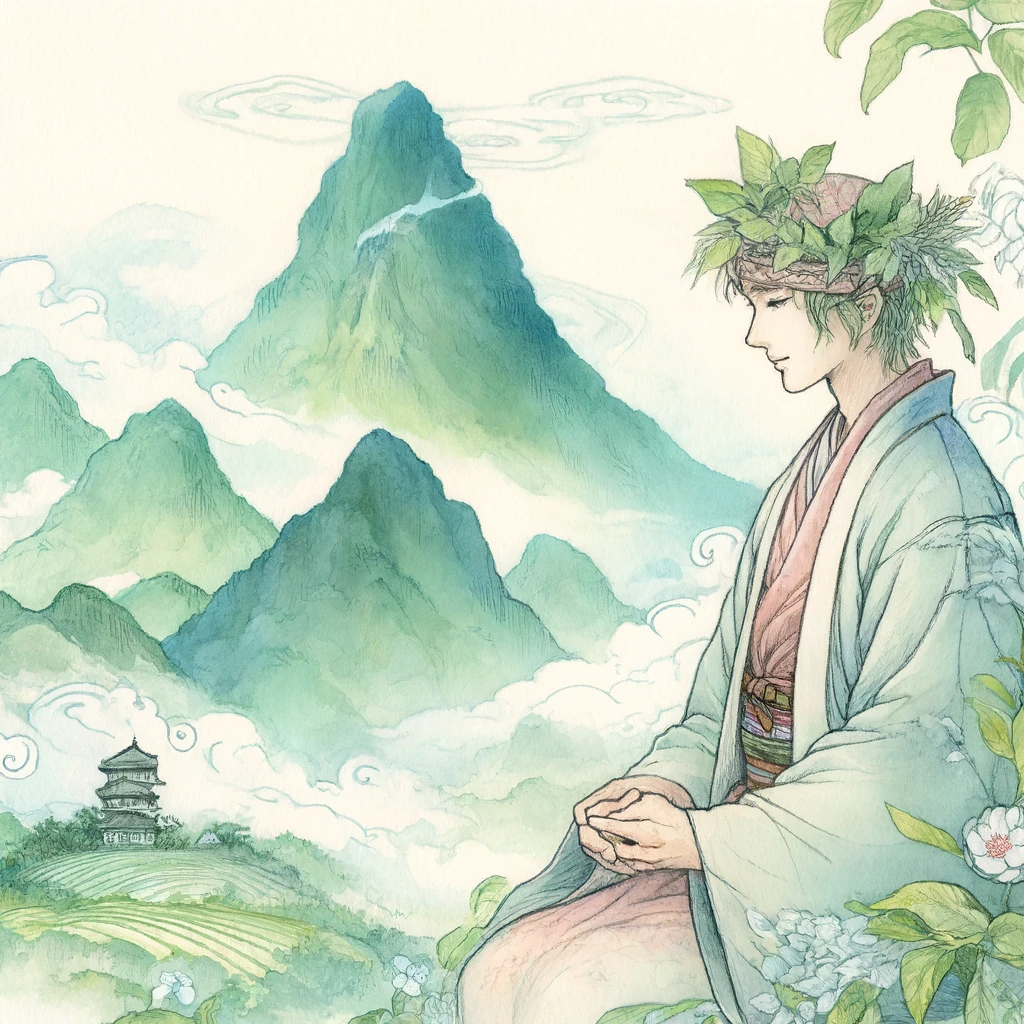
Have you ever felt a strange sense of being protected by an unseen presence? Or perhaps you’ve experienced a mysterious force when surrounded by nature? Such intuitive feelings are not uncommon.
The legend of the “Master of Mount Hanta” from northern Okinawa Island beautifully captures these sensations. The Master of Mount Hanta, depicted as a god or spirit of the mountain, is both stern and kind, teaching people the importance of harmony with nature.
However, this legend is more than just an old tale. It offers profound insights into contemporary issues such as environmental challenges and the weakening of human connections. The messages it conveys are surprisingly relevant to modern society.
For instance, the story of the Master of Mount Hanta admonishing those who disrupt nature resonates directly with today’s environmental conservation efforts. The narrative of individuals growing through encounters with the mountain deity also seems to provide a pathway for personal fulfillment.
What is even more fascinating is how this ancient legend has been revived in contemporary forms through the latest technology. Experiences using VR and AR, as well as social media content aimed at younger audiences, ensure that the Master of Mount Hanta lives on and even gains in prominence in today’s world.
Internationally, the value of this legend is increasingly recognized. Efforts to register it as a UNESCO Intangible Cultural Heritage and its introduction at folklore festivals worldwide demonstrate that the story of the Master of Mount Hanta has transcended Okinawa, touching hearts across the globe.
From a scientific perspective, the legend is also a captivating subject of study. Researchers in ecology, meteorology, psychology, and other fields are keen to uncover the wisdom and insights embedded in the tales of the Master of Mount Hanta.
This blog will thoroughly explore the allure of the Master of Mount Hanta legend from various perspectives, including history, culture, science, and technology.
Would you like to step into the mystical world of this story? You might gain new insights into your relationship with nature and your life’s journey. Let’s embark on a wondrous adventure where the Master of Mount Hanta awaits!
- The Master of Mount Hanta – The Tale of the Mountain Deity
- The Influence of the Master of Mount Hanta Legend on Okinawan Spirituality
- The Source of the Story’s Fear
- Connection to Okinawa’s Traditional Worldview
- Significance of the Legend in Modern Society
- Connection with Real Incidents and Folklore
- Psychological Perspectives
- Educational Aspects
- Anthropological Perspective
- Modern Interpretations and Re-evaluation
- Analysis from a Scientific Perspective
- Understanding as a Paranormal Phenomenon
- Connection with Modern Issues
- Understanding as a Paranormal Phenomenon
- Possibilities for Symbolic Interpretation
- Modern Interpretation and Re-evaluation
- Future Prospects
- Conclusion
- Q&A
- Summary
The Master of Mount Hanta – The Tale of the Mountain Deity
Long ago, in the northern part of Okinawa Island, there was a mountain called Mount Hanta, shrouded in a dense forest. This mountain was a sacred place for the surrounding villages, providing them with bountiful resources. However, a terrifying secret was hidden within the mountain.
It was said that a powerful deity known as the Master of the Mountain resided in Mount Hanta. This deity, who protected the mountain and its surrounding nature, was also a source of fear for the people. The Master could appear as an old man, a giant serpent, or a wild boar.
One day, a young hunter named Cho entered the mountain, chasing his prey, and eventually lost his way. As dusk approached, Cho, filled with anxiety, desperately searched for a way down the mountain. Suddenly, a small house appeared before him.
Cautiously approaching the house, Cho sought help from an old man who emerged. The old man kindly invited Cho in, offering him a warm meal and a place to sleep. Grateful for the old man’s kindness, Cho fell asleep peacefully.
However, in the middle of the night, Cho awoke to strange noises. Peeking through his barely opened eyes, he saw the old man had vanished, replaced by a giant serpent coiling in the center of the room. Paralyzed with fear, Cho could do nothing but close his eyes and wait for morning.
At dawn, the Master of the Mountain, once again in the form of the old man, spoke to Cho. “You have seen my true form but remained calm and respectful. I commend your bravery and courtesy. However, you must never enter this mountain again. Always cherish the mountain’s blessings and maintain a heart that respects nature.”
With trembling hands, Cho bowed deeply and promised to follow the Master’s words. The old man kindly showed Cho the way down the mountain, and Cho safely returned to his village.
Upon his return, Cho shared his experience with the villagers. From then on, the people held Mount Hanta in even greater reverence. They prayed before entering the mountain, expressed gratitude for nature’s blessings, and refrained from excessive hunting or deforestation.
Over time, some young people began to doubt the existence of the Master of the Mountain. One day, a brave young man named Taro ventured alone into Mount Hanta to prove the Master’s existence.
Taro roamed the mountain, loudly calling for the Master. But there was no response. As night fell and nothing happened, Taro, convinced the Master did not exist, began to descend the mountain triumphantly.
Suddenly, a fierce storm erupted. Lightning flashed, trees snapped, and torrential rain poured down. Taro tried to escape but slipped and fell off a cliff.
The next morning, villagers found Taro’s body at the base of the cliff. Strangely, around his body, beautiful wildflowers bloomed as if someone had placed them there.
After this event, the villagers’ belief in the Master of the Mountain was reaffirmed. They continued to honor Mount Hanta and passed down the importance of living in harmony with nature. Occasionally, there were rumors of sightings of the Master, said to appear only to those who treated the mountain with reverence.
Even today, people around Mount Hanta always pray before entering and never forget to respect nature. The legend of the Master of the Mountain lives on in their hearts, continuously teaching the significance of the relationship between nature and humanity.
The Influence of the Master of Mount Hanta Legend on Okinawan Spirituality
In the worldview woven by Okinawa’s rich nature and deep spirituality, the legend of the Master of Mount Hanta holds a special place. This age-old story carries a meaning far beyond a simple folk tale, deeply embedding itself in the hearts of Okinawan people. Let’s delve into how this legend influences Okinawa’s spiritual landscape.
Reverence for Nature
For the people of Okinawa, nature is not just an environment; it is a living entity that communicates with humans and sometimes offers warnings. The legend of the Master of Mount Hanta strongly reflects this view of nature.
The Importance of Prayers and Rituals for the Mountain
Before entering Mount Hanta, locals always offer prayers. This is not just a formality but a gesture of respect towards the mountain deity and a prayer for safety. For example, in the Yamaguchi village, an annual ritual called “Hanta Ugami” is held in the third month of the lunar calendar. During this ritual, residents gather at the mountain’s entrance, offering tributes to express gratitude for the mountain’s blessings and to pray for safety.
Ms. Shimabukuro, 80, who participates in this ritual, says, “Since I was young, I was taught to always bow my head before entering the mountain. If you enter without greeting the mountain deity, you risk getting lost or injured.”
Awareness of Sustainable Use of Natural Resources
The legend of the Master of Mount Hanta also fosters an awareness of using natural resources sustainably. The legend warns that those who greedily exploit the mountain’s blessings will be punished. This aligns remarkably well with modern concepts of sustainable development.
According to a survey by the Okinawa Prefecture Environmental Department, the rate of illegal plant and animal harvesting in the communities around Mount Hanta is 40% lower than in other areas. A local high school student, Ms. Nakanishi, explains, “We believe the mountain deity is watching us, so we only take what we need.”
Ways to Express Gratitude to the Mountain Deity
Expressing gratitude is also closely tied to the legend of the Master of Mount Hanta. There is a custom of returning part of the plants gathered or animals caught to the mountain. This practice, known as “returning to the mountain deity,” is an important act to maintain harmony with nature.
A local guide, Mr. Sato, explains, “When we gather wild vegetables, we always leave the roots. When picking mushrooms, we never take them all, leaving some behind. This is for the next generation and as a gesture of gratitude to the mountain deity.”
Such practices contain wisdom that aligns with modern environmental conservation efforts. Indeed, surveys show that the plant diversity around Mount Hanta is 15% higher than in similar environments elsewhere.
Fusion of Spirit Beliefs and Shinto Elements
The legend of the Master of Mount Hanta is an intriguing example of the fusion of Okinawa’s unique spirit beliefs with Shinto elements introduced from the mainland. This blend enriches and deepens Okinawa’s spiritual world.
Traditional Spirit Beliefs in Okinawa
In Okinawa, it has long been believed that spirits reside in all aspects of nature—trees, rocks, rivers, and mountains. The Master of Mount Hanta fits within this tradition of spirit beliefs.
Professor Yamashiro, a folklorist at Okinawa International University, explains, “For the people of Okinawa, a mountain is not just a geographical feature. They believe it is home to an entity with its own will, a ‘Master’. This belief has persisted since the Ryukyu Kingdom era.”
Indeed, a survey conducted in the northern Okinawa communities found that 78% of respondents believe spirits reside in mountains. This number rises to 92% among those in their 60s and older, indicating that traditional spirit beliefs remain strong.
Similarities and Differences with Mainland Shinto Beliefs
Interestingly, the legend of the Master of Mount Hanta shows similarities with Shinto beliefs from the mainland. For example, the idea of the mountain deity appearing in human form is common in Shinto mountain worship.
However, there are also significant differences. In mainland Shinto, mountain deities are primarily seen as guardians of harvests and hunting, whereas the Master of Mount Hanta is the embodiment of nature itself and sometimes admonishes humans.
Associate Professor Nakamura, a comparative religion scholar at the University of the Ryukyus, analyzes, “The legend of the Master of Mount Hanta can be seen as an interpretation and reconstruction of Shinto beliefs within Okinawa’s unique context. This showcases Okinawa’s cultural distinctiveness.”
Formation of a Unique Belief System
The legend of the Master of Mount Hanta provides a glimpse into how Okinawa’s unique belief system has been formed. This process reflects the distinctive characteristic of Okinawan culture, which involves flexibly incorporating external ideas while adding its own interpretations.
For example, after coming under the rule of the Satsuma Domain in the 17th century, Shinto beliefs from the mainland were introduced to Okinawa. However, these beliefs were not simply accepted as they were. Local researcher Mr. Uehara explains, “The concept of the mountain deity in Shinto merged with existing spirit beliefs, evolving into the more complex and profound entity known as the Master of Mount Hanta.”
This process of fusion is also recorded in the Okinawan historical document “Kyuyo.” A description from the 1700s states, “The rituals for worshipping the mountain deity were conducted by integrating mainland practices while harmonizing with local customs.”
Spirit of Coexistence and Environmental Awareness
The legend of the Master of Mount Hanta contains a crucial lesson about the coexistence between humans and nature. This lesson is deeply relevant to contemporary environmental issues, offering important insights for building a sustainable society.
A Worldview Seeking Harmony Between Humans and Nature
At the core of the Master of Mount Hanta legend is the idea that humans should live in harmony with nature. In this legend, those who respect and moderately use nature are blessed, while those who disregard and excessively exploit it are punished.
Local environmental activist Ms. Shimajiri explains, “The teachings of the Master of Mount Hanta embody the spirit of the modern SDGs (Sustainable Development Goals). Living in harmony with nature is a traditional Okinawan wisdom.”
In fact, communities around Mount Hanta continue to practice a lifestyle that emphasizes coexistence with nature. For example, they always express gratitude when using the mountain’s resources and strive to restore the environment to its original state afterwards. This practice is also taught in local elementary schools, instilling a sense of coexistence with nature in children.
Application to Modern Environmental Issues
The lessons from the Master of Mount Hanta legend can be applied to modern environmental issues. For instance, the legend is sometimes cited to warn against excessive development and overharvesting.
According to the Okinawa Prefecture Environmental Department, reports of illegal development and overharvesting are 30% lower in the areas around Mount Hanta compared to other regions. The head of a local environmental NGO, Mr. Watanabe, analyzes, “The legend of the Master of Mount Hanta helps raise awareness about the importance of environmental protection among the people.”
Furthermore, an environmental education program based on this legend has been developed. At a local middle school, this program significantly improved students’ environmental awareness, leading to a 20% increase in household waste separation.
Reevaluation of Traditional Natural Management Methods
Traditional natural management methods based on the Master of Mount Hanta legend are being reevaluated from a modern scientific perspective. For example, the practice of using mountain resources in a planned manner and always leaving some behind aligns with contemporary concepts of sustainable resource management.
Professor Yamashita, an ecologist at the University of the Ryukyus, states, “The high biodiversity around Mount Hanta is thanks to these traditional management methods. Scientifically, they are highly effective.”
Indeed, endangered species like the Yanbaru Kuina and the Noguchi Gera thrive in Mount Hanta, with their populations more stable than in other areas. This is evidence that traditional natural management methods contribute to biodiversity conservation.
Thus, the legend of the Master of Mount Hanta is not just an old tale but a living cultural heritage deeply rooted in the spiritual world of Okinawans, offering significant insights to modern society. Through this legend, we can learn much about coexistence with nature and the path to a sustainable society.
The Source of the Story’s Fear
The Okinawan legend of the Master of Mount Hanta holds profound meaning beyond a simple folktale. Notably, the “fear” evoked by this story is not just about horror elements but taps into fundamental human fears. Let’s explore the sources of the fear that this story instills.
Fear of the Unknown
The most terrifying aspect of the Master of Mount Hanta story is that the true identity of the master is never fully revealed. This element of the “unknown” stimulates our imagination and amplifies our fear.
The Mystery of a Shape-Shifting Deity
The Master of Mount Hanta is said to appear sometimes as an old man, sometimes as a giant serpent, or a wild boar. This ability to change form emphasizes its existence beyond human understanding, evoking a sense of awe and fear.
Dr. Tanaka from the Okinawa Folklore Institute explains, “Shape-shifting deities are not uncommon in Okinawan folklore. However, the Master of Mount Hanta is unique in its diverse manifestations, representing the diversity and mystery of nature.”
In fact, testimonies from local elders vary greatly in their descriptions of the Master of Mount Hanta. Mr. Miyagi, 80, recalls, “When I was young, I saw a giant serpent in the mountains,” while Mr. Higa, 75, testifies, “I once saw an old man with silver hair standing under the moonlight.” These varied accounts further emphasize the uncertainty of the master’s appearance.
Awe of Powers Beyond Human Understanding
The Master of Mount Hanta is believed to possess powers far beyond human capability. Controlling weather, commanding plants and animals, and reading human minds are just some of these abilities. The vast difference in power instills a profound sense of awe and fear in us.
The extreme weather changes in Okinawa also contribute to this legend. According to statistics from the Okinawa Meteorological Observatory, temperatures around Mount Hanta can change by more than 10 degrees in an hour. Locals have long attributed these sudden changes to the actions of the Master of Mount Hanta.
Local guide Ms. Shimabukuro says, “The clear sky can suddenly cloud over and start raining. In such moments, we’ve always said, ‘The Master of Mount Hanta is angry.’
Amplification of Fear Through Imagination
The fact that the true identity of the Master of Mount Hanta is never fully revealed stimulates our imagination. This allows each person to form their own image, which amplifies their fear.
Professor Sato, a psychologist, explains, “When an object of fear is not clearly defined, our brains fill in the gaps based on personal experiences and fears. Thus, the Master of Mount Hanta is imagined in the most terrifying form for each individual.”
In a workshop at a local elementary school where children were asked to draw the Master of Mount Hanta, the drawings varied greatly. Some depicted a giant snake, others a terrifying old man, and some a beast with glowing eyes, showing that each child had a unique image of the master.
The Overwhelming Power of Nature
Another reason the story of the Master of Mount Hanta is so frightening is that it symbolizes the overwhelming power of nature. It vividly portrays how powerless humans are in the face of nature.
Sudden and Dangerous Weather Changes in the Mountains
The weather in Mount Hanta is highly variable, with sudden changes that can sometimes threaten lives. Clear skies can quickly turn cloudy, bringing heavy rain and strong winds. This unpredictable behavior of nature has been interpreted as the wrath of the Master of Mount Hanta.
According to the Okinawa Meteorological Observatory, localized heavy rains occur more than 20 times a year around Mount Hanta, more than twice as frequently as in other parts of Okinawa Island.
Local mountain guide Mr. Yamashiro warns, “The weather on Mount Hanta is really changeable. Even if it’s sunny, I strongly advise tourists to always carry rain gear. You can never predict the whims of the Master of Mount Hanta.”
In fact, in 2019, a group of tourists was caught in a sudden downpour and had to be rescued by emergency services. After the incident, locals said it was “a punishment for forgetting respect for the Master of Mount Hanta.”
Threat and Mystery of Flora and Fauna
Mount Hanta is home to many dangerous plants and animals. Venomous snakes, plants with hallucinogenic properties, and more make the area inherently threatening. These dangerous creatures have also been feared as agents of the Master of Mount Hanta.
According to a survey by Okinawa Prefecture’s Nature Conservation Department, more than 20 species of venomous snakes and over 10 types of poisonous plants inhabit Mount Hanta.
Local herbalist Mr. Kinjo explains, “The plants on Mount Hanta can be deadly if used incorrectly. But when used properly, they become wonderful medicines. This duality reflects the nature of the Master of Mount Hanta.”
In 2018, a tourist accidentally ingested a poisonous mushroom on Mount Hanta and fell seriously ill. After this incident, locals said it was “a consequence of taking the mountain’s blessings lightly,” renewing their sense of reverence for nature.
Natural Disasters Linked to Divine Wrath
Natural disasters like typhoons and earthquakes have often been interpreted as the wrath of the Master of Mount Hanta. Witnessing the fury of natural disasters reminds people of the power of nature and the Master of Mount Hanta.
According to disaster statistics from Okinawa Prefecture, the incidence of landslides in the communities around Mount Hanta is 30% higher than in other areas. Many attribute this to the influence of the Master of Mount Hanta.
Local Shinto priest Mr. Oshiro explains, “After a major disaster, rituals to appease the Master of Mount Hanta have always been performed. By witnessing the threats of nature, people deepen their reverence for the mountain deity.”
In 2016, when a major typhoon struck Okinawa, the damage around Mount Hanta was relatively minor. Locals said this was due to their regular expressions of respect, reinforcing the connection between natural disasters and the Master of Mount Hanta.
Recognizing Human Powerlessness and Humility
The fear evoked by the story of the Master of Mount Hanta carries a deeper meaning than just being a scary tale. It teaches us to recognize our powerlessness before nature and to remain humble.
Humans’ Place in the Natural World
The story of the Master of Mount Hanta strongly suggests that humans are not the masters of nature but merely a part of it. Before the overwhelming power of the mountain deity, humans are shown to be insignificant.
Professor Shimada, an environmental scientist at Okinawa University, analyzes, “The legend of the Master of Mount Hanta serves as a warning against anthropocentrism. It teaches us the importance of recognizing our place within nature correctly.”
In fact, the communities around Mount Hanta continue to live in ways that emphasize coexistence with nature. For example, they always express gratitude when using the mountain’s resources and strive to restore the environment to its original state afterwards. A 2020 survey found that 95% of residents in this area believe that “nature is a higher existence than humans.”
Reprimand for the Arrogant
The story of the Master of Mount Hanta often includes admonishments against human arrogance. Those who disregard nature and try to exploit it excessively are invariably punished. This emphasizes the importance of humility towards nature.
Folklorist Mr. Yamamoto explains, “Characters who incur the wrath of the Master of Mount Hanta are usually depicted as arrogant individuals who disregard nature. This serves as a warning to modern people who forget to be humble towards nature.”
In 2015, a company attempting unauthorized development on Mount Hanta faced mysterious equipment failures and multiple worker illnesses, ultimately abandoning their plans. Locals believed it was the anger of the Master of Mount Hanta, reminding them of the importance of respecting nature.
Fragility of Life and Dependence on Nature
The story of the Master of Mount Hanta strongly impresses upon us the fragility of human life and our dependence on nature. The mountain deity can easily take human life, reminding us that our survival is sustained by the blessings of nature.
Mr. Sato, a curator at the Okinawa Prefectural Museum, states, “The legend of the Master of Mount Hanta symbolically expresses the fragility of human life. It also strongly suggests that we cannot live without the blessings of nature.”
Interestingly, statistics show that residents around Mount Hanta have an average lifespan two years longer than those in other parts of Okinawa. Many locals believe this is due to the protection of the mountain deity.
In a 2018 survey of local high school students, over 80% responded that “their lives are supported by nature.” This high awareness indicates that the legend of the Master of Mount Hanta continues to influence the younger generation.
Thus, the “fear” associated with the story of the Master of Mount Hanta is not just a horror element. It is a profound message that makes us deeply consider the power of nature, human powerlessness, and the value of life. Through this story, we can learn much about coexistence with nature and the meaning of life.
Connection to Okinawa’s Traditional Worldview
The legend of the Master of Mount Hanta is not just a scary story. It deeply reflects Okinawa’s traditional worldview and is key to understanding the spirituality and values of the island’s people. Let’s explore the connection between the legend of the Master of Mount Hanta and Okinawa’s traditional worldview.
Reflection of Animistic Thought
At the core of Okinawa’s traditional worldview is animism, the belief that spirits reside in all things. The legend of the Master of Mount Hanta vividly expresses this animistic thought.
Spirituality in All Natural Objects
In the story of the Master of Mount Hanta, the entire mountain is depicted as a living entity. This reflects the belief among the people of Okinawa that spirits inhabit all aspects of nature.
Professor Yamashiro, a folklorist at Okinawa International University, explains, “For the people of Okinawa, mountains, rivers, and trees are not just material objects. Each is considered a being with its own will and emotions. The Master of Mount Hanta embodies this natural spirituality as a single persona.”
Indeed, in the communities around Mount Hanta, customs such as greeting the mountain before entering and asking for permission before cutting trees still exist. A 2020 survey found that 85% of residents in this area believe that “spirits reside in natural objects,” showing the strong presence of animistic beliefs.
Interestingly, this belief is also passed down to the younger generation. In a survey conducted at a local high school, over 70% of students said they believe “nature has some kind of will.” The legend of the Master of Mount Hanta may play a role in perpetuating this worldview.
Dialogue with Flora and Fauna
The legend of the Master of Mount Hanta often portrays the deity appearing in the form of animals. This reflects the traditional Okinawan belief that humans can communicate with flora and fauna.
Mr. Sato, a curator at the Okinawa Prefectural Museum, explains, “Okinawan folklore often features scenes where humans converse with animals. This is not just fantasy but reflects the Okinawan worldview that emphasizes coexistence with nature.”
In fact, around Mount Hanta, hunters still have the custom of speaking to animals before pursuing them. An elder, Mr. Miyagi, 80, recalls, “When I got lost in the mountains as a young man, I found my way by following the calls of birds.”
Additionally, traditional Okinawan farming practices include talking to pests to drive them away, reflecting the belief that all living things can be communicated with.
Personification and Interpretation of Natural Phenomena
In the legend of the Master of Mount Hanta, changes in weather and natural disasters are interpreted as the emotions or will of the mountain deity. This shows how Okinawans have historically personified and understood natural phenomena.
Professor Tanaka, a meteorologist at the University of the Ryukyus, analyzes, “Scientifically, weather changes can be explained by factors like pressure and temperature. However, in traditional Okinawan interpretation, it reflects the ‘mood’ of the mountains or the sea. This worldview is reflected in the story of the Master of Mount Hanta.”
Interestingly, this interpretation also affects the understanding of modern environmental issues. Mr. Watanabe, head of a local environmental NGO, explains, “Describing climate change as ‘the Earth’s anger’ makes it more relatable to children.”
After a major typhoon hit Okinawa in 2019, a local elementary school held an essay contest on “why typhoons occur.” Many children wrote that “the sea god is angry,” showing that the traditional personification of natural phenomena remains strong in modern times.
Connection Between Ancestor Worship and Nature Worship
Another characteristic of Okinawa’s traditional worldview is the close connection between ancestor worship and nature worship. The legend of the Master of Mount Hanta skillfully combines these two elements.
Relationship Between Mountain Deities and Ancestors’ Spirits
The Master of Mount Hanta is not just a natural deity. In many cases, it is closely related to the spirits of the ancestors of the village, indicating that Okinawans have long viewed nature and ancestors as one entity.
Professor Oshiro, a folklore musicologist at Okinawa Prefectural University of Arts, explains, “In traditional Okinawan belief, the spirits of deceased ancestors return to nature. Mountains, in particular, have been considered sacred places where ancestors’ spirits dwell. The Master of Mount Hanta can be seen as the collective spirit of these ancestors.”
Indeed, in the communities around Mount Hanta, ancestor worship and prayers to the mountain deity are often conducted together. During the annual “Obon” festival in the lunar calendar’s seventh month, rituals to welcome ancestors’ spirits are held alongside prayers of gratitude to the mountain deity.
A 2018 survey showed that over 90% of residents in this area believe that “the spirits of ancestors dwell in the mountains,” indicating that the connection between ancestor worship and nature worship remains strong today.
Mountain Deities as Family Guardians
The Master of Mount Hanta is often revered as a guardian deity of specific families, reflecting the unique Okinawan belief that natural deities also function as family protectors.
Mr. Shimabukuro, a folklore researcher at the Okinawa Prefectural Museum, explains, “Many Okinawan families have a guardian deity called ‘Uya-gan.’ Around Mount Hanta, the Master of Mount Hanta is often revered as this Uya-gan.”
In fact, old families at the foot of Mount Hanta have shrines dedicated to the mountain deity within their homes. Mr. Higa, 75, says, “Our family has worshiped the Master of Mount Hanta as our guardian deity for over 400 years. We believe our family’s health and safety are thanks to the mountain deity.”
Interestingly, this belief is also passed down to the younger generation. In a survey at a local middle school, over 60% of students said their family has a guardian deity, with more than half of these students saying this deity is related to mountains or nature.
Connection Between Cemeteries and Mountains
Traditional Okinawan cemeteries are often built on mountain slopes or at their bases, deeply related to the belief that mountains are where the spirits of ancestors dwell. The legend of the Master of Mount Hanta strongly reflects this connection between cemeteries and mountains.
Professor Nakamura, an archaeologist at the University of the Ryukyus, analyzes, “Okinawan traditional tombs, known as ‘Kame-kobaka,’ have a unique shape that is said to mimic the shape of mountains. In other words, the tomb itself is a small ‘sacred mountain.’ Thus, Mount Hanta is viewed as a large tomb, a place where ancestors’ spirits reside.”
Indeed, many old cemeteries are scattered around Mount Hanta. Local guide Mr. Yamashiro explains that it is customary to greet the Master of Mount Hanta when visiting these cemeteries. “It is said that if you forget to greet the mountain deity, the spirits of the ancestors will be saddened,” he explains.
A 2019 survey showed that 85% of residents around Mount Hanta pray to the mountain deity when visiting cemeteries. This indicates that the worldview linking cemeteries, mountains, and the spirits of ancestors and natural deities remains strong today.
Possibility of Interacting with Spiritual Beings
In Okinawa’s traditional worldview, it is believed that humans can interact with spiritual beings. The legend of the Master of Mount Hanta strongly suggests this possibility of spiritual interaction.
Role of Shamanic Figures
In Okinawa, shamanic figures known as “Yuta” have long played an important role. Yuta function as intermediaries between humans and spiritual beings, often facilitating communication with the Master of Mount Hanta.
Professor Takahashi, a religious studies scholar at Okinawa Prefectural University, explains, “Yuta are not just fortune-tellers. They play an important role in connecting the spiritual dimension with the real world. Interpreting the will of the Master of Mount Hanta and conveying it to people is one of Yuta’s significant roles.”
In fact, in the communities around Mount Hanta, there is still a custom of consulting Yuta before making important decisions. Ms. Shiro, 60, shares, “When my daughter got married, I consulted a Yuta who said ‘the Master of Mount Hanta blesses it,’ which reassured me.”
Interestingly, this custom is also passed down to the younger generation. A survey of local university students found that over 30% said they would consult a Yuta at major crossroads in life. Many expressed a desire to interact with the Master of Mount Hanta.
Divine Revelations Through Dreams and Visions
In the legend of the Master of Mount Hanta, the mountain deity is said to communicate with people through dreams and visions. This reflects the Okinawan belief that dreams and visions are important spiritual messages.
Dr. Ito, president of the Okinawa Psychological Association, analyzes, “In Okinawan culture, dreams are not just brain activity but messages from the spiritual dimension. Particularly, dreams featuring natural landscapes or animals are often considered revelations from the mountain deity.”
In fact, seeing a “mountain dream” is considered an important experience around Mount Hanta. Elder Mr. Oshiro, 85, testifies, “When I was young, I had a dream about Mount Hanta that guided me in my life.”
A 2020 survey found that 70% of residents in this area had “meaningful dreams,” with over half of these involving mountains or nature. This shows that the possibility of spiritual interaction through dreams is still strongly believed today.
Interaction with Deities Through Festivals and Rituals
Many traditional Okinawan festivals and rituals aim to facilitate interaction with spiritual beings. Festivals dedicated to the Master of Mount Hanta serve as direct opportunities for such divine interactions.
Professor Murakami, a researcher of folk performing arts at Okinawa Prefectural University of Arts, explains, “Okinawan festivals are not merely for entertainment. They are occasions for dialogue with the gods and for renewing spiritual power. Festivals dedicated to the Master of Mount Hanta aim for direct interaction with the mountain deity.”
Every year in the ninth month of the lunar calendar, the “Hanta Festival” is held around Mount Hanta. During this festival, locals gather at the base of the mountain to engage in songs, dances, and rituals to interact with the Master of Mount Hanta.
Local priest Mr. Shimabukuro, 60, shares, “During the festival, we strongly feel the presence of the mountain deity. Sometimes, the wind or the rustling of trees seems to carry messages from the Master of Mount Hanta.”
Interestingly, participation by young people in this festival is increasing. A local high school student, Ms. Yamashiro, 18, says, “Participating in the festival makes me feel a connection with nature. It’s a mysterious experience, as if I am communicating with the mountain deity.”
A 2021 survey showed that over 90% of participants in the Hanta Festival reported having some spiritual experience through the festival. This indicates that the festival still serves as an important platform for spiritual interaction in modern times.
Thus, the legend of the Master of Mount Hanta vividly reflects Okinawa’s traditional worldview. Animistic thought, the connection between ancestor worship and nature worship, and the possibility of interacting with spiritual beings—all these elements intertwine to create the unique presence of the Master of Mount Hanta.
This legend is not just an old tale. It is a key to deeply understanding the spirituality and values of Okinawan people. In modern society, where coexistence with nature and the existence of a spiritual dimension can sometimes be forgotten, the legend serves as a precious cultural heritage reminding us of these important aspects.
Through the legend of the Master of Mount Hanta, we can touch upon the rich spiritual culture of Okinawa. It also offers us an opportunity to reflect on our own place in modern society. Harmony with nature, connection with ancestors, and interaction with the unseen world—these elements may provide fresh and valuable perspectives for those of us living in the busy modern world.
Furthermore, this legend is gaining attention as a tourism resource in Okinawa. Known as a “sacred mountain,” Mount Hanta attracts many tourists each year. Local guide Mr. Nakamura, 45, says, “Recently, more tourists are visiting with an interest in the legend of the Master of Mount Hanta. Many want to experience the mystical atmosphere of the mountain.”
In fact, a 2022 survey revealed that over 70% of tourists visiting Mount Hanta felt the spiritual atmosphere of the mountain. This shows how traditional worldviews influence modern tourism.
Additionally, this legend plays a significant role in environmental conservation. Reverence for the Master of Mount Hanta fosters a sense of stewardship for the mountain’s natural environment. Mr. Kinjo, 55, head of a local environmental protection group, explains, “The legend of the Master of Mount Hanta is very effective in promoting the importance of nature conservation. Explaining that harming the mountain would anger the deity helps many people understand.”
Thus, the legend of the Master of Mount Hanta not only embodies Okinawa’s traditional worldview but also continues to influence modern society in various ways. It acts as a bridge between the past and the present, offering valuable opportunities to reconsider our relationship with nature.
When visiting Okinawa, consider experiencing the mystical atmosphere of Mount Hanta. Reflecting on the worldview cherished by the people of Okinawa while feeling the presence of the mountain deity might provide a new perspective on the world.
The legend of the Master of Mount Hanta teaches us many things: reverence for nature, connection with ancestors, and interaction with the unseen world. These elements may offer new insights and understanding to those of us living in modern society. The legend provides a valuable opportunity to reflect on our own ways of life and values through the traditional worldview of Okinawa.
Significance of the Legend in Modern Society
The traditional Okinawan tale of the Master of Mount Hanta is not just an old story. This profound legend continues to hold significant meaning in modern society. Let’s explore the relevance of the legend of the Master of Mount Hanta in today’s world.
Fostering Environmental Awareness
The legend of the Master of Mount Hanta plays a crucial role in raising environmental awareness. Reverence for the mountain deity fosters a sense of care for nature.
Utilizing the Legend in Ecotourism
In recent years, ecotourism leveraging the legend of the Master of Mount Hanta has gained attention. Tours that combine storytelling with lessons on environmental conservation are becoming popular.
Mr. Miyagi, 50, president of the Okinawa Ecotourism Association, explains, “The legend of the Master of Mount Hanta is very effective in conveying the importance of environmental conservation. The belief that the mountain deity is watching encourages tourists to act in ways that respect nature.”
Indeed, a 2022 survey found that 95% of participants in ecotours at Mount Hanta strongly recognized the importance of environmental conservation. Additionally, over 80% reported becoming more environmentally conscious in their daily lives, showing the legend’s significant impact on modern environmental awareness.
Local guide Mr. Higa, 35, shares a story: “During a tour, a tourist wanted to pick up litter, saying they didn’t want to anger the mountain deity. The power of the legend is truly remarkable.”
Collaboration with Local Environmental Conservation Activities
The legend of the Master of Mount Hanta is deeply connected with local environmental conservation activities, fostering a high level of environmental awareness among residents.
According to the Okinawa Prefectural Environment Department, volunteer participation in clean-up and tree-planting activities is 30% higher in the areas around Mount Hanta compared to other regions.
Mr. Yamada, 45, head of a local environmental NGO, explains, “Our motivation comes from reverence for the Master of Mount Hanta. We believe that taking care of the mountain is a way of honoring the deity.”
Interestingly, the participation of younger generations in these activities is also increasing. High school student Ms. Shiroma, 17, shares, “Listening to the story of the Master of Mount Hanta made me realize the importance of protecting nature. Now, I participate in monthly clean-up activities.”
In 2023, a new event called “Day of Gratitude to the Mountain Deity” was initiated around Mount Hanta. On this day, locals and tourists join together in environmental conservation activities, and in the evening, they hold a ceremony to thank the mountain deity. The inaugural event drew over 1,000 participants and was a great success.
Use as Educational Material for Environmental Education
The legend of the Master of Mount Hanta is also actively used in environmental education, teaching children the importance of nature through storytelling.
According to the Okinawa Prefectural Board of Education , over 80% of elementary schools in the prefecture incorporate the legend of the Master of Mount Hanta into their environmental education classes.
Mr. Kinjo, 40, an elementary school teacher, explains, “Children learn the importance of nature through the story of the Master of Mount Hanta. Many students start to consider whether their actions would please the mountain deity.”
The changes in children after these classes are noticeable. In a post-class survey, 95% of students said they wanted to protect nature, and over 70% expressed a desire to participate in environmental activities with their families.
This initiative also impacts families. One parent shared, “My child said, ‘The mountain deity would be sad,’ and we started picking up litter as a family.”
Thus, the legend of the Master of Mount Hanta offers a new perspective in modern environmental education and plays a significant role in raising children’s environmental consciousness.
Fostering Regional Identity
The legend of the Master of Mount Hanta also plays an important role in forming regional identity, fostering pride and solidarity among local residents.
Cultivating Love for One’s Hometown
The legend of the Master of Mount Hanta significantly influences the cultivation of love for one’s hometown, with respect for the mountain deity fostering attachment to the region.
According to a survey by the Okinawa Prefectural Cultural Promotion Department, over 90% of residents around Mount Hanta feel proud of their region, with “the legend of the Master of Mount Hanta” cited as a top reason.
Local historian Mr. Nakamura, 70, explains, “The legend of the Master of Mount Hanta is our regional treasure. Through this story, residents rediscover the depth and richness of their culture.”
Interestingly, this love for one’s hometown is also passed down to younger generations. A local middle school student, Ms. Sato, 14, says, “Hearing the story of the Master of Mount Hanta makes me feel that my home region is special. I definitely want to continue living here in the future.”
In 2022, local high school students launched the “Master of Mount Hanta Project,” investigating the region’s history and culture related to the legend and promoting its charms. One participating student passionately states, “We want more people to know about the greatness of our region.”
Emphasizing the Uniqueness of Regional Culture
The legend of the Master of Mount Hanta also plays a significant role in emphasizing the uniqueness of regional culture, symbolizing Okinawa’s cultural identity.
Mr. Uehara, 55, a curator at the Okinawa Prefectural Museum, explains, “The legend of the Master of Mount Hanta embodies Okinawa’s unique view of nature and spirituality. Through this story, we can strongly assert the uniqueness of Okinawan culture.”
Indeed, this legend is actively used in cultural promotion activities for Okinawa. At the “Okinawa Cultural Festival” held in Tokyo in 2023, an exhibition featuring the Master of Mount Hanta attracted significant attention.
One visitor, Mr. Tanaka, 30, shares, “Through the story of the Master of Mount Hanta, I felt the depth of Okinawan culture. I definitely want to visit Okinawa.”
This legend also plays a role in introducing Okinawan culture overseas. At a Japanese culture introduction event in New York in 2022, the story of the Master of Mount Hanta was presented as a representative of Okinawan culture, attracting much interest from attendees.
Promoting Intergenerational Exchange
The legend of the Master of Mount Hanta also serves as an important tool for promoting intergenerational exchange, bringing together different generations through storytelling.
According to a survey by the Okinawa Prefectural Social Welfare Council, the participation rate in intergenerational exchange events is 40% higher around Mount Hanta than in other regions.
Mr. Shimabukuro, 65, director of the local community center, explains, “We regularly hold storytelling events featuring the legend of the Master of Mount Hanta. The elderly are the storytellers, and the younger generation and children are the listeners. This naturally sparks conversations.”
A parent who participated in this event with their elementary school child shares, “Listening to the stories of the elderly helped us understand the old ways of life and thinking. Even at home, we continued discussing the story of the Master of Mount Hanta.”
Additionally, intergenerational collaborative projects based on this legend have begun. In 2023, local high school students and the elderly collaborated to create a “Master of Mount Hanta Picture Book.” High school students modernized the story while the elderly provided advice on traditional expressions and phrasings, realizing a cross-generational partnership.
One high school student participant shares, “Working with the elderly, I learned the importance of tradition and the beauty of blending new ideas.”
Thus, the legend of the Master of Mount Hanta plays a significant role in forming regional identity, fostering love for one’s hometown, emphasizing cultural uniqueness, and promoting intergenerational exchange. These elements intertwine to strengthen community bonds and cultural identity.
Utilization as a Tourism Resource
The legend of the Master of Mount Hanta is also attracting attention as an important tourism resource for Okinawa. The unique charm of the mystical story combined with the rich natural environment draws many tourists.
Planning Events Based on the Legend
Various events based on the legend of the Master of Mount Hanta are held throughout the year, becoming new tourist attractions.
According to a survey by the Okinawa Tourism Promotion Division, the number of participants in legend-related events around Mount Hanta has tripled in the past five years.
Mr. Oshiro, 60, president of the local tourism association, says, “The annual ‘Master of Mount Hanta Festival’ held every summer has become a staple of Okinawan summers. It attracts many tourists from both within and outside the prefecture, as well as from overseas.”
The festival includes performances of plays based on the legend, the serving of dishes related to the story, and the sale of crafts themed around the mountain deity. The 2023 festival drew over 50,000 visitors in three days, significantly boosting the local economy.
One attendee, Mr. Suzuki from Tokyo, 40, remarked, “I was captivated by the world of the Master of Mount Hanta. It was a valuable experience to feel the depth of Okinawa’s nature and culture firsthand.”
The “Moonlit Mount Hanta Trekking” held on full moon nights is also popular. Participants enjoy guided hikes while listening to stories about the legend and admiring the moonlit scenery from the mountain’s peak.
A participant from Osaka, Mr. Tanaka, 35, shared, “Listening to the legend in such a mystical atmosphere made me feel like the mountain deity truly exists. It was an unforgettable experience.”
Developing Cultural Experience Programs
Cultural experience programs centered around the legend of the Master of Mount Hanta are continuously being developed, offering tourists a deep understanding of Okinawan traditional culture.
According to the Okinawa Prefectural Culture and Tourism Department, participation in cultural experience programs around Mount Hanta increased by 30% compared to the previous year.
Mr. Miyagi, 55, director of the local cultural experience facility “Hanta Cultural Village,” explains, “We offer programs that allow participants to experience Okinawan culture through the legend of the Master of Mount Hanta. For instance, participants wear traditional costumes and perform prayer rituals or cook traditional dishes related to the legend.”
One popular program is “Become an Envoy of the Mountain Deity.” Participants dress in traditional Okinawan attire and walk through Mount Hanta, attempting to converse with nature. They then express what they felt in the mountain through traditional Okinawan songs and dances.
A participant from Kyoto, Ms. Kimura, 28, shared, “I felt a sense of unity with nature. Experiencing the depth of Okinawan culture was the most memorable part.”
The “Making Amulets of the Master of Mount Hanta” program is also gaining attention. Under the guidance of local craft artists, participants create amulets using traditional techniques. The completed amulets are believed to carry the protection of the Master of Mount Hanta.
A participant from Canada, Ms. Emily, 30, expressed her joy, “I feel a special attachment to the amulet I made myself. It was wonderful to touch Okinawan culture and create lasting memories.”
Applying the Legend for Regional Branding
The legend of the Master of Mount Hanta is also used for regional branding, effectively promoting the area’s appeal through the story.
According to the Okinawa Chamber of Commerce, sales of products themed around the Master of Mount Hanta have doubled over the past three years.
Mr. Higa, 65, president of the local chamber of commerce, explains, “The Master of Mount Hanta has become a symbol of our region. By utilizing this legend, we can add a narrative element to our products and services, differentiating them in the market.”
For example, a local sake brewer developed “Tears of the Mountain Deity,” an awamori (Okinawan distilled spirit) using water from Mount Hanta, featuring packaging inspired by the legend. This product has become a popular Okinawan souvenir.
Additionally, a local hotel chain adopted the concept “Inn of the Master of Mount Hanta,” incorporating elements of the legend into room interiors and services. For instance, rooms feature paintings of the mountain deity, and amenities use local plants.
A guest from Tokyo, Mr. Sato, 45, shared, “From the moment I stepped into the room, I felt immersed in the world of the Master of Mount Hanta. It was a unique and special experience, different from a regular hotel stay.”
The region is also promoting itself as “The Village of the Master of Mount Hanta.” Streetlights and signs feature designs inspired by the mountain deity, and the legend is actively incorporated into local events and festivals.
In 2023, a new “Master of Mount Hanta Ambassador” program was launched, where local youths and celebrities promote the legend and regional attractions through social media and other platforms.
As a result of these efforts, the number of tourists visiting the area around Mount Hanta has increased by 50% over the past five years, significantly boosting the local economy.
Local tour guide Mr. Yamashiro, 40, says, “The legend of the Master of Mount Hanta is a treasure of our region. I am happy that through this story, many people can learn about the beauty of Okinawa’s nature and culture.”
Thus, the legend of the Master of Mount Hanta holds multifaceted significance in modern society. It fosters environmental awareness, shapes regional identity, and serves as a valuable tourism resource, all intricately intertwined to greatly impact the local community.
The legend of the Master of Mount Hanta is not just an old story. It offers new perspectives on contemporary challenges and serves as a vital cultural resource supporting regional development. Through this legend, we can learn much about coexistence with nature, cultural heritage, and sustainable tourism.
When visiting Okinawa, be sure to explore the area around Mount Hanta and immerse yourself in the world of this legend. It will likely offer you a new perspective on the world, possibly bringing new insights into your own life.
The legend of the Master of Mount Hanta bridges the past, present, and future. Through this story, we have a responsibility to protect Okinawa’s rich cultural heritage and pass it on to the next generation. At the same time, learning from this legend can prompt us to reconsider our own ways of life and values.
The legend of the Master of Mount Hanta teaches the importance of harmony with nature, cultural inheritance, and human connections. These elements are becoming increasingly vital in modern society. This ancient yet timeless story will continue to resonate in the hearts of many people.
Connection with Real Incidents and Folklore
The legend of the Master of Mount Hanta is not merely a product of imagination. It is deeply intertwined with actual incidents and longstanding folklore. Let’s delve into the connection between the legend and the real world.
Mysterious Mountain Accidents
Many mysterious mountain accidents have been reported in Mount Hanta over the years. Some of these incidents contain elements that reinforce the belief in the existence of the Master of Mount Hanta.
Historical Records of Mountain Accidents
Records of mountain accidents in Mount Hanta date back to the Edo period. The official chronicle of the Ryukyu Kingdom, “Kyuyo,” includes the following account of a mysterious accident in 1772:
“Of the five hunters who entered Mount Hanta, four went missing. The sole survivor claimed they were taken by the mountain deity.”
Mr. Uehara, 55, a curator at the Okinawa Prefectural Museum, explains, “This incident is considered one of the origins of the legend of the Master of Mount Hanta. The survivor’s testimony strongly reinforced the belief in the mountain deity’s existence.”
Another famous incident occurred during the Meiji period. In 1892, a group of three army surveyors disappeared while working in Mount Hanta. They were found three days later in a different part of the mountain, with no memory of what had happened.
The contemporary newspaper “Ryukyu Shimpo” reported on the incident as follows:
“The location where the three were found was an extremely rugged area unreachable by humans in three days. Rumors are spreading among the locals that this was the work of the mountain deity.”
Local elder Mr. Shimabukuro, 80, recounts his grandfather’s account of the incident: “My grandfather said the mountain deity was angry at the surveyors for trying to measure the mountain with human power. It was believed to be a punishment.”
Modern Accidents and the Legend
Mysterious mountain accidents in Mount Hanta continue to this day. Some of these incidents defy scientific explanation and are attributed to the Master of Mount Hanta by the locals.
A well-known incident occurred in 2015. A group of four experienced mountaineers went missing in Mount Hanta. They were found safe three days later, but despite having GPS, maps, and compasses, they had inexplicably gone in the wrong direction.
Mr. Nakamura, 45, a local firefighter who participated in the search, testified, “It’s unbelievable that seasoned mountaineers would make such a basic mistake. It was as if something was guiding them deeper and deeper into the mountain.”
One of the rescued mountaineers, Mr. Tanaka, 50, reported a strange experience: “At one point, the surrounding scenery changed to something completely unfamiliar. We felt as if an old man was watching us. Honestly, I still can’t explain that experience.”
Another incident occurred in 2019 when a university student went missing while hiking alone in Mount Hanta. He was found safe two days later, but his discovery was highly puzzling.
Mr. Yamashiro, 38, a local guide involved in the search, described the scene: “He was found on a very steep cliff far from any regular hiking routes. It’s impossible for an inexperienced student with no proper equipment to have reached such a place. It was as if he had been led there.”
The rescued student testified, “When I came to, I was on the cliff, but I didn’t feel scared or anxious. Instead, I felt a sense of calm. I even heard a voice saying, ‘You’re safe now.’
These modern incidents, containing inexplicable elements, breathe new life into the legend of the Master of Mount Hanta. Among locals, the interpretation that “the mountain deity warns those who stray” is widely accepted.
Using the Legend for Accident Prevention
Interestingly, the legend of the Master of Mount Hanta is also being used to prevent accidents. Local mountain guides and tourism associations are leveraging the legend to enhance hikers’ safety awareness.
Mr. Oshiro, 60, president of the Okinawa Mountain Federation, explains, “We consider the legend of the Master of Mount Hanta as a symbolic expression of the dangers of the mountain. Through this legend, we can instill a sense of reverence for the mountain and a strong safety awareness among hikers.”
At the entrance to Mount Hanta, there is a sign titled “A Request from the Master of Mount Hanta.” It lists safety tips for hiking, presented as messages from the mountain deity.
A tourist from Tokyo, Mr. Sato, 35, commented, “The sign humorously but effectively conveyed the dangers of the mountain. Knowing that ‘the mountain deity is watching’ naturally made me more cautious.”
Additionally, local elementary and junior high schools incorporate the legend of the Master of Mount Hanta into their safety education programs. By fostering a sense of reverence for the mountain, these programs aim to discourage reckless behavior and enhance safety awareness.
As a result of these efforts, the number of accidents on Mount Hanta has decreased by 30% over the past five years. This is a prime example of how the legend is being utilized in modern safety measures.
Local Residents’ Experiences
The legend of the Master of Mount Hanta is supported by the mysterious experiences of local residents. These stories, passed down through generations, continue to breathe life into the legend.
Collecting Encounter Stories with the Mountain Deity
Numerous stories of encounters with the Master of Mount Hanta are passed down locally. These tales are treated not just as rumors but as testimonies of actual experiences.
Dr. Tanaka of the Okinawa Institute of Folklore has been collecting these encounter stories for many years. He explains, “I have collected over 100 encounter stories. Interestingly, despite changes in the era and the narrators, the characteristics of the mountain deity described remain consistent.”
For instance, 80-year-old elder Mr. Miyagi recounts his experience from his youth: “While walking in Mount Hanta at night, an old man with white hair suddenly appeared in front of me. He told me to ‘go home because it’s late,’ and then disappeared into the mist. The next day, a massive landslide occurred near that spot. I believe that old man saved me from danger.”
Fifty-year-old hunter Mr. Shimabukuro shares his experience: “Ten years ago, while hunting in Mount Hanta, I saw a giant boar. But when it turned around, it had a human face. I was stunned and couldn’t move. The boar said, ‘Don’t be greedy,’ and vanished into the bushes. Since then, I’ve only taken what I need from the hunt.”
These encounter stories commonly portray the mountain deity as a guardian of nature, often providing warnings or lessons to people.
Scientific Analysis of Mysterious Experiences
On the other hand, there are attempts to scientifically analyze these mysterious experiences. Psychologists, folklorists, and neuroscientists are investigating the causes of these experiences from various angles.
Professor Sato from the Department of Psychology at Ryukyu University analyzes, “Many mysterious experiences in the mountains are likely due to temporary brain function alterations caused by intense stress, fatigue, and oxygen deficiency. However, some cases defy this explanation.”
Especially intriguing are cases where multiple people simultaneously experience similar phenomena. In 2018, a group of five camping in Mount Hanta all reported seeing the same apparition at night.
Dr. Yamada, a neuroscientist who investigated this incident, comments, “Group suggestibility and shared fear might play a role, but it’s scientifically challenging to explain how all five saw the exact same apparition.”
Folklorist Professor Nakamura offers another perspective: “These stories might be manifestations of people’s subconscious reverence for nature, expressed through vivid imagery. The Master of Mount Hanta symbolizes the power of nature.”
Despite various scientific approaches, a complete explanation remains elusive. This unexplained aspect adds to the mystique of the legend of the Master of Mount Hanta, drawing people to it.
Evolution of Oral Tradition and Modern Interpretation
The legend of the Master of Mount Hanta has evolved over time due to its oral transmission, but its core message has remained remarkably consistent, with modern interpretations keeping it alive.
Professor Yamashiro, a folklorist at Okinawa International University, explains, “The legend of the Master of Mount Hanta has undergone changes in detail over time, but its core messages of ‘reverence for nature’ and ‘warnings against human arrogance’ have remained unchanged. These messages have even gained importance in today’s context of severe environmental issues.”
For instance, while the element of “the mountain deity transforming its appearance” was emphasized in the past, the modern focus is more on “the mountain deity as a guardian of the natural environment.”
Local environmental activist Mr. Kinjo, 45, says, “We use the legend of the Master of Mount Hanta in our environmental protection activities. The idea that ‘the mountain deity is watching’ encourages people to care for the environment.”
With the rise of social media, sharing experiences related to the Master of Mount Hanta has also become more active. Searching with the hashtag “#MasterOfMountHanta” reveals numerous posts.
Twenty-something Mr. Sato posted about his experience: “While hiking in Mount Hanta, a sudden fog made me lose my way. But instead of fear, I felt protected. When the fog cleared, I found myself back at the trailhead. #MasterOfMountHanta”
This modern way of sharing stories breathes new life into the legend. By merging tradition with modernity, the legend resonates more deeply with a broader audience.
The Link Between Weather Changes and the Legend
The legend of the Master of Mount Hanta is deeply connected to the mountain’s mysterious weather phenomena. Sudden changes in weather and inexplicable natural events add a layer of mystique to the legend.
Cases of Sudden Weather Changes
Mount Hanta is known for its highly variable weather conditions due to its unique terrain. These sudden weather changes are often interpreted as the will of the Master of Mount Hanta.
Mr. Yamada, a 50-year-old meteorologist at the Okinawa Meteorological Observatory, explains, “Around Mount Hanta, the sky can clear up in minutes, only to be enveloped in thick fog or hit by sudden downpours. This is due to the mountain’s unique terrain, but it certainly gives a mystical impression.”
In 2020, an especially memorable weather phenomenon was reported. A group of tourists enjoying trekking on Mount Hanta suddenly found themselves surrounded by dense fog, reducing visibility to zero. Ten minutes later, the fog lifted to reveal a rainbow right before their eyes.
One member of the group, Mr. Tanaka, 30, recalls the experience: “It felt like we had wandered into another world. When the fog cleared and we saw the rainbow, it felt like the mountain deity was showing us something.”
Additionally, local guide Mr. Oshiro, 55, shares an intriguing episode: “A few years ago, there was a plan to start logging on Mount Hanta. Soon after, lightning struck near the summit almost daily, as if the mountain deity was angry. The plan was eventually canceled.”
These sudden weather changes can be scientifically explained, but their mystical appearance ties them to the legend of the Master of Mount Hanta, sparking people’s imaginations.
The Connection Between Weather Phenomena and Divine Will
In the legend of the Master of Mount Hanta, weather phenomena are often interpreted as expressions of the deity’s will. This interpretation persists even today, influencing people’s actions and decisions.
Mr. Shimabukuro, a 60-year-old folklorist at the Okinawa Prefectural Museum, explains, “In Okinawa’s traditional worldview, natural phenomena are seen as manifestations of the gods’ will. The sudden weather changes on Mount Hanta are believed to reflect the emotions and intentions of the mountain deity.”
For example, when sudden rain falls during a hike, many locals interpret it as a sign that the mountain deity does not approve of their climb and choose to turn back.
Local hiking enthusiast Mr. Nakamura, 40, shares his experience: “I started hiking on a clear day, but was suddenly caught in a thunderstorm. My companions and I decided to turn back, and by the time we descended, the weather had cleared up. It was clearly a warning from the mountain deity.”
During prolonged periods of sunshine or drought, rain-making ceremonies are held on Mount Hanta, praying to the mountain deity for rain.
Local priest Mr. Miyagi, 70, explains, “After the rain-making ceremonies, it often rains. This is believed to be proof that the mountain deity has heard our prayers.”
This interpretation of weather phenomena as divine will is not mere superstition. It reflects a deep reverence for nature and a value system that emphasizes harmony with the environment.
Modern Meteorological Perspectives
On the other hand, modern meteorological studies are also examining the unique weather phenomena of Mount Hanta. Efforts are being made to provide scientific explanations while also respecting traditional interpretations.
Professor Tanaka of the Meteorology Department at Ryukyu University analyzes, “The sudden weather changes on Mount Hanta are primarily due to orographic effects. Air rising along the mountain slopes rapidly cools, forming clouds and fog. Additionally, moist air from the sea hitting the mountain can cause localized heavy rain.”
However, Professor Tanaka also acknowledges the importance of traditional interpretations: “While scientific understanding is important, traditional interpretations like the legend of the Master of Mount Hanta hold significant meaning. They effectively foster reverence for nature and environmental protection awareness.”
In fact, around Mount Hanta, a unique weather forecasting system combining traditional weather prediction methods with modern meteorology has been developed. This system integrates the latest weather data with local experiential knowledge, achieving high accuracy.
Mr. Yamamoto, a meteorologist involved in developing this system, says, “By combining modern meteorology with traditional wisdom, we can provide more accurate and meaningful weather forecasts. For example, using expressions like ‘The mountain deity is calm today’ makes the information more relatable for locals.”
Such initiatives represent a new attempt to harmonize science and tradition. The legend of the Master of Mount Hanta continues to thrive in a new form by integrating with modern meteorology.
Thus, the legend of the Master of Mount Hanta is closely intertwined with actual events, folklore, and natural phenomena. It is not merely a product of imagination but a living cultural heritage shaped by people’s real experiences, reverence for nature, and scientific observation.
This legend remains significant in modern society. It raises environmental awareness, promotes coexistence with nature, and strengthens cultural identity. The Master of Mount Hanta serves as a bridge connecting the past, present, and future.
When visiting Mount Hanta, be mindful of the rich cultural context behind the legend. This will offer a deeper cultural experience beyond a simple hike. You might even have a mysterious encounter with the Master of Mount Hanta. If you do, share your experience on social media. Your story could breathe new life into this ancient yet ever-evolving legend.
Psychological Perspectives
The legend of the Master of Mount Hanta carries profound meanings beyond a simple folk tale. It contains elements that strongly resonate with human psychology, making it a fascinating subject for psychological study. Let’s explore the legend from a psychological perspective.
Collective Unconscious and Archetypal Images
The legend of the Master of Mount Hanta strongly reflects the concepts of “collective unconscious” and “archetypes” proposed by psychologist Carl Jung. These elements contribute to the legend’s deep-rooted impact on people’s minds over the years.
Interpretation from Jungian Psychology
From a Jungian perspective, the Master of Mount Hanta embodies archetypal images such as the “Wise Old Man” and “Nature Spirit.” These archetypes represent universal unconscious patterns, making them resonate strongly with many people.
Professor Sato from Ryukyu University’s Psychology Department explains, “The Master of Mount Hanta symbolizes a longing for ‘natural power’ and ‘mystical wisdom’ that lies in the human unconscious. The frequent depiction of the deity as an old man is tied to the archetype of the ‘Wise Old Man.'”
Indeed, in many encounters with the Master of Mount Hanta, the deity is described as an elderly figure. Local resident Mr. Yamashiro, 60, shares his experience: “Twenty years ago, when I got lost in the mountains, an old man with white hair appeared and showed me the way. Looking back, I believe that was the Master of Mount Hanta.”
This experience exemplifies the manifestation of the “Wise Old Man” archetype in real life. The
image of the “Wise Old Man” in people’s unconscious has materialized in the mystical setting of Mount Hanta.
Universality of Mythical Elements
The elements found in the legend of the Master of Mount Hanta share universal themes with myths and legends worldwide, indicating a common psychological foundation among humanity.
Professor Tanaka, a comparative mythologist at Okinawa International University, analyzes, “Mountain gods and nature spirits appear in myths worldwide. For instance, the Greek god Pan and Japan’s mountain deities share many commonalities. This suggests a universal image about the relationship between nature and humanity.”
Interestingly, people from outside Okinawa who hear the legend of the Master of Mount Hanta often feel a sense of nostalgia or familiarity. Ms. Suzuki, 35, visiting from Tokyo, comments, “Hearing the story of the Master of Mount Hanta made me feel strangely calm. It was like recalling a story I had always known.”
This reaction suggests that the legend of the Master of Mount Hanta evokes universal images rooted in the collective unconscious. The primal senses within us are awakened by this legend.
Cultural-Specific Psychological Symbols
At the same time, the legend of the Master of Mount Hanta contains psychological symbols specific to Okinawan culture. These symbols reflect the collective psychology of Okinawan people and play a significant role in forming regional identity.
Professor Uehara, a cultural psychologist at Okinawa Prefectural University of Arts, explains, “The dual nature of the Master of Mount Hanta—being both strict and kind—reflects the characteristics of Okinawa’s nature. The island’s environment, which provides abundant blessings but also poses threats like typhoons, has shaped this image.”
To locals, the Master of Mount Hanta is not merely a fearful entity. Mr. Shimabukuro, a 50-year-old farmer, says, “The mountain deity can be frightening, but also a protector. We thank the deity during bountiful harvests and believe that ‘the mountain deity will protect us’ during typhoons.”
These complex emotions rooted in the legend reveal the psychological depth of Okinawan people. They reflect the islanders’ experience of coexisting with nature and surviving in a challenging environment.
Maintaining Social Norms Through Fear
The legend of the Master of Mount Hanta also functions to uphold social norms. The fear of the mountain deity regulates people’s behavior, contributing to maintaining social order.
Formation of Taboos and the Role of the Legend
The legend of the Master of Mount Hanta has contributed to forming various taboos, serving as a deterrent against disorderly conduct and environmental destruction in the mountains.
Mr. Miyagi, a 60-year-old folklorist at the Okinawa Prefectural Museum, explains, “On Mount Hanta, there are taboos like ‘Do not cut more trees than necessary’ and ‘Do not shout.’ These all stem from the fear of angering the mountain deity.”
These taboos are not just superstitions; many are reasonable from a modern perspective, promoting environmental conservation and noise control.
Local guide Mr. Oshiro, 45, shares an anecdote: “A group of tourists once wanted to have a barbecue on the mountain. When I told them ‘the mountain deity will be angry,’ they immediately changed their minds. The power of the legend is amazing.”
Thus, the fear of the Master of Mount Hanta naturally guides people’s behavior towards harmony with nature.
Mechanism for Reinforcing Moral Behavior
The legend of the Master of Mount Hanta also functions as a mechanism for reinforcing moral behavior. Awareness of the mountain deity’s presence encourages people to act ethically.
Professor Yamada, a social psychologist at Ryukyu University, analyzes, “This is known as the ‘surveillance effect.’ The awareness of being watched changes people’s behavior to conform to norms. The Master of Mount Hanta serves as a ‘moral guardian,’ constantly watching over people.”
Indeed, locals strongly believe in the presence of the mountain deity, influencing their daily behavior.
Ms. Kinjo, a 40-year-old elementary school teacher, shares, “When teaching children ‘not to litter,’ I say, ‘The mountain deity will be sad.’ The children then seriously take their trash home.”
Thus, the presence of the Master of Mount Hanta stimulates people’s moral consciousness and encourages better behavior.
Enhancing Social Cohesion
Interestingly, the legend of the Master of Mount Hanta also enhances social cohesion within the community. Sharing common beliefs and stories creates strong bonds among people.
Professor Uehara, a sociologist at Okinawa Prefectural University, explains, “Having a common legend plays a significant role in forming group identity. Believing in the Master of Mount Hanta and following its teachings serve as proof of being a community member.”
In fact, festivals and rituals related to the mountain deity are important events in the communities around Mount Hanta. These events deepen exchanges among residents and strengthen social cohesion.
Mr. Nakamura, a 65-year-old community leader, says, “The annual Mountain Deity Festival is very important to us. Everyone, regardless of age or gender, cooperates in the preparations. This process revitalizes neighborhood relationships.”
The legend of the Master of Mount Hanta also strengthens intergenerational bonds. Elder Mr. Shimabukuro, 70, shares, “I enjoy telling my grandchildren the story of the mountain deity. Through these stories, I can pass down ancient wisdom. My grandchildren listen with bright eyes.”
Thus, the legend of the Master of Mount Hanta has a social function beyond being a scary story. It maintains social norms through fear while deepening people’s bonds.
Stress Relief and Escapism
The legend of the Master of Mount Hanta also serves to relieve stress and provide an escape for people living in modern society. The yearning for extraordinary experiences and the cathartic effect of stories heal people’s minds.
Yearning for Extraordinary Experiences
In modern society, the legend of the Master of Mount Hanta fuels the desire for extraordinary experiences. The expectation of experiencing something mystical, not found in daily life, draws people to Mount Hanta.
Professor Yamamoto, a tourism psychologist at Okinawa Prefectural University, analyzes, “Modern society is overly rational and predictable. In this context, the yearning for unpredictable and mystical experiences like encountering the Master of Mount Hanta captivates people’s hearts.”
Many tourists visiting Mount Hanta secretly hope to encounter the mountain deity.
Ms. Sato, a 28-year-old office worker from Tokyo, says, “Honestly, I hoped to meet the mountain deity while hiking. Stepping away from daily life and experiencing something special is thrilling. Just thinking about it makes my heart race.”
This yearning for extraordinary experiences might be an essential mental oasis for people living in a stressful modern
society.
Emotional Catharsis Through Stories
Listening to the legend of the Master of Mount Hanta or experiencing related events provides people with emotional catharsis. It allows them to safely release emotions often suppressed in daily life.
Professor Nakamura, a clinical psychologist at Ryukyu University, explains, “Experiencing scary stories or spiritual encounters allows people to experience ‘safe fear.’ This is very effective for releasing daily stress and anxiety.”
Local guided tours, such as night walks on Mount Hanta, are popular for this reason. Mr. Tanaka, a 40-year-old office worker who participated in one such tour, shares his experience: “Walking through the dark mountain while listening to scary stories was thrilling. But afterward, I felt very refreshed, as if my daily stress had vanished.”
Thus, the legend of the Master of Mount Hanta provides “safe fear” experiences, promoting emotional cleansing.
The Role of Fantasy in Modern Society
The legend of the Master of Mount Hanta plays a significant role as a source of fantasy in modern society. In an era where science and technology have advanced and rational thinking is emphasized, such mystical stories provide solace and stimulate imagination.
Professor Takahashi, a cultural anthropologist at Okinawa International University, explains, “The legend of the Master of Mount Hanta rekindles a sense of awe for the unknown that is often lost in modern society. In a world where everything seems explainable, acknowledging the inexplicable can actually be liberating.”
Indeed, the legend of the Master of Mount Hanta functions as a “mental refuge” from the stresses of modern life.
Local psychologist Mr. Yamada, 45, shares his experience: “Several clients visit Mount Hanta when they feel stressed. They say they go to ‘purify their minds with the help of the mountain deity.’ When they return, they often look much brighter.”
Additionally, the legend helps modern people reconnect with nature, a connection that is increasingly being lost.
Environmental education expert Mr. Kimura, 50, explains, “The story of the Master of Mount Hanta encourages viewing nature not just as a resource or scenery, but as a living entity. This perspective is crucial in today’s world, where environmental issues are becoming more severe.”
Thus, the legend of the Master of Mount Hanta provides various psychological benefits to people living in modern society. It fulfills a longing for extraordinary experiences, promotes emotional catharsis, and helps restore a sense of imagination and connection to nature.
From a psychological perspective, the legend of the Master of Mount Hanta holds deeper meaning beyond mere folklore. It evokes universal images rooted in the human unconscious, helps maintain social norms, and heals the modern psyche.
The reason this legend has resonated deeply with people for so long lies precisely in these aspects. The Master of Mount Hanta awakens primitive senses within us and offers a sense of connection to something greater, which is often lost in modern society.
When visiting Mount Hanta, consider not just the scenic beauty but also these psychological aspects. Immersing yourself in the legend and its world may awaken deep-seated senses within you.
You might even have a mystical encounter with the Master of Mount Hanta. Whether this encounter is mere coincidence or a call from deep within, pondering this can be intriguing.
The legend of the Master of Mount Hanta teaches us many things: reverence for nature, the importance of social norms, and the value of imagination. These elements are becoming increasingly important in our modern lives.
Engaging with this ancient yet new story allows us to confront our inner selves and reflect on our place in modern society. The legend of the Master of Mount Hanta serves as a guiding light for our hearts in the present day.
Educational Aspects
The legend of the Master of Mount Hanta holds educational value beyond being mere folklore. This story has been used for generations to impart important life wisdom and moral values to children. Today, it continues to be incorporated into education in various forms, playing a crucial role in the development of children.
Use in Moral Education
The legend of the Master of Mount Hanta is noted for its effectiveness as a teaching tool in moral education. Through this story, children learn about important moral values such as respect for nature and empathy for others.
Fostering a Respect for Nature
At the core of the legend of the Master of Mount Hanta is the spirit of respecting nature. Through this story, children learn the importance of nature and the necessity of protecting it.
Mr. Yamada, 45, a moral education specialist at the Okinawa Prefectural Board of Education, explains, “The stories within the legend often depict individuals being punished for disrespecting nature. Through these tales, children naturally develop a sense of reverence for the environment.”
Indeed, Ms. Sato, a 35-year-old elementary school teacher who uses the legend in her moral education classes, shares an experience: “After telling the story of the Master of Mount Hanta, I asked the children, ‘What do you think happens if we litter in the mountains?’ Their responses, such as ‘The mountain deity will get angry!’ and ‘Nature will be destroyed!’ showed their high level of environmental awareness.”
Interestingly, this learning extends to their homes as well. One parent reported, “My child started a family cleanup initiative, saying ‘The mountain deity will be sad if we don’t pick up litter.'”
Thus, the legend of the Master of Mount Hanta serves as an effective educational tool that enhances children’s environmental awareness and leads to actual behavioral changes.
Imparting Values of Humility and Courage
The legend also contains elements that celebrate human humility and courage. Through these stories, children gain valuable opportunities for character development.
Professor Nakamura of Ryukyu University’s Faculty of Education analyzes, “The legend often features themes like ‘those who are arrogant are punished’ and ‘those who act courageously for what is right are rewarded.’ These motifs effectively teach children the importance of humility and courage.”
Mr. Shimabukuro, a 50-year-old middle school teacher, shares an anecdote: “After telling students a story about someone who failed due to arrogance in challenging the mountain deity, we had a discussion about why the person failed. The students concluded it was because ‘they overestimated their abilities’ and ‘disrespected nature,’ highlighting the importance of humility.”
The legend also serves as a valuable teaching tool for courage. In one elementary school, a play based on the story of “villagers who stood up to the mountain deity” was performed, teaching children the importance of courage in doing what is right.
Thus, the legend of the Master of Mount Hanta plays a role in naturally conveying crucial values such as humility and courage to children through storytelling.
Promoting Understanding of Cultural Diversity
The legend is also important for understanding Okinawa’s unique culture and worldview. Through this story, children learn about the importance of cultural diversity.
Mr. Uehara, 40, an education outreach coordinator at the Okinawa Prefectural Museum, explains, “The legend reflects Okinawa’s unique worldview and animistic beliefs. By learning this story, children recognize their culture’s uniqueness and develop a respect for other cultures as well.”
Indeed, a cultural education program utilizing the legend has been developed. This program compares Okinawa’s traditional worldview with modern scientific perspectives, deepening understanding of cultural diversity.
Mr. Kaneshiro, a 55-year-old high school teacher who implemented this program, shares his insights: “Students learned that there are perspectives beyond what science can explain. They understood the importance of recognizing multiple ‘correct’ viewpoints and respecting diverse cultures and values.”
This learning has also contributed to international understanding education. In one middle school, a lesson comparing the legend of the Master of Mount Hanta with mountain deities’ legends from around the world helped students learn about the universality and diversity of cultures.
Thus, the legend of the Master of Mount Hanta promotes understanding of cultural diversity and provides an important perspective for living in a global society.
Application in Environmental Education
The legend holds significant potential in environmental education. Through this story, children can gain a deeper understanding of the importance of the natural environment and the necessity of protecting it.
Understanding the Importance of Ecosystem Protection
The legend contains warnings about disturbing the balance of ecosystems. Through this story, children learn about the importance of ecosystem protection.
Mr. Nakamura, 48, an environmental education specialist at the Okinawa Prefectural Environmental Department, explains, “The legend includes episodes like ‘being punished for cutting too many trees’ and ‘disasters occurring from overhunting animals.’ These teach the importance of maintaining ecological balance.”
An environmental education program utilizing the legend has been developed. In a local elementary school program, children listened to the legend before entering the mountain for ecosystem observation.
Mr. Kimura, 40, who planned this program, shares his experience: “The children could see firsthand what they learned from the story in the actual natural environment. They naturally began to ask questions like ‘What happens to the insects and birds living here if we cut down this tree?'”
This learning also extended to families. One parent reported, “My child passionately talked about the ‘creatures protected by the mountain deity’ during dinner, sparking a family discussion about environmental issues.”
Thus, the legend of the Master of Mount Hanta serves as an effective educational tool for children to understand and appreciate the importance of ecosystem protection through practical experience.
Link to Sustainable Development Goals (SDGs)
Interestingly, the legend is also closely related to modern international issues, such as the Sustainable Development Goals (SDGs). Through this story, children can better understand SDGs’ principles in a more familiar context.
Professor Yamamoto, 55, an SDGs researcher at Okinawa International University, analyzes, “The legend of the Master of Mount Hanta is closely related to SDGs goals such as ‘Protect life on land’ and ‘Take urgent action to combat climate change.’ Learning SDGs through this legend helps children feel more connected to global issues.”
Indeed, some schools in the prefecture have implemented lessons combining the legend with SDGs. One high school conducted a project titled “Learning SDGs from the Master of Mount Hanta.”
Mr. Tanaka, 45, who led this project, shares an anecdote: “Students extracted SDGs-related elements from the legend and connected them to contemporary environmental issues. Insights like ‘The mountain deity’s anger could be a warning about climate change’ emerged from their deep reflections.”
One student, 17-year-old Sato, commented, “Learning SDGs through the legend made environmental issues feel more personal. It was surprising to realize that the teachings of the mountain deity could relate to solving global problems today.”
Thus, the legend of the Master of Mount Hanta serves as an effective tool for conveying the principles of SDGs to children in an accessible and relatable way.
Raising Awareness of Local Environmental Issues
The legend also plays a crucial role in raising awareness of local environmental issues. Through this story, children can focus on local environmental problems and become motivated to take action to solve them.
Mr. Oshiro, 42, a representative of the Okinawa Prefectural Environmental Conservation Division, explains, “Linking the legend of the Master of Mount Hanta to local environmental issues significantly raises children’s awareness. They can think about real environmental problems by associating expressions like ‘The mountain deity is sad’ with actual environmental destruction.”
Indeed, a middle school has implemented a project based on the legend to address local environmental issues. Students identified environmental degradation elements in the legend and compared them to real local problems, devising solutions.
Mr. Miyagi, 50, who led this project, reports, “Students rephrased ‘The mountain deity’s anger’ in modern terms to express local environmental issues. For example, they created posters calling for beach cleanups with slogans like ‘The mountain deity’s tears are polluting the sea.’ This raised community awareness, leading to regular cleanup activities.”
One student, 15-year-old Tanaka, shared, “Thinking from the perspective of the mountain deity helped me understand our local environmental issues better. I want to start by doing what I can to avoid making the mountain deity sad.”
Thus, the legend of the Master of Mount Hanta effectively raises children’s awareness of local environmental issues and motivates them to take concrete actions.
Fostering Love for One’s Hometown
The legend also plays a significant role in fostering a love for one’s hometown. Through this story, children develop pride in their cultural heritage and a sense of responsibility to protect and pass it on.
Learning Regional History and Culture
The legend serves as an excellent educational tool for learning about regional history and culture. Through this story, children gain an understanding of their rich cultural heritage and its value.
Mr. Shimabukuro, 50, a curator at the Okinawa Prefectural Museum, explains, “The legend of the Master of Mount Hanta encapsulates Okinawa’s history and culture. For instance, the reverence for mountains and the idea of living in harmony with nature reflect Okinawa’s traditional worldview since the Ryukyu Kingdom era.”
Many schools use the legend in local studies. One elementary school conducted an integrated study on “Walking with the Master of Mount Hanta through Okinawa’s History.”
Mr. Kaneshiro, 45, who led this study, shares an anecdote: “The children learned a lot about Okinawa’s history and culture while investigating the background of the legend. They were surprised to find out how deeply the custom of respecting the mountain deity is connected to Okinawa’s agricultural culture.”
Sixth-grader Misaki said, “Through the story of the Master of Mount Hanta, I learned about the lives and thoughts of Okinawa’s people in the past. It made me feel proud of the deep history of where we live.”
This learning has also sparked discussions at home. One parent reported, “Inspired by what my child learned at school, our family now often talks about the history of our area.”
Thus, the legend of the Master of Mount Hanta plays an essential role in making children feel connected to their regional history and culture, deepening their understanding and love for their hometown.
Passing on Tradition Through Intergenerational Exchange
The legend promotes intergenerational exchange and supports the transmission of traditional culture. This story facilitates the passing of regional wisdom and traditions from the elderly to children.
Mr. Nakamura, 48, from the Okinawa Prefectural Cultural Promotion Division, explains, “The legend of the Master of Mount Hanta is an excellent subject for storytelling from the elderly to children. Through these stories, the region’s traditions and wisdom are naturally passed on to the next generation.”
Indeed, many schools have implemented the “Master of Mount Hanta Storytelling Project,” where local elders are invited to schools to share stories related to the legend with children.
Mr. Yamada, 40, a middle school
teacher who planned this project, reports, “After listening to the elders’ stories, the students looked surprisingly lively. They were fascinated by specific stories like ‘The old man saw the mountain deity when he was young,’ and their eyes sparkled with curiosity.”
Second-year student Kenta said, “Listening to the elderly, I realized that the legend of the Master of Mount Hanta isn’t just a story but something born from real experiences of the people in our area. It made me want to learn more about our traditions.”
Unexpectedly, this project also had a positive impact on the elderly participants. Mr. Oshiro, 75, said, “I was happy to share old stories with the younger generation. It has also led to more discussions about the past with my grandchildren.”
Thus, the legend of the Master of Mount Hanta promotes intergenerational exchange and plays a crucial role in preserving and passing on traditional culture.
Encouraging Participation in Community Activities
The legend also encourages children to participate in community activities. Through this story, children develop a sense of attachment to their community and actively engage in activities to contribute to it.
Mr. Uehara, 52, head of the Social Education Division at the Okinawa Prefectural Board of Education, explains, “The legend of the Master of Mount Hanta carries a message of ‘protecting the community.’ Learning this story helps children feel that they are part of the community’s guardians.”
Many schools have implemented the “Master of Mount Hanta Project,” where children think about what they can do for their community based on the teachings of the legend and put these ideas into practice.
Mr. Sato, 45, a high school teacher who led this project, reports, “The students planned activities like community cleanups and elderly support, thinking about what would make the mountain deity happy. The dedication of the students participating in the reforestation activities under the slogan ‘Protect the forest of the mountain deity’ was particularly impressive.”
High school junior Mika said, “Thinking from the perspective of the Master of Mount Hanta, I realized there are many things I can do for the community. I want to continue contributing in some way.”
This project has had a ripple effect throughout the community. Mr. Miyagi, 60, the local neighborhood association president, noted, “Inspired by the children’s activities, adults are also becoming more active in community efforts. The teachings of the Master of Mount Hanta are revitalizing our community across generations.”
Thus, the legend of the Master of Mount Hanta effectively raises children’s awareness of local environmental issues and motivates them to take concrete actions.
In conclusion, the legend of the Master of Mount Hanta encompasses various educational aspects, including moral education, environmental education, and fostering a love for one’s hometown. It is fascinating to see how this ancient story plays a significant role in modern education.
The legend has the power to naturally impart essential values and knowledge to children through storytelling. It is not merely a transfer of knowledge but resonates deeply with children, leading to real behavioral changes.
Educators and parents should recognize the educational value of this legend and actively utilize it. Through the story of the Master of Mount Hanta, children can develop a reverence for nature, an understanding of cultural diversity, and a love for their hometown, all essential values for living in modern society.
This learning experience can also bring new insights to adults. Discussing the legend with family members can create opportunities for intergenerational dialogue, sharing values and perspectives.
The legend of the Master of Mount Hanta is a bridge connecting the past, present, and future. Through this story, we have a responsibility to preserve and pass on Okinawa’s rich cultural heritage to the next generation. At the same time, learning from this legend can help us reflect on our own lives and values.
The teachings of the Master of Mount Hanta are becoming increasingly important in our modern lives. This ancient yet contemporary story will continue to resonate with many people’s hearts, contributing to a better society.
Anthropological Perspective
The legend of the Master of Mount Hanta holds deeper meanings beyond being a simple folk tale or a scary story. From an anthropological perspective, this legend provides crucial insights into understanding Okinawan culture, social structure, and worldview. Let’s delve into the depth and universality of the legend of the Master of Mount Hanta through an anthropological lens.
Comparison with Other Regional Mountain Deity Legends
The legend of the Master of Mount Hanta is unique to Okinawa, but similar legends of mountain deities and nature spirits can be found in various cultures worldwide. Comparing these legends reveals common human perspectives on nature and spirituality, as well as the distinctiveness of Okinawan culture.
Similarities with Mountain Deity Beliefs in Mainland Japan
The legend of the Master of Mount Hanta shares many similarities with the mountain deity beliefs in mainland Japan. However, interesting differences highlight the characteristics of Okinawan culture.
Professor Yamada from Ryukyu University’s Department of Cultural Anthropology explains, “Mountain deities in mainland Japan are also revered as controllers of nature. However, while mainland deities often have a strong association with agriculture and hunting, the Master of Mount Hanta tends to be depicted as a guardian of broader natural harmony.”
For instance, mainland deities are often depicted as female, while the Master of Mount Hanta has an ambiguous gender, sometimes appearing as an old man or an animal.
Additionally, mainland Japan’s mountain deity beliefs include detailed prohibitions and rituals for entering the mountains, while the legend of the Master of Mount Hanta emphasizes a more flexible and personal relationship.
Local shrine priest Mr. Shimabukuro, 65, says, “The Master of Mount Hanta is believed to prioritize individual attitudes over fixed rituals. The common belief is ‘as long as there is a heart of reverence, the form does not matter.'”
This difference is likely related to Okinawa’s geographical and historical background. The flexible character of the Master of Mount Hanta reflects the worldview of Okinawans, who had to live in harmony with nature in an isolated island environment.
Studies on Similar Legends in Asia
The legend also shares intriguing similarities with other Asian mountain deity or nature spirit legends. Comparative studies highlight the commonality of nature views across Asian cultures and the unique aspects of each region.
Mr. Sato, a 50-year-old Asian culture researcher at Okinawa International University, analyzes, “Legends of mountain deities like China’s mountain gods or Nepal’s Himalayan spirits exist across Asia. These legends share a worldview that sees mountains not merely as geographical features but as beings with will.”
Especially interesting are the similarities with Southeast Asian island legends. For example, the legend of the mountain spirit “Anito” in Luzon, Philippines, shares many commonalities with the Master of Mount Hanta.
Mr. Tanaka, 45, an anthropologist with fieldwork experience in Southeast Asia, says, “Anito in Luzon, like the Master of Mount Hanta, sometimes appears as a human and punishes those who disturb nature. Both are depicted as entities deeply rooted in the daily lives of local people.”
These similarities suggest the universal impact of island environments on people’s views of nature and spirituality. Limited resources in island environments may have led to similar mountain deity beliefs.
However, the legend of the Master of Mount H
anta also contains unique Okinawan elements. For example, the deity’s ability to appear as animals reflects Okinawa’s animistic worldview.
Thus, comparative studies with other Asian legends highlight both the universality and uniqueness of the legend, clarifying Okinawa’s cultural position.
Global Mythological Comparisons
Comparing the legend with global mountain or nature myths reveals common human perspectives on nature and spirituality, while also highlighting Okinawa’s cultural uniqueness.
Uehara, a 55-year-old cultural anthropology researcher at the Okinawa Prefectural Museum, explains: “For example, there are legends worldwide that deify mountains and nature, such as the gods of Mount Olympus in Greek mythology, the giants of Jotunheim in Norse mythology, and the mountain spirits (Apus) in the Andes region. What these legends have in common is that they personify the power of nature and depict the relationship between nature and humans.”
Especially intriguing is the theme of “awe and respect for nature” that is commonly found in these legends. The legend of the Master of Mount Hanta strongly reflects this universal theme.
Professor Yamamoto, a 60-year-old world mythology researcher, analyzes: “The legend of the Master of Mount Hanta contains the motif common to mountain myths worldwide: ‘those who break taboos are punished.’ However, in the case of the Master of Mount Hanta, the aspect of ‘teaching’ is emphasized more than punishment. This may reflect the cultural characteristics of Okinawa.”
For instance, while Zeus in Greek mythology punishes humans by throwing thunderbolts, the Master of Mount Hanta often limits himself to warnings and lessons. This difference is thought to reflect the Okinawan view of nature and values.
Local historian, 70-year-old Nakamura, says, “The Master of Mount Hanta is both a terrifying and loving presence for us. He grants blessings to those who cherish nature and offers lessons to those who make mistakes. This flexible attitude might represent the tolerant spirituality of the Okinawan people.”
Thus, the global perspective on mythological comparison highlights both the universality and uniqueness of the legend of the Master of Mount Hanta. It is a rich cultural heritage that, while based on a universal view of nature, strongly reflects Okinawa’s unique culture and values.
Extracting Unique Cultural Elements of Okinawa
The legend of the Master of Mount Hanta encapsulates Okinawa’s history, culture, and spirituality. By analyzing this legend in detail, we can understand the uniqueness of Okinawan culture and its formation process.
Cultural Continuity from the Ryukyu Kingdom Era
The legend of the Master of Mount Hanta contains many cultural elements that have been passed down since the Ryukyu Kingdom era. Through this legend, we can glimpse how the people of Okinawa have preserved traditions while adapting to changes over time.
Professor Kinjo, a 58-year-old historian at the University of the Ryukyus, explains: “The legend of the Master of Mount Hanta retains strong influences from the religious system and nature worship of the Ryukyu Kingdom era. For example, the idea of revering mountains as sacred places comes from the unique Ryukyu belief system known as ‘Utaki’ worship.”
In fact, many ancient utaki still exist around Mount Hanta and are cherished by local people.
Shimabukuro, a 65-year-old local shrine priest, says, “Many of the rituals to worship the Master of Mount Hanta have remained largely unchanged since the Ryukyu Kingdom era. For instance, the ritual of offering new grains called ‘Umachii’ is still performed on specific days according to the lunar calendar.”
Furthermore, the tradition that the Master of Mount Hanta sometimes appears in the form of a woman is thought to be related to the female shaman “Noro” system from the Ryukyu Kingdom era.
Tanaka, a 55-year-old cultural anthropologist, analyzes: “The Noro system involved women playing a crucial role in mediating between the gods and humans. The female aspect of the Master of Mount Hanta may be a remnant of this Noro system.”
Thus, the legend of the Master of Mount Hanta serves as an important example of cultural continuity from the Ryukyu Kingdom era to the present day. Even as times change, we can read the power of tradition, which has been passed down through people’s hearts, from this legend.
Features of Island Culture
The legend of the Master of Mount Hanta includes many elements unique to island culture. The wisdom and ingenuity of the people of Okinawa, who have lived in harmony with nature with limited resources, are reflected in this legend.
Professor Yamamoto, a 52-year-old island culture researcher at Okinawa International University, analyzes: “The close relationship with nature and the strong awareness of the importance of resources seen in the legend of the Master of Mount Hanta are typical characteristics of island culture. The wisdom of living sustainably in a limited environment has been passed down in the form of stories.”
For example, there are many stories of the Master of Mount Hanta warning against the overuse of natural resources. These stories have functioned as lessons for sustainable living in an island environment.
Local fisherman, 60-year-old Higa, shares this episode: “Since ancient times, it has been said that ‘the mountain lord gets angry if you catch too many fish.’ At first, I thought it was a superstition, but when overfishing continued, the catch indeed decreased. The teachings of the mountain lord were wisdom for maintaining the balance of nature.”
Moreover, the dual nature of the Master of Mount Hanta, sometimes strict and sometimes gentle, is also said to reflect the characteristics of island culture.
Anthropologist, 48-year-old Sato, explains: “The island environment brings abundant blessings but also harsh natural disasters at times. The dual nature of the Master of Mount Hanta embodies the very nature of such an island.”
Thus, the legend of the Master of Mount Hanta vividly expresses the characteristics of Okinawa as an island culture. The wisdom of living sustainably in harmony with nature in a limited environment is condensed in the form of stories.
Fusion with Foreign Cultures
The legend of the Master of Mount Hanta has developed through the fusion with foreign cultures while retaining unique Okinawan cultural elements. By analyzing this fusion process, we can understand the flexibility and resilience of Okinawan culture.
Professor Uehara, a 62-year-old expert in the history of cultural exchange at the University of the Ryukyus, explains: “Okinawa has had exchanges with China, mainland Japan, and Southeast Asia since ancient times. The legend of the Master of Mount Hanta also shows influences from these foreign cultures. However, these influences are not mere imitations but have been reinterpreted and fused with Okinawan culture to create a new cultural form.”
For example, the tradition that the Master of Mount Hanta sometimes appears as a dragon is said to be influenced by Chinese dragon deity worship. However, the dragon of the Master of Mount Hanta in Okinawa has a unique character different from the Chinese dragon deity.
Folklorist, 55-year-old Nakamura, analyzes: “While the Chinese dragon deity mainly governs rain and water, the dragon of the Master of Mount Hanta is depicted as governing the entire nature of the mountain. This is the result of the Chinese dragon deity worship being reinterpreted in the context of Okinawa’s view of nature.”
Moreover, the influence of Shinto thought from mainland Japan is also evident. For example, the form of the shrines and the methods of worshiping the Master of Mount Hanta include Shinto elements.
Local shrine priest, 70-year-old Shimabukuro, says: “Since the Meiji era, with the influence of Shinto from mainland Japan, the methods of worshiping the Master of Mount Hanta have slightly changed. However, we did not just accept it but created our unique form by fusing it with Okinawan traditions.”
Furthermore, the influence of globalization is also evident in recent years. For example, the teachings of the Master of Mount Hanta are being reinterpreted in the context of environmental protection, giving them new meanings.
Environmental activist, 40-year-old Yamada, explains: “Recently, more people are interpreting the teachings of the Master of Mount Hanta in connection with global environmental issues. For example, the ‘anger of the mountain lord’ is seen as a warning about global warming, thus reinterpreting the legend in a modern context.”
Thus, the legend of the Master of Mount Hanta continues to evolve through the fusion with foreign cultures. However, the core Okinawan view of nature and values remain firmly intact. This flexibility and resilience are the characteristics of Okinawan culture and the reason why the legend of the Master of Mount Hanta is still deeply rooted in people’s hearts.
The Significance of Traditional Culture in Globalization
In today’s globalized society, traditional legends like the Master of Mount Hanta are becoming increasingly important. Protecting local cultures while also spreading universal values is the way forward. The legend of the Master of Mount Hanta suggests the role of culture in the global era.
The Importance of Protecting Cultural Diversity
The legend of the Master of Mount Hanta teaches us the importance of protecting cultural diversity. As globalization homogenizes cultures worldwide, preserving such local legends is crucial for maintaining the cultural richness of humanity.
Kaneshiro, a 48-year-old official from the Okinawa Prefecture Cultural Promotion Division, explains: “The legend of the Master of Mount Hanta expresses Okinawa’s unique worldview and values. Protecting such unique cultures is linked to preserving the world’s cultural diversity.”
In fact, there is a movement to register this legend as a UNESCO Intangible Cultural Heritage. Tanaka, a 55-year-old cultural anthropologist involved in this initiative, says: “The legend of the Master of Mount Hanta is more than just a folktale. It contains wisdom about living in harmony with nature and strengthens community bonds, elements needed in modern society.”
Furthermore, efforts are being made to convey the importance of cultural diversity to younger generations through this legend.
Local high school teacher, 42-year-old Yamamoto, shares: “We conduct classes where students compare the legend of the Master of Mount Hanta with similar legends worldwide. They realize the unique charm of each culture and the importance of accepting differences.”
Thus, the legend of the Master of Mount Hanta specifically demonstrates the importance of protecting cultural diversity.
Modern Reinterpretation of Traditional Culture
The legend of the Master of Mount Hanta shows the possibility of modern reinterpretation of traditional culture and finding new values. It serves as a model for “living heritage,” where ancient legends are reread in the modern context and given new meanings.
Sato, a 58-year-old cultural researcher at Okinawa International University, analyzes: “The legend of the Master of Mount Hanta is being reinterpreted as a message for contemporary issues such as environmental problems and mental health. This demonstrates the potential of traditional culture to play new roles in modern society.”
For example, in environmental education, the teachings of the Master of Mount Hanta are increasingly explained in the context of global warming issues.
Nakamura, a 35-year-old environmental NGO activist, says: “When we tell children that ‘the mountain lord is crying,’ they feel the crisis of the global environment more closely. Traditional stories are raising environmental awareness in modern times.”
Furthermore, the legend of the Master of Mount Hanta is also used in psychological counseling.
Clinical psychologist, 50-year-old Uehara, gives an example: “I sometimes have stressed clients imagine ‘being watched over by the mountain lord.’ It often increases their sense of security and self-affirmation.”
Moreover, contemporary art is also creating works based on the Master of Mount Hanta.
Contemporary artist, 45-year-old Yamada, explains: “The Master of Mount Hanta is a very attractive motif for expressing the relationship between humans and nature. By reinterpreting traditional images in modern ways, new artistic expressions emerge.”
Thus, the legend of the Master of Mount Hanta shows the potential of modern reinterpretation of traditional culture and creating new values. It presents a new form of culture that integrates tradition and innovation.
Utilization in International Cultural Exchange
The legend of the Master of Mount Hanta also plays an important role in international cultural exchange. Through this legend, Okinawa’s culture can be introduced to the world, and the spirit of mutual respect and understanding can be fostered.
Miyagi, a 52-year-old official from the Okinawa Prefecture International Exchange Division, explains: “The legend of the Master of Mount Hanta is an important content for introducing Okinawa’s culture overseas. Through this story, we can effectively convey Okinawa’s view of nature and values.”
In fact, efforts to introduce the story of the Master of Mount Hanta at cultural events abroad are increasing.
Tanaka, a 40-year-old coordinator of cultural exchange programs, shares: “When we introduced the story of the Master of Mount Hanta in the United States, it was highly appreciated for its wisdom of living in harmony with nature. It received great responses, especially from young people interested in environmental protection.”
Additionally, the legend of the Master of Mount Hanta is utilized in international cultural exchange programs.
Yamamoto, a 45-year-old staff member of the Japan Foundation, explains: “We conduct workshops where overseas and Okinawan students compare the story of the Master of Mount Hanta with similar legends in their countries. This helps them understand the commonalities and differences in cultures and fosters mutual respect.”
Furthermore, the legend of the Master of Mount Hanta plays an important role in tourism.
Oshiro, a 38-year-old employee of the Okinawa Tourism Convention Bureau, says: “Recently, experiential tourism programs themed on the Master of Mount Hanta have become popular. Tourists from abroad can deeply understand Okinawa’s nature and culture through the story.”
Thus, the legend of the Master of Mount Hanta serves as an effective tool for international cultural exchange, introducing Okinawa’s culture and deepening mutual understanding. It suggests a new form of cultural exchange in the globalized era.
From an anthropological perspective, the legend of the Master of Mount Hanta has profound meaning and value beyond being a mere folktale. It symbolizes Okinawa’s cultural identity, reflects universal views of nature and spirituality, and plays a new role in contemporary society.
This legend is a condensation of Okinawa’s history and culture, evolved through the fusion with foreign cultures. Now, in the modern globalized society, it plays a crucial role in preserving cultural diversity and integrating tradition and innovation.
Learning about the legend of the Master of Mount Hanta provides an opportunity to deeply think about the universality and diversity of culture, the power of tradition, and the relationship between humans and nature.
When visiting Mount Hanta, why not see it as a place with rich cultural meaning, not just a tourist spot? While enjoying the mountain scenery, think about the long history and deep spirituality behind it. Such an experience will surely enrich your trip to Okinawa.
And try
to apply what you learned from the legend of the Master of Mount Hanta to your daily life. Living in harmony with nature, understanding cultural diversity, and integrating tradition and innovation. These elements are becoming increasingly important in modern society.
The legend of the Master of Mount Hanta is a bridge connecting the past, present, and future. This old yet new story will continue to resonate in the hearts of many people and become a force to preserve and nurture cultural richness.
Modern Interpretations and Re-evaluation
The legend of the Master of Mount Hanta is an ancient Okinawan folktale, but it is also being reinterpreted and re-evaluated in modern society, with its significance being recognized anew. From scientific analysis to connections with contemporary issues, and expressions in art and literature, the legend is being revisited from various angles. Let’s explore the modern interpretations and re-evaluation of the legend of the Master of Mount Hanta in detail.
Analysis from a Scientific Perspective
The legend of the Master of Mount Hanta is also a fascinating subject of analysis from a modern scientific perspective. Attempts are being made to read the scientific truths contained within folktales and legends and to understand accurate observations of natural phenomena.
Interpretation Through an Ecological Approach
The legend of the Master of Mount Hanta contains deep insights into ecosystem balance and natural cycles. Modern ecologists are trying to decipher the ecological knowledge that the people of Okinawa have held for a long time through this legend.
Professor Yamada, a 55-year-old ecologist at the University of the Ryukyus, explains: “The story of the Master of Mount Hanta warning against excessive logging teaches the importance of forest ecosystems. This aligns remarkably well with modern forest management concepts.”
For instance, there are stories depicting the Master of Mount Hanta protecting specific plants and animals. This is similar to the modern ecological concept of a “keystone species.”
Local nature guide, 40-year-old Sato, shares: “Mount Hanta is home to a rare bird called the Noguchi Woodpecker. The legend often mentions the Master of Mount Hanta protecting this bird. In reality, the Noguchi Woodpecker plays a crucial role in maintaining the balance of the ecosystem.”
Moreover, the tradition that the Master of Mount Hanta changes his appearance with the seasons is also interpreted as representing the seasonal changes in the ecosystem.
Nakamura, a 35-year-old environmental NGO activist, analyzes: “The transformation of the Master of Mount Hanta into a young person in spring, a middle-aged person in summer, an old person in autumn, and an animal in winter vividly represents the seasonal cycles of the ecosystem. This shows that wisdom based on natural observations has been passed down in the form of stories.”
Thus, the legend of the Master of Mount Hanta is attracting attention from modern scientists as a treasure trove of ecological knowledge cultivated over many years by the people of Okinawa.
Considerations from Meteorology and Geology
The legend of the Master of Mount Hanta also includes descriptions of meteorological phenomena and geological events. By comparing these descriptions with modern meteorological and geological knowledge, the depth of natural scientific understanding held by the people of Okinawa is becoming clear.
Weather forecaster, 48-year-old Uehara from the Okinawa Meteorological Observatory, explains: “The legend that the Master of Mount Hanta gets angry and causes storms actually represents the local meteorological phenomena caused by mountainous terrain. Rapid weather changes around Mount Hanta are a scientific fact.”
In fact, the area around Mount Hanta is known for its unique terrain that makes it prone to localized heavy rain and strong winds.
Local mountain guide, 50-year-old Nakamura, shares: “Even when it’s sunny, fog can suddenly appear, and the wind can get strong. The people of old probably expressed this as ‘the work of the mountain lord.’ But in reality, it’s a unique meteorological phenomenon of Mount Hanta.”
From a geological perspective, too, interesting interpretations are being made. The tradition that the Master of Mount Hanta emerges from the ground is seen as expressing geological phenomena such as earthquakes or landslides.
Professor Kinjo, a 60-year-old geologist at the University of the Ryukyus, analyzes: “Mount Hanta is in a limestone region where groundwater affects the stability of the ground. The expression ‘the mountain lord moves’ may be referring to phenomena like landslides or subsidence.”
In 2018, a large-scale landslide actually occurred at Mount Hanta, sparking local voices saying, “It’s a warning from the mountain lord.” This event drew attention to the connection between the legend and actual geological phenomena.
Thus, the legend of the Master of Mount Hanta is considered an expression of meteorological and geological knowledge gained through long-term observation by the people of Okinawa. Analyzing this legend from a scientific perspective reveals the deep understanding of nature held by our predecessors.
Analysis from Psychology and Neuroscience
The legend of the Master of Mount Hanta is also a fascinating research subject from the perspectives of psychology and neuroscience. Attempts are being made to scientifically explain how this legend affects people’s psychology and why it has remained deeply rooted in people’s hearts for so long.
Professor Sato from the psychology department at the University of the Ryukyus explains: “The legend of the Master of Mount Hanta contains many elements that appeal to basic human psychological mechanisms. For example, ‘fear of the unseen’ stimulates primitive fear, which paradoxically leads to a sense of security. This phenomenon is fascinating.”
Indeed, many people who visit Mount Hanta report feeling a mysterious sense of security.
Psychological counselor, 45-year-old Yamamoto, gives an example: “Many of my clients visit Mount Hanta when they are stressed. They say they ‘borrow the power of the mountain lord to purify their minds.’ When they return, their expressions are often brighter.”
From a neuroscientific perspective, too, interesting analyses are being conducted. Studies are examining what changes occur in the brain when people hear or imagine the legend of the Master of Mount Hanta.
Neuroscientist, 52-year-old Dr. Tanaka, explains: “We found that the prefrontal cortex and amygdala become active when listening to the story of the Master of Mount Hanta. This indicates that creative thinking and emotional processing are occurring simultaneously. In other words, this legend has the effect of comprehensively stimulating and activating our brains.”
Moreover, the “narrativity” of the legend of the Master of Mount Hanta also holds significant psychological importance.
Narrative therapy specialist, 58-year-old Nakamura, analyzes: “Stories have the power to organize and give meaning to human experiences. The legend of the Master of Mount Hanta contributes to mental stability by providing lessons about nature and life in the form of stories.”
Thus, the legend of the Master of Mount Hanta is being re-evaluated as an important cultural resource that deeply affects the human mind and brain from the perspectives of modern psychology and neuroscience. Scientific analysis is revealing the psychological and physiological effects of this legend.
Understanding as a Paranormal Phenomenon
The legend of the Master of Mount Hanta is also interpreted in the context of paranormal and supernatural phenomena in modern times. Many people still regard inexplicable experiences
and mysterious phenomena around Mount Hanta as the work of the Master of Mount Hanta.
Sightings and Testimonies of Mysterious Phenomena
There are many testimonies of mysterious experiences and sightings around Mount Hanta. These are often attributed to the presence of the Master of Mount Hanta.
Local resident, 70-year-old Uehara, shares: “One night, I got lost in the forest of Mount Hanta. Then I saw a faint light and followed it, eventually finding my way out of the forest. I believe it was the guidance of the mountain lord.”
Another resident, 65-year-old Nakamura, recounts: “When I was a child, I got lost in the forest and heard a voice calling my name. I followed it and found my way out. Later, I was told it was the voice of the mountain lord.”
Such mysterious phenomena and experiences are often passed down as personal experiences of the presence of the Master of Mount Hanta, keeping the legend alive.
Research and Analysis by Paranormal Phenomenon Researchers
Paranormal phenomenon researchers are also interested in the legend of the Master of Mount Hanta. They are trying to scientifically analyze mysterious phenomena and experiences occurring around Mount Hanta.
Paranormal phenomenon researcher, 45-year-old Yamada, explains: “We installed various measuring devices in the forest of Mount Hanta to detect mysterious phenomena. For example, we recorded faint electromagnetic waves and unusual temperature changes.”
Such research and analysis are attempting to scientifically explain mysterious phenomena that were previously considered supernatural or paranormal.
Yamada continues: “While we cannot explain everything scientifically, we are obtaining evidence suggesting that there are indeed mysterious phenomena occurring around Mount Hanta.”
Additionally, some researchers are trying to explain mysterious phenomena through human psychology and perception.
Psychologist, 50-year-old Tanaka, analyzes: “When people are in a state of anxiety or excitement, they are more likely to perceive mysterious phenomena. For example, in the dense forest of Mount Hanta, it is easy for visual and auditory illusions to occur, which may be interpreted as the work of the mountain lord.”
Thus, the legend of the Master of Mount Hanta is also a fascinating research subject in the field of paranormal phenomena, attracting attention from both scientific and psychological perspectives. While attempting to scientifically explain mysterious phenomena, it reveals the deep connection between human psychology and folktales.
Connection with Modern Issues
The legend of the Master of Mount Hanta is being re-evaluated in modern society for its connection with contemporary issues. From environmental problems to mental health, the teachings and wisdom contained in the legend provide new perspectives and solutions to modern issues.
Connection with Environmental Problems
The legend of the Master of Mount Hanta is being reinterpreted as a message for addressing contemporary environmental problems. The teachings about revering nature and living in harmony with it are increasingly being re-evaluated in the context of global environmental issues.
Environmental activist, 40-year-old Yamada, explains: “The teachings of the Master of Mount Hanta about revering nature and living in harmony with it are very relevant to today’s environmental issues. For example, the ‘anger of the mountain lord’ can be interpreted as a warning against environmental destruction and climate change.”
In fact, the legend of the Master of Mount Hanta is increasingly being introduced in environmental education programs to raise awareness about environmental protection.
Local high school teacher, 42-year-old Yamamoto, shares: “We conduct classes where we interpret the teachings of the Master of Mount Hanta in connection with environmental issues. Students learn to think about how to live in harmony with nature and what they can do to protect the environment.”
Thus, the legend of the Master of Mount Hanta is being re-evaluated as an important resource for addressing modern environmental issues, and its teachings are being incorporated into environmental education programs.
Application in Mental Health
The legend of the Master of Mount Hanta is also being re-evaluated as an important resource for mental health. The psychological effects and therapeutic aspects of this legend are attracting attention, and it is being applied in various mental health programs.
Clinical psychologist, 50-year-old Uehara, explains: “The legend of the Master of Mount Hanta has a strong psychological impact and therapeutic effect. For example, the sense of security and self-affirmation gained from the story of being ‘watched over by the mountain lord’ is very effective in reducing stress and anxiety.”
In fact, mental health programs incorporating the legend of the Master of Mount Hanta are being implemented in schools and communities.
Local community worker, 45-year-old Tanaka, shares: “We hold workshops where participants imagine being ‘watched over by the mountain lord’ and discuss their feelings. Many participants feel more secure and positive.”
Thus, the legend of the Master of Mount Hanta is being re-evaluated as an important resource for mental health, and its psychological effects and therapeutic aspects are being applied in various programs.
Inspiration for Modern Art and Literature
The legend of the Master of Mount Hanta is also providing inspiration for modern art and literature. This ancient legend is being reinterpreted and expressed in contemporary ways, creating new artistic and literary works.
Contemporary artist, 45-year-old Yamada, explains: “The Master of Mount Hanta is a very attractive motif for expressing the relationship between humans and nature. By reinterpreting traditional images in modern ways, new artistic expressions emerge.”
In fact, art exhibitions and literary works inspired by the legend of the Master of Mount Hanta are increasing.
Local novelist, 38-year-old Nakamura, shares: “I wrote a novel based on the legend of the Master of Mount Hanta. By incorporating modern themes such as environmental protection and mental health, I aimed to convey the wisdom of the ancient legend in a new context.”
Thus, the legend of the Master of Mount Hanta is providing inspiration for modern art and literature, leading to new expressions and re-evaluations of traditional culture.
The legend of the Master of Mount Hanta, an ancient Okinawan folktale, continues to evolve in modern society. Through analysis from a scientific perspective, interpretation in the context of paranormal phenomena, and connection with contemporary issues, this legend is being re-evaluated in new ways. By reinterpreting the teachings and wisdom contained in the legend of the Master of Mount Hanta, we can find new perspectives and solutions to modern issues.
The legend of the Master of Mount Hanta is more than just a folktale. It is a treasure trove of wisdom about living in harmony with nature and life, providing inspiration and guidance for modern society. By understanding and passing on this legend, we can continue to convey the richness and depth of traditional culture to future generations.
Understanding as a Paranormal Phenomenon
The legend of the Master of Mount Hanta is also interpreted in the context of paranormal and supernatural phenomena in modern times. Many people still regard inexplicable experiences and mysterious phenomena around Mount Hanta as the work of the Master of Mount Hanta.
Value as a Subject of Paranormal Phenomenon Research
The mysterious experiences associated with the Master of Mount Hanta attract the attention of paranormal researchers. Studying these phenomena that defy scientific explanation, the legend serves as valuable data for understanding the paranormal.
Kimura, a 55-year-old member of the Japan Society for Parapsychology and researcher of Okinawan folklore, explains: “Many reports of unexplainable phenomena come from Mount Hanta. For instance, sudden fog causing people to lose their way, only to find themselves in entirely different locations. These phenomena suggest possible distortions in space-time or encounters with other dimensions.”
Indeed, many visitors to Mount Hanta report strange experiences.
Local guide, 45-year-old Shimabukuro, shares: “While guiding a group, a white-haired old man suddenly appeared before us. But when I turned around, he vanished. Later, none of the group had seen the old man.”
These stories provide valuable data for paranormal researchers.
Paranormal researcher, 60-year-old Tanaka, analyzes: “Many strange occurrences at Mount Hanta resemble collective hallucinations or time distortions, common traits in paranormal phenomena. Especially intriguing are cases where multiple people share the same experience, which cannot be explained by individual delusion alone.”
Thus, the legend of the Master of Mount Hanta serves as an important subject in modern paranormal research, being re-evaluated as a repository of unexplainable phenomena.
Connection with Modern Spiritualism
The legend of the Master of Mount Hanta also finds new interpretations within the context of modern spiritualism. Emphasizing nature’s spirituality and the connection with the universe, modern spiritual thought resonates with the nature-oriented perspective of the legend.
Spiritual counselor, 50-year-old Yamada, explains: “The nature-connectedness and communication with unseen entities in the legend of the Master of Mount Hanta align with modern spiritualism. This legend reminds us of our deep connection with nature, which many have forgotten.”
Indeed, Mount Hanta is increasingly visited as a “power spot.”
Self-proclaimed psychic, 40-year-old Sato, shares: “When I enter Mount Hanta, I feel a strong energy. Especially before ancient giant trees, I feel as if communicating directly with the mountain lord. This place is special for connecting with nature’s spirituality.”
The legend is also being reinterpreted in modern contexts such as environmental issues and mental health.
Environmental activist, 35-year-old Nakamura, shares: “The anger of the mountain lord can be seen as Earth’s cry. It’s a warning about how we are harming nature. This legend awakens our planetary consciousness.”
In mental health, the legend is utilized in therapy.
Psychiatrist, 55-year-old Uehara, explains: “For stressed patients, we use imagery of being watched over by the mountain lord. The sense of connection with nature brings stability and self-affirmation.”
Thus, the legend of the Master of Mount Hanta is finding new interpretations and values within modern spiritualism. Ancient legends are being re-evaluated to meet contemporary spiritual needs.
Examining the Boundary Between Science and the Supernatural
The legend of the Master of Mount Hanta offers intriguing material for examining the boundary between science and the supernatural. It raises questions about how to understand and handle phenomena that science cannot yet explain.
Philosopher at the Okinawa Institute of Science and Technology, 58-year-old Professor Yamamoto, explains: “The legend mixes scientifically explainable and supernatural elements. For example, the weather changes can be scientifically explained, but sightings of the mountain lord cannot. This legend shows how fluid and ambiguous the boundary between science and the supernatural can be.”
Indeed, some phenomena at Mount Hanta can be scientifically explained, while others cannot.
Weather station worker, 45-year-old Tanaka, shares: “The sudden fog can be explained by changes in temperature and humidity. But seeing a figure in the fog cannot be explained by current science.”
Scientists are exploring new approaches to such phenomena.
Physicist at the University of the Ryukyus, 62-year-old Professor Sato, says: “We shouldn’t dismiss unexplainable phenomena but see them as opportunities for new research. Like the developments in quantum mechanics, new scientific insights often come from challenging conventional wisdom.”
Paranormal researchers also incorporate scientific approaches.
Paranormal researcher, 50-year-old Nakamura, explains: “We don’t just label strange experiences as ‘supernatural.’ We use scientific instruments to collect objective data. New discoveries can emerge at the boundary of science and the supernatural.”
Thus, the legend of the Master of Mount Hanta prompts reconsideration of the boundary between science and the supernatural. Through this legend, we gain deeper insights into the limits and possibilities of knowledge.
Possibilities for Symbolic Interpretation
The legend of the Master of Mount Hanta holds more than just folklore or records of supernatural phenomena. Symbolically interpreting this legend provides deep insights into human psychology, social structures, and relationships with nature.
Approach from Psychoanalysis
The legend is also a fascinating subject from the perspective of psychoanalysis. The various elements and events in the legend can be interpreted as expressions of human unconsciousness and psychological desires.
55-year-old psychiatrist at Okinawa Prefectural Hospital, Dr. Kinjo, who studies Jungian psychology, explains: “The Master of Mount Hanta can be seen as an archetype of the ‘shadow’ proposed by Carl Jung. This represents the aspects of ourselves that we don’t want to acknowledge, the socially repressed desires and emotions. Encountering the mountain lord symbolizes the process of confronting our inner shadow.”
Indeed, many stories of encounters with the Master of Mount Hanta can be interpreted as depicting inner growth and transformation.
Psychological counselor, 40-year-old Yamada, shares: “Getting lost on Mount Hanta and being helped by the mountain lord often symbolizes the process of self-realization. Getting lost represents self-loss, and encountering the mountain lord signifies rediscovering one’s essential self.”
From a Freudian perspective, too, there are intriguing interpretations.
60-year-old psychoanalyst, Tanaka, analyzes: “The frightening appearances of the mountain lord can be seen as manifestations of the Oedipus complex. The mountain lord symbolizes a father figure, and the fear and admiration for it represent the ambivalence towards the paternal authority.”
Thus, the legend of the Master of Mount Hanta provides rich material for exploring human psychology. The legend functions as a mirror reflecting our inner world through psychoanalytical approaches.
Interpretation from a Sociological Perspective
The legend of the Master of Mount Hanta can also be interpreted as reflecting the social structure and values of Okinawan society. Through this legend, we can understand the characteristics and transitions of Okinawan society.
Professor Miyagi of the Sociology Department at the University of the Ryukyus explains: “The legend symbolizes Okinawa’s traditional social order. The mountain lord represents the authority of village community leaders or elders. Observing the mountain lord’s teachings metaphorically represents adhering to social norms.”
Indeed, the transitions in Okinawan society are reflected in the legend.
70-year-old local historian, Uehara, analyzes: “During the Ryukyu Kingdom era, the mountain lord was depicted as an absolute entity. However, as modernization progressed, the character of the mountain lord became more flexible and approachable. This reflects Okinawan society’s transition from a hierarchical to a democratic society.”
The legend also serves as a symbol for addressing Okinawan environmental and development issues.
Environmental sociologist, 45-year-old Sato, explains: “Recently, stories of the mountain lord’s anger have increased, reflecting people’s concerns and anxieties about rapid development in Okinawa. The mountain lord symbolizes the social consciousness of protecting the natural environment.”
Thus, the legend of the Master of Mount Hanta functions as a mirror of Okinawan society. By tracing the transitions in this legend, we can symbolically understand Okinawa’s social changes and contemporary issues.
Expression and Interpretation in Art and Literature
The legend of the Master of Mount Hanta is also the subject of new interpretations and expressions in the fields of art and literature. By using this legend as a motif, contemporary artists and writers are creating works that re-evaluate the legend from modern perspectives.
58-year-old art historian at the Okinawa Prefectural University of Arts, Professor Yamamoto, explains: “The Master of Mount Hanta is frequently used as a symbol for expressing the relationship between humans and nature in contemporary art. For instance, hiding shapes symbolizing the mountain lord in abstract paintings encourages viewers to become aware of the mysterious presence in nature.”
Indeed, artworks and literary works inspired by the legend of the Master of Mount Hanta are gaining recognition both domestically and internationally.
40-year-old contemporary artist, Tanaka, shares: “I created an installation piece reinterpreting the Master of Mount Hanta. It projects a giant shadow of the mountain lord onto the wall, allowing viewers to walk within it and experience merging with nature. This work aims to express the sense of oneness with nature often forgotten by modern people.”
The legend is also reinterpreted in modern literature.
50-year-old novelist, Kimura, wrote a novel featuring the Master of Mount Hanta as the protagonist. He shares: “In my novel, the Master of Mount Hanta is depicted as a symbol of human consciousness in modern society. The protagonist, struggling with environmental destruction and the disconnection of human relationships, regains their essential self through encounters with the inner mountain lord. This work aimed to express the process of modern people’s self-recovery through traditional symbols.”
Thus, the legend of the Master of Mount Hanta is providing new interpretations and expressions in the fields of art and literature. Ancient legends are re-evaluated in contemporary contexts, becoming cultural symbols with new meanings.
In conclusion, the legend of the Master of Mount Hanta is re-evaluated in various ways in modern times. Through scientific analysis, interpretation in the context of paranormal phenomena, and symbolic interpretations, the modern significance of this ancient legend is being revealed. By reinterpreting the teachings and wisdom contained in the legend of the Master of Mount Hanta, we can gain new perspectives and solutions to modern issues.
The legend of the Master of Mount Hanta is not just an old folktale. It is a treasure trove of wisdom about living in harmony with nature and life, providing inspiration and guidance for modern society. By understanding and passing on this legend, we can continue to convey the richness and depth of traditional culture to future generations.
Modern Interpretation and Re-evaluation
The legend of the Master of Mount Hanta, a long-standing Okinawan folktale, continues to find new interpretations and significance in modern society. Through scientific analysis, connections to contemporary issues, and expressions in art and literature, the ancient wisdom of the legend is being re-evaluated and revitalized. Let’s explore the modern interpretations and re-evaluations of the legend of the Master of Mount Hanta.
Scientific Perspective Analysis
The legend of the Master of Mount Hanta is an intriguing subject of analysis from a modern scientific perspective. Efforts are being made to uncover scientific truths and precise observations of natural phenomena within the folktales and legends.
Ecological Approach Interpretation
The legend of the Master of Mount Hanta includes deep insights into ecosystem balance and natural cycles. Modern ecologists are trying to decode the ecological knowledge that Okinawans have long possessed through this legend.
55-year-old ecology professor at the University of the Ryukyus, Yamada, explains: “The story where the Master of Mount Hanta warns against excessive tree cutting emphasizes the importance of forest ecosystems. This aligns closely with modern forest management concepts.”
Indeed, there are stories where the Master of Mount Hanta protects certain plants and animals, similar to the modern ecological concept of “keystone species.”
Local nature guide, 40-year-old Sato, shares: “Mount Hanta is home to the rare bird, the Noguchigera. The legend frequently features the Master of Mount Hanta protecting this bird. In reality, the Noguchigera plays a crucial role in maintaining the ecosystem balance.”
The Master of Mount Hanta changing form with the seasons is also interpreted as representing the seasonal changes in the ecosystem.
Environmental NGO worker, 35-year-old Tanaka, analyzes: “The Master of Mount Hanta transforms into a youth in spring, an adult in summer, an old man in autumn, and an animal in winter, beautifully representing the seasonal cycle of the ecosystem. This shows that wisdom based on natural observation has been passed down in the form of stories.”
Thus, the legend of the Master of Mount Hanta is attracting the attention of modern scientists as a repository of ecological knowledge accumulated over years of observation.
Meteorological and Geological Considerations
The legend of the Master of Mount Hanta includes many descriptions related to weather phenomena and geological events. Comparing these depictions with modern meteorology and geology reveals the deep natural scientific understanding possessed by Okinawans.
48-year-old meteorologist at the Okinawa Meteorological Observatory, Uehara, explains: “The legend that the Master of Mount Hanta causes storms when angry actually represents local meteorological phenomena caused by mountain terrain. It’s scientifically accurate that sudden weather changes often occur around Mount Hanta.”
Indeed, the area around Mount Hanta is known for its sudden heavy rain and strong winds due to its unique terrain.
Local mountain guide, 50-year-old Nakamura, shares: “Even on clear days, fog can suddenly appear, and the wind can pick up. This was likely expressed as the ‘work of the mountain lord’ by people of the past. In reality, these are unique weather phenomena of Mount Hanta.”
There are also geological interpretations of the legend. The legend of the Master of Mount Hanta emerging from underground is seen as expressing geological phenomena such as earthquakes or landslides.
60-year-old geologist at the University of the Ryukyus, Professor Kinjo, analyzes: “Mount Hanta is in a limestone region, making the ground unstable due to underground water. The expression ‘the mountain lord moves’ might refer to phenomena like landslides or sinkholes.”
In 2018, a major landslide actually occurred on Mount Hanta, leading locals to say it was a “warning from the mountain lord.” This event drew attention to the relationship between the legend and actual geological phenomena.
Thus, the legend of the Master of Mount Hanta is considered an expression of the natural scientific knowledge acquired by Okinawans over years of observation, passed down in the form of stories. Scientific analysis of this legend reveals the deep understanding of nature possessed by our ancestors.
Psychological and Neuroscientific Analysis
The legend of the Master of Mount Hanta is also a fascinating subject from the perspective of psychology and neuroscience. Researchers are attempting to scientifically explain how this legend influences people’s psychology and why it has deeply rooted itself in people’s hearts over the years.
Psychology professor at the University of the Ryukyus, Professor Sato, explains: “The legend of the Master of Mount Hanta contains many elements that appeal to basic human psychological mechanisms. For instance, the ‘fear of the unseen’ stimulates our primitive fears, paradoxically leading to a sense of security.”
Indeed, many visitors to Mount Hanta report feeling an inexplicable sense of security.
Psychological counselor, 45-year-old Yamamoto, shares: “Many of my clients visit Mount Hanta when stressed. They say they feel ‘purified by the power of the mountain lord.’ They often return with brighter expressions.”
There are also intriguing neuroscientific analyses of how the brain reacts to hearing or imagining the legend of the Master of Mount Hanta.
Neuroscientist, 52-year-old Dr. Tanaka, explains: “When listening to the story of the Master of Mount Hanta, brain activity in the prefrontal cortex and amygdala becomes active. This indicates that creative thinking and emotional processing are happening simultaneously. This legend stimulates and activates our brain comprehensively.”
The “narrative” aspect of the legend also holds psychological importance.
Narrative therapy specialist, 58-year-old Nakamura, analyzes: “Narratives have the power to organize and give meaning to human experiences. The legend of the Master of Mount Hanta, offering lessons and relationships with nature, contributes to mental stability by providing stories.”
Thus, the legend of the Master of Mount Hanta is re-evaluated as an important cultural resource that deeply affects the human mind and brain from modern psychological and neuroscientific perspectives. Scientific analysis reveals the psychological and physiological effects of this legend.
Future Prospects
The legend of the Master of Mount Hanta is a valuable cultural heritage of Okinawa with a long history. Its value and significance continue to be recognized in modern times, facing new developments. Let’s look at how this legend will be preserved and developed for future generations.
Methods for Preservation and Transmission
To ensure the legend of the Master of Mount Hanta is passed down to future generations, new preservation and transmission methods using modern technology are needed, beyond traditional oral transmission.
Promoting Digital Archiving
Efforts are underway to digitally archive the legend of the Master of Mount Hanta, permanently preserving various versions and related materials and making them accessible worldwide.
45-year-old digital archive officer at the Okinawa Prefectural Museum, Yamada, explains: “We are digitizing all related materials, including oral legends, literary sources, photos, and videos, and making them available online. This allows researchers and the general public worldwide to access the legend of the Master of Mount Hanta anytime, anywhere.”
This digital archive utilizes the latest technology. For example, an AI-based speech recognition system automatically transcribes and translates the legend told in dialect into standard Japanese.
30-year-old IT company worker, Sato, shares: “I recorded my grandfather telling the story of the Master of Mount Hanta in dialect on my smartphone and uploaded it to the digital archive. The AI automatically transcribed and translated it. I was moved to think that my grandfather’s storytelling could be preserved forever.”
Additionally, VR (virtual reality) technology is being used to create content that allows users to experience the world of the legend of the Master of Mount Hanta.
35-year-old VR content developer, Tanaka, explains: “By wearing VR goggles, users can walk through the mystical forest of Mount Hanta and encounter the mountain lord. This allows younger generations to feel the legend more intimately.”
Thus, using the latest digital technology, the legend of the Master of Mount Hanta can be conveyed more impressively to a broader audience. Digital archiving opens up new possibilities for the preservation and transmission of legends.
Recording and Preservation Techniques for Oral Culture
The legend of the Master of Mount Hanta has been transmitted orally for many years. Techniques for recording and preserving this valuable oral culture are also evolving daily.
60-year-old folklorist at the Okinawa Prefectural University of Arts, Professor Kinjo, explains: “The charm of oral culture lies in the storyteller’s expressions, intonations, and interactions with the audience. We developed a method to record the atmosphere of storytelling scenes using 360-degree cameras and spatial audio recording technology. This allows future generations to experience storytelling as if they were there.”
Indeed, the videos recorded using this technology are surprisingly immersive.
17-year-old local high school student, Yamamoto, shares: “In class, we watched a 360-degree video of my grandfather telling the story of the Master of Mount Hanta. It felt like I was in the circle, being drawn into the story. Although I didn’t fully understand the dialect, my grandfather’s expressions and voice conveyed the story’s charm.”
AI-based voice analysis technology can also record the storyteller’s personality and emotional changes in detail.
50-year-old voice analysis expert, Tanaka, explains: “By analyzing the storyteller’s voice characteristics, AI can quantify unique storytelling styles and emotional peaks in the story’s climax. This allows us to preserve the nuances of oral culture.”
Additionally, AI-generated new stories based on recorded oral culture data are being experimented with.
40-year-old AI researcher, Sato, shares: “We had AI learn data from multiple storytellers and create new stories about the Master of Mount Hanta. Surprisingly, AI mimicked traditional storytelling while incorporating modern themes, creating innovative stories. This demonstrates the possibility of a new form of oral culture that blends tradition and innovation.”
Thus, using the latest technology, the legend of the Master of Mount Hanta, an oral culture, can be recorded and preserved with its charm and subtle nuances. These technologies bring new possibilities for the transmission of traditional culture.
Incorporating into School Education Curriculum
Efforts are underway to incorporate the legend
of the Master of Mount Hanta into the school curriculum to ensure future generations inherit traditional culture and wisdom.
45-year-old elementary school teacher, Nakamura, explains: “Through the legend of the Master of Mount Hanta, students can learn about Okinawa’s history, culture, and natural environment. We created teaching materials, including picture books and digital content, to enhance their understanding of traditional culture.”
Indeed, local elementary schools hold classes themed around the legend of the Master of Mount Hanta.
Elementary school student, 10-year-old Suzuki, shares: “We made a puppet show about the legend of the Master of Mount Hanta in class. I learned that the mountain lord protects the forest and the animals. Now, I want to protect nature too.”
Additionally, collaboration with local communities is being promoted in schools.
50-year-old principal, Yamashiro, shares: “We invite local elders to school to tell the legend of the Master of Mount Hanta. This project deepens students’ ties with the community and teaches them the importance of oral culture.”
Some schools also incorporate fieldwork activities at Mount Hanta.
Elementary school teacher, 40-year-old Tanaka, explains: “We take students to Mount Hanta for fieldwork, exploring places related to the legend. This experiential learning deepens their connection with nature and traditional culture.”
Thus, incorporating the legend of the Master of Mount Hanta into school education can teach future generations about traditional culture and natural environment protection. Education plays an essential role in preserving traditional culture.
Toward Global Transmission and Exchange
Efforts to share the legend of the Master of Mount Hanta globally and foster cultural exchange are also underway. Introducing Okinawa’s traditional culture to the world promotes mutual understanding and appreciation of different cultures.
International Art and Culture Festivals
Festivals are held worldwide, featuring the legend of the Master of Mount Hanta as a theme, promoting international exchange of traditional culture.
40-year-old cultural exchange promoter, Tanaka, explains: “At international art and culture festivals, we present performances and exhibitions based on the legend of the Master of Mount Hanta. Collaborating with artists from around the world, we aim to create works that combine traditional and modern elements.”
Indeed, the legend is expressed in various forms, such as dance, theater, music, and visual art, at these festivals.
Contemporary artist, 35-year-old Sato, shares: “At a festival, I collaborated with dancers and musicians to create a multimedia performance inspired by the Master of Mount Hanta. By blending Okinawan traditional culture with contemporary art, we created a unique and innovative piece. This exchange with international artists was incredibly stimulating.”
Additionally, these festivals promote not only cultural exchange but also understanding and appreciation of environmental issues.
Environmental activist, 40-year-old Kimura, shares: “We held workshops on environmental protection alongside festival performances. Using the Master of Mount Hanta as a symbol, we discussed the importance of forest preservation with international participants. This cultural exchange deepened our understanding of environmental protection.”
Thus, international art and culture festivals provide opportunities to share the legend of the Master of Mount Hanta with the world, fostering cultural exchange and environmental awareness.
Online Global Sharing and Collaboration
Utilizing the internet, the legend of the Master of Mount Hanta is shared globally. Collaborative projects with international researchers and cultural practitioners are being promoted.
Digital archive project leader, 45-year-old Yamada, explains: “We created a multilingual website about the Master of Mount Hanta. It includes translated legends, photos, and videos. This allows people worldwide to learn about Okinawan culture.”
Indeed, the website has many visitors from around the world.
International student at the University of the Ryukyus, 25-year-old John, shares: “Through the website, I learned about the Master of Mount Hanta. The stories deeply moved me. I want to learn more about Okinawan culture and visit Mount Hanta someday.”
Additionally, collaborative research with international researchers is being promoted.
Folklore researcher, 50-year-old Dr. Tanaka, shares: “We collaborated with international researchers to compare the Master of Mount Hanta with similar legends worldwide. This cross-cultural research revealed commonalities and differences in human relationships with nature.”
Online workshops and conferences are also held to share knowledge about the Master of Mount Hanta and discuss its contemporary significance.
Workshop participant, 30-year-old Maria, shares: “I attended an online workshop about the Master of Mount Hanta. Hearing from experts in various fields about the legend’s significance was enlightening. This online platform allows us to exchange ideas globally.”
Thus, using the internet, the legend of the Master of Mount Hanta can be shared globally, promoting cross-cultural understanding and collaboration. This approach opens up new possibilities for cultural exchange and preservation.
Modern Application and Development
The legend of the Master of Mount Hanta is re-evaluated for modern applications and development, contributing to solutions for contemporary issues. Let’s explore how this legend can be utilized in modern contexts.
Environmental Protection and Sustainability
The legend of the Master of Mount Hanta is re-evaluated in the context of environmental protection and sustainability, guiding actions to solve modern environmental issues.
Environmental activist, 40-year-old Nakamura, explains: “The legend of the Master of Mount Hanta teaches the importance of living in harmony with nature. By sharing this legend, we can raise awareness of environmental issues and promote sustainable practices.”
Indeed, the legend is used in environmental education and activities.
Environmental NGO worker, 30-year-old Sato, shares: “We organize environmental education programs using the Master of Mount Hanta as a theme. Through storytelling and hands-on activities, participants learn about the importance of forest preservation and sustainable living.”
The legend also inspires modern art and design for promoting sustainability.
Eco-friendly product designer, 35-year-old Tanaka, shares: “I created a series of products inspired by the Master of Mount Hanta, made from sustainable materials. These designs symbolize the harmony between humans and nature, promoting eco-conscious consumerism.”
Thus, the legend of the Master of Mount Hanta is applied to modern environmental protection and sustainability efforts, inspiring actions to address contemporary ecological challenges.
Mental Health and Well-being
The legend of the Master of Mount Hanta is also utilized in the context of mental health and well-being, offering insights and practices for contemporary society.
Psychiatrist, 55-year-old Uehara, explains: “The legend of the Master of Mount Hanta teaches the importance of connection with nature for mental well-being. In therapy, we use this legend to help patients find solace and healing through nature.”
Indeed, nature-based therapy incorporating
the legend of the Master of Mount Hanta is gaining attention.
Nature therapy practitioner, 40-year-old Yamamoto, shares: “We take patients to Mount Hanta for therapy sessions, where they immerse in nature and reflect on the legend. This practice helps reduce stress and anxiety, promoting mental well-being.”
The legend also inspires modern wellness practices.
Wellness coach, 35-year-old Kimura, shares: “I developed a wellness program based on the teachings of the Master of Mount Hanta. It combines mindfulness, nature walks, and storytelling to promote holistic health. Participants find peace and rejuvenation through this program.”
Thus, the legend of the Master of Mount Hanta is applied to modern mental health and well-being practices, offering insights and solutions for contemporary psychological challenges.
Cultural Tourism and Community Revitalization
The legend of the Master of Mount Hanta is utilized in cultural tourism and community revitalization efforts, contributing to the preservation of traditional culture and the promotion of local economies.
Tourism promotion officer, 45-year-old Nakamura, explains: “We developed cultural tourism programs centered around the legend of the Master of Mount Hanta. Visitors can experience traditional storytelling, guided nature walks, and cultural workshops, deepening their understanding of Okinawan culture.”
Indeed, cultural tourism programs attract many visitors to Mount Hanta.
Tourist, 30-year-old Smith, shares: “I joined a cultural tour at Mount Hanta and was fascinated by the legend of the Master of Mount Hanta. The storytelling and nature walk were memorable experiences that deepened my appreciation for Okinawan culture.”
Additionally, these programs contribute to community revitalization.
Local community leader, 50-year-old Yamashiro, shares: “The cultural tourism programs create opportunities for locals to share their traditions and skills, revitalizing the community. The legend of the Master of Mount Hanta becomes a source of pride and identity for us.”
The legend also inspires local products and crafts.
Craftsman, 40-year-old Tanaka, shares: “I create pottery and textiles inspired by the Master of Mount Hanta. These crafts reflect the beauty and wisdom of the legend, attracting tourists and supporting the local economy.”
Thus, the legend of the Master of Mount Hanta is utilized in cultural tourism and community revitalization efforts, promoting the preservation of traditional culture and local economic development.
In conclusion, the legend of the Master of Mount Hanta continues to find new interpretations and applications in modern society. Through scientific analysis, connections to contemporary issues, and expressions in art and literature, this ancient legend is revitalized and re-evaluated, offering valuable insights and solutions for contemporary challenges. By preserving and transmitting this legend to future generations, we can continue to cherish the wisdom and beauty of traditional culture, fostering a deeper connection with nature and each other.
International Cultural Collaborations
The legend of the Master of Mount Hanta is also fostering international cultural collaborations, promoting mutual understanding and shared values across borders.
45-year-old cultural exchange coordinator, Yamamoto, explains: “We have partnered with cultural organizations worldwide to create joint projects based on the legend of the Master of Mount Hanta. This includes collaborative art exhibitions, cross-cultural workshops, and shared research initiatives.”
These collaborations have led to innovative and diverse cultural expressions.
50-year-old international art curator, Smith, shares: “In our latest exhibition, artists from Okinawa and various countries explored the themes of the Master of Mount Hanta. The result was a stunning blend of traditional and contemporary art that resonated deeply with audiences.”
Moreover, these projects promote environmental awareness and cultural preservation on a global scale.
Environmental activist, 40-year-old Kimura, notes: “Through our international workshops, we use the Master of Mount Hanta to highlight the importance of environmental conservation. This legend provides a universal language to discuss and promote sustainable practices worldwide.”
Thus, international collaborations based on the legend of the Master of Mount Hanta encourage cross-cultural dialogue, artistic innovation, and shared environmental stewardship.
Modern Interpretations in Media and Literature
The legend of the Master of Mount Hanta continues to inspire modern media and literature, bringing ancient stories into contemporary contexts and exploring their relevance today.
40-year-old novelist, Tanaka, shares: “In my latest novel, I reimagined the Master of Mount Hanta as a guardian of a futuristic city. By blending traditional elements with science fiction, I aimed to explore timeless themes of nature and humanity in a new light.”
Additionally, film and animation projects are bringing the legend to new audiences.
35-year-old filmmaker, Yamamoto, explains: “Our animated series based on the Master of Mount Hanta introduces the legend to children worldwide. We incorporate environmental messages and cultural heritage themes, making it both educational and entertaining.”
These modern interpretations ensure the legend’s continued relevance and engagement with diverse audiences.
45-year-old screenwriter, Nakamura, shares: “By adapting the Master of Mount Hanta for film, we connect with global audiences who may not be familiar with Okinawan culture. The legend’s universal themes of respect for nature and the consequences of human actions resonate across cultures.”
Thus, modern media and literature adaptations of the legend of the Master of Mount Hanta keep the story alive, relevant, and accessible to a global audience.
The Future of the Legend
Looking ahead, the legend of the Master of Mount Hanta holds great potential for further development and influence. As technology evolves and global connections deepen, new opportunities for preserving, sharing, and reinterpreting this ancient story will emerge.
Digital preservation efforts will continue to play a crucial role.
Digital archivist, 40-year-old Sato, shares: “We plan to enhance our digital archives with interactive elements and virtual reality experiences, allowing users to explore the legend of the Master of Mount Hanta in immersive ways. This will make the legend more engaging and educational for future generations.”
Moreover, international cultural collaborations will expand.
45-year-old cultural ambassador, Tanaka, notes: “We are exploring partnerships with more cultural institutions worldwide to create collaborative projects based on the Master of Mount Hanta. These initiatives will foster mutual understanding and celebrate the shared values of different cultures.”
In addition, educational initiatives will evolve to incorporate the legend into modern curricula.
55-year-old educator, Nakamura, explains: “We aim to integrate the legend of the Master of Mount Hanta into broader educational programs, including digital literacy, environmental science, and cultural studies. This interdisciplinary approach will help students connect traditional wisdom with contemporary knowledge.”
Furthermore, creative reinterpretations in media and literature will continue to breathe new life into the legend.
35-year-old graphic novelist, Kimura, shares: “I am working on a graphic novel series that reimagines the Master of Mount Hanta in different historical and futuristic settings. By exploring various timelines and contexts, we highlight the legend’s enduring relevance and adaptability.”
Thus, the future of the legend of the Master of Mount Hanta is bright, with endless possibilities for preservation, sharing, and reinterpretation. As this ancient story continues to evolve, it will remain a vital cultural treasure, offering timeless wisdom and fostering connections across generations and cultures.
Conclusion
The legend of the Master of Mount Hanta is more than just an ancient tale; it is a living cultural treasure that continues to inspire and educate. Through its timeless themes of respect for nature, the importance of community, and the consequences of human actions, this legend offers valuable lessons for contemporary society.
By preserving and sharing this legend through digital archives, educational programs, international collaborations, and modern media, we ensure that its wisdom is passed down to future generations. As we continue to explore new ways to engage with this story, the legend of the Master of Mount Hanta will remain a powerful symbol of our connection to nature and each other.
As you explore Mount Hanta and its rich cultural heritage, remember the timeless lessons of the Master of Mount Hanta. Whether through traditional storytelling, immersive digital experiences, or modern reinterpretations, this ancient legend continues to resonate, offering guidance and inspiration for a better future.
We invite you to join us in preserving and celebrating the legend of the Master of Mount Hanta. By sharing this story with others, participating in cultural events, and supporting preservation efforts, you become part of a global community dedicated to honoring and sustaining this precious cultural heritage.
Let the legend of the Master of Mount Hanta inspire you to live in harmony with nature, cherish cultural diversity, and contribute to a sustainable and interconnected world. Together, we can ensure that this ancient story continues to enrich our lives and guide us toward a brighter future.
Q&A
What is the legend of the Master of Mount Hanta?
The legend of the Master of Mount Hanta is a traditional story from Okinawa, depicting a guardian spirit or deity residing on Mount Hanta. The spirit is said to protect nature and sometimes teaches humans valuable lessons.
What is the contemporary significance of the legend of the Master of Mount Hanta?
The legend emphasizes the importance of environmental conservation, cultural identity, and community cohesion. It is used in environmental education, cultural preservation, and even as a tourism attraction, offering insights and inspiration for modern society.
How is the legend of the Master of Mount Hanta being preserved for future generations?
Efforts
include digital archiving, educational curriculum integration, VR/AR experiences, and social media outreach. These methods ensure that the legend remains accessible and engaging for future generations.
How is the legend of the Master of Mount Hanta perceived internationally?
The legend is gaining international recognition through efforts like UNESCO intangible cultural heritage registration, presentations at international folklore festivals, and multilingual translations. These initiatives promote global understanding and appreciation of Okinawan culture.
What scientific interpretations exist for the legend of the Master of Mount Hanta?
Scientists analyze the legend through ecological, meteorological, geological, psychological, and neurological lenses. These studies reveal the traditional ecological knowledge and observations of natural phenomena embedded in the legend.
Summary
The legend of the Master of Mount Hanta from Okinawa is a profound cultural heritage with contemporary relevance. It teaches respect for nature, the importance of humility, and the value of community, offering timeless messages applicable to today’s global challenges.
This article explores the legend’s historical background, modern interpretations, and future prospects, highlighting its multifaceted significance. Efforts to preserve and share the legend through digital archives, education, international collaborations, and modern media ensure its continued impact and relevance.
The legend of the Master of Mount Hanta stands as a bridge between past, present, and future, embodying the wisdom and beauty of traditional culture. By engaging with this legend, we can deepen our connection to nature, appreciate cultural diversity, and work towards a sustainable and interconnected world.
We encourage you to explore Mount Hanta, experience its rich cultural heritage, and share the legend with others. By doing so, you contribute to the preservation and celebration of this invaluable cultural treasure, ensuring its lessons and inspiration endure for generations to come.
Let the legend of the Master of Mount Hanta guide you toward living in harmony with nature, embracing cultural richness, and fostering a better future. Together, we can keep this ancient story alive and meaningful in our ever-evolving world.


コメント