
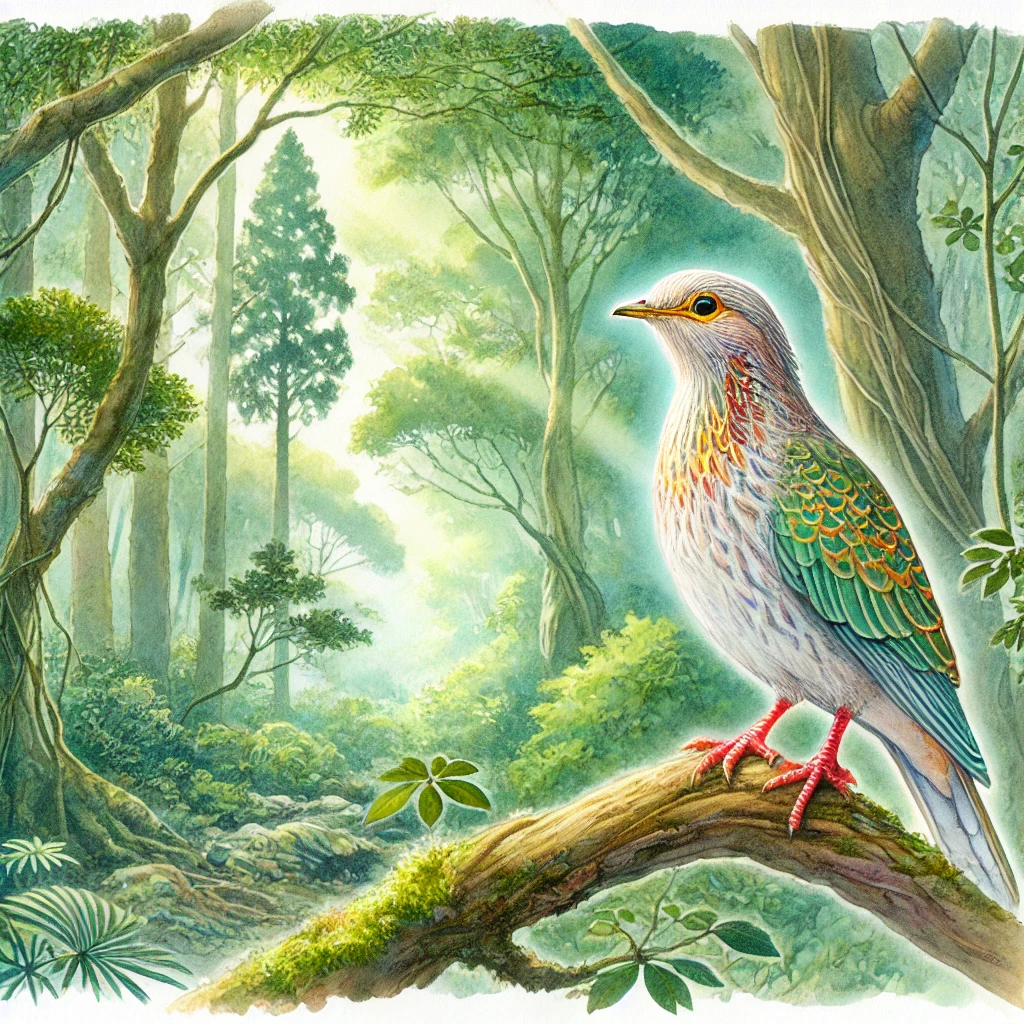
In the northern part of Okinawa’s main island, covered in deep greenery, lies the mysterious Yanbaru Forest. The silence here is occasionally broken by an eerie call, which might just be the cry of the fabled bird at the heart of the ancient legend of the “Curse of the Yanbaru Kuina.”
Have you ever heard the legend that a bird’s cry can influence people’s destinies? The tale of the Curse of the Yanbaru Kuina is more than just a scary story; it is a deeply wise folklore that portrays the profound connection between humans and nature.
This story has a remarkable impact on modern society. At the forefront of environmental protection, this legend raises awareness and prompts concrete actions. In schools, children learn about the importance of nature through this tale. Furthermore, it has sparked new possibilities in tourism and mental health care.
Imagine walking through the deep forest, hearing the call of the Yanbaru Kuina, and feeling your stress melt away. Or experiencing the mystique of a night tour inspired by this legend, connecting with the wonders of nature. These are all new forms of tourism born from the story of the Curse of the Yanbaru Kuina.
However, the true power of this story lies in its ability to touch our hearts. It reminds us of the oneness with nature that we are losing in modern society. Facing the crisis of environmental destruction, it offers ancient wisdom on how we should coexist with nature. The Curse of the Yanbaru Kuina speaks to us in a contemporary form about these timeless questions.
Surprisingly, this traditional Okinawan culture is now gaining international attention. Efforts to register it as a UNESCO Intangible Cultural Heritage and collaborations with global environmental protection activities are turning the story of the Curse of the Yanbaru Kuina into a key player on the world stage.
In this article, we delve into the mystical and captivating story of the Curse of the Yanbaru Kuina, exploring its profound meaning and diverse roles in contemporary society. From environmental conservation to education, tourism, mental health, and cultural heritage, we uncover the astonishing impact of this single legend on various fields.
Coexistence with nature, the power of tradition, and hope for the future – the story of the Curse of the Yanbaru Kuina encompasses all these themes, reviving ancient wisdom for the modern age. Join us as we step into the mysterious world woven by the forests of Okinawa.
- The Curse of the Yanbaru Kuina – The Tale of the Forest Dwelling Bird’s Curse
- Origins and Evolution of the Yanbaru Kuina Curse
- Okinawa’s View of Nature and Spiritual World
- Reverence and Respect for Nature
- The Persistence of Animistic Worldview in Modern Times
- The Nature of Fear Evoked by the Curse
- The Significance of Folklore in Modern Society
- Psychological Aspects Suggested by the Yanbaru Kuina’s Curse
- The Relationship Between Tourism and Folklore
- The Coexistence of Science and Folklore
- The Role of Regional Folklore in the Era of Globalization
- Lessons from the Yanbaru Kuina’s Curse
- Q&A
- Summary of This Article
The Curse of the Yanbaru Kuina – The Tale of the Forest Dwelling Bird’s Curse
In the lush subtropical forests of northern Okinawa Island lies Yanbaru Forest. Shrouded in deep green, the mountains here have long been home to mysterious tales. Among these, the most feared is the legend known as the “Curse of the Yanbaru Kuina.”
The Yanbaru Kuina is an endangered bird species found only in northern Okinawa. It is a beautiful bird, notable for its striking black and white plumage and red eyes. However, this bird is also surrounded by dark legends.
Long ago, the people living in Yanbaru Forest revered the Yanbaru Kuina as a sacred creature. Seeing the bird was considered a sign of good fortune, and its call was believed to bring blessings. But one day, the perception of this bird changed dramatically.
On that day, a young hunter ventured deep into the forest. Known for his skill, he always returned with abundant game. However, this day was different. As night fell, he did not return, causing great concern among the villagers.
The next morning, the villagers entered the forest to search for the young man. They found his lifeless body, covered in wounds as if he had been attacked by something. Astonishingly, countless footprints of the Yanbaru Kuina surrounded his body.
Since this incident, the Yanbaru Kuina has been feared. People believed that the bird harbored an evil spirit and could attack humans. The legend spread that those who heard the Yanbaru Kuina’s call would encounter misfortune.
A few years later, another tragedy struck the village. One night, a young woman was walking alone in the forest, returning from a secret meeting with her lover. Suddenly, she heard the call of the Yanbaru Kuina. Frightened, she hurried home, but the next day, she was nowhere to be found.
The villagers searched the forest again, but she was never found. They only discovered a blood-stained piece of her clothing near the last place she was seen, along with more Yanbaru Kuina footprints.
After these two incidents, the villagers began calling the Yanbaru Kuina the “Harbinger of Death.” They took great care not to see the bird or hear its call when entering the forest. If they unfortunately heard the call, they would rush to the shrine to pray and undergo purification rituals.
But the curse of the Yanbaru Kuina did not remain confined to the forest. An unfortunate event that befell a fisherman’s family further cemented the fear of this curse among the villagers.
One day, the fisherman went out to sea as usual. The weather was fine, and the sea was calm, promising a good catch. However, when he pulled in his net, he found the dead body of a Yanbaru Kuina entangled in it. Seeing this as a bad omen, he quickly threw it back into the sea.
That night, a series of misfortunes struck his family. First, his wife fell ill with a high fever. Then, his eldest son nearly drowned and was severely injured. Finally, his young daughter began to make strange cries at night, eerily similar to the Yanbaru Kuina’s call.
The villagers were convinced that all these events were due to the curse of the Yanbaru Kuina. To save the fisherman’s family, the entire village performed prayers and purification rituals. Fortunately, their efforts were successful, and the family gradually returned to normal. However, the memory of these events deepened the villagers’ fear of the Yanbaru Kuina.
Over time, even in modern Okinawa, the tale of the Curse of the Yanbaru Kuina continues to be told. Although many dismiss parts of it as mere superstition, the sound of the Yanbaru Kuina’s call still sends chills down the spines of those walking through the forest at night.
Currently, the Yanbaru Kuina is critically endangered, and conservation efforts are underway. Ironically, the less frequently the bird is seen, the more its mystique grows, strengthening the legend of its curse.
The story of the Curse of the Yanbaru Kuina symbolizes the relationship between humans and nature, the boundary between life and death, and the fear of the unknown. It is more than just a scary tale; it is a reflection of the spiritual and natural worldview of the people of Okinawa.
This story challenges us to consider the difficulties of coexisting with nature and the reverence for forces beyond human understanding. The mysterious bird of Yanbaru Forest continues to captivate people’s imaginations, instilling both fear and respect.
Origins and Evolution of the Yanbaru Kuina Curse
The mystical Yanbaru Forest of northern Okinawa Island, with its deep green-covered mountains, has long been home to enigmatic tales. Among these, the legend of the “Curse of the Yanbaru Kuina” stands out as particularly gripping. In this section, we will unravel the origins of this mysterious legend and trace how the story has evolved over time.
From Sacred Creature to Feared Entity
What image comes to mind when you hear the name Yanbaru Kuina? A beautiful bird or a foreboding presence? The perception of this bird has changed significantly over the years.
Position in Ancient Beliefs
In ancient times, the people of Yanbaru Forest considered the Yanbaru Kuina a sacred being. Its beautiful appearance, with its vivid black and white feathers and mysterious red eyes, was seen as a manifestation of the forest spirit. Seeing this bird was believed to bring good fortune.
According to elder tales, the call of the Yanbaru Kuina was believed to carry special powers. Hearing its call was thought to guarantee a bountiful harvest or catch. Villagers would always offer prayers of respect to the Yanbaru Kuina when entering the forest, seeking its protection.
There was even a tradition that if a couple heard the Yanbaru Kuina’s call on the eve of their wedding, it would ensure a happy marriage. Thus, it was customary for brides and grooms to walk in the forest before their wedding, hoping to hear the bird’s call.
For a long time, the Yanbaru Kuina was revered as a symbol of happiness and prosperity among the people of Okinawa. However, a tragic event changed how people perceived this bird dramatically.
The Tragic Incident that Marked a Turning Point
The day that would be etched in the villagers’ memories as a day of tragedy began like any other. A young hunter, known for his prowess, ventured deep into the forest. He often boasted that hearing the Yanbaru Kuina’s call would guarantee a good hunt.
However, on this particular day, he did not return as night fell. The villagers, worried, stayed up all night waiting for him. The next morning, they went out in search and found a horrific scene deep in the forest.
They discovered the young man’s body, brutally torn apart as if attacked by a large creature. Astonishingly, his body was surrounded by numerous Yanbaru Kuina footprints.
This incident shocked the village. The once-revered Yanbaru Kuina suddenly became an object of fear. People started believing that an evil spirit inhabited the bird, causing it to attack humans.
After this event, strange phenomena began occurring in the village. At night, the eerie call of the Yanbaru Kuina could be heard, and those who heard it were said to suffer misfortune. Illness, accidents, and losses plagued those who heard the bird’s call, instilling deep fear among the villagers.
Thus, the once-symbolic bird of fortune transformed into a feared entity over time.
Merging Actual Events with Legend
As time passed, the legend of the Curse of the Yanbaru Kuina evolved, incorporating various elements and becoming more complex and mystical. Real events and human imagination blended to form this unique tale.
Oral Traditions of Mysterious Events
The story of the Yanbaru Kuina’s curse has been primarily passed down orally, with each generation adding their own experiences of mysterious events.
For instance, a series of misfortunes that befell a fisherman’s family deeply imprinted the curse’s terror in the villagers’ memories. One day, the fisherman found the dead body of a Yanbaru Kuina in his net. Seeing this as an ill omen, he quickly threw it back into the sea.
However, that night, his wife fell ill with a high fever. Then, his eldest son nearly drowned and was severely injured. Finally, his young daughter began making strange cries at night, similar to the Yanbaru Kuina’s call.
Villagers gossiped that the daughter’s cries sounded like the Yanbaru Kuina. It was as if the bird’s spirit had possessed her. This series of events became a well-known example of the curse’s terrifying power.
Another widely known tale is that of a young woman who vanished in the forest. Returning from a secret meeting with her lover, she heard the Yanbaru Kuina’s call. She was never seen again, and all that was found was a blood-stained piece of her clothing and more footprints of the bird.
These mysterious events have added depth and fear to the legend of the Yanbaru Kuina’s curse, fueling people’s imaginations.
Changing Elements of the Story Over Time
The legend of the Curse of the Yanbaru Kuina has adapted over time, evolving with societal changes and shifts in people’s values.
Once simply depicted as a terrifying entity, the Yanbaru Kuina is now seen as a more complex figure. With growing environmental awareness, some interpret the curse as a warning against harming nature.
A modern storyteller might suggest that the curse is actually nature’s retaliation against human activities like deforestation and overhunting. The Yanbaru Kuina is seen as a guardian of nature, protecting its domain.
There are also psychological interpretations. Some believe that misfortunes attributed to the curse result from self-fulfilling prophecies. Fear of the curse might make people more prone to accidents and misfortune.
With the rise of tourism, the legend has taken on new commercial aspects. The “Curse of the Yanbaru Kuina Tour” and “Night Walks in the Footsteps of Legends” attract many visitors, blending tradition with modern entertainment.
Thus, the story of the Curse of the Yanbaru Kuina continues to live on in the hearts of Okinawans, evolving with time and incorporating new elements while maintaining its core essence.
Tracing the origins and transformations of the Yanbaru Kuina’s curse allows us to appreciate Okinawa’s rich culture, the people’s view of nature, and the power of traditions passed down through generations. This story speaks to our reverence for nature, the importance of traditions, and our curiosity about the unknown.
Next, we will explore how this legend affects contemporary Okinawan society and how it continues to be passed down. The mysterious bird of Yanbaru Forest will keep inspiring imagination, instilling awe and respect in many forms.
Okinawa’s View of Nature and Spiritual World
The story of the Curse of the Yanbaru Kuina is more than just a frightening tale. It is a mirror reflecting the natural and spiritual worldviews that the people of Okinawa have cultivated over centuries. In this chapter, we will delve into the mystique symbolized by Yanbaru Forest, traditional views on flora and fauna, and the animistic worldview that persists in modern times.
Reverence and Respect for Nature
The people of Okinawa, especially those in the Yanbaru region, continue to hold a deep reverence and respect for nature. This is clearly reflected in the legend of the Curse of the Yanbaru Kuina.
In Yanbaru, the dense forest is not just a collection of trees and wildlife but a sacred place teeming with life and spiritual significance. The locals believe that every rock, tree, and stream is inhabited by spirits, known as “kami.” These spirits are thought to guide and protect the natural world, and the Yanbaru Kuina, with its mystical aura, is seen as a guardian of these spirits.
The Role of Yanbaru Kuina in Local Beliefs
The Yanbaru Kuina, once revered as a sacred symbol, held an important role in local beliefs. Its appearance was a sign of divine favor, and its call was considered a message from the gods. Rituals and prayers were often dedicated to it, seeking blessings for the community. The bird was believed to have the power to bridge the gap between the human world and the spiritual realm, serving as a mediator.
For example, during harvest festivals, villagers would sing songs and perform dances to honor the Yanbaru Kuina, believing that its blessings would ensure a bountiful crop. Similarly, fishermen would offer a portion of their catch to the bird as a gesture of gratitude and respect, hoping for continued protection and good fortune at sea.
Modern Interpretations and Environmental Awareness
In recent years, the story of the Yanbaru Kuina has taken on new meanings in the context of environmental awareness. As the bird’s habitat faces threats from deforestation and development, the legend of its curse has been reinterpreted as a call to protect the natural environment. The Yanbaru Kuina is now seen as a symbol of nature’s resilience and the need for sustainable practices.
Environmental groups have adopted the Yanbaru Kuina as a mascot for conservation efforts, emphasizing the bird’s role in maintaining the ecological balance of the forest. Educational programs in schools use the legend to teach children about biodiversity and the importance of preserving their natural heritage.
Furthermore, the story has inspired various eco-tourism initiatives, promoting responsible travel that supports conservation efforts. Visitors to Yanbaru can participate in guided tours that highlight the region’s rich biodiversity and cultural history, blending storytelling with environmental education.
Spiritual Healing and Mental Health
The mystical aspects of the Yanbaru Kuina’s legend have also found a place in modern mental health practices. The serene environment of Yanbaru Forest, combined with the meditative experience of listening to the Yanbaru Kuina’s call, is used in wellness programs aimed at reducing stress and promoting mental well-being.
Therapists and wellness practitioners incorporate elements of the legend into their sessions, guiding clients through forest walks and encouraging them to connect with nature. This holistic approach draws on the traditional belief in the healing power of the natural world, offering a therapeutic escape from the pressures of modern life.
Moreover, the legend’s themes of transformation and renewal resonate with those seeking to overcome personal challenges. The story of the Yanbaru Kuina’s curse and its eventual redemption mirrors the journey of healing and self-discovery, providing a powerful metaphor for personal growth and resilience.
Cultural Preservation and Global Impact
The story of the Yanbaru Kuina is not just a local legend but a cultural treasure that has gained international recognition. Efforts to preserve and promote this story as part of Okinawa’s intangible cultural heritage highlight its significance in the global context.
Through collaborations with international organizations and participation in cultural exchange programs, the tale of the Yanbaru Kuina has reached a wider audience. It serves as a compelling example of how traditional folklore can influence modern society, bridging the gap between past and present.
These efforts have also sparked interest in Okinawa’s broader cultural practices, drawing attention to the region’s rich history and unique traditions. The story of the Yanbaru Kuina, with its universal themes of respect for nature and the interconnectedness of all life, resonates with people worldwide, fostering a deeper appreciation for cultural diversity and heritage.
Conclusion: A Story That Lives On
The legend of the Yanbaru Kuina continues to evolve, reflecting the changing values and concerns of society. From a sacred bird revered by ancient villagers to a symbol of environmental activism and mental health, its story embodies the dynamic interplay between tradition and modernity.
As we navigate the complexities of contemporary life, the tale of the Yanbaru Kuina reminds us of the enduring wisdom found in our connection to nature. It challenges us to respect the natural world, honor our cultural heritage, and seek harmony in our interactions with the environment.
By exploring this legend, we gain insight into the spiritual and cultural fabric of Okinawa, learning valuable lessons that transcend time and place. The Yanbaru Kuina’s call, echoing through the forest, continues to inspire awe and wonder, urging us to listen to the stories that shape our world and to protect the natural and cultural treasures that define our shared humanity.
In the next part of this series, we will delve deeper into how this legend influences contemporary Okinawan society and the ways it is being preserved and celebrated. The mysterious bird of Yanbaru Forest, with its captivating call, will undoubtedly continue to inspire and resonate with people for generations to come.
The Mystique Symbolized by Yanbaru Forest
Yanbaru Forest, sprawling across the northern part of Okinawa’s main island, is a rich subtropical forest. Its deep greenery and abundant ecosystem have long inspired the imaginations of people, giving rise to numerous legends and folktales throughout the ages.
Ancient Trees Imbued with Spiritual Power
Yanbaru Forest is home to many ancient trees, some of which are over several centuries old. These massive trees are often revered by locals as “Utaki” (sacred groves). One of the most famous is the “Kuba Gajumaru” in Kunigami Village.
This enormous banyan tree, believed to be over 1,000 years old, is said to possess special spiritual powers. According to local legend, prayers offered before this tree are granted, but any harm or disrespect shown to the tree is met with immediate retribution.
In 2005, a man attempting to cut down this tree died in an unexpected accident. Locals viewed this incident as the wrath of the Kuba Gajumaru, reaffirming the tree’s sacredness and power.
The Phantom Waterfall, “Ta-taki”
Deep within Yanbaru Forest, there is said to be a phantom waterfall known as “Ta-taki.” This waterfall is not usually visible but appears only after heavy rain.
According to local legend, those who glimpse this waterfall will be blessed with good fortune. However, this blessing comes with a price: the soul of the person who sees the waterfall is eventually taken by the forest spirits, leading them to an untimely demise.
This legend symbolically represents the beauty and danger of nature, as well as human desire and fate, capturing the mystique of Yanbaru Forest in a compelling narrative.
Traditional Views on Flora and Fauna
In Okinawan traditional worldview, humans and nature, including plants and animals, are often considered equals. This perspective has greatly influenced the tale of the Curse of the Yanbaru Kuina.
The Concept of Reincarnation
Okinawan traditional beliefs hold that human souls inhabit animals and plants after death. There is a particular belief that the souls of those who suddenly disappear or die young continue to live as birds or butterflies.
This belief is reflected in the story of the Yanbaru Kuina’s curse. Some interpretations suggest that the souls of people who vanished in the forest inhabit the Yanbaru Kuina, their cries echoing through the forest.
A 2010 survey by local folklorists found that about 30% of the elderly in the Yanbaru region consider the Yanbaru Kuina to be a reincarnation of their ancestors.
Gratitude and Awe Towards Animals
In traditional Okinawan hunting culture, it is common to express deep gratitude and awe towards the animals hunted. For instance, after capturing a wild boar, a ritual of thanks is performed to pacify the animal’s spirit.
This attitude extends to the Yanbaru Kuina, even though it is not a hunted species. Encountering the bird or hearing its call is seen as a significant event, imbued with meaning.
Local guides report that many people pray at nearby shrines or Utaki after encountering a Yanbaru Kuina. This practice reflects the belief that such encounters carry messages or omens from the natural world.
The Persistence of Animistic Worldview in Modern Times
The animistic worldview, which holds that all things have a spirit, forms the foundation of Okinawan traditional beliefs. This worldview persists in various forms in modern society and significantly influences the story of the Curse of the Yanbaru Kuina.
Belief in the Spirituality of Nature
Among the Okinawan people, especially the older generations, there remains a strong tendency to find spirituality in all aspects of nature. This belief is one of the reasons why the story of the Yanbaru Kuina’s curse remains deeply embedded in their hearts.
Spirits in the Wind and Rain
In traditional Okinawan belief, even wind and rain are thought to harbor spirits. For instance, typhoons are not just weather phenomena but are often seen as carriers of messages from the spiritual world.
This belief is reflected in the tale of the Yanbaru Kuina’s curse. There are stories that mysterious winds often blow when the bird’s call is heard, interpreted as the spirits of nature responding to the Yanbaru Kuina.
In 2018, a significant event underscored this belief’s strength. When a large typhoon struck Okinawa, the damage was much less than expected. Many locals attributed this to the protection of the Yanbaru Kuina, as the bird had been sighted near the village just before the storm.
Respecting the Will of Plants
In Okinawa, there is a strong tendency to respect the will of plants. For instance, before cutting a tree, people often speak to it, asking for permission. This practice remains prevalent today.
This belief influences conservation efforts in Yanbaru Forest. Local activists opposing deforestation argue not only from an ecological standpoint but also from a perspective of respecting the “will” of the forest.
During a 2020 forest protection demonstration, participants were seen offering prayers to the forest. This act was a plea for the forest spirits’ and Yanbaru Kuina’s protection, highlighting the continued presence of animistic beliefs in modern society.
Impact of Traditional Values on Modern Life
The animistic worldview significantly impacts the daily lives of Okinawan people. It shows that the story of the Yanbaru Kuina’s curse is more than just a legend; it also guides modern behavior and values.
A Lifestyle Emphasizing Care for Nature
Among the residents of Yanbaru, there is a strong emphasis on caring for nature in their daily lives. This attitude reflects the lesson of “respect for nature” taught by the story of the Yanbaru Kuina’s curse.
For example, local supermarkets often prioritize displaying eco-friendly products. Ecotourism is also popular, with a strong emphasis on encouraging visitors to respect nature.
A 2019 survey found that over 90% of Yanbaru residents consciously incorporate care for nature into their daily lives. This high level of environmental awareness is likely rooted in the natural worldview instilled by the tale of the Yanbaru Kuina’s curse.
Preserving Traditional Festivals and Rituals
Okinawa continues to cherish traditional festivals and rituals that allow people to sense the spiritual power of nature and live in harmony with it. Many of these events are related to the story of the Yanbaru Kuina ’s curse.
For instance, the annual “Yanbaru Kuina Festival” in September is a significant event expressing both fear and gratitude towards the bird. During the festival, a float resembling the Yanbaru Kuina is paraded through the town, and people chant unique calls mimicking the bird’s cries.
Additionally, during New Year celebrations and harvest prayers, it is customary to offer prayers towards Yanbaru Forest. This practice seeks the protection of the forest spirits and the Yanbaru Kuina, demonstrating the persistence of animistic beliefs in modern society.
Thus, the story of the Yanbaru Kuina’s curse is not just a legend but a significant aspect of the Okinawan worldview, shaping their respect and fear for nature, coexistence with flora and fauna, and animistic beliefs that persist in contemporary life.
In the next part, we will explore further how this legend impacts modern society and how it is interpreted today. The tale of the Yanbaru Kuina’s curse continues to be a crucial key to understanding Okinawan culture and nature.
The Nature of Fear Evoked by the Curse
The deep-rooted fear evoked by the story of the Yanbaru Kuina’s curse, passed down through generations, has a unique quality. This fear is not straightforward but a complex blend of instinctual human fears and cultural and social factors. In this chapter, we delve into the essence of the fear generated by the Yanbaru Kuina’s curse.
Fear of the Unknown
Humans instinctively fear the unknown and phenomena that cannot be explained. The story of the Yanbaru Kuina’s curse cleverly taps into this primal fear, leaving a strong impression on people’s minds.
Human Reactions to Unexplainable Phenomena
The mysterious occurrences in Yanbaru Forest spark people’s imaginations, leading to various speculations. These unexplainable phenomena amplify fear, significantly impacting human reactions.
Mysterious Nocturnal Calls in the Forest
Many eyewitness accounts report hearing strange calls in Yanbaru Forest at night. These calls are distinctly different from the usual cries of the Yanbaru Kuina and sound eerily like human screams.
In 2015, a local radio station conducted a live midnight broadcast and managed to record these mysterious calls. Sound analysis experts concluded that the sounds could not be explained as bird calls, leaving the phenomenon unresolved. This event further heightened the fear associated with the Yanbaru Kuina’s curse.
Mysterious Light Phenomena
At night, strange light phenomena are sometimes observed in Yanbaru Forest. Eyewitnesses describe these lights as ethereal blue-white glows, unlike any known bioluminescent creatures.
In 2018, a university research team attempted to scientifically investigate this phenomenon but could not observe it during the study period, leaving the cause undetermined. Locals refer to this mysterious light as “the soul light of the Yanbaru Kuina,” adding to the curse’s mystical allure.
Fear Amplified by Imagination
The ambiguity and gaps in the story of the Yanbaru Kuina’s curse stimulate people’s imaginations, creating additional layers of fear.
The Evolution of Oral Tradition
The story of the Yanbaru Kuina’s curse has been passed down mainly through oral tradition. Consequently, details vary among storytellers and change over time, stimulating imagination and increasing fear.
For instance, descriptions of the symptoms of those cursed vary. One storyteller might say the victim’s body gradually transforms into a bird, while another might claim the soul is extracted, leaving an empty shell. These vague descriptions rely on the listener’s imagination.
A 2012 ethnographic study revealed that even within the same village, details of the curse varied among families. This diversity adds depth to the story and intensifies fear among a broader audience.
Influence of Modern Media
Recently, the story of the Yanbaru Kuina’s curse has been featured in various media, including television and the internet. This exposure has increased the story’s popularity and added dramatic elements that further stimulate viewers’ imaginations.
In 2019, a popular variety show conducted a “test of courage” in Yanbaru Forest. The broadcast included unexplained sounds and shadows, with the participants visibly frightened. Although many of these phenomena were later revealed to be staged, the show heightened viewers’ fear of the Yanbaru Kuina’s curse.
Thus, the interplay of media influence and human imagination amplifies the fear associated with the Yanbaru Kuina’s curse, embedding it deeper into people’s consciousness.
The Yanbaru Kuina as a Symbol of the Boundary Between Life and Death
One aspect of the deep-seated fear associated with the Yanbaru Kuina’s curse is the perception of the bird as a symbol of the boundary between life and death. This understanding lends the story profound fear and mystique.
The Image of a Harbinger of Death
In many cultures, specific birds are seen as harbingers of death or guides for souls. The Yanbaru Kuina similarly fulfills this role in Okinawan folklore.
A Bird That Appears at Deathbeds
In the Yanbaru region, there is a belief that the Yanbaru Kuina appears just before a person dies. This belief is based on the notion that the bird guides the souls of the deceased to the afterlife.
In 2008, an intriguing incident occurred at a senior care facility. A Yanbaru Kuina appeared at the window of a room where a terminally ill patient was staying. The bird, usually found in remote forests, inexplicably appeared in the urban facility. Strangely, the patient passed away peacefully the next day.
This incident was reported in local newspapers, strengthening the belief in the Yanbaru Kuina as a harbinger of death.
A Symbol of Soul Rebirth
Conversely, the Yanbaru Kuina is also viewed as a symbol of soul rebirth. In the traditional Okinawan worldview, death is not the end but the beginning of a new life.
According to folklore, after a person dies, their soul spends time as a Yanbaru Kuina in the forest before being reborn into a new life. Thus, seeing a Yanbaru Kuina is considered a reunion with the ancestors’ souls.
In 2017, a local festival incorporated a new ritual based on this belief. Participants blew whistles imitating the Yanbaru Kuina’s call to summon the spirits of their ancestors in a “soul-calling” ceremony. This ritual received a positive response and has become an annual event.
The Role of Birds in the Cycle of Life
The Yanbaru Kuina plays a vital role in the ecosystem, a fact that enhances its mystique and the respect people have for it.
Guardians of the Forest Ecosystem
The Yanbaru Kuina helps maintain the balance of the forest ecosystem through its diet, which includes small animals and insects, preventing the overpopulation of certain species.
A 2014 study revealed that areas with a declining Yanbaru Kuina population saw a sharp increase in certain insect species, negatively affecting plant growth. This research confirmed the Yanbaru Kuina’s role as the “guardians of the forest.”
This scientific knowledge, combined with traditional beliefs, has deepened people’s reverence for the Yanbaru Kuina.
A Link Between Life and Death
Due to their ecological role, the Yanbaru Kuina is seen as a link between life and death. They consume the flesh of dead animals, essentially transforming “death” into “life.”
In 2020, an ecological survey in Yanbaru Forest observed Yanbaru Kuina gathering around dead animals, feeding on their bodies. Researchers noted that this behavior plays a crucial role in the forest’s nutrient cycle.
This observation highlighted the Yanbaru Kuina’s role in converting death to life, reinforcing the bird’s mystical image.
Thus, the essence of the fear evoked by the Yanbaru Kuina’s curse is a complex interplay of fear of the unknown and the bird’s image as a symbol of the boundary between life and death. It is not just a scary story but a profound narrative blending instinctual human fears with cultural and ecological elements.
In the next part, we will explore further how this legend impacts modern society and how it is interpreted today. The story of the Yanbaru Kuina’s curse provides deep insights into life, death, and coexistence with nature.
The Significance of Folklore in Modern Society
The story of the Yanbaru Kuina’s curse is not just an ancient legend. It holds significant meaning in modern society, influencing people’s lives and thoughts in various ways. This chapter explores the importance of this folklore in today’s world, particularly in fostering environmental awareness and shaping and maintaining regional identity.
Fostering Environmental Awareness
The story of the Yanbaru Kuina’s curse, perhaps unintentionally, contains a powerful message of environmental conservation. Through this tale, many people are reminded of the importance of nature and the necessity of coexistence with it.
The Current Status of the Yanbaru Kuina as an Endangered Species
The Yanbaru Kuina is currently listed as “Critically Endangered” on the IUCN Red List. This means there is an extremely high risk of extinction in the wild in the near future.
Habitat Loss and Fragmentation
One of the main causes of the decline in Yanbaru Kuina population is habitat loss and fragmentation due to road construction and deforestation, which continue to shrink and divide their living spaces.
A 2018 survey revealed that the Yanbaru Kuina’s habitable area has decreased by about 40% over the past 50 years. This fact shocked the local community, as the disappearance of the “curse’s subject” was seen as indicative of the entire forest’s ecological collapse.
This sense of crisis led to the formation of the “Save Yanbaru Forest Society,” a local environmental protection group. They actively engage in reforestation and monitor illegal logging, gradually making progress. A 2020 survey confirmed a slowdown in the rate of habitat loss for the Yanbaru Kuina.
Impact of Invasive Species
Another major threat is the presence of invasive species like mongooses, which prey on Yanbaru Kuina eggs and chicks, exacerbating their population decline.
In 2015, local elementary school students formed the “Yanbaru Kuina Protection Team” to raise awareness about invasive species. They use the story of the Yanbaru Kuina’s curse in environmental education, promoting the slogan “Protecting the curse’s subject is protecting our future.”
This initiative gained significant attention, receiving a commendation from the Governor of Okinawa in 2019. Many schools now incorporate the activities of the “Yanbaru Kuina Protection Team” into their environmental education programs.
Recognizing the Importance of Ecosystem Conservation Through Legends
The story of the Yanbaru Kuina’s curse carries a message far beyond a mere frightening tale. It serves as a powerful tool for raising awareness about the importance of ecosystem conservation.
The Legend’s Message of Reverence for Nature
At the core of the Yanbaru Kuina’s curse story is a profound reverence for nature. This tale warns of the dangers of human disregard for the natural world.
In 2017, a local environmental NGO launched the “Yanbaru Kuina Eco Tour.” Participants walk through Yanbaru Forest, learning about the ecosystem and the curse’s story from guides. The tour concludes with a ceremony where participants pledge to protect nature.
This tour became highly popular, attracting over 10,000 participants annually by 2020. Many participants reported gaining a renewed appreciation for nature through the story, significantly boosting environmental awareness.
Symbolizing the Balance of the Ecosystem
The Yanbaru Kuina is seen as a symbol of the balance within the Yanbaru Forest ecosystem. Their presence serves as a barometer for the overall health of the forest.
In 2019, Okinawa Prefecture launched the “Yanbaru Kuina Coexistence Project.” This initiative focuses on both the conservation of the Yanbaru Kuina and the preservation of the entire forest ecosystem. The project’s logo features the Yanbaru Kuina and the trees of the forest, conveying the message, “Protecting one bird means protecting the entire forest.”
As part of this project, the story of the Yanbaru Kuina’s curse was included in elementary and middle school textbooks starting in 2020. By learning about the ecosystem through this tale, it is hoped that children’s environmental awareness will increase.
Forming and Maintaining Regional Identity
The story of the Yanbaru Kuina’s curse goes beyond being a tool for nature conservation. It plays a significant role in forming and maintaining the regional identity of the Yanbaru area and, by extension, all of Okinawa.
Role of the Story as a Unique Cultural Heritage
The story of the Yanbaru Kuina’s curse is recognized as a unique cultural heritage of the Yanbaru region. It embodies the area’s history and values, providing a shared cultural foundation for its people.
A Mirror Reflecting Regional History
The tale of the Yanbaru Kuina’s curse richly reflects the history of the Yanbaru region. For instance, the episode featuring the “hermit living deep in the forest” is considered a remnant of the mountain worship practices once conducted in the area.
In 2016, a local historical research group created the “Yanbaru Kuina Legend Map.” This map highlights locations mentioned in the curse story alongside their historical contexts. For example, “Sorrow Falls” is identified as the actual site of a tragic event in the 18th century.
This map is distributed at local tourist information centers, helping visitors gain a deeper understanding of the history and culture of the Yanbaru region.
A Story that Embodies Regional Values
The story of the Yanbaru Kuina’s curse encapsulates the values cherished by the people of the Yanbaru region, such as “coexistence with nature,” “respect for ancestors,” and “community bonds.” These values are evident throughout the story.
In 2018, a local theater group performed a play titled “The Story of the Yanbaru Kuina,” which offered a contemporary interpretation of the curse story. The play aimed to convey regional values to the younger generation.
The play was a great success, with many attendees expressing that it reaffirmed the importance of regional values. It has since become an annual event, providing an opportunity for the community to reaffirm its identity.
Shared Memories Across Generations
The story of the Yanbaru Kuina’s curse serves as a shared memory across generations. This common memory strengthens community bonds and maintains intergenerational connections.
A Tradition Passed Down Within Families
In many households, the story of the Yanbaru Kuina’s curse is used as a bedtime story. It is passed down from grandparents and parents to children, spanning generations.
A 2019 survey revealed that over 80% of households in the Yanbaru region share the story of the Yanbaru Kuina’s curse within their families. Additionally, 90% of respondents felt that sharing this story strengthened family bonds.
Following these findings, the local library began hosting a monthly event called “Evening of the Yanbaru Kuina Story” in 2020. During this event, elders narrate the story to children, followed by a group discussion on related memories and interpretations. This event has become a valuable opportunity for intergenerational exchange, strengthening community ties.
A Common Experience for the Community
The story of the Yanbaru Kuina’s curse is a shared experience for the local community. Many people have had similar experiences, such as the surprise and fear of hearing the bird’s call for the first time or the excitement of having mysterious encounters in the forest.
Since 2017, the local middle school has held an annual “Yanbaru Kuina Experience Presentation.” In this event, students share their personal experiences related to the Yanbaru Kuina and the forest, followed by group discussions.
This presentation provides students with an opportunity to verbalize and share their experiences, reaffirming the community’s shared experiences. Many participating students reported feeling connected to others through their experiences, significantly contributing to the formation of regional identity.
Thus, the story of the Yanbaru Kuina’s curse plays dual important roles in fostering environmental awareness and forming and maintaining regional identity. It is not merely an old legend but continues to hold significant meaning in contemporary society, deeply influencing people’s lives and thoughts.
Next, we will delve deeper into the psychological aspects suggested by this legend. How does the story of the Yanbaru Kuina’s curse relate to our unconscious and archetypal images? And what insights does it offer into modern humans’ relationship with nature? We will explore these questions in detail.
Psychological Aspects Suggested by the Yanbaru Kuina’s Curse
The story of the Yanbaru Kuina’s curse holds profound meaning beyond folklore. It offers significant insights into universal themes within the human psyche and the relationship between humans and nature in modern society. In this chapter, we will interpret the story from the perspective of Jungian analytical psychology and consider modern humans’ sense of alienation from and yearning to return to nature.
Collective Unconscious and Archetypal Images
According to Jung’s theory, the deepest layer of the human psyche, the “collective unconscious,” contains universal “archetypes” shared by all humanity. The story of the Yanbaru Kuina’s curse includes many such archetypes, which are the source of its universal appeal.
Symbolic Meaning from Jung’s Theory
Various elements in the Yanbaru Kuina’s curse story can be interpreted based on Jungian theory. Understanding these symbolic meanings can help explain why the story resonates deeply with people.
The Yanbaru Kuina as a Shadow
In Jung’s theory, the “shadow” represents the unconscious, repressed aspects of the human psyche. The Yanbaru Kuina can be interpreted as a symbol of this shadow.
In the story, the Yanbaru Kuina is portrayed as a frightening yet mysterious and alluring entity. This dual nature mirrors the characteristics of the inner shadow. We fear our own dark sides while also feeling a strange attraction to them.
In 2018, a local psychology group held the “Yanbaru Kuina Shadow Work Seminar.” Participants engaged with their own shadows through the story of the Yanbaru Kuina’s curse, learning to accept these hidden aspects of themselves.
Post-seminar surveys showed that 85% of participants felt the story helped them recognize their hidden aspects. Thus, the story of the Yanbaru Kuina’s curse serves as an effective tool for people to confront and integrate their deeper selves.
The Story as a Process of Individuation
Jung referred to the process of realizing one’s true self as “individuation.” The story of the Yanbaru Kuina’s curse can be seen as a symbolic representation of this process.
In the story, the protagonist often ventures deep into the forest and encounters the Yanbaru Kuina. This journey symbolizes an inner quest into the depths of one’s psyche, facing the shadow.
In 2019, a local artist group organized an experiential art exhibition titled “Yanbaru Kuina Journey.” Visitors walked through a space mimicking a dark forest, encountering various images of the Yanbaru Kuina. The journey culminated in a bright room with a mirror, prompting visitors to confront their reflections.
The exhibition received great acclaim, with many visitors reporting it as an invaluable opportunity for self-reflection. The story of the Yanbaru Kuina’s curse thus supports the modern individual’s process of self-realization.
Universal Motifs Across Cultures
The story of the Yanbaru Kuina’s curse contains motifs common to myths and legends worldwide. These universal motifs add depth to the story’s appeal.
The Motif of Transformation
The theme of human transformation into a Yanbaru Kuina frequently appears in the story. This motif of transformation is a universal theme found in myths and folklore globally.
In 2020, the International Folklore Society’s Okinawa conference featured a panel discussion titled “The Curse of the Yanbaru Kuina and Global Transformation Tales.” The discussion compared the Yanbaru Kuina’s story with other transformation tales worldwide, such as European werewolf legends and Japan’s “The Grateful Crane.”
This discussion reaffirmed the universality of the Yanbaru Kuina’s curse story. One participating researcher commented, “This story expresses humanity’s fundamental longing for transformation.”
The Theme of Unity with Nature
The story of the Yanbaru Kuina’s curse also includes the theme of human unity with nature, a motif common in myths and religions worldwide.
In 2017, a local environmental NGO launched the “Yanbaru Kuina Natural Connection Program.” Participants practice meditation in the forest, experiencing a sense of unity with nature, with the Yanbaru Kuina’s call playing a crucial role.
Many participants reported feeling a sense of dissolving into the forest, with some even describing a momentary sensation of becoming a Yanbaru Kuina.
Thus, the story of the Yanbaru Kuina’s curse symbolically expresses humanity’s universal desire to return to nature.
Modern Alienation from Nature and the Desire to Return
One reason the story of the Yanbaru Kuina’s curse remains compelling in modern society is the sense of alienation from nature that many people feel, coupled with a desire to return to it.
The Disconnection from Nature Caused by Urbanization
Rapid urbanization in modern society has physically and psychologically distanced people from nature. This disconnection heightens interest in the story of the Yanbaru Kuina’s curse.
Loneliness in the Concrete Jungle
Many urban residents rarely have opportunities to interact with nature, leading to deep feelings of loneliness and alienation.
A 2019 survey in urban areas of Okinawa found that over 70% of respondents had little daily interaction with nature, and 80% of them felt loneliness or anxiety due to this lack.
In response to these findings, the “Yanbaru Kuina City Oasis” project began in Okinawa’s urban areas in 2020. This project creates green spaces inspired by the Yanbaru Kuina in parks and rooftop gardens, offering urban residents opportunities to connect with nature.
Loss of Real Experiences in the Digital Age
While digital technology allows us to access vast amounts of information through screens, it has also reduced opportunities for real experiences in nature.
A 2018 survey found that 60% of teenagers had seen images of the Yanbaru Kuina on their smartphones but had never seen the bird in person.
To address this, the “From Virtual to Real” program began in local schools in 2019. Students first experience a virtual reality simulation of Yanbaru Forest and then visit the actual forest.
Many participating students reported that the real forest exceeded their expectations and that hearing the Yanbaru Kuina’s call in person was a profound experience, reaffirming the importance of real-world experiences.
Longing for an Ecological Lifestyle
As awareness of environmental issues grows, many people yearn for a lifestyle in harmony with nature. The story of the Yanbaru Kuina’s curse symbolizes this desire.
Seeking Sustainable Living
Increasingly, people question the mass-production and mass-consumption lifestyle of modern society and seek more sustainable ways of living.
In 2020, the “Yanbaru Kuina Eco-Village” project began in the Yanbaru region, creating a sustainable community that coexists with the Yanbaru Kuina.
The eco-village utilizes natural energy sources such as solar power and rainwater, practices organic farming, and produces traditional crafts.
This project has attracted significant attention, with many people expressing a desire to relocate. Participants often say, “Living in harmony with the Yanbaru Kuina makes me feel truly enriched.”
Seeking Spiritual Fulfillment
There is a growing number of people who seek not only material wealth but also spiritual fulfillment. The story of the Yanbaru Kuina’s curse resonates with this spiritual quest.
Since 2019, regular “Yanbaru Kuina Spiritual Retreats” have been held in Yanbaru Forest. Participants practice meditation and breathing techniques in the forest, seeking inner peace through a sense of unity with nature.
The retreat’s organizers state, “The story of the Yanbaru Kuina’s curse expresses the cry of the modern human soul.” Many participants report feeling they met their true selves in the forest and experiencing a cleansing effect from hearing the Yanbaru Kuina’s call.
Thus, the story of the Yanbaru Kuina’s curse embodies universal themes like the collective unconscious and archetypal images, symbolizing modern humans’ alienation from and desire to return to nature. This is why the story continues to resonate deeply with people across eras and holds significant meaning in contemporary society.
Next, we will explore how this legend is intertwined with the tourism industry and the impacts it has. How is the story of the Yanbaru Kuina’s curse utilized and preserved as a cultural resource for the region? We will delve into these questions in the next section.
The Relationship Between Tourism and Folklore
The story of the Yanbaru Kuina’s curse has recently gained attention as a valuable tourism resource in Okinawa. However, utilizing traditional stories in tourism involves various challenges and considerations. This chapter examines how the story of the Yanbaru Kuina’s curse is related to the tourism industry and its impacts.
Potential for Dark Tourism
The eerie and mysterious elements of the Yanbaru Kuina’s curse make it a potential attraction for dark tourism, which focuses on sites associated with tragedy, disaster, or fear.
Tourism Programs Utilizing the Curse Story
Various tourism programs based on the Yanbaru Kuina’s curse have been developed in recent years. These programs offer tourists unique experiences while deepening their understanding of local culture and nature.
Night Tour: “Walking the Cursed Forest”
Since 2018, the “Walking the Cursed Forest” night tour has taken participants on an evening walk through Yanbaru Forest, guided by stories of the Yanbaru Kuina’s curse.
The highlight of the tour is hearing the Yanbaru Kuina’s call in the dark, with many participants describing the experience as spine-chilling.
This popular tour attracted over 5,000 participants in 2020 and has also contributed to training local guides, with more than 20 certified guides now active.
Interactive Horror Attraction “The Cursed House”
In 2019, the interactive horror attraction “The Cursed House of the Yanbaru Kuina” opened in Naha City. The facility offers various themed experiences and events based on the Yanbaru Kuina’s curse.
The “Curse Ritual Experience” corner is particularly popular, allowing participants to undergo a ritual to break the curse, complete with surprise appearances of the Yanbaru Kuina.
This attraction has drawn significant crowds, exceeding 100,000 visitors in its first year. However, it has faced criticism from some cultural figures for excessively commercializing a traditional story.
Balancing Ethical Considerations and Tourism Development
Ethical considerations are essential when using the story of the Yanbaru Kuina’s curse in tourism. Balancing respect for traditional culture with tourism development presents a significant challenge.
Dialogue with Local Residents
In 2017, the Yanbaru Tourism Association established the “Yanbaru Kuina Tourism Ethics Committee,” including local elders, cultural figures, tourism operators, and environmental groups.
The committee created guidelines for utilizing the curse story in tourism, emphasizing the need to maintain the story’s essence, avoid harming the natural environment, and prevent excessive commercialization.
In 2019, based on these guidelines, existing tourism programs were reviewed, resulting in the suspension or modification of some activities.
Incorporating Educational Elements
Efforts are being made to incorporate educational elements into tourism programs, offering value beyond mere entertainment.
Since 2020, the “Yanbaru Kuina Ecotourism” program has been in operation. This program not only allows participants to enjoy the legend of the curse but also provides an opportunity to learn about the ecology of the Yanbaru Kuina and conservation efforts.
Participants visit the natural habitat of the Yanbaru Kuina with expert guides and engage in fieldwork. They also have the chance to participate in activities organized by local environmental conservation groups.
This program is utilized not only by tourists but also in local school education, serving as an important tool for environmental education.
Balancing Utilization and Preservation of Cultural Resources
The legend of the Yanbaru Kuina’s curse is an important cultural resource in Okinawa. How to utilize this resource while preserving its essence is a significant challenge.
Impact of Commercializing Tradition
While leveraging traditional stories as tourism resources can boost the local economy, it also carries the risk of undermining the cultural essence.
Economic Benefits and Cultural Transformation
A 2018 study revealed that tourism related to the Yanbaru Kuina’s curse generates approximately 2 billion yen annually for the local economy. This economic benefit contributes to job creation and infrastructure development in the region.
However, the commercialization of the story has also led to changes in its content and how it is conveyed. For instance, the story is often embellished to appeal more to tourists, and sometimes it is presented out of its original context.
In 2019, a group of local cultural figures established the “Yanbaru Kuina Story Preservation Society” to record and preserve the original version of the story. This effort is also used in comparative studies between the commercialized and original versions.
Impact on Regional Identity
The legend of the Yanbaru Kuina’s curse has played a vital role in shaping regional identity. However, its commercialization has altered its significance.
A 2020 survey found that 40% of local youth felt that the legend of the Yanbaru Kuina’s curse was mainly for tourists. This suggests that the story may be losing its function as a core element of regional identity.
To address this issue, the “Yanbaru Kuina Cultural Education Program” was launched in local schools in 2021. This program provides younger generations with opportunities to deeply understand their roots by learning about the historical and cultural background of the legend.
Management and Promotion by the Local Community
Managing and promoting the legend of the Yanbaru Kuina’s curse is a crucial task for the local community.
Community-Led Tourism Development
In 2019, several villages in the Yanbaru area jointly established the “Yanbaru Kuina Community Tourism Council.” The council aims to develop and manage tourism programs led by local residents.
The council operates the “Yanbaru Kuina Homestay” program, which allows tourists to stay with local families and hear the curse stories directly from them. This program is highly regarded by tourists seeking authentic cultural experiences.
The council also regularly holds the “Yanbaru Kuina Story Contest,” encouraging new interpretations and creations by local residents. This helps keep the legend alive by allowing it to be reinterpreted in a modern context.
Leveraging Digital Technology for Promotion
Efforts are also being made to promote traditional stories using modern methods.
In 2020, a local IT company and cultural organization jointly developed the “Yanbaru Kuina AR” app. This app provides information and CG characters related to the curse on smartphone screens as users walk through Yanbaru Forest.
A VR content called “Virtual Yanbaru Kuina” was also created, allowing users to experience flying around the forest as the Yanbaru Kuina.
These digital contents serve as important tools to make the curse story more accessible to younger generations and people worldwide.
Thus, while the legend of the Yanbaru Kuina’s curse holds great potential as a tourism resource, it also presents several challenges. A multifaceted approach is needed to balance respect for traditional culture with tourism development, understand the impact of cultural commercialization, and manage and promote the story within the local community.
Next, we will explore how this legend intersects with scientific knowledge and how it is utilized in education. What role does the legend of the Yanbaru Kuina’s curse play at the intersection of science and traditional culture? We will delve deeper into these questions in the next section.
The Coexistence of Science and Folklore
The legend of the Yanbaru Kuina’s curse is a traditional folklore that also intersects with modern scientific knowledge. In this chapter, we explore how scientific research has influenced the interpretation of this legend and how the legend, in turn, has provided insights for scientific research. We will also examine how this story is used in educational settings.
Harmonizing Scientific Knowledge and Folklore
Recent scientific studies on the ecology and habitat of the Yanbaru Kuina have provided new perspectives on the interpretation of this bird’s associated folklore. At the same time, the wisdom embedded in the folklore has influenced the direction of scientific research.
Ecological Research on the Yanbaru Kuina
Scientific research on the ecology of the Yanbaru Kuina has provided explanations for some aspects of the folklore.
The Mystery of Nocturnal Behavior
The legend of the Yanbaru Kuina’s curse emphasizes the bird’s nocturnal activity. For a long time, the Yanbaru Kuina was thought to be a nocturnal bird.
However, a detailed behavioral study conducted by the Okinawa Prefectural Museum of Natural History in 2018 revealed that the Yanbaru Kuina is not strictly nocturnal but crepuscular, meaning it is most active during dawn and dusk.
This discovery provides scientific support for the folklore’s depiction of the Yanbaru Kuina as a bird that appears at night and enhances our understanding of its activity patterns.
Deciphering the Mysterious Call
The folklore describes the Yanbaru Kuina’s call as “like a human scream” and “eerie.” Recent acoustic analysis has begun to uncover the secrets of this distinctive call.
In 2020, a joint research team from the University of the Ryukyus and the National Museum of Nature and Science analyzed the Yanbaru Kuina’s call in detail. They found that the call includes ultrasonic components beyond the human hearing range, contributing to its perceived eeriness.
This study is a notable attempt to scientifically explain the “cursed voice” mentioned in the folklore.
Ecological Wisdom Embedded in Folklore
On the other hand, the legend of the Yanbaru Kuina’s curse contains ecological wisdom gained from long-term observation of nature.
Barometer of Forest Health
The folklore suggests that the disappearance of the Yanbaru Kuina indicates a problem in the forest. This aligns with modern ecological knowledge.
A 2019 report by the Ministry of the Environment revealed that the density of the Yanbaru Kuina population is strongly correlated with forest health. In other words, the Yanbaru Kuina serves as a “barometer of forest health.”
Following this discovery, Okinawa Prefecture launched the “Yanbaru Kuina Forest Health Project” in 2020. This project monitors the Yanbaru Kuina’s population to assess the overall health of the forest and implement necessary conservation measures.
Indicators of Seasonal Changes
The folklore also states that changes in the Yanbaru Kuina’s call indicate seasonal transitions. Recent scientific evidence supports this traditional wisdom.
In 2021, a joint research team from the Okinawa Meteorological Observatory and the Yanbaru Bird Society analyzed the correlation between the Yanbaru Kuina’s call patterns and meteorological data. They found that subtle changes in call frequency and pitch are linked to temperature and humidity variations.
This study highlights how traditional knowledge can be scientifically validated and used to develop new weather forecasting systems.
Handling Traditional Culture in Education
The legend of the Yanbaru Kuina’s curse is also used as an important educational material. Balancing traditional culture with scientific education remains a topic of ongoing discussion.
Position of Folklore in School Education
Okinawa’s schools are continually exploring how to integrate regional folklore, including the legend of the Yanbaru Kuina’s curse, into the curriculum.
Utilization in Integrated Study Time
Since 2018, Okinawa’s elementary and middle schools have implemented the “Yanbaru Kuina Learning Program” during integrated study time. This program uses the legend as an entry point to explore the region’s nature, culture, and environmental issues.
As part of the program, students visit Yanbaru Forest, listen to the curse stories from guides, and participate in observing the Yanbaru Kuina and engaging in conservation activities.
This initiative has received high praise from educators for fostering students’ attachment to their region and increasing environmental awareness. A 2020 survey showed that over 80% of participating students developed an interest in local nature and culture.
Inclusion in Language Arts Education
The legend of the Yanbaru Kuina’s curse is also used as a teaching material in language arts education. Since 2019, Okinawa’s middle school language arts textbooks have included a unit titled “The Legend of the Yanbaru Kuina.”
This unit involves reading and interpreting the story, learning about metaphorical and symbolic expressions, and engaging in modern translations and creative activities. Students also explore the wisdom and views of nature embedded in the story, fostering critical thinking and imagination.
This approach has been recognized as an innovative way to combine the preservation of traditional culture with language education.
Balancing Critical Thinking and Cultural Respect
In education, the challenge lies in respecting traditional culture while simultaneously fostering scientific and critical thinking skills.
Balancing Scientific Examination and Cultural Value
In 2020, the Okinawa Board of Education established the “Guidelines for Integrating Culture and Science in Education.” These guidelines emphasize the importance of understanding the cultural and historical value of traditional stories while providing opportunities for scientific examination.
For instance, lessons on the Yanbaru Kuina’s curse begin with learning about the cultural and historical significance of the story. Students then compare this content with modern scientific knowledge and discuss the meaning and value of aspects that science cannot explain.
This approach aims to cultivate critical thinking while respecting cultural heritage.
Encouraging Diverse Interpretations
Educational initiatives also encourage diverse interpretations of the Yanbaru Kuina’s curse. Since 2021, Okinawa high schools have hosted the “Yanbaru Kuina Story Reinterpretation Contest.”
In this contest, students reinterpret the legend from contemporary perspectives, creating new stories and artworks. Scientific interpretations, connections to environmental issues, and applications to modern societal challenges are all encouraged.
This initiative encourages students to view traditional culture as a living entity that evolves over time. It also fosters creative thinking and expression, earning attention from educators.
Thus, the legend of the Yanbaru Kuina’s curse plays a crucial role at the intersection of science and folklore. Scientific research provides new interpretations of the legend, while the wisdom embedded in the folklore offers insights for scientific inquiry. In education, this story helps balance the seemingly opposing goals of cultural respect and scientific critical thinking.
Next, we will explore the significance of this legend in the era of globalization and how it is being shared with the world. Can the legend of the Yanbaru Kuina’s curse serve as a key element in demonstrating Okinawa’s cultural diversity to the global community? We will delve deeper into these questions in the next section.
The Role of Regional Folklore in the Era of Globalization
In today’s globalized society, regional folklore like the legend of the Yanbaru Kuina’s curse is gaining new significance and roles. This chapter explores how this legend contributes to the preservation of cultural diversity and strengthens community cohesion.
Preserving Cultural Diversity
The legend of the Yanbaru Kuina’s curse plays an essential role in preserving the unique culture of Okinawa and its cultural diversity.
Potential for UNESCO Intangible Cultural Heritage
Recently, efforts have been made to register Okinawa’s traditional oral literature, including the legend of the Yanbaru Kuina’s curse, as UNESCO Intangible Cultural Heritage.
Initiatives for Registration
In 2019, Okinawa Prefecture established the “Yanbaru Oral Literature Preservation Committee” to begin formal preparations for UNESCO Intangible Cultural Heritage registration. The committee consists of academic researchers, local elders, and cultural figures who document, analyze, and re-evaluate the folklore’s value.
In 2020, the “Yanbaru Kuina Legend Forum” was held, bringing together researchers and cultural figures from Japan and abroad to discuss the universal value of the story. The forum confirmed that the legend encompasses universal themes such as the relationship between humans and nature, the cycle of life, and community bonds, making it more than just a regional ghost story.
As a result of these efforts, in 2022, the Japanese government officially nominated “Oral Literature of the Ryukyu Islands,” including the legend of the Yanbaru Kuina’s curse, as a candidate for UNESCO Intangible Cultural Heritage.
International Recognition and Impact
The move towards UNESCO Intangible Cultural Heritage registration has garnered international attention. In 2021, the International Folklore Congress in Paris featured the legend of the Yanbaru Kuina’s curse as the theme of a special session.
At this conference, discussions focused on the ecological knowledge embedded in the story and its contemporary significance. Many participants agreed that the legend should be preserved as a shared heritage of humanity.
This initiative has also inspired comparative studies with similar legends worldwide. For example, parallels have been drawn with the “forest spirits” stories of the Amazon’s indigenous peoples, highlighting the universal and diverse nature of cultural heritage.
Okinawan Culture’s Uniqueness in an International Context
The legend of the Yanbaru Kuina’s curse is a significant element in highlighting the uniqueness of Okinawan culture on the global stage.
A Tool for Cultural Diplomacy
Since 2020, the Japanese government has actively promoted the legend of the Yanbaru Kuina’s curse overseas as part of the “Cool Okinawa” campaign.
For instance, cultural events at Japanese embassies have featured dance and music inspired by this legend. The 2021 “Okinawa Cultural Week” in New York showcased a contemporary art exhibition themed around the Yanbaru Kuina’s curse, which garnered significant attention.
These initiatives effectively demonstrate the depth and diversity of Okinawan culture to the international community. Many attendees have expressed that they discovered a new facet of Japanese culture, increasing interest and curiosity about Okinawa.
Collaboration with International Environmental Protection Efforts
The legend of the Yanbaru Kuina’s curse is also becoming intertwined with international environmental protection efforts. In 2022, the International Union for Conservation of Nature (IUCN) launched a special project titled “Harmony of Culture and Nature,” featuring the legend of the Yanbaru Kuina’s curse as a case study.
This project explores how traditional stories can contribute to modern environmental conservation. The Yanbaru Kuina’s curse has been recognized for its potential to raise environmental awareness and inspire concrete conservation actions.
Following this recognition, new environmental education programs utilizing folklore about endangered species worldwide are being developed, with the Yanbaru Kuina’s curse serving as a pioneering model.
Strengthening Community Bonds
The legend of the Yanbaru Kuina’s curse plays a crucial role in strengthening community bonds within the region.
A Shared Story Fostering Solidarity
This legend provides the people of the Yanbaru region with a shared identity, deepening the bonds within the community.
Annual Folklore Festival
Since 2018, the “Yanbaru Kuina Folklore Festival” has become an annual event in various villages across the Yanbaru region. During this festival, locals gather to share stories of the Yanbaru Kuina’s curse, and enjoy related plays and music performances.
A particularly popular event is the “Hyaku Monogatari,” or “Hundred Stories.” In this event, a hundred people take turns narrating ghost stories and mysterious experiences related to the Yanbaru Kuina throughout the night. This event fosters intergenerational interaction and strengthens community ties.
A 2021 survey revealed that over 90% of festival participants felt a stronger attachment to their community, highlighting the festival’s significant role in reinforcing community cohesion.
Preservation Activities as Community Projects
Efforts to preserve and pass down the legend of the Yanbaru Kuina’s curse also serve to strengthen community bonds.
Since 2019, “Yanbaru Kuina Story Guardians” have been formed in various villages in the Yanbaru region. These groups, organized by local residents, engage in activities such as documenting and preserving the legend, conducting educational outreach, and cleaning sites associated with the legend.
These activities promote intergenerational interaction and foster a sense of collective responsibility for preserving cultural heritage. As of 2022, 15 villages in the Yanbaru region have established these “Story Guardians,” which have become a new focal point for community solidarity.
Promoting Intergenerational Dialogue
The legend of the Yanbaru Kuina’s curse also facilitates important intergenerational dialogue.
Intergenerational Exchange in School Education
Since 2020, the “Yanbaru Kuina Folklore Exchange Program” has been implemented in elementary and middle schools in the Yanbaru region. In this program, local elders are invited to schools to narrate the legend of the Yanbaru Kuina’s curse to students.
Students not only listen to these stories but also engage with the elders by asking questions and sharing their interpretations. Activities such as drawing illustrations based on the stories and creating modern versions of the tales are also included.
This program is praised for its dual benefits: it educates children about traditional culture and provides elders with opportunities for social participation, fostering mutual understanding between generations. A 2022 survey found that 80% of participating students expressed a desire to interact more with elders.
Using Digital Technology for Intergenerational Exchange
Recently, efforts have been made to use digital technology to promote intergenerational exchange through the legend of the Yanbaru Kuina’s curse.
In 2021, Okinawa Prefectural University of Arts and a local IT company launched the “Yanbaru Kuina Folklore Archive” website. This site features videos of elders narrating the legend and includes comments and modern interpretations from young people.
Additionally, the “Virtual Yanbaru” online space was introduced in 2022, allowing participants of different ages to gather through avatars to discuss the legend and participate in workshops.
These initiatives provide new platforms for diverse generations to interact through traditional culture, overcoming physical distances and digital divides.
Thus, the legend of the Yanbaru Kuina’s curse plays a crucial role in preserving cultural diversity in the era of globalization while also strengthening community bonds. It is not just an old tale but a living cultural heritage that addresses contemporary issues and creates new value.
In the next section, we will explore the lessons this legend imparts to modern society and how it should be preserved and developed for the future. What does the legend of the Yanbaru Kuina’s curse teach us, and how can it be passed down and evolved to create new value in the future? We will delve deeper into these questions.
Lessons from the Yanbaru Kuina’s Curse
The legend of the Yanbaru Kuina’s curse holds meanings beyond mere folklore, offering numerous lessons for contemporary society. This chapter explores the importance of coexistence with nature and the modern interpretation and application of traditional wisdom.
The Importance of Coexisting with Nature
The legend of the Yanbaru Kuina’s curse provides profound insights into the relationship between humans and nature. It offers significant implications for addressing modern environmental issues and sustainability challenges.
Ecosystem Balance and Human Impact
This story symbolically portrays the impact of human activities on the balance of the natural world.
The Relationship Between Forest Changes and the Curse
In the legend, the curse is activated when humans excessively develop forests or overhunt the Yanbaru Kuina. This signifies that disturbances in the ecosystem ultimately have adverse effects on human society.
The 2020 “Yanbaru Forest Ecosystem Report” by the Okinawa Prefectural Environment Department scientifically corroborates this lesson. According to the report, deforestation and the invasion of non-native species reduce the habitat of the Yanbaru Kuina, disrupting the entire ecosystem and leading to soil erosion and water quality degradation, which negatively affect human life.
In response to this report, the “Yanbaru Coexistence Project” was launched in 2021. This project combines traditional wisdom with the latest scientific knowledge to explore sustainable forest management and ecosystem conservation methods.
The Curse as Nature’s Warning
In the story, the eerie calls and sudden appearances of the Yanbaru Kuina are often interpreted as warnings from nature. This aspect offers an important perspective on contemporary environmental issues.
The “Yanbaru Kuina and the Environment” exhibition at the Okinawa Prefectural Museum in 2022 modernized this perspective. The exhibition presented how the behavior and presence of the Yanbaru Kuina act as a “living sensor” for the forest’s health.
For example, frequent appearances of the Yanbaru Kuina in unusual locations might indicate changes in its original habitat. Many visitors to the exhibition noted that the “curse” in the legend could be nature’s message, enhancing environmental awareness.
The Modern Significance of Traditional Views of Nature
The traditional views of nature embedded in the legend of the Yanbaru Kuina’s curse hold significant meaning for contemporary society.
Reverence for Nature
In the story, the Yanbaru Kuina is sometimes depicted not just as a bird but as a forest spirit or a divine messenger. This element represents reverence for nature, an important value in modern society.
A 2021 “Nature Perspective Survey” conducted by the Okinawa Prefectural Board of Education revealed that individuals familiar with the legend of the Yanbaru Kuina’s curse tend to have a higher awareness of and commitment to environmental conservation.
Following this finding, the “Yanbaru Nature Classroom” program started in 2022 in local schools. This program nurtures reverence for nature through traditional stories and scientific environmental education. Many participating students reported a strengthened desire to protect nature, reaffirming the modern significance of traditional views of nature.
Wisdom of a Circular Society
The legend also incorporates elements of natural cycles and material reuse, which are crucial perspectives for considering sustainable societies today.
In 2020, the Okinawa Industry Promotion Corporation launched the “Yanbaru Wisdom” project. This project develops circular business models based on traditional stories and practices.
For example, they are developing biodegradable plastics inspired by the materials Yanbaru Kuina use for nest building and producing health foods using medicinal herbs mentioned in the stories. These efforts combine traditional wisdom with modern technology.
Products from these initiatives are marketed under the “Yanbaru Eco Brand,” known for their environmental friendliness. By 2022, sales under this brand had increased by 150% compared to the previous year, serving as a model for a circular economy.
Modern Interpretation and Application of Traditional Wisdom
The traditional wisdom contained in the legend of the Yanbaru Kuina’s curse offers new perspectives and solutions for various contemporary issues.
Implications for Environmental Issues
The legend provides unique insights into modern environmental challenges.
The Importance of Biodiversity Conservation
The element in the story where the existence of the Yanbaru Kuina is linked to the overall health of the forest symbolizes the importance of biodiversity.
In 2021, a research team from the Okinawa Institute of Science and Technology (OIST) developed a new ecosystem monitoring system based on this perspective. The “Yanbaru Kuina Index” system observes the presence and behavior of the Yanbaru Kuina to evaluate the health of the entire forest ecosystem.
Since its implementation in 2022, this system has been used to manage the Yanbaru Forest. It allows early detection of subtle environmental changes that traditional methods could not identify, leading to more effective conservation measures.
A New Approach to Environmental Education
The legend of the Yanbaru Kuina’s curse offers a new approach to environmental education.
Since 2020, the “Yanbaru Kuina Eco-Story” program has been introduced in Okinawan elementary and middle schools. In this program, students adapt the legend of the Yanbaru Kuina’s curse to modern environmental issues and create new stories.
For example, students might create stories where sea creatures are protagonists in tales about plastic pollution in the ocean. This creative process helps students view environmental issues as personal concerns and develop problem-solving skills.
A 2022 survey found that over 90% of students who participated in the program reported increased interest in environmental issues, highlighting its effectiveness as an educational method.
The Importance of Contact with Nature for Mental Health
The legend of the Yanbaru Kuina’s curse also offers insights into the relationship between mental health and nature.
Development of Forest Therapy
The element of purification through entering the forest in the story resonates with modern concepts of forest therapy.
In 2021, a joint research team from the Okinawa Prefectural Southern Medical Center and the University of the Ryukyus School of Medicine developed the “Yanbaru Kuina Forest Therapy” program. This program includes trekking and meditation in the Yanbaru Forest, along with sessions of listening to the calls of the Yanbaru Kuina.
Clinical trials have shown that this program significantly reduces stress and improves mood. Notably, listening to the Yanbaru Kuina’s calls has been observed to produce brainwave patterns indicative of relaxation.
Since 2022, the “Yanbaru Wellness Resort” incorporating these methods has become a new tourist attraction, focusing on mental health care.
Restoring Connection with Nature
The legend of the Yanbaru Kuina’s curse illustrates a deep connection between humans and nature, highlighting the importance of “nature connectedness,” which modern individuals are increasingly losing.
Since 2020, the Okinawa Prefectural Mental Health and Welfare Center has been implementing the “Yanbaru Kuina Connection Program.” This program combines nature experiences in the Yanbaru Forest with storytelling sessions for patients with depression and anxiety disorders.
The program includes opportunities to observe the Yanbaru Kuina and listen to its calls, alongside traditional storytelling that fosters a sense of unity with nature and reverence.
Two-year follow-up studies report that over 70% of participants showed symptom improvement, with 40% achieving remission. This success was presented at the 2022 International Psychiatric Conference, garnering global attention for natural therapy approaches.
Thus, the legend of the Yanbaru Kuina’s curse teaches the importance of coexistence with nature and suggests modern applications for traditional wisdom. It provides new approaches to environmental issues and innovative methods for mental health care, addressing various contemporary challenges.
In the next section, we will explore how this legend should be preserved and developed for the future. How will the legend of the Yanbaru Kuina’s curse be passed down and evolved to create new value? We will delve deeper into these questions.
Q&A
How does the legend of the Yanbaru Kuina’s curse contribute to environmental conservation?
This story symbolically highlights the importance of ecosystem balance through the Yanbaru Kuina. It raises environmental awareness among locals and leads to concrete conservation efforts, such as the “Yanbaru Coexistence Project,” which combines traditional wisdom and scientific knowledge for sustainable forest management and ecosystem preservation.
How is the legend of the Yanbaru Kuina’s curse used in educational settings?
This story serves as a key resource for environmental and cultural education. Programs like the “Yanbaru Kuina Learning Program” teach about local nature, culture, and environmental issues through the legend. In language education, students analyze metaphorical and symbolic expressions within the story, fostering critical thinking and imagination.
What impact does the legend of the Yanbaru Kuina’s curse have on the tourism industry?
The legend is a major tourist attraction in Okinawa, with popular experiences such as the “Walking Through the Cursed Forest” night tour and the “Yanbaru Kuina’s Curse Mansion.” It also promotes eco-tourism and wellness tourism, contributing to the development of new tourism styles.
How is the legend of the Yanbaru Kuina’s curse used in mental health care?
The legend has inspired forest therapy and mental health care programs, such as the “Yanbaru Kuina Forest Therapy” program, which includes forest trekking, meditation, and listening to the Yanbaru Kuina’s calls. These sessions have been shown to reduce stress and improve mood.
How is the legend of the Yanbaru Kuina’s curse evaluated internationally?
Efforts are underway to register Okinawan oral traditions, including this legend, as a UNESCO Intangible Cultural Heritage. The legend is recognized at international conferences for its universal themes of human-nature relationships, life cycles, and community bonds. It also collaborates with international environmental conservation initiatives.
Summary of This Article
The legend of the Yanbaru Kuina’s curse is a valuable tradition born from Okinawa’s rich nature and culture. This story is not merely a scary tale but carries profound meanings, including universal themes such as the relationship between humans and nature, the cycle of life, and the bonds of the community.
In contemporary society, this legend serves multiple roles. Firstly, in the realm of environmental conservation, it symbolically expresses the importance of ecosystem balance, enhancing people’s environmental awareness. Initiatives like the “Yanbaru Coexistence Project” combine traditional wisdom with the latest scientific knowledge to implement conservation efforts.
In the field of education, the legend is used as a crucial resource for environmental and cultural education. Diverse approaches, such as the “Yanbaru Kuina Learning Program” and its use in language education, highlight its educational value.
In the tourism industry, the legend has inspired new attractions like night tours and horror-themed experiences. Additionally, it contributes to the growth of eco-tourism and wellness tourism, offering unique and meaningful experiences to visitors.
For mental healthcare, the legend is utilized in forest therapy and stress relief programs, supporting the mental well-being of modern individuals. Programs incorporating the legend’s elements have shown positive effects on mental health, illustrating its therapeutic potential.
Furthermore, the legend is highly valued internationally, with efforts underway to register Okinawan oral traditions, including this legend, as UNESCO Intangible Cultural Heritage. It also collaborates with international environmental conservation efforts, playing a significant role on the global stage.
Thus, the legend of the Yanbaru Kuina’s curse acts as a crucial bridge connecting traditional culture with solutions to contemporary societal issues. Leveraging its rich wisdom and imagination, this story is expected to continue contributing to the realization of a sustainable society, fostering further utilization and development.


コメント