
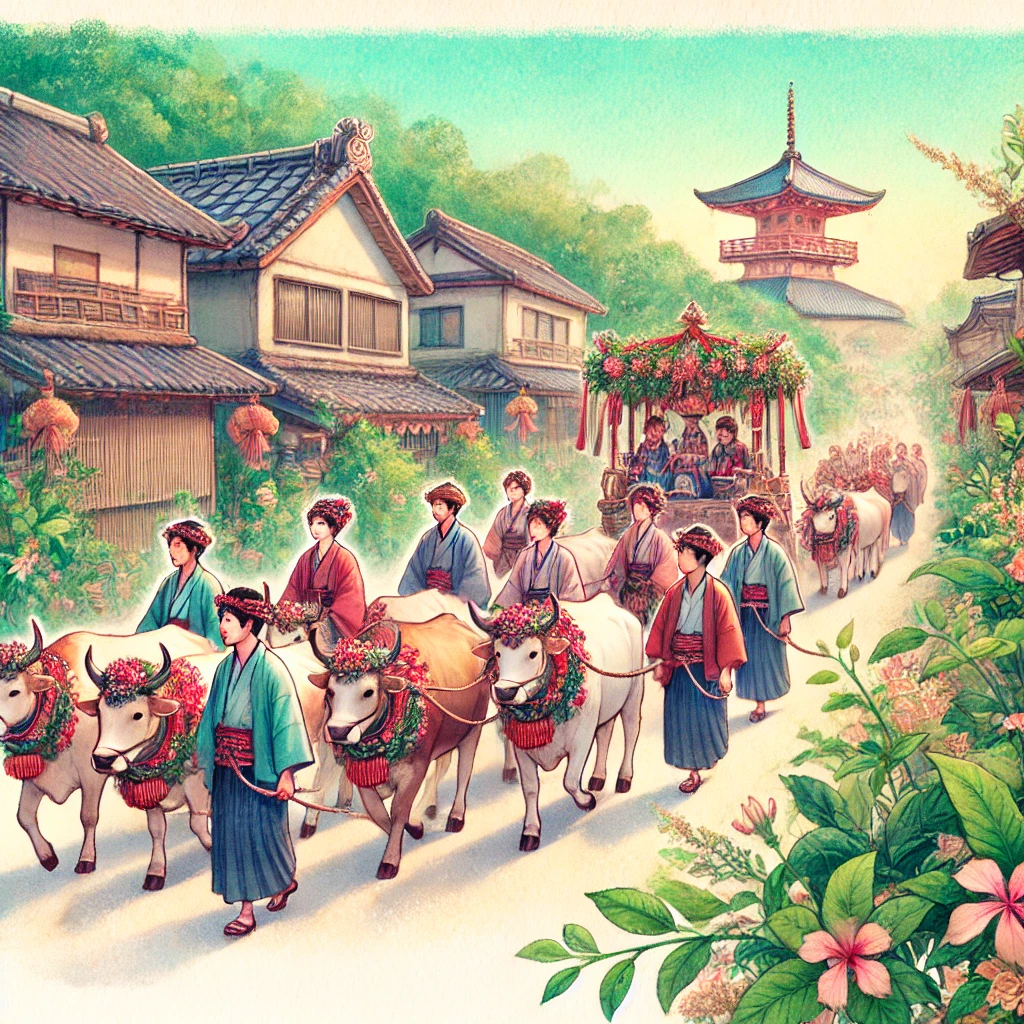
Have you ever heard the term “Ushidekui”? It is the name of a traditional festival that has been passed down in Okinawa for centuries. Ushidekui is more than just a venue for entertainment; it is a festival that embodies the spirit of Okinawa, blending its farming culture with a deep respect for cattle.
The people of Okinawa have lived through harsh natural environments, constantly innovating and adapting. For them, cattle were not merely livestock but essential partners in farming. Ushidekui serves as a platform to express gratitude to these valuable animals and is a sacred ceremony to thank nature for its bounty and pray for a good harvest.
While the exact origins of Ushidekui are unclear, it is certain that this traditional event has been celebrated for several hundred years. Although the festival has evolved over time, its core principles of “living in harmony with nature” and “gratitude toward cattle” have been faithfully preserved. Today, Ushidekui is still cherished and maintained in various parts of Okinawa. The sight of beautifully decorated cattle parading through communities captivates the hearts of onlookers. However, Ushidekui now faces the challenge of preserving its traditions. In a globalized world, conveying the value of Ushidekui to younger generations is a significant question that impacts the future of Okinawan culture. In this blog, we will explore the history, characteristics, and current state of Ushidekui, delving into the spiritual and cultural values it reflects.
Join us on a journey through Ushidekui to touch the soul of Okinawa. Let’s embark together!
- What is Ushidekui?
- The Content of Ushidekui
- Significance of Ushidekui
- Legends and Events Surrounding Ushidekui
- Ushidekui in Modern Times
- Conclusion
- Q&A
- Summary
What is Ushidekui?
The Meaning and Origins of Ushidekui
The Etymology of “Ushi” and “Dekui”
When you hear the word “Ushidekui,” what comes to mind? You might guess that it has something to do with cattle from its name. However, the term “Ushidekui” holds a much deeper meaning.
“Ushi” refers to cattle in the Okinawan dialect, but these animals were not merely livestock; they were treated as crucial components of agriculture. Cattle played a vital role in supporting food production in Okinawa’s harsh natural environment.
On the other hand, “Dekui” means “to meet” or “to interact” in the Okinawan dialect. Therefore, “Ushidekui” signifies a place where cattle and humans meet and interact.
Why was it necessary for cattle and humans to meet and interact? This is deeply connected to Okinawan farming culture.
Agricultural Rituals: The Origin of Ushidekui
The origins of Ushidekui can be traced back to ancient agricultural rituals performed in Okinawa. The people revered cattle as sacred beings foundational to agriculture, and they cherished rituals that expressed gratitude to these animals.
Particularly before the start of farming or when praying for a good harvest, special ceremonies centered around cattle were held. In these rituals, offerings were made to the cattle, and their health and work were appreciated. Through these ceremonies, people deepened their bond with the cattle and renewed their commitment to agriculture.
These agricultural rituals are believed to be the prototype of the present-day Ushidekui. Ushidekui is not merely a form of entertainment but a vital occasion to confirm the bond between humans and cattle and express gratitude for agriculture.
Historical Background of Ushidekui
The Relationship between Okinawan Farming Culture and Cattle
To understand the meaning and origins of Ushidekui, it is essential to know the relationship between Okinawan farming culture and cattle.
Okinawa is one of the regions in Japan with particularly harsh natural conditions. Frequent natural disasters such as typhoons and droughts and rocky terrain make suitable farmland scarce.
In such a challenging environment, the people of Okinawa have used their wisdom and ingenuity to carry out agriculture. Especially, cattle were indispensable for farming. Cattle tilled the rocky land and pulled heavy farming tools, supporting food production.
Additionally, cattle provided valuable resources beyond their role in farming. Their meat was a source of food, their hides were used for leather goods, and their bones were made into tools. Indeed, cattle were indispensable to the livelihood of the Okinawan people.
Therefore, the people of Okinawa treated cattle as sacred beings rather than mere livestock. Their gratitude towards cattle was expressed through Ushidekui.
The Development and Transformation of Ushidekui
Although Ushidekui originated from agricultural rituals, it has developed and transformed over time.
Initially, Ushidekui was conducted by individual households or communities but gradually grew into a large festival held by entire regions. This shift likely occurred because the festival’s role in strengthening community bonds became more recognized.
Additionally, the content of Ushidekui has changed over time. Initially focused on gratitude towards cattle, the festival gradually emphasized prayers for a good harvest.
This change may be related to the development of agricultural technology, which reduced the relative importance of cattle. People’s concerns shifted from gratitude toward cattle to prayers for abundant harvests.
In modern times, Ushidekui has also taken on a role as a tourist attraction, representing one of Okinawa’s traditional events. It is being reconsidered as part of efforts to revitalize local communities.
Thus, Ushidekui has changed with the times throughout its long history. However, the underlying sentiments of gratitude for agriculture and prayers for a good harvest remain unchanged.
Ushidekui is a precious cultural heritage that encapsulates the lives, beliefs, and views of nature held by the people of Okinawa.
The Content of Ushidekui
When and Where Ushidekui is Held
Significance of Holding Ushidekui in the 8th Month of the Lunar Calendar
Ushidekui is a traditional festival held in the 8th month of the Okinawan lunar calendar, corresponding to September and October in the modern Gregorian calendar. The timing of this festival is deeply related to the agricultural calendar.
Okinawa’s climate is subtropical, characterized by high temperatures, humidity, and susceptibility to typhoons. The 8th lunar month is the peak of the typhoon season, posing a significant threat to crops. This period is also critical as it marks the end of summer farming activities and the onset of the harvest season.
Thus, the people of Okinawa began holding Ushidekui in the 8th lunar month to protect crops from natural disasters like typhoons and to pray for abundant harvests. Ushidekui is a vital traditional event intertwined with Okinawan farming culture and beliefs.
Venues for Ushidekui in Various Regions
Ushidekui is celebrated across Okinawa Prefecture, including the main island, Miyako Island, and the Yaeyama Islands. While the venues vary by region, a common feature is selecting locations closely related to agriculture.
For instance, in Nakijin Village in the northern part of the main island, Ushidekui is held at the “Nakijin Gusuku,” a UNESCO World Heritage Site. This site has long been known as a place to worship agricultural deities, making it an ideal location for Ushidekui.
Similarly, in Taketomi Island in the Yaeyama Islands, Ushidekui, known as the “Seed Festival,” is held annually in the 8th lunar month. Each village on the island conducts the festival, with ceremonies centered around cattle performed in village squares or sacred sites.
In this way, the venues for Ushidekui are deeply connected to the history and beliefs of each region. By celebrating Ushidekui in these significant places, modern participants honor the legacy of their ancestors.
Main Events of Ushidekui
Ushi Osei
Purpose and Meaning of Ushi Osei
Ushi Osei is one of the most important rituals in Ushidekui. The term “Osei” means “purification” in the Okinawan dialect. Thus, Ushi Osei is a ceremony to purify and express gratitude to the cattle.
The purpose of Ushi Osei can be divided into two main aspects. One is to pray for the health and safety of the cattle, ensuring they can work without illness or injury. The second is to express heartfelt gratitude to the cattle for their contributions to agriculture throughout the year.
Process and Roles in Ushi Osei
Although there are slight regional variations, the basic flow of Ushi Osei is generally as follows:
First, the cattle are brought to the festival site. They are cleaned and beautifully decorated beforehand. Young people mainly take on the role of leading the cattle.
Next, prayers are offered to the cattle. This task is performed by a person known as the priest, who prays for the cattle’s health and safety and expresses words of gratitude.
Following this, offerings are made to the cattle, typically including rice, sake, and vegetables. All participants take part in making these offerings.
Finally, the cattle are released and allowed to walk freely. This act symbolizes gratitude and a wish for the cattle to remain healthy and active in the coming year.
In this way, Ushi Osei is a significant ritual where the community unites to offer gratitude and prayers to the cattle.
Cattle Memorial
Significance and Origins of Cattle Memorial
The Cattle Memorial is a particularly sacred ritual within Ushidekui. Its purpose is to comfort the spirits of deceased cattle and express gratitude for their lives.
To the people of Okinawa, cattle were not merely livestock but cherished companions in their daily lives. During their lifetimes, cattle supported agriculture and helped sustain human lives. Even after death, their meat, hides, and bones continued to provide for people.
Thus, Okinawans have always valued the spirits of deceased cattle, ensuring they never forget their gratitude. The Cattle Memorial is a ritual that embodies this deep respect and appreciation.
Rituals and Offerings in the Cattle Memorial
The Cattle Memorial is conducted during Ushidekui, either by individual families or communities. Photos or bones of the deceased cattle are placed on an altar to summon their spirits.
The cattle’s favorite foods are offered, incense is burned, and prayers are said. Common offerings include sugarcane, vegetables, and rice, which the cattle enjoyed during their lifetimes.
Additionally, flowers and offerings are placed by the cattle’s photos to comfort their spirits. The Cattle Memorial shares similarities with ancestral worship ceremonies.
The ritual concludes with prayers for the cattle’s peace and words of gratitude, wishing for their spirits to rest in peace.
Through the Cattle Memorial, the people of Okinawa express their gratitude and comfort the spirits of the deceased cattle.
Cattle Chase
Purpose and Meaning of the Cattle Chase
The Cattle Chase is another central event in Ushidekui, alongside Ushi Osei. As the name suggests, this event involves chasing cattle, but it is more than just a fun activity.
The primary purpose of the Cattle Chase is to promote the cattle’s health and vigor. By chasing them, the cattle get exercise, which helps maintain their health. The event also strengthens the bond between humans and cattle.
Moreover, the Cattle Chase has a role in exorcism, as chasing the cattle is believed to drive away evil spirits, purifying the animals.
In this way, the Cattle Chase is an essential ritual for wishing for the health and vitality of the cattle, strengthening the bond between humans and cattle, and driving away evil spirits.
The Process and Roles in the Cattle Chase
The Cattle Chase typically takes place after the Ushi Osei ceremony.
Young people primarily take on the role of chasing the cattle. As the chase begins, they run towards the cattle, sometimes touching them while chasing them around. During the chase, flutes and drums are played to excite the cattle. The chase continues until the cattle are exhausted, marking the end of the ritual.
These young chasers do more than just pursue the cattle; they talk to them, praising and encouraging them, almost as if having a conversation. This scene highlights the deep bond between the people of Okinawa and their cattle. The Cattle Chase serves as a crucial opportunity to reaffirm and strengthen this bond.
People Involved in Ushidekui
Roles of the Priests and Assistants
In Ushidekui, priests and their assistants play vital roles. The priests oversee the entire festival, ensuring everything proceeds smoothly.
Priests are typically selected from community elders or those knowledgeable about religious ceremonies. During rituals like Ushi Osei, priests offer prayers, guiding the sacred aspects of Ushidekui.
Meanwhile, the assistants support the priests, preparing offerings and helping with the ceremony’s progression.
Together, the priests and their assistants create the sacred atmosphere essential to Ushidekui. Their solemn prayers and sacred actions emphasize that Ushidekui is more than just a festival; it is a profound religious ceremony.
Community Participation and Cooperation
Ushidekui thrives on the active participation and cooperation of the local community. It is a festival prepared and carried out by the collective effort of the residents.
Preparations for Ushidekui begin months in advance. The community discusses the festival’s schedule, venue, necessary materials, and roles for the festival day, ensuring every detail is planned meticulously.
On the day of the festival, residents take on various roles. Some lead the cattle, others offer the sacred gifts, and some participate in the Cattle Chase. Each person’s contribution is vital to the festival’s success.
Moreover, Ushidekui strengthens community bonds. Residents who may not interact regularly come together, fostering deeper connections and a stronger sense of unity through the festival.
Thus, Ushidekui is a community-supported festival that highlights the deep ties between the people and their cattle. It is a tradition that embodies the essence of Okinawan life and faith, sustained by the collective effort of the community.
Through understanding Ushidekui, one can appreciate the profound bond between Okinawans and their cattle and the importance of community cooperation.
Ushidekui is not merely a form of entertainment. Through rituals like Ushi Osei, Cattle Memorial, and the Cattle Chase, Okinawans express their gratitude and respect towards the cattle.
Additionally, the active involvement of community members in the festival’s preparation and execution fosters stronger community ties. Ushidekui encapsulates the lifestyle, faith, and community spirit of the Okinawan people, making it an invaluable tradition.
Significance of Ushidekui
Connection with Farming Culture
Impact of Ushidekui on Agricultural Practices
Ushidekui is a traditional event closely tied to Okinawan farming culture. Let’s explore how Ushidekui has influenced agricultural practices over the years.
While sugarcane farming is well-known in Okinawa, rice cultivation has also been prevalent. Particularly in regions like Ogimi Village, Higashi Village, and Kunigami Village in northern Okinawa, paddy rice farming has been practiced. In these areas, Ushidekui has been deeply integrated into agricultural activities.
Ushidekui takes place in the 8th month of the lunar calendar, a critical period for rice harvesting. Harvesting rice requires significant labor, and this period often coincides with typhoon season, posing additional challenges.
In such circumstances, Ushidekui serves not just as a form of entertainment but as a time to pray for successful farming and abundant harvests.
The central ritual, Ushi Osei, is aimed at wishing for the health and vitality of the cattle. As the driving force behind farming, cattle are indispensable, and maximizing their strength through Ushi Osei enhances agricultural efficiency.
The Cattle Chase helps alleviate the cattle’s lack of exercise, maintaining their health. Successful farming heavily relies on the cattle’s health, and the Cattle Chase ensures their well-being, thereby stabilizing agricultural practices.
Furthermore, during the Cattle Memorial, prayers are offered for the deceased cattle. These cattle supported agricultural efforts during their lifetime, and praying for their souls is a way to show gratitude and hope for a prosperous harvest in the coming year.
In this manner, Ushidekui is a traditional event intricately linked to agricultural practices. Through Ushidekui, the people of Okinawa have prayed for successful farming and abundant harvests. Ushidekui is indeed a vital tradition supporting Okinawan farming culture.
Ushidekui as a Prayer for Abundance
Ushidekui serves as a prayerful event wishing for agricultural success. Particularly, praying for abundance is one of its significant purposes. Obtaining a bountiful harvest in Okinawa’s harsh natural environment is not easy. Natural disasters like droughts and typhoons can threaten crops at any moment.
In such a context, the people of Okinawa have used Ushidekui to pray to the gods for abundant harvests. During Ushi Osei, beautifully decorated cattle symbolize these prayers for a bountiful harvest. The cattle, being central to agriculture, are seen as essential for abundant crops, and Ushi Osei embodies this wish.
Additionally, during the Cattle Memorial, prayers are offered not only for the deceased cattle but also for a prosperous harvest in the coming year. Honoring the cattle’s contributions during their lifetime and praying for their souls is also a plea for a fruitful future harvest.
The timing of Ushidekui, the 8th month of the lunar calendar, aligns with the rice harvest and the preparation for the next year’s crop. Ushidekui, therefore, is a moment to express gratitude for the current harvest and pray for abundance in the next season.
For the people of Okinawa, a bountiful harvest is the foundation of their lives. Ushidekui is a significant prayerful event embodying their earnest wishes for agricultural success. Through Ushidekui, Okinawans have confronted nature, offering prayers to the gods, and renewing their hopes for a rich harvest.
Ushidekui symbolizes Okinawan farming culture and the prayers of the people. We must learn from our ancestors’ wisdom, value harmony with nature, and cherish the spirit of prayer. Ushidekui imparts these crucial lessons to us.
The Spiritual World of Okinawans
Gratitude and Respect for Cattle
The Culture of Revering Cattle in Okinawa
Understanding Ushidekui requires recognizing the culture of revering cattle in Okinawa. To Okinawans, cattle are not just livestock but sacred beings and vital partners in agriculture.
Various rituals across Okinawa honor cattle. For example, Nakijin Village in northern Okinawa conducts “Ushi Oniga,” a ritual praying for the health and prosperity of cattle.
Many Okinawan homes have an altar called “Ushi Dana” dedicated to cattle. These altars display photos and horns of cattle, with daily prayers of gratitude offered.
This culture of revering cattle is deeply reflected in Ushidekui. During Ushi Osei, cattle are adorned and treated like deities. The Cattle Memorial involves a respectful burial and prayers for the deceased cattle’s souls.
Revering cattle is intertwined with Okinawans’ view of nature and the world. They have always valued living as part of nature. Revering cattle symbolizes their reverence for nature.
Ushidekui, thus, encapsulates this culture of revering cattle. Through Ushidekui, Okinawans express their gratitude and respect for cattle.
Ways to Express Gratitude to Cattle
Gratitude towards cattle is expressed in various ways through Ushidekui.
In Ushi Osei, cattle are beautifully adorned and respectfully treated. The decorations symbolize gratitude. During the ceremony, people speak words of thanks and pray for the cattle’s health and prosperity.
The Cattle Chase praises the strength of the cattle and shows appreciation for their efforts. The young chasers respect the cattle, testing their own strength against them.
In the Cattle Memorial, the deceased cattle are honored with prayers and offerings. Photos of the cattle are displayed, offerings are made, and prayers for their souls are given.
Even in daily life, Okinawans do not forget their gratitude towards cattle. They speak kindly to the cattle while caring for them and wish for their health. When cattle die, they are mourned with gratitude.
In these ways, Okinawans have expressed their gratitude towards cattle through Ushidekui and other practices. This gratitude is deeply rooted in their hearts.
We, too, must learn the spirit of gratitude towards cattle embodied in Ushidekui. In an era relying heavily on machinery, it is crucial to appreciate the power of cattle and cherish the spirit of living in harmony with nature.
Living in Harmony with Nature
Okinawa’s Worldview of Respecting Nature
The spirit of gratitude towards cattle in Ushidekui is deeply connected to Okinawans’ worldview of respecting nature. They have always valued living harmoniously with nature.
Okinawa’s nature can be harsh and kind, providing various blessings. Natural phenomena like typhoons and droughts pose threats, while the rich sea and fertile land offer abundance.
Okinawans have always appreciated nature’s blessings and respected it. They strive to live in harmony with nature rather than conquer it.
This worldview is reflected in Ushidekui, a prayerful event thanking nature for its blessings and seeking protection from its threats.
Harmony with Nature in Ushidekui
Ushidekui embodies Okinawa’s worldview of valuing harmony with nature.
Held in the abundant 8th lunar month, Ushidekui coincides with the typhoon season. Through Ushidekui, Okinawans express gratitude for nature’s blessings and pray for protection from its threats.
In Ushi Osei, cattle are released into nature, respecting their freedom. This practice reflects Okinawans’ view of valuing the natural state of the cattle over human convenience.
During the Cattle Memorial, the spirits of deceased cattle are wished to return to nature. Mourning their death, people hope their spirits become part of nature.
Thus, Ushidekui is a traditional event that embodies Okinawa’s worldview of harmony with nature. Through Ushidekui, Okinawans have cultivated wisdom for living with nature.
In modern society, we often forget the importance of living harmoniously with nature in pursuit of convenience. However, sustainable development of human society cannot exist without harmony with nature. Ushidekui teaches us the importance of living in harmony with nature.
Passing Down Traditions and Strengthening Community Bonds
Preserving Tradition Through Ushidekui
Ushidekui is a precious cultural tradition of Okinawa. Preserving this tradition and passing it on to the next generation is an important duty for the people of Okinawa.
The history of Ushidekui dates back several hundred years. Throughout this long history, while the festival has evolved with the times, its essence has been faithfully passed down.
The preparation and execution of Ushidekui involve the collective efforts of the entire community. People of all ages and genders take on various roles, ensuring the preservation of the festival’s traditions.
Through this process of passing down traditions, children learn the significance and importance of Ushidekui. Participating in the festival allows them to experience Okinawan culture, history, and their view of nature firsthand.
Moreover, preserving Ushidekui is also about safeguarding Okinawa’s identity. In an era of globalization, valuing unique cultural traditions holds great importance for the people of Okinawa.
Ushidekui embodies Okinawa’s history, culture, and spirituality. By preserving and passing on Ushidekui, the people of Okinawa protect their roots.
Furthermore, maintaining the traditions of Ushidekui also preserves the pride of Okinawa. Ushidekui is a testament to the wisdom and ingenuity of the ancestors. Keeping this tradition alive honors their efforts.
However, in modern society, preserving traditional culture is not easy. Challenges include the migration of young people to cities and a declining interest in traditional practices.
To preserve the traditions of Ushidekui, community-wide efforts are necessary. Teaching children the importance of Ushidekui, encouraging young people to participate, and passing on the wisdom of the elders are essential. Such collective efforts ensure that Ushidekui traditions are upheld.
Ushidekui is a treasure of Okinawa. Protecting this treasure and passing it on to the next generation is a responsibility for those living today. Through Ushidekui, we can rediscover the beauty of Okinawan culture and renew our commitment to preserving it.
Strengthening Community Bonds
Ushidekui also plays a crucial role in strengthening community bonds.
The preparation and execution of Ushidekui involve the collective effort of the community. People who rarely see each other come together through Ushidekui, fostering deeper connections.
For example, during the preparation phase, community members gather to assign roles and procure necessary items. This collaborative work deepens the bonds among the people.
On the day of Ushidekui, it serves as a valuable opportunity for the community to come together. Families, relatives, and friends who usually live apart gather to enjoy Ushidekui.
Participating in events like Ushi Osei and the Cattle Chase fosters intergenerational interactions. Children hear old stories from elders and learn traditional games. Elders take joy in the children’s growth and share their experiences.
These interactions through Ushidekui enhance community cohesion and strengthen bonds. People who are usually too busy to interact find a way to connect through Ushidekui.
Community cohesion is a vital foundation for sustaining Okinawan culture. Ushidekui plays a significant role in reinforcing this foundation.
In contemporary society, individualism is on the rise, weakening community ties. However, people cannot live in isolation. Community support is essential for a happy life.
Ushidekui teaches us the importance of community. Strengthening local bonds and nurturing a spirit of mutual support through Ushidekui may be essential for the future.
Having explored the significance of Ushidekui, how do you feel?
Ushidekui is a traditional event that encapsulates the essence of Okinawan culture, including agricultural practices, spirituality, and community structure.
There is much to learn from Ushidekui. Wisdom in coexisting with nature, the spirit of mutual support, and the responsibility to preserve and pass on traditions are invaluable lessons for us today.
In an era of globalization and homogenized culture, valuing local traditions like Ushidekui is essential.
Ushidekui’s significance extends to protecting Okinawa’s unique culture. It is a symbol of Okinawan pride and identity.
Ensuring the participation of younger generations is crucial for preserving Ushidekui traditions. However, today’s youth tend to be less interested in traditional culture, often absorbed in smartphones and the internet.
In this context, preserving and passing on Ushidekui requires creativity. Clearly conveying its significance and appeal to young people is vital. Utilizing social media to promote Ushidekui is one method.
Incorporating Ushidekui into school curriculums is also essential. Learning about local traditions helps children connect with their roots and develop a sense of pride.
While preserving Ushidekui traditions is not easy, the effort is indispensable for sustaining Okinawa’s rich culture for future generations.
Strengthening Community Bonds
Ushidekui plays an essential role in strengthening community ties.
The preparation and execution of Ushidekui involve collective efforts from the community. People who rarely interact come together through Ushidekui, deepening their connections.
During the preparation phase, community members gather to assign roles and procure necessary items. This collaborative work enhances community bonds.
On the day of Ushidekui, it serves as a valuable opportunity for the community to come together. Families, relatives, and friends who usually live apart gather to enjoy Ushidekui.
Participating in events like Ushi Osei and the Cattle Chase fosters intergenerational interactions. Children hear old stories from elders and learn traditional games, while elders take joy in the children’s growth and share their experiences.
These interactions through Ushidekui enhance community cohesion and strengthen bonds. Ushidekui provides a platform for people to connect meaningfully.
Community cohesion is essential for a rich cultural life. Ushidekui plays a crucial role in reinforcing this foundation.
In modern society, individualism is on the rise, and community ties are weakening. However, people cannot thrive in isolation. Community support is vital for a fulfilling life.
Ushidekui teaches us the importance of community. Strengthening local bonds and fostering a spirit of mutual support through Ushidekui may be crucial for the future.
We have thoroughly examined the significance of Ushidekui. How do you feel about it now?
Ushidekui is a traditional event that encapsulates the essence of Okinawan culture, including agricultural practices, spirituality, and community structure.
There is much to learn from Ushidekui. Wisdom in coexisting with nature, the spirit of mutual support, and the responsibility to preserve and pass on traditions are invaluable lessons for us today.
In an era of globalization and homogenized culture, valuing local traditions like Ushidekui is essential.
To share the charm of Ushidekui with a wider audience, please share this article. If you have any thoughts or questions about Ushidekui, feel free to write in the comments section. We look forward to discussing Ushidekui with you.
Next time, we will discuss contemporary challenges surrounding Ushidekui and efforts to preserve traditional culture.
What can we do to protect and pass down traditional culture to future generations? Let’s consider this together, keeping the lessons learned from Ushidekui in mind.
Legends and Events Surrounding Ushidekui
Legends About the Origins of Ushidekui
Legend Depicting the Relationship Between the God of Agriculture and Cattle
Various legends tell the origins of Ushidekui. One of the most famous is the legend depicting the relationship between the god of agriculture and cattle.
Throughout Okinawa, there are sacred sites called Utaki, where agricultural gods are worshipped. Utaki are central to village faith, where prayers for agricultural abundance are offered.
According to one legend from an Utaki, the god of agriculture disguised himself as a human and visited a village. Observing the villagers’ lives, he learned about the hardships of farming.
Thus, the god instructed the villagers to use cattle for farming. With the help of cattle, farming efficiency increased, and the villagers’ lives became easier.
The villagers, following the god’s words, began using cattle in their farming. Consequently, crop yields dramatically increased, enriching the village.
In gratitude to the god of agriculture and the cattle, the villagers started Ushidekui. This festival has been passed down as a celebration of the god’s blessings and the cattle’s contributions.
This legend underscores that the origins of Ushidekui are deeply tied to agriculture. Ushidekui is a festival born from faith in the agricultural god and gratitude towards cattle.
Legend of Ushidekui’s Birthplace
There are various theories about Ushidekui’s birthplace, one of the most prominent being the legend from Nakijin Village in northern Okinawa.
Nakijin Village has a long history of thriving agriculture, with the tradition of Ushidekui firmly rooted in the area. At the village’s center lies the Nakijin Gusuku, a World Heritage castle ruin, believed to be the birthplace of Ushidekui.
According to legend, the Nakijin Gusuku was home to the cattle god, who bestowed agricultural wisdom upon the villagers, leading to abundant harvests.
It is said that the villagers began Ushidekui to express their gratitude to the god of cattle. They held festivals at Nakijin Gusuku to honor the power of cattle and pray for bountiful harvests.
Ushidekui is believed to have spread from Nakijin Village to various parts of Okinawa. As the birthplace of Ushidekui, Nakijin Village continues to attract the faith and devotion of many people.
Every year, during the 8th month of the lunar calendar, Nakijin Village hosts a grand Ushidekui festival. The event features people dressed in colorful costumes, parading with cattle around Nakijin Gusuku, accompanied by energetic shouts and cheers.
The Ushidekui in Nakijin Village serves as a valuable opportunity to share the legends of its origin. The sacred grounds of Nakijin Gusuku, steeped in ancient tales, imbue the festival with a sense of divine presence.
The legends surrounding the birthplace of Ushidekui highlight the deep connections between Ushidekui and various regions of Okinawa. Each community has nurtured this festival, intertwining it with their unique history and culture.
Historical Events Related to Ushidekui
Periods When Ushidekui Was Disrupted and the Reasons
Throughout its long history, Ushidekui has faced numerous interruptions. One significant period was during World War II.
In the Battle of Okinawa in 1945, the island became a battlefield, resulting in the loss of many lives. The war devastated the land, and many cattle were lost.
For some time after the war, it was impossible to hold Ushidekui as people were preoccupied with recovering from the war’s aftermath and rebuilding their lives.
Additionally, during the post-war period, Okinawa was under U.S. military control. The U.S. authorities considered Ushidekui superstitious and banned it. For many years, the tradition survived only in the memories of the people.
When Okinawa was returned to Japan in 1972, Ushidekui re-emerged. The people worked tirelessly to revive the lost tradition.
Despite facing challenges like war and foreign rule, the people of Okinawa have preserved the tradition of Ushidekui. This festival stands as a testament to their indomitable spirit.
Regional Conflicts Over Ushidekui
Ushidekui is a source of regional pride. Consequently, disputes have arisen between communities over the festival.
One notable incident, known as the “Ushidekui Conflict,” occurred between Nago City and Motobu Town in northern Okinawa.
In 1955, volunteers from Nago City attempted to participate in Motobu Town’s Ushidekui but were met with resistance from the locals. The people of Motobu felt that Nago City was trying to take over their festival.
The conflict escalated to physical confrontations, and eventually, the Nago volunteers had to give up their participation in Motobu’s Ushidekui.
This incident highlights how deeply Ushidekui is intertwined with regional identity. It is not just a festival but a symbol of local pride.
However, such conflicts go against the true spirit of Ushidekui, which is about community unity and gratitude towards cattle.
Today, efforts are being made to foster cooperation between regions to celebrate Ushidekui together. There is a growing movement to honor the festival’s original significance beyond regional boundaries.
The conflicts surrounding Ushidekui underscore its role as a symbol of regional identity and highlight the need to reclaim its true spirit.
The legends and historical events associated with Ushidekui reflect its profound history and the deep emotions of the Okinawan people.
Legends about the relationship between the god of agriculture and cattle illustrate the festival’s origins in agriculture. Ushidekui began as a festival of gratitude for agricultural blessings and the power of cattle.
Legends about Ushidekui’s birthplace highlight the deep connections between the festival and various regions of Okinawa. Each community has cultivated this festival, intertwined with their unique history and culture.
The interruptions in Ushidekui’s history reflect the strong attachment of Okinawans to the festival. Despite facing war and foreign rule, they have preserved Ushidekui.
Regional conflicts over Ushidekui emphasize its role as a symbol of local pride.
Understanding the legends and events surrounding Ushidekui allows us to appreciate its deeper significance. Ushidekui is not merely a festival but a cultural heritage that encapsulates Okinawa’s history, culture, and spirituality.
To spread the charm of Ushidekui, please share this article. If you have any questions or thoughts about Ushidekui, please leave a comment. We look forward to discussing Ushidekui with you.
Next time, we will explore the modern aspects of Ushidekui and the challenges it faces.
What can we do to preserve traditional culture for future generations? Let’s consider this together, keeping the lessons from Ushidekui in mind.
Ushidekui in Modern Times
Changes and Current State of Ushidekui
Changes in Ushidekui in Contemporary Society
Throughout its long history, Ushidekui has evolved with the times, particularly experiencing significant changes in modern society.
Historically, Ushidekui was closely tied to agriculture. In times when cattle played a crucial role in farming, Ushidekui was an indispensable event for farmers.
However, with the mechanization of agriculture and the reduction of cattle’s role, the nature of Ushidekui has changed. Additionally, urbanization has led to population declines in rural areas, weakening the community foundations that support Ushidekui.
These societal changes have prompted shifts in how Ushidekui is celebrated.
For instance, the timing of Ushidekui has changed. Originally held in the 8th month of the lunar calendar, the festival now varies by region, often adjusted to coincide with school holidays and public events.
The content of Ushidekui has also evolved. Traditional events like Ushi Osei and the Cattle Chase are still practiced in many areas, but some regions have introduced new elements to increase entertainment value.
For example, some places incorporate music and dance into the Cattle Chase or add events designed for tourists. Balancing tradition and modernity is a challenge for each community.
Another pressing issue is the shortage of participants to support Ushidekui. The festival’s organization requires significant manpower and time, but aging populations and the outflow of young people have left many communities struggling to maintain it.
To ensure the continuation of Ushidekui, it is vital to involve younger generations. Communities are making efforts to communicate the joy and importance of Ushidekui to children.
In modern society, Ushidekui faces numerous changes and challenges. It is essential to preserve tradition while adapting to contemporary circumstances.
Efforts to Preserve and Pass Down Ushidekui
Amidst these changes, various efforts are underway to preserve Ushidekui and pass it down to future generations.
Okinawa Prefecture has initiatives to support the preservation and transmission of traditional events, including Ushidekui. For instance, there is the “Okinawa Prefecture Intangible Cultural Property” designation system, which lists important cultural assets and provides support for their preservation.
Local communities have also established preservation societies and youth groups to sustain Ushidekui. These organizations are involved in organizing the festival and training the next generation.
In Nakijin Village, for example, the “Nakijin Village Ushidekui Preservation Society” conducts research to preserve the tradition and passes down techniques to younger generations.
Schools are also incorporating Ushidekui into their curricula. By engaging with traditional culture, children develop a deeper connection to their heritage.
In Okinawan elementary schools, for example, students learn about Ushidekui during integrated study periods. They learn its history and significance and even participate in the festival.
Through these efforts, children gain a genuine appreciation for Ushidekui, fostering a willingness to carry on the tradition.
Preserving and passing down Ushidekui is not an overnight task. However, through persistent efforts, the future of Ushidekui can be secured.
Collaboration between local communities and authorities, involving children, is crucial in the preservation and transmission of Ushidekui.
Ushidekui as a Tourism Resource
Promoting Tourism Through Ushidekui
Recently, Ushidekui has gained attention as a tourism resource. For visitors to Okinawa, Ushidekui offers a rare glimpse into the island’s traditional culture.
Communities are leveraging Ushidekui to boost tourism.
Some adjust the festival dates to align with peak tourist seasons and incorporate tourist-friendly events. Stalls selling local specialties line the festival grounds, adding to the festive atmosphere.
There are also interactive tourism programs that allow visitors to participate in Ushidekui preparations or join in the Cattle Chase, providing a hands-on cultural experience.
These initiatives offer tourists a deeper understanding of Okinawan culture and can bring economic benefits to the region.
Indeed, more tourists are visiting Okinawa specifically for Ushidekui. With the festival’s charm widely shared on social media, further increases in tourist numbers are expected.
The promotion of Ushidekui as a tourism resource can help balance the preservation of tradition with regional revitalization.
Balancing Tourism and Tradition
However, the commercialization of Ushidekui also presents challenges. Balancing the influx of tourists with the preservation of tradition is critical.
Ushidekui is fundamentally a festival for the local community. An increase in tourists could diminish community participation or dilute the festival’s original meaning. Additionally, tourists’ behavior can sometimes disrupt the sacred atmosphere of Ushidekui. Some tourists, viewing Ushidekui merely as a tourist attraction, fail to follow the rules and respect the event’s sanctity.
To address these issues, communities are devising ways to accommodate tourists while maintaining tradition. For example, they are creating guidelines to explain Ushidekui’s significance and proper conduct for participation. These guidelines emphasize the sacred nature of Ushidekui, urging tourists to show respect.
Moreover, creating opportunities for interaction between tourists and locals can foster mutual understanding. By participating in Ushidekui preparations and attending exchange events, tourists can learn about local culture and values.
Achieving a sustainable balance between tourism and tradition requires cooperation among local communities, authorities, and the tourism industry.
The Future and Challenges of Ushidekui
Importance of Passing Ushidekui to the Next Generation
Thinking about the future of Ushidekui, the most crucial aspect is passing it down to the next generation. For Ushidekui to continue and flourish, the participation of young people is essential.
However, modern youth often find it challenging to connect with traditional culture. For a generation accustomed to smartphones and the internet, Ushidekui might seem distant.
To overcome this, we need creative ways to convey Ushidekui’s appeal to young people.
Creating manga or anime about Ushidekui or organizing events geared toward young people could spark their interest.
Including Ushidekui in school curricula is also important. By increasing children’s exposure to Ushidekui, we can foster a deeper understanding and appreciation of traditional culture.
Involving young people in the organization of Ushidekui is equally vital. When youth take an active role, their enthusiasm for preserving the tradition grows.
Passing down Ushidekui to the next generation is a gradual process. However, persistent efforts will eventually pave the way for its future.
The collective effort and passion of those who love Ushidekui are crucial for passing the baton to the next generation.
Challenges Facing Ushidekui and Solutions
When considering Ushidekui’s future, it is also essential to address the challenges it faces.
Firstly, there is the issue of a shortage of people to support Ushidekui. Aging populations and the outflow of young people have weakened the community foundations necessary for the festival. Securing the manpower needed for its organization has become difficult.
To address this, encouraging young people’s participation is vital. Additionally, seeking support from outside the community can be beneficial. Recruiting volunteers interested in Ushidekui or gaining sponsorship from companies can help alleviate the burden.
Another issue is the risk of Ushidekui becoming a mere formality. The increase in tourists has sometimes led to the festival losing its original meaning.
To counter this, it is essential to revisit the essence of Ushidekui. Learning about its significance and history fosters a mindset that values tradition.
Additionally, adapting Ushidekui to contemporary times by incorporating new elements can enhance its appeal without losing its essence.
Furthermore, collaboration with other festivals is another important consideration. Okinawa has many traditional events besides Ushidekui. By linking these festivals, we can enhance each other’s appeal.
The challenges facing Ushidekui are not easily resolved. However, through collective wisdom and persistent efforts, solutions can be found.
Those who cherish Ushidekui must come together and move forward towards a brighter future.
Understanding the modern aspects of Ushidekui reveals the complexities of preserving traditional culture and its importance.
As society changes, Ushidekui must adapt. Balancing tradition with contemporary relevance is crucial.
As a tourism resource, Ushidekui also faces challenges. Balancing preservation and tourism requires mutual understanding between tourists and locals.
Most importantly, the future of Ushidekui depends on its transmission to younger generations.
Efforts to convey the festival’s depth and enjoyment and involve young people are essential.
The challenges Ushidekui faces cannot be resolved overnight. However, the dedication of those who love Ushidekui will pave the way.
Preserving and passing on tradition is a mission entrusted to us today.
Thinking about the future of Ushidekui is also about considering the future of Okinawan culture. In an era of globalization, valuing local traditions is crucial.
There are many lessons to be learned from Ushidekui.
Reverence for nature, community bonds, and the responsibility of preserving traditions. These insights from our ancestors remain relevant today.
To spread the charm of Ushidekui, please share this article.
If you have any questions or thoughts about Ushidekui, please leave a comment. Let’s think about the future of Ushidekui together.
We sincerely hope that the tradition of Ushidekui will continue to be passed down for generations to come.
Ushidekui, a proud cultural heritage of Okinawa, is something we hope to share with more people, highlighting both its charm and challenges.
The future of Ushidekui may rest in the hands of each of us.
By cherishing tradition, combining our wisdom, and taking action, we can help pass Ushidekui to the next generation.
The history of Ushidekui is also the history of the people of Okinawa.
The festival embodies the thoughts and efforts of our ancestors who lived with ingenuity and resilience in harsh natural conditions.
It is our responsibility to inherit these sentiments and connect them to the future.
We hope for a bright future for Ushidekui.
Let us together contemplate how Ushidekui can be adapted to new times while preserving its traditions.
Through Ushidekui, we aim to pass on the wonderful culture of Okinawa to the next generation.
We look forward to continuing these efforts.
We hope many of you will take an interest in Ushidekui.
We look forward to the day when we can share the charm of Ushidekui with even more people.
This time, we examined the current state and challenges of Ushidekui in modern times.
We hope the discussion highlighted the difficulty and importance of preserving traditional culture.
The future of Ushidekui is entrusted to each one of us.
We must earnestly address issues such as passing the tradition to younger generations, balancing tourism promotion, and re-evaluating the essence of Ushidekui as we pave the way for its future.
Let us continue to protect the brilliance of Ushidekui, a treasure of Okinawa.
We look forward to thinking about the future of Ushidekui together with you all, so that we can pass on its charm to the next generation and a broader audience.
We hope that the tradition of Ushidekui will continue to thrive on the soil of Okinawa for many years to come.
Conclusion
Why Ushidekui is Deeply Rooted as a Unique Okinawan Culture
The Fusion of Agricultural Culture and Respect for Cattle
Exploring why Ushidekui has become a unique cultural fixture in Okinawa reveals a deep connection between agricultural culture and respect for cattle.
Okinawa is known for its particularly harsh natural environment within Japan. Frequent natural disasters like typhoons and droughts, coupled with rocky terrain, make agricultural land scarce.
In such a challenging environment, the people of Okinawa have devised various methods and strategies to sustain agriculture. Cattle played a crucial role in this effort. They plowed the rocky land and hauled heavy farm equipment, thus supporting food production.
Cattle were not only essential for farming but also provided valuable resources. Their meat served as food, hides were used for leather products, and bones for tools. Cattle were indispensable to the livelihood of Okinawans.
Consequently, the people of Okinawa treated cattle not merely as livestock but as sacred beings. They cherished and expressed gratitude for the cattle, which became the foundation for the Ushidekui festival.
Ushidekui can be seen as a culture born from the fusion of agriculture and respect for cattle. It embodies the wisdom and ingenuity of the Okinawan people who have lived in harmony with cattle in a harsh natural environment.
Tradition Carried on by Community
Another reason Ushidekui has become rooted as a unique Okinawan culture is the community’s role in passing down the tradition.
Ushidekui is a festival conducted by local community members. Everyone in the community, regardless of age or gender, participates in its preparation and execution.
Through this communal effort, intergenerational exchanges occur. Children learn about the significance and joy of Ushidekui from adults, and the elderly pass down their wisdom gained from years of experience.
The preparation and management of Ushidekui foster deeper community bonds. People who rarely interact come together through the festival, strengthening their connections.
Ushidekui also serves as a source of pride for the community. Preserving and passing down Ushidekui to the next generation is a responsibility and a joy for community members.
It is this tradition carried on by the community that has allowed Ushidekui to be preserved over centuries and become deeply embedded as a unique Okinawan culture.
Ushidekui is a culture nurtured with care by the local community, driven by a strong sense of love and responsibility for their region.
Lessons from Ushidekui: Okinawan Values and Worldview
The Okinawan Worldview of Living in Harmony with Nature
Ushidekui offers insights into the Okinawan worldview of living in harmony with nature.
Okinawa’s nature is both harsh and bountiful, offering various blessings to its people. Natural disasters like typhoons and droughts threaten livelihoods, but the rich seas and fertile lands provide abundant resources.
Okinawans have always respected and revered these natural forces. They value living alongside nature rather than attempting to conquer it.
Ushidekui reflects this deep connection to nature.
The festival takes place in the abundant season of the lunar August, expressing gratitude for nature’s blessings and hoping for their continuation.
Rituals within Ushidekui emphasize harmony with nature. During the Ushioase, cattle are released into nature and admired for their free movement. Ushikuyou involves prayers for the deceased cattle’s spirits to return to nature.
From Ushidekui, we can learn the wisdom of living in harmony with nature, a lesson that remains relevant in modern society.
Rather than opposing nature, embracing and living as part of it is a perspective that can greatly benefit us today.
The Okinawan Attitude of Valuing Tradition
Ushidekui also teaches us about the Okinawan attitude of valuing tradition.
Throughout its long history, Ushidekui has faced numerous challenges. During World War II, the festival was halted due to the war’s impact. Post-war, under foreign rule, Ushidekui was even banned.
However, the people of Okinawa never let the spirit of Ush idekui die. Even when it could not be openly celebrated, it lived on in their hearts.
The revival of Ushidekui after the war was a moment of immense joy for the people, marking the restoration of a cherished tradition.
Today, there is a strong commitment to preserving and passing down Ushidekui to future generations. Valuing and connecting traditions to the future is a sentiment strongly reflected in Ushidekui.
Ushidekui symbolizes Okinawan identity. Preserving it means preserving Okinawa’s unique character.
This attitude of valuing tradition is particularly significant in today’s globalized world.
Ushidekui, as a symbol of Okinawan culture and spirituality, illustrates the fusion of agricultural traditions and respect for cattle, born from the ingenuity and resilience of the Okinawan people.
It has been carefully preserved and passed down by the community, strengthening local bonds and ensuring the continuation of tradition.
Through Ushidekui, we learn about Okinawan perspectives on nature and their commitment to preserving traditions.
Living in harmony with nature and connecting traditions to the future are values from Ushidekui that can guide us today.
Having explored Ushidekui in detail, we hope you have gained valuable insights.
Ushidekui is a cultural heritage that encapsulates the history, culture, and spirituality of Okinawa.
Understanding the significance of Ushidekui leads to a deeper appreciation of Okinawa, revealing the resilience and ingenuity of its people.
The lessons from Ushidekui are also valuable for us in modern society.
Living in harmony with nature and valuing traditions are perspectives particularly crucial in today’s globalized world.
To spread the charm of Ushidekui, please share this article.
If you have any thoughts or questions about Ushidekui, please leave a comment. We look forward to exploring the depths of Ushidekui with you.
The journey of learning about Ushidekui has just begun.
Through Ushidekui, deepen your understanding of Okinawan culture, history, and spirituality.
Traditions are our spiritual home, providing us with strength through the wisdom and thoughts of our ancestors.
We hope Ushidekui continues to shine brightly in the hearts of the people of Okinawa and into the future.
Thank you for reading until the end.
We look forward to sharing the charm of Ushidekui with more people.
We hope you take an interest in Ushidekui.
Through the world of Ushidekui, experience the depths of Okinawan culture.
New discoveries and learning await you.
We hope that the tradition of Ushidekui will continue to thrive on the soil of Okinawa for many years to come.
Thank you.
Q&A
When did Ushidekui start?
The origins of Ushidekui are unclear, but it is believed to have been practiced for several centuries. It likely became established as part of Okinawa’s agricultural rituals.
Why did Ushidekui become established as a unique Okinawan culture?
Ushidekui became rooted in Okinawan culture due to the fusion of agricultural practices and respect for cattle, and the tradition being passed down through community efforts. It embodies the wisdom and ingenuity of Okinawans who lived in harmony with cattle in harsh natural conditions.
What can we learn about the spirit and values of the Okinawan people from Ushidekui?
Ushidekui teaches us about the Okinawan worldview of living in harmony with nature and their commitment to preserving traditions. These values are highly relevant and beneficial for us in modern society.
What is the current status of Ushidekui?
Today, Ushidekui continues to evolve while preserving its traditions. It is also recognized as a valuable tourism resource, contributing to local development. However, it faces challenges in maintaining its traditions and passing them to future generations.
What is necessary to preserve and pass on the tradition of Ushidekui to the next generation?
To preserve and pass on the tradition of Ushidekui, the participation and understanding of younger generations are essential. Community unity, support from local governments and private organizations, and efforts to adapt traditions to contemporary contexts are also crucial.
Summary
“Ushidekui: A Unique Festival Born from Okinawa’s Agricultural Culture” is an article that provides a multifaceted exploration of the traditional Okinawan festival Ushidekui, covering its origins, history, features, and current status.
The article explains how Ushidekui is intertwined with agricultural rituals, reflecting the ingenuity and resilience of Okinawans living in harsh natural conditions. It discusses how the festival has become an integral part of Okinawan culture through the fusion of agricultural practices and respect for cattle, and through community-driven efforts to pass down the tradition.
The article also highlights the lessons we can learn from Ushidekui about Okinawan values and worldview. The Okinawan approach to living in harmony with nature and valuing traditions provides valuable insights for modern society.
In the latter part, the article addresses the current status of Ushidekui and the challenges related to preserving the tradition. It emphasizes the need for the participation and understanding of younger generations, community efforts, and support from various organizations to ensure the tradition continues.
Overall, the article effectively communicates the depth and charm of Ushidekui and the lessons it offers, making it a valuable resource for those interested in Okinawan culture. It provides a comprehensive understanding of the festival and its significance, emphasizing the importance of preserving this unique cultural heritage.


コメント