
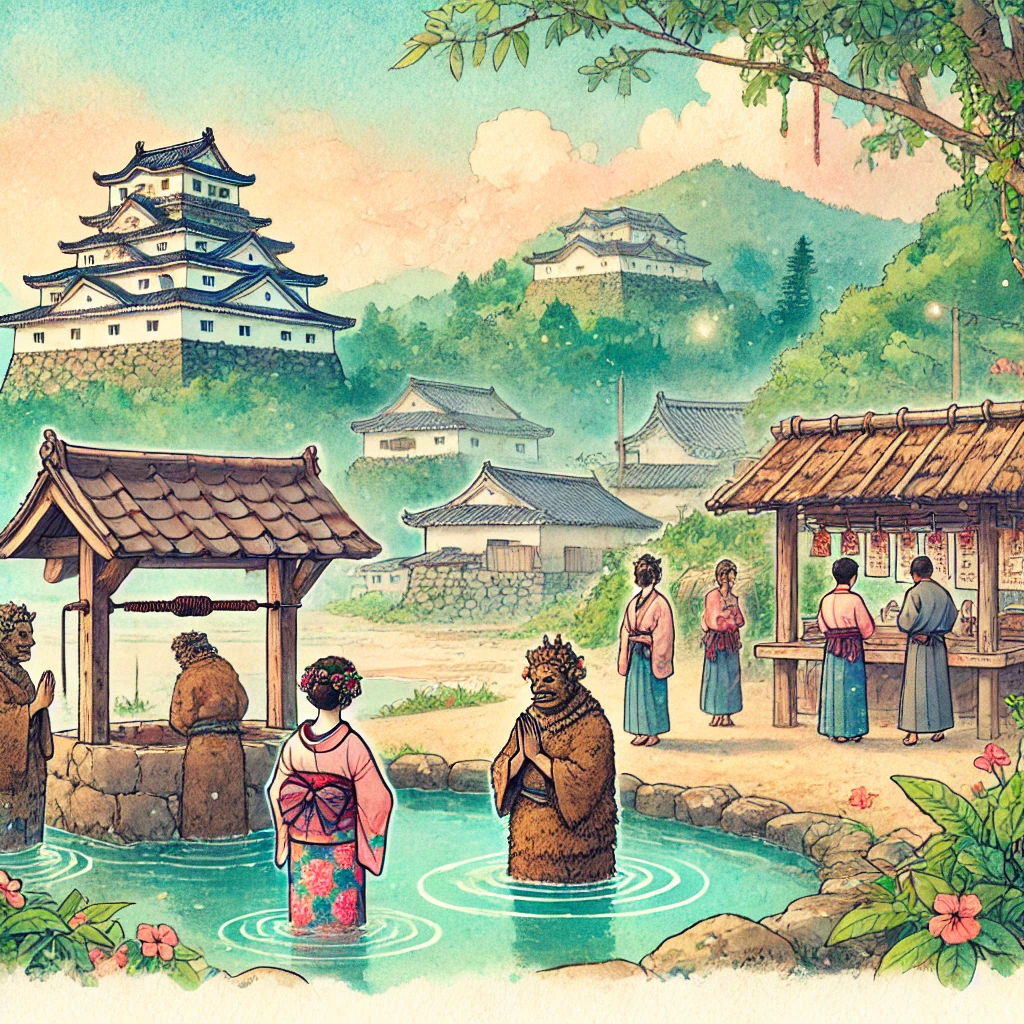
Okinawa’s blue sea, white sandy beaches, and tranquil island landscapes captivate many visitors each year. However, beneath this beautiful surface lies a mysterious world that defies our imagination. Did you know about this hidden realm in Okinawa?
At the heart of this mystery are sacred places called “Hinpun” and the legends of their curses. These might seem like mere old wives’ tales or superstitions, but the “Curse of Hinpun” is deeply rooted in the daily lives and thoughts of Okinawans, continuing to influence modern society.
Imagine a mysterious forest standing beyond the beautiful coastline. Within this forest lies a sacred site, steeped in centuries of prayers and reverence. Entering this place recklessly could bring unforeseen misfortune—this is the world of the “Curse of Hinpun.”
However, this legend is not just meant to instill fear. It symbolizes the values cherished by the people of Okinawa, such as coexistence with nature, respect for ancestors, and community solidarity. Surprisingly, this ancient legend also offers hints and solutions for various contemporary issues.
From environmental protection and cultural preservation to tourism and education, the concept of the “Curse of Hinpun” is utilized in various facets of modern Okinawan society. For instance, the “Hinpun Mystery Tour” not only caters to tourists interested in experiencing traditional culture but also helps in preserving local traditions.
In schools, special classes known as “Hinpun Studies” are conducted, where children learn about local history, culture, and the importance of environmental conservation. Even in urban development, considerations for “Hinpun” are necessary, showing the deep integration of this legend into contemporary Okinawan life.
Understanding the legend of the “Curse of Hinpun” allows for a deeper appreciation of Okinawan culture and the spiritual world of its people. It opens the door to discovering Okinawa not just as a tourist destination but as a place rich in history and culture, and vibrant in the lives of its people today.
This article explores specific examples and legends related to the “Curse of Hinpun,” such as the “Rain-Praying Well” at Shurijo, the “Izaiho” ritual on Kudaka Island, and the “Paantu” festival on Miyako Island, delving into the profound meanings and contemporary relevance of this legend.
Whether you are planning a trip to Okinawa, interested in its culture, or contemplating the role of traditional culture in modern society, this article will deepen your understanding of Okinawa and offer new insights. Let’s embark on a journey into the spiritual world of Okinawa, where mystery and tradition thrive.
- The Ancient Okinawan Tradition of “Hinpun’s Curse”
- Reasons Why Hinpun’s Curse is Frightening
- The Importance of Sacred Sites in Okinawan Spiritual Culture
- Okinawan Religious Beliefs Reflected in the Story of Hinpun’s Curse
- Educational Functions of the Legends
- The Significance of Hinpun’s Curse Legends in Modern Society
- Actual Cases and Legends
- Q&A
- Summary of This Article
The Ancient Okinawan Tradition of “Hinpun’s Curse”
On a hot summer day in a small village in Okinawa, a young fisherman named Taro went out to sea every day to catch fish. Known as a skilled fisherman in the village, Taro had recently faced a series of poor catches, struggling to support his family.
One day, Taro heard an intriguing story from the village elder. On a small hill at the edge of the village lay a sacred place known as “Hinpun.” It was said to be inhabited by a deity of abundance who watched over the villagers’ happiness and prosperous fishing. However, the site was strictly off-limits, and no one dared to approach it.
The elder warned Taro, “Hinpun is a sacred place. You must never go near it, or you will be cursed.”
Although skeptical, Taro couldn’t stop thinking about Hinpun after hearing the story. If the deity of abundance truly resided there, visiting the place might end his poor fishing streak. This thought grew stronger in Taro’s mind.
A few days later, under the cover of night, Taro headed toward Hinpun. Climbing the hill by moonlight, he found an old torii gate and a small shrine. Approaching the shrine with trepidation, he clasped his hands together and prayed for a bountiful catch.
Suddenly, a fierce wind blew, and thunder roared. Terrified, Taro hurried back to the village.
The next day, strange things began happening to Taro. His nets caught no fish but instead strange, unidentifiable sea creatures. At home, food spoiled, and tools moved on their own, leading to a series of inexplicable occurrences.
The villagers soon noticed Taro’s odd behavior. One night, his wife awoke to hear him muttering “Hinpun… Hinpun…” in his sleep.
Rumors spread quickly, revealing that Taro had trespassed at Hinpun. The villagers, fearful, began to avoid him.
As Taro grew weaker, plagued by hallucinations, he saw terrifying faces in the waves and heard whispers in the wind saying, “Return… Return…”
Desperate, Taro decided to visit Hinpun again, this time to apologize and seek atonement. Kneeling before the shrine, he sincerely repented and begged for forgiveness. Miraculously, a gentle breeze enveloped him, bringing peace and dispelling his fears.
Returning to the village, Taro consulted with the elder and confessed everything to the villagers. They pledged to respect the sanctity of Hinpun and vowed never to trespass again.
Over time, Taro’s fishing skills improved beyond previous levels, and the village enjoyed abundant catches. The villagers took his experience as a lesson, renewing their reverence for Hinpun.
Since then, the villagers have honored Hinpun with annual festivals, praying for abundance. Taro’s story has been passed down through generations, teaching both the fearsome power of the curse and the benevolence of the deity.
Next, we will examine the key points for understanding the spiritual world of the Okinawan people through this story, explained in a table of contents format.
- Reasons why Hinpun’s Curse is frightening
1-1. Awe towards nature
1-2. Connection to ancestors and deities
1-3. Fear of breaking taboos - The importance of sacred sites in Okinawan spiritual culture
2-1. Dualistic worldview of the sacred and the secular
2-2. Belief in the spirituality of the land
2-3. Strengthening community bonds - Okinawa’s religious views seen through Hinpun’s Curse
3-1. Influence of animism
3-2. Fusion of Shinto and indigenous beliefs
3-3. Emphasis on tangible benefits - Educational function of legends
4-1. Conveying moral lessons
4-2. Wisdom of environmental protection
4-3. Formation of cultural identity - Significance of the legend in modern society
5-1. Preservation and transmission of traditional culture
5-2. Utilization as a tourism resource
5-3. Strengthening community ties - Real-life examples and legends
6-1. The legend of the “Rain-Praying Well” at Shurijo
6-2. The “Izaiho” ritual and taboos of Kudaka Island
6-3. The “Paantu” festival traditions of Miyako Island
By exploring each of these points in detail based on this table of contents, one can gain a deeper understanding of the spiritual world of Okinawan people through the “Curse of Hinpun.” By incorporating real-life examples and legends , it is possible to delve deeper into Okinawa’s rich cultural background, views on nature, religious beliefs, and sense of community.
Reasons Why Hinpun’s Curse is Frightening
Deeply rooted in Okinawan traditional culture, the term “Hinpun’s Curse” alone can send chills down many people’s spines. Why does this legend resonate so strongly and evoke such fear? This time, we delve into the essence of the fear brought by Hinpun’s Curse, exploring the spiritual world of Okinawan people behind it.
Awe Towards Nature
The deep reverence for nature held by Okinawans is a major factor that amplifies the fear of Hinpun’s Curse. Okinawa’s culture, nurtured in a unique island environment, is based on coexistence with nature. This close relationship with nature makes the Curse of Hinpun a more immediate and tangible fear.
Natural Threats Brought by Island Environments
The islands of Okinawa are constantly exposed to natural threats due to their geographical characteristics. Typhoons, tsunamis, and sometimes earthquakes pose daily risks. For people living in such an environment, nature is both a fearful and respectful entity.
Hinpun’s Curse symbolically represents these forces of nature. The structure of the story, where trespassing into forbidden areas disrupts the natural order and results in severe retribution, vividly portrays the fear and respect towards nature.
For instance, a legend in a certain village speaks of trees around Hinpun being unnaturally uprooted after a typhoon. Villagers interpreted this as a sign of the deity’s anger. Such experiences make the story of Hinpun’s Curse more realistic and intensify the sense of fear.
Traditional Okinawan Lifestyle in Harmony with Nature
Traditional Okinawan lifestyles emphasize harmony with nature. Agriculture and fishing have long been the mainstays, relying on nature’s blessings. This background instills a deep respect for nature and recognition of its power in daily life.
The story of Hinpun’s Curse strongly reflects this spirit of coexistence with nature. Trespassing into forbidden areas is seen not only as a social taboo but also as an act disrupting harmony with nature. Thus, the misfortunes resulting from the curse are considered natural consequences of disturbing the balance of nature.
Many Okinawan communities actively protect the natural environment around Hinpun. In one village, annual cleaning activities around Hinpun are conducted to maintain the natural surroundings. These activities hold significance beyond mere environmental protection, symbolizing respect for the deities of Hinpun.
In this way, in Okinawa, where a lifestyle in harmony with nature is deeply rooted, the story of Hinpun’s Curse is regarded not merely as superstition but as an important teaching symbolizing the relationship with nature. Thus, the story remains deeply embedded in people’s hearts, evoking strong fear.
Connection to Ancestors and Deities
In Okinawan culture, the connection to ancestors and deities is a very important element. This strong spiritual bond is a major reason why the Curse of Hinpun is felt so fearfully. The cultural background that perceives ancestors and deities as close presence makes the story of Hinpun’s Curse more realistic and poignant.
Characteristics of Okinawan Ancestor Worship
Okinawan ancestor worship has unique characteristics distinct from that of mainland Japan. Ancestors’ spirits are regarded not merely as past entities but as beings deeply involved in present life. This belief is manifested in various forms, such as sacred sites known as “Utaki” and household altars for the “Fire God.”
The story of Hinpun’s Curse is closely tied to this culture of ancestor worship. Hinpun is recognized not just as a part of nature but as a special place imbued with the power of ancestors and deities. Therefore, violating Hinpun is seen as a serious act of desecration towards ancestors and deities.
For example, in one village, an annual ancestral memorial ceremony is conducted in front of the Hinpun. During this ritual, villagers gather to express their gratitude and respect to the spirits of their ancestors residing in the Hinpun. Such practices highlight the strong connection between the Hinpun and ancestors while impressing upon people the seriousness of violating these sacred sites.
Cultural Background of Feeling Close to Deities
In the traditional worldview of Okinawa, the presence of deities is deeply rooted in daily life. Various gods inhabiting nature, guardians of homes and villages, and other deities are intimately involved in people’s lives.
The story of Hinpun’s Curse serves to strongly remind people of the presence of these deities. The Hinpun is recognized as a place where the power of the gods is especially strong, and trespassing into such areas is seen as an act that would incur the wrath of the gods.
In many villages, various taboos and rituals related to Hinpun exist. For instance, in one village, walking around the Hinpun on a full moon night is prohibited. This belief is based on the idea that the power of the gods is particularly strong on full moon nights. Such specific taboos reinforce the sanctity of the Hinpun and the danger of violating it.
Additionally, there are numerous mysterious anecdotes related to the Hinpun. Stories of sudden fog appearing near the Hinpun causing people to lose their way, or strange music emanating from the direction of the Hinpun at night, are shared orally. These tales emphasize the supernatural power of the Hinpun and amplify people’s fear.
Thus, the cultural background of Okinawa, with its strong connection to ancestors and deities, imprints the fear of Hinpun’s Curse deeply into people’s hearts. It is not mere superstition but a living tradition deeply embedded in the spiritual world of the people.
Fear of Breaking Taboos
In Okinawan culture, the fear of breaking taboos is very strong. This fear makes the story of Hinpun’s Curse more powerful and influential. Taboos are seen not just as social norms but as having spiritual and sometimes physical consequences.
Function of Taboos as Social Norms
Taboos serve as important social norms in Okinawan society. These taboos not only restrict individual behavior but also help maintain the harmony and order of the entire community. The story of Hinpun’s Curse reinforces these social norms and guides people’s actions effectively.
For instance, in one village, a person who broke a taboo related to the Hinpun was ostracized by the community. This story highlights that breaking taboos is not just a personal issue but a significant problem that affects the entire community. The existence of such social sanctions makes the fear of Hinpun’s Curse more realistic.
Many villages have special occasions to teach children about the taboos related to the Hinpun. For example, some villages explain the importance and taboos of Hinpun during coming-of-age ceremonies. These educational efforts pass down the significance of taboos across generations, maintaining their effectiveness.
Recognizing the Impact on Individuals and the Community
In the story of Hinpun’s Curse, the consequences of breaking taboos extend beyond the individual to affect the entire community. This reflects the strong sense of community held by Okinawan people.
At the individual level, stories often tell of misfortune or illness befalling those who broke the taboos. Tales of sudden illness after trespassing into the Hinpun or not catching any fish after such an act are common. These stories strongly emphasize the dangers of breaking taboos.
More importantly, there is a recognition that an individual’s actions can impact the entire community. In one village’s legend, the whole village suffered poor harvests because someone broke the Hinpun’s taboo. Such stories suggest that individual actions can determine the fate of the entire community, further stressing the importance of observing taboos.
In many villages, communal purification rituals are conducted when a Hinpun taboo is broken. For example, in one village, the entire community participates in prayers and cleanses the area around the Hinpun when a taboo is violated. These communal efforts reinforce the idea that breaking taboos is not just a personal issue but a communal concern.
Thus, the fear of breaking taboos is multilayered, encompassing not only individual misfortune but also the potential impact on the entire community. This is why the story of Hinpun’s Curse carries more weight than mere superstition, significantly influencing people’s actions and thoughts.
This strong sense of taboo makes the story of Hinpun’s Curse more terrifying and influential. It is not just an old tale but a living tradition deeply rooted in people’s lives, continuing to function as a vital part of Okinawan culture.
In summary, three elements—reverence for nature, connection to ancestors and deities, and fear of breaking taboos—make Hinpun’s Curse deeply frightening to Okinawan people. These elements are rooted in Okinawa’s unique cultural background and historical experiences, giving the story significance beyond mere superstition. The story of Hinpun’s Curse reflects the worldview and values of Okinawan people and remains a vital cultural heritage to be preserved and passed down.
The Importance of Sacred Sites in Okinawan Spiritual Culture
In Okinawa’s rich culture, sacred sites hold special significance. The deep imprint of Hinpun’s Curse on people’s minds is also due to the reverence for these sacred places. Let’s delve into the importance of sacred sites in Okinawan spiritual culture.
Dualistic Worldview of the Sacred and the Secular
The dualistic worldview of the sacred and the secular is a crucial concept for understanding the Okinawan worldview. This concept is key to understanding why the story of Hinpun’s Curse resonates strongly with people.
Division Between Everyday Space and Sacred Space
In the traditional Okinawan worldview, spaces are clearly divided into “everyday spaces” and “sacred spaces.” This division significantly influences people’s lives and behaviors.
Everyday spaces are where people conduct their daily activities—homes, workplaces, schools, etc. In contrast, sacred spaces are considered special places inhabited by gods or ancestral spirits, including Utaki (sacred groves), Uganju (prayer spots), and Hinpun.
For example, Kubougusuku in central Okinawa has long been revered as a sacred place. Entry is only permitted on specific days, and the site is otherwise strictly managed. Such places emphasize the clear distinction between sacred and everyday spaces to people.
This division plays an important role in the story of Hinpun’s Curse. Hinpun is a prime example of a sacred space, and entering it recklessly is a serious violation of this dualistic worldview. Therefore, the fear of violating Hinpun carries more weight than mere superstition.
Special Behavioral Norms for Sacred Sites
Specific behavioral norms exist for sacred spaces to maintain their sanctity and honor the gods and ancestral spirits dwelling there.
For example, many sacred sites require specific prayers to be recited upon entry. Purifying oneself before entering, wearing certain attire, and observing quiet behavior are also common requirements. Loud noises and unnecessary movement of plants or stones are strictly prohibited.
At Sefa Utaki in Nanjo City, for example, visitors must offer prayers at the entrance and maintain silence inside. Photography is prohibited to preserve the sanctity of the site.
These behavioral norms are reflected in the story of Hinpun’s Curse. The cursed are often those who disregarded these norms and entered the Hinpun. Thus, the story teaches proper attitudes towards sacred sites.
In one village, it is customary to recite a special prayer called “Ututi” before approaching the Hinpun. Stories of misfortune befalling those who neglected this practice reinforce its importance.
Thus, the dualistic worldview and special behavioral norms make the story of Hinpun’s Curse more realistic and poignant. It is an important cultural element reflecting the worldview and values of the Okinawan people.
Belief in the Spirituality of the Land
In Okinawan spiritual culture, there is a strong belief that land possesses special spirituality. This belief is a key factor in the deep resonance of Hinpun’s Curse with people.
Deified Powers Residing in Specific Places
In traditional Okinawan belief, specific places are thought to harbor powerful spiritual forces. These forces are often deified and become objects of worship.
For instance, Ta Falls in northern Okinawa has long been revered as a place where the water god resides. Approaching the falls requires offering special prayers and purifying oneself. Locals believe the water has purifying power and use it for important rituals.
Hinpun is also recognized as a place where deified power resides. Depending on the region and tradition, the power in the Hinpun is often associated with fertility, safety, and health.
In one village, for instance, the Hinpun is believed to be inhabited by a fertility god called “Sandan.” Villagers hold special ceremonies in front of the Hinpun every year to pray for a bountiful harvest, offering new crops and expressing gratitude to the gods.
Such beliefs make the story of Hinpun’s Curse more powerful. Violating the Hinpun means not only breaking taboos but also angering the deified power residing there. Therefore, the consequences of the curse are depicted as severe, intensifying people’s fear.
Connection Between Landforms and Natural Phenomena with Spirituality
In Okinawan belief, specific landforms and natural phenomena are closely associated with spirituality. This worldview emerged from the long history of coexistence with nature among the Okinawan people.
For example, “Kāgā” (river springs) in Okinawa are often revered as places of special spiritual power. These places, considered sacred sites of the water god, are often the focus of prayers. Hijaga in central Okinawa has long been revered as a dwelling place of the water god, and many people still visit to offer prayers.
In the case of Hinpun, the landform and surrounding natural environment often have spiritual significance. In one village, the Hinpun is located near a uniquely shaped rock believed to be a landing place for gods descending from the heavens, thus imbuing it with special spiritual power.
Additionally, there are many legends that link natural phenomena with the spirituality of Hinpun. In one village, when mist forms near the Hinpun, it is believed to be a sign of the gods descending. On such days, villagers act with extra caution and avoid approaching the Hinpun.
Such a worldview, which connects landforms and natural phenomena with spirituality, makes the story of Hinpun’s Curse more tangible and relatable. People observe these natural changes in their daily lives and link them to the spirituality of Hinpun, making the curse’s narrative more vivid and immediate.
The belief in the spirituality of the land in Okinawa gives depth and credibility to the story of Hinpun’s Curse. It is not merely superstition but a living cultural heritage that reflects the Okinawan perspective on nature and religion. Understanding this belief allows for a deeper comprehension of why the story of Hinpun’s Curse still resonates strongly with people today.
Role in Strengthening Community Bonds
The story of Hinpun’s Curse is not just about restricting individual behavior. These legends play an important role in strengthening community bonds. Communal rituals and activities centered around sacred sites foster deeper connections among people and cultivate a sense of unity within the community.
Strengthening Bonds Through Communal Rituals
In many regions of Okinawa, communal rituals held at sacred sites, including Hinpun, are significant annual events. These rituals provide important opportunities to reinforce community bonds.
For instance, in a village in northern Okinawa, the “Umachii” harvest festival is held every year in March according to the lunar calendar. During this festival, all villagers gather at the Hinpun to pray for a good harvest. Everyone, regardless of age or gender, participates in the preparations and execution of the event, working together to ensure its success.
The central ritual of the festival is conducted in front of the Hinpun. Elders of the village lead the prayers, followed by a communal dance that has been passed down through generations, symbolizing the village’s history and culture.
After the festival, the villagers hold a feast where intergenerational interactions take place. The younger generation learns about the village’s history and traditions from the elders, while the elders are exposed to new ideas from the younger generation.
These communal rituals make the story of Hinpun’s Curse more than just a frightening legend. They provide opportunities for the community to come together and strengthen their sense of unity.
In fact, there are stories of families who did not participate in the Hinpun rituals gradually becoming isolated from village activities. This example illustrates the importance of these rituals in maintaining the social cohesion of the village.
Village Structure Centered Around Sacred Sites
In many traditional Okinawan villages, sacred sites like Hinpun occupy central positions. This structure is not just geographical but also spiritual, serving as the focal point of villagers’ lives.
For example, in a village in southern Okinawa, houses are arranged in concentric circles around the Hinpun. The innermost circle contains the Hinpun and key village facilities, with ordinary houses built outward from there. This arrangement physically signifies the importance of the Hinpun and keeps it constantly in villagers’ awareness.
In many villages, the path to the Hinpun is a major road. By traveling this path in their daily lives, villagers continually acknowledge the Hinpun’s presence and sanctity.
This village structure makes the story of Hinpun’s Curse more relatable. The constant presence of the Hinpun at the village’s center keeps its significance in the forefront of villagers’ minds, making the curse’s narrative more realistic.
For instance, in one village, it is considered good practice to build houses facing the Hinpun. Many homes are oriented this way, reflecting a daily awareness and respect for the Hinpun’s sanctity.
In some villages, elders gather in front of the Hinpun to discuss important decisions. This practice shows that the Hinpun is not just a spiritual center but also a central part of social life.
Such village structures embed the story of Hinpun’s Curse deeply in daily life. The placement of the Hinpun influences people’s spirituality and social structures.
For example, in one village, it is customary to orient new houses towards the Hinpun. This habit reflects respect for the Hinpun’s sanctity and the belief that family happiness and safety come from its blessings.
Additionally, many villages perform communal maintenance and cleaning of the Hinpun area. This work goes beyond environmental upkeep, acting as a ritual to express respect for the Hinpun. The participation of all villagers, including younger generations, ensures that the Hinpun’s importance is passed down.
Such village structures and daily practices make the story of Hinpun’s Curse more immediate and realistic. Constant awareness of the Hinpun’s sanctity lends credibility to the curse’s narrative.
Consequently, the community cohesion centered around the Hinpun plays a vital role in modern society. During disasters, the collaborative systems established around the Hinpun prove effective, such as a village that successfully implemented an evacuation plan centered on the Hinpun during a major typhoon.
In environmental protection and cultural preservation, the community cohesion centered around the Hinpun is crucial. For instance, villagers voluntarily conduct regular cleanups and tree-planting activities around the Hinpun. These efforts not only protect the environment but also facilitate intergenerational exchanges and cultural learning.
Thus, the story of Hinpun’s Curse and the community cohesion it fosters are fundamental to preserving Okinawan traditions and supporting regional society. They function as a living cultural heritage, not just as old customs.
The importance of sacred sites in Okinawan spiritual culture is evident through the story of Hinpun’s Curse. The dualistic worldview, belief in the spirituality of the land, and the role of community cohesion all intricately intertwine, deeply engraving the story of Hinpun’s Curse in the hearts of the Okinawan people.
This story functions not only as a fearful legend but also as an important cultural element reflecting the worldview, values, and social structures of the Okinawan people. It is both inherited wisdom from the past and a living tradition relevant in modern society.
Understanding the story of Hinpun’s Curse leads to a deeper understanding of Okinawan culture and spirituality. It serves as a key to comprehensively understanding the lives, thoughts, and social organization of the Okinawan people.
Preserving and passing down this important cultural heritage is essential for maintaining Okinawa’s cultural identity and building a rich community. The story of Hinpun’s Curse acts as a crucial bridge connecting Okinawa’s past, present, and future.
Okinawan Religious Beliefs Reflected in the Story of Hinpun’s Curse
To deeply understand Okinawan culture, one must grasp its unique religious beliefs. The story of Hinpun’s Curse serves as a mirror reflecting these beliefs vividly. Let’s explore the depth and complexity of Okinawan religious beliefs through this story.
Influence of Animism
At the core of Okinawan religious beliefs is a strong influence of animism, the belief that spirits reside in all things in nature. This worldview is prominently reflected in the story of Hinpun’s Curse.
Belief in Spirits Inhabiting Natural Objects
Okinawans have long believed that spirits inhabit all elements of nature, such as trees, rocks, rivers, and the sea , which are revered as sacred entities. This belief forms the core of the story of Hinpun’s Curse.
For example, Gangala Valley in northern Okinawa has been revered as a sacred place for centuries. The valley contains numerous limestone caves, each believed to house different gods. Locals offer prayers and seek permission before entering these caves, believing that those who enter without permission will be cursed. Many stories of mysterious experiences have been passed down.
One story tells of a tourist whose camera malfunctioned, and all photos turned out black after ignoring a guide’s warning not to use flash photography. Locals interpreted this as the gods of the caves expressing their anger.
Similarly, Hinpun and the surrounding natural objects are believed to harbor powerful spirits. In one village, an ancient tree within the Hinpun is deified. Villagers strictly prohibit touching or breaking branches of this tree.
There is a story of a tourist who broke a branch from this tree and experienced a series of misfortunes, such as family illnesses and work failures. After returning to the village to apologize and return the branch, the misfortunes ceased.
These examples show that the belief in spirits inhabiting natural objects is not mere superstition but significantly influences people’s daily lives and actions. The story of Hinpun’s Curse reinforces this belief and instills a sense of reverence for nature.
Respect for All Living Things
Okinawa’s animistic worldview is also reflected in the deep respect for all living things. Animals and plants are treated as beings with spirits, each possessing special meaning or power.
For instance, the habu (pit viper) is both feared and revered as a divine messenger bringing prosperity. In one village, spotting a habu near the Hinpun is considered a good omen, predicting a bountiful harvest.
One story tells of a farmer who chased away a habu near the Hinpun, resulting in a poor harvest that year. Villagers saw this as a sign of the gods’ displeasure and stopped driving away habu.
Similarly, plants hold significant respect. Many Hinpun sites have specific trees revered as sacred. For example, the banyan tree is often considered a sacred tree of the Hinpun, believed to possess special power.
In one village, banyan leaves from the Hinpun were used medicinally. This was done with great caution, involving prayers and seeking permission before harvesting a small amount. A story tells of someone who ignored these rules, harvested many leaves, and subsequently fell seriously ill.
Such examples show that respect for all living things is not just theoretical but deeply influences people’s actions and decisions. The story of Hinpun’s Curse strengthens this respect, emphasizing the importance of living in harmony with nature.
Okinawa’s animistic worldview, exemplified in the story of Hinpun’s Curse, continues to thrive today. It is not just an ancient belief but a vital perspective relevant to modern issues like environmental protection and biodiversity. The story of Hinpun’s Curse plays a crucial role in passing down this invaluable worldview to future generations.
Fusion of Shinto and Indigenous Beliefs
Another characteristic of Okinawan religious beliefs is the unique fusion of Shinto and indigenous faiths. The religious policies of the Ryukyu Kingdom period intertwined with ancient beliefs to create Okinawa’s distinct religious perspective. This fusion significantly influences the story of Hinpun’s Curse.
Influence of Religious Policies During the Ryukyu Kingdom Period
During the Ryukyu Kingdom period, especially under the control of the Satsuma Domain, Shinto influences became stronger. However, in Okinawa, Shinto was not merely adopted but merged with existing indigenous beliefs to form a unique religious structure.
For example, Enkakuji Temple at Shurijo Castle originally served as a Buddhist temple but also functioned as a site for rituals performed by the highest priestess, Kikoe Okimi. This exemplifies the blend of Buddhism, Shinto, and indigenous Okinawan beliefs.
This fusion can be seen in the story of Hinpun’s Curse, where many Hinpun sites feature Shinto elements (e.g., torii gates and Shinto talismans) alongside indigenous elements (e.g., the worship of natural objects).
In one village, the entrance to the Hinpun features a Shinto-style torii gate, but behind it lies an ancient sacred stone. Villagers perform Shinto rituals such as bowing twice, clapping twice, and bowing once at the torii, while reciting traditional Okinawan prayers at the stone, showcasing a harmonious blend of rituals.
There are stories of misfortunes befalling those who did not follow these blended rituals. One tourist who ignored the proper manners at the torii and did not pray at the stone ended up lost in the forest all night, which locals interpreted as a sign of the gods’ anger.
Harmony Between Shinto Elements and Indigenous Beliefs
The harmony between Shinto and indigenous beliefs in Okinawa is not merely superficial. The elements of both are deeply intertwined, forming a unique worldview.
For instance, the Shinto concept of “Yaoyorozu no Kami” (eight million gods) blends with Okinawan nature worship, creating a more complex and layered pantheon of gods. This intricate system is reflected in the story of Hinpun’s Curse.
In one village’s Hinpun, gods from “Niraikanai” (a mythical paradise) are worshiped alongside local land gods. Villagers believe these gods, each with different roles, harmoniously protect the village.
During rituals, Shinto ceremonies and local traditions alternate. For example, offering sacred sake follows Shinto practices, while traditional Okinawan dances are performed right afterward.
An interesting story illustrates the importance of this harmony. When some young villagers tried to modernize the festival by omitting traditional dances, a sudden storm disrupted the celebration. Villagers interpreted this as the gods’ anger and have since ensured to include both elements.
Such examples demonstrate that the harmony between Shinto and indigenous beliefs is a vital part of people’s faith, not just a formal practice. The story of Hinpun’s Curse conveys the importance of this harmony, maintaining a unique religious perspective.
The fusion of Shinto and indigenous beliefs in Okinawa continues to thrive through the story of Hinpun’s Curse. It is not just an old custom but offers wisdom relevant to modern issues such as the coexistence of diverse values and cultural integration. The story of Hinpun’s Curse serves as a crucial cultural heritage, passing down this valuable wisdom to future generations.
Emphasis on Tangible Benefits in This World
Another characteristic of Okinawan religious beliefs is the emphasis on tangible benefits in this world. This is expressed in the daily interactions with gods and ancestors, seeking their blessings. The story of Hinpun’s Curse reflects this focus on tangible benefits.
Gods and Ancestors as Objects of Prayer
For Okinawans, gods and ancestors are ever-present in daily life. They offer prayers for happiness and success in this world at various occasions, and this tendency is strongly reflected in the story of Hinpun’s Curse.
Many villages view Hinpun as a place to pray for good harvests, bountiful catches, business success, and family safety. People regularly visit Hinpun, offering prayers with specific wishes.
In a fishing village, it is customary to pray at the Hinpun before setting out to sea, offering small fish models or pieces of net as offerings. Stories abound of boats that ignored this custom facing poor catches or encountering danger.
Students preparing for exams also visit the Hinpun to pray for success. In one village, a special stone called “Wisdom Stone” is believed to grant intelligence to those who touch it. Stories of students who touched the stone and passed their exams are passed down, attracting many hopefuls each year.
These examples show that Hinpun is seen not just as an object of fear but as a place to seek tangible benefits. The story of Hinpun’s Curse reinforces this perception, emphasizing the importance of maintaining relationships with gods and ancestors.
Practical Aspects of Faith in Daily Life
Okinawan faith is deeply rooted in daily life, not confined to special places or times. It is a part of everyday activities, and the story of Hinpun’s Curse illustrates this practical aspect of faith.
Educational Functions of the Legends
The legend of Hinpun’s Curse in Okinawa carries significance beyond being a frightening tale. It contains important teachings passed down through generations, playing a crucial role in shaping the values and behavioral norms of Okinawan people. Let’s explore the educational functions of the legend of Hinpun’s Curse.
Conveying Moral Lessons
The story of Hinpun’s Curse serves not only to instill fear but also to convey important moral lessons. Through these stories, people learn societal norms and values, internalizing them over time.
Passing Down Values Through Stories
The legend of Hinpun’s Curse weaves together various values cherished by Okinawans, such as reverence for nature, respect for ancestors and gods, and the importance of community harmony.
For example, the “Greedy Fisherman” story from one village tells of a fisherman who prayed for a bountiful catch near the Hinpun but, driven by greed, violated the Hinpun’s taboos to catch more fish. He was caught in a fierce storm and barely survived. This story teaches not only the lesson of respecting the Hinpun but also the broader value of curbing greed and respecting nature’s balance.
Another village has a story emphasizing “the power of kindness.” A young man who helped an old man near the Hinpun later learned that the old man was a deity in disguise, and the entire village prospered because of his kindness. This story highlights the importance of compassion and mutual aid.
These stories are passed down through various settings, particularly during family or community gatherings where elders narrate them to younger generations. This process ensures that Okinawan values are absorbed naturally from a young age.
In one village, an annual event called “Yuunushima” gathers children around the Hinpun to hear stories from elders. Through this event, children learn about their village’s history, traditions, and values.
Passing down values through stories is more effective than mere verbal instruction because stories contain emotional elements that resonate deeply with listeners. The specific events and characters make abstract values more relatable and understandable.
Internalizing Social Norms
The legend of Hinpun’s Curse also plays a key role in internalizing social norms. These stories teach the necessary norms for maintaining social order.
Many Hinpun’s Curse stories feature the motif of “punishment for breaking taboos.” This motif is not just to scare people but to illustrate the importance of societal rules.
In one village, a story tells of a man who faced continuous misfortune after breaking a branch from the Hinpun’s tree. He finally consulted the village elder, performed a ritual of apology, and was released from the curse. This story teaches both the danger of breaking rules and the importance of acknowledging and atoning for one’s mistakes.
Another village has a story about “cleaning the Hinpun.” One year, villagers neglected to clean the Hinpun, resulting in poor harvests. This story underscores the importance of communal responsibility and caring for public spaces.
Children who grow up hearing these stories naturally internalize social norms. They learn not just to follow rules but to understand the reasons and importance behind them, leading to voluntary compliance.
In one village, children began voluntarily cleaning the Hinpun after hearing stories from their grandparents. They understood the importance of the Hinpun and put this knowledge into practice.
Thus, the legend of Hinpun’s Curse functions as an effective educational tool, allowing social norms to be internalized naturally through stories. It promotes voluntary adherence to norms based on understanding and empathy rather than fear.
The moral lessons conveyed by the legend of Hinpun’s Curse remain vital in modern society. Maintaining traditional values and social norms is challenging in a rapidly changing world, but these stories help pass down important teachings across generations.
Moreover, these stories can be reinterpreted in contemporary contexts. For example, “reverence for nature” can be viewed through the lens of modern environmental protection. “Community harmony” can be interpreted as the importance of diversity and mutual understanding.
In this way, the legend of Hinpun’s Curse bridges values from the past to the future. It is a precious educational resource, flexible enough to address contemporary issues while maintaining Okinawa’s cultural identity.
Wisdom of Environmental Protection
The legends of Hinpun’s Curse contain ancient wisdom about environmental protection. These stories play a crucial role in passing down traditional knowledge on sustainable use of natural resources and maintaining ecological balance across generations.
Sustainable Use of Natural Resources
The people of Okinawa have cultivated wisdom on using resources sustainably through their long history of living in harmony with nature. The legends of Hinpun’s Curse intricately weave in this wisdom.
For instance, a story from a fishing village titled “The Sea God’s Anger” tells of fishermen who, driven by greed, caught more fish than needed. This excessive fishing angered the sea god of Hinpun, resulting in a violent storm that prevented them from fishing. This tale warns against the dangers of overexploitation and teaches the importance of moderate fishing.
In this village, an annual festival called “Ugamee” is held, where fishermen express gratitude for the sea’s bounty and pledge to use resources responsibly. During the festival, a special ceremony is performed at Hinpun, and the story of “The Sea God’s Anger” is retold.
Another village has a story titled “The Tears of the Forest Goddess.” This tale narrates how villagers made the forest goddess cry by excessively cutting down trees near Hinpun, leading to a drought. It emphasizes the importance of forest resources and the necessity of sustainable use.
In this village, it is customary to offer prayers at Hinpun before cutting down trees and to plant new ones. This practice stems from the lessons learned from “The Tears of the Forest Goddess.”
Through such stories and practices, the people of Okinawa have learned and practiced sustainable use of natural resources. These are not mere superstitions or old customs but scientifically supported wisdom derived from years of experience and observation.
Recent studies have confirmed the effectiveness of these traditional resource management methods. For example, the traditional Okinawan fishing method called “Mo-kā” (fishing in tidal pools) is recognized by modern marine biologists as an efficient way to catch fish while maintaining resource sustainability.
Thus, the legends of Hinpun’s Curse are not just frightening tales but treasure troves of valuable knowledge about the sustainable use of natural resources. Through these stories, Okinawans learn and practice the wisdom of living in harmony with nature from a young age.
Traditional Knowledge on Maintaining Ecological Balance
The legends of Hinpun’s Curse also contain traditional knowledge about the importance of maintaining ecological balance. These stories teach the significance of understanding the impact of human activities on the natural world and the necessity of preserving this balance.
For example, a mountain village has a story called “The Warning of the Mountain God.” This tale describes how hunters who excessively hunted near Hinpun angered the mountain god, causing the animals to disappear. However, when the hunters reflected on their actions and returned to moderate hunting, the animals returned. This story teaches the dangers of disrupting the ecological balance and the importance of restoring it.
In this village, an annual festival called “Yamanushi” is held, where people express gratitude for the mountain’s blessings and reaffirm the importance of protecting ecological balance. During the festival, a special ceremony is held at Hinpun, and the story of “The Warning of the Mountain God” is retold.
Another village has a story titled “The Spirit of the Coral Reef.” This tale tells how the spirit of the coral reef in the Hinpun’s sea warned villagers about polluting the ocean. Eventually, the villagers cooperated to clean the sea. This story highlights the importance of marine ecosystems and the impact of human activities on them.
In this village, children participate in a beach cleanup on “Marine Day” every year. Before the cleanup, the story of “The Spirit of the Coral Reef” is told at Hinpun, emphasizing the importance of marine protection.
Through such stories and practices, Okinawans learn the importance of maintaining ecological balance and practice it in their daily lives. This traditional knowledge is valuable from a modern environmental science perspective.
Recent studies have confirmed the effectiveness of traditional Okinawan environmental management methods. For example, the traditional farming method called “Kusate” (mulching) is recognized by modern agronomists as a sustainable agricultural practice that maintains soil ecosystems.
Thus, the legends of Hinpun’s Curse are treasure troves of valuable traditional knowledge about maintaining ecological balance. Through these stories, Okinawans learn the complexity of ecosystems and the importance of protecting them from a young age.
This traditional knowledge provides crucial insights for addressing contemporary environmental issues. The wisdom of living in harmony with nature that Okinawans have developed over centuries offers potential solutions for modern problems such as global warming and biodiversity loss.
The environmental wisdom conveyed by the legends of Hinpun’s Curse is not just a legacy of the past but a vital resource for creating a sustainable future. Through these stories, we can reconsider our relationship with nature and gain hints for building a sustainable future.
Formation of Cultural Identity
The legends of Hinpun’s Curse play a crucial role in forming the cultural identity of Okinawans. These stories reflect regional traditions and values, serving as a medium for cultural transmission across generations.
Differentiation Through Regional Legends
The legends of Hinpun’s Curse vary slightly from region to region, highlighting each area’s unique characteristics and strengthening cultural identity.
For example, a village in northern Okinawa has a story called “The Mischief of Kijimuna.” Kijimuna is a yokai (spirit) in Okinawan folklore depicted as a small old man with red hair. In this village’s legend, Kijimuna plays tricks on those who violate the Hinpun, bringing various misfortunes.
This story combines the northern region’s unique Kijimuna legend with the concept of Hinpun’s Curse, reflecting the region’s cultural characteristics. Through this story, villagers recognize and take pride in their cultural uniqueness.
Every year, the village holds the “Kijimuna Festival,” featuring special ceremonies at Hinpun and retellings of the Kijimuna stories. This festival is also a tourist attraction, balancing cultural identity reinforcement with economic benefits.
In a central Okinawan village, a unique legend merges the “Ryugu” (Dragon Palace) myth with Hinpun’s Curse. This story tells of a Ryugu at the bottom of the sea near Hinpun, where those who violate it are dragged underwater.
This story fuses Okinawa’s traditional belief in “Niraikanai” (a utopia) with Hinpun’s Curse, reflecting the region’s unique worldview. Villagers reacknowledge their cultural depth and uniqueness through this story.
Each year, the village holds the “Sea Gratitude Festival,” featuring ceremonies at Hinpun and retellings of the “Ryugu” story. This event is crucial for preserving traditional culture and educating younger generations.
Thus, the regional variations of the Hinpun’s Curse legends are vital in forming and strengthening cultural identity. These stories reflect the history, environment, and lifestyle of each region, highlighting their uniqueness.
The Importance of Cultural Transmission Across Generations
The legends of Hinpun’s Curse are essential for transmitting culture across generations. These stories are not just old tales but cultural assets embodying Okinawan values, worldviews, and life wisdom.
For instance, a southern Okinawan village has a story called “The Promise on a Moonlit Night.” This tale tells of a young man who made a promise to his ancestor’s spirit at Hinpun, leading to prosperity for the entire village.
This story encapsulates traditional values like respect for ancestors, the importance of keeping promises, and the impact of individual actions on the community. Villagers understand their cultural core through this story and aim to pass it on to the next generation.
The village has a tradition called “Moonlight Storytellers,” where elders gather at Hinpun on full moon nights to share stories with younger generations. This event helps young people not only hear stories but also learn the values and worldviews behind them, shaping their cultural identity.
In a western Okinawan village, a story called “The Song of the Wind” is told. This tale features a girl with the ability to hear the wind’s voice at Hinpun, using her talent to protect the village from various calamities.
This story conveys multiple traditional values, such as harmony with nature, using individual talents for the community, and the importance of women’s power. Villagers recognize and take pride in their cultural richness and depth through this story.
Every year, the village holds the “Song of the Wind Festival,” where special ceremonies are performed at Hinpun, and the story is enacted. Many young people participate, learning about their culture through the performance.
Thus, the legends of Hinpun’s Curse are crucial for transmitting culture across generations. These stories are not just about preserving the past but are reinterpreted in modern contexts, contributing to the identity formation of new generations.
For example, the story “The Promise on a Moonlit Night” is reinterpreted to teach the importance of community and individual responsibility in modern society. The story “The Song of the Wind” is now told in the context of environmental protection and respecting diversity.
Through such reinterpretations, the legends of Hinpun’s Curse serve as cultural bridges connecting the past, present, and future. They help Okinawans maintain their cultural identity while adapting to a changing society.
The educational functions of the legends of Hinpun’s Curse are multifaceted. They convey moral lessons, pass down environmental protection wisdom, and form cultural identity. These stories are deeply rooted in the lives and thoughts of Okinawans, playing a vital role.
These legends are not mere old customs or superstitions but effective educational tools that convey accumulated wisdom and experience in an understandable form to future generations. Even in modern society, there is much to learn from these legends.
The legends provide important insights for addressing contemporary issues, such as environmental challenges, strengthening community bonds, and respecting cultural diversity.
Utilizing these legends as living educational resources, rather than just tourism assets or cultural heritage, will become increasingly important. The stories of Hinpun’s Curse are valuable cultural heritage that connects Okinawa’s past and present while creating a future.
The Significance of Hinpun’s Curse Legends in Modern Society
Traditional beliefs and legends in Okinawa continue to hold significant meaning in contemporary society. The legend of “Hinpun’s Curse” is not merely an old tale but a cultural asset deeply rooted in the lives and thoughts of modern Okinawan people. Here, we will explore the relevance of Hinpun’s Curse legends in today’s world.
Preservation and Transmission of Traditional Culture
The legend of Hinpun’s Curse plays a crucial role in preserving Okinawa’s traditional culture and passing it on to future generations. This legend encapsulates the worldview and values of the Okinawan people, forming a core part of their cultural identity.
Value as Oral Literature
The legend of Hinpun’s Curse forms an essential part of Okinawa’s rich oral literature. These stories are more than just entertainment; they are valuable cultural heritage reflecting Okinawa’s history, culture, and spirituality.
For example, a story from a village in central Okinawa called “The Oath of the Moonlight” tells of a young man who, bathed in moonlight at Hinpun, communicates with his ancestors’ spirits and receives important revelations about the village’s future. This story beautifully expresses Okinawan views of nature, ancestor worship, and hope for the future.
Every year on the 15th of the lunar calendar (full moon day), this village holds the “Moonlight Festival.” During this festival, the story of “The Oath of the Moonlight” is told in front of Hinpun, and participants renew their vows to their ancestors and their future while bathing in the moonlight.
This festival is not merely a traditional event but holds significant meaning for modern villagers. For instance, when a major resort development plan emerged in the village in 2019, many villagers cited this story in their opposition to the development, emphasizing, “Protecting the nature we inherited from our ancestors is our vow.” Ultimately, the development plan was canceled.
Thus, the legend of Hinpun’s Curse is a living culture that influences contemporary people’s actions and decisions. These stories, passed down through generations, help maintain and strengthen Okinawa’s cultural identity.
Moreover, as oral literature, the legend of Hinpun’s Curse contributes to preserving Okinawan linguistic culture. Many stories are told in Okinawan dialects, preserving unique expressions and phrases. For instance, “The Oath of the Moonlight” includes words like “Tiidanufaa” (child of the sun) and “Gushinuutaki” (sacred grove), which are unique to Okinawa.
These words hold more than just lexical meaning. “Tiidanufaa” symbolizes Okinawans’ history of living with nature, while “Gushinuutaki” represents the core of Okinawan spirituality. Through these words, Okinawans reaffirm their cultural roots and strengthen their identity.
Furthermore, the legend of Hinpun’s Curse contributes to the development of Okinawan performing arts. Many stories serve as themes for traditional arts like Ryukyu dance and Kumiodori (a form of traditional Okinawan theater). For instance, a Ryukyu dance based on “The Oath of the Moonlight” has been created and performed at local cultural festivals, preserving traditional dance elements while adding modern interpretations to make the culture accessible to younger generations.
In this way, the legend of Hinpun’s Curse plays a comprehensive role in preserving and transmitting Okinawa’s oral literature, linguistic culture, and performing arts. It is not merely a relic of the past but a source of inspiration that stimulates contemporary creativity and produces new cultural expressions.
Modern Interpretations and Re-evaluations
The legend of Hinpun’s Curse is being reinterpreted and re-evaluated within the context of modern society. These legends are now seen in light of contemporary issues and values, giving them new meanings.
For instance, a southern Okinawan village has a story called “The Guardian of the Green.” This tale describes a spirit protecting the Hinpun forest from destructive development and the villagers’ eventual success in preserving the forest through cooperation.
Traditionally, this story was simply a lesson on valuing nature. However, in recent years, it has been re-evaluated in the context of environmental protection and sustainability. In 2020, when a large-scale solar power plant construction plan emerged in the village, many villagers cited this story to emphasize the importance of sustainable development in harmony with the natural environment.
As a result, the village adopted a compromise plan to reduce the solar power plant’s scale and designate part of the forest as a protected area. In this decision-making process, “The Guardian of the Green” served as a common language for intergenerational dialogue. Elderly villagers shared traditional views of nature, while younger generations expressed contemporary environmental concerns through the story, fostering mutual understanding.
Additionally, the legend of Hinpun’s Curse is being re-evaluated from the perspectives of modern psychology and psychiatry. For example, a central Okinawan village has a story called “The Dream-Revealing Stone,” where touching a special stone at Hinpun grants people revelatory dreams.
Previously dismissed as mere superstition, recent research suggests that such traditional practices may contribute to people’s mental health. A 2022 study by a local university reported significantly reduced stress levels among participants in the “Dream-Revealing Stone” ritual.
Researchers explain this effect as a type of “placebo effect” or “meditative practice,” highlighting the potential mental health benefits of traditional stories and practices. Following this study, the village developed a mental health program centered around the “Dream-Revealing Stone” to enhance community well-being.
Furthermore, the legend of Hinpun’s Curse is being re-evaluated from the perspective of modern community building. For instance, a northern Okinawan village has a story called “The Power of Unity,” where the Hinpun god teaches the villagers the importance of cooperation, enabling them to overcome challenges.
This story has gained new significance in the context of modern community revitalization. In 2021, during a workshop on depopulation countermeasures in the village, “The Power of Unity” was highlighted as a model for community cooperation. Inspired by this story, participants launched projects to address regional issues collaboratively.
For example, initiatives like establishing shared living spaces for the elderly using vacant houses and after-school support programs for local children began. These projects reinterpret and practice the cooperative spirit embedded in “The Power of Unity” for contemporary relevance.
Thus, the legend of Hinpun’s Curse is being reinterpreted and re-evaluated in the context of modern society, offering insights and solutions for contemporary challenges. These legends are not just old tales but living sources of wisdom that help Okinawans creatively address modern issues while honoring their cultural heritage.
Utilization as a Tourism Resource
The legend of Hinpun’s Curse is also gaining attention as an important tourism resource in Okinawa. These legends enhance Okinawa’s cultural appeal and attract many tourists, recognizing the importance of balancing economic development with cultural preservation through tourism.
Introduction of Legends as Part of Cultural Experience Tourism
Recently, there has been an increasing demand from tourists not only to enjoy scenery and food but also to deeply experience the culture and history of the places they visit. The legend of Hinpun’s Curse is utilized as an essential element of cultural experience tourism.
For instance, a central Okinawan village offers a popular tourism program called the “Hinpun Mystery Tour.” This tour takes participants around the village, sharing various legends of Hinpun, culminating in observing a traditional ceremony near Hinpun.
Started in 2019, this tour has gained a reputation through word of mouth and now attracts over 10,000 tourists annually. Many participants have remarked that they “felt the depth of Okinawan culture” and “experienced something different from ordinary sightseeing,” resulting in many repeat visitors.
This tour’s success demonstrates the cultural allure of Hinpun’s Curse legends. Through these stories, tourists can connect with Okinawan spirituality on a deeper level, gaining a richer understanding and appreciation of the region.
Additionally, a southern Okinawan village regularly holds an evening event called “Hinpun Yowa.” In this event, local storytellers share legends of Hinpun’s Curse, followed by visits to related sites.
Notably, this event goes beyond mere storytelling, incorporating participatory elements. For example, after introducing the legend of “The Guardian of the Green,” participants engaged in a clean-up activity around Hinpun. In another session, after hearing “The Power of Unity,” participants cooperatively created traditional crafts.
Through these experiences, tourists do not just hear legends but also immerse themselves in the values and lifestyles behind them. Many participants in “Hinpun Yowa” have expressed that they “felt the Okinawan view of nature and community spirit” and “realized that the legends are still alive today.”
Moreover, a northern Okinawan village hosts the annual “Hinpun Storytelling Festival,” a major event where storytellers from across Okinawa gather to share various legends of Hinpun’s Curse.
This festival combines traditional storytelling techniques with modern performances, such as using projection mapping to visually depict the legend’s world and collaborating with contemporary music to present the legends as musical dramas.
Since its inception in 2018, this festival has become a new cultural event in Okinawa, attracting many tourists from both domestic and international locations. In 2022, the festival recorded over 20,000 visitors in three days, significantly boosting the local economy.
The festival’s success highlights the universal appeal of Hinpun’s Curse legends and the creative reinterpretations by Okinawan people. Tourists experience a blend of tradition and innovation, leaving them deeply impressed by the evolving Okinawan culture.
These examples show that the legend of Hinpun’s Curse functions as a key element in Okinawa’s cultural experience tourism. These legends offer more than mere stories; they provide tourists with invaluable opportunities to experience Okinawan spirituality and values.
Balancing Regional Development and Tradition Preservation
While utilizing the legend of Hinpun’s Curse as a tourism resource, it is also essential to balance regional development with the preservation of traditional culture. Efforts are being made to enjoy the economic benefits of tourism while maintaining the essence of traditional culture.
For example, a central Okinawan village has established the “Hinpun Protection Council.” This council, comprising local elders, cultural researchers, tourism operators, and government officials, discusses and formulates guidelines for the protection and utilization of Hinpun and its legends.
The council’s guidelines include:
1. **Ensuring Authenticity:** Ensuring that the legends and cultural practices remain authentic and are not overly commercialized.
2. **Sustainable Tourism:** Promoting tourism practices that do not harm the natural environment and cultural heritage.
3. **Community Involvement:** Involving local communities in tourism activities to ensure that they benefit economically and culturally.
4. **Educational Programs:** Developing educational programs for tourists and locals to increase awareness and appreciation of the legends and their cultural significance.
Through these guidelines, the Hinpun Protection Council aims to create a sustainable tourism model that respects and preserves Okinawa’s rich cultural heritage while promoting regional development.
In conclusion, the legend of Hinpun’s Curse continues to play a vital role in modern Okinawan society. It serves as a cultural bridge, linking the past, present, and future, offering insights into environmental sustainability, community cooperation, and cultural identity. As these legends are reinterpreted and utilized in contemporary contexts, they remain a living source of wisdom, creativity, and cultural pride for the people of Okinawa.
- Establish restricted areas to respect the sacred nature of Hinpun and limit tourist access.
- Ensure that local storytellers accompany tours to provide accurate information and appropriate explanations of the Hinpun legends.
- Allocate a portion of tourism revenue to the maintenance and preservation of Hinpun and the research and conservation of its legends.
- Implement educational programs in local elementary and middle schools to teach students about Hinpun and its legends, ensuring their transmission to future generations.
One example of initiatives based on these guidelines is the “Hinpun Guardian System.” In this program, local youths are trained as guides to introduce tourists to the legends of Hinpun.
This system not only provides accurate information to tourists but also offers young people an opportunity to learn about and take pride in their culture. Many participants have stated that they “re-evaluated the value of their culture” and “felt a sense of responsibility to protect traditions.”
Additionally, a village in southern Okinawa has initiated a project called “Hinpun Ecotourism.” This effort connects the legend of Hinpun’s curse with environmental conservation messages, emphasizing the importance of living in harmony with nature to tourists.
For instance, a popular program involves introducing the legend of “The Guardian of the Green” followed by a tree-planting activity around Hinpun, where tourists and locals work together. This program allows tourists to experience Okinawa’s nature and culture while contributing to real environmental conservation efforts.
Moreover, a village in northern Okinawa has implemented the “Hinpun Artist-in-Residence” program. This initiative invites artists from around the world to create works inspired by the legend of Hinpun’s curse while residing in the village.
Artists interact with local residents to deeply understand the cultural and value background of the legends before creating their works. These finished pieces are displayed throughout the village, creating new tourist attractions.
This initiative aims to reinterpret and express traditional culture in a modern context, reaffirming its value and protecting it. At the same time, it enhances the village’s appeal through art, attracting new tourist demographics.
These examples demonstrate the importance of balancing regional development with the preservation of traditional culture when utilizing the legend of Hinpun’s curse as a tourism resource. It’s not merely about economic benefits but also about protecting the essence of traditional culture, adapting it to contemporary society, and broadly conveying its value.
Through the legend of Hinpun’s curse, the people of Okinawa reaffirm their cultural identity and share it with tourists, striving for both cultural preservation and economic development. This approach could serve as a model for safeguarding and leveraging regional culture in an increasingly globalized world.
Strengthening Community Bonds
The legend of Hinpun’s curse serves not only as a valuable tourism resource but also as an essential element in strengthening community bonds. These legends act as a common narrative that connects people and promotes intergenerational exchange.
Fostering a Sense of Belonging through Shared Stories
The legend of Hinpun’s curse provides the community with a shared story, fostering a strong sense of belonging and unity. These legends encapsulate the history and values of the region, significantly influencing the formation of people’s identities.
For instance, in a central Okinawan village, the legend of “The Oath of Moonlight” is widely shared among the villagers. This story tells of ancestors pledging the village’s prosperity under the moonlight at Hinpun.
This legend is the central element of the annual “Moonlight Festival” held on the 15th of the lunar calendar (full moon day). During the festival, all villagers gather at Hinpun, reenact the legend, and make vows for the village’s future under the moonlight, just as their ancestors did.
This festival holds more than traditional significance. Many participants express feelings of “a strong connection with their ancestors” and “pride in being a part of the village,” showing that the shared story strengthens their sense of belonging.
Indeed, this village is known for its relatively low out-migration and high return rate. In a survey, many returnees cited the legend of “The Oath of Moonlight” and the Moonlight Festival as reminders of their roots.
In another example, a southern Okinawan village is united by the legend of “Words of the Wind,” where the wind at Hinpun conveys important messages to the villagers.
This village hosts a unique gathering called “Listening to the Wind’s Words” once a month. Villagers gather at Hinpun to quietly listen to the wind, then share their thoughts and feelings with each other.
This practice goes beyond mere legend reenactment. Participants feel a connection with nature through the wind’s sound and understand each other’s thoughts through dialogue, creating a strong sense of unity.
Many participants of “Listening to the Wind’s Words” express that they “feel a deeper connection with fellow villagers” and “realize their role as part of the community.” Notably, this gathering facilitates intergenerational exchange, with people of all ages participating and sharing their thoughts.
In northern Okinawa, the legend of “The Forest Guardian” has inspired a village-wide initiative. This legend tells that protecting the Hinpun forest leads to the village’s prosperity.
The village has launched the “Forest Guardian Project,” where all villagers register as “Forest Guardians” and participate in regular forest cleaning and tree-planting activities.
This project goes beyond environmental protection. Participants feel a strong sense of solidarity as they cooperate for a common goal. The identity of being a “Forest Guardian” enhances their sense of belonging and strengthens community bonds.
Indeed, recent years have seen a significant increase in participation in community activities in this village. Residents are more actively involved in local events and decision-making processes, with the “Forest Guardian Project” serving as a catalyst.
These examples illustrate how the legend of Hinpun’s curse connects people through a shared story, fostering a strong sense of belonging. These legends are not just old tales but play a crucial role in modern community building.
Promoting Intergenerational Exchange
The legend of Hinpun’s curse also functions as a vital tool for promoting intergenerational exchange. These legends provide a common topic for conversation, offering opportunities for people of different ages to engage in dialogue.
For instance, a village in central Okinawa runs the “Hinpun Storyteller School.” In this program, village elders narrate the legends of Hinpun’s curse to children, followed by visits to related sites.
This initiative yields more than just the transmission of legends. Children learn about the village’s history and culture through the legends and absorb practical wisdom through conversations with elders. On the other hand, elders find a sense of purpose and fulfillment in sharing their experiences and knowledge with the younger generation.
Many children participating in the “Hinpun Storyteller School” say they found the elders’ stories fascinating and developed a stronger interest in learning about their village. The elders also express joy in interacting with the younger generation and seeing their knowledge appreciated.
Additionally, a southern Okinawan village hosts the annual “Hinpun Storytelling Contest,” an engaging event where participants of all ages creatively retell the legends of Hinpun’s curse.
The contest’s unique feature is its intergenerational teams. Grandparents pair with grandchildren, and middle school students team up with seniors, creatively presenting the legends through plays or songs.
This contest promotes intergenerational dialogue and creative collaboration. Different generations work together, understanding each other’s perspectives and generating new ideas.
Many participants enjoy the cooperation across generations and report making new friends from other age groups, highlighting the event’s role in breaking down generational barriers.
Furthermore, a northern Okinawan village has launched the innovative “Hinpun Digital Storytelling Project.” In this project, elders narrate the legends of Hinpun’s curse while young people use digital technology to create films based on these stories.
High school and college students interview the elders, filming their stories, and then produce animations or live-action videos to match the narration. The completed works are shown at the village cultural center and shared online.
This project represents a new form of cultural preservation that blends traditional oral culture with digital technology. Elders pass down their knowledge and experiences, while young people gain experience in using modern technology to express traditional culture.
A participating high school student said they realized the depth of their culture through the process of creating a film based on their grandmother’s stories. An elder storyteller expressed joy in seeing young people engage with and value their knowledge.
This project not only promotes intergenerational exchange but also shows the potential to adapt traditional culture to contemporary contexts, reaching a broader audience and even introducing Okinawan culture to the world.
These examples demonstrate how the legend of Hinpun’s curse effectively promotes intergenerational exchange. These legends serve as a medium for different generations to engage in dialogue, cooperation, and shared experiences.
This intergenerational exchange can lead to new cultural expressions and social innovations. The fresh perspectives of the younger generation combined with the rich experiences of the elders can generate new ideas that are rooted in tradition yet responsive to modern societal needs.
For instance, the “Hinpun Digital Storytelling Project” led to the development of new applications for environmental conservation and tourism promotion, inspired by traditional wisdom and realized through modern technology.
Thus, the legend of Hinpun’s curse fosters intergenerational exchange, contributing to the sustainable development of the community. It serves as a bridge connecting tradition and innovation, past and future.
In modern society, the significance of the legend of Hinpun’s curse is manifold. It plays a vital role in preserving and transmitting traditional culture, utilizing it as a tourism resource, and strengthening community bonds.
The legend of Hinpun’s curse is not merely an old tale but a living cultural heritage that expresses the identity and values of the Okinawan people, shared across generations. These legends offer insights and solutions to contemporary issues, inspiring new cultural expressions and social practices.
In the future, the legend of Hinpun’s curse will continue to hold a significant place in Okinawan culture and society. As a valuable cultural resource, it will continue to support the people of Okinawa, linking the past with the present and creating the future.
Actual Cases and Legends
In Okinawa, numerous actual cases and legends are related to the Hinpun curse. These stories are not merely superstitions or fabricated tales but are often based on real experiences and long-term observations. Let’s take a closer look at some of the most famous cases and legends.
The Legend of the “Rain Prayer Well” at Shuri Castle
Shuri Castle is one of Okinawa’s most iconic historical structures. Within its grounds lies a special site known as the “Rain Prayer Well.” This well is associated with a legend that exemplifies the concept of the Hinpun curse.
Origins and Historical Background of the Legend
The legend of the “Rain Prayer Well” dates back to the era of the Ryukyu Kingdom. During prolonged droughts, special rain-praying rituals were conducted at this well within Shuri Castle.
According to the legend, a powerful water spirit resided in the well, and if prayers were offered in the correct manner, it would surely bring rain. However, it was also believed that if the ritual was performed incorrectly or disrespectfully, a terrible curse would befall the offenders.
Historical records from 1709 document an incident where a high-ranking official made a mistake during the ritual, resulting in continuous heavy rain that caused widespread damage. After this event, the “Rain Prayer Well” became an object of great reverence and was strictly managed.
Interestingly, this legend is not just a myth but is linked to actual historical events. Official documents from the Ryukyu Kingdom era contain numerous references to rain-praying rituals at this well. This suggests that the Hinpun curse legend might be based on real experiences and historical facts rather than mere superstition.
Modern Acceptance and Interpretation of the Legend
The legend of the “Rain Prayer Well” is still widely told today, interpreted in various ways.
For example, after the devastating fire at Shuri Castle in 2019, many locals visited the “Rain Prayer Well” to offer prayers. They hoped for “rain” in the form of blessings and good fortune to aid in the castle’s reconstruction. This demonstrates how traditional beliefs continue to live on in contemporary society.
Some local meteorologists also study the weather patterns around the “Rain Prayer Well.” They suggest that the area’s unique topography might cause localized rain clouds, which ancient people interpreted as the work of the water spirit.
Additionally, environmental scholars point out that the legend embodies ancient wisdom about water resource management. The strict rituals and the concept of a curse likely served as social norms to protect and carefully manage this precious water source, preventing overexploitation.
In 2020, an archaeological survey around the “Rain Prayer Well” uncovered evidence of an advanced ancient water management system. This finding suggests that scientific knowledge and technology might have underpinned the legend.
Thus, the legend of the “Rain Prayer Well” is a living cultural heritage that continues to be passed down and reinterpreted in modern society. It is not just an old tale but a valuable source of insights for contemporary issues.
The “Izaiho” Ritual and Taboos of Kudaka Island
Kudaka Island, located off the east coast of Okinawa’s main island, is known as the “Island of the Gods,” where many sacred rituals have been performed since ancient times. One of the most famous rituals is the “Izaiho.” This ceremony involves strict taboos closely related to the Hinpun curse.
Details and Social Significance of the Ritual
The Izaiho is the largest ceremonial rite on Kudaka Island, held once every twelve years. Women aged between 30 and 41 participate to qualify as priestesses (noro), playing a central role in the island’s spiritual culture.
The ritual is highly complex and strict. Participants undergo several months of purification and abstinence, adhering to specific dietary restrictions and behavioral rules, and engaging in daily prayers and meditation at sacred sites (Hinpun).
During the main ceremony, participants wear special garments and visit the island’s sacred sites. They are believed to communicate with deities and experience mystical encounters. In the final stage, they receive spiritual powers, assuming roles as spiritual leaders of the island.
The Izaiho holds significant social importance. It grants the women high social status and roles, strengthens community bonds, and ensures the transmission of traditional knowledge and values to the next generation.
Interestingly, this ritual continues to play a crucial role in modern society. For example, during the 2018 Izaiho, many women who had moved to cities returned to participate, reconnecting with their roots and reinforcing their ties to the island.
The Izaiho also impacts the island’s economy significantly. During the ritual year, many tourists and researchers visit the island, boosting the local economy.
Specific Taboos and Their Impact
The Izaiho is associated with very strict taboos, closely linked to the concept of the Hinpun curse.
For instance, during the preparation period, participants are forbidden to walk on certain “sacred paths.” Violating this rule is believed to anger the deities, leading to ritual failure and bringing calamity upon the entire island.
In 1979, a participant reportedly broke this taboo, and shortly afterward, a severe typhoon struck the island. Islanders interpreted this as a consequence of the broken taboo, leading to even stricter management of subsequent rituals.
Moreover, outsiders are strictly prohibited from approaching specific sacred sites during the ceremony. Violating this taboo is believed to compromise the ritual’s sanctity and endanger the participants.
In 2006, a tourist unknowingly approached a sacred site, and afterward, the tourist’s travel company faced a series of misfortunes, including financial crises. Islanders saw this as evidence of the Hinpun curse.
These taboos are not mere superstitions. They function to maintain the ritual’s sanctity and enhance participants’ spiritual focus. They also play a role in protecting the island’s natural environment and cultural heritage.
For example, restricting access to certain areas helps preserve their ecosystems. A 2015 study found that biodiversity in areas protected by Izaiho taboos was higher than in other regions.
Additionally, these taboos help preserve the island’s cultural identity. Strict rules ensure the accurate transmission of the ritual’s form across generations, maintaining the island’s traditional culture.
Even in modern society, these taboos hold significant meaning. For example, during the 2018 Izaiho, new taboos regarding photo posting on social media were introduced, aiming to preserve the ritual’s sanctity while harmonizing with contemporary technology.
Thus, the Izaiho ritual and its taboos on Kudaka Island exemplify how the concept of the Hinpun curse continues to play a crucial role in modern society. It serves as a valuable cultural heritage with multifaceted functions, including traditional culture protection, environmental conservation, and community cohesion.
The Legend of the “Paantu” Event on Miyako Island
The ” Paantu” event on Miyako Island is one of the most mystical and sometimes frightening traditional Okinawan rituals. This event is steeped in various legends related to the Hinpun curse, significantly influencing the lives of islanders.
Overview and Religious Significance of the Event
Paantu is a traditional visiting deity ritual held in several villages on Miyako Island in the ninth month of the lunar calendar. Mud-covered deities (Paantu) visit the villages to dispel evil and impurities.
Usually, three Paantu appear together, visiting homes and smearing mud on the residents. This is not just a prank; the mud is believed to have the power to cleanse impurities and bring good fortune.
The religious significance of this event is profound. Paantu are considered messengers from the other world, and interacting with them is seen as communion with the divine. Being smeared with mud is viewed as receiving blessings from the gods.
Interestingly, the appearance of Paantu is associated with the guardians of Hinpun (sacred places). According to legend, Paantu emerges from Hinpun and returns there at the end of the event. Therefore, it is strictly forbidden to approach Hinpun after encountering Paantu.
For example, in 2015, a tourist who chased after Paantu and approached Hinpun fell seriously ill shortly afterward. Islanders interpreted this as a manifestation of the Hinpun curse.
The Paantu event involves strict taboos. For instance, fleeing from or resisting Paantu is strictly forbidden, as these actions are considered disrespectful and are believed to invite disaster.
In 2010, a young man who tried to escape from Paantu later lost his job and experienced a series of misfortunes. Islanders saw this as a result of the Paantu curse, further linked to the Hinpun curse.
Thus, the Paantu event is more than a traditional ritual. It reflects the spiritual world and values of the islanders and is deeply connected to the concept of the Hinpun curse.
Challenges and Efforts in Modern Preservation
The unique form and profound spirituality of the Paantu event present challenges for modern preservation. However, various efforts are being made to maintain and pass down this tradition.
One significant challenge is the decreasing number of young participants. Traditionally, young men played the role of Paantu, but increasing numbers of young people moving to cities make it difficult to find participants.
In response, Miyako Island launched the “Paantu Successor Training Program,” targeting local middle and high school students to teach them about Paantu’s history, significance, and performance.
Since its inception in 2018, the program has exceeded expectations. One student remarked, “Learning about the deep meaning of Paantu has made me proud of my culture.” Additionally, the program has encouraged some young people to return to the island.
Another challenge is the commercialization of the event. As Paantu gained national fame, the influx of tourists posed a risk of diluting its sacredness and original meaning.
The “Paantu Preservation Society” has taken steps to address this issue by creating guidelines for tourists, explaining the event’s significance and taboos. They also ensure that particularly sacred parts of the event remain private and exclusive to locals.
In 2019, a “Paantu Experience Tour” was launched, allowing tourists to wear Paantu costumes and take photos without participating in the actual event. This approach aims to balance tourism with tradition, serving as a model for sustainable cultural tourism.
Moreover, efforts are underway to reinterpret the Paantu event in a contemporary context, finding new meanings and applications. For instance, a local environmental group launched a project to incorporate the “spirit of Paantu” into environmental conservation activities.
Participants in this project, wearing outfits resembling Paantu costumes, engage in cleanup activities around the island, raising awareness about environmental conservation.
Since its start in 2020, the project has garnered significant support, particularly from young people. A high school student remarked, “I feel like we’re preserving the Paantu tradition in a modern way.”
Thus, despite facing challenges, the Paantu event is being preserved and evolved in new ways. It is a living tradition that continues to influence people’s lives, embodying core Okinawan values of coexistence with nature, respect for ancestors, and community unity.
The taboos and legends surrounding the Paantu event are closely tied to the concept of the Hinpun curse. For example, the taboo against approaching Hinpun after seeing Paantu underscores the sacredness and power of Hinpun.
In 2017, a tourist who tried to take photos at Hinpun after the Paantu event experienced camera malfunctions and health issues. Locals saw this as evidence of the Hinpun curse and reinforced warnings to tourists.
The taboo against fleeing from Paantu is also deeply connected to the Hinpun curse. Paantu, considered messengers from Hinpun, must be respected. Rejecting Paantu is seen as rejecting the gods of Hinpun.
In 2016, a local youth who tried to escape from Paantu later had an accident, reinforcing the seriousness of the taboos for many islanders.
These legends and taboos around the Paantu event significantly influence people’s behavior and beliefs. They are not mere superstitions but crucial elements shaping the community’s values and worldview.
The Paantu event symbolizes the spiritual world of Miyako Island’s people through the lens of the Hinpun curse. It embodies traditional Okinawan values of coexistence with nature, respect for ancestors, and community unity.
At the same time, the event continues to evolve, finding new meanings in contemporary society. From environmental conservation to balancing tourism with tradition, the Paantu event adapts while maintaining its essential significance.
These actual cases and legends demonstrate that the concept of the Hinpun curse is deeply rooted in Okinawa’s traditions and culture. It is present in various forms, from the “Rain Prayer Well” at Shuri Castle to the “Izaiho” ritual on Kudaka Island and the “Paantu” event on Miyako Island.
These traditions are not just old customs or superstitions. They express the worldview and values of Okinawan people, maintaining social order and protecting the natural environment as crucial cultural heritage.
Moreover, these traditions continue to evolve, providing insights and solutions to modern issues such as environmental conservation, cultural preservation, and community development. For example, programs like the “Hinpun Mystery Tour” and special lessons like “Hinpun Studies” illustrate their diverse applications.
The concept of the Hinpun curse also influences urban development and environmental conservation in modern Okinawa. For instance, the 2019 redevelopment plan in Naha City faced opposition from locals citing the intrusion on a Hinpun site, resulting in modifications to the plan.
In environmental conservation, projects like the “Hinpun Forest” in northern Okinawa emphasize the importance of preserving ecosystems through the lens of traditional Hinpun concepts.
A 2020 survey revealed that over 80% of residents involved in this project felt a deeper understanding of environmental conservation through the Hinpun concept. This shows how traditional ideas can enhance modern environmental awareness.
In education, schools in some parts of Okinawa offer “Hinpun Studies” to teach students about regional history, culture, and environmental conservation through Hinpun legends.
A 2021 study found that over 90% of students who participated in these classes felt more connected to their culture and environment. This demonstrates the educational value of traditional concepts in contemporary settings.
Thus, the concept of the Hinpun curse is a living cultural resource with ongoing relevance in modern society, influencing behaviors and thoughts in various ways. It bridges the past and present, providing valuable insights for the future.
By exploring these actual cases and legends, we gain a deeper understanding of the multifaceted meanings and functions of the Hinpun curse. It not only expresses the core of Okinawan cultural identity but also offers new perspectives and solutions for contemporary issues.
The Hinpun curse legends are part of Okinawa’s rich cultural heritage. Understanding them helps us appreciate the worldview and values of Okinawan people more deeply. These legends also provide valuable wisdom for addressing modern societal challenges.
In the future, the concept of the Hinpun curse will continue to play a crucial role in Okinawa’s culture and society. It will persist as an essential cultural resource, connecting the past and present, and shaping the future.
Q&A
What is the Hinpun curse?
The Hinpun curse is a concept in traditional Okinawan belief, referring to misfortune or disaster that befalls those who desecrate sacred sites (Hinpun) or break taboos.
Does the legend of the Hinpun curse hold significance in modern society?
Yes, it does. The legend of the Hinpun curse is a valuable cultural resource that provides insights and solutions for modern issues such as environmental conservation, cultural preservation, and community development.
How is the traditional Okinawan event “Paantu” related to the Hinpun curse?
Paantu is considered a messenger from Hinpun, and approaching Hinpun after seeing Paantu is taboo. Breaking this taboo is believed to invoke a curse, showing the deep connection between the Paantu event and the concept of the Hinpun curse.
How does the concept of the Hinpun curse impact tourism in Okinawa?
The legend of the Hinpun curse enhances cultural tourism in Okinawa. Programs like the “Hinpun Mystery Tour” attract tourists, increasing the cultural appeal of Okinawa.
How is the concept of the Hinpun curse used in education?
In some Okinawan schools, special classes called “Hinpun Studies” teach students about regional history, culture, and environmental conservation through Hinpun legends, fostering greater cultural and environmental awareness.
Summary of This Article
The traditional Okinawan belief in the “Hinpun curse” is not merely an old superstition but remains a significant cultural heritage in modern society. This concept refers to the misfortune or disaster that befalls those who desecrate sacred sites (Hinpun) or break taboos, reflecting the deep spiritual beliefs of the Okinawan people.
The legend of the Hinpun curse is deeply rooted in various traditions and cultures of Okinawa, such as the “Rain Prayer Well” at Shuri Castle, the “Izaiho” ritual on Kudaka Island, and the “Paantu” event on Miyako Island. These traditions express the worldview and values of Okinawan people, maintaining social order and protecting the natural environment as vital cultural heritage.
In modern society, the concept of the Hinpun curse continues to evolve, offering new interpretations and solutions for contemporary issues such as environmental conservation, cultural preservation, and community development. Examples include tourism programs like the “Hinpun Mystery Tour” and educational initiatives like “Hinpun Studies.”
Moreover, the concept of the Hinpun curse influences urban development and environmental conservation in modern Okinawa, playing a crucial role in shaping the society. It offers new perspectives and solutions for modern societal challenges while expressing the core of Okinawan cultural identity.
Thus, the legend of the Hinpun curse connects Okinawa’s past and present, serving as an essential cultural resource for creating the future. Understanding this concept helps us appreciate the rich cultural heritage of Okinawa and provides valuable insights for addressing contemporary issues.
The concept of the Hinpun curse will continue to play a significant role in Okinawa’s culture and society, remaining a vital cultural resource that connects the past, present, and future.


コメント