
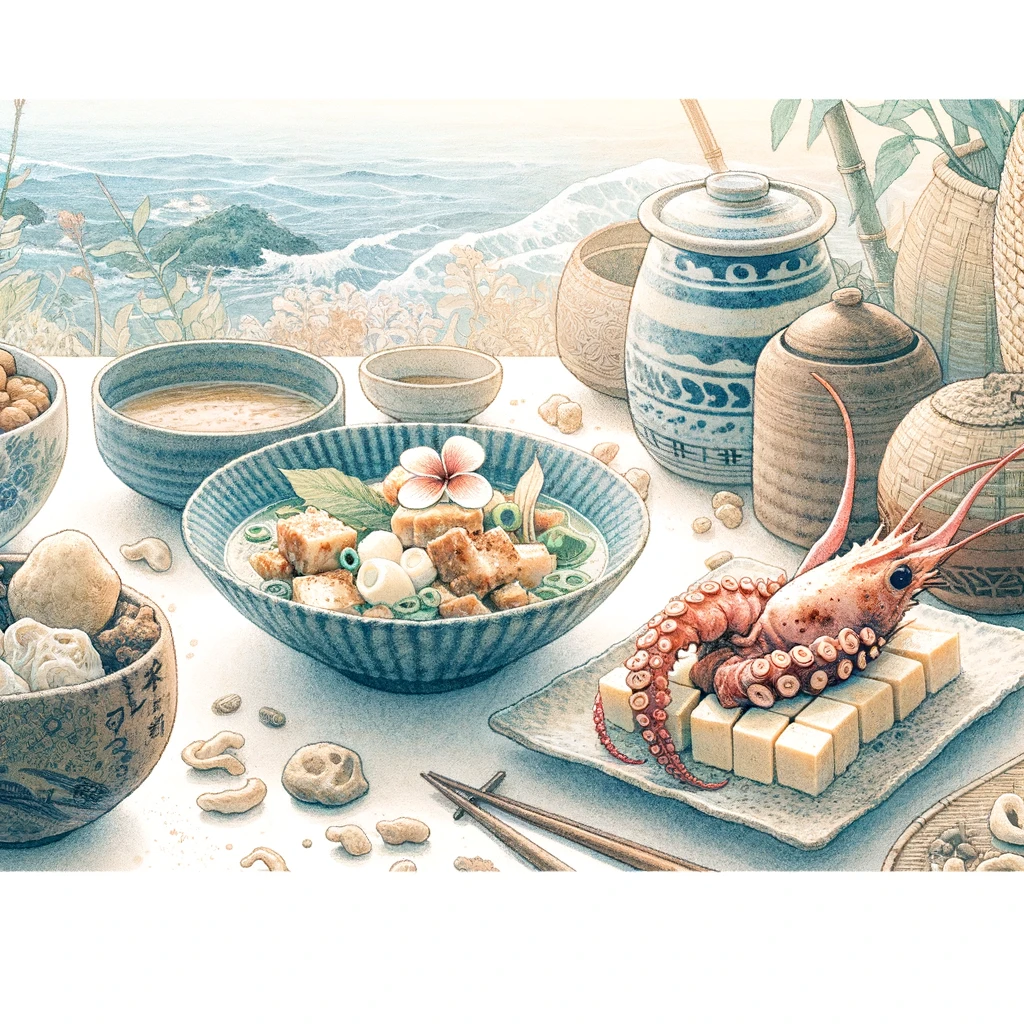
When people think of Okinawa, images of blue seas, white sandy beaches, and a unique culture often come to mind. However, Okinawa’s allure extends far beyond these elements. In fact, its culinary culture is an essential aspect that truly captures the island’s charm.
Among Okinawa’s many culinary treasures, “Takoyasa” and “Jimami Tofu” stand out as iconic symbols of the region’s food culture. At first glance, they may seem like simple local dishes, but they embody the history, culture, and wisdom of Okinawa’s people.
Takoyasa is a preserved dish made from salted octopus. The origin of its name reveals the intriguing nature of the Okinawan language. While “Tako” means octopus, “Yasa” refers to vegetables or side dishes in the Okinawan dialect. Thus, the name essentially means “octopus side dish.”
On the other hand, Jimami Tofu, despite its name suggesting a type of tofu, does not use soybeans. Instead, its main ingredient is peanuts, known as “Jimami” in Okinawan dialect. The dish’s smooth texture and rich flavor leave a lasting impression on anyone who tries it.
These dishes reflect the optimistic spirit of Okinawan people, encapsulated in the phrase “Nankurunaisa” (everything will be alright) and their warm humanity, as expressed by “Icharibachode” (once we meet, we are brothers). The wisdom and spirit of making the most of limited resources and sharing them with others are deeply embedded in these dishes.
What’s even more fascinating is how these traditional foods continue to evolve today. Modern twists, such as Takoyasa Carpaccio and Jimami Tofu Tiramisu, showcase a fusion of tradition and innovation. This adaptability reflects the Okinawan people’s ability to preserve tradition while embracing new ideas.
The secret to Okinawa’s reputation for longevity and good health is also found in these dishes. The low-calorie, high-protein nature of Takoyasa and the abundance of plant-based proteins in Jimami Tofu align perfectly with modern health-conscious trends.
Exploring Okinawan cuisine is not just about enjoying delicious food; it’s a way to deeply understand the island’s history, culture, and way of life. It has the potential to transform how we approach our daily diet and worldview.
In this blog, we delve into the depth of Okinawa’s food culture through Takoyasa and Jimami Tofu. It’s certain to change your perspective on Okinawa. Next time you visit, you’ll be drawn not only to the blue sea but also to the vibrant culinary culture.
So, let’s embark on a journey into the enchanting world of Okinawan cuisine. Takoyasa and Jimami Tofu are sure to guide you to new discoveries.
—
- Introduction
- What Is Takoyasa?
- Characteristics and Uses of Takoyasa
- Takoyasa Recipe
- Comparison with Jīmamī Dōfu
- The Characteristics and History of Jīmamī Dōfu
- The Making of Jīmamī Dōfu and the Secret Behind Its Unique Texture
- Comparing Takoyasa and Jīmamī Dōfu
- What Takoyasa and Jīmamī Dōfu Reveal About Okinawan Food Culture
- Conclusion: Discovering the Charm of Okinawan Food Culture Through Takoyasa and Jīmamī Dōfu
- The Spirituality in Okinawan Food Culture
- Recent Changes in Okinawan Food Culture
- Conclusion
- Q&A
- Summary of This Article
Introduction
Okinawan cuisine reflects its unique history and geographical characteristics, creating a captivating world distinct from the rest of Japan. Among the many dishes that have been loved for generations, “Takoyasa” stands out as a traditional flavor that is indispensable to Okinawan tables. In this blog, we will delve into the depth and allure of Okinawan food culture, with a particular focus on Takoyasa.
The Characteristics of Okinawan Cuisine
Okinawan cuisine has garnered global attention for its uniqueness and contribution to the region’s renowned longevity. The fusion of ingredients cultivated in a subtropical climate and traditions dating back to the Ryukyu Kingdom has resulted in a food culture like no other.
Dishes That Make the Most of Island Vegetables and the Bounty of the Sea
One of the defining features of Okinawan cuisine is the skillful combination of abundant island vegetables and seafood. Vegetables such as goya (bitter melon), hechima (sponge gourd), and island scallions are rich in vitamins and minerals, providing essential nutrients for maintaining health.
On the other hand, the bounty of the sea, including octopus, the star of Takoyasa, as well as tuna, squid, and sea grapes, adds a vibrant variety to Okinawan tables. These ingredients are not only enjoyed fresh but are often preserved, with Takoyasa being a prime example.
An exemplary dish that combines island vegetables with seafood is Goya Champuru. The bitter flavor of goya, the umami of pork, and the richness of eggs create a perfect balance, making it one of Okinawa’s representative dishes. This ingenuity in making the most of limited ingredients to create a nutritionally balanced meal lies at the core of Okinawan food culture.
Recognized as a Cuisine for Longevity
One of the major reasons Okinawan cuisine has gained worldwide recognition is its reputation as a cuisine for longevity. Okinawa was once celebrated as Japan’s top “longevity prefecture,” and the secret to this long life is believed to be rooted in the traditional Okinawan diet.
The traditional Okinawan diet has the following characteristics:
- Low in calories and nutritionally balanced
- Rich in vegetables and seaweeds
- Moderate intake of high-quality proteins (from seafood and tofu)
- High in dietary fiber
- Utilizes ingredients rich in antioxidants
Takoyasa plays a key role in this longevity diet. Octopus is an excellent source of high-quality protein, containing all essential amino acids while being low in calories. It is also rich in functional components such as taurine and DHA, which are beneficial in preventing lifestyle-related diseases.
The method of preparing Takoyasa by salting not only enhances its preservability but also concentrates its umami, making even a small amount satisfying, which helps in calorie control.
Takoyasa and Jimami Tofu: Two Icons of Okinawan Cuisine
No discussion of Okinawan food culture is complete without mentioning Takoyasa and Jimami Tofu. These two foods are emblematic of the distinctive characteristics of Okinawan culinary traditions.
The Fusion of Tradition and Innovation in Okinawan Cuisine
Takoyasa and Jimami Tofu are symbols of the fusion between tradition and innovation in Okinawan cuisine.
Takoyasa is a traditional preserved food that has been made in Okinawan households for centuries. Although its preparation method—salting octopus—is simple, its unique texture and rich flavor have made it a beloved staple among Okinawans. In recent years, new cooking methods and combinations have emerged, leading to the creation of innovative dishes using Takoyasa.
Jimami Tofu, on the other hand, has developed uniquely in Okinawa, based on techniques introduced from China during the Ryukyu Kingdom era. Made from peanuts (known as “Jimami” in Okinawan dialect) instead of soybeans, it offers a completely different flavor and texture compared to regular tofu. Recently, new ways to enjoy Jimami Tofu, such as in desserts, have been proposed.
These foods embody the Okinawan cultural trait of valuing traditional preparation methods and ingredients while continuously evolving to meet modern needs.
The Wisdom of Balancing Health and Flavor
Takoyasa and Jimami Tofu exemplify the wisdom of Okinawan food culture in balancing health and deliciousness.
Takoyasa is prepared in a way that preserves the nutritional value of octopus while enabling long-term storage. Octopus is rich in high-quality protein, taurine, vitamin B12, and other nutrients, all of which remain intact even after salting. Additionally, the salting process intensifies the umami, making a small amount satisfying, which contributes to calorie control.
Jimami Tofu, on the other hand, is a concentrated source of the nutritional value of peanuts. It is rich in plant-based protein, vitamin E, and minerals. Moreover, it serves as a suitable alternative for those with soy allergies.
These foods are a testament to the Okinawan wisdom of making the most of limited resources, enhancing nutritional value while still pursuing deliciousness. They are more than just food; they are cultural artifacts, embodying the history, culture, and ingenuity of the Okinawan people.
In the following sections, we will explore Takoyasa in greater detail, covering its origins, historical background, and its role in modern Okinawa. Whether you are interested in Okinawan cuisine or simply intrigued by the term “Takoyasa,” we hope you will enjoy learning more about this fascinating dish.
What Is Takoyasa?
Takoyasa is a cornerstone of Okinawan cuisine. Loved for its unique texture and rich flavor, this traditional dish has remained a favorite among Okinawans and has also become popular with visitors. In this section, we will delve into the origins, historical background, and cultural significance of Takoyasa.
The Origin of the Name Takoyasa
What comes to mind when you hear the name “Takoyasa”? The name itself is a reflection of Okinawan culture and history.
The Meaning of “Tako” and “Yasa”
The name Takoyasa is composed of two words: “Tako” and “Yasa.”
- Tako: Literally refers to octopus.
- Yasa: In Okinawan dialect, it means “vegetable.”
However, you might wonder why the term “vegetable” is included when there are no vegetables in Takoyasa.
In Okinawan dialect, “Yasa” is also used to refer to side dishes in general, not just vegetables. Thus, Takoyasa can be interpreted as “an octopus side dish.”
This naming reflects the relationship between “main dish” and “side dish” in Okinawan cuisine. Traditionally, rice is the staple food in Okinawa, and various “Yasa” (side dishes) are eaten alongside it. Takoyasa has a prominent place as one of these important “Yasa.”
Understanding Food Culture Through Language
The name Takoyasa carries more meaning than just being a dish’s name. It offers a glimpse into the characteristics of Okinawan food culture and language.
The Okinawan dialect is rich in unique expressions and phrases that differ significantly from standard Japanese. This reflects the long history of Okinawa developing its own culture during the Ryukyu Kingdom era. Food-related terminology is no exception, and the unique name “Takoyasa” arose from this cultural backdrop.
Moreover, the dual meaning of “Yasa” as both vegetables and side dishes highlights the importance of vegetables in Okinawan diets. Okinawa’s traditional diet, focused on vegetables, is recognized worldwide for its health benefits, and the use of “Yasa” in language reinforces this cultural trait.
The name Takoyasa also reflects the Okinawan approach to food. By treating octopus not just as an ingredient but as a standalone side dish, the name illustrates the cultural practice of making the most of each ingredient and cherishing each dish in Okinawan cuisine.
The History and Cultural Background of Takoyasa
Takoyasa is much more than just a dish. Its history unveils aspects of Okinawa’s culture, way of life, and even its geographical characteristics.
Tradition from the Ryukyu Kingdom Era
The origins of Takoyasa trace back to the Ryukyu Kingdom era. During this time, Okinawa developed a unique culture through trade with China and Southeast Asia, and its food culture evolved as part of this broader cultural exchange.
During the Ryukyu Kingdom period, octopus was a valuable food resource. The seas around Okinawa were rich in high-quality octopus, and techniques for preserving it through salting were developed, laying the foundation for modern Takoyasa.
Historical records indicate that Takoyasa was highly prized among royalty and the nobility. Its rich flavor and ability to be stored for long periods made it a popular gift.
However, Takoyasa was not exclusive to
the upper classes. It was also widely appreciated by common people as a valuable source of protein. Records show that it was especially favored as a convenient snack during breaks from farming or fishing.
During this period, Takoyasa held more than just culinary significance. It was often featured in ceremonies and rituals, underscoring its cultural importance.
A Preserved Food Born from Common Wisdom
The development of Takoyasa owes much to the ingenuity of the Okinawan people, particularly its role as a preserved food.
Okinawa’s subtropical climate, characterized by high temperatures and humidity, presents significant challenges for food preservation. In such an environment, preserving protein-rich seafood like octopus was particularly difficult.
The solution was found in salting octopus. Salt has strong preservative properties, and salting the octopus allowed for long-term storage. Additionally, the process of salting concentrated the octopus’s umami, resulting in a richer flavor.
Several key factors contribute to the success of this preservation method:
- Proper salting: The right amount of salt is crucial. Too little salt risks spoilage, while too much makes the octopus overly salty and inedible.
- Moisture management: Properly removing moisture during the salting process helps maintain the octopus’s texture while ensuring long-term preservation.
- Storage environment: Storing the salted octopus in a cool, dry place further extends its shelf life.
This preservation method had a significant impact on Okinawan life. During natural disasters like typhoons or prolonged rain, Takoyasa provided a reliable source of protein. It was also a convenient preserved food during busy farming or fishing seasons.
Moreover, the preservation techniques developed for Takoyasa were applied to other foods as well. For instance, pork was preserved in “Rafute” and fish in “Kugani.” These various preserved foods all reflect the Okinawan people’s wisdom in making the most of limited resources.
Thus, Takoyasa is much more than just a dish. It is a “cultural heritage in food form,” embodying Okinawa’s history, culture, and the wisdom and ingenuity of its people.
The allure of Takoyasa lies not only in its unique flavor but also in the rich cultural background behind it. When you visit Okinawa, be sure to try Takoyasa and savor the history and wisdom it encapsulates.
In the next chapter, we will delve deeper into the characteristics and uses of Takoyasa. For those interested in Okinawan cuisine and those who want to learn more about Takoyasa, stay tuned. You will gain a deeper understanding of this fascinating dish.
—
Characteristics and Uses of Takoyasa
Takoyasa, a beloved traditional Okinawan dish, has been cherished for generations. Its unique texture and rich flavor make it an unforgettable culinary experience. In this section, we will explore the distinctive features and various uses of Takoyasa in detail. Whether you are a fan of Okinawan cuisine or simply seeking new taste sensations, this information is sure to be of interest.
The Unique Texture and Flavor of Takoyasa
The most captivating aspect of Takoyasa is its distinctive texture and flavor. One bite, and you’ll understand why this dish has remained a favorite in Okinawa for so long.
The Secret Behind Its Firm, Chewy Texture
The first thing you’ll notice when you eat Takoyasa is its firm, chewy texture—one of its most defining characteristics.
This unique texture is the result of several factors:
- Octopus Muscle Structure: The complex intertwining of muscle fibers in octopus meat creates the foundational chewy texture when you bite into it.
- Effects of Salting: Salting the octopus tightens the meat, enhancing the chewy texture even further.
- Proper Preparation: The time and temperature at which the octopus is boiled are crucial. When done correctly, it achieves a texture that is firm but not too tough, offering just the right amount of chewiness.
This chewy texture is not just a delightful mouthfeel—it’s also a vehicle for flavor. The more you chew, the more the umami spreads in your mouth, bringing out the full, inherent deliciousness of the octopus.
Additionally, this texture evolves over the storage period. Right after salting, Takoyasa is relatively soft, but as time passes, the texture becomes firmer. This means you can enjoy the texture that best suits your preference, which is one of the many appeals of Takoyasa.
The Perfect Balance of Umami and Saltiness
Another significant feature of Takoyasa is its well-balanced combination of umami and saltiness. This balance elevates Takoyasa beyond a simple salty snack to a deeply flavorful traditional dish.
The flavor of Takoyasa is composed of the following key elements:
- Natural Umami of Octopus: Octopus is rich in umami components such as glutamic acid and inosinic acid, which form the base of Takoyasa’s deep flavor.
- Saltiness: The saltiness from the salting process enhances the umami, playing a crucial role in Takoyasa’s overall taste profile.
- Flavor Development Through Aging: Various chemical changes occur in the octopus meat during the salting process, leading to a more complex and profound flavor.
It is particularly noteworthy that the saltiness does not overpower the octopus’s umami but rather enhances it—a testament to the refined salting techniques honed through years of experience.
Moreover, the flavor of Takoyasa changes over time. Initially, the saltiness is more pronounced, but as it matures, the umami becomes more prominent, resulting in a more complex flavor. The ability to enjoy these evolving flavors is another unique aspect of Takoyasa.
Takoyasa’s flavor is also deeply connected to Okinawa’s climate and environment. In the subtropical climate of Okinawa, salty foods have traditionally been valued for their role in replenishing the salts lost through sweating. The saltiness of Takoyasa can be seen as an adaptation to Okinawa’s climatic conditions.
How Takoyasa Is Used in Okinawan Cuisine
Thanks to its unique flavor and texture, Takoyasa is widely used in various Okinawan dishes. Here, we will look at some of the most common uses of Takoyasa and its role within Okinawan food culture.
A Staple Appetizer for Alcohol
Takoyasa is a popular appetizer, especially enjoyed with Okinawa’s famous local spirit, Awamori. Its rich flavor pairs perfectly with the strong, distinct taste of Awamori.
The reasons why Takoyasa is such a favored appetizer include:
- Balance of Saltiness and Umami: The saltiness of Takoyasa softens the sharpness of Awamori, while its umami enhances the drink’s flavor.
- Chewy Texture: The firm texture slows down your drinking pace, allowing you to savor your drink more leisurely.
- Long Shelf Life: Takoyasa can be stored at room temperature for long periods, making it a convenient and ready-to-eat appetizer at any time.
- Satisfaction with Small Portions: The intense flavor of Takoyasa means that even small amounts are satisfying, helping to prevent overconsumption.
In Okinawan izakayas (pubs) and households, it is common to serve Takoyasa in small dishes alongside Awamori. The rich umami of the octopus spreads in your mouth when you eat Takoyasa, enhancing the taste of the Awamori that follows.
Besides Awamori, Takoyasa also pairs well with beer and shochu. Recently, more people have started enjoying it with wine—especially dry white wine, which complements the saltiness of Takoyasa beautifully.
Popular ways to enjoy Takoyasa as an appetizer include:
- With a Squeeze of Lemon: Adding lemon gives Takoyasa a refreshing taste, particularly enjoyable during the summer.
- Drizzled with Olive Oil: Olive oil adds a smooth richness, offering a delightful twist with a Mediterranean flair.
- Garnished with Shiso Leaf: Adding a shiso leaf imparts a refreshing aroma, enhancing the complexity of the dish.
Thus, Takoyasa can be enjoyed on its own or with various additions that broaden its range of flavors.
Incorporating Takoyasa into Various Dishes
Takoyasa is not just a stand-alone appetizer; its unique texture and intense flavor make it an excellent ingredient for enhancing a variety of dishes.
Here are some popular dishes that feature Takoyasa, along with their recipes:
- Stir-Fried Takoyasa
- Ingredients: Takoyasa, garlic, chili pepper, olive oil
- Method:
- Cut Takoyasa into bite-sized pieces.
- Heat olive oil in a pan, and sauté minced garlic and chili pepper.
- Add Takoyasa and quickly stir-fry.
- Serve once the Takoyasa is heated through.
- Takoyasa Salad
- Ingredients: Takoyasa, cucumber, wakame seaweed, sesame oil, vinegar
- Method:
- Thinly slice Takoyasa.
- Thinly slice cucumber and sprinkle with salt, then squeeze out excess moisture.
- Soak and cut wakame into bite-sized pieces.
- Toss all ingredients together and season with sesame oil and vinegar.
- Takoyasa Rice
- Ingredients: Takoyasa, rice, kombu (kelp), sake, mirin
- Method:
- Cut Takoyasa into small pieces.
- Rinse the rice and add sake and mirin to the usual amount of water.
- Place rice, Takoyasa, and kombu in a rice cooker and cook as usual.
- Once cooked, remove the kombu and mix the rice well.
These dishes make full use of Takoyasa’s characteristics, creating new layers of flavor. For example, in the stir-fry, the saltiness of Takoyasa pairs perfectly with the aroma of garlic, creating a deep, satisfying taste. In the salad, the saltiness of Takoyasa complements the freshness of cucumber, resulting in a light and refreshing dish. In the rice dish, the umami of Takoyasa infuses the entire pot, creating a richly flavored meal.
In recent years, creative dishes using Takoyasa have also emerged, such as:
- Takoyasa Carpaccio: Thinly sliced Takoyasa drizzled with olive oil and balsamic vinegar, topped with grated Parmesan cheese.
- Takoyasa Pizza: Pizza topped with Takoyasa and mozzarella cheese, then baked to perfection.
- Takoyasa Pasta: Takoyasa stir-fried with garlic and chili pepper, then tossed with pasta.
These fusion dishes combine the distinct flavors of Okinawa with Western cuisine, showcasing the versatility and potential of Takoyasa. Such creative recipes demonstrate how Takoyasa can evolve and adapt, reflecting its broad culinary possibilities.
Moreover, Takoyasa is also nutritionally beneficial. Octopus is a high-quality source of protein, low in calories but rich in essential amino acids. It is also packed with functional components such as taurine and DHA, which are known to help prevent lifestyle diseases and improve brain function.
Thus, Takoyasa is an exceptionally versatile ingredient within Okinawan cuisine. Its unique flavor and texture enhance various dishes, enriching the overall food culture of Okinawa.
The ways in which Takoyasa is used reflect the characteristics of Okinawan food culture, such as:
- Respect for Food Resources: The practice of using every part of the octopus in Takoyasa reflects Okinawa’s “Ichimanchimu” (a respect for the blessings of life) philosophy.
- Preservation Techniques: The salting method used in Takoyasa represents the wisdom of adapting to Okinawa’s island environment.
- Highlighting Natural Flavors: The technique of salting to enhance the octopus’s natural umami exemplifies the Okinawan culinary approach of maximizing the natural flavors of ingredients.
- Balancing Health and Taste: Takoyasa, with its high nutritional value and delicious flavor, contributes to Okinawa’s reputation for longevity.
In this way, Takoyasa is more than just a dish; it is a “cultural heritage in food form,” encapsulating the history, culture, and wisdom of the Okinawan people.
Tips for Enjoying Takoyasa
Having explored the characteristics and uses of Takoyasa, here are some tips for enjoying it to the fullest.
Tips for Eating Takoyasa
- Savor It Slowly in Small Amounts: Takoyasa’s rich flavor is best appreciated when eaten slowly in small bites. This allows you to fully experience its complex flavors.
- Consider the Temperature: While Takoyasa is usually eaten at room temperature, chilling it slightly can give it a refreshing taste, particularly enjoyable in warmer months.
- Experiment with Drink Pairings: While Awamori is the classic pairing, try Takoyasa with beer, white wine, or even sake to discover your favorite combination.
- Enjoy with Various Toppings: Add lemon juice, olive oil, or shiso leaves to customize your Takoyasa experience and find your preferred flavor combination.
Selecting and Storing Takoyasa
- How to Choose:
- Look for pieces with vibrant color and a glossy sheen.
- Ensure it has a firm texture without stickiness.
- Check for a fresh aroma, free from strong acidity or off-putting smells.
- How to Store:
- Store Takoyasa in the refrigerator and consume it as soon as possible for the best flavor.
- For long-term storage, keep it in an airtight container and freeze it.
- After opening, wrap it tightly to minimize exposure to air before refrigerating.
Things to Keep in Mind When Enjoying Takoyasa
While Takoyasa is delicious, please keep the following points in mind:
- It is high in salt, so those with high blood pressure should consume it in moderation.
- Those with octopus allergies should avoid eating Takoyasa.
- If you’re trying Takoyasa for the first time, start with a small portion and monitor how your body reacts.
In conclusion, we have delved into the characteristics and uses of Takoyasa, a dish that stands as a symbol of Okinawa’s rich culinary heritage. Its unique texture and deep flavor offer an unforgettable experience that will leave a lasting impression.
If you have the chance to visit Okinawa, be sure to try authentic Takoyasa. It has also become more accessible outside Okinawa, so you can enjoy a taste of Okinawa at home. Through Takoyasa, we hope you’ll appreciate the depth of Okinawa’s vibrant food culture.
In our next installment, we’ll explore specific recipes featuring Takoyasa, from traditional Okinawan dishes to creative new recipes. Stay tuned for a journey into the diverse culinary uses of Takoyasa!
Takoyasa Recipe
Takoyasa, a traditional Okinawan delicacy, is renowned for its distinctive texture and rich, savory flavor—a taste that once experienced, is never forgotten. Here, we will guide you through the process of making Takoyasa, from the basic preparation to more creative recipes. By the end of this guide, you’ll be well-equipped to recreate this authentic taste in your own kitchen!
Basic Preparation Method
The basic preparation of Takoyasa is surprisingly simple. Yet, within its simplicity lies the wisdom and ingenuity of the Okinawan people. The process begins with the careful preparation of the octopus.
Preparing the Octopus
The key to making delicious Takoyasa is in the proper preparation of the octopus. Follow these steps to ensure the best results:
- Selecting the Octopus
- Choose fresh octopus with clear eyes and glossy skin for the best flavor and texture.
- A size of 500g to 1kg is ideal for easy handling and optimal taste.
- Cleaning the Octopus
- Rinse the octopus thoroughly under running water.
- Sprinkle salt (not included in the recipe ingredients) over the octopus and gently rub it to remove any sliminess.
- Blanching the Octopus
- Bring a large pot of water to a boil.
- Blanch the octopus in the boiling water for about 30 seconds.
- Immediately submerge the octopus in cold water to cool it down and firm up the flesh.
- Drying the Octopus
- Pat the octopus dry with kitchen paper, ensuring all surface moisture is removed.
This preparation process enhances the texture of the octopus, allowing the salt to penetrate more evenly. The blanching step is particularly crucial, as it gives Takoyasa its characteristic firm and chewy texture.
Salting Process
Once the octopus is prepped, it’s time to move on to the salting process, which is key to developing the unique flavor of Takoyasa.
Ingredients (serves 4):
- Octopus: 500g
- Salt: 10% of the octopus’s weight (approximately 50g)
Steps:
- Cutting the Octopus
- Cut the octopus into bite-sized pieces, about 3cm in size. Avoid cutting pieces too large, as it will make it harder for the salt to penetrate evenly.
- Applying the Salt
- Evenly coat the octopus pieces with salt.
- Use about 10% of the octopus’s weight in salt. For example, if your octopus weighs 500g, use 50g of salt.
- Sealing in a Bag
- Place the salted octopus in a plastic bag.
- Remove as much air as possible before sealing the bag tightly.
- Refrigerating
- Allow the octopus to rest in the refrigerator for 3 days to 1 week.
- The longer it rests, the stronger the saltiness and the firmer the texture, so adjust the time according to your preference.
- Draining the Liquid
- After the resting period, drain any liquid released from the octopus.
- Pat the octopus pieces dry with kitchen paper.
With these steps, you’ll have successfully made basic Takoyasa. The salting process concentrates the umami of the octopus and creates its distinctive texture.
Tips:
- You can adjust the amount of salt to your taste. If you prefer less saltiness, reduce the salt to about 8% of the octopus’s weight.
- Massage the bag gently once a day during the resting period to ensure even distribution of the salt.
- The finished Takoyasa can be stored in the refrigerator for up to two weeks, or in the freezer for about a month.
Popular Dishes Using Takoyasa
Now that you’ve mastered the basic preparation of Takoyasa, it’s time to explore some popular Okinawan dishes that feature this delightful ingredient. Here are a few recipes to inspire your culinary creativity.
Takoyasa Sunomono (Vinegared Salad)
This refreshing sunomono salad balances the salty flavor of Takoyasa with the tangy taste of vinegar, making it a popular choice for a light, appetizing dish.
Ingredients (serves 4):
- Takoyasa: 200g
- Cucumber: 1
- Dried wakame seaweed: 10g
- Vinegar: 3 tablespoons
- Sugar: 1 tablespoon
- Sesame oil: 1 teaspoon
Steps:
- Preparing the Takoyasa
- Cut the Takoyasa into bite-sized pieces, about 1cm in size.
- Preparing the Cucumber
- Slice the cucumber thinly and sprinkle with a pinch of salt (not listed in the ingredients) to soften it.
- After about 5 minutes, squeeze out any excess water from the cucumber.
- Rehydrating the Wakame
- Soak the dried wakame in water to rehydrate, then cut it into bite-sized pieces.
- Mixing the Dressing
- In a bowl, mix the vinegar, sugar, and sesame oil thoroughly.
- Combining the Ingredients
- Toss the Takoyasa, cucumber, and wakame with the dressing.
- Chilling
- Refrigerate the salad for about 30 minutes to allow the flavors to meld.
This Takoyasa sunomono offers a delightful contrast of flavors and textures, with the chewiness of Takoyasa, the crispness of cucumber, and the smooth texture of wakame. The balance between the saltiness of Takoyasa and the acidity of the vinegar creates a refreshing dish that’s perfect as a side or appetizer.
Tips:
- Be mindful of the salt content in the dressing, as Takoyasa is already salty.
- You can substitute cucumber with daikon radish or carrots for a different flavor and texture.
- Sprinkle some toasted sesame seeds on top for added nuttiness and depth of flavor.
Takoyasa Stir-Fry
Next, let’s explore a stir-fry recipe that brings out the rich umami of Takoyasa through the magic of heat.
Ingredients (serves 4):
- Takoyasa: 200g
- Garlic: 2 cloves
- Red chili pepper: 1
- Olive oil: 2 tablespoons
- White wine: 1 tablespoon
- Chopped parsley: To taste
Steps:
- Preparing the Ingredients
- Cut the Takoyasa into small, bite-sized pieces, about 1cm in size.
- Mince the garlic.
- Remove the seeds from the chili pepper and slice it thinly.
- Heating the Pan
- Heat olive oil in a pan over medium heat.
- Sautéing the Garlic and Chili
- Add the garlic and chili to the pan and sauté until fragrant.
- Adding the Takoyasa
- Once the garlic is fragrant, add the Takoyasa to the pan.
- Stir-fry on high heat for 2-3 minutes.
- Adding the Wine
- When the Takoyasa starts to brown slightly, add the white wine.
- Cook until the alcohol evaporates.
- Finishing Touches
- Remove from heat and sprinkle with chopped parsley before serving.
This stir-fry combines the umami of Takoyasa with the rich aroma of garlic, creating a sophisticated dish that’s full of flavor. The white wine softens the saltiness of the Takoyasa, making the dish more balanced and enjoyable.
Tips:
- Be careful not to overcook the Takoyasa, as it can become tough. A quick sauté is all it needs.
- You can substitute white wine with sake for a different flavor profile.
- A sprinkle of black pepper at the end adds a pleasant kick to the dish.
Takoyasa Takikomi Gohan (Seasoned Rice)
Finally, we present a recipe for Takoyasa takikomi gohan—a type of seasoned rice that showcases the full depth of flavor that Takoyasa can bring to a dish.
Ingredients (serves 4):
- Takoyasa: 150g
- Rice: 2 cups
- Kombu (kelp): 1 piece, 5cm square
- Sake: 1 tablespoon
- Mirin: 1 tablespoon
- Minced ginger: 1 knob
- Chopped green onion: 2 stalks
Steps:
- Preparing the Ingredients
- Finely dice the Takoyasa into 5mm cubes.
- Rinse the rice and place it in the rice cooker.
- Adding the Seasonings
- Add the sake and mirin to the rice cooker.
- Fill with water up to the 2-cup line.
- Adding the Ingredients
- Place the diced Takoyasa, minced ginger, and kombu evenly over the rice.
- Cooking the Rice
- Cook the rice as usual using the standard rice cooking mode.
- Letting It Steam
- After the rice is done cooking, let it steam for about 10 minutes.
- Final Steps
- Remove the kombu, fluff the rice, and gently mix in the ingredients.
- Serve in bowls and garnish with chopped green onions.
This Takoyasa takikomi gohan is a fragrant and flavorful dish where the umami of the Takoyasa permeates every grain of rice. The combination of kombu and Takoyasa creates a deeply satisfying meal that embodies the essence of Okinawan cuisine.
Tips:
- Since Takoyasa is quite salty, be mindful of the water level when cooking the rice. Slightly more water than usual is recommended.
- When the rice is done cooking, mix it thoroughly to evenly distribute the Takoyasa, which may have settled at the bottom.
- For extra flavor, you can add shredded nori (seaweed) or toasted sesame seeds before serving.
Creative Dishes Using Takoyasa
So far, we’ve covered the basic preparation and traditional uses of Takoyasa in Okinawan cuisine. However, the potential of Takoyasa goes far beyond these traditional applications. In recent years, creative dishes featuring Takoyasa have emerged, offering new and exciting ways to enjoy this versatile ingredient. Here are a few inventive recipes to try.
Takoyasa Carpaccio
This dish is inspired by Italian cuisine, presenting Takoyasa in a fresh, Western-style appetizer.
Ingredients (serves 4):
- Takoyasa: 150g
- Lemon: 1/2
- Extra virgin olive oil: 2 tablespoons
- Black pepper: To taste
- Parmesan cheese: 20g
- Arugula: 1 pack
Steps:
- Slicing the Takoyasa
- Slice the Takoyasa as thinly and evenly as possible.
- Plating
- Arrange the slices of Takoyasa on a large plate, spreading them out evenly.
- Adding the Dressing
- Mix the lemon juice with olive oil and drizzle it over the Takoyasa slices.
- Finishing Touches
- Sprinkle with black pepper, shave Parmesan cheese thinly over the top, and garnish with arugula.
This carpaccio showcases the perfect balance between the saltiness of Takoyasa, the acidity of lemon, and the richness of olive oil. The aroma of Parmesan cheese and the slight bitterness of arugula add layers of complexity, making this dish an elegant and refined starter.
Takoyasa Pizza
Everyone loves pizza, and adding Takoyasa as a topping brings a unique twist to this classic favorite.
Ingredients (serves 1):
- Pizza dough: 1 piece
- Takoyasa: 100g
- Tomato sauce: 4 tablespoons
- Mozzarella cheese: 100g
- Red onion: 1/4
- Olive oil: 1 tablespoon
- Dried oregano: To taste
Steps:
- Preparing the Ingredients
- Dice the Takoyasa into 5mm cubes.
- Thinly slice the red onion.
- Tear the mozzarella cheese into small pieces.
- Assembling the Pizza
- Spread the tomato sauce evenly over the pizza dough.
- Adding the Toppings
- Top the pizza with Takoyasa, red onion, and mozzarella cheese.
- Baking the Pizza
- Bake in a preheated oven at 220°C for 10-12 minutes.
- Finishing Touches
- Once baked, drizzle with olive oil and sprinkle with dried oregano before serving.
This pizza combines the savory saltiness of Takoyasa with the tangy tomato sauce, while the mozzarella cheese adds a creamy texture that ties everything together. The sweetness of the red onion adds depth, making each bite more flavorful and satisfying.
Takoyasa Pasta
Lastly, here’s a recipe for a simple yet flavorful pasta dish that highlights the umami of Takoyasa.
Ingredients (serves 2):
- Spaghetti: 200g
- Takoyasa: 100g
- Garlic: 2 cloves
- Red chili pepper: 1
- Olive oil: 3 tablespoons
- Chopped parsley: To taste
Steps:
- Preparing the Ingredients
- Dice the Takoyasa into 1cm pieces.
- Mince the garlic.
- Slice the red chili pepper into small rings.
- Cooking the Pasta
- Boil the spaghetti in salted water, cooking it 1 minute less than the package instructions.
- Sautéing the Ingredients
- In a pan, heat olive oil, garlic, and chili pepper over low heat until fragrant.
- Add the Takoyasa and sauté for an additional minute.
- Tossing the Pasta
- Add the cooked spaghetti to the pan and toss with the ingredients, adding a little pasta water as needed to combine.
- Finishing Touches
- Serve on plates and sprinkle with chopped parsley.
This pasta dish is simple yet packed with flavor. The salty umami of Takoyasa pairs beautifully with the garlic’s richness, creating a deeply satisfying meal. The chili pepper adds a hint of spice, making it a dish that appeals to more sophisticated palates.
With these recipes, you can see that Takoyasa is much more than just salted octopus—it’s a versatile ingredient that can be adapted into a wide variety of dishes. Once you’ve mastered the basics, feel free to experiment and create your own original Takoyasa dishes.
While Takoyasa is rooted in traditional Okinawan cuisine, its potential is limitless. Whether in Japanese, Western, or even Chinese dishes, Takoyasa can enhance a wide range of culinary styles. We encourage you to explore the new possibilities of Takoyasa in your kitchen and share this wonderful taste with your family and friends. It’s a fantastic way to bring the rich culture of Okinawa closer to your everyday life.
Comparison with Jīmamī Dōfu
When discussing Okinawan cuisine, it’s impossible to overlook *jīmamī dōfu* alongside *takoyasa*. Both of these traditional dishes are emblematic of Okinawa’s rich food culture. Here, we will compare *takoyasa* and *jīmamī dōfu*, exploring the unique characteristics and appeal of each.
The Characteristics and History of Jīmamī Dōfu
Let’s start by diving into the features and history of *jīmamī dōfu*, a dish that perfectly encapsulates Okinawa’s distinct culinary heritage.
A Unique Tofu Made from Peanuts
Despite what its name might suggest, *jīmamī dōfu* isn’t made from soybeans like traditional tofu. Instead, its primary ingredient is peanuts, known as “jīmamī” in Okinawan dialect.
The key characteristics of *jīmamī dōfu* are:
- Main Ingredient: Peanuts
- Color: Pale cream
- Texture: Smooth, almost melting in the mouth
- Flavor: Rich peanut flavor with a subtle sweetness and a hint of salt
Since it is made from peanuts, *jīmamī dōfu* is a safe and delicious option for those with soybean allergies. The peanut base gives it a distinctive flavor and sweetness, making it a completely different experience from regular tofu.
The process of making *jīmamī dōfu* involves the following steps:
- Soak peanuts in water to soften them.
- Grind the softened peanuts into a paste.
- Add water to the paste and cook it over heat.
- Add salt and *kudzu* starch (arrowroot) to thicken the mixture.
- Pour the mixture into molds and chill until set.
This process gives *jīmamī dōfu* its signature smooth texture and rich flavor. The use of *kudzu* starch ensures that the tofu remains soft and delicate even after cooling, contributing to its silky mouthfeel.
A Traditional Dish from the Ryukyu Dynasty
*Jīmamī dōfu* has a long history, tracing its origins back to the Ryukyu Kingdom era. While its exact origins are debated, the most popular theory suggests that it was inspired by the sesame tofu introduced from China, with Okinawans adapting the recipe using locally abundant peanuts.
The historical background of *jīmamī dōfu* includes:
- Origins: 17th century, Ryukyu Kingdom
- Place of Origin: Shuri Castle (modern-day Naha City)
- Initial Status: A delicacy for the royal and noble classes
- Spread: Became popular among the general public after the Meiji era
Initially, *jīmamī dōfu* was a rare and prized dish, enjoyed primarily by the royal and noble classes due to its unique preparation method. It was especially important in the royal court ceremonies, known as *Ouchakō*, held in the Ryukyu Kingdom.
However, from the Meiji era onwards, the preparation of *jīmamī dōfu* spread to the general populace, becoming a staple in Okinawan households. It became particularly popular during special occasions and ceremonies, cementing its place in Okinawan food culture.
Today, *jīmamī dōfu* is widely recognized as one of Okinawa’s signature dishes and is a favorite among tourists. Its unique flavor and high nutritional value have also earned it recognition as a health food.
The Making of Jīmamī Dōfu and the Secret Behind Its Unique Texture
One of the most captivating aspects of *jīmamī dōfu* is its unique texture. Let’s delve into the process of making *jīmamī dōfu* and uncover the secrets behind its silky smoothness.
Selecting and Preparing the Peanuts
To make delicious *jīmamī dōfu*, it’s crucial to start with high-quality peanuts. Here’s how to select and prepare them:
How to Choose Peanuts
- Choose fresh peanuts with a good aroma and low oiliness.
- Select peanuts of uniform size for even cooking.
- Opt for peanuts with skins, as the skins contain valuable nutrients.
How to Prepare the Peanuts
- Rinse the peanuts thoroughly in water.
- Soak them overnight (8–12 hours) to soften.
- Drain the water and remove the skins.
- Rinse again to remove any impurities.
This preparation process softens the peanuts, making them easier to grind into a smooth paste. Soaking also reduces the peanuts’ bitterness, contributing to the tofu’s creamy taste.
The Unique Non-Coagulant Method
One of the key factors that give *jīmamī dōfu* its unique texture is the absence of traditional coagulants. Unlike regular tofu, which uses coagulants like *nigari* (magnesium chloride), *jīmamī dōfu* is set using *kudzu* starch.
The method of making *jīmamī dōfu* has several distinctive features:
- No use of coagulants like *nigari*
- Uses *kudzu* starch to achieve a thick consistency
- Chilled to set into a smooth, soft tofu
This method gives *jīmamī dōfu* the following characteristics:
- A smooth, melt-in-your-mouth texture
- Stays soft even when chilled
- Intensifies the natural peanut flavor
Using *kudzu* starch helps maintain *jīmamī dōfu*’s soft texture, even when cold, ensuring a pleasant eating experience. Additionally, the absence of traditional coagulants allows the pure peanut flavor to shine through, making this dish truly unique.
The basic process for making *jīmamī dōfu* is as follows:
- Blend the prepared peanuts into a paste using a mixer.
- Add water to the paste and cook in a pot.
- Add salt to taste.
- Mix in dissolved *kudzu* starch and cook until the mixture thickens.
- Pour into molds and chill in the refrigerator until set.
This method produces a *jīmamī dōfu* with a smooth texture and rich flavor. Chilling enhances the taste, giving it a refined and satisfying quality.
Comparing Takoyasa and Jīmamī Dōfu
Having explored the details of both *takoyasa* and *jīmamī dōfu*, let’s compare these two iconic Okinawan dishes, summarizing their unique characteristics and appeal.
Differences in Ingredients and Preparation Methods
One of the most significant differences between *takoyasa* and *jīmamī dōfu* lies in their ingredients and preparation techniques.
| Takoyasa | Jīmamī Dōfu | |
|---|---|---|
| Main Ingredient | Octopus | Peanuts |
| Seasonings | Salt | Salt, *Kudzu* Starch |
| Preparation Method | Salt Curing | Cooking, Chilling to Set |
| Storage Method | Can be stored at room temperature | Requires refrigeration |
*Takoyasa* is made using a very straightforward method of salt-curing octopus. In contrast, *jīmamī dōfu* involves grinding peanuts, cooking, and then chilling to set—a more complex process.
These differences in preparation greatly influence the characteristics of each dish:
- Takoyasa:
- Long shelf life
- Firm, chewy texture
- Strong salty flavor
- J
īmamī Dōfu:
- Shorter shelf life
- Smooth, melt-in-your-mouth texture
- Rich, sweet peanut flavor
Comparing Nutritional Value and Health Benefits
*Takoyasa* and *jīmamī dōfu* also differ significantly in terms of nutritional value and health benefits.
| Takoyasa | Jīmamī Dōfu | |
|---|---|---|
| Main Protein Source | Animal Protein | Plant-Based Protein |
| Fat Content | Low Fat | Rich in Unsaturated Fats |
| Notable Nutrients | Taurine, DHA | Vitamin E, Folic Acid |
As a dish made from octopus, *takoyasa* is rich in high-quality animal protein, along with beneficial compounds like taurine and DHA, which are known to support cardiovascular health.
Conversely, *jīmamī dōfu* is abundant in plant-based protein, unsaturated fats, and nutrients like Vitamin E and folic acid, which contribute to cardiovascular health and skin health.
Both dishes are celebrated as part of Okinawa’s longevity cuisine, though they serve different health purposes:
- Takoyasa:
- Low-calorie, high-protein, making it suitable for diets
- Taurine and DHA support cardiovascular health
- Jīmamī Dōfu:
- High in plant-based protein, ideal for vegetarians
- Vitamin E and unsaturated fats promote beauty and health
Differences in Cultural Significance
*Takoyasa* and *jīmamī dōfu* occupy different roles in Okinawan culture.
| Takoyasa | Jīmamī Dōfu | |
|---|---|---|
| Origins | A preserved food born from common wisdom | A royal court dish from the Ryukyu Dynasty |
| Everyday Use | Frequently eaten as a side dish or snack | Often served on special occasions or as a dessert |
| Tourism Significance | Popular as a traditional local dish | Renowned as a signature Okinawan sweet |
*Takoyasa* was originally created as a preservation method for octopus, making it a staple in daily life, particularly as a snack paired with *awamori* (Okinawan liquor).
On the other hand, *jīmamī dōfu* began as a royal court dish during the Ryukyu Kingdom era and remains a special treat often reserved for significant occasions.
In terms of tourism, both dishes are beloved as iconic Okinawan foods, though they serve different roles:
- Takoyasa:
- Frequently offered as a snack in Okinawan *izakayas* and restaurants
- Popular for experiencing Okinawan food culture, especially paired with *awamori*
- Jīmamī Dōfu:
- Often introduced as a traditional Okinawan dessert
- Popular as a souvenir, with various creative versions available
Modern Adaptations and Creative Dishes
Both *takoyasa* and *jīmamī dōfu* have evolved beyond their traditional forms, inspiring various modern adaptations and creative dishes.
Examples of Takoyasa Adaptations:
- *Takoyasa* Stir-Fry: A Western-style stir-fry with garlic and chili
- *Takoyasa* Salad: A refreshing salad with cucumber and wakame seaweed
- *Takoyasa* Pizza: Used as a unique pizza topping
- *Takoyasa* Pasta: An Italian-inspired dish
Examples of Jīmamī Dōfu Adaptations:
- *Jīmamī Dōfu* Mousse: A lighter dessert version
- *Jīmamī Dōfu* Ice Cream: A cold, creamy dessert
- *Jīmamī Dōfu* Dressing: A unique salad dressing
- *Jīmamī Dōfu* Gratin: A fusion dish combining traditional and Western elements
These adaptations and creative dishes bring new life to traditional Okinawan cuisine, making it accessible and appealing to a broader audience while preserving its essence.
What Takoyasa and Jīmamī Dōfu Reveal About Okinawan Food Culture
Through *takoyasa* and *jīmamī dōfu*, we can identify several key features of Okinawan food culture.
Wisdom in Maximizing Nature’s Bounty
One of the defining characteristics of Okinawan cuisine is the wisdom in utilizing nature’s gifts to the fullest. Both *takoyasa* and *jīmamī dōfu* exemplify this trait in different ways.
- Takoyasa:
- Uses the abundant octopus without waste
- Simple salting technique allows for long-term preservation
- Concentrates the octopus’s umami, creating a unique texture
- Jīmamī Dōfu:
- Utilizes locally grown peanuts as the main ingredient
- Preserves the nutritional value of peanuts through careful preparation
- The use of *kudzu* starch achieves a smooth, delicate texture
These dishes demonstrate the ingenuity of the Okinawan people, who have historically made the most of limited resources to create nutritious and delicious meals.
Balancing Tradition with Innovation
Another hallmark of Okinawan cuisine is its ability to balance tradition with innovation. *Takoyasa* and *jīmamī dōfu* are excellent examples of this dynamic balance.
- Preservation of Tradition:
- *Takoyasa*: Maintains traditional methods born from common wisdom
- *Jīmamī Dōfu*: Upholds techniques passed down from the Ryukyu Kingdom era
- Innovative Adaptations:
- *Takoyasa*: Applied in Western-style dishes (e.g., pasta, pizza)
- *Jīmamī Dōfu*: Modernized into desserts (e.g., mousse, ice cream)
These examples highlight how Okinawan cuisine continues to evolve, embracing new influences while staying true to its roots.
Combining Health and Deliciousness
A significant feature of Okinawan food culture is its successful combination of health and taste. Both *takoyasa* and *jīmamī dōfu* are highly nutritious and delicious dishes.
- Takoyasa:
- Low in calories and high in protein, making it a healthy choice
- Contains functional ingredients like taurine and DHA
- Offers a unique texture and rich flavor
- Jīmamī Dōfu:
- Rich in high-quality plant-based protein
- Contains abundant Vitamin E and unsaturated fats
- Features a smooth texture and rich, nutty flavor
These dishes reflect the Okinawan people’s long-held belief in “ishoku-dogen” (medicine and food
from the same source), emphasizing the role of food in maintaining health.
Conclusion: Discovering the Charm of Okinawan Food Culture Through Takoyasa and Jīmamī Dōfu
The comparison between *takoyasa* and *jīmamī dōfu* has revealed the depth and charm of Okinawan cuisine. While these dishes have distinct characteristics, both embody the essence of Okinawan food culture.
The appeal of Okinawan cuisine can be summarized as follows:
- Wisdom in maximizing nature’s bounty
- Balancing tradition with innovation
- Combining health and deliciousness
- Reflecting the region’s history and culture
- Offering simple yet profound flavors
*Takoyasa* and *jīmamī dōfu* are microcosms of Okinawan food culture, reflecting the wisdom, creativity, and harmonious relationship with nature that the Okinawan people have cultivated over centuries.
If you have the opportunity to visit Okinawa, be sure to try *takoyasa* and *jīmamī dōfu*. Through these flavors, you’ll taste the history, culture, and daily life of the Okinawan people. Additionally, you might find it enjoyable to create your own Okinawan-inspired recipes based on these traditional dishes.
Okinawan cuisine remains a treasure trove with much to teach us. Starting with *takoyasa* and *jīmamī dōfu*, why not delve deeper into the rich world of Okinawan food culture?
The Spirituality in Okinawan Food Culture
Okinawan food culture goes beyond mere nourishment and taste satisfaction, embodying a profound spirituality that reflects the values and way of life of the Okinawan people. Traditional dishes like *Takoyasa* offer a window into this deeper meaning, representing the Okinawan spirit in every bite. In this section, we will delve into the spirituality of Okinawa’s food culture, with a particular focus on how *Takoyasa* exemplifies these values.
The Spirit of “Nankuru Naisa” and Takoyasa
One phrase that captures the essence of Okinawan life is “Nankuru Naisa,” which translates to “It’ll be alright” or “Everything will work out.” This expression embodies the optimistic and resilient spirit of the Okinawan people, a mindset that is deeply intertwined with the creation and purpose of *Takoyasa*.
Preserved Foods as a Wisdom for Overcoming Hardships
The origin of *Takoyasa* is a reflection of the “Nankuru Naisa” spirit, arising from Okinawa’s unique historical and geographical challenges, including:
- Limited resources typical of island regions
- Frequent natural disasters like typhoons
- Economic difficulties over a long history
In the face of these challenges, the Okinawan people have always relied on creativity and ingenuity, rooted in the belief that “things will work out.” *Takoyasa* is one of the culinary expressions of this enduring spirit.
*Takoyasa* embodies the “Nankuru Naisa” spirit in several ways:
- Long-term preservation:
- Salting enables octopus to be stored for extended periods
- A reliable food source during times of disaster or scarcity
- Simple preparation:
- Requires no special skills or equipment
- An accessible dish for everyone
- High nutritional value:
- Rich in protein and minerals
- Provides substantial nourishment even in small amounts
These characteristics reflect the resourcefulness of the Okinawan people, who, even in difficult circumstances, have maximized the use of available resources with a positive outlook. *Takoyasa* is a culinary manifestation of the “Nankuru Naisa” spirit, a testament to Okinawa’s enduring optimism and resilience.
Maximizing Resources Without Waste
The spirit of “Nankuru Naisa” is also evident in *Takoyasa* through the careful utilization of resources. The Okinawan people have long embraced the practice of minimizing waste, a necessity in overcoming challenges. This wisdom is embedded in the creation and preparation of *Takoyasa*.
The ingenuity in maximizing resources within *Takoyasa* can be observed in the following aspects:
- Using the entire octopus:
- Utilization of all parts, including the head and innards
- Development of cooking methods that highlight each part’s unique qualities
- Preservation through salting:
- Salting ensures long-term storage
- Prevents spoilage, minimizing food waste
- Concentration of umami:
- Salting intensifies the octopus’s natural flavors
- Even small portions offer deep satisfaction
- Diverse culinary applications:
- Versatile enough to be used in various dishes, not just as a snack
- Allows for a wide range of creative culinary expressions, keeping the dish fresh and interesting
These practices are a direct manifestation of the “Nankuru Naisa” spirit, showcasing how the Okinawan people have built a rich food culture through resourcefulness and ingenuity, even in the face of adversity.
Moreover, this approach to minimizing waste aligns with modern-day principles of sustainability, as seen in the SDGs (Sustainable Development Goals). Reducing food waste and optimizing resource use are current global challenges, and *Takoyasa* offers a valuable model for addressing these issues.
Health, Longevity, and Okinawan Traditional Foods
Okinawa has long been recognized as a “land of longevity,” drawing global attention for its residents’ impressive lifespans. One of the secrets to this longevity is the traditional Okinawan diet, which includes dishes like *Takoyasa*. These traditional foods play a crucial role in supporting health and longevity.
The Nutritional Value of Takoyasa
*Takoyasa* is not just a delicious dish; it is also a powerhouse of nutrients that contribute to health and longevity. Its nutritional profile includes:
- High-quality protein:
- Octopus is a rich source of animal protein
- Supports muscle maintenance and boosts immune function
- Low-calorie content:
- Octopus is naturally low in calories
- Salting enhances flavor, making small portions satisfying
- Abundant taurine:
- High in taurine, which helps regulate blood pressure and reduce heart disease risk
- Rich in DHA and EPA:
- Contains DHA and EPA, omega-3 fatty acids that support brain function and prevent arterial sclerosis
- Mineral richness:
- Packed with zinc, magnesium, selenium, and other essential minerals
- Promotes metabolism and offers antioxidant benefits
These nutrients are believed to have significantly contributed to the longevity of Okinawan people. Taurine, DHA, and EPA, in particular, are known for their cardiovascular and neurological benefits, which are crucial for a long and healthy life.
Additionally, the salting process used in *Takoyasa* plays a vital role in promoting health:
- Improvement of gut health:
- Moderate salt intake can balance gut microbiota
- A healthy gut enhances immune function
- Efficient mineral absorption:
- Salting aids in the intake of sodium, potassium, and other minerals
- Helps maintain fluid and electrolyte balance, particularly in hot climates
However, it is important to monitor salt intake to avoid excess. Traditional Okinawan diets balance high-salt foods like *Takoyasa* with low-sodium vegetables and fruits, ensuring overall salt consumption remains within healthy limits.
Takoyasa as a Longevity Food in Okinawa
*Takoyasa* has established itself as a longevity food, not only due to its high nutritional value but also because of its deep connection to Okinawan culture and lifestyle. The reasons *Takoyasa* functions as a longevity food include:
- Satisfaction with small portions:
- Flavor concentration through salting makes small amounts satisfying
- Smaller portions aid in calorie control, linked to longevity
- Part of a traditional dietary pattern:
- Often paired with vegetables and grains, promoting balanced nutrition
- The traditional Okinawan diet is closely associated with longevity
- Social aspects:
- *Takoyasa* is commonly enjoyed in social settings with family and friends
- Strengthens social connections, contributing to mental health and longevity
- Stress relief:
- Often enjoyed with *awamori* or other alcoholic beverages
- The combination of moderate alcohol and *Takoyasa* helps reduce stress
- Low-stress living is associated with longer life
The combination of these factors has solidified *Takoyasa*’s role as a longevity food in Okinawa. Its significance goes beyond nutrition, as it is intricately tied to the culture and lifestyle of the region.
Moreover, the traditional Okinawan diet, including *Takoyasa*, is characterized by:
- A diet centered on plant-based foods
- Diverse use of ingredients
- Moderate salt intake
- Consumption of fermented foods that support gut health
- A cultural emphasis on savoring meals slowly
From a modern nutritional standpoint, these features represent an ideal dietary pattern, with *Takoyasa* playing a key role in this tradition.
The Spirituality Reflected in Takoyasa
*Takoyasa* is more than just a dish; it embodies the spirit and values of the Okinawan people. It is a “culinary heritage” that encapsulates the way of life in Okinawa. In this section, we will explore the deeper spiritual aspects reflected in *Takoyasa*.
The Spirit of “Ichari Bachoodee”
“Ichari Bachoodee” is an Okinawan phrase meaning “Once we meet, we are brothers.” It reflects the open-hearted, warm relationships among the Okinawan people. *Takoyasa* can be seen as a manifestation of this spirit.
Here’s how *Takoyasa* embodies the spirit of “Ichari Bachoodee”:
- Culture of communal eating:
- *Takoyasa* is often enjoyed with family and friends
- It provides an opportunity to gather around the table and engage in conversation
- Plays a role in strengthening interpersonal bonds
- The spirit of hospitality:
- *Takoyasa* is commonly served to guests as a sign of hospitality
- Offering homemade *Takoyasa* expresses care and thoughtfulness
- Reflects Okinawa’s cultural emphasis on human connections
- The principle of sharing:
- It is a tradition to share *Takoyasa* with neighbors and relatives
- Food serves as a means to strengthen community bonds
- Represents the Okinawan spirit of mutual support
In this way, *Takoyasa* is more than just food; it is a medium through which social connections are deepened, and community ties are strengthened.
The Connection to “Niraikanai” Faith
“Niraikanai” is a traditional Okinawan belief referring to a utopia across the sea, representing the source of all blessings. This belief underscores the Okinawan worldview of the sea as a provider of abundance. *Takoyasa* is closely linked to the “Niraikanai” faith.
The connection between *Takoyasa* and “Niraikanai” can be seen in the following aspects:
- Gratitude for the sea’s bounty:
- Octopus is viewed as a gift from the sea
- Eating *Takoyasa* is an act of expressing gratitude for the sea’s blessings
- A symbolic food representing the gifts from “Niraikanai”
- A symbol of abundance:
- The octopus’s fertility is seen as a symbol of wealth and prosperity
- Eating *Takoyasa* is a way to pray for abundance
- Embodies the richness bestowed by “Niraikanai”
- Spiritual connection:
- Eating *Takoyasa* fosters a spiritual connection with “Niraikanai”
- Represents a longing for and hope in the utopia across the sea
- Provides a sense of connection to “Niraikanai” in daily life
In this way, *Takoyasa* gains a spiritual significance through its association with “Niraikanai.” It becomes a “culinary philosophy” that embodies the Okinawan worldview and relationship with nature.
Learning Okinawan Values Through Takoyasa
Through *Takoyasa*, we can learn much about the values and way of life of the Okinawan people. Here, we summarize the values reflected in *Takoyasa*:
Living in Harmony with Nature
*Takoyasa* demonstrates the importance the Okinawan people place on living in harmony with nature:
- Respect for seasonality: Valuing the seasonality of octopus, aligning with nature’s rhythm in their diet
- Efficient resource use: Employing the entire octopus without waste
- Environmental consideration: Salting for long-term preservation, reducing food waste
Preserving Tradition While Embracing Innovation
*Takoyasa* reflects the Okinawan people’s flexible approach of preserving tradition while embracing new ideas:
- Inheritance of traditional methods: Continuation of age-old salting techniques
- Creation of new culinary variations: Applying *Takoyasa* in modern dishes (e.g., *Takoyasa* pasta)
- Cultural fusion: Integrating elements from other culinary traditions (e.g., *Takoyasa* carpaccio)
Emphasis on Community
Through *Takoyasa*, it is clear that the Okinawan people place great importance on community:
- Culture of communal eating: A tradition of enjoying *Takoyasa* with family and friends
- Spirit of sharing: The practice of sharing *Takoyasa* with neighbors and relatives
- Hospitality: Serving *Takoyasa* as a sign of welcome to guests
Consciousness of Health
*Takoyasa* reflects the Okinawan people’s high awareness of health:
- Focus on nutritional balance: Making the most of octopus, rich in protein and minerals
- Moderate salt intake: Concentrating flavors through salting, allowing for smaller portions
- Role as a longevity food: Choosing ingredients that contribute to health and long life
Conclusion: The Wisdom and Spirit Embedded in Takoyasa
*Takoyasa* is more than just a traditional dish; it is a “culinary heritage” that encapsulates the wisdom and spirit of the Okinawan people. Through *Takoyasa*, we can learn the following values and principles of Okinawan life:
- The optimistic, forward-looking attitude of “Nankuru Naisa”
- The open-hearted, warm human relationships embodied in “Ichari Bachoodee”
- The reverence for nature seen in the “Niraikanai” belief
- The wisdom and ingenuity in maximizing limited resources
- The flexibility to preserve tradition while embracing innovation
- The emphasis on health and longevity
- The importance of community connections
These values may provide insights into addressing the challenges of modern society, such as achieving sustainability, fostering long life, and rebuilding social ties. The wisdom and spirit embedded in *Takoyasa* offer valuable lessons for all of us.
When you next enjoy *Takoyasa*, take a moment to appreciate not just its flavor but also the thoughts and values of the Okinawan people that it represents. This can transform a simple meal into a rich cultural learning experience. And perhaps, by integrating the wisdom and spirit learned from *Takoyasa* into our own lives, we may discover ways to lead richer and more fulfilling lives.
Recent Changes in Okinawan Food Culture
Okinawan food culture, while deeply rooted in centuries-old traditions, has continuously evolved over time. In recent years, globalization, the expansion of the tourism industry, and changes in lifestyle have introduced new dimensions to Okinawan cuisine. This section will explore how traditional foods like *Takoyasa* and *Jiimami Tofu* have adapted to these changes, reflecting the broader evolution of Okinawan food culture.
Modern Twists on Takoyasa and Jiimami Tofu
*Takoyasa* and *Jiimami Tofu* are iconic representations of Okinawan culinary heritage. However, in recent years, these traditional foods have been reimagined in various contemporary ways, bringing new appeal to both locals and visitors. These modern adaptations honor the original flavors while evolving to meet the preferences and lifestyles of today’s society.
New Culinary Approaches to Takoyasa
Traditionally enjoyed as a snack or side dish, *Takoyasa* has recently gained attention as a main ingredient in a variety of innovative dishes. Below are some examples of modern culinary techniques applied to *Takoyasa*:
- *Takoyasa* Carpaccio
- Thinly sliced *Takoyasa* drizzled with olive oil and lemon juice, garnished with Parmesan cheese
- An Italian-inspired, Western-style adaptation
- The combination of *Takoyasa*’s salty flavor with the acidity of lemon and the richness of cheese creates a harmonious balance
- *Takoyasa* Ajillo
- *Takoyasa* cooked in a heat-resistant dish with olive oil, garlic, and chili peppers
- A hot tapas-style dish inspired by Spanish cuisine
- The umami of *Takoyasa* merges with the aromatic flavors of olive oil, resulting in a deep, satisfying taste
- *Takoyasa* Peperoncino
- Finely chopped *Takoyasa* added to a peperoncino sauce
- An Italian pasta dish enhanced with the distinct flavor of *Takoyasa*
- The saltiness of *Takoyasa* enriches the simplicity of peperoncino, adding depth to the dish
- *Takoyasa* Tacos
- Chopped *Takoyasa* used as a filling for tacos
- A fusion with Mexican cuisine
- The savory taste of *Takoyasa* pairs perfectly with the spiciness of the tacos
These new cooking methods highlight different facets of *Takoyasa*, allowing it to be enjoyed by a broader audience. By incorporating culinary techniques from around the world, *Takoyasa* has found new life, appealing to both traditionalists and modern palates alike.
Creative Dishes with Jiimami Tofu
Much like *Takoyasa*, *Jiimami Tofu* has also been creatively adapted in various ways. Traditionally served as is, *Jiimami Tofu* has recently gained attention as a versatile ingredient in modern cuisine. Here are some innovative dishes featuring *Jiimami Tofu*:
- Jiimami Tofu Mousse
- *Jiimami Tofu* blended with cream to create a mousse
- A dessert with a light texture and rich flavor
- Served with fruit sauce for an elegant touch
- Jiimami Tofu Gratin
- *Jiimami Tofu* used as a key ingredient in gratin
- Perfectly paired with béchamel sauce and cheese
- The creaminess of *Jiimami Tofu* adds smoothness to the entire dish
- Jiimami Tofu Tiramisu
- *Jiimami Tofu* used as a substitute for mascarpone cheese
- The tofu’s sweetness complements the coffee flavor, creating a delightful fusion
- A unique blend of Japanese and Western dessert traditions
- Jiimami Tofu Dressing
- A creamy dressing made with *Jiimami Tofu* as the base
- Enhances the nutritional value of salads
- The flavor of *Jiimami Tofu* enhances the taste of fresh vegetables
These creative dishes expand the possibilities of *Jiimami Tofu*, demonstrating its versatility beyond traditional Japanese cuisine. By incorporating *Jiimami Tofu* into Western dishes and desserts, it has become a popular ingredient in a variety of culinary contexts.
The Future of Okinawan Food Culture
The contemporary adaptations of traditional foods like *Takoyasa* and *Jiimami Tofu* offer important insights into the future of Okinawan food culture. Let’s explore some key perspectives on the potential evolution of this vibrant culinary tradition.
Preservation and Challenges of Traditional Foods
Preserving Okinawa’s traditional food culture for future generations is a critical challenge. To ensure that foods like *Takoyasa* and *Jiimami Tofu* continue to be cherished, several initiatives are necessary:
- Enhancing Educational Efforts
- Increasing opportunities to learn about Okinawan food culture in school curriculums
- Hosting cooking classes and community events to pass down traditional cooking methods to younger generations
- Providing opportunities to understand the historical and cultural significance of *Takoyasa* and *Jiimami Tofu*
- Adapting to Modern Lifestyles
- Developing simplified recipes that busy individuals can easily prepare
- Creating products with enhanced shelf-life, making traditional foods more accessible for everyday consumption
- Scientifically validating the nutritional and health benefits of traditional foods to appeal to health-conscious consumers
- Integrating New Ingredients
- Updating traditional recipes by incorporating new local ingredients
- Creating new Okinawan dishes by blending techniques and ingredients from other regions
- Developing vegetarian and vegan-friendly adaptations of traditional recipes
- Strengthening Information Dissemination
- Utilizing social media to share the appeal of traditional foods with younger generations
- Collaborating with renowned chefs and food influencers to highlight the modern appeal of traditional dishes
- Expanding multilingual outreach to increase international recognition
These efforts are essential for preserving the essence of traditional foods like *Takoyasa* and *Jiimami Tofu* while simultaneously creating new value. Balancing tradition and innovation will be key to ensuring that Okinawan food culture is successfully passed on to future generations.
The Relationship with the Tourism Industry
Okinawan food culture is deeply intertwined with the tourism industry. In recent years, “food” has become a significant attraction for visitors to Okinawa, and traditional foods like *Takoyasa* and *Jiimami Tofu* have become important components of the island’s tourism offerings.
Let’s examine the connection between Okinawan food culture and the tourism industry from several angles:
- Developing Food-Themed Tourism Programs
- Offering tours where visitors can learn to make *Takoyasa* and *Jiimami Tofu*
- Organizing gourmet tours that explore traditional dining establishments
- Hosting cooking classes that utilize Okinawan ingredients
- Providing Okinawan Cuisine in Hotels and Restaurants
- Featuring modern interpretations of traditional foods in high-end resort hotels
- Increasing the number of restaurants that specialize in creative Okinawan cuisine using local ingredients
- Developing fusion cuisine that incorporates *Takoyasa* and *Jiimami Tofu*
- Hosting Food Events and Festivals
- Regularly hosting Okinawan food culture festivals
- Organizing cooking contests featuring *Takoyasa* and *Jiimami Tofu*
- Creating events that combine traditional and contemporary culinary styles
- Developing Food-Themed Souvenirs
- Producing long-shelf-life versions of *Takoyasa* and *Jiimami Tofu* for tourists
- Creating sweets and snacks inspired by traditional foods
- Developing condiments and dressings using Okinawan ingredients
- Promoting International Culinary Exchange
- Hosting workshops with international chefs to showcase Okinawan cuisine
- Training chefs to share Okinawan food culture globally
- Actively participating in international food events
Through these initiatives, Okinawan food culture has become a central pillar of the tourism industry. Foods like *Takoyasa* and *Jiimami Tofu* are now seen not just as “meals,” but as “tourism content” that offers a way to experience Okinawa’s history and culture.
However, the deepening relationship with the tourism industry also presents challenges:
- The alteration of traditional flavors to suit tourist preferences
- The risk of quality degradation due to mass production
- Reduced opportunities for locals to enjoy traditional foods
- The potential loss of essential traditional cooking methods and cultural aspects
Addressing these challenges while preserving the essence of Okinawan food culture and creating synergies with the tourism industry will be a significant task in the coming years.
The Impact of Changes in Okinawan Food Culture
Recent changes in Okinawan food culture have far-reaching implications beyond just the variety and taste of dishes. These shifts impact Okinawan society, culture, economy, and the health of its people. Using *Takoyasa* and *Jiimami Tofu* as examples, let’s explore the broader effects of these cultural changes.
Impact on the Local Economy
The evolution of Okinawan food culture has had a significant impact on the local economy. As traditional foods like *Takoyasa* and *Jiimami Tofu* gain new value, several economic effects have emerged:
- Creating New Employment Opportunities
- Increased employment through the development and production of new products featuring *Takoyasa* and *Jiimami Tofu*
- Job creation associated with the growing number of restaurants serving traditional foods
- The emergence of new professions, such as guides for food culture experience tours
- Strengthening Regional Branding
- Enhancing the recognition of *Takoyasa* and *Jiimami Tofu* as representative foods of Okinawa
- Developing regional branding strategies that leverage traditional foods
- Establishing Okinawa as a culinary destination, leading to increased tourism
- Revitalizing Agriculture and Fisheries
- Boosting the octopus fishing industry due to increased demand for *Takoyasa*
- Expanding peanut cultivation as a key ingredient for *Jiimami Tofu*
- Increasing production of local ingredients used in traditional foods
- Expanding Related Industries
- Growth of the food processing industry that utilizes traditional foods
- Development of related creative industries, such as food packaging design
- Expansion of the tourism industry by incorporating food culture experiences
These economic effects contribute significantly to the revitalization of Okinawa’s regional economy. By preserving traditional food culture while creating new value, Okinawa is achieving sustainable economic growth.
Impact on Cultural Identity
The evolution of Okinawan food culture also deeply influences the cultural identity of its people. The renewed attention to traditional foods like *Takoyasa* and *Jiimami Tofu* has led to several cultural shifts:
- Reevaluation of Traditional Culture
- Sparking interest in traditional foods among younger generations
- Reaffirming the value of traditional cooking methods and food culture
- Contributing to the rediscovery of Okinawa’s cultural identity
- Promoting Intergenerational Communication
- Increasing dialogue across generations through traditional foods
- Creating opportunities for passing down food culture within families and communities
- Providing more occasions to honor the knowledge and experience of elders
- Fostering Cultural Diversity
- Creating new cultural expressions through the fusion of traditional foods with other culinary traditions
- Promoting intercultural exchange through food
- Enhancing international recognition of Okinawa’s food culture
- Cultivating Pride in the Region
- Increased pride in the region as *Takoyasa* and *Jiimami Tofu* gain attention
- Redefining “Okinawan identity” through traditional foods
- Strengthening regional identity through food culture
These cultural shifts play a crucial role in strengthening Okinawa’s cultural identity, fostering a balance between tradition and modernity. The changes in food culture contribute to the richness and diversity of Okinawan culture as a whole.
Impact on Health and Nutrition
The evolution of Okinawan food culture also affects people’s health and nutrition. As traditional foods like *Takoyasa* and *Jiimami Tofu* are presented in new ways, several health-related changes have been observed:
- Improving Nutritional Balance
- Promoting healthier eating habits through the reevaluation of the nutritional value of traditional foods
- Renewed focus on *Takoyasa* as a low-calorie, high-protein food
- Reaffirming the value of *Jiimami Tofu* as a source of plant-based protein
- Developing New Health Foods
- Creating functional foods using *Takoyasa* and *Jiimami Tofu*
- Manufacturing supplements based on the nutritional components of traditional foods
- Developing low-salt, low-fat versions of traditional foods in response to growing health consciousness
- Promoting Nutrition Education
- Implementing nutrition education through traditional foods
- Integrating traditional foods into school lunch programs
- Encouraging healthy cooking practices at home
- Addressing Lifestyle Diseases
- Preventing lifestyle-related diseases through the revival of traditional eating patterns
- Promoting scientific research on the health benefits of *Takoyasa* and *Jiimami Tofu*
- Developing functional foods based on traditional dietary practices
These changes contribute to the maintenance and improvement of health among the Okinawan population. By combining the wisdom of traditional food culture with modern nutritional knowledge, Okinawans are realizing healthier eating patterns.
Conclusion: Prospects for the Future of Okinawan Food Culture
Okinawan food culture, centered on traditional foods like *Takoyasa* and *Jiimami Tofu*, continues to evolve and adapt to changing times. This evolution has wide-ranging effects on Okinawan society, economy, culture, and even the health of its people.
Looking to the future, several prospects for Okinawan food culture can be envisioned:
- Balancing Globalization and Regional Identity
- Creating new Okinawan cuisine through the fusion of global culinary influences
- Gaining international recognition while maintaining local uniqueness
- Expanding inbound demand by promoting Okinawan food culture worldwide
- Leveraging Technology
- Developing new Okinawan recipes using AI
- Offering Okinawan food culture experiences through VR/AR technologies
- Ensuring the traceability of ingredients using blockchain technology
- Pursuing Sustainability
- Promoting sustainable sourcing of ingredients with environmental considerations
- Reevaluating traditional preserved foods to reduce food waste
- Encouraging local consumption to support regional economic circulation
- Reconstructing as a Longevity Diet
< ul> - Adapting traditional foods to address contemporary health challenges
- Deepening scientific research on the relationship between Okinawan food culture and longevity
- Proposing new dietary practices based on the concept of “food as medicine”
Achieving these prospects will require a flexible approach that respects tradition while embracing innovation. By preserving the essence of traditional foods like *Takoyasa* and *Jiimami Tofu* and simultaneously creating new value, the future of Okinawan food culture promises to be diverse, healthy, and above all, deeply appealing.
Okinawan food culture will undoubtedly continue to inspire and delight us in the years to come. As you savor *Takoyasa* and *Jiimami Tofu*, remember that within these dishes lies the past, present, and future of Okinawa. It is not just a “meal,” but an experience that connects you with the spirit of Okinawa.
Conclusion
We have taken an in-depth look at Okinawan food culture, particularly focusing on Takoyasa and Jiimami Tofu. These traditional foods are more than just dishes—they are a “culinary cultural heritage” that encapsulates the history, culture, and wisdom of the Okinawan people. In this section, we will summarize our findings and explore the unique appeal of Okinawan food culture as seen through Takoyasa and Jiimami Tofu, and how these traditions continue to evolve while preserving their essence.
The Unique Appeal of Okinawan Food Culture Through Takoyasa and Jiimami Tofu
Takoyasa and Jiimami Tofu are quintessential dishes that vividly represent Okinawa’s food culture. Through these dishes, we can outline the key attractions of Okinawan cuisine as follows:
The Wisdom of Maximizing Nature’s Bounty
One of the standout features of Okinawan food culture is the wisdom to make the most of limited resources. Takoyasa and Jiimami Tofu each embody this principle in different ways:
- Takoyasa:
- Utilizes the abundant supply of octopus without waste
- Preserves the octopus through simple salting, allowing for long-term storage
- Concentrates the flavor of the octopus, creating a unique texture
- Jiimami Tofu:
- Uses locally grown peanuts as the primary ingredient
- Retains the nutritional value of peanuts through careful preparation
- Achieves a smooth texture by using kudzu starch
These dishes demonstrate the Okinawan people’s ability to use available resources wisely to create delicious and nutritious meals. This “mottainai” (waste-not) spirit aligns with modern Sustainable Development Goals (SDGs), highlighting the forward-thinking nature of Okinawan food culture.
The Balance of Tradition and Innovation
Another characteristic of Okinawan food culture is its flexibility in maintaining traditions while incorporating new elements. Takoyasa and Jiimami Tofu are excellent examples of this balance between tradition and innovation:
- Preservation of Tradition:
- Takoyasa: Maintains traditional preparation methods rooted in common wisdom
- Jiimami Tofu: Continues the culinary techniques from the Ryukyu Kingdom era
- Innovative Adaptations:
- Takoyasa: Applied to Western-style dishes like pasta and pizza
- Jiimami Tofu: Adapted into modern desserts like mousse and ice cream
This balance of tradition and innovation shows how Okinawan food culture continues to evolve with the times, generating new appeal. It also reflects the flexibility and creativity of the Okinawan people, contributing to the diversity and depth of Okinawan cuisine.
Combining Health and Flavor
A key feature of Okinawan food culture is the successful combination of health and flavor. Both Takoyasa and Jiimami Tofu are nutritious and delicious:
- Takoyasa:
- Low in calories and high in protein, making it a healthy choice
- Rich in functional ingredients like taurine and DHA
- Notable for its unique texture and rich flavor
- Jiimami Tofu:
- Contains high-quality plant-based proteins
- Rich in vitamin E and unsaturated fatty acids
- Known for its smooth texture and rich flavor
These dishes show that Okinawan people have long embraced the concept of “food as medicine,” using diet as a means to maintain health. This combination of health and flavor aligns with the growing modern focus on healthy eating, highlighting a new appeal of Okinawan cuisine.
Cultural Background and Spirituality
Takoyasa and Jiimami Tofu are deeply rooted in Okinawa’s cultural background and spirituality:
- The Spirit of “Nankurunaisa”:
- Takoyasa: Reflects the wisdom of securing food even in difficult circumstances
- Jiimami Tofu: Showcases the creativity in making nutritious food from limited ingredients
- The Spirit of “Ichariba Chode”:
- Takoyasa: Represents the practice of sharing food with family and community
- Jiimami Tofu: Serves as a dish that connects people on special occasions
- The Belief in “Niraikanai”:
- Takoyasa: A food that expresses gratitude for the blessings of the sea
- Jiimami Tofu: A food that embodies the blessings of the land
These spiritual elements reflect the values and lifestyle of the Okinawan people, allowing us to experience the depth of Okinawan culture through Takoyasa and Jiimami Tofu.
Okinawan Cuisine: Preserving Tradition While Embracing Evolution
Okinawan food culture, centered on traditional foods like Takoyasa and Jiimami Tofu, continues to evolve with time, influencing various aspects of society, economy, culture, and health. This evolution is not just about changes in the types of dishes or flavors, but it also has a broader impact.
Modern Adaptations and Creative Dishes
While preserving traditional preparation methods and ways of eating, Takoyasa and Jiimami Tofu have also evolved into modern adaptations and creative dishes:
- New Cooking Methods for Takoyasa:
- Takoyasa Carpaccio
- Takoyasa Ajillo
- Takoyasa Peperoncino
- Takoyasa Tacos
- Creative Dishes with Jiimami Tofu:
- Jiimami Tofu Mousse
- Jiimami Tofu Gratin
- Jiimami Tofu Tiramisu
- Jiimami Tofu Dressing
These new adaptations and creative dishes expand the appeal of Takoyasa and Jiimami Tofu, making them more accessible to a wider audience. They also demonstrate the potential for Okinawan food culture to grow and create new attractions.
Reevaluation in Terms of Health and Nutrition
Takoyasa and Jiimami Tofu are also being reevaluated for their health and nutritional benefits:
- Takoyasa:
- Recognized as a low-calorie, high-protein food
- Reevaluated for its richness in taurine and DHA
- Viewed as a traditional preserved food that can help reduce food waste
- Jiimami Tofu:
- Reappreciated as a valuable source of plant-based protein
- Highlighted for its richness in vitamin E and unsaturated fatty acids
- Considered a potential alternative food for people with soybean allergies
This reevaluation aligns Takoyasa and Jiimami Tofu with modern health-conscious trends, giving them new value. It also shows how the wisdom of Okinawan food culture can offer solutions to contemporary health challenges.
Collaboration with the Tourism Industry
Takoyasa and Jiimami Tofu are deeply connected with Okinawa’s tourism industry:
- Experiential Tourism Programs:
- Takoyasa-making experience tours
- Jiimami Tofu cooking classes
- Local Cuisine Offerings:
- Creative dishes featuring Takoyasa at luxury resort hotels
- Dessert buffets featuring Jiimami Tofu
- Development of Souvenir Products:
- Long-lasting Takoyasa products
- Snacks flavored with Jiimami Tofu
Through these efforts, Takoyasa and Jiimami Tofu have become essential elements of Okinawa’s tourism offerings, playing a crucial role in promoting Okinawan
food culture to the world. At the same time, the recognition and appreciation of these traditional foods are leading to their preservation and continued evolution.
Looking Towards the Future
Looking ahead, the evolution of Okinawan food culture, including Takoyasa and Jiimami Tofu, is expected to continue. Here are some potential developments:
- Balancing Globalization and Local Identity:
- Creating new Okinawan dishes through fusion with global cuisines
- Gaining international recognition while maintaining local uniqueness
- Utilizing Technology:
- Developing new Okinawan recipes using AI
- Offering Okinawan food culture experiences through VR/AR
- Commitment to Sustainability:
- Promoting sustainable food sourcing that respects the environment
- Reevaluating traditional preserved foods to reduce food waste
- Reconstructing as a Health and Longevity Cuisine:
- Adapting traditional foods to address modern health challenges
- Proposing new dietary practices based on the concept of “food as medicine”
These prospects indicate that Okinawan food culture, while grounded in traditional foods like Takoyasa and Jiimami Tofu, has the potential to develop sustainably into the future.
The Importance of Experiencing Okinawan Food Culture
Exploring Okinawan food culture through Takoyasa and Jiimami Tofu offers great significance beyond just culinary enjoyment. Here’s why experiencing Okinawan food culture is so important:
Deepening Cultural Learning and Understanding
Experiencing Okinawan food culture offers a valuable opportunity to learn about Okinawa’s history, culture, and the way of life of its people:
- Understanding Historical Backgrounds:
- Learning about the evolution of food culture from the Ryukyu Kingdom era
- Gaining insights into the wisdom that helped overcome post-war food shortages
- Experiencing Cultural Values:
- Feeling the spirit of “Nankurunaisa” through food
- Experiencing the spirit of “Ichariba Chode” through shared meals
- Understanding Geographical Characteristics:
- Discovering the unique ingredients and cooking methods of island regions
- Experiencing the distinct food culture nurtured by the subtropical climate
Gaining Insights into Healthy Eating
Okinawan traditional food culture is globally recognized as a key to longevity. Experiencing Okinawan cuisine, including Takoyasa and Jiimami Tofu, can provide valuable insights into maintaining a healthy diet:
- Learning About Balanced Nutrition:
- Understanding the balance between plant-based and animal-based foods
- Gaining wisdom on utilizing a wide variety of ingredients
- Moderation in Salt Intake:
- Learning proper consumption methods for salted foods like Takoyasa
- Discovering how to enhance flavor without relying heavily on seasonings
- Enjoying the Art of Eating:
- Experiencing the culture of savoring meals slowly
- Recognizing the importance of communication through food
Stimulating Creativity and Innovation
Okinawan food culture is continually evolving while preserving its traditions. This approach stimulates creativity and innovation, sparking new ideas:
- The Fusion of Tradition and Innovation:
- Learning creativity from modern adaptations of Takoyasa
- Gaining fresh perspectives from new uses of Jiimami Tofu
- Making the Most of Limitations:
- Learning to create diverse dishes from limited ingredients
- Understanding the importance of long-term planning through the development of preserved foods
- Embracing Cultural Fusion:
- Discovering new possibilities through the fusion of Okinawan and other cuisines
- Learning the flexibility to preserve tradition while embracing change
Insights for Sustainable Food Culture
Okinawa’s traditional food culture holds valuable lessons for addressing modern food-related challenges. Through Takoyasa and Jiimami Tofu, we can explore sustainable approaches to food culture:
- Reducing Food Waste:
- Gaining insights from Takoyasa’s preservation techniques on reducing food waste
- Learning to use ingredients without waste
- Practicing Local Production for Local Consumption:
- Understanding the importance of utilizing local ingredients
- Gaining knowledge on selecting ingredients according to the seasons
- Maintaining Food Diversity:
- Recognizing the significance of preserving traditional foods
- Learning how the transmission of food culture contributes to regional revitalization
Final Words
Through our exploration of Okinawan food culture via Takoyasa and Jiimami Tofu, we’ve only scratched the surface of Okinawa’s rich culinary heritage. Okinawa has many more fascinating dishes and ingredients, each reflecting the island’s history, culture, and the wisdom of its people.
If you have the opportunity to visit Okinawa, be sure to savor a variety of Okinawan dishes, including Takoyasa and Jiimami Tofu. As you enjoy these flavors, take a moment to appreciate the history, culture, and daily life of the Okinawan people. And perhaps, use these dishes as inspiration to create your own Okinawan-inspired recipes.
Okinawan food culture remains a treasure trove that continues to offer us valuable lessons. Starting with Takoyasa and Jiimami Tofu, why not delve deeper into the richness of Okinawan food culture? Within it lies not only deliciousness but also elements like health, sustainability, and creativity—key components that modern society seeks.
Finally, experiencing and deepening your understanding of Okinawan food culture is not just a personal enjoyment—it’s a crucial step towards respecting cultural diversity and building a sustainable society. Share the charm of Okinawan food culture, which you’ve experienced through Takoyasa and Jiimami Tofu, with those around you. In doing so, Okinawan food culture will be better understood, loved, and passed down to future generations.
Okinawan food culture will undoubtedly continue to inspire and delight us. As you savor Takoyasa and Jiimami Tofu, remember that within these dishes lies the past, present, and future of Okinawa. It is not just a “meal” but an experience that connects you with the spirit of Okinawa.
Q&A
What is Takoyasa, and what is the origin of its name?
Takoyasa is a traditional Okinawan preserved food made by salting octopus. The name combines “tako” (octopus) with “yasa,” a word in the Okinawan dialect that means “vegetable” or “side dish.” Hence, the name essentially means “octopus side dish.”
What are the characteristics of Jiimami Tofu, and how does it differ from regular tofu?
Jiimami Tofu is a unique Okinawan food made primarily from peanuts, known as “jiimami” in the local dialect, rather than soybeans. Unlike regular tofu, which uses a coagulant, Jiimami Tofu is thickened with kudzu starch, giving it a smooth, melt-in-your-mouth texture and a rich, peanut-flavored sweetness.
What significance do Takoyasa and Jiimami Tofu hold in Okinawan food culture?
These dishes embody the wisdom of making the most of Okinawa’s natural resources, balancing tradition with innovation, and combining health with deliciousness. They also reflect the spiritual essence of Okinawa, including the “Nankurunaisa” spirit (meaning “everything will work out”) and the “Ichariba Chode” spirit (“once we meet, we are family”). Thus, they hold cultural significance far beyond just being food.
What recent changes have been observed in Takoyasa and Jiimami Tofu?
While maintaining traditional preparation methods, modern adaptations and creative dishes have emerged. Examples include Takoyasa carpaccio, pasta, Jiimami Tofu mousse, and tiramisu. Additionally, these foods are being re-evaluated as health foods, and new value is being created through collaboration with the tourism industry.
What is the significance of experiencing Okinawan food culture?
Experiencing Okinawan food culture allows for a deeper understanding of Okinawa’s history, culture, and the way of life of its people. It also provides insights into healthy eating, stimulates creativity and innovation, and encourages reflection on sustainable food practices. This experience is a crucial step in respecting cultural diversity and building a sustainable society.
Summary of This Article
In this article, we have explored the traditional Okinawan foods Takoyasa and Jiimami Tofu in detail, discussing their characteristics, history, cultural significance, and the changes and future prospects they are currently undergoing.
Takoyasa is a preserved food made from salted octopus, with its name meaning “octopus side dish.” Jiimami Tofu, on the other hand, is a unique food made from peanuts, characterized by its smooth texture and rich flavor.
These dishes embody the wisdom of maximizing Okinawa’s natural resources, the balance between tradition and innovation, and the combination of health and deliciousness. They also reflect Okinawa’s spiritual essence, including the “Nankurunaisa” (everything will work out) and “Ichariba Chode” (once we meet, we are family) spirits, giving them cultural significance far beyond just being food.
Recently, both Takoyasa and Jiimami Tofu have evolved with modern adaptations and creative dishes, such as Takoyasa carpaccio and pasta, and Jiimami Tofu mousse and tiramisu. They are also being re-evaluated as health foods and are creating new value through their connection with the tourism industry.
Experiencing Okinawan food culture is not just about enjoying delicious dishes, but also about deeply understanding Okinawa’s history, culture, and the way of life of its people. It provides insights into healthy eating, stimulates creativity and innovation, and encourages reflection on sustainable food practices. This experience is a crucial step in respecting cultural diversity and building a sustainable society.
If you have the opportunity to visit Okinawa, be sure to try various Okinawan dishes, including Takoyasa and Jiimami Tofu. As you savor these flavors, take a moment to appreciate the history, culture, and daily life of the Okinawan people. Okinawan food culture will continue to surprise and inspire us in the future.


コメント