
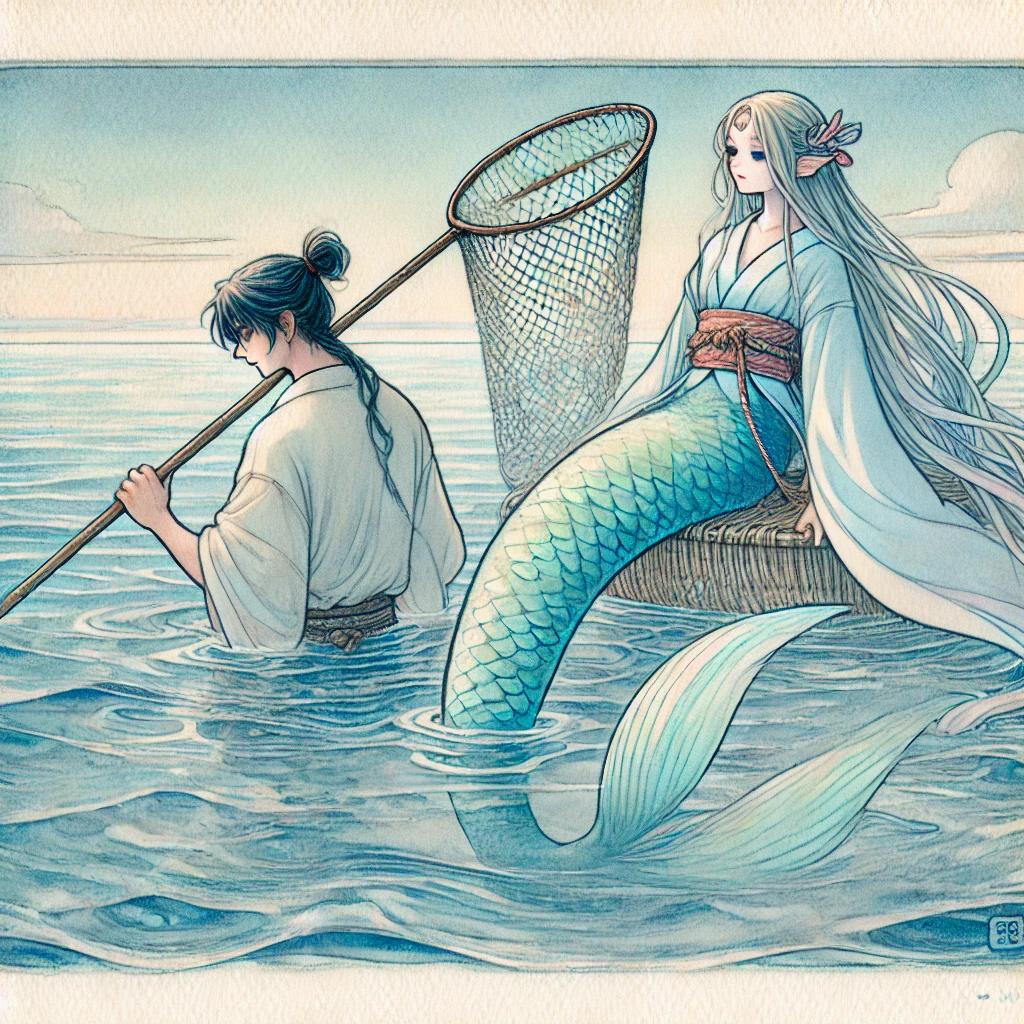
- Discovering Sesoko Island: The Enchanting Legend of Uminchu
- The Legend of Uminchu from Sesoko Island – Guardians of the Sea
- Reverence for the Ocean in Okinawa
- Faith in Unseen Forces
- The Boundary Between Humans and Supernatural Beings
- Fear of Breaking Taboos
- The Weight of Fate and Trials
- The Eerie Nature of Transformation Tales
- Reverence for the Guardian Deities
- The Influence of Legend on Reality
- The Concept of Eternity and Time
- Connection to Views on Life and Death
- Collective Memory and Identity
- The Significance of Legends in Modern Society
- Q&A
- Summary of This Article
Discovering Sesoko Island: The Enchanting Legend of Uminchu
Surrounded by the clear, blue sea, the small Okinawan island of Sesoko holds a rich tapestry of stories. Among these is the ancient legend of “Uminchu,” a tale that at first glance might seem like just another old folktale. However, this story holds the key to understanding the lives and spiritual world of the island’s inhabitants.
The Tale of Taro and Umika
The legend revolves around Taro, a skilled fisherman, and Umika, a beautiful mermaid princess. Their poignant love story unfolds with a dramatic twist, where, as punishment for breaking a taboo, they are forced to live for a hundred years as guardians of the sea. But this narrative goes beyond mere fantasy.
Living with the Sea: Themes of Coexistence and Reverence
Themes of coexistence with the sea, reverence for nature, and the power of love are vividly reflected in the worldview of the Okinawan people, particularly those on Sesoko Island who live closely with the ocean. Remarkably, this ancient legend continues to have a profound impact on modern-day Sesoko.
Educational Impact: Merging Legend with Modern Science
In the island’s schools, a unique curriculum inspired by the Uminchu story has been developed. This innovative education blends the legend with the latest scientific knowledge, encouraging children to think deeply about their natural environment and local culture.
Medical Innovations: Uminchu Healing
In the medical field, the legend has inspired new possibilities. The “Uminchu Healing” approach combines modern medicine with traditional healing methods, utilizing the power of the sea to promote physical and mental health. This therapeutic method is gaining attention for its effectiveness.
Tourism and Cultural Heritage
The tourism industry on Sesoko Island has also been revitalized by the Uminchu story. Advanced VR technology is used in museums, and walking trails that follow the story’s settings have been developed. These initiatives are not just about creating tourist attractions but fostering a deeper understanding of the island’s culture and natural environment.
Challenges and Balances
However, these developments come with their own challenges. The commercialization of traditional culture risks losing its essence, and the increase in tourists could impact the environment. The islanders are engaged in serious discussions about how to balance cultural preservation with economic development.
A Living Legend in Modern Society
It is rare to see an ancient legend come to life so vividly in modern society. The story of Uminchu from Sesoko Island offers profound insights into the harmony between tradition and innovation, coexistence with nature, and the power of cultural heritage.
The tale of this small island, surrounded by the sea, brings deep insights even to those of us living in contemporary times. Would you like to experience this enchanting world where tradition and modernity intersect? The doors to the rich world woven by the Uminchu legend of Sesoko Island are now opening.
The Legend of Uminchu from Sesoko Island – Guardians of the Sea
Long ago, on Sesoko Island, a small fishing village blessed with a rich and bountiful sea thrived in the northwest of Okinawa’s main island. The islanders lived off the sea’s abundance for generations, calling themselves “Uminchu,” which means “people of the sea,” and took great pride in their fishing heritage.
In this village lived a young fisherman named Taro. He was a skilled and successful fisherman, always blessed with plentiful catches. However, Taro harbored a secret. He was secretly in love with a beautiful mermaid princess who lived beneath the sea.
The Forbidden Love of Taro and Umika
The mermaid princess was named Umika. She was the only daughter of the sea king, possessing a beautiful singing voice and a kind heart. Under the moonlit sky, Taro and Umika would meet in secret among the reefs, and over time, their love deepened profoundly.
However, their love faced a significant obstacle. Umika’s father, the sea king, had strictly forbidden any relationship between humans and mermaids. This ancient decree carried severe penalties for anyone who dared to break it.
One night, while Taro and Umika were together on the reefs, a sudden storm arose. Lightning flashed and huge waves crashed around them as they hurried to part. But at that moment, the sea king emerged from the waves, his face filled with rage.
“Umika! You have broken my decree. How dare you consort with a human!”
The sea king’s voice thundered like a storm. Trembling, Umika pleaded for her father’s forgiveness, but his anger would not be quelled.
“Foolish daughter, you shall be imprisoned in the depths of the ocean for a hundred years.”
With that, the sea king summoned a giant whirlpool to drag Umika to the ocean floor. Taro grasped her hand desperately, but his human strength was no match for the sea king.
“Do not forget me, Taro!”
As Umika’s final cry echoed, Taro was overwhelmed with helplessness. In his sorrow and rage, he shouted to the sea king.
“Sea king, please hear me! Our love is true. Please, release Umika. I will pay any price.”
For a moment, the sea king paused, then looked sternly at Taro.
“Very well. I will test your resolve. For the next seven days, you must not drink a single drop of water. If you survive, I will release Umika.”
Taro agreed immediately. He was willing to endure any trial for Umika.
The Trial of Taro
The seven-day ordeal was the hardest thing Taro had ever faced. His throat parched, and his body weakened. The villagers, concerned, offered him water, but Taro refused steadfastly. Driven by his love for Umika, he endured the suffering.
On the seventh night, barely conscious, Taro saw Umika appear before him.
“Taro, you’ve proven your love. My father acknowledges it. But if you continue, you will die.”
Umika spoke through her tears, but Taro shook his head.
“The promise is for seven days. There is still time. I will endure till the end.”
With the last of his strength, Taro walked to the shore, gazing at the sea under the moonlight. There, the sea king appeared.
“Human, your love and determination are true. As promised, I will release Umika.”
With the sea king’s words, Umika transformed into a human and stood on the shore. Taro and Umika embraced, shedding tears of joy.
The Role of Guardians
However, the sea king continued.
“But this is not the end. To prove your love’s eternity, you will become guardians of this island. By day, you will live as humans; by night, you will transform into sea creatures to protect the ocean. After a hundred years, if your love remains unchanged, you will be allowed to live as complete humans.”
Taro and Umika accepted their fate. From then on, they lived as humans by day and protected the sea by night, ensuring the safety and prosperity of Sesoko Island’s waters.
The islanders, upon learning of Taro and Umika’s story, began to revere them as the “Guardians of the Sea.” They prayed to the couple for safety and abundant catches before setting out to fish and sought their protection during sea accidents.
As time passed, no one alive had seen Taro and Umika, but their legend persisted among the people. It was said that on full moon nights, two shadows could be seen embracing on distant reefs.
Miraculous Occurrences
One time, a powerful typhoon struck the island, capsizing many fishing boats and tossing fishermen into the sea. Miraculously, not a single life was lost. The rescued fishermen claimed to have been saved by mermaid-like creatures.
Another summer night, a child was nearly swept away while swimming. As the adults realized, the child had drifted too far to reach. Yet, the child safely returned to shore, claiming a beautiful lady had rescued them.
With each miraculous event, the islanders’ faith in Taro and Umika grew stronger.
The Eternal Guardians
As a hundred years passed since Taro and Umika became guardians, an old fisherman claimed to have seen them in a dream.
“Taro and Umika held hands, looking happy as they ascended to the sky. They must have finally been allowed to live as true humans.”
From that day, no one reported seeing Taro and Umika again. However, in the hearts of Sesoko’s people, they live on as the eternal “Guardians of the Sea.” Even now, before fishing, islanders pray to Taro and Umika, wishing for safe and bountiful days at sea.
Through this story, the people of Sesoko Island learn to appreciate the sea’s blessings, hold deep respect for nature, and believe in the power of true love. The legend of Taro and Umika is not just an old tale; it is a fundamental part of the islanders’ lives and faith.
Reverence for the Ocean in Okinawa
For the people of Okinawa, the ocean is both the center of their lives and an object of profound reverence. While the beautiful blue sea captivates tourists, it evokes complex emotions among the islanders. The legend of the Uminchu of Sesoko Island embodies this deep-seated awe and respect for the sea.
A Source of Abundant Blessings
Since ancient times, the ocean around Okinawa has provided its inhabitants with abundant blessings. These gifts go beyond economic benefits, deeply influencing the culture, traditions, and identity of the islanders.
The Importance of Fishing and the Bounty of the Sea
Fishing is one of the crucial industries sustaining Okinawa’s economy. On small islands like Sesoko, fishing is the core of life, with many islanders living as “Uminchu” (people of the sea). The waters around Sesoko Island, influenced by the Kuroshio Current, are rich fishing grounds. Migratory fish like tuna and bonito, as well as squid, octopus, and various fish species inhabiting the coral reefs, are caught here. These oceanic treasures not only bolster the island’s economy but also enrich the islanders’ diets and support traditional culinary culture.
Uminchu rely on wisdom and techniques passed down through generations to fish. Their ability to read the subtle changes in tides, wind direction, and the phases of the moon seems almost mystical, as if granted by the “Guardians of the Sea.”
However, this abundance also underscores the islanders’ dependence on the sea. The difference between a good and bad fishing season can significantly impact their lives, making Uminchu acutely aware of the sea’s capricious nature. This instability is a key reason for their reverence for the ocean.
Seafood Sustaining Okinawan Cuisine
Okinawan cuisine, shaped by its geographical characteristics, heavily relies on seafood. On Sesoko Island, fresh fish and shellfish regularly grace the dining tables.
Notable dishes include “Minudaru,” raw fish eaten with vinegar miso, and “Namakura,” salted fish intestines. These recipes, born from the wisdom of using every part of the catch, reflect a deep connection with the sea.
Unique Okinawan delicacies like “Irabu” (moray eel) and “Aasa” (seaweed) are also integral to the island’s culinary heritage. These ingredients are not just food sources but are intertwined with the island’s history, culture, and the identity of its people.
For instance, during the traditional “Kaijinsai” festival on Sesoko Island, the year’s catch is offered to the gods in gratitude and for future bountiful harvests. Prayers to Taro and Umika, characters from the Uminchu legend, are an integral part of this festival, linking culinary culture with faith and legend.
However, this rich culinary tradition relies on the sea’s bounty. The recent issues of marine pollution and overfishing have raised concerns among the islanders. To protect their traditional food culture, they recognize the need to reevaluate their coexistence with the ocean.
The Harsh Realities of Nature
While Okinawa’s sea is renowned for its beauty and abundance, it also has a harsh side that sometimes turns against the islanders. This dual nature deepens their reverence for the ocean.
The Threat of Typhoons and High Waves
Okinawa is one of the most typhoon-prone regions in Japan. Small islands like Sesoko are directly exposed to these powerful storms.
From summer to autumn, typhoons frequently approach and land on the island, significantly affecting the lives of the residents. The damage from strong winds, coastal erosion from high waves, and the capsizing of fishing boats and loss of fishing gear can be devastating.
For example, the “Miyakojima Typhoon” of 1959 recorded maximum wind speeds of 85.3 meters per second, causing numerous casualties and leaving a lasting impact on the islanders. In 2018, Typhoon No. 24 hit Okinawa’s main island and severely damaged Sesoko Island, eroding the coastline and altering the island’s shape.
Each time the islanders face such natural fury, they are reminded of the destructive power of the sea, reinforcing their awareness of the “Guardians of the Sea.” Many islanders pray to the sea gods for safety after the storm has passed.
High waves, not just during typhoons but also caused by winter monsoon winds, present another threat. The phenomenon known as “Ikamajiri” can create waves over 10 meters high, making it impossible for fishing boats to set out. These natural threats keep the sea-dependent people in a constant state of tension, deepening their reverence for the ocean.
History and Lessons of Maritime Accidents
Okinawa’s sea has a long history of maritime accidents. Sesoko Island is no exception, and these events are deeply etched in the islanders’ memories.
One notable incident was a large-scale maritime accident in 1970 when a fishing fleet from Sesoko Island encountered a sudden storm. Several boats were wrecked. While the human casualties were minimal, the loss of numerous fishing boats severely impacted the island’s fishing industry.
After this accident, the legend of the “Guardians of the Sea” was rekindled among the islanders. Many fishermen believed their near-miraculous survival was thanks to the protection of Taro and Umika.
In 2005, a tourist almost drowned while swimming near Sesoko Island. A local fisherman quickly rescued the person, preventing a tragedy. This event is often cited as a modern manifestation of the “Guardians of the Sea” spirit, showing that the legend still lives on among the islanders.
These maritime accidents remind the islanders of the ocean’s dangers and the importance of safety measures. Nowadays, they have adopted various measures, including advanced meteorological systems and regular rescue drills.
Despite these scientific and technological advancements, the islanders still hold a deep reverence for the sea. This reverence is a blend of humility, acknowledging that no preparation can fully overcome the sea’s power, and faith in the “Guardians of the Sea.”
Thus, the sea around Okinawa, especially around Sesoko Island, remains both a source of life and an object of reverence for the islanders. The dual nature of the sea, providing rich blessings while occasionally showing its fierce side, is what has given rise to legends like the “Uminchu of Sesoko Island,” which continue to live on in the hearts of the people.
The islanders’ continuous search for ways to coexist with the sea offers valuable insights to those of us living in the modern world. Balancing reverence for nature with scientific understanding may be the key to a sustainable future.
We can only hope that the Uminchu of Sesoko Island will continue to live harmoniously with the sea, passing on their rich culture to future generations.
Faith in Unseen Forces
For the people of Okinawa, especially the residents of remote islands like Sesoko, faith in unseen forces is a crucial part of daily life. This belief is reinforced and passed down through generations via legends like “The Tale of the Uminchu of Sesoko Island.”
Tradition of Deifying Natural Phenomena
In Okinawa’s traditional belief system, many natural phenomena are deified. This reflects a profound respect and awe for the forces of nature, a worldview particularly vital for those living on islands surrounded by the sea.
Belief Systems from the Ryukyu Kingdom Era
The roots of Okinawa’s nature worship can be traced back to the Ryukyu Kingdom era. During that time, people recognized the presence of gods within nature and sought their protection.
In the Ryukyu Kingdom era, the royal government stationed female priestesses called “Noro” across the region to pray for the nation’s peace and prosperity. These Noro played a crucial role in connecting people with the gods who governed natural forces.
On Sesoko Island, this tradition continued with the establishment of a shrine known as “Norotunuchi.” Rituals held there focused on prayers to the sea gods. Ceremonies for bountiful catches and protection from maritime disasters were particularly vital to the islanders’ lives.
Even today, Sesoko Island holds an annual festival called “Umachi” in the lunar month of March to pray for maritime safety and abundant catches. During this festival, islanders gather at the shore to offer thanks and prayers to the sea gods. The names of Taro and Umika, characters from the Uminchu legend, are often invoked, demonstrating the merging of legend and contemporary faith.
Nature Worship and Harmonious Living
For the people of Okinawa, particularly those on small islands like Sesoko, nature worship is more than just a belief. It is wisdom for living harmoniously with nature and a guideline for maintaining a sustainable lifestyle.
For instance, Sesoko’s fishermen avoid overfishing, a practice that demonstrates their respect for marine resources and the sea gods. They believe that overfishing would incur the “wrath of the sea.”
The islanders also engage in regular beach clean-ups. This act is seen not just as environmental conservation but also as a gesture of gratitude and respect towards the sea gods. The belief that “cleaning the sea is preparing a home for the sea gods” is widely shared among the islanders.
Furthermore, when building new houses on Sesoko Island, some families include a small window called a “kami-mado” facing the sea. This window invites the sea gods into their homes, praying for the family’s safety and prosperity.
Thus, nature worship, especially reverence for the sea, permeates every aspect of life on Sesoko Island. It is a form of wisdom for achieving coexistence with nature and serves as a cultural foundation for sustaining a harmonious society.
The Sense of Invisible Beings Nearby
For the people of Okinawa, particularly those on remote islands like Sesoko, the presence of invisible beings is a deeply ingrained feeling. This sense, cultivated through daily life, is reinforced by legends like “The Tale of the Uminchu of Sesoko Island.”
The Role and Influence of Yuta (Shamans)
In Okinawa’s traditional belief system, “Yuta,” or shamans, play a significant role. Yuta act as intermediaries between the visible and invisible worlds, deeply influencing the lives of the people.
Sesoko Island has long had Yuta who serve as spiritual anchors for the community. Yuta interpret the will of the sea gods and provide guidance to fishermen. For example, they might predict the auspiciousness of fishing expeditions or conduct rituals for abundant catches.
One notable event occurred in the 1980s. During a period of sharply declining fish catches, putting the island’s economy at risk, a Yuta declared that the sea gods were angry and proposed a large-scale sea purification ritual. After the entire island participated in this ritual, the fish catches mysteriously recovered. This incident further solidified the islanders’ belief in the power of unseen forces.
Yuta also claim to sense the presence of Taro and Umika from the Uminchu legend. There are testimonies of Yuta seeing Taro and Umika during rituals on the beach under a full moon. Such stories blur the line between legend and reality, strengthening the sense of unseen beings nearby.
Sharing Spiritual Experiences in Daily Life
On Sesoko Island, spiritual experiences are commonly shared among the residents, shaping their mental and spiritual world.
For example, fishermen often report seeing mysterious lights while out at sea. Many believe these lights are “guidance from Taro and Umika.” There are numerous accounts of fishermen being led to abundant catches by these lights.
There are also many testimonies of being saved by mysterious forces during maritime accidents. In one incident in 2010, a capsized fisherman reported being guided to safety by a “beautiful woman’s voice.” Many islanders believe this woman to be Umika.
Children playing on the beach also share stories of strange experiences. Tales of seeing two figures embracing on distant reefs during full moon nights or hearing beautiful singing mixed with the sound of waves are passed down among them.
These spiritual experiences are not dismissed as mere superstition or imagination but are accepted as part of reality by the islanders. This reflects Okinawa’s traditional worldview of living alongside unseen beings.
Sharing these experiences strengthens the communal bonds on the island. By exchanging stories, people reaffirm shared values and perspectives, enhancing community solidarity.
Moreover, these stories play a crucial role in passing traditional values to younger generations. Spiritual experiences recounted by parents and grandparents stimulate children’s imaginations and teach respect for nature and the importance of community.
Thus, the sense of unseen beings being close is deeply rooted in the daily lives of the people of Sesoko Island. This sense, blending legend and reality, forms a unique spiritual world. It plays an essential role in fostering coexistence with nature and preserving traditional culture, becoming a vital part of the islanders’ identity.
The Boundary Between Humans and Supernatural Beings
One of the distinctive elements of Okinawan folklore, especially in the tale of the Uminchu from Sesoko Island, is the blurred boundary between humans and supernatural beings. This concept is deeply rooted in the worldview and beliefs of the island’s inhabitants, significantly influencing their daily lives.
Interacting with the Otherworld: The Mermaid Legends
Many islands in Okinawa have long been home to mermaid legends. These tales depict mysterious events occurring at the boundary between the human world and the sea, continually stimulating the imagination of the people.
Mermaid Legends Across Okinawa
Mermaid legends can be found in various regions of Okinawa, including the main island, Miyako Island, and Ishigaki Island. While these legends share many similarities, they also reflect the unique characteristics of each region.
For example, in Nakijin Village in the northern part of the main island, there is a place known as the “Mermaid’s Grave.” According to legend, a mermaid saved by a fisherman lies buried here after offering her own flesh as a token of gratitude. This story shows how the interaction between humans and mermaids is not just a fantasy but a memory deeply etched in the people’s consciousness.
In Miyako Island, there is a mermaid legend called “Unuguor.” This tale involves a mermaid falling in love with a human man and bearing his child, only to eventually return to the sea in a tragic end. This story illustrates the deep bonds and inherent difficulties between humans and supernatural beings.
The legend from Ishigaki Island tells of mermaid tears turning into beautiful pearls. Fishermen are taught to treat mermaids with respect rather than harm, embodying awe and reverence for the mysterious beings of nature.
The tale of the Uminchu from Sesoko Island can be seen within the broader context of these Okinawan mermaid legends. The story of Taro and Umika shares common elements with legends from other regions while presenting unique aspects reflective of Sesoko Island’s culture and environment.
The Symbolic Significance of Mermaid Legends in Maritime Culture
Okinawan mermaid legends are not mere fantasies. They symbolically represent the maritime culture and worldview of the Okinawan people.
First, these legends express both awe and admiration for the sea. The sea provides abundant blessings but can also be a source of danger. Mermaids, as beautiful and alluring yet potentially perilous beings, personify the dual nature of the sea. Their image mirrors the characteristics of the ocean itself.
Secondly, these legends explore the relationship between humans and nature. The interactions between mermaids and humans symbolize the ideal of coexistence with nature. Many legends depict relationships based on mutual understanding and respect, reflecting the Okinawan people’s vision of their relationship with the natural world.
Furthermore, mermaid legends demonstrate the richness of the Okinawan spiritual world. The ability to perceive and interact with unseen beings is a crucial element of the traditional Okinawan worldview. These legends express this sensibility in narrative form, passing it down through generations.
The tale of the Uminchu from Sesoko Island encapsulates essential aspects of Okinawan maritime culture: coexistence with the sea, reverence for nature, and interaction with the unseen world. For instance, Taro’s trial of abstaining from water for seven days symbolizes the resilience of fishermen facing the harshness of the sea. Additionally, the dual existence of Taro and Umika, living as humans by day and sea creatures by night, reflects the lives of Okinawans who straddle the boundary between land and sea.
In this way, the mermaid legends of Okinawa, including the Uminchu tale from Sesoko Island, hold significance beyond mere entertainment. They convey the maritime culture, views on nature, and spiritual world of the Okinawan people, serving as vital cultural assets that preserve and transmit these values.
The Process of Human Deification
Another characteristic element of Okinawan folklore, especially seen in the tale of the Uminchu from Sesoko Island, is the process of human deification. Understanding this concept is crucial for comprehending Okinawan religious beliefs and worldview.
Relationship Between Heroic Tales and Deification
Many Okinawan legends depict humans with exceptional abilities or high moral character eventually being revered as gods over time. This reflects a belief in human potential combined with ancestor worship.
In the Uminchu tale from Sesoko Island, Taro and Umika are ultimately deified as “Guardians of the Sea.” Their story includes typical elements of hero deification:
- Exceptional Abilities: Taro is an excellent fisherman, and Umika is a special mermaid princess.
- Overcoming Trials: Taro endures the severe trial of abstaining from water for seven days.
- Self-Sacrifice: They choose to forsake human life to become sea guardians.
- Contribution to the Community: They continually protect the island’s people, saving them from maritime accidents.
These elements combined transform Taro and Umika from mere legendary figures into revered deities.
A real-life example of this process is the story of Yakabi Choki, a fisherman from Sesoko Island in the 18th century. Known for his superior navigation and fishing skills, he saved many from maritime accidents. After his death, he was worshipped as a “Sea God,” exemplifying the deification process of a historical figure.
Conditions for Becoming Regional Guardians
Each region in Okinawa has its own guardian deities, many of whom were once humans. Certain conditions are believed to be necessary for becoming a guardian deity:
- Contribution to the Community: The individual must have significantly served the local people.
- Extraordinary Abilities: They are often credited with exceptional talents or skills.
- Tragic End: Many died in self-sacrifice or through unforeseen accidents.
- Spiritual Power: Miracles attributed to their spirit after death are essential.
- Long-Term Worship: Sustained veneration by the community over time is crucial.
Taro and Umika from the Uminchu tale meet these conditions. They protect the island’s people, possess extraordinary abilities, sacrifice their human lives (symbolic death), demonstrate ongoing spiritual power, and are continually worshipped.
An actual example is the guardian deity known as “Teriya no Ufusu” from Ogimi Village in northern Okinawa. Originally a fisherman named Meiyoshi, he was renowned for his fishing skills and generous sharing of techniques with villagers. He is said to have sacrificed his life to save villagers during a storm. After his death, he was venerated as the village guardian deity.
This process of human deification reflects Okinawan values and beliefs, emphasizing faith in human potential, respect for self-sacrifice, and the importance of communal bonds. The Uminchu tale from Sesoko Island encapsulates these traditional values and beliefs, preserving and passing them on through storytelling.
Understanding these legends provides deeper insights into Okinawan culture and the mindset of its people, highlighting the profound connections between folklore, religious beliefs, and community values.
Fear of Breaking Taboos
Okinawan folklore, particularly the tale of the Uminchu from Sesoko Island, strongly conveys the fear of breaking taboos. This element reflects the traditional social norms and moral values of Okinawa, imparting important lessons to the community through its narratives.
Laws to Maintain Social Order
In traditional Okinawan society, various laws and taboos existed to maintain social order and harmony with nature, playing a crucial role in preserving the community’s stability.
Rules of Traditional Village Society
In traditional village societies across Okinawa, including Sesoko Island, numerous rules were established to maintain communal order. These rules were often perceived not merely as social agreements but as the will of the gods and ancestors.
For instance, Sesoko Island has a sacred area known as “Yurunuki,” believed to be inhabited by sea gods. Entering this area was strictly prohibited. Violating this taboo was thought to provoke the wrath of the sea, leading to poor catches or maritime accidents.
There were also several taboos related to fishing. For example, it was forbidden to go fishing on nights of the full moon, as these nights were considered a time when the sea gods appeared on the surface, and disturbing the tranquility was believed to anger the gods.
Moreover, women were traditionally forbidden from boarding fishing boats. This belief stemmed from the idea that their presence would incite the jealousy of the sea gods, causing rough seas. This taboo is sometimes linked to the story of Umika, the mermaid in the Uminchu legend, who represents a female figure associated with the sea.
An incident from 1985 illustrates the power of these taboos. A young fisherman ignored the prohibition and went fishing on a full moon night, only to be caught in a sudden storm and barely survive. This event heightened respect for traditional taboos among the younger generation on the island.
The Educational Role of Taboos
These taboos serve an educational purpose beyond merely restricting behavior.
Firstly, taboos convey wisdom about coexisting with nature. For example, avoiding fishing on full moon nights may correlate with the spawning periods of certain fish. Adhering to such taboos inadvertently ensures the sustainable use of marine resources.
Secondly, taboos also incorporate safety wisdom. The prohibition against women boarding fishing boats likely served to keep pregnant women and children away from the dangerous sea.
Additionally, taboos reinforce communal bonds. Sharing and observing the same taboos fosters common values and behavioral norms, strengthening the unity of small island societies.
The tale of the Uminchu from Sesoko Island exemplifies the educational role of taboos. In the story, the love between Taro and Umika breaks the taboo against human-mermaid relationships, resulting in severe trials for both. This narrative underscores the gravity of breaking taboos and the importance of courage and dedication in overcoming such transgressions.
In the early 2000s, a local school on Sesoko Island used the Uminchu story in its curriculum to teach children about traditional values and the importance of harmony with nature. This approach was seen as a modern method of preserving the spirit of traditional taboos.
Thus, taboos are not mere superstitions or outdated customs but are wisdom crystallized to maintain social order and harmony with nature, serving significant educational roles. The tale of the Uminchu from Sesoko Island remains valuable today for conveying the meanings and importance of these taboos through storytelling.
Severe Consequences of Breaking Rules
In traditional Okinawan society, breaking laws and taboos was a grave matter. This perspective is strongly reflected in the tale of the Uminchu from Sesoko Island.
Symbolism of Punishments in the Story
In the tale of the Uminchu from Sesoko Island, Taro and Umika face severe punishment for breaking the taboo against human-mermaid relationships. The nature of these punishments carries deep symbolism.
Firstly, Umika being imprisoned in an underwater cell symbolizes the isolation of those who break taboos from the community. This reflects the traditional societal response of ostracizing individuals who disrupt communal harmony.
Secondly, the trial of Taro abstaining from water for seven days signifies the need for severe atonement for breaking taboos. Water, essential for life, is especially crucial in an island environment. Abstaining from it represents a life-threatening form of penance, highlighting the extreme measures required for redemption.
Finally, the fate of Taro and Umika living as humans by day and sea creatures by night symbolizes the incomplete existence of those who violate taboos. It illustrates that those who disrupt social order become beings that belong nowhere fully, underscoring the consequences of such actions.
These punishments reflect real societal sanctions. For instance, until the 1950s, Sesoko Island practiced “mura hachibu,” a form of social ostracism for serious offenders. The punishments depicted in the Uminchu story can be seen as narrative representations of these real sanctions.
Impact of Breaking Rules in Real Society
In traditional Okinawan society, breaking laws and taboos affected not just the individual but the entire community.
A well-known incident from the 1970s on Sesoko Island tells of a fisherman who fished in a forbidden area, leading to a prolonged period of poor catches for the entire island. The community interpreted this as punishment for breaking the taboo and held a large-scale ritual to appease the sea gods. This event underscores the belief that breaking taboos impacts the entire community.
Moreover, breaking rules significantly affects an individual’s social status and trust. In the early 2000s, a scandal erupted when a leader of the Sesoko Island fishery cooperative was found falsifying catch reports, violating the traditional taboo of treating the sea’s bounty with honesty. The leader lost his position and was effectively ostracized from the community.
The belief that breaking taboos affects future generations is also strong. The concept that “the sins of the ancestors fall upon their descendants” is deeply rooted, reflected in the Uminchu story’s depiction of a “hundred-year trial,” symbolizing transgenerational consequences.
However, there are movements to reinterpret traditional taboos in contemporary contexts. For example, the prohibition against women on fishing boats is being reconsidered. A 2010 survey on Sesoko Island revealed that many younger people believe that fishing should be inclusive of all genders based on ability rather than tradition.
Thus, the meaning and significance of taboos and their violation are evolving. However, the underlying values of “harmony with nature” and “communal order” remain deeply ingrained. The tale of the Uminchu from Sesoko Island is a valuable cultural resource for understanding the continuity and changes in these values.
This tale, with its lessons on the significance of taboos and the severe consequences of breaking them, continues to be relevant, offering insights into traditional values and their adaptation in modern society.
The Weight of Fate and Trials
The tale of the Uminchu from Sesoko Island is deeply imbued with themes of fate and trials. These themes reflect the life views and values of the people of Okinawa, especially those who live in harmony with the sea.
Enduring Hardships for Love
In the story, Taro and Umika endure significant hardships for the sake of their love. This is not merely a romantic depiction but a reflection of the life views and values held by the people of Okinawa.
The Motif of Love and Hardship in Okinawan Literature
In Okinawan literature, particularly in folklore, the motif of love intertwined with hardship frequently appears. This reflects the experiences of the Okinawan people, shaped by a harsh natural environment and a complex historical background.
For example, the tale “The Love of Ungami Taisho” from northern Okinawa’s main island depicts a love between a couple of different social statuses, opposed by their surroundings, leading them to choose death after enduring hardships. After their death, they are enshrined as deities. This tale shares many common elements with the story of the Uminchu from Sesoko Island.
Similarly, the legend of “Tidagaama” from Miyako Island deals with the theme of love and hardship. It narrates the tragic love between a human woman and the child of the sun god. The motif of love between beings from different worlds echoes the Uminchu story.
In the Uminchu story, Taro’s seven-day trial of abstaining from water reflects these literary traditions. It symbolizes not just physical suffering but the immense value of love, a value deeply ingrained in Okinawan culture.
An event from the 1960s in Sesoko Island is often cited as a real-life version of this motif. A young fisherman imposed a “trial” on himself by abstaining from fishing for a week to marry someone his parents disapproved of. This act was said to be inspired by the Uminchu story.
The Source of Strength to Overcome Trials
In the story of the Uminchu, Taro and Umika overcome severe trials due to their strong love. This motif of love as the source of strength to overcome trials reflects the values of the Okinawan people.
In traditional Okinawan society, the spirit of “Yui-maru,” or mutual assistance, has been highly valued. This idea of supporting each other in difficult times is embodied in the relationship between Taro and Umika in the Uminchu story.
For instance, in 2000, a major typhoon hit Sesoko Island. The community worked together to recover quickly, showcasing the strength and resilience described in the Uminchu story as living within the islanders.
Fishermen on Sesoko Island often say, “We live because of the sea,” expressing their determination to face harsh nature and the bonds that make it possible. The way Taro and Umika overcome their trials in the story mirrors the fishermen’s worldview.
Recently, local schools have incorporated the Uminchu story into their curriculum. Since 2015, the elementary school on Sesoko Island has offered a class called “The Heart of Sesoko,” using the Uminchu story to teach courage in facing difficulties and the importance of community bonds. This initiative highlights the ongoing educational value of traditional stories in contemporary society.
Thus, the theme of “enduring hardships for love” in the Uminchu story is more than a romantic tale. It encapsulates the life views and values of Okinawans, particularly those living with the sea, and continues to hold significant meaning today.
The Meaning of Long-term Atonement
In the Uminchu story from Sesoko Island, Taro and Umika are forced to live as guardians of the sea for a hundred years. This long-term atonement carries profound meaning.
The Concept of Atonement and Religious Views
In traditional Okinawan beliefs, atonement for sins requires more than mere apology. It involves long-term acts or services to fully atone for one’s sins.
This belief is rooted in Okinawa’s unique religious perspective, which blends elements of Shintoism, Buddhism, and Chinese Taoism. Particularly, the Taoist concept of “karma” or “cause and effect” has a significant influence, emphasizing that all human actions result in consequences.
The hundred-year atonement in the Uminchu story symbolizes this concept of karma. Taro and Umika are subjected to long-term atonement as a consequence (effect) of breaking the taboo (cause).
On Sesoko Island, there are several sacred sites known as “Uganju,” where people perform daily prayers and periodic rituals to express gratitude and atonement to their ancestors and deities. The annual “Ukui” ceremony in the lunar month of July is a ritual to cleanse the year’s sins and impurities, reflecting the long-term atonement concept portrayed in the Uminchu story.
The Idea of Intergenerational Atonement
The hundred-year period in the Uminchu story does not merely signify a long time but also embodies the idea of intergenerational atonement.
In traditional Okinawan thought, the actions of an individual can impact not only their own life but also that of their descendants. This is the idea of “intergenerational karma.”
In the Uminchu story, the hundred-year atonement of Taro and Umika represents this idea, showing that their actions affect future generations and the community as a whole. Their atonement protects their descendants and the community from the consequences of their actions.
On Sesoko Island, “Monchu,” or kin groups, play a crucial role in maintaining ancestral graves and conducting rituals. This practice reflects the belief that the actions of ancestors, both good and bad, are inherited and addressed by their descendants.
A 2010 survey on Sesoko Island revealed that many residents believe their current lives are influenced by their ancestors’ actions. For example, some attribute the preservation of rich fishing grounds to their ancestors’ respect for the sea. This reflects the idea of intergenerational atonement depicted in the Uminchu story and its deep-rooted presence in modern islander consciousness.
This intergenerational atonement idea has also gained new relevance in environmental conservation. Since 2018, the “Guardians of the Sea Project” on Sesoko Island has utilized the Uminchu story for environmental education, teaching children that their actions today will affect the state of the sea a hundred years from now.
Thus, the long-term atonement in the Uminchu story reflects Okinawan religious and philosophical views. It is not just a story element but deeply rooted in the people’s way of life and values, continuing to hold significance in contemporary society.
The Eerie Nature of Transformation Tales
The Uminchu story from Sesoko Island includes the element of humans transforming into other beings. This transformation tale adds a unique eeriness and mystery to the story, leaving a lasting impression on the audience.
The Duality of Day and Night Transformations
The setting where Taro and Umika live as humans by day and sea creatures by night is particularly striking. This duality holds deep symbolic meaning beyond mere fantasy.
Transformation Motifs in Okinawan Folklore
The motif of transformation is common in Okinawan folklore, reflecting a worldview where the boundaries between humans, nature, and the supernatural are blurred.
For example, the legend of “Kijimuna” in northern Okinawa tells of tree spirits that can transform into humans. On Miyako Island, the “Paantu” legend involves mud-covered deities visiting villages, a form of transformation tale.
Around Sesoko Island, fishermen tell stories of “Umineko,” mysterious creatures that can occasionally take human form. A 2005 interview with local elders recorded eyewitness accounts of these creatures.
These transformation tales reflect a traditional view where humans and nature are closely connected. The day and night transformations in the Uminchu story symbolize this connection.
The Symbolism of Human Duality
The duality of Taro and Umika’s transformations symbolizes deeper insights into human nature.
First, this duality represents the inner conflicts and contradictions within humans. We all possess a public and a private self, a social facade, and an inner self. Taro and Umika’s transformations visually express this human duality.
Moreover, this setting symbolizes the relationship between humans and nature. Their human forms during the day represent their social existence, while their sea creature forms at night symbolize their integration with nature. This reflects the traditional Okinawan view of humans as both social beings and integral parts of nature.
In the lives of Sesoko’s fishermen, this duality is evident. By day, they use modern fishing tools as “ordinary humans,” but at night, they employ traditional knowledge and techniques, becoming “creatures of the sea.” An interesting testimony from a 2018 interview with young fishermen stated, “When I’m at sea, I feel like I become a part of the ocean.”
Additionally, this duality suggests the vast potential within humans. We all harbor diverse, unseen aspects and abilities. Local schools use the Uminchu story to encourage children to explore their various potentials.
Thus, the duality in the Uminchu story is not just a fantasy element. It contains deep insights into human nature and the relationship with nature, offering new perspectives on self and the world.
The Blurred Boundary Between Humans and Creatures
In the Uminchu story from Sesoko Island, the boundary between humans and sea creatures is blurred. This setting reflects traditional Okinawan views and has contemporary relevance.
Influence of Animism
Traditional Okinawan beliefs strongly incorporate animism, the idea that all things have a spirit. This worldview blurs the boundaries between humans, animals
, plants, and even inanimate objects.
For example, the “Nirai Kanai” belief from southern Okinawa considers a utopia beyond the sea, accessible to humans. This signifies the blurred boundary between humans and the supernatural.
Around Sesoko Island, there is special respect for sea creatures. Dugongs, considered incarnations of sea goddesses, are gently returned to the sea if caught accidentally. A 2012 survey confirmed that this practice continues among some fishermen.
The transformations of Taro and Umika in the Uminchu story symbolize this animistic worldview, portraying humans and nature as fundamentally the same.
Modern Human-Nature Relationships
The theme of blurred boundaries between humans and creatures is significant in considering modern human-nature relationships.
With growing concern over environmental issues, the recognition of humans as part of nature is being reevaluated. The Uminchu story anticipates this modern theme.
Since 2015, the “Coexistence with the Sea Project” on Sesoko Island aims to apply the spirit of the Uminchu story today. It promotes ecotourism balancing fishing and tourism and protects marine life.
The story is also used in environmental education. Since 2019, the local middle school has conducted “Uminchu Studies,” discussing how humans and sea creatures can coexist.
Furthermore, the story influences modern medical practices, integrating traditional healing methods. In 2020, a “marine therapy” program started at a nearby hospital, based on the belief that sea activities benefit mental and physical health. Named the “Taro and Umika Project,” it brings the story’s spirit into modern medicine.
Thus, the blurred boundaries in the Uminchu story are not just elements of legend. They reflect traditional views and provide important insights into modern human-nature relationships, continuing to question how we coexist with nature.
Through these themes, the Uminchu story from Sesoko Island transcends its time, offering timeless wisdom about love, endurance, atonement, and the deep connection between humans and nature.
Reverence for the Guardian Deities
In the tale of the Uminchu from Sesoko Island, Taro and Umika ultimately become guardian deities of the sea. This narrative reflects the deep-seated faith and reverence for nature held by the people of Okinawa.
Gratitude Toward Protective Deities
In traditional Okinawan belief, guardian deities hold a crucial place as protectors of daily life, offering their blessings and safeguarding the people.
Daily Prayers and Rituals
Among the people of Sesoko Island, especially the fishermen, daily prayers and rituals directed towards the sea’s guardian deities are deeply ingrained. These practices are not merely formalities but are spiritually intertwined with their everyday lives.
For instance, before heading out to sea, fishermen engage in a ritual called “Unkee,” praying for safety and a bountiful catch. According to a 2018 survey, about 80% of Sesoko Island’s fishermen continue this practice.
Moreover, the annual “Kaijin-sai” festival held in the lunar month of June is a significant event where the entire island participates. During this festival, statues modeled after Taro and Umika are enshrined at the coast, and people express their gratitude for the past year’s blessings and pray for future prosperity.
Daily expressions of gratitude also manifest in other ways. For example, when preparing fish, residents often say, “Thank you for the life we are about to receive.” This phrase goes beyond a simple mealtime greeting, embodying gratitude for the sea’s bounty and the protection of the guardian deities.
Since 2015, the community initiative “Umi no Megumi Kyoshitsu” (Sea’s Blessing Classroom) has been teaching children not only how to prepare fish but also the importance of gratitude. This program is one of the efforts to carry traditional values into the modern era.
Fostering Community Spirit Through Faith
The belief in guardian deities strengthens not only individual spirituality but also the sense of community on the island.
Sharing the worship of these deities and expressing collective gratitude foster a strong sense of unity among the islanders. For example, during the Kaijin-sai festival, nearly all residents, not just fishermen, participate. This communal worship reinforces the feeling that they are protected by the guardian deities as one unified community.
During times of disaster, such as the 2012 typhoon that struck Sesoko Island, the faith in guardian deities played a pivotal role. Many islanders spontaneously prayed to the sea deities during the recovery efforts, which is believed to have strengthened their resolve and facilitated swift reconstruction.
This belief also strengthens intergenerational bonds. The tales of the Uminchu and family prayers to the guardian deities, passed down from grandparents to grandchildren, form a foundation of shared values across generations.
The “Uminchu Storytelling Project,” launched in 2019, provides a platform for elderly fishermen to share their experiences related to the guardian deities with the younger generation. This project promotes not only the preservation of traditional culture but also dialogue and mutual understanding between generations.
Thus, the reverence for guardian deities is not just an old superstition or custom for the people of Sesoko Island. It is a spiritual pillar deeply embedded in daily life and an essential element in forming and maintaining community identity. The presence of the guardian deities in the Uminchu story symbolically represents the spiritual and social fabric of the island community.
The Potential for Unjust Calamities
On the other hand, guardian deities are not always perceived as purely benevolent. They are also seen as capable of bringing about unjust calamities, deepening the reverence and fear toward them.
Recognition of the Dual Nature of Deities
In traditional Okinawan belief, deities are understood to possess both good and evil qualities, a concept known as “the duality of deities.” This dual nature is reflected in the tale of the Uminchu from Sesoko Island.
For instance, Taro and Umika serve as protectors of the island’s people, yet they are also sinners who broke societal laws. This setup symbolically represents the dual nature of deities, encompassing both benevolence and retribution.
This duality is also evident in real-life faith practices. In interviews conducted in 2010 with the elders of Sesoko Island, many testified that “the sea gods provide blessings but also deal harsh punishments at times.”
Among fishermen, the phrase “the sea’s caprice” is commonly used to describe the unpredictable nature of the sea, attributing both bountiful catches and harsh weather to the whims of the sea gods. This phrase encapsulates both gratitude and fear towards the guardian deities.
Linking Disasters to Divine Punishment
In the traditional Okinawan worldview, natural disasters and misfortunes are often interpreted as manifestations of divine wrath or punishment. This belief is mirrored in the tale of the Uminchu from Sesoko Island.
For example, after a severe typhoon struck the island in the 1980s, some residents speculated that the disaster was divine retribution for polluting the sea. This led to island-wide efforts to clean the coastline and conduct rituals to appease the sea gods.
Similarly, during a prolonged period of poor fishing in 2005, there was widespread anxiety that the guardian deities were angered. This prompted religious leaders to organize a large-scale memorial service to express gratitude and apologize to the sea creatures.
Such incidents illustrate the persistence of interpreting disasters and misfortunes as divine punishment in modern times. However, there has been growing criticism of this perspective in recent years.
Since 2018, Sesoko Island’s disaster education program has emphasized the importance of scientifically understanding natural disasters. Discussions also focus on how to integrate traditional beliefs with scientific knowledge, such as “respecting the sea gods while implementing scientific disaster prevention measures.”
Thus, the reverence for the guardian deities depicted in the Uminchu story is not just a narrative element. It is a reflection of deeply rooted faith in the islanders’ spiritual life and provides a crucial perspective on understanding their relationship with nature and disaster response. The islanders’ efforts to integrate traditional beliefs with modern knowledge offer new insights into sustainable coexistence with nature.
The Influence of Legend on Reality
The tale of the Uminchu from Sesoko Island is more than just a legend or an old story. It is deeply embedded in the daily lives and values of the island’s people, influencing reality in various ways.
Connection to Actual Sea Rescue Efforts
Taro and Umika, as depicted in the Uminchu story, are guardian deities who save people from maritime accidents. This aspect of the legend is closely linked to real-life sea rescue efforts.
Integration of Fishermen’s Experiences and Legends
Among the fishermen of Sesoko Island, many accounts of miraculous experiences during sea accidents are often interpreted in the context of the Uminchu legend.
For instance, during a 2008 maritime accident, a fisherman swept away by strong currents reported being mysteriously guided back to the island. He claimed to have heard a beautiful female voice leading him, which many islanders believe to be Umika’s intervention.
In another incident during a 2015 typhoon, a nearly capsized fishing boat suddenly stabilized. The crew reported feeling as if something was supporting the boat from below, which was interpreted as Taro’s protective power.
These accounts are not dismissed as mere coincidences or hallucinations but are instead viewed through the lens of the Uminchu story, giving them deeper meaning and reinforcing the community’s faith.
The “Voice of the Sea Project,” launched in 2017, systematically collects and records these experiences. This initiative goes beyond folkloric research, aiming to share wisdom and experiences related to sea safety with future generations.
The Role of Faith in the Advancement of Sea Rescue Technology
Interestingly, the faith in the Uminchu story has influenced the development of actual sea rescue technologies.
For example, the latest lifeboat introduced by the Sesoko Island fishing cooperative in 2010 was named “Taro.” This naming reflects an intention to blend modern technology with traditional guardian deity beliefs. Since its deployment, there have been reports of improved rescue success rates in maritime accidents around the island.
Additionally, since 2019, local high school students have been developing a sea rescue support app called the “Umika System.” This app combines the latest GPS technology and weather data with traditional sea knowledge to create a unique algorithm for rescue operations.
Among the fishermen, wearing the latest safety gear is often referred to as “receiving the protection of Taro and Umika.” This expression illustrates the fascinating fusion of modern science and traditional faith.
A 2020 survey indicated that this blend of tradition and science effectively enhances the safety awareness of fishermen. By interpreting legends in conjunction with modern safety technologies, more effective maritime prevention and rescue operations have been realized.
Thus, the Uminchu story from Sesoko Island is intricately connected to real-life sea rescue efforts. It extends beyond psychological comfort, influencing actual safety measures and technological developments. This intersection of legend and reality demonstrates how Okinawan traditional culture continues to thrive in contemporary society.
Faith in Daily Life
The Uminchu story is deeply rooted in the daily lives of Sesoko Island’s people, influencing their actions and thoughts in tangible ways.
Rituals and Ceremonies Related to Fishing
Sesoko Island’s fishing practices incorporate various rituals and ceremonies based on the Uminchu story.
For example, a ritual called “Taro-Umika Prayer” is performed when launching a new fishing boat. During this ritual, a local priest recites a passage from the Uminchu story at the boat’s bow, praying for the guardian
deities’ protection. According to a 2016 survey, almost all the island’s fishermen consider this ritual essential.
Additionally, the annual “Kaijin-sai” festival, held in the lunar month of March, involves floating effigies modeled after Taro and Umika out to sea. This significant event expresses gratitude to the sea deities and prays for a prosperous year. Recently, this festival has also attracted tourists, becoming an important cultural event for the island.
Daily fishing practices also reflect this faith. Many fishermen recite, “Thank you, Taro and Umika, for the blessings,” when hauling in their nets. This practice is not merely habitual but expresses gratitude for the sea’s bounty and the consciousness of coexistence with nature.
The “Uminchu Cultural Heritage Program,” initiated in 2018, aims to convey the meaning of these rituals and practices to the younger generation. This program seeks not only to teach formal practices but also to instill an understanding of the underlying views on nature and ethics.
Utilizing Legends in Tourism
In recent years, there has been a growing movement to leverage the Uminchu story as a tourism resource on Sesoko Island.
The “Uminchu Legend Museum,” opened in 2015, is an interactive museum themed around this story. Visitors can experience the Uminchu world through 3D visuals and VR technology and view exhibits of actual fishing tools and ancient documents. Since its opening, the museum has become a popular spot for tourists from outside the island.
Moreover, the “Taro-Umika Tour,” an eco-tourism program, has gained attention. This tour takes participants to the locations featured in the story, educating them about marine ecosystem conservation and sustainable fishing. A 2019 survey showed that this tour effectively raised participants’ environmental awareness.
Local restaurants also offer a special menu called the “Uminchu Gozen,” featuring seafood dishes inspired by the story. This dining experience allows visitors to connect with the legend and the region’s culinary culture.
However, there are concerns about the commercialization of these traditions. Some worry that traditional faith and culture might be overshadowed by commercial interests or that the sanctity of sacred sites might be compromised.
In response, the “Sustainable Uminchu Tourism Council” was established in 2020. This council brings together local residents, fishing industry representatives, tourism operators, and researchers to discuss how to balance tourism development with cultural preservation.
Thus, the Uminchu story from Sesoko Island permeates daily life, faith, and even the local economy. It is a living cultural heritage that continues to find new meanings and roles in modern society. This blend of tradition and innovation provides valuable insights into the sustainability of cultural practices.
The Concept of Eternity and Time
The story of the Uminchu from Sesoko Island encompasses unique notions of eternity and time. These concepts are not merely narrative settings but deeply reflect the Okinawan people’s perspective on time and life.
Beings Living for a Century
In the story, Taro and Umika continue to live as guardians of the sea for a hundred years. This setting carries profound significance.
Connection to Okinawa’s Longevity Culture
Okinawa is renowned for its long-lived population in Japan. The hundred-year span depicted in the Uminchu story is closely related to this culture of longevity.
Indeed, centenarians are not uncommon on Sesoko Island. According to a 2022 statistic, out of a population of about 1,000, five people were over 100 years old, a rate significantly higher than the national average.
Islanders often attribute this longevity to the “teachings of the Uminchu.” Lessons such as “cherish the blessings of the sea” and “live in harmony with nature” translate into a healthy diet, regular physical activity, and a low-stress lifestyle.
The “Uminchu Longevity Project,” initiated in 2018, scientifically examines the correlation between the story and the longevity culture. This project investigates how traditional dietary habits, daily rhythms, and spiritual fulfillment contribute to longevity.
Philosophical Reflection on the Passage of Time
The hundred-year span in the Uminchu story prompts philosophical reflection on the flow of time.
Among the elders on the island, the phrase “life is like the waves of the sea” is frequently heard. This metaphor likens life’s ups and downs to ocean waves, simultaneously suggesting the cyclical nature of time.
Additionally, the concept that “living in the present connects to eternity” stems from the Uminchu story. Taro and Umika’s enduring daily duties over a century symbolize the idea that the accumulation of small, daily actions links to eternal time.
In 2020, a middle school lesson on “Time and Life” used the Uminchu story, asking students to write essays on what they would do if they lived for a hundred years. Many responses focused on long-term perspectives and daily actions, such as “cleaning the sea a little every day” or “preserving traditions while embracing new challenges.”
Thus, the hundred-year span in the Uminchu story encourages islanders to contemplate the essence of longevity and time. It transcends mere narrative settings, influencing people’s life views and values.
Love Enduring Beyond Human Lifespans
The Uminchu story portrays Taro and Umika’s love enduring for a hundred years, far beyond a typical human lifespan. This element profoundly impacts the islanders’ views on love and relationships.
The Story as a Symbol of Eternal Love
Taro and Umika’s century-long love serves as an ideal symbol of love for the islanders.
For example, island weddings often include a ritual known as “Taro and Umika’s Vow.” During this ritual, the bride and groom stand by the sea and recite a passage from the Uminchu story. According to a 2019 survey, about 70% of weddings on the island incorporated this ritual.
Additionally, two rocks known as “Taro Rock” and “Umika Rock” serve as popular meeting spots for lovers. There’s a local legend that swimming between these rocks ensures romantic success, a trend particularly popular among young couples.
Since 2021, the “Eternal Love Project” has been interviewing long-married couples, sharing their experiences and wisdom with younger generations. The Uminchu story frequently appears as a symbol of enduring love in these discussions.
The Importance of Intergenerational Bonds
The Uminchu story also emphasizes the significance of intergenerational bonds. Taro and Umika’s century-long guardianship of the island’s people symbolizes the connection between ancestors and descendants.
On Sesoko Island, family clans known as “Munju” play a vital role. These clans regularly gather to honor ancestors and pray for descendants’ prosperity. The Uminchu story is often cited during these gatherings, highlighting the importance of intergenerational bonds.
Additionally, the island’s schools implement a “Three-Generation Exchange Program,” where children, parents, and grandparents participate together in beach cleanups and traditional event preparations. This program aims to “inherit the spirit of the Uminchu,” strengthening bonds between generations.
In 2022, the “Bridge of Memory Project” was launched to use digital technology to pass on the memories and experiences of elders to younger generations. The Uminchu story serves as an essential tool for fostering intergenerational communication.
Thus, the enduring love depicted in the Uminchu story encourages islanders to reflect on eternal love and intergenerational bonds. The story transcends romantic narrative, deeply influencing people’s values and relationships. Through this tale, islanders gain unique insights into the nature of time, life, and love.
Connection to Views on Life and Death
The Uminchu story from Sesoko Island is deeply intertwined with the unique views on life and death held by the Okinawan people. This story profoundly impacts their beliefs about life, death, and the afterlife.
Souls Continuing as Guardians After Death
In the Uminchu story, Taro and Umika continue to exist as guardians of the sea even after their deaths. This reflects the traditional Okinawan view of life and death.
Traditional Okinawan Views on Life and Death
In traditional Okinawan belief, death is not the end but a continuation of existence in a different form.
For instance, the “Shimi” ancestral festival is a significant event in Okinawa. Every year around the lunar month of March, Sesoko Island holds this festival, where people honor their ancestors at their graves and reaffirm family bonds. During these gatherings, families often reference the Uminchu story, discussing how ancestral spirits continue to watch over them.
Additionally, the concept of “Gusoo” holds that the spirits of the deceased protect their descendants. According to a 2017 survey, about 80% of Sesoko Island residents believe that ancestral spirits guard them.
The island also has several sacred sites known as “Uganju,” where people pray to ancestors and sea deities. The names of Taro and Umika are frequently invoked at these sites, expressing the belief that their spirits still protect the island.
Since 2019, the “Soul Heritage Project” has sought to interpret these traditional views on life and death in a modern context and convey them to younger generations. This project provides a forum for discussing life, death, and the continuity of the soul using the Uminchu story as a basis.
The Fusion of Ancestral Worship and Guardian Deity Faith
The Uminchu story from Sesoko Island expresses a fusion of ancestral worship and guardian deity faith.
Many households on the island have “Totoome” (ancestral tablets), where daily rituals honor the ancestors. Interestingly, in some households, Taro and Umika’s names are recited alongside ancestors, showing their recognition as protective spirits akin to ancestors.
Among fishermen, the term “Uminchu no Tamayose” (spirit possession of the Uminchu) is often used. This concept holds that the skills of experienced fishermen are guided by the spirits of Taro, Umika, or their ancestors. A 2020 survey found that many veteran fishermen believe their skills were imparted by ancestral and Uminchu spirits.
In 2021, the “Sea Memory Hall” opened, showcasing the island’s fishing history and ancestral wisdom, along with explanations of the guardian deities based on the Uminchu story. This demonstrates the close integration of ancestral worship and guardian deity faith.
Thus, the Uminchu story portrays the continuity of protective spirits after death, reflecting Okinawa’s traditional views on life and death. It also plays a role in merging ancestral worship with guardian deity faith, shaping the unique worldview of the islanders.
The Significance of Final Ascension and Liberation
The concluding part of the Uminchu story suggests that Taro and Umika eventually ascend and might be reborn as humans. This setting reflects Okinawan beliefs about life, death, and the purification of the soul.
Relation to Reincarnation Beliefs
Traditional Okinawan beliefs incorporate ideas of reincarnation influenced by Buddhism. The Uminchu story is sometimes interpreted in this context.
For instance, elders on the island often share the “teachings of the Uminchu,” which include the idea that “good deeds in this life will lead to a better next life.” This aligns with the narrative of Taro and Umika ascending after years of service.
The term “Umari-Kawari,” referring to the concept of reincarnation, is also commonly used on the island. According to a 2018 survey, about 60% of residents believe in some form of reincarnation.
In 2022, local elementary schools began a “Life Education” program, using the Uminchu story to teach students about the continuity of life and the concept of reincarnation.
The Process of Soul Purification and Growth
The hundred years of service depicted in the Uminchu story can be interpreted as a process of soul purification and growth.
Religious leaders on the island view Taro and Umika’s century-long service as “spiritual training.” This concept suggests that the soul undergoes trials, becoming purified and evolving into a higher state of being.
The practice of “Ugan” (prayer) is highly valued on the island. These prayers are not merely requests but acts of purifying and elevating one’s soul. Many islanders strive to grow their souls daily through Ugan,
inspired by Taro and Umika’s example.
Since 2020, the “Soul Growth Project” has explored modern interpretations of the Uminchu story, seeking ways to purify and grow the soul in everyday life through practices like meditation and community service, rooted in the spirit of the Uminchu story.
Thus, the final ascension and liberation in the Uminchu story symbolize Okinawan beliefs about reincarnation and soul purification. This narrative element represents deep spirituality and provides islanders with insights into life, death, and the essence of the soul.
Collective Memory and Identity
The Uminchu story from Sesoko Island holds significance beyond being a mere legend. It forms part of the islanders’ collective memory and plays a crucial role in shaping their identity.
The Power of Legends in Shaping History
The Uminchu story is closely tied to Sesoko Island’s history. This legend provides a vital framework for interpreting the past, understanding the present, and envisioning the future.
The Importance of Oral Tradition
Sesoko Island has preserved various legends, including the Uminchu story, through oral tradition. This tradition is a crucial means of conveying the island’s history and values.
For instance, the island has individuals known as “Yumuchi” (storytellers), who have passed down legends, including the Uminchu story, for generations. According to a 2015 survey, about ten Yumuchi still actively share these stories at schools and community events.
The practice of “Yogari” (night storytelling) also exists, where families and neighbors gather at night to share old tales and legends. Although this practice waned with the advent of television and the internet, it has seen a revival as part of a broader movement to re-evaluate traditional culture.
Since 2019, the “Digital Yumuchi Project” has aimed to digitally record and archive the storytellers’ narratives. This project seeks to adapt oral tradition to the digital age.
The Role of Legends in Historical Education
The Uminchu story also plays a significant role in historical education on Sesoko Island.
In elementary schools, the Uminchu story is used as part of “Hometown Learning.” Through this story, students learn about the island’s fishing history, environmental changes, and people’s lives.
For example, the scene where Taro and Umika become sea guardians is used to teach the importance of coexistence with the sea. Additionally, fishing methods and tools in the story are explained as reflections of the island’s historical fishing practices.
In 2020, the “Virtual Uminchu Museum” was launched, an online platform that comprehensively introduces the island’s history, culture, and natural environment, centered on the Uminchu story. This platform serves as a valuable resource for local children and provides outsiders with insight into Sesoko Island’s heritage.
Thus, the Uminchu story is not merely a legend but a vital tool for shaping and conveying the island’s history. It preserves oral tradition while integrating modern educational methods, significantly influencing the islanders’ identity formation.
The Role of Stories in Strengthening Community Bonds
The Uminchu story also plays a crucial role in strengthening the bonds within the Sesoko Island community. This tale provides shared values and experiences, deepening the sense of solidarity among the islanders.
Promoting Intergenerational Exchange
The Uminchu story serves as a vital medium for promoting intergenerational exchange.
For instance, the annual “Uminchu Festival” brings together people of all ages to perform plays and dances based on the Uminchu story. The 2018 festival featured a touching scene where a 90-year-old fisherman and a 10-year-old student co-starred, reenacting the tale of Taro and Umika.
The “Three-Generation Uminchu Classroom” initiative also facilitates intergenerational dialogue. In this program, grandparents, parents, and children gather to discuss the island’s traditions and values using the Uminchu story as a foundation. This classroom strengthens generational understanding and passes on traditional wisdom.
Since 2021, the “Uminchu Memories Project” has encouraged elders to share their memories and experiences related to the Uminchu story, digitally recorded by younger generations. This project fosters intergenerational dialogue and preserves the island’s collective memory.
Forming and Sustaining Regional Identity
The Uminchu story significantly impacts the formation and maintenance of Sesoko Island’s regional identity.
Islanders sometimes refer to themselves as “descendants of the Uminchu.” This phrase is more than a metaphor; it forms a crucial part of their identity. This consciousness is reflected in environmental conservation activities and cultural preservation efforts.
For instance, the “Uminchu Eco-Project,” started in 2019, involves young islanders in beach cleanups and coral reef protection. They describe their activities as “becoming modern Taro and Umika,” showing the connection between the legend and environmental awareness.
Even for those who live away from the island, the Uminchu story remains a vital source of comfort. At the annual “Sesoko Island Reunion” in August, the Uminchu story is always recited, helping participants reaffirm their ties to their homeland.
In 2022, the “Uminchu Identity Research Group” was established, bringing together psychologists, sociologists, and folklorists to scientifically study how the Uminchu story influences the islanders’ identity formation.
Thus, the Uminchu story deeply intertwines with the collective memory and identity formation of Sesoko Island’s residents. It is more than an ancient tale; it connects generations, strengthens community bonds, and serves as a critical cultural resource. Through this story, islanders understand their history, acknowledge their current position, and envision their future.
The Significance of Legends in Modern Society
The story of the Uminchu from Sesoko Island, while rooted in ancient tradition, continues to hold significant meaning in modern society. Despite the advancements in science and technology, this tale remains deeply ingrained in people’s hearts and continues to influence various aspects of life.
The Coexistence of Scientific Thought and Traditional Beliefs
In contemporary Sesoko Island, scientific knowledge and traditional beliefs coexist in a unique harmony. The Uminchu story plays a crucial role in bridging these two worldviews.
Incorporating Legends in Educational Settings
In Sesoko Island’s school education, efforts are made to treat the Uminchu story not as a contradiction to scientific knowledge but as a complementary perspective.
For instance, the local middle school offers a special class called “Science and Uminchu.” In this class, natural phenomena and creatures featured in the Uminchu story are explained using modern scientific knowledge. For example, the ability of Taro and Umika to breathe underwater is discussed in relation to the respiratory mechanisms of marine animals.
Additionally, the “Uminchu Science Project,” initiated in 2020, aims to scientifically investigate various elements of the legend. For example, the scene where Taro goes without water for seven days is used to study dehydration and physiological limits.
In 2021, local high school students launched the “Uminchu AI” project, which uses artificial intelligence to analyze the Uminchu story and extract scientific knowledge and environmental wisdom embedded within it.
These educational efforts aim to enrich learning by integrating both legend and science, rather than pitting them against each other.
The Coexistence of Modern Medicine and Traditional Healing Practices
On Sesoko Island, modern medicine and traditional healing methods coexist in a unique way. The Uminchu story helps to connect these two approaches.
While the island has a modern clinic, traditional healers known as “Yuta” also play an important role. Many residents visit both when they fall ill.
Interestingly, since 2019, the island’s clinic has offered the “Uminchu Healing Program,” which combines modern medical treatments with traditional healing methods inspired by the Uminchu story. Treatments include seawater therapy and seaweed massages.
Another notable initiative is the “Sea Sound Therapy,” which uses music inspired by the “voice of the sea” from the Uminchu story to help reduce stress and improve sleep.
In 2022, the “Uminchu Medical Research” project was launched to study elements from the legend, such as the benefits of seaweed and the relationship between tides and health, from a modern medical perspective.
On Sesoko Island, scientific thinking and traditional beliefs are not in conflict but rather complement each other. The Uminchu story serves as a vital mediator between these two worldviews.
Utilizing Legends as Tourism Resources
In recent years, Sesoko Island has actively used the Uminchu story as a tourism resource, aiming to balance cultural preservation with economic development.
Promotion and Challenges of Cultural Tourism
Sesoko Island is promoting cultural tourism centered around the Uminchu story.
The “Uminchu Museum,” which opened in 2018, has become a major tourist attraction. Here, visitors can experience the world of Uminchu through the latest VR technology and view displays of actual fishing tools and ancient documents.
A walking trail called the “Taro and Umika Trail” has also been established, guiding visitors to locations featured in the story. Each point along the trail has QR codes that, when scanned with a smartphone, provide information about the legend associated with that spot.
Since 2021, the “Uminchu Experience” program allows tourists to go out to sea with local fishermen and experience traditional fishing methods firsthand.
However, the commercialization of this legend has its challenges. Concerns have been raised about the potential loss of cultural essence and the environmental impact of increased tourism.
In response, the “Sustainable Uminchu Tourism Council” was established in 2022. This council includes local residents, fishermen, tourism operators, and researchers, who discuss how to balance cultural preservation with tourism promotion.
Impact of Commercializing Legends
The commercialization of the Uminchu story has brought economic benefits but also various impacts on the island.
For example, products inspired by the legend, such as “Taro and Umika Love Chocolates” and “Sea Guardian Soap,” have been developed and become popular souvenirs. However, there are concerns that such commercialization might undermine the sacredness of the legend.
In 2020, the “Uminchu Cosplay Festival” attracted many tourists but also sparked controversy, with criticisms that it trivialized traditional culture.
In response to these issues, the “Uminchu Branding Project” was launched in 2023. This project aims to create guidelines to ensure that commercialization and tourism development do not undermine the intrinsic value of the legend.
Thus, the Uminchu story from Sesoko Island continues to find new meanings and roles in modern society. It influences various aspects of island life, from the fusion of science and tradition to the promotion of cultural tourism and the revitalization of the local economy. At the same time, it faces the complex challenge of preserving its essence while adapting to contemporary society. Through this story, the people of Sesoko Island continue to explore the balance between tradition and innovation.
Q&A
What is the main content of the Uminchu story from Sesoko Island?
The story centers around the love between Taro, a fisherman, and Umika, a mermaid princess. They break a taboo and are thus compelled to live as sea guardians for a hundred years. This tale reflects themes of coexistence with the sea, the power of love, and reverence for nature.
How does this legend influence the people of Sesoko Island?
The legend significantly influences the islanders’ identity formation, environmental consciousness, and the transmission of traditional values. It also plays a crucial role in the island’s tourism industry and education, continuing to hold significant importance in modern society.
What traditional Okinawan views on life and death are reflected in the Uminchu story?
The story reflects the belief that the soul continues to exist after death, encompassing concepts of reincarnation and soul purification, integral to traditional Okinawan views on life and death.
How do scientific thinking and traditional beliefs coexist on Sesoko Island?
On the island, efforts are made to interpret the Uminchu story scientifically and to combine traditional healing methods with modern medicine. This approach fosters a complementary relationship between science and tradition.
What challenges are associated with using the Uminchu story as a tourism resource?
Concerns include the potential loss of cultural essence due to commercialization and the environmental impact of increased tourism. Efforts are underway to balance cultural preservation with tourism promotion, ensuring sustainable practices.
Summary of This Article
“The Story of the Uminchu” from Sesoko Island is more than a mere legend; it is a cultural heritage deeply embedded in the lives and spiritual world of the islanders. Centered around the love story of fisherman Taro and mermaid princess Umika, it weaves themes of coexistence with the sea, the power of love, and reverence for nature.
The story reflects traditional Okinawan views on life and death, including beliefs in the continuity of the soul, reincarnation, and soul purification. It also significantly influences the formation of the islanders’ identity and their environmental consciousness.
In modern society, the Uminchu story continues to play a vital role. In education, efforts are made to integrate the legend with scientific knowledge. In healthcare, the combination of modern medicine with traditional healing practices inspired by the Uminchu story attracts attention.
The legend is also utilized as a tourism resource, with various initiatives such as the VR-enhanced Uminchu Museum and trails that guide visitors through story locations. However, challenges such as the loss of cultural essence due to commercialization and environmental impacts are being addressed through sustainable tourism efforts.
The Uminchu story serves as a cultural foundation that connects the past and present, guiding the future for the people of Sesoko Island. Through this narrative, they reaffirm their identity and strive to pass down their unique culture to future generations.
This legend offers profound insights into coexistence with nature, the power of love, and the value of tradition. It demonstrates how an ancient tale can gain new significance in modern society, continuing to impact people’s lives. The efforts on Sesoko Island provide valuable insights into harmonizing traditional culture with contemporary life.

コメント