
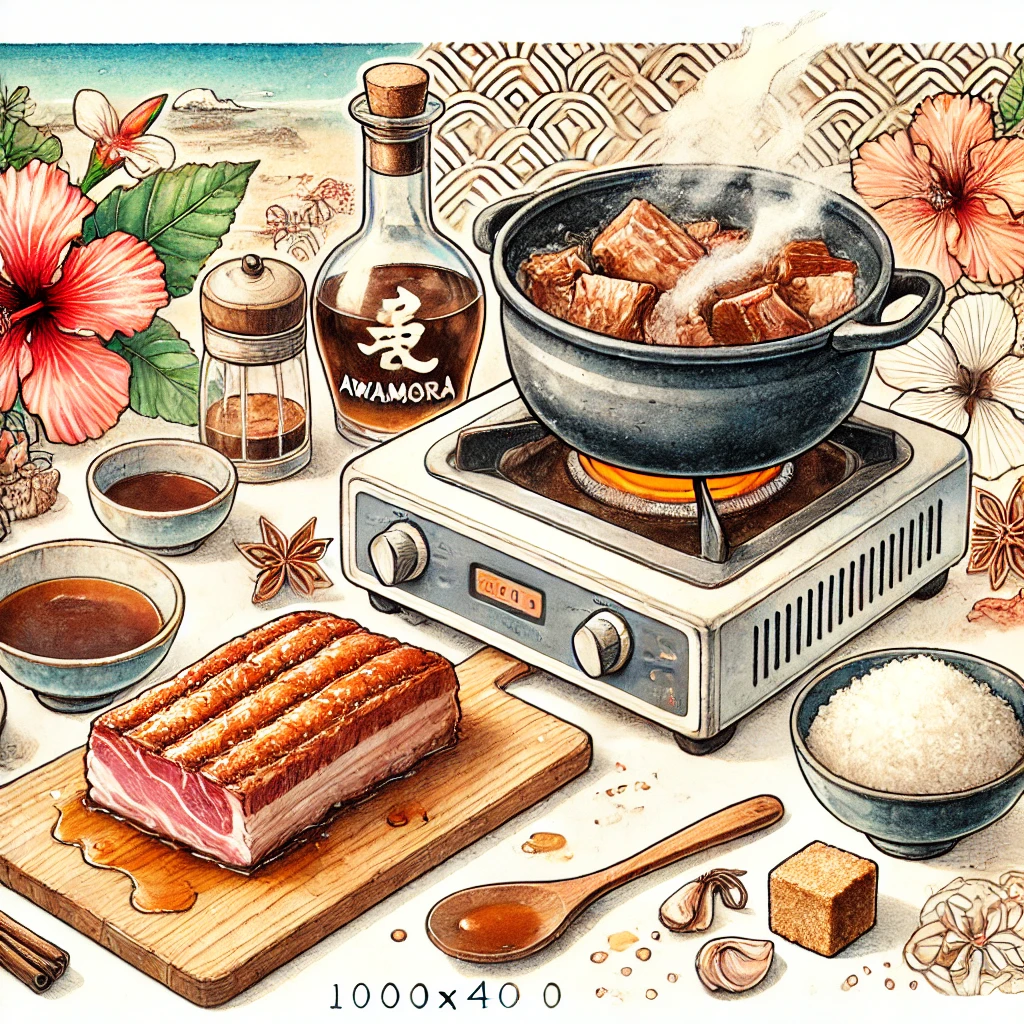
Have you ever visited Okinawa? With its emerald green seas, white sandy beaches, and unique culture, Okinawa is full of charm. However, to truly understand the essence of Okinawa, one must delve into its culinary traditions. Among these, have you heard of the dish called “Rafute”?
Rafute is a quintessential Okinawan dish made by slowly simmering pork belly until it becomes incredibly tender and flavorful. Just one bite, and you might find yourself closing your eyes to savor its melt-in-your-mouth texture and rich taste. But Rafute is more than just a delicious dish.
This dish boasts over 400 years of history, embodying the heart and soul of the Okinawan people. From the royal court cuisine of the Ryukyu Kingdom to a beloved household staple, Rafute has weathered the hardships of war and has been passed down to modern times, carrying the pride of Okinawa in every bite.
Do you know the phrase “Nuchi du takara”? Meaning “life is a treasure,” this expression captures the Okinawan way of living. Rafute epitomizes this spirit, demonstrating wisdom in using every part of the pig, the patience of slow-cooking, and the warmth of sharing the dish with family and community.
In this article, we will explore the profound allure of Rafute. We will delve into its grand history dating back to the Ryukyu Kingdom, uncover the secret recipes passed down through generations, and discover modern variations. Through Rafute, you’ll fully experience the splendor of Okinawan cuisine.
So, why not dive into the fascinating world of Rafute with us? You’ll likely awaken a deep love for Okinawa within you. And the next time you visit Okinawa or enjoy Rafute at a local restaurant, you’ll appreciate its flavors in a whole new way.
Enjoy the soul food of Okinawa, Rafute, to your heart’s content.
- Introduction
- The History of Rafute
- The Appeal of Rafute
- Traditional Rafute Recipe
- Easy Homemade Rafute Recipe
- Stories Behind Rafute
- Rafute and the Spiritual Culture of Okinawa
- The Evolution of Rafute in Modern Times
- Conclusion
- Q&A
- Summary of This Article
Introduction
When you think of Okinawa, you probably envision its blue seas, white sandy beaches, and unique culture. However, there’s more to Okinawa than its stunning scenery and rich traditions. Okinawan cuisine is also a major draw, captivating many with its unique flavors. Among its culinary delights, one dish stands out as the soul food of Okinawa: “Rafute.”
Rafute is a signature Okinawan dish made by slowly simmering pork belly for an extended period. Its melt-in-your-mouth texture and rich, deep flavor make it a favorite among locals and visitors alike. In this blog, we will delve into the fascinating world of Rafute, exploring all its captivating aspects.
What is Rafute?
Rafute is more than just a dish; it represents the history, culture, and everyday life of the Okinawan people. However, many might not be familiar with the details of Rafute. So, let’s start by introducing the basics of this remarkable dish.
Definition of Rafute
Rafute is a traditional Okinawan braised pork belly dish. The pork is simmered slowly over a long period, resulting in a tender, gelatinous texture where the fat transforms into a rich, flavorful gelatin. Key ingredients include awamori (a distilled Okinawan liquor) and brown sugar, which impart a unique depth of flavor and aroma.
The key characteristics of Rafute include:
- Soft, melt-in-your-mouth texture
- Rich and deep flavor
- The aroma of awamori and the sweetness of brown sugar blend perfectly
- Dark brown, glossy appearance
- Delicious at room temperature and highly preservable
Rafute is widely enjoyed both as a household staple and a popular restaurant dish in Okinawa. It is especially prominent during celebrations and events, making it a quintessential part of Okinawan food culture.
Origin of the Name
The name “Rafute” has an interesting origin rooted in the Okinawan dialect.
The etymology of “Rafute” is believed to be:
- “Rafu”: Meaning “to recover” or “to get healthy” in the Okinawan dialect
- “Tee”: A suffix meaning “hand”
Thus, “Rafute” translates to “a dish that recovers” or “a dish that rejuvenates.” This name highlights that Rafute is more than just a tasty meal.
Historically, Okinawans believed that Rafute had restorative properties, often serving it to women post-childbirth or to those recovering from illness. The high nutritional value and easy digestibility of the pork make it an ideal dish for recovery.
Additionally, Rafute is sometimes referred to as “Toonah,” a name derived from the Chinese “Dongpo pork” (Dongpo rou). It is believed that this braised pork dish, created by the Song Dynasty poet Su Dongpo, was introduced to Okinawa during the Ryukyu Kingdom period, merging with local cuisine to develop its unique character.
The Role of Rafute in Okinawan Food Culture
Rafute holds a significant place in Okinawan food culture, symbolizing the island’s history, culture, and way of life. Here, we will explore how Rafute is positioned within the culinary traditions of Okinawa.
Rafute as an Everyday Dish
Rafute is deeply ingrained in the daily lives of Okinawans. It is a popular menu item in homes, school lunches, and workplace cafeterias.
The characteristics of Rafute as an everyday dish include:
- Well-balanced nutrition and high satisfaction
- Can be prepared in advance, suiting busy modern lifestyles
- Delicious even when cold, making it a popular bento item
- Variety of adaptations and variations to keep it interesting
- Easy to adjust flavors to suit family preferences
Many Okinawan households prepare a large batch of Rafute over the weekend to use throughout the week. It remains delicious for up to a week when refrigerated, making it a convenient and efficient meal option.
Rafute also embodies the Okinawan spirit of “nankuru naisa” (it will be alright), with flexible ingredients and cooking methods allowing for numerous regional and family variations. This adaptability is one reason why Rafute remains a beloved everyday dish.
Role in Celebrations and Events
Beyond daily meals, Rafute plays an important role in Okinawan celebrations and events, frequently appearing in the following occasions:
- New Year celebrations
- Obon (ancestral worship)
- Wedding receptions
- Birth celebrations
- Longevity celebrations (such as 60th, 70th, and 77th birthdays)
- Housewarming parties
The reasons Rafute is favored during these occasions include:
- Good fortune: Pigs are considered symbols of good luck, carrying fortune on their backs.
- Symbol of abundance: Using what was once a precious meat symbolizes the wish for a prosperous life.
- Representation of longevity: The long cooking time signifies “long-lasting happiness.”
- Joy of sharing: It fosters a sense of community by being shared among many people.
Rafute is an essential part of Okinawan New Year celebrations. Okinawans traditionally prepare “Toshikoshi Rafute,” which is eaten from New Year’s Eve to New Year’s Day. The tender pork symbolizes the hope for a “soft” and smooth new year.
During Obon, many families offer Rafute to their ancestors’ spirits, reflecting the Okinawan tradition of treating ancestors as part of the family. Offering delicious Rafute expresses gratitude and strengthens family bonds.
At wedding receptions, Rafute plays a crucial role, symbolizing blessings for the couple’s future and the wish for a long and happy marriage. The tender, slow-cooked pork represents the hope for a gentle and harmonious relationship.
Thus, Rafute is present at significant life events, expressing joy, gratitude, and hopes. It transcends mere food, embodying Okinawan culture and values.
Rafute serves as a bridge between the everyday and the extraordinary in Okinawan food culture. It is cherished in daily meals and imbued with special meaning on important days. This duality is a key reason Rafute is considered the soul food of Okinawa.
Moreover, Rafute exemplifies the Okinawan “mottainai” (waste not) spirit. The dish showcases the wisdom of making the most of the pork belly, once a luxury, turning it into a delicious and waste-free meal. This spirit aligns with modern sustainable food practices, enhancing Rafute’s value.
In the next chapter, we will explore the historical background of Rafute, tracing its development from the Ryukyu Kingdom era to the present day. Discover how Rafute evolved and remained a beloved dish in Okinawa’s culinary heritage.
The History of Rafute
Rafute is an essential dish in Okinawan cuisine, with a history that dates back to the Ryukyu Kingdom era. Let’s explore the evolution of Rafute, a dish that has been beloved by Okinawans for centuries. Understanding its history will deepen your appreciation of this unique culinary treasure.
Origins in the Ryukyu Kingdom
The origins of Rafute can be traced back to the 15th century during the Ryukyu Kingdom era. During this period, Ryukyu prospered as a hub of trade in East Asia, welcoming various cultures and technologies. Among these influences was a method of cooking pork introduced from China, which eventually evolved into what we now know as Rafute.
Influence of Trade with China
The relationship between the Ryukyu Kingdom and China was profound, particularly the tributary trade with the Ming Dynasty, which significantly contributed to Ryukyu’s prosperity. This trade brought about influences that led to the creation of Rafute:
- Introduction of Chinese pork cooking techniques
- Importation of cooking utensils and seasonings
- Incorporation of Chinese culinary culture and values
One specific dish, “Dongpo pork” (Dongpo rou), attributed to the Song Dynasty poet Su Dongpo, is considered the direct ancestor of Rafute. Dongpo pork, a type of braised pork, shares the slow-cooking technique that tenderizes the meat, a hallmark of Rafute.
However, the Dongpo pork that reached Ryukyu was not adopted wholesale. It was gradually modified to suit the local climate, ingredients, and preferences of the people. For example:
- Substitution of seasonings: Using Awamori (Okinawan distilled liquor) and brown sugar instead of Chinese seasonings
- Adjustment of spices: Reducing the amount of spices to match Okinawa’s climate
- Extension of cooking time: Prolonging the simmering time to achieve a softer texture
Through these adaptations, the dish gradually transformed into the Rafute we know today.
From Royal Cuisine to Common Delight
Initially, Rafute was a luxurious dish enjoyed by the royalty and nobility of the Ryukyu Kingdom. In an era when pork was a precious commodity, Rafute, with its lengthy preparation time, was a special dish reserved for grand occasions.
In the context of royal cuisine, Rafute held the following significance:
- Regarded as a tribute to the Chinese emperor
- Served as a formal banquet dish to entertain foreign envoys
- Celebrated during royal banquets to honor the longevity of royalty
Over time, however, Rafute gradually spread to the common people. Several factors contributed to this transition:
- Increased pork production: Improved pig farming techniques made pork more accessible
- Dissemination of cooking techniques: Court chefs shared their knowledge with general cooks
- Nutritional value: Rafute became valued as a source of nutrition for laborers
- Preservation qualities: The dish could be stored for longer periods, even without refrigeration
During the late 17th to 18th centuries, the Ryukyu Kingdom was under the control of the Satsuma Domain, which encouraged pork consumption for economic reasons. This further facilitated the spread of Rafute among the general populace.
The Okinawan spirit of “mottainai” (waste not) also played a role in Rafute’s popularity. Rafute became a favored method of utilizing the fatty pork belly, ensuring no part of the pig went to waste.
Thus, Rafute evolved from a luxurious royal dish to a practical and beloved household staple. Each family and region developed its own variations, fostering the diversity of Rafute recipes we see today.
The Evolution and Development of Pork Culture
The history of Rafute is closely intertwined with the development of pork culture in Okinawa. For Okinawans, pigs were more than just a source of food. Understanding this cultural background reveals why Rafute holds such a special place in Okinawan cuisine.
Spread of Pork and Social Context
The widespread consumption of pork in Okinawa is a relatively recent development, influenced by various social factors:
- Late 17th century: Under the Satsuma Domain’s rule, pig farming was encouraged for economic reasons
- 18th century: Improved pig farming techniques increased pork production
- 19th century: Pork consumption became more common among the populace
- Early 20th century: Nutritional improvement campaigns recognized pork as a vital protein source
Notably, Okinawans revered pigs as “kami-zukai” (sacred tools), reflecting their special status:
- Symbol of good fortune: Pigs were believed to bring luck
- Source of livelihood: Every part of the pig was utilized, from meat to fat and bones
- Medicinal value: Pork offal and fat were used in traditional medicine
This “use everything” philosophy is evident in Rafute’s preparation. Slow cooking transforms tough cuts into tender, flavorful meat.
Economically, pig farming was a vital industry during the Ryukyu Kingdom era, especially from the 17th century onward when pigs were produced as tribute to the Satsuma Domain. This encouraged pork’s integration into everyday life.
Moreover, the health benefits of pork, such as lowering cholesterol and being rich in Vitamin B1, became well-known, further entrenching pork in Okinawan diets.
Post-War Food Culture Changes and Rafute’s Evolution
World War II significantly impacted Okinawan food culture. Post-war recovery, American occupation, and reintegration with mainland Japan brought about new culinary influences, evolving Rafute along the way.
Post-war changes in Rafute can be summarized as follows:
- Immediate post-war period (1945–early 1950s)
- Food shortages reduced Rafute preparation
- Substitute ingredients created imitation Rafute
- American occupation (late 1950s–1972)
- Influence of American pork dishes
- Diversification of seasonings (soy sauce, ketchup, etc.)
- Post-reversion (1972–present)
- Introduction of new recipes influenced by Japanese cuisine
- Development of low-fat Rafute for health-conscious consumers
During the American occupation, significant changes included:
- Introduction of pressure cookers, reducing cooking time
- Use of new seasonings like ketchup and Worcestershire sauce
- Emergence of “Rafute sandwiches” combining Rafute with bread
These innovations increased Rafute’s diversity while also inspiring efforts to preserve traditional flavors. Today, both classic recipes and modern variations coexist, enhancing Rafute’s appeal.
In recent years, health trends have also influenced Rafute:
- Healthy versions using low-fat meat
- Balanced Rafute with more vegetables
- Alternative recipes using tofu or chicken
These innovations cater to younger and health-conscious demographics, sustaining Rafute’s popularity.
As tourism developed, Rafute solidified its status as a representative Okinawan dish. Many tourists savor Rafute during their visits, enchanted by its flavor. This has helped Rafute evolve from a regional specialty to a dish recognized nationwide and even globally.
Rafute’s history is a testament to its ability to adapt while retaining its core essence. The flexibility of Okinawan cuisine, combining tradition with innovation, is vividly embodied in Rafute.
Reflecting on Rafute’s history reveals it as more than just a dish. It mirrors the lives, culture, and values of the Okinawan people. From a royal delicacy in the Ryukyu Kingdom to a beloved household staple, and from post-war adaptation to a modern soul food, Rafute’s journey enhances the experience of enjoying it today.
In the next chapter, we will delve deeper into Rafute’s unique appeal. Discover why Rafute is so beloved by Okinawans and tourists alike, unraveling the secrets behind its enduring charm.
The Appeal of Rafute
Rafute, a quintessential Okinawan dish, captivates all who try it. Here, we will explore Rafute’s unique charm, from its flavor and texture to its aroma and nutritional benefits, leaving no aspect untouched.
Meltingly Tender Texture
R
afute’s most distinctive feature is its “meltingly tender texture.” This exquisite texture, achieved through long simmering, is a testament to the careful preparation and quality ingredients used in Rafute.
The Role of Collagen
The secret to Rafute’s tender texture lies in the collagen found in pork. Collagen has the following characteristics:
- A type of protein found in connective tissues
- Transforms into gelatin when heated
- Softens meat, creating a melt-in-your-mouth texture
Pork belly, used in Rafute, is particularly rich in collagen. Slow cooking converts collagen into gelatin, softening the meat.
This process also thickens the cooking liquid, adding a luscious texture to the dish. This rich, gelatinous sauce pairs perfectly with rice or sake, enhancing Rafute’s appeal.
Collagen also has beauty benefits, making Rafute especially popular among women. Enjoying Rafute provides a delicious way to benefit from collagen’s properties.
The Effect of Long Simmering
Another factor contributing to Rafute’s unique texture is the long simmering time. Typically, Rafute is simmered for 2-3 hours. This prolonged cooking has several benefits:
- Breaks down meat fibers: Prolonged heat softens meat fibers, making the meat tender
- Renders fat: Gradually melts fat, enhancing flavor and juiciness
- Infuses flavors: Deeply imbues the meat with seasoning flavors
- Dissolves collagen: Slowly converts collagen into gelatin
This lengthy simmering results in meat so tender it falls apart with a gentle touch. The rich flavors and tender texture make Rafute a culinary delight.
Additionally, long simmering eliminates any pork odor, making Rafute palatable to all ages. This is one reason for Rafute’s wide appeal.
Furthermore, slow cooking retains the meat’s nutrients, making them easier to digest and absorb. This makes Rafute not only delicious but also nutritionally beneficial.
Rich Flavor and Aroma
Rafute’s allure extends beyond its texture. Its deep flavor and aroma, achieved through traditional Okinawan seasonings and slow cooking, create a complex and unforgettable taste.
The Aroma and Umami of Awamori
A key ingredient in Rafute is Awamori, Okinawa’s traditional distilled liquor. Awamori imparts a unique aroma and depth of flavor to Rafute.
The effects of Awamori in Rafute include:
- Neutralizes pork odor: Alcohol and aroma components reduce pork’s odor
- Enhances umami: Alcohol breaks down proteins, enhancing flavor
- Adds fragrance: Awamori’s rich aroma permeates the dish
- Tenderizes meat: Alcohol helps soften meat fibers
The type of Awamori used can alter Rafute’s flavor. Typically, aged Awamori (more than three years old) is used, but younger Awamori can provide a fresher aroma.
In addition to cooking, enjoying Awamori with Rafute is recommended. The drink’s aroma complements Rafute, enhancing its depth of flavor.
Using Awamori makes Rafute distinctly Okinawan, transcending a simple braised pork dish.
The Sweetness and Complexity of Brown Sugar
Another crucial ingredient in Rafute is Okinawan brown sugar. Brown sugar does more than add sweetness; it provides depth and complexity to Rafute.
The effects of brown sugar in Rafute include:
- Enhances richness: Brown sugar’s unique sweetness permeates the dish
- Adds color: The sugar imparts a beautiful brown hue to the meat
- Boosts nutrition: Rich in minerals, brown sugar enhances nutritional value
- Tenderizes meat: Components in brown sugar help soften the meat
The amount and type of brown sugar used can significantly affect Rafute’s flavor. Generally, a balanced sweetness and richness are preferred, but variations exist among families and restaurants.
Brown sugar not only adds sweetness but also harmonizes with the meat’s umami, creating Rafute’s complex and deep flavor.
Brown sugar also contains various nutrients:
- Calcium: Important for bone and dental health
- Iron: Effective in preventing anemia
- Potassium: Helps regulate blood pressure
- Vitamin B group: Promotes energy metabolism
These nutrients enhance Rafute’s nutritional profile. Combining deliciousness with health benefits contributes to Rafute’s enduring popularity.
Nutritional Value and Health Benefits
Rafute is not just flavorful; it is also nutritionally balanced. Made from pork belly, Rafute offers a well-rounded nutritional profile due to its preparation methods and ingredients. Here, we delve into Rafute’s nutritional value and health benefits.
Balance of Protein and Fat
Pork belly, the primary ingredient in Rafute, provides a balanced mix of protein and fat, forming the foundation of Rafute’s nutritional value.
The role of protein:
- Constitutes muscles and organs
- Serves as a raw material for enzymes and hormones
- Maintains immune function
- Acts as an energy source
The role of fat:
- Acts as an energy source
- Constitutes cell membranes
- Serves as a raw material for hormones
- Facilitates absorption of fat-soluble vitamins
Pork belly used in Rafute contains moderate fat, which melts during long simmering, enhancing flavor while reducing excess fat intake.
Pork fat also contains beneficial unsaturated fatty acids like oleic acid, which are known for:
- Improving cholesterol levels
- Preventing arteriosclerosis
- Having anti-inflammatory effects
- Enhancing brain function
Additionally, pork is rich in vitamins and minerals:
- Vitamin B1: Aids in carbohydrate metabolism, effective for fatigue recovery
- Vitamin B6: Promotes protein metabolism
- Vitamin B12: Helps form red blood cells
- Zinc: Maintains taste and boosts immune function
- Selenium: Has antioxidant properties, effective in preventing aging
These nutrients further enhance Rafute’s nutritional value. Vitamin B1, in particular, is abundant in pork and is known as the “King of Vitamin B1,” helping to combat fatigue in Okinawa’s hot climate.
Collagen’s Beauty Benefits
One of Rafute’s attractions is its high collagen content, known for its beauty and health benefits. Let’s explore the beauty benefits of collagen in Rafute.
Key benefits of collagen:
- Maintains skin elasticity: Keeps skin firm and elastic
- Lubricates joints: Facilitates smooth joint movement
- Strengthens bones: Contributes to bone density maintenance
- Maintains healthy nails and hair: Strengthens and adds shine to nails and hair
Pork belly used in Rafute is particularly rich in collagen. Long simmering transforms collagen into a more absorbable form.
Research supports the beauty benefits of collagen intake:
- Improved skin moisture retention: Collagen intake enhances skin hydration
- Reduction of wrinkles: Regular collagen intake reduces eye wrinkles
- Enhanced skin elasticity: Collagen peptides improve skin elasticity
- Faster nail growth: Collagen intake speeds up nail growth
Collagen in Rafute also offers health benefits:
- Relieves joint pain: Collagen acts as a lubricant, potentially alleviating joint pain
- Maintains bone density: Collagen, a major bone component, helps prevent osteoporosis
- Improves gut health: Collagen peptides may balance gut bacteria
- Increases muscle mass: As a protein, collagen aids muscle growth and repair
Regular consumption is essential to fully benefit from these effects. Eating Rafute regularly can provide beauty and health benefits.
Moreover, pork-derived collagen in Rafute is easily absorbed by the human body due to its structural similarity to human collagen, enhancing its effectiveness.
Additionally, brown sugar used in Rafute has beauty benefits:
- Rich in minerals: Contains calcium, iron, and magnesium, beneficial for skin and hair
health
- Antioxidant properties: Brown sugar polyphenols have antioxidant effects, preventing skin aging
- Moisturizing effect: Sugars in brown sugar help retain moisture, preventing dry skin
Thus, Rafute is a dish that offers both culinary delight and beauty and health benefits, with its nutrients supporting beauty and health from within.
Summary of Rafute’s Appeal
We have explored the various aspects of Rafute’s appeal. To summarize:
- Meltingly tender texture
- Softness from collagen
- Fiber breakdown through long simmering
- Rich flavor and aroma
- Fragrant and umami from Awamori
- Sweetness and complexity from brown sugar
- Nutritional value and health benefits
- Balanced protein and fat
- Beauty benefits from collagen
- Abundant vitamins and minerals
These elements combine to make Rafute more than just a dish. It is a culinary embodiment of Okinawan history and culture, aligned with modern health trends.
Rafute’s charm may not be fully appreciated after just one taste. However, repeated enjoyment will reveal its deep flavors, textures, and health benefits, making it an indispensable part of your culinary experience.
In the next chapter, we will provide detailed recipes for Rafute, from traditional methods to modern variations. Use these recipes to make Rafute at home and enjoy this Okinawan soul food.
Traditional Rafute Recipe
To fully appreciate the charm of Rafute, it’s best to make it using a traditional recipe. Here, we will introduce an authentic Rafute recipe that has been passed down through Okinawan households for generations. We will detail everything from ingredient selection to preparation steps, and share some secret tips for perfect seasoning.
Ingredients and Preparation
Selecting the right ingredients and carefully preparing them are crucial to making delicious Rafute. Let’s take a closer look at the necessary ingredients for traditional Rafute and how to prepare them.
Choosing the Best Pork Cut
The star of Rafute is undoubtedly the pork. For traditional Rafute, use pork belly (samgyeopsal). Here are the key points to consider when selecting pork belly:
- Good balance of fat and lean meat
- Fresh with good color and sheen
- Thick enough (about 3-4 cm)
- Preferably with skin on
Here’s why pork belly is ideal for Rafute:
- Rich in collagen: Long simmering creates a melt-in-your-mouth texture
- Balanced fat and lean meat: Offers a perfect balance of juiciness and flavor
- Skin-on: Collagen in the skin adds a rich texture to the broth
The amount of pork needed per person is approximately 150-200 grams. For four servings, prepare 600-800 grams.
Other ingredients you’ll need:
- Awamori: 200ml
- Brown sugar: 100g
- Soy sauce: 100ml
- Ginger: one piece
- Garlic: two cloves
- Chili pepper: one (optional)
- Water: as needed
With these ingredients, you can make Rafute for four people.
The Importance of Parboiling
Parboiling is a crucial step to make Rafute delicious. It has the following effects:
- Removes excess fat and odor
- Firms up the meat to prevent it from falling apart during simmering
- Removes scum and impurities
Here are the steps for parboiling:
- Fill a large pot with water and bring it to a boil.
- Once boiling, add the pork and simmer over medium heat for 15-20 minutes.
- Skim off any scum and fat that rise to the surface.
- Once done, rinse the pork lightly with cold water and drain well in a colander.
Key points for parboiling:
- Adding the meat to boiling water quickly seals the surface.
- Adjust boiling time based on the thickness of the meat; thicker cuts need more time.
- Save the boiling water to use as a base for the simmering broth.
After parboiling, cut the meat into bite-sized pieces (about 4-5 cm square). This size ensures even cooking and allows the flavors to penetrate thoroughly.
Cooking Steps
Now, let’s dive into the detailed cooking steps for making Rafute using a traditional recipe.
Basic Simmering Method
The basic steps for simmering Rafute are as follows:
- Add Awamori, brown sugar, and soy sauce to a pot, and warm over low heat to dissolve the sugar.
- Once the sugar is dissolved, add the parboiled pork.
- Add enough water (or the parboiling water) to cover the pork.
- Add sliced ginger, crushed garlic, and optional chili pepper.
- Bring to a boil, then reduce to low heat, skimming off any scum while simmering for 2-3 hours.
- Turn the pork occasionally to ensure even flavor absorption.
- Once the meat is tender and the broth has reduced by half, it’s done.
Key points during simmering:
- Start with medium heat to bring to a boil, then simmer gently over low heat.
- If the liquid reduces too much, add water gradually.
- Adjust simmering time based on the quantity and size of the meat.
- Avoid overcooking, as the meat might fall apart; find the perfect tenderness.
For best results, let the Rafute sit overnight to allow the flavors to deepen. Reheat gently before serving for optimal taste.
Managing Heat and Cooking Time
Properly managing the heat and cooking time is crucial to achieving the perfect Rafute. Here are some guidelines:
Basic heat management:
- Initial boiling: Use medium heat to bring to a boil quickly.
- Skimming: Use medium-low heat to skim off scum.
- Long simmer: Use low heat for slow cooking.
- Finishing: Use medium heat to reduce the broth if necessary.
Suggested cooking times:
- Total cooking time: 2-3 hours
- Initial boiling: About 10 minutes
- Skimming: About 15 minutes
- Long simmer: 1.5-2 hours
- Finishing reduction: About 15 minutes
Key points for managing heat and cooking time:
- Slow simmering helps the meat absorb the flavors thoroughly.
- Check the tenderness occasionally with chopsticks to avoid overcooking.
- If the broth is too watery, reduce over medium heat until thickened.
- If the broth is too little, add a small amount of water or parboiling water.
Additionally, adjust based on your cooking equipment:
- Gas stove: Pay attention to the flame as it can be strong; maintain a gentle simmer.
- IH stove: Maintains stable temperature, but avoid sudden temperature changes.
- Clay pot: Distributes heat evenly but takes longer to warm up.
Secret Seasoning Tips
Seasoning is a key element in defining the taste of Rafute. Here are some secret seasoning tips passed down in Okinawan households.
Balancing Awamori and Brown Sugar
The combination of Awamori and brown sugar is crucial for Rafute’s flavor. The balance between these two ingredients significantly impacts the dish’s taste.
The basic ratio for Awamori and brown sugar:
- Awamori: 200ml
- Brown sugar: 100g
This ratio is for four servings, but feel free to adjust according to your taste.
Tips for choosing Awamori:
- Alcohol content: Select Awamori with at least 30% alcohol to enhance the meat’s flavor.
- Aged vs. young: Aged Awamori (over three years) for a rich taste, young Awamori for a lighter flavor.
- Brands: Recommended brands include Zuisen, Kumesen, and Kikuno Tsuyu.
Tips for choosing brown sugar:
- Origin: Okinawan brown sugar, especially from Hateruma or Iriomote islands, is recommended.
- Texture: Softer brown sugar dissolves more easily and ensures an even flavor.
- Grain size: Finer grains dissolve faster.
Adjusting the balance of Awamori and brown sugar:
- More Awamori for a stronger aroma and lighter taste.
- More brown sugar for richer and sweeter flavor.
- Equal amounts for a balanced flavor.
- Adjust gradually to achieve the desired taste.
Using Hidden Flavors
Adding hidden flavors can make Rafute even more delicious. Here are some traditional Okinawan secret ingredients to enhance your Rafute:
1. Island Chili Pepper
- Quantity: 1-2 peppers (seeds removed)
- Effect: Adds a spicy kick and depth of flavor.
- Method: Add whole at the
start of simmering and remove before serving.
2. Star Anise
- Quantity: 1-2 pieces
- Effect: Provides a unique aroma, adding a hint of Chinese flavor.
- Method: Add at the start of simmering and remove before serving.
3. Miso
- Quantity: 1-2 tablespoons
- Effect: Adds depth and umami, creating a smoother taste.
- Method: Dissolve in during the simmering process.
4. Coffee
- Quantity: 50ml (strongly brewed)
- Effect: Adds depth and aroma, creating a sophisticated flavor.
- Method: Add towards the end of simmering and mix well.
5. Apple
- Quantity: 1/4 apple (grated)
- Effect: Adds natural sweetness and a refreshing flavor.
- Method: Add midway through simmering and let it blend in.
Key points for using hidden flavors:
- Start with 1-2 hidden flavors to avoid overwhelming complexity.
- Adjust quantities gradually to find the perfect balance.
- Experiment with different combinations to find your preferred taste.
- Add hidden flavors at appropriate times; some at the beginning, others towards the end of simmering.
Using these hidden flavors can add uniqueness to your Rafute. However, the goal is to enhance the pork’s natural flavor, so be careful not to let the hidden flavors overpower the dish.
Summary of Traditional Rafute Recipe
We’ve covered the traditional Rafute recipe in detail. Let’s summarize the key points:
- Ingredient Selection
- Use pork belly (samgyeopsal).
- Awamori and brown sugar are crucial for the flavor.
- Use fresh ginger and garlic for aroma.
- Preparation
- Parboiling the pork is essential.
- Carefully remove scum and excess fat.
- Cooking Steps
- Simmer gently for 2-3 hours over low heat.
- Properly manage heat and cooking time for the best results.
- Seasoning Tips
- Balance Awamori and brown sugar for the perfect flavor.
- Use hidden flavors to add depth and uniqueness.
The traditional Rafute recipe has been refined over a long history by the people of Okinawa. Its flavors embody Okinawan culture and history.
However, this recipe is a basic template. The exact seasoning and cooking methods may vary by household and region. This variety is one of Rafute’s charms. Try different variations to find your perfect Rafute.
Rafute is also a great make-ahead dish. In fact, it often tastes better after a day or two as the flavors meld. Make a batch, store it in the fridge, and enjoy it as a convenient dinner or bento side dish throughout the week.
Rafute tastes different depending on its temperature. Warm, it offers a melt-in-your-mouth texture and rich flavor. Cold, the flavors are more concentrated. Find your favorite way to enjoy it.
Finally, Rafute is versatile and can be used in various dishes:
- Rafute Don: Serve sliced Rafute over rice.
- Rafute Soba: Use it as a topping for Okinawa soba.
- Rafute Sandwich: Put it in a sandwich with bread.
- Rafute Fried Rice: Chop it and add to fried rice.
Rafute is a dish with many layers of enjoyment. Use this traditional recipe as a guide and try making Rafute at home. It will surely be a wonderful experience that brings the taste and culture of Okinawa to your table.
Easy Homemade Rafute Recipe
Now that you know the traditional method, you might think, “But making it at home seems difficult…” Don’t worry! In this section, we’ll introduce an easy homemade Rafute recipe. Even busy people can enjoy the taste of Okinawa with this simple method.
Tips for Choosing Ingredients
Choosing the right ingredients is key to making easy Rafute at home. Here, we’ll show you how to recreate authentic flavors using ingredients available at regular supermarkets.
Substitute Ingredients Available at Supermarkets
If traditional Rafute ingredients are not available, you can still make delicious Rafute with substitutes. Here are some alternative ingredients for key components:
- Pork
- Best: Pork belly
- Substitute: Pork shoulder or pork belly block
- Tip: Choose meat with a good balance of fat and lean
- Awamori
- Best: Awamori with 30% alcohol or higher
- Substitute: Sake or shochu
- Tip: Choose higher alcohol content for better flavor
- Brown Sugar
- Best: Okinawan brown sugar
- Substitute: Light brown sugar or dark brown sugar
- Tip: Choose the darkest possible for a richer flavor
- Soy Sauce
- Best: Dark soy sauce
- Substitute: Regular soy sauce
- Tip: Low-sodium soy sauce allows for easier seasoning adjustment
These substitutes will help you get closer to the authentic taste. Especially for pork, choosing meat with a good fat-to-lean ratio is key to replicating the original flavor.
You can also use the following additional ingredients to enhance the flavor:
- Star Anise: Available in the Asian food section
- Chili Pepper: Regular chili pepper can be used
- Miso: Any type of miso works
These ingredients are optional but can add depth to the dish.
Choosing the Right Seasonings
Seasonings play a crucial role in defining Rafute’s taste. For an easy homemade version, the right selection and use of seasonings are key. Here are tips for choosing and using essential seasonings:
- Soy Sauce
- Choice: Dark soy sauce is ideal, but regular soy sauce works too
- Use: Start with about one-third of the total amount and adjust to taste
- Tip: Low-sodium soy sauce makes salt adjustment easier
- Sugar (as a substitute for brown sugar)
- Choice: Light brown sugar or dark brown sugar is best, but regular sugar works too
- Use: Start with half the amount of soy sauce and adjust sweetness to taste
- Tip: Using more sugar can help tenderize the meat
- Sake (as a substitute for Awamori)
- Choice: Sake or shochu, but cooking sake works too
- Use: About one-fourth of the total amount
- Tip: Make sure to simmer until the alcohol evaporates
- Garlic and Ginger
- Choice: Fresh is best, but pre-minced or paste can be used
- Use: Mince and add at the beginning of simmering
- Tip: Adds important aroma and flavor
Using these seasonings in balance helps recreate the authentic Rafute taste at home. Especially the balance between soy sauce and sugar is crucial; adjust the ratio to your preference.
You can also try adding the following additional seasonings for more depth:
- Oyster Sauce: Adds richness and umami
- Miso: Adds smoothness and depth
- Red Wine
: Adds aroma and acidity
These seasonings are not essential but can easily be found in most kitchens, making it easy to experiment. Try different combinations to find your perfect taste.
Time-Saving Cooking Techniques
Traditional Rafute requires long simmering, but in today’s busy life, spending hours in the kitchen can be challenging. Here are some time-saving techniques to make delicious Rafute quickly.
Using a Pressure Cooker
A pressure cooker is a great tool to significantly reduce Rafute’s cooking time. What usually takes 2-3 hours can be cut down to 30 minutes to an hour. Here’s a step-by-step guide to making Rafute with a pressure cooker:
- Preparation
- Cut pork belly into bite-sized pieces.
- Mince garlic and ginger.
- Mix soy sauce, sugar, and sake in advance.
- Pre-cooking
- Fill the pressure cooker with water and parboil the pork (about 5 minutes).
- Remove the pork, drain, and clean the cooker.
- Cooking
- Heat oil in the pressure cooker and sauté garlic and ginger.
- Add pork and lightly brown the surface.
- Add the mixed seasonings and coat the pork.
- Add water, close the pressure cooker lid tightly.
- Pressure Cooking
- Heat on high until steam starts to escape, then reduce to low heat.
- Pressure cook for 30-40 minutes.
- Turn off the heat and allow natural pressure release (about 10 minutes).
- Finishing
- Open the lid, and if there’s too much broth, reduce it.
- Taste and adjust seasoning as needed.
Tips for using a pressure cooker:
- Never fill more than two-thirds of the pressure cooker’s capacity.
- Maintain low heat during pressure cooking.
- Always wait for natural pressure release before opening the lid.
- Ensure all pressure is released before opening the lid.
Using a pressure cooker shortens the cooking time and ensures the meat becomes tender and flavorful. Enjoy authentic Rafute even on busy weekdays.
Marinating and Freezing Ahead
Marinating and freezing ahead not only saves cooking time but also infuses deeper flavors. By marinating in advance, you can reduce preparation time on the day of cooking. Here’s how to marinate and freeze Rafute:
- Preparation for Marinating and Freezing
- Cut pork belly into bite-sized pieces.
- Place pork in a ziplock bag or airtight container.
- Add soy sauce, sugar, sake, minced garlic, and ginger.
- Seal the bag, removing air, and massage to coat the pork evenly.
- Freezing
- Freeze flat in the freezer.
- Can be stored for 1-2 weeks.
- Thawing and Cooking
- Thaw in the fridge the day before use.
- Add thawed pork to a pot, add water, and simmer.
- Cook for about an hour until done.
Key points for marinating and freezing:
- Freezing breaks down meat fibers, making it tender and allowing flavors to penetrate better.
- Adding sugar to the marinade prevents the meat from deteriorating during freezing.
- Ensure all air is removed from the bag to prevent freezer burn.
- Always thaw in the fridge to maintain quality.
Using marinating and freezing techniques allows you to quickly prepare Rafute on busy weekdays. Preparing a batch in advance on weekends can make weekday dinners easier.
Tips for Perfecting Your Rafute
Even with an easy recipe, following a few tips can make your Rafute even more delicious. Here are some tips for perfecting homemade Rafute.
Adjusting the Flavor After Cooling
Adjusting the flavor after cooling can enhance Rafute’s taste. Here’s how to do it:
- Let it Cool Completely
- After cooking, let Rafute cool to room temperature.
- Ideally, leave it overnight.
- Remove Fat
- Remove solidified fat from the surface.
- Leave some fat if desired.
- Taste Test
- Taste the cooled Rafute.
- The flavor perception might differ from when it’s warm.
- Adjust Seasoning
- Add more seasoning if needed.
- Soy sauce for more saltiness.
- Sugar or honey for more sweetness.
- Sake or mirin for more depth and smoothness.
- Reheat
- Reheat gently on low heat after adjusting the seasoning.
- Avoid reducing the broth too much while reheating.
- Final Check
- Do a final taste test after reheating.
- Make minor adjustments if necessary.
Key points for adjusting flavor after cooling:
- Cooling helps tighten the flavor, making it taste saltier.
- Adjust seasoning before reheating to avoid over-seasoning.
- Final seasoning adjustments should be made just before serving.
This method ensures a balanced and delicious Rafute. It’s also useful for making ahead and ensuring consistent flavor.
Creative Ways to Use Rafute
Rafute is versatile and can be used in various dishes. Here are some creative ways to enjoy Rafute in different forms:
- Rafute Don
- Serve sliced Rafute over rice.
- Drizzle with broth and garnish with chopped green onions.
- Add a soft-boiled egg for extra flavor.
- Rafute Sandwich
- Chop Rafute into small pieces.
- Mix with mayonnaise and sandwich between bread slices.
- Add lettuce and tomato for extra crunch.
- Rafute Fried Rice
- Chop Rafute into small pieces and mix with fried rice.
- Season with soy sauce or salt to taste.
- Add green onions and eggs for color.
- Rafute Pasta
- Shred Rafute and mix with cooked pasta.
- Toss with olive oil and black pepper.
- Top with grated cheese for a Western twist.
- Rafute Onigiri
- Chop Rafute finely and mix with rice.
- Use as filling for rice balls (onigiri).
- Wrap with seaweed for easy eating.
Tips for creative Rafute recipes:
- Keep other ingredients simple to let Rafute’s flavor shine.
- Vary the size of Rafute pieces for different textures.
- Experiment with different cuisines, such as Japanese, Western, and Chinese styles.
- Use the broth as a seasoning for added flavor.
These creative recipes help keep Rafute exciting. Enjoy experimenting with different combinations and share your discoveries with family and friends.
Summary of Easy Homemade Rafute Recipe
We’ve covered how to make easy Rafute at home. Let’s summarize the
key points:
- Ingredient Selection
- Use commonly available substitutes from supermarkets.
- Basic ingredients include pork belly, soy sauce, sugar, and sake.
- Add additional seasonings for more depth.
- Time-Saving Techniques
- Use a pressure cooker to significantly reduce cooking time.
- Marinate and freeze in advance to save preparation time.
- Tips for Perfecting Rafute
- Adjust the flavor after cooling for a balanced taste.
- Try creative recipes to enjoy Rafute in different ways.
By following these points, even busy people can enjoy authentic Rafute at home. Rafute is not only delicious but also nutritious and convenient as a make-ahead dish for weekday dinners or bento box sides.
Moreover, Rafute represents Okinawan food culture. Making it at home allows you to experience the taste and culture of Okinawa. Cooking and sharing Rafute with family and friends can also enhance your social connections.
The recipes and techniques shared here are just a starting point. Feel free to experiment with new ingredients and variations to create your unique Rafute. Enjoy the process of finding your “home-style Rafute” while appreciating the traditional techniques and flavors.
Finally, Rafute is a “soul food” for Okinawans, embodying their history and culture. Understanding this background can deepen your appreciation of Rafute and Okinawan food culture. We hope you’ll try making Rafute at home using these recipes and techniques. It will surely be a delightful experience, bringing the taste and culture of Okinawa to your table.
Stories Behind Rafute
Rafute is more than just a dish; it is deeply rooted in Okinawan culture and lifestyle. Here, we’ll share some fascinating stories about Rafute that will enhance your enjoyment and appreciation of this dish.
A Favorite of Royalty
Rafute has been beloved by royalty since the Ryukyu Kingdom era, dating back over 400 years. Initially known as “Dongpo Pork,” it was a high-class dish brought from China.
King Sho Tai’s Favorite Dish
Sho Tai, the last king of the Ryukyu Kingdom, was particularly fond of Rafute. Here are some stories related to Sho Tai and Rafute:
- Daily Menu
- It is said that King Sho Tai had Rafute on his daily menu.
- Royal chefs constantly strived to serve the best Rafute.
- Diplomatic Use
- King Sho Tai served Rafute to envoys from China and Japan.
- Rafute symbolized the wealth and high culture of the Ryukyu Kingdom.
- Efforts to Improve Rafute
- King Sho Tai reportedly ordered chefs to improve Rafute’s taste continually.
- This led to the development of the Rafute we know today.
- Secret to Longevity
- King Sho Tai lived to the age of 84, which some attributed to Rafute’s health benefits.
- The B1 vitamins in pork are believed to help maintain health in Okinawa’s hot climate.
These stories show that Rafute was not just a dish but a significant part of the Ryukyu Kingdom’s culture, diplomacy, and even the royal family’s health.
Royal Chefs’ Secret Recipes
The royal chefs who preserved and handed down Rafute’s flavors played a crucial role. They passed on the cooking techniques and secret recipes for generations. Here are some elements of the secret recipes kept by royal chefs:
- Selection of the Finest Ingredients
- Royal chefs were meticulous in selecting the best pork.
- They particularly valued pork belly with a good balance of fat and lean meat.
- Unique Preparation Methods
- Special preparation techniques were used to tenderize the meat.
- For example, soaking the meat in Awamori overnight to remove excess fat and odor.
- Secret Seasonings
- The royal recipe included a unique blend of seasonings.
- The golden ratio of Awamori, brown sugar, and soy sauce was a closely guarded secret.
- Long Simmering Technique
- Ensuring the meat became tender was a testament to the chefs’ skills.
- Managing heat and simmering time relied on years of experience and intuition.
- Finishing Touches
- Special finishing techniques were also employed.
- For example, lightly grilling the surface for added aroma and texture.
These secret recipes were passed down even after the annexation of the Ryukyu Kingdom by Japan, preserved by a few dedicated chefs. Some traditional Okinawan restaurants today still offer Rafute based on these royal recipes.
The royal chefs’ techniques and wisdom live on in modern Rafute, such as:
- Long simmering methods
- Using Awamori and brown sugar for seasoning
- Selecting high-quality ingredients
These techniques, built by royal chefs, continue to be cherished and handed down through generations.
Legend of Longevity
Okinawa is renowned for its long-lived population, and Rafute is sometimes cited as one of the secrets to longevity. The relationship between Rafute and longevity is supported by both scientific evidence and folk wisdom.
Centenarians’ Diet
Studies on Okinawan centenarians reveal that many enjoy Rafute regularly. Here are some interesting facts about centenarians and Rafute:
- Regular Consumption
- Many centenarians reportedly eat Rafute once or twice a week.
- Rafute is especially eaten during celebrations and special occasions.
- Moderate Portions
- Centenarians consume Rafute in moderate amounts, typically 50-100g per serving.
- Balanced Diet
- Rafute is often eaten with vegetables and seaweed, ensuring a balanced diet.
- Mental Health Connection
- Rafute plays a role in deepening family and community bonds during festive occasions.
- Maintaining social connections is linked to mental health and longevity.
- Emphasis on Traditional Cooking Methods
- Centenarians prefer Rafute prepared using traditional methods without chemical seasonings.
- Natural ingredients and long simmering make it a healthful dish.
These facts indicate that Rafute is more than just a tasty dish; it’s an essential part of a healthy and balanced diet contributing to longevity.
Folk Wisdom and Scientific Considerations
Many folk tales link Rafute to health benefits, some of which align with modern scientific findings. Here are some traditional beliefs and their scientific considerations:
- Fatigue Recovery
- Belief: Eating Rafute relieves fatigue and boosts energy.
- Science: Pork contains vitamin B1, which aids in carbohydrate metabolism and fatigue recovery.
- Skin Health
- Belief: Rafute improves skin texture and glow.
- Science: Collagen in pork helps maintain skin elasticity. Long simmering releases collagen, making it easier to absorb.
- Vitality
- Belief: Rafute strengthens the body.
- Science: Pork is a good source of protein and iron, essential for vitality and preventing anemia.
- Heart Health
- Belief: Rafute strengthens the heart.
- Science: B vitamins in pork promote homocysteine metabolism
, reducing heart disease risk.
- Digestive Health
- Belief: Rafute improves digestive health.
- Science: Gelatin from long simmering protects the intestinal lining and aids digestion.
These folk beliefs and scientific considerations suggest that Rafute may contribute to health beyond just being delicious. However, it’s important to enjoy Rafute as part of a balanced diet.
Note the following points:
- Avoid excessive consumption: Rafute is high in fat, so eat in moderation.
- Pay attention to cooking methods: Long simmering enhances nutritional value, but overcooking can deplete nutrients.
- Individual differences: Rafute’s effects may vary based on personal health and constitution. Adjust intake accordingly.
The connection between Rafute and longevity is not yet fully scientifically proven. However, the overlap between folk wisdom and modern science is intriguing. Future research may further clarify Rafute’s health benefits.
Summary of Rafute Stories
We’ve explored various fascinating stories about Rafute, showing that it is more than just a dish. It embodies Okinawan history and culture. Let’s summarize the key points:
- Deep Connection with Royalty
- A high-class dish loved by royalty since the Ryukyu Kingdom era.
- Favored by King Sho Tai, served at daily meals and diplomatic events.
- Royal chefs passed down secret recipes for generations.
- Association with Longevity
- An essential part of Okinawan centenarians’ diet.
- Balanced nutrition and moderate consumption are key.
- Folk wisdom and scientific findings partially align.
- Cultural Significance
- Strengthens family and community bonds.
- Represents Okinawan food culture.
- Traditional flavors passed down through generations.
These stories deepen our understanding of Rafute’s charm. It’s not just about the taste but also about its history, culture, and health benefits.
These stories also offer messages for us today:
- Valuing tradition while evolving to suit contemporary needs.
- Using food to deepen family and community connections.
- Incorporating traditional ingredients into a balanced diet.
- Respecting and passing down the wisdom and techniques of our ancestors.
Remember these stories when enjoying Rafute, and the dish will taste even richer and more meaningful. It connects us to Okinawa’s deep food culture and the values of cherishing food and tradition.
Rafute stories are not limited to those shared here. Each region and household in Okinawa has its unique Rafute tales. If you have the chance, talk to local people and discover more. New insights and emotions are sure to await you.
Rafute is a dish that goes beyond taste, offering a deeper understanding of Okinawan culture. As you continue to enjoy Rafute, you might also create new stories to pass down. Rafute’s charm will continue to evolve.
Rafute and Okinawa’s Future
Understanding Rafute’s stories reveals its importance in linking Okinawa’s past and present. But what role will Rafute play in Okinawa’s future? Here, we explore Rafute’s impact on Okinawa’s future.
Passing the Baton to New Generations
Passing on Rafute’s tradition to the next generation is crucial for preserving Okinawan food culture. However, changes in young people’s eating habits and a shortage of traditional cooking technique successors present challenges. Here are some efforts to pass Rafute on to new generations:
- Incorporating into School Lunches
- Many Okinawan schools include Rafute in their lunch menus.
- This allows children to become familiar with Rafute from a young age.
- Cooking Classes
- Community centers hold Rafute cooking classes.
- These classes teach traditional cooking techniques to young people.
- Using Social Media
- Young chefs share Rafute recipes and appeal on platforms like Instagram and YouTube.
- They rediscover Rafute’s charm from a modern perspective.
- Rafute Contests
- Rafute contests are held in various parts of Okinawa.
- These events develop new recipes and discover young talent.
These efforts aim to pass Rafute’s tradition to new generations in new forms.
Globalization of Okinawan Cuisine
Okinawan cuisine has gained international attention in recent years, with Rafute being one of its representative dishes. Here are some global trends involving Rafute:
- Overseas Okinawan Restaurants
- Okinawan restaurants are increasing in cities like New York and London.
- Rafute is a popular menu item in many of these restaurants.
- Introduction at International Food Events
- Okinawan cuisine is featured at international food events like the Milan Expo.
- Rafute is highlighted as a representative Okinawan dish.
- Creative Interpretations by Renowned Chefs
- Renowned chefs in France and Italy create dishes inspired by Rafute.
- This brings Rafute’s appeal to a global audience in new forms.
- Recognition as a Health Food
- Interest in Okinawan food culture is growing due to Okinawa’s longevity reputation.
- Rafute is increasingly introduced as an example of healthy Japanese cuisine.
These trends show that Rafute is being recognized worldwide as part of global food culture.
Rafute’s future lies in preserving tradition while exploring new possibilities. This beloved dish, carefully maintained by Okinawan people, will continue to evolve and be cherished globally. Watching its development is part of Rafute’s joy.
Finally, experiencing Okinawan food culture through Rafute is not just about savoring a delicious dish; it’s about appreciating Okinawa’s history, culture, and way of life. Remember these stories and backgrounds while enjoying Rafute for a richer, more meaningful experience.
Rafute and the Spiritual Culture of Okinawa
Rafute is more than just a dish. It deeply reflects the spirituality and values of the Okinawan people, symbolizing Okinawan culture itself. In this chapter, we will delve into the spiritual culture of Okinawa as seen through Rafute.
The Spirit of “Nuchidu Takara” and Rafute
In Okinawa, there is a phrase, “Nuchidu Takara,” which means “life is a treasure.” This phrase embodies the Okinawan spirit of valuing life highly, a spirit that is deeply rooted in the culture surrounding Rafute.
Wisdom of Not Wasting Food
The spirit of “Nuchidu Takara” is evident in Okinawa’s food culture, which emphasizes not wasting food. Rafute is a prime example of this spirit. Here are some ways Rafute embodies the wisdom of maximizing the use of food:
- Utilization of Pork Belly
- Pork belly, used in Rafute, was once considered a fatty cut often discarded.
- However, Okinawans developed a method to transform this cut into a delicious dish by simmering it for a long time.
- This showcases the wisdom of making the most out of available ingredients.
- Reuse of Simmering Liquid
- The simmering liquid used for Rafute is not discarded but repurposed in other dishes.
- For example, it can be used in stir-fries or as a base for soups.
- This ensures that the flavors of Rafute are fully utilized.
- Long-term Preservation Techniques
- Rafute can be preserved for a long time by simmering it thoroughly.
- This wisdom was crucial in times before modern refrigeration.
- Attention to Nutritional Balance
- Rafute is often eaten with vegetables and seaweed to balance its high-fat content.
- This practice demonstrates an effort to maintain nutritional balance with limited ingredients.
- For instance, pairing Rafute with dishes like Goya Champuru ensures a balanced meal.
These examples illustrate how Rafute embodies the spirit of “Nuchidu Takara.” The practice of not wasting food and maximizing the use of available resources is a message that remains relevant today.
The Culture of Eating the Whole Pig
In Okinawan food culture, there is a philosophy of eating the whole pig, which also reflects the spirit of “Nuchidu Takara.” Rafute is a symbol of this philosophy.
- The “Kwachii” Culture
- “Kwachii” is an Okinawan term meaning to eat the whole pig without wasting any part.
- Rafute is a central dish in this Kwachii culture.
- Different parts of the pig are prepared deliciously using various cooking methods, showcasing Okinawan wisdom.
- Utilization of Different Parts
- Head: Cooked as tebichi (pig’s feet stew).
- Innards: Used in stews and stir-fries.
- Skin: Served as a chewy appetizer.
- Bones: Used to make broth or as soup ingredients.
- A Spirit of Gratitude
- The practice of eating the whole pig reflects a deep gratitude for the life that provides the food.
- This spirit of gratitude is always present when Okinawans enjoy Rafute.
- Implications for Sustainability
- This philosophy aligns with modern concepts of sustainability.
- The practice of not wasting food is a crucial message in today’s context of environmental concerns.
Through Rafute, the culture of eating the whole pig reveals the deep respect for food and life inherent in Okinawan culture. This practice offers valuable insights for contemporary society.
A Symbol of Family and Community Bonds
Rafute is more than a delicious dish; it is a symbol of family and community bonds for the Okinawan people. Here, we will explore the social roles Rafute plays in Okinawa.
A Symbol of Family Togetherness
Rafute is a symbol of family togetherness in Okinawan households. Here’s how Rafute strengthens family bonds:
- A Staple on Special Occasions
- Rafute is essential during special family gatherings like New Year’s and Obon.
- This tradition makes Rafute a symbol of family gatherings.
- Sharing Rafute brings family members closer, creating opportunities to deepen their bonds.
- Passing Down Recipes Through Generations
- Rafute recipes are often handed down from generation to generation.
- These recipes, passed from grandmother to mother to daughter, represent the family’s history.
- Cooking Rafute fosters intergenerational communication.
- A Taste of Memories
- For many Okinawans, Rafute is remembered as “mother’s taste” or “grandmother’s taste.”
- This nostalgic flavor strengthens family ties.
- Even those who live far from home feel connected to their family through the taste of Rafute.
- A Wish for Family Health
- Rafute is considered nutritious and warming.
- The love and care put into making Rafute convey the cook’s wish for their family’s health.
In these ways, Rafute transcends being just a dish, becoming a symbol of family bonds. Sharing Rafute strengthens family connections and fosters intergenerational interaction.
Strengthening Community Ties
Rafute plays a significant role not only within families but also in the broader community. For Okinawans, Rafute acts as a medium that deepens community bonds. Here’s how Rafute serves the community:
- Role as a Festival Food
- Rafute is an essential dish at many Okinawan community festivals.
- During traditional events like harvest festivals and Eisa dances, Rafute is always served.
- Eating Rafute together fosters a sense of unity in the community.
- Spirit of Mutual Assistance
- Okinawa has a spirit of mutual assistance known as “Yuimaru.”
- The practice of community members gathering to cook large quantities of Rafute and sharing it reflects this spirit.
- This tradition strengthens community ties.
- Medium for Communication
- The preparation and seasoning of Rafute vary slightly between regions and households.
- This diversity becomes a topic of conversation, promoting communication within the community.
- Discussing how to make Rafute deepens regional connections.
- Passing Down Traditions
- The skills required to make Rafute are passed down through the community.
- Rafute cooking classes at community centers provide intergenerational exchange opportunities.
- This process preserves not only the dish but also the history and culture of the region.
- Regional Identity
- Each region has its unique Rafute flavor.
- This uniqueness fosters regional pride and identity.
- The pride in one’s regional Rafute enhances community solidarity.
Through Rafute, Okinawan communities build deeper bonds, pass down traditions, and strengthen their regional identity.
Summary of Rafute and Okinawan Spiritual Culture
We have explored the deep connection between Rafute and Okinawan spiritual culture. Rafute is a cultural symbol reflecting the values and way of life of the Okinawan people. Here are the main points:
- Embodiment of the Spirit of “Nuchidu Takara”
- Wisdom of not wasting food
- Culture of eating the whole pig
- Respect and gratitude for life
- Symbol of Family Bonds
- Role as a staple on special occasions
- Passing down recipes through generations
- Expression of care for family health
- Medium for Strengthening Community Ties
- Importance as a festival food
- Expression of the spirit of mutual assistance, “Yuimaru”
- Contribution to forming regional identity
- Harmony of Tradition and Innovation
- Preservation of traditional cooking methods
- Acceptance of modern adaptations
- Intergenerational cultural transmission
- Implications for Sustainability
- Consideration for the environment through efficient use of food
- Wisdom of long-term preservation methods
- Commonalities with modern sustainability concepts
These points highlight that Rafute is a vital embodiment of Okinawan spiritual culture. Through Rafute, Okinawans express and pass down values such as:
- Respecting and valuing life
- Emphasizing family and community connections
- Balancing tradition with modernity
- Living harmoniously with nature
- Practicing mutual assistance
These values remain crucial in modern society. The fact that a single dish like Rafute can convey such profound meanings and values showcases the depth of Okinawan culture.
Additionally, the culture of Rafute is not static; it evolves with time. For example:
- The introduction of low-fat Rafute in response to health trends
- The development of Rafute-inspired dishes for vegetarians
- The dissemination of Rafute culture to younger generations through social media
- The globalization of Rafute amidst the Okinawan cuisine boom overseas
These changes demonstrate that the spiritual culture of Okinawa, as represented by Rafute, continues to thrive and adapt to modern society. This adaptability, while preserving tradition, is one reason why Rafute remains beloved as Okinawa’s soul food.
Finally, let’s reflect on the significance of experiencing Okinawan spiritual culture through Rafute. In a globalized world, understanding and respecting regional cultures and values are increasingly important. Rafute serves as an excellent gateway to such cultural understanding.
Enjoying Rafute is not just about savoring a delicious dish; it is an opportunity to experience the way of life and values of the Okinawan people. This experience can deepen cross-cultural understanding and foster a spirit of respect for diversity.
Next time you visit Okinawa or have the chance to eat Rafute, consider the spiritual culture embedded in this dish. It will surely provide a richer, more profound experience. This reflection might even prompt us to re-examine our own values and ways of living.
Rafute is the taste and heart of Okinawa. Savor this dish, filled with the wisdom and love of this small island, and it will undoubtedly become an unforgettable experience.
The Evolution of Rafute in Modern Times
Rafute has long been cherished as a traditional Okinawan dish, but it has continued to evolve with the times. In this chapter, we will explore the new forms of Rafute in contemporary society and its expanding reach.
Newly Arranged Recipes
While preserving the traditional taste of Rafute, new recipes tailored to modern needs have been emerging. These innovative recipes are helping to introduce the charm of Rafute to new audiences.
The Emergence of Western-style Rafute
Recently, Western-style adaptations of Rafute have gained attention. These recipes blend Okinawan tradition with Western culinary techniques, offering a new and exciting twist on the classic dish. Here are some ideas for Western-style Rafute:
- Rafute Pasta
- Finely chopped Rafute mixed with pasta.
- Seasoned with olive oil, garlic, and chili peppers for an Italian flavor.
- Finish with a sprinkle of Parmesan cheese for a more authentic taste.
- Rafute Risotto
- Use Rafute broth as the base for the risotto.
- Add chopped Rafute for a rich, flavorful risotto.
- Top with Parmesan cheese and black pepper for a sophisticated taste.
- Rafute Pizza
- Use Rafute as a pizza topping.
- Pair it with mozzarella cheese for an excellent combination.
- Consider adding Okinawan ingredients like goya (bitter melon) or pineapple for a unique twist.
- Rafute Gratin
- Combine Rafute with a white sauce for a gratin.
- Bake with plenty of cheese for a rich flavor.
- Use Okinawan “sata andagi” (sweet deep-fried buns) crumbs instead of regular breadcrumbs for an Okinawan touch.
- Rafute Sandwich
- Finely chop Rafute and use it as a sandwich filling.
- Mix with mayonnaise for a creamy texture.
- Add lettuce and tomato for a fresh, light taste.
These Western-style adaptations highlight new aspects of Rafute, making it more accessible to younger generations and those unfamiliar with Okinawan cuisine. They also offer a fresh surprise and delicious experience for tourists visiting Okinawa.
When making Western-style Rafute, consider the following tips:
- Preserve the umami of Rafute: Use subtle seasoning to let the deep flavors of Rafute shine.
- Consider the texture: Enhance Rafute’s softness with contrasting textures from other ingredients.
- Pay attention to appearance: Complement Rafute’s brown hue with colorful ingredients for a visually appealing dish.
- Combine with Okinawan ingredients: Pair Rafute with goya, shikuwasa (citrus), and other local ingredients for a distinctive dish.
These Western-style adaptations can be easily tried at home. Discover your favorite version and uncover new charms of Rafute.
Vegetarian Alternatives
With the growing emphasis on health and diverse dietary preferences, vegetarian versions of Rafute are also emerging. These recipes aim to replicate the taste and texture of Rafute using plant-based ingredients. Here are some vegetarian Rafute recipes:
- Soy Meat Rafute
- Use soy meat to recreate the texture of Rafute.
- Season with awamori (Okinawan rice liquor), brown sugar, and soy sauce, and simmer for a long time to achieve a similar taste.
- Adding konnyaku (yam cake) can enhance the meat-like texture.
- Tofu Rafute
- Use thick fried tofu to replicate Rafute’s softness.
- Lightly grill the tofu before simmering for a smoky flavor.
- Enhance the umami with kelp and shiitake mushroom broth.
- Jackfruit Rafute
- Utilize the fibrous texture of jackfruit as a meat substitute.
- Simmer with Rafute seasonings to replicate the taste.
- Add coconut milk for a creamy finish.
- Mushroom Rafute
- Use mushrooms like king oyster mushrooms or shiitake for their texture.
- Simmer with Rafute seasonings to bring out the umami.
- Add olive oil for a rich, creamy flavor.
- Konnyaku Rafute
- Use konnyaku to replicate the texture of Rafute.
- Pre-boil and squeeze out excess water before cooking.
- Add miso for a deeper flavor.
These vegetarian recipes offer several benefits:
- Low in calories and fat, suitable for health-conscious individuals.
- Accessible to vegetarians and those who avoid pork for religious reasons.
- Appeal to environmentally conscious people looking to reduce meat consumption.
- Provide a new sensory and culinary experience.
When making vegetarian Rafute, consider the following tips:
- Replicate the texture: Long simmering helps recreate Rafute’s softness.
- Enhance umami: Use kelp, shiitake mushrooms, and miso to boost umami.
- Seasoning: Use traditional Rafute seasonings like awamori, brown sugar, and soy sauce.
- Add color: Incorporate vegetables for nutritional balance and visual appeal.
These vegetarian recipes help continue the Rafute tradition in a new form, allowing more people to enjoy Okinawan food culture. They also meet the diverse dietary needs of modern society.
Popularity and Spread Beyond Okinawa
Once exclusive to Okinawa, Rafute has recently gained popularity outside the prefecture, significantly increasing its recognition. This expansion indicates Rafute’s potential to transcend regional boundaries and spread nationwide and globally.
Becoming a Staple in Okinawan Restaurants
Rafute has become a staple menu item in Okinawan restaurants nationwide. This phenomenon reflects its widespread recognition and popularity. Here’s a closer look at how Rafute has become a standard in Okinawan restaurants:
- Okinawan Cuisine Boom in Major Cities
- Okinawan restaurants have proliferated in major cities like Tokyo, Osaka, and Nagoya.
- Rafute is often a flagship menu item in these establishments.
- It serves as an introductory dish for newcomers to Okinawan cuisine.
- Expansion of Chain Restaurants
- Chains bearing names like “Ryukyu” or “Okinawa” have spread nationwide.
- Rafute is a staple in these chain restaurants.
- This expansion has made Rafute accessible even in regional cities.
- Integration into Izakaya Menus
- Rafute is increasingly featured in general izakayas (Japanese pubs), not just Okinawan specialty restaurants.
- It is popular as a snack, often served with awamori or Okinawan beer.
- This has introduced Rafute to a broader audience.
- Emergence of Rafute Specialty Shops
- Specialty shops focusing on Rafute have emerged in major cities like Tokyo and Osaka.
- These shops offer various Rafute dishes, showcasing its versatility.
- The existence of such specialty shops highlights Rafute’s popularity.
- Popularity at Okinawan Fairs
- Rafute is a popular item at Okinawan fairs held in department stores and supermarkets.
- These events increase exposure to Rafute among the general public.
- Rafute is also popular as a souvenir, often sold in vacuum-packed forms.
The reasons behind Rafute becoming a staple in Okinawan restaurants include:
-
Universal appeal: Pork-based dishes are generally well-received by Japanese palates.
- Visual appeal: Rafute’s glossy, deep brown color is visually attractive.
- Cultural story: The historical and cultural background from the Ryukyu Kingdom era fascinates diners.
- Health image: Rafute’s association with Okinawa’s longevity diet appeals to health-conscious consumers.
- SNS appeal: Its striking appearance makes it popular for social media posts.
The popularization of Rafute in Okinawan restaurants has led to several impacts:
- Increased recognition of Okinawan cuisine: Rafute serves as a gateway for exploring other Okinawan dishes.
- Boosted tourism to Okinawa: People seek out the authentic taste of Rafute, planning trips to Okinawa.
- Enhanced interest in Okinawan culture: Rafute sparks curiosity about Okinawa’s history and culture.
- Improved culinary skills: Chefs outside Okinawa refine their skills to offer authentic Rafute.
The establishment of Rafute as a staple in Okinawan restaurants is a significant development, not just for the dish itself, but for promoting and understanding Okinawan culture as a whole.
Becoming a Popular Home-cooked Dish Nationwide
Rafute is also becoming popular as a home-cooked dish across Japan, transcending its status as an “ethnic food” to become a part of everyday Japanese cuisine. Let’s explore the factors contributing to this trend:
- Widespread Access to Recipes
- Numerous Rafute recipes are available in cookbooks and online.
- Easy-to-make variations make it accessible for beginners.
- Rafute cooking videos on platforms like YouTube are gaining popularity.
- Availability of Ingredients
- Ingredients like awamori and brown sugar, once hard to find, are now available nationwide.
- Online shopping makes it easy to purchase authentic Okinawan ingredients.
- Recipes using alternative ingredients make Rafute more accessible.
- Advancements in Cooking Equipment
- Pressure cookers and slow cookers reduce the effort required for long cooking times.
- New methods like sous vide (vacuum cooking) are being introduced.
- These tools make it easier to prepare Rafute at home.
- Health-conscious Variations
- Low-carb Rafute recipes cater to the low-carb diet trend.
- The collagen content of Rafute is attracting those interested in beauty benefits.
- High-protein, low-fat versions using lean cuts of pork are also popular.
- Success in Cooking Contests
- Rafute-inspired dishes frequently win awards in home cooking contests nationwide.
- This trend is shifting Rafute’s image from a “special dish” to an “everyday dish.”
- New recipes combining local ingredients with Rafute are emerging.
Several factors have contributed to Rafute’s popularity as a home-cooked dish:
- Convenience for meal prepping: Suitable for busy modern lifestyles.
- Cost-effectiveness: Uses relatively inexpensive pork belly.
- Versatility: Can be adapted to suit family preferences.
- Good nutritional balance: Can be combined with protein and vegetables for a balanced meal.
- Easy information sharing: Recipes and tips are widely shared on social media.
The widespread adoption of Rafute as a home-cooked dish has led to various positive effects:
- Diversification of food culture: Expanding the repertoire of Japanese home cooking.
- Promotion of regional exchange: New dishes combining local specialties with Rafute are emerging.
- Opportunities for food education: Children are learning about Okinawan food culture.
- Strengthened family bonds: Families spending more time together around the dinner table.
The spread of Rafute as a home-cooked dish is not just about popularizing one dish, but about bringing new influences to Japanese food culture as a whole. This trend is expected to continue fostering cultural exchange and development through Rafute.
Summary of Rafute’s Evolution in Modern Times
In this chapter, we have explored the evolution of Rafute in modern times. Despite being a traditional dish, Rafute has adapted flexibly to contemporary needs, continuously unveiling new charms. Here are the key points of its evolution:
- Emergence of New Recipes
- Creation of Western-style Rafute.
- Development of vegetarian alternatives.
- Health-conscious versions tailored to modern diets.
- Popularity and Spread Beyond Okinawa
- Establishment as a staple in Okinawan restaurants.
- Widespread adoption as a home-cooked dish.
- Expansion of popularity through social media.
- Advancements in Cooking Techniques and Equipment
- Use of pressure cookers and slow cookers.
- Introduction of sous vide cooking methods.
- Incorporation of new ingredients and seasonings.
- Re-evaluation of Cultural Value
- Recognition as a representative dish of Okinawan food culture.
- Attention as a part of the longevity diet.
- Use as a tourism resource.
These developments indicate that Rafute is becoming more than a local specialty; it is influencing Japanese food culture as a whole. At the same time, the core essence of Rafute—its deep flavors and cultural background—remains intact, being rediscovered and appreciated in new ways.
The evolution of Rafute in modern times holds several significances:
- Promoting culinary diversity: New recipes expand food choices.
- Fostering regional exchange: Rafute facilitates cultural exchange between Okinawa and other regions.
- Balancing tradition and innovation: Preserving tradition while embracing new elements offers insights for other cultural practices.
- Proposing a healthy lifestyle: Its role in the longevity diet serves as a model for healthy eating.
- Providing educational opportunities: Rafute offers chances to learn about food history and culture.
The evolution of Rafute is expected to continue. As it encounters new cooking techniques, ingredients, and cultural influences, Rafute will continue to transform. Yet, its core—the heart of Okinawa—will be preserved and passed down.
Through Rafute’s evolution, we witness the power and adaptability of food culture. A single dish can transcend time and space, capturing hearts and creating new values. Rafute exemplifies a “living culture” in every sense.
Finally, a message to our readers: When you enjoy Rafute, savor not just its taste but also the culture, history, and modern evolution it represents. This will deepen your experience and appreciation. And if you have the chance, try adding your own ideas and variations to Rafute. Your creativity might contribute to its next evolution.
Conclusion
We have explored the soul food of Okinawa, Rafute, delving into its history and evolution in modern times. Let us now summarize the content covered and reflect on the charm and significance of Rafute.
Why Rafute Continues to be Loved by the People of Okinawa
Rafute is more than just a dish; it is deeply cherished by the people of Okinawa for several reasons. Let’s summarize these reasons:
A Symbol of Cultural Identity
Rafute plays a crucial role as a symbol of Okinawa’s cultural identity. Here are some specific aspects:
- Historical Background
- With a history dating back to the Ryukyu Kingdom era, Rafute allows the people of Okinawa to connect with their roots.
- It encapsulates Okinawa’s complex history, including its trade relations with China and Japan.
- Rafute also symbolizes overcoming the hardships of the post-war period.
- Embodiment of the “Nuchi du Takara” Spirit
- Rafute embodies the “mottainai” spirit of Okinawa, using the wisdom to make the most out of every part of the pig.
- The long, slow cooking method reflects Okinawa’s deep respect for life.
- The practice of sharing nutritious Rafute signifies the kindness and care for each other’s health among the Okinawan people.
- A Symbol of Family and Community Bonds
- As a staple dish for special occasions like New Year’s and Obon, Rafute plays a role in strengthening family ties.
- Rafute served at community events reinforces communal solidarity.
- Passing down Rafute recipes to the next generation is a significant cultural inheritance.
- Expression of Okinawan Identity
- Rafute, using unique Okinawan ingredients like awamori and brown sugar, is the epitome of “Okinawan-ness.”
- Its distinctive look and taste represent the individuality and appeal of Okinawan cuisine.
- Through Rafute, Okinawans feel pride in their culture.
These combined elements make Rafute an irreplaceable part of the lives of the people of Okinawa.
A Taste Passed Down Through Generations
Rafute’s appeal lies in its ability to be passed down through generations. Let’s explore this aspect in detail:
- Family Traditions
- In many Okinawan households, Rafute recipes are handed down from mother to daughter, grandmother to grandchild.
- Making Rafute together as a family offers a precious opportunity to share cooking techniques, family history, and memories.
- Each family’s unique seasoning and preparation methods are valuable legacies that tell their stories.
- Universal Appeal
- Rafute, made with pork, has a flavor that appeals to a wide range of ages, from children to adults.
- The perfect balance of sweetness and saltiness makes Rafute a beloved dish across generations.
- Its tender texture makes it easy to eat for the elderly and young children alike, making it a dish for the whole family to enjoy.
- Acceptance of Modern Variations
- While based on traditional recipes, incorporating new variations keeps Rafute popular with younger generations.
- Adaptations for health consciousness and vegetarian alternatives cater to modern needs.
- SNS and other media help younger generations rediscover Rafute’s charm, ensuring its legacy continues in new forms.
- Role in Cultural Education
- Rafute is used in school meals, offering an opportunity to learn about Okinawan food culture.
- Through making Rafute, one can learn about Okinawa’s history, culture, and the importance of food resources.
- Cooking classes and community events involving Rafute provide opportunities for intergenerational exchange.
Thus, Rafute is not just a delicious dish but an important medium for passing down Okinawan culture, history, and family bonds to the next generation. Its continued relevance across generations only adds to its significance for the people of Okinawa.
A Taste to Pass On to the Next Generation
Rafute is one of Okinawa’s precious cultural heritages that should be passed on to the next generation. Let’s consider why it is important to pass on Rafute and how to do so:
Balancing Tradition and Innovation
Maintaining a balance between preserving tradition and incorporating modern innovations is crucial in passing down Rafute. Here’s how:
- Preserving Traditional Cooking Methods
- The fundamental cooking method of long, slow simmering is essential for creating Rafute’s characteristic deep flavor and should be accurately passed on.
- Utilizing unique Okinawan ingredients like awamori and brown sugar is also a vital aspect of the tradition.
- Recording and preserving each family’s and region’s unique recipes is important for cultural inheritance.
- Utilizing Modern Cooking Tools
- Using pressure cookers and slow cookers makes it easier to prepare Rafute, allowing busy modern people to enjoy traditional flavors.
- Incorporating sous vide techniques and other modern cooking methods can help produce consistent, high-quality Rafute.
- Combining new cooking methods with traditional recipes makes Rafute more accessible to a broader audience.
- Adapting to Health Trends
- Using low-fat cuts and incorporating more vegetables align with modern health trends.
- Developing lower-calorie and lower-sodium versions of Rafute can make it appealing to health-conscious people.
- Care should be taken to maintain the authentic flavor of Rafute even when making health-focused adaptations.
- Catering to Diverse Dietary Needs
- Developing vegetarian and vegan alternatives allows more people to enjoy Rafute’s charm.
- Creating allergen-free versions ensures that people with food allergies can safely enjoy Rafute.
- Introducing gluten-free and low-carb recipes can cater to specific dietary restrictions.
By preserving tradition while incorporating modern innovations, Rafute can continue to be a beloved dish for many people.
Promoting Okinawan Food Culture in the Global Era
In the era of globalization, Rafute plays an important role in promoting Okinawan food culture to the world. Here’s a detailed look at this role:
- Utilizing Tourism Resources
- For tourists visiting Okinawa, Rafute is a must-try local dish.
- Experience-based tourism programs, such as Rafute cooking tours, are gaining popularity.
- Vacuum-packed Rafute as a souvenir allows tourists to take home a taste of Okinawa.
- Expanding Okinawan Restaurants Overseas
- Okinawan restaurants are opening in major cities worldwide, featuring Rafute as a flagship menu item.
- This expansion allows people worldwide to experience the taste of Okinawa.
- More chefs abroad are inspired by Rafute and are creating new variations of the dish.
- Media Promotion
- Featuring Rafute in travel and cooking shows increases its national recognition.
- Social media helps spread Rafute’s charm and cooking methods globally.
- International food reporters and bloggers are introducing Rafute to their audiences, increasing its international attention.
- Recognition as a Healthy Food
- Rafute is gaining global attention as part of Okinawa’s longevity diet.
- Its collagen content and the balanced combination with vegetables are highly valued.
- It is increasingly introduced as an example of healthy Japanese cuisine, especially in Western countries.
- A Medium for Cultural Exchange
- Rafute is served to introduce Okinawan culture during sister city exchanges and other international events.
- At international food events, Rafute represents Okinawa
’s culinary heritage.
- Okinawan cuisine classes, including Rafute, are being taught at culinary schools abroad.
Thus, Rafute serves an important role in promoting Okinawan food culture globally. It is not just a delicious dish but also a “cultural ambassador” conveying Okinawa’s history, culture, and way of life to the world.
Learning the Importance of Food Culture from Rafute
Through Rafute, we can learn a lot about the importance of food culture. Here are the key aspects:
- Inheritance of History and Culture
- Rafute, with its long history from the Ryukyu Kingdom era, provides insights into Okinawa’s history through its preparation and consumption.
- Rafute recipes passed down through generations are important mediums for sharing family history and memories.
- Through Rafute, one can understand the “Nuchi du Takara” spirit and “Yui Maru” (mutual aid) culture of Okinawa.
- Respect for Regional Identity and Diversity
- Rafute, using unique Okinawan ingredients and cooking methods, expresses the region’s individuality.
- Different recipes for Rafute in various households and regions show the diversity of food culture.
- Rafute teaches us the importance of respecting and preserving regional food cultures.
- Building Community Through Food
- Gathering around Rafute strengthens bonds among family and community members.
- Intergenerational exchanges through Rafute-making enhance community cohesion.
- The tradition of serving Rafute at celebrations and events highlights the importance of food in fostering communication.
- Practicing Sustainable Food Culture
- The “mottainai” spirit of using every part of the pig is a model for sustainable food culture.
- Rafute’s long shelf life helps reduce food waste.
- Using local ingredients for Rafute promotes the importance of local food consumption.
- Understanding the Relationship Between Food and Health
- Rafute, with its balanced nutrition, emphasizes the importance of healthy eating.
- As part of Okinawa’s longevity diet, Rafute highlights the close relationship between food and health.
- Modern adaptations of Rafute to meet health-conscious needs demonstrate how traditional foods can be relevant today.
Thus, Rafute offers rich learning opportunities, allowing us to recognize the depth and importance of food culture.
Final Thoughts
We have explored Rafute, Okinawa’s soul food, covering its history, cultural background, cooking methods, and modern evolution. Rafute is more than just a dish; it embodies the heart and soul of Okinawa.
Rafute is a culmination of wisdom, techniques, and the sentiments of Okinawans developed over centuries. Its deep flavor carries the legacy of the Ryukyu Kingdom, the hardships of the post-war era, and Okinawa’s journey to the present day. Additionally, it symbolizes family and community bonds, respect for life, and harmony with nature—values cherished by the people of Okinawa.
In modern times, Rafute continues to evolve. It adapts to health trends, vegetarianism, and new cooking techniques, meeting contemporary needs. Despite these changes, its essential charm and value remain intact, gaining recognition and appreciation from a broader audience.
Rafute also serves as a “cultural ambassador” promoting Okinawan food culture to the world. Its unique taste and rich cultural background attract global interest, fostering a deeper understanding of Okinawa.
To our readers, if you get the chance, please try Rafute. Enjoy it not just as a delicious dish but also reflect on the history, culture, and sentiments embedded in it. This will deepen your experience and appreciation.
If possible, try making Rafute yourself. Selecting ingredients, slow cooking, and sharing it with family or friends will be a wonderful opportunity to experience and understand Okinawan food culture.
Through Rafute, we can contemplate the importance of food culture, the value of regional identity, and the significance of human connections. We hope you take this opportunity.
Okinawa’s soul food, Rafute, will continue to captivate hearts and provide joy and inspiration. We hope its deep flavor, along with the heart and culture of Okinawa, spreads worldwide.
Q&A
What is the origin of Rafute, and how did it come about?
Rafute’s origins trace back to the 15th century Ryukyu Kingdom. It is believed to have evolved from pork cooking methods introduced through trade with China. The direct ancestor of Rafute is said to be “Dongpo pork,” a dish created by the Chinese Song dynasty scholar Su Dongpo. Over time, Rafute adapted to Okinawa’s climate, ingredients, and local tastes, evolving into its current form.
How do you make basic Rafute?
Here is the basic method for making Rafute:
1. Cut pork belly into bite-sized pieces and parboil to remove scum.
2. In a pot, combine awamori, brown sugar, and soy sauce, heating gently to dissolve the brown sugar.
3. Add the parboiled pork to the pot, along with some water.
4. Add ginger, garlic, and optional chili pepper.
5. Bring to a boil, then simmer on low heat for 2–3 hours, skimming off scum as needed.
6. When the meat becomes tender and the broth is reduced by half, it’s done. The flavor improves if left to sit overnight.
Why is Rafute loved by the people of Okinawa?
Rafute is loved by the people of Okinawa for several reasons:
1. Cultural Identity Symbol: With its long history from the Ryukyu Kingdom era, Rafute embodies Okinawan culture.
2. Embodiment of “Nuchi du Takara” Spirit: It reflects the Okinawan value of not wasting food and respecting life.
3. Family and Community Bonds: As a staple for special occasions, it strengthens relationships.
4. Generational Taste: Recipes passed down in families help preserve cultural heritage.
5. Nutritional and Health Benefits: Known as part of the longevity diet, it is valued for its health benefits. These factors collectively make Rafute an irreplaceable part of Okinawan life.
What are some modern adaptations and evolutions of Rafute?
Modern adaptations and evolutions of Rafute include:
1. Western Fusion: Incorporating Rafute into pasta, risotto, pizza, and other Western dishes.
2. Vegetarian Alternatives: Using soy meat, tofu, jackfruit, and other substitutes.
3. Health-conscious Variations: Using low-fat cuts and adding more vegetables.
4. New Cooking Techniques: Utilizing pressure cookers and sous vide methods.
5. Globalization: Featuring Rafute in Okinawan restaurants worldwide and inspiring new dishes by international chefs. These evolutions make Rafute more accessible and appealing to a broader audience.
What can we learn about the importance of food culture from Rafute?
From Rafute, we learn the importance of food culture in several ways:
1. Inheritance of History and Culture: Understanding regional history and passing it down through generations.
2. Respect for Regional Identity and Diversity: Valuing unique regional ingredients and cooking methods.
3. Building Community Through Food: Strengthening bonds by sharing meals.
4. Practicing Sustainable Food Culture: Utilizing all parts of ingredients and promoting local consumption.
5. Understanding the Relationship Between Food and Health: Recognizing the health benefits of traditional diets. Rafute offers valuable insights into these important aspects of food culture.
Summary of This Article
In this article, we have extensively explored Rafute, known as Okinawa’s soul food, covering its history, cultural background, cooking methods, and modern evolution.
Rafute is a traditional dish believed to have originated in the 15th century during the Ryukyu Kingdom era, influenced by Chinese cooking techniques. Made by simmering pork belly for a long time, Rafute embodies the Okinawan spirit of “Nuchi du Takara” (life is a treasure), emphasizing the importance of not wasting food.
Rafute is more than just a dish; it symbolizes Okinawa’s cultural identity and plays a crucial role in strengthening family and community bonds. It is a staple for special occasions and a beloved everyday dish, cherished across generations.
The traditional preparation involves unique Okinawan seasonings like awamori and brown sugar, and slow simmering to achieve tender meat and deep flavors.
In modern times, Rafute has evolved with new adaptations such as Western fusion, vegetarian alternatives, and health-conscious versions. It is becoming a staple in Okinawan restaurants nationwide and is spreading as a home-cooked dish.
Through Rafute, we can learn the importance of food culture, including the inheritance of history and culture, respect for regional identity and diversity, community building through food, practicing sustainable food culture, and understanding the relationship between food and health.
Okinawa’s soul food, Rafute, offers a rich experience beyond mere taste. Understanding its deep flavors and cultural significance enhances our appreciation and provides a profound culinary experience. We encourage you to explore Rafute and touch the heart and culture of Okinawa through this remarkable dish.


コメント