
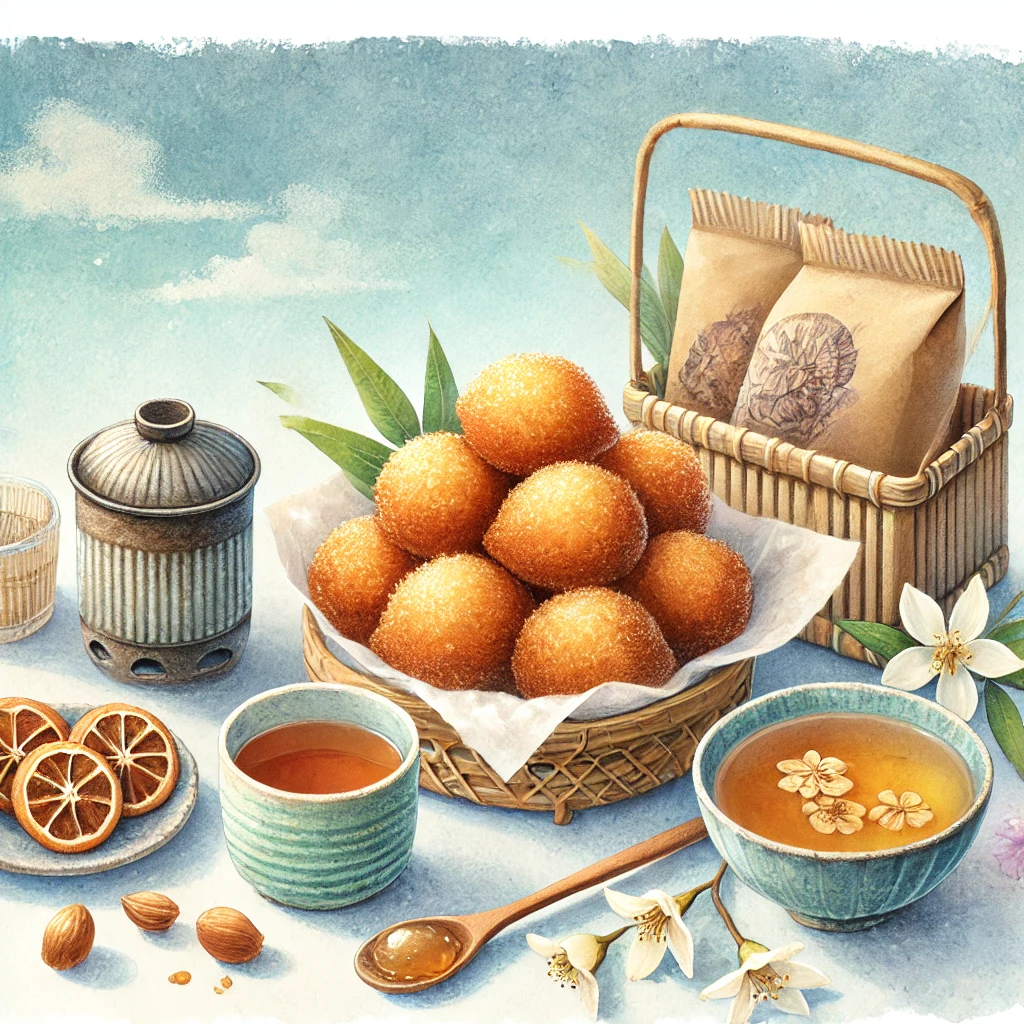
When you think of Okinawa’s blue skies and seas, a nostalgic sweet aroma might come to mind. Yes, it’s Sata Andagi. This small, round confection embodies the history, culture, and warm hearts of Okinawa’s people.
Sata Andagi might appear to be just a simple fried donut at first glance. However, its unassuming appearance hides a surprisingly deep charm. With a crisp exterior and a chewy interior, each bite releases the fragrant wheat and gentle sweetness of sugar. Most importantly, it has the power to strengthen bonds among people.
If you’ve visited Okinawa, you’ve likely tasted Sata Andagi, and many have been captivated by its flavor. Yet, the appeal of Sata Andagi extends beyond its taste.
This confection encapsulates the rich culinary heritage of Okinawa, dating back to the Ryukyu Kingdom. It has a history of supporting people through difficult post-war times and continues to quietly convey the spirit of mutual aid, known as “Yui.”
In this article, we will guide you through the profound world of Sata Andagi. From its history and cultural background to basic recipes and popular variations, we’ll cover it all. Whether you’re planning a trip to Okinawa, interested in its culture, or simply love delicious sweets, you’re in for a journey of discovery.
Let’s embark on a journey to explore the charm of Sata Andagi together. Through this small confection, you’ll touch the heart and culture of Okinawa, offering you a unique and delightful experience.
- What is Sata Andagi?
- The Allure of Sata Andagi
- Basic Sata Andagi Recipe
- Enjoying Sata Andagi with Creative Recipes
- How to Enjoy Sata Andagi
- Conclusion: Savoring the Taste and Spirit of Okinawa
- Q&A
- Summary
What is Sata Andagi?
If you’ve been to Okinawa, you’ve likely heard of “Sata Andagi.” This traditional Okinawan sweet with a distinctive name has gained popularity across Japan. However, its charm lies not only in its taste but also in its history, cultural background, and reflection of Okinawan people’s hearts.
This time, we will delve into Sata Andagi, exploring its origins, place in Okinawan culinary culture, and more. Whether you’re planning a trip to Okinawa, interested in its culture, or simply love delicious sweets, you’re sure to find something new.
The Origin and History of Sata Andagi
Though it may resemble a donut, the history and cultural background of Sata Andagi are entirely different. Exploring its origins reveals the depth of Okinawan culinary culture.
Meaning of the Name
Let’s start by deciphering the meaning of “Sata Andagi.” This name originates from the Okinawan dialect.
– “Sata”: Sugar
– “Andagi”: Fried
In other words, it directly translates to “fried with sugar,” a straightforward name reflecting its simple nature. This name alone conveys the simplicity and rustic charm of Sata Andagi.
Okinawan dialect often significantly differs from standard Japanese, and understanding these food names helps deepen our comprehension. From a linguistic perspective, Sata Andagi is a fascinating subject of study.
Place of Origin and Historical Background
The exact origin of Sata Andagi is not clear, but it is generally believed to date back to the Ryukyu Kingdom (15th to 19th centuries).
During this period, Okinawa thrived on trade with China and Southeast Asia, influencing its culture and cuisine. Sata Andagi is thought to be one of the sweets born from this international exchange.
Especially significant is the influence of China, with similarities noted to the Chinese “You Tiao,” a type of fried dough. However, Sata Andagi evolved uniquely to suit Okinawa’s climate and culinary preferences, resulting in its present form.
Widespread adoption of Sata Andagi is believed to have occurred after the 17th century when sugar production flourished. Okinawa’s warm climate was suitable for sugarcane cultivation, making sugar an important industry. Consequently, sweets using sugar, including Sata Andagi, became popular among the general populace.
Thus, the history of Sata Andagi reflects not just a sweet’s past but the historical and cultural exchanges of the Okinawan region.
Sata Andagi’s Role in Okinawan Culinary Culture
Sata Andagi plays a vital role in Okinawan culinary culture and social life. Understanding its significance offers deeper insight into the lives and values of Okinawan people.
Connection with Traditional Events
Sata Andagi is closely linked to various traditional Okinawan events and ceremonies, notably the “Seinen Iwai,” a birthday celebration.
In Okinawa, significant birthdays known as “Toshibi” are celebrated at ages 13, 25, 37, 49, 61, 73, 85, and 97 with a grand feast. Sata Andagi is always served at these celebrations.
Several reasons are cited for this choice:
1. Its round shape symbolizes “wholeness.”
2. The way it puffs up represents “prosperity.”
3. Its sweetness embodies the “sweetness of life.”
Thus, Sata Andagi conveys meanings beyond its taste. Eating it during celebrations is an act of sharing Okinawan people’s wishes for longevity and happiness.
Moreover, during annual events such as Obon and New Year, Sata Andagi plays a key role. These occasions, which honor ancestors and strengthen family and community bonds, see Sata Andagi as a connector of hearts.
Role in Daily Life
Sata Andagi is deeply ingrained in the daily lives of Okinawan people, beyond just special events.
1. **Snack Culture:**
Sata Andagi is a beloved snack for both children and adults. It’s a staple from local sweet shops after school to family tea times, offering a moment of relaxation in busy modern lives.
2. **Communication Tool:**
Often shared as a “O-susowake” (a small gift), homemade Sata Andagi fosters bonds among neighbors and coworkers. This practice embodies the Okinawan spirit of mutual aid, “Yui.”
3. **Tourism Highlight:**
Recently, Sata Andagi has become a key element of Okinawan tourism. Many tourists seek Sata Andagi as part of their Okinawan experience, leading to a variety of innovative and upscale versions. Specialized shops focusing on Sata Andagi are also increasing.
4. **Health Considerations:**
While traditional Sata Andagi is high in calories, new health-conscious versions have emerged. Variations using whole grains or baked instead of fried, known as “Yaki Sata Andagi,” are popular, showcasing its evolution to meet modern needs.
5. **Home Taste:**
Many families have recipes passed down through generations, making Sata Andagi a nostalgic “taste of home” for those living away from Okinawa.
In this way, Sata Andagi holds significant value in Okinawa’s culinary culture, reflecting its history, culture, and the hearts of its people. Through Sata Andagi, we can touch upon the lives, values, and warm hearts of Okinawan people.
When you eat Sata Andagi, consider these backgrounds. Surely, the taste will feel deeper and richer.
The Allure of Sata Andagi
Sata Andagi is known as one of Okinawa’s signature sweets. Its appeal extends beyond mere taste; it’s a blend of unique textures, rustic flavors, and a reflection of the Okinawan spirit. Here, we delve into the essence of Sata Andagi to uncover its true charm.
Unique Texture and Flavor
Taking a bite of Sata Andagi surprises you with its distinctive texture. The outer layer is crispy, while the inside is delightfully chewy, creating a perfect balance that defines this confection.
Crunchy Exterior
The exterior of Sata Andagi is as crunchy as a thin shell. This texture is achieved through the frying process.
– **Frying Tips:**
Achieving the perfect crunch requires precise oil temperature management. Generally, it’s fried at 170–180°C (338–356°F). Using a thermometer at home is recommended to maintain the right temperature.
– **Choice of Oil:**
The type of oil used is also crucial. Traditionally, lard was common in Okinawa, giving the sweets a rich flavor. Nowadays, vegetable oil is also popular, offering a lighter finish.
– **Impact of Shape:**
The unique round shape of Sata Andagi contributes to its crunchy texture. The larger surface area allows for even heating, ensuring a uniformly crispy exterior.
This crispy exterior contrasts beautifully with the chewy interior, enhancing the overall appeal of Sata Andagi.
Chewy Interior
Contrasting the crispy exterior, the interior of Sata Andagi is incredibly chewy. This texture is a result of the specific properties of its dough.
– **Choice of Flour:**
Medium-strength flour is typically used, which is not as strong as bread flour but not as light as cake flour, providing the ideal chewiness.
– **Mixing Technique:**
The mixing method is critical. Over-mixing can develop too much gluten, making the dough tough. It’s essential to mix just enough to eliminate lumps while incorporating some air.
– **Moisture Control:**
Achieving the perfect chewiness requires adjusting the moisture content, fine-tuning the amounts of eggs and milk.
– **Resting the Dough:**
Allowing the dough to rest before frying enhances the flavor and texture. Professional bakers master this resting period for optimal results.
The chewy interior of Sata Andagi provides a satisfying contrast to the crispy exterior, captivating those who try it.
Rustic and Nostalgic Flavors
One of the charms of Sata Andagi lies in its rustic and nostalgic taste. Made from simple ingredients, it evokes a sense of warmth and familiarity.
The Appeal of Simple Ingredients
The basic ingredients of Sata Andagi are flour, sugar, eggs, and oil. This simplicity highlights its charm.
– **Flour:**
As mentioned, medium-strength flour is commonly used. Some shops use locally sourced flour, adding a unique flavor nurtured by Okinawa’s climate.
– **Sugar:**
While white sugar is standard, using brown sugar adds depth. Okinawan brown sugar enhances the regional flavor.
– **Eggs:**
Fresh eggs contribute to a richer flavor. Some places use eggs from native Okinawan chickens, offering a unique and robust taste.
– **Oil:**
The choice of frying oil affects the flavor. Traditional lard offers richness, while modern vegetable oil provides a lighter alternative.
These simple ingredients, when combined perfectly, create the distinctive flavor of Sata Andagi.
Sweetness and Flavor Profiles
The sweetness of Sata Andagi is never overwhelming. Its moderate sweetness is a key factor in its rustic and nostalgic appeal.
– **Sweetness Adjustment:**
The amount of sugar can be adjusted to taste. Typically, 20-30% of the flour’s weight in sugar is used. Less sugar allows the natural flavors of the ingredients to shine.
– **Salt as an Accent:**
Some recipes include a small amount of salt, enhancing the sweetness and adding depth.
– **Vanilla Essence:**
Adding vanilla essence enriches the flavor, making it even more enticing.
– **Freshly Fried Flavor:**
Sata Andagi is best enjoyed fresh. Over time, the crispiness diminishes, but it gains a different, softer texture that is equally enjoyable.
This rustic and nostalgic flavor is cherished as a “taste of home” for Okinawans and a memorable experience for visitors.
Connection to Okinawan Spirit
Sata Andagi is more than just a sweet treat; it is deeply intertwined with the spiritual world of Okinawan people. Understanding this connection enhances the appreciation of its charm.
The Spirit of “Yui” and Sata Andagi
The Okinawan spirit of mutual aid, known as “Yui,” is embodied in Sata Andagi.
– **Collaborative Preparation:**
Historically, villagers gathered to make Sata Andagi during festivals, strengthening community bonds.
– **Sharing Culture:**
The sweets were shared among participants, symbolizing the sharing of joy and happiness.
– **Passing Down Skills:**
The technique of making Sata Andagi is passed down through generations, preserving family bonds and traditions.
– **Symbol of Resilience:**
During tough post-war times, people encouraged each other by making and sharing Sata Andagi, symbolizing the resilience of the Okinawan spirit.
Related to the Culture of Sharing
The tradition of “Osusowake,” or sharing what you have, is closely linked to Sata Andagi.
– **Daily Sharing:**
It’s common to share Sata Andagi with neighbors and colleagues, expressing kindness and gratitude.
– **Special Occasions:**
On birthdays or anniversaries, making and sharing Sata Andagi shows a desire to share one’s happiness.
– **Tourist Connections:**
Nowadays, tourists are often gifted Sata Andagi, showcasing Okinawan hospitality.
– **Deepening Bonds:**
Receiving Sata Andagi fosters a sense of connection and love from the giver.
Thus, Sata Andagi reflects the heart of Okinawan culture, embodying the spirit of sharing and mutual support.
The allure of Sata Andagi lies in its unique texture and flavor, rustic and nostalgic taste, and its deep connection to the Okinawan spirit. It’s more than just a confection; it’s a mirror reflecting Okinawa’s culture, history, and people’s hearts.
Next time you visit Okinawa, savor Sata Andagi, and consider the culture and emotions imbued in each bite. You’ll discover a deeper appreciation for Okinawa’s rich heritage.
Basic Sata Andagi Recipe
Sata Andagi is a traditional sweet that represents Okinawa. Its unique texture and rustic flavor continue to captivate many. Here, we present a simple Sata Andagi recipe that you can easily make at home. Using this recipe, why not bring the taste of Okinawa into your kitchen?
Preparing Ingredients and Tools
First, gather the necessary ingredients and tools to make Sata Andagi. The basic ingredients are simple and likely already in your kitchen.
Ingredients List
The basic ingredients for Sata Andagi are as follows:
1. Flour: 200g (all-purpose or cake flour)
2. Sugar: 50g (granulated or caster sugar)
3. Baking powder: 5g
4. Egg: 1 (medium size)
5. Milk: 50ml
6. Frying oil: sufficient amount (vegetable or canola oil)
With these ingredients, you can make about 10 Sata Andagi.
Ingredient Selection Tips
– **Flour:** Using cake flour results in a crispier texture, while all-purpose flour gives a chewier texture. Choose based on your preference.
– **Sugar:** Granulated or caster sugar is typical, but using brown sugar adds a distinct Okinawan flavor.
– **Eggs:** Fresh eggs enhance the overall flavor.
– **Milk:** You can substitute milk with soy milk for a different taste.
– **Frying oil:** Use neutral oils like vegetable or canola oil.
Tools and Substitutes
The necessary tools for making Sata Andagi are as follows:
1. Mixing bowls (large and small)
2. Rubber spatula or wooden spoon
3. Whisk
4. Measuring cups and spoons
5. Frying pan or deep pot
6. Thermometer (for oil temperature)
7. Slotted spoon
8. Paper towels
Substitute Tools
If you don’t have the specified tools, you can use the following substitutes:
– Use a large plastic container instead of a mixing bowl.
– Use a fork instead of a whisk.
– Use chopsticks to check the oil temperature (method explained later).
– Use a ladle instead of a slotted spoon.
Once you have all the ingredients and tools ready, it’s time to start making Sata Andagi!
How to Make the Dough
The key to delicious Sata Andagi lies in the dough preparation. Here’s a detailed explanation to ensure you get it right.
Proportions of Ingredients
First, let’s look at the proportions of the ingredients. The basic ratio for Sata Andagi is:
– Flour: 100%
– Sugar: 25%
– Baking powder: 2.5%
– Egg: 25%
– Milk: 25%
Remembering this ratio will make it easy to adjust the quantities if needed.
Proportion Tips
– **Sugar:** Adjust between 20% and 30% based on your sweetness preference.
– **Liquid:** The total amount of egg and milk should be 50% of the flour’s weight.
– **Baking powder:** Use 2% to 3% of the flour’s weight.
Mixing Tips
Proper mixing techniques can significantly improve the taste and texture of Sata Andagi.
1. **Mix Dry Ingredients:** In a bowl, combine the flour, sugar, and baking powder. Mix well with a whisk.
2. **Mix Wet Ingredients:** In another bowl, beat the egg and add the milk, mixing thoroughly.
3. **Combine Dry and Wet Ingredients:** Gradually add the wet mixture to the dry mixture, gently folding with a rubber spatula.
4. **Knead the Dough:** Once combined, knead the dough gently by hand. Avoid over-kneading.
Mixing Tips
– **Mix until just combined:** Stop mixing once the flour is no longer visible.
– **Dough consistency:** Aim for a dough as soft as your earlobe.
– **Incorporate air:** Mix gently to incorporate some air into the dough.
Resting the Dough
Allowing the dough to rest at room temperature for 15 to 30 minutes improves the final product. This resting period helps:
– The gluten in the flour relax.
– The ingredients to meld together.
– The dough to evenly absorb moisture.
While the dough rests, start preparing the frying oil.
Frying Tips and Techniques
The key to delicious Sata Andagi is proper frying. Here are some tips to ensure success.
Managing Oil Temperature
The ideal oil temperature for frying Sata Andagi is 160–170°C (320–338°F). Maintaining this temperature ensures a crispy exterior and chewy interior.
Checking Oil Temperature
1. **Using a Thermometer:** A thermometer provides an accurate temperature reading.
2. **Using Chopsticks:** Insert the tip of a chopstick into the oil. If small bubbles form around it, the oil is ready.
3. **Using Flour:** Sprinkle a bit of flour into the oil. If it sinks and then rises slowly, the oil is at the correct temperature.
Oil Temperature Tips
– Start frying at a slightly higher temperature (170–180°C) and lower the heat after adding the dough.
– Fry in small batches to prevent the oil temperature from dropping too quickly.
– Continuously monitor the oil temperature and adjust the heat as necessary.
Shaping and Frying Time
Here are the steps to achieve the perfect shape and frying time for Sata Andagi.
Shaping the Dough
1. **Scoop the Dough:** Use a tablespoon to scoop about 25g of dough.
2. **Form the Shape:** Use another spoon or your fingers to push the dough into the oil.
3. **Shape in Oil:** Gently press the dough with a ladle or slotted spoon to form a round shape.
Frying Time Tips
– **Initial Frying:** After the dough floats to the surface, gently pour oil over it using a ladle for the first minute.
– **Turning the Dough:** Turn the dough once the surface turns golden (about 2–3 minutes).
– **Finishing:** Fry for an additional 1–2 minutes until the entire dough turns golden brown.
– **Draining Oil:** Use a slotted spoon to remove the Sata Andagi and place them on paper towels to absorb excess oil.
Preventing Common Issues
– **Cracked Dough:** The oil temperature may be too high. Lower the temperature slightly.
– **Undercooked Interior:** The oil temperature may be too low, or the dough balls are too large. Adjust the temperature and size accordingly.
– **Deformed Shapes:** The dough might be too soft. Add a bit more flour to firm up the dough.
That’s the basic Sata Andagi recipe. Using this guide, try making Okinawa’s traditional sweet at home. It may seem challenging at first, but with practice, you’ll be making delicious Sata Andagi in no time.
Additionally, you can customize this recipe to create your unique version. For instance, adding cocoa powder to the dough for a chocolate flavor or mixing in purple sweet potato paste for a colorful twist can offer various delightful variations.
Through making Sata Andagi, you can connect with Okinawan culinary culture and rediscover its charm. Making these treats with family and friends can also be a fun and enjoyable experience. So, why not aim to become a Sata Andagi master starting today?
Enjoying Sata Andagi with Creative Recipes
Sata Andagi, a traditional Okinawan sweet, has long enchanted many with its rustic, delightful flavor. Recently, a variety of creative recipes have emerged, bringing out new aspects of this beloved treat. Here, we introduce several popular variations. By trying these recipes, you’ll discover new charms of Sata Andagi and delve deeper into Okinawan culinary culture.
Brown Sugar Sata Andagi
When thinking of Okinawa, brown sugar immediately comes to mind. The rich flavor of brown sugar in Brown Sugar Sata Andagi represents a quintessential Okinawan twist.
Choosing the Right Brown Sugar
The key to making delicious Brown Sugar Sata Andagi lies in the choice of brown sugar.
1. **Opt for Okinawan Brown Sugar:**
To enjoy the authentic flavor, Okinawan brown sugar is recommended. Particularly, brown sugar from remote islands like Iheya and Iriomote offers a richer taste.
2. **Powdered vs. Block Brown Sugar:**
Powdered brown sugar is easier to use, but block brown sugar provides a stronger flavor. If using block brown sugar, grate or crush it finely before use.
3. **Proportion of Brown Sugar:**
Replacing all the sugar in the basic recipe with brown sugar can result in an overly intense flavor. Start with half brown sugar and adjust according to your preference.
Nutritional Value of Brown Sugar
Brown sugar contains nutrients that regular sugar lacks:
– **Minerals:** Rich in calcium, iron, potassium, and magnesium.
– **Vitamins:** Contains vitamins B1, B2, and B6.
– **Polyphenols:** Known for their antioxidant properties.
These nutrients make Brown Sugar Sata Andagi more nutritious than the standard version.
Proportion Tips
Here are some tips for proportioning ingredients in Brown Sugar Sata Andagi:
1. **Amount of Brown Sugar:**
For the basic recipe using 50g of sugar, use 30g to 40g of brown sugar. Adjust the remaining sweetness with white sugar.
2. **Adjusting Flour:**
Since brown sugar can make the dough slightly moist, increase the flour by 5g to 10g.
3. **Adding Spices:**
Enhance the flavor of brown sugar with a small amount of spices like cinnamon or ginger.
4. **Milk Alternatives:**
Using soy milk instead of regular milk adds depth to the flavor.
Brown Sugar Sata Andagi Recipe
Here’s a specific recipe:
**Ingredients (for about 10 pieces):**
– Flour: 210g
– Brown sugar: 35g
– White sugar: 15g
– Baking powder: 5g
– Egg: 1
– Soy milk: 50ml
– Cinnamon: 1/4 tsp (optional)
**Instructions:**
1. In a bowl, mix flour, brown sugar, white sugar, baking powder, and cinnamon.
2. In a separate bowl, beat the egg and add the soy milk.
3. Gradually add the wet mixture to the dry ingredients, folding gently with a rubber spatula.
4. Let the dough rest for about 15 minutes.
5. Fry bite-sized balls of dough in oil at 170°C until golden brown.
This recipe yields Brown Sugar Sata Andagi with a deep color and a complex flavor profile.
Red Sweet Potato Sata Andagi
Red Sweet Potato Sata Andagi, made with Okinawa’s specialty red sweet potatoes, is popular for its vibrant purple color and unique flavor.
Preparing Red Sweet Potatoes
Proper preparation of red sweet potatoes is crucial.
1. **Selecting Sweet Potatoes:**
Choose fresh, unblemished red sweet potatoes. The deeper the color, the more vibrant the finished product will be.
2. **Cleaning:**
Thoroughly wash the surface to remove dirt.
3. **Peeling and Cutting:**
Peel and cut into 1cm cubes.
4. **Steaming:**
Steam the sweet potato pieces for 15-20 minutes until soft enough to be easily pierced with a skewer.
5. **Mashing:**
Mash the steamed sweet potatoes in a bowl while still hot.
6. **Sieving:**
For a smoother texture, pass the mashed sweet potatoes through a sieve.
Nutritional Value of Red Sweet Potatoes
Red sweet potatoes offer unique nutritional benefits:
– **Anthocyanins:** The purple pigment with strong antioxidant properties.
– **Vitamin C:** Boosts the immune system.
– **Dietary Fiber:** Supports healthy digestion.
These nutrients make Red Sweet Potato Sata Andagi not only delicious but also healthy.
Tips for Vibrant Color
One of the attractions of Red Sweet Potato Sata Andagi is its vibrant purple color. Here’s how to achieve it:
1. **Amount of Sweet Potato:**
Use red sweet potatoes for one-third to half of the total dough to ensure a vivid color.
2. **Type of Sweet Potato:**
Varieties like Chura Koi Beni or Beni Hokkori are ideal for their deep color.
3. **Using Lemon Juice:**
Adding a little lemon juice when mashing the sweet potatoes helps retain the bright color.
4. **Maintaining Frying Temperature:**
Avoid high temperatures that can brown the color. Keep the oil at 160–170°C.
5. **Frying Time:**
Fry until the surface sets and then flip to ensure even, light coloring.
Red Sweet Potato Sata Andagi Recipe
Here’s a detailed recipe:
**Ingredients (for about 10 pieces):**
– Flour: 150g
– Sugar: 40g
– Baking powder: 5g
– Red sweet potato paste: 100g
– Egg: 1
– Milk: 30ml
**Instructions:**
1. In a bowl, mix flour, sugar, and baking powder.
2. In another bowl, combine the sweet potato paste, egg, and milk.
3. Add the sweet potato mixture to the dry ingredients and mix gently with a spatula.
4. Let the dough rest for about 15 minutes.
5. Fry bite-sized balls of dough in oil at 170°C until golden brown.
This recipe produces Red Sweet Potato Sata Andagi with a vibrant purple hue and natural sweetness.
Chocolate Sata Andagi
Adding a Western twist to the traditional Sata Andagi, Chocolate Sata Andagi has become popular, especially among the younger generation.
Choosing and Mixing Chocolate
The type and quantity of chocolate significantly influence the flavor of Chocolate Sata Andagi.
1. **Types of Chocolate:**
– **Dark Chocolate:** Provides a rich, sophisticated flavor.
– **Milk Chocolate:** Offers a sweeter taste, favored by children.
– **White Chocolate:** Adds a sweet and creamy touch.
2. **Cocoa Content:**
– **50-60%:** Balances well with the dough.
– **70% or higher:** Gives a more intense, mature flavor.
3. **Quantity of Chocolate:**
Use 20-30g of chocolate per 100g of flour.
4. **Form of Chocolate:**
– **Chocolate Chips:** Adds texture.
– **Melted Chocolate:** Ensures an even distribution of flavor.
Nutritional Value of Chocolate
High-cocoa dark chocolate includes beneficial nutrients:
– **Polyphenols:** Antioxidants that may reduce heart disease risk.
– **Magnesium:** Supports muscle and nerve function.
– **Iron:** Helps prevent anemia.
These benefits make Chocolate Sata Andagi a delicious and health-conscious treat.
Topping Ideas
Enhance the appeal of Chocolate Sata Andagi with creative toppings:
1. **Chocolate Sauce:**
Drizzle melted chocolate for added richness.
2. **Cocoa Powder:**
Dust the surface with cocoa powder for extra flavor and aroma.
3. **Nuts:**
Add almonds or walnuts for added crunch and flavor.
4. **Fruits:**
Top with strawberries or bananas for a refreshing contrast.
5. **White Chocolate:**
Drizzle white chocolate over dark chocolate dough for a visually appealing contrast.
Chocolate Sata Andagi Recipe
Here’s a detailed recipe:
**Ingredients (for about 10 pieces):**
– Flour: 180g
– Cocoa powder: 20g
– Sugar: 50g
– Baking powder: 5g
– Egg: 1
– Milk: 50ml
– Chocolate chips: 30g
**Instructions:**
1. In a bowl, mix flour, cocoa powder, sugar, and baking powder.
2. In another bowl, beat the egg and add the milk.
3. Add the wet mixture to the dry ingredients and mix gently.
4. Stir in the chocolate chips.
5. Let the dough rest for about 15 minutes.
6. Fry bite-sized balls of dough in oil at 170°C.
7. Once cooled, add desired toppings.
This recipe yields Chocolate Sata Andagi with a crispy exterior, moist interior, and rich chocolate flavor.
In conclusion, we’ve introduced creative variations of Sata Andagi using brown sugar, red sweet potatoes, and chocolate. These recipes offer a fresh take on the traditional sweet, allowing you to explore new flavors. Feel free to create your original Sata Andagi by experimenting with these ideas.
Sata Andagi’s simple charm and versatile nature ensure it remains a beloved sweet, continuously evolving with new tastes and forms. By embracing
tradition and innovation, Sata Andagi continues to be cherished across generations.
Enjoy these creative recipes to deepen your appreciation of Okinawan culinary culture and bring a touch of Okinawa into your home. Making Sata Andagi with family and friends can also create enjoyable and memorable moments.
Finally, here are some tips for enjoying these creative recipes:
1. **Quality Ingredients:**
Using high-quality, local ingredients can enhance the authentic flavor.
2. **Temperature Control:**
Proper oil temperature is crucial for perfect Sata Andagi. Use a thermometer for accuracy.
3. **Compare and Contrast:**
Make both traditional and creative versions to appreciate the differences and unique qualities of each.
4. **Seasonal Ingredients:**
Incorporate seasonal fruits and vegetables for unique variations, like cherry blossoms in spring or mangoes in summer.
5. **Share on Social Media:**
Share your creations on social media for feedback and new ideas.
6. **Event-Themed Recipes:**
Create recipes for special occasions like birthdays or holidays, adding a festive touch.
7. **Health-Conscious Variations:**
Try using whole grain flour or baking instead of frying for healthier options.
8. **Local Specialties:**
Experiment with your region’s specialties to create unique Sata Andagi.
9. **Cooking with Kids:**
Involve children in the process for a fun and educational activity.
10. **Food Education:**
Use Sata Andagi making as an opportunity to teach about its history, cultural significance, and ingredients.
By exploring these tips, you can enjoy the rich flavors and creative possibilities of Sata Andagi. This delightful sweet embodies the spirit of Okinawa, combining tradition with endless potential for innovation.
Let’s discover the joy of Sata Andagi and share the love for Okinawan culinary heritage. Whether you stick to the basics or venture into creative recipes, Sata Andagi will continue to bring smiles and delicious moments to all who enjoy it.
How to Enjoy Sata Andagi
Sata Andagi, a traditional Okinawan sweet, offers a multitude of ways to be enjoyed. This guide explores various ways to savor Sata Andagi, from enjoying it in Okinawa to choosing it as a souvenir and even making it at home. Discover the richness of this beloved treat and deepen your appreciation for Okinawan culture.
Popular Shops in Okinawa
When visiting Okinawa, the best way to enjoy Sata Andagi is at local shops cherished by residents. Here, we introduce some highly recommended shops in Naha City and the surrounding islands.
Recommended Shops in Naha City
Naha City boasts numerous Sata Andagi specialty shops and long-established confectioneries. Here are some standout locations:
1. **Pork Tamago Onigiri Main Store (Makishi, Naha City)**
– **Features:** Enjoy Sata Andagi alongside their famous Pork Tamago Onigiri.
– **Recommendations:** Try various flavors such as plain, brown sugar, and red sweet potato.
– **Hours:** 7:00 AM – 7:00 PM
– **Access:** 5-minute walk from Makishi Station
2. **Ryukyu Confectionery Mitsuya (Shuri, Naha City)**
– **Features:** A traditional confectionery with over 60 years of history, preserving authentic flavors.
– **Recommendations:** The Royal Sata Andagi, made with rich brown sugar.
– **Hours:** 9:00 AM – 6:00 PM
– **Access:** 10-minute walk from Shuri Station
3. **Jimmy’s (Matsuyama, Naha City)**
– **Features:** A Sata Andagi specialty store offering over ten flavors.
– **Recommendations:** The chocolate Sata Andagi, a popular Western twist.
– **Hours:** 11:00 AM – 7:00 PM (closes when sold out)
– **Access:** 7-minute walk from Miebashi Station
When visiting these stores, keep the following points in mind:
– **Check Business Hours:** Some shops open early in the morning while others start in the afternoon. Verify hours in advance.
– **Arrive Early:** Popular stores often sell out by afternoon. Visiting early is recommended.
– **Eat-In Options:** While many stores are take-out only, some offer eat-in spaces where you can enjoy warm Sata Andagi.
Famous Shops on the Islands
Beyond Okinawa’s main island, the surrounding islands also host excellent Sata Andagi shops, each offering unique flavors and traditional methods.
1. **Nakayukui (Ishigaki Island)**
– **Features:** Known for Sata Andagi made with rich Ishigaki Island brown sugar.
– **Recommendations:** Brown sugar Sata Andagi, featuring deep island flavors.
– **Hours:** 9:00 AM – 6:00 PM
– **Access:** 10-minute drive from Ishigaki Port Ferry Terminal
2. **Paikaji (Miyako Island)**
– **Features:** Specializes in Sata Andagi made with Miyako Island’s famous snow salt.
– **Recommendations:** Salted Sata Andagi, a perfect blend of sweet and savory.
– **Hours:** 10:00 AM – 5:00 PM (closed Wednesdays)
– **Access:** 15-minute drive from Miyako Airport
3. **Obaa no Mise (Kume Island)**
– **Features:** Homemade Sata Andagi crafted by local grandmothers, offering a rustic taste.
– **Recommendations:** Plain Sata Andagi, highlighting the quality of the ingredients.
– **Hours:** 9:00 AM – 4:00 PM (irregular holidays)
– **Access:** 10-minute drive from Kume Island Airport
When enjoying Sata Andagi on the islands, consider the following tips:
– **Allow Extra Time:** Island shop hours can be irregular, and stores might close early. Plan with plenty of time.
– **Ask Locals:** Beyond tourist information centers, ask local residents or hotel staff for their recommendations. You might discover hidden gems.
– **Pair with Local Delicacies:** Enjoy Sata Andagi with other island specialties like fruits or salt for a unique experience.
Choosing Sata Andagi as a Souvenir
Sata Andagi is a popular Okinawan souvenir, but as a fried pastry, it requires careful handling for long-term storage and transportation. Here are some tips for enjoying Sata Andagi as a souvenir.
Packaging for Longevity
To ensure Sata Andagi remains delicious, proper packaging is crucial. Here are some tips to keep them fresh:
1. **Cool Before Packing:**
– Let Sata Andagi cool completely before packaging to prevent moisture buildup.
– Wrap in kitchen paper to absorb excess oil after cooling.
2. **Choose Appropriate Containers:**
– Use breathable paper boxes or bags instead of plastic containers to avoid moisture buildup.
– Opt for boxes with compartments to prevent crushing.
3. **Use Desiccants:**
– Include small desiccants to keep moisture at bay.
– Ensure desiccants do not touch the Sata Andagi directly.
4. **Vacuum Packing:**
– For long-term storage, consider vacuum packing.
– Be cautious as softer Sata Andagi might get squished.
5. **Freezing:**
– If not consuming immediately, freeze individually wrapped pieces for convenience.
Typical Shelf Life of Sata Andagi
The general shelf life of Sata Andagi is as follows:
– **Room Temperature:** 2-3 days
– **Refrigerated:** 4-5 days
– **Frozen:** About 1 month
However, always confirm shelf life with the store at the time of purchase.
Popular Souvenir Options
Okinawan souvenir shops offer a variety of Sata Andagi. Here are some popular items among tourists:
1. **Assorted Sets:**
– **Features:** Assorted flavors make great gifts for families or colleagues.
– **Recommendation:** “Okinawa Sata Andagi Tasting Set” (6 flavors, 12 pieces)
– **Price:** ¥1,000-¥1,500
– **Where to Buy:** Naha Airport, souvenir shops on Kokusai Street
2. **Long Shelf Life Types:**
– **Features:** Vacuum-packed or specially wrapped for extended shelf life.
– **Recommendation:** “Chura Island Sata Andagi” (shelf life about 1 month)
– **Price:** ¥800-¥1,200
– **Where to Buy:** Supermarkets and drugstores in Okinawa
3. **Local Character Packaging:**
– **Features:** Cute packaging featuring Okinawan mascots.
– **Recommendation:** “Shisa Sata Andagi”
– **Price:** ¥600-¥900
– **Where to Buy:** Souvenir shops in Naha and some convenience stores
4. **Premium Line:**
– **Features:** Premium ingredients for an upscale version.
– **Recommendation:** “Ryukyu Dynasty Sata Andagi” (made with brown sugar and red sweet potato)
– **Price:** ¥1,500-¥2,000
– **Where to Buy:** High-end confectioneries and department stores
5. **Individually Wrapped:**
– **Features:** Individually wrapped for easy sharing and hygiene.
– **Recommendation:** “Chura Koi Sata Andagi” (10 individually wrapped pieces)
– **Price:** ¥700-¥1,000
– **Where to Buy:** Airports and major tourist spots
**Tips for Choosing Souvenirs:**
– **Check Shelf Life:** Choose items with an appropriate shelf life based on when you plan to consume them.
– **Packaging Quality:** Ensure the packaging is sturdy enough to prevent damage during transport.
– **Sample Before Buying:** Many shops offer samples; taste before purchasing to ensure satisfaction.
– **Look for Limited Editions:** Check for seasonal or store-exclusive items.
– **Compare Prices:** Prices can vary by store; compare to find the best deal.
Enjoying Sata Andagi at Home
You don’t have to visit a store to enjoy Sata Andagi. Here are some ways to savor it at home.
Pairing with Beverages
Sata Andagi pairs well with various beverages, enhancing its flavor. Here are some recommended pairings:
1. **Okinawan Black Sugar Tea:**
– **Features:** The sweetness of black sugar complements the rustic flavor of Sata Andagi.
– **Recommendation:** Pair with plain Sata Andagi to appreciate the ingredients’ flavors.
– **How to Make:** Add a small amount of Okinawan black sugar to your tea.
2. **Jasmine Tea:**
– **Features:** The refreshing aroma reduces the oily taste of Sata Andagi.
– **Recommendation:** Perfect with brown sugar Sata Andagi.
– **How to Enjoy:** Serve chilled jasmine tea with warm Sata Andagi.
3. **Awamori:**
– **Features:** Pairing with Okinawa’s iconic alcohol is an adult delight.
– **Recommendation:** Goes well with salted Sata Andagi.
– **Caution:** Drink in moderation due to alcohol content.
4. **Shikuwasa Juice:**
– **Features:** The tartness of Okinawan Shikuwasa complements the sweetness of Sata Andagi.
– **Recommendation:**
Ideal with red sweet potato Sata Andagi.
– **How to Enjoy:** Dilute with sparkling water for a refreshing drink.
5. **Okinawan Coffee:**
– **Features:** Locally grown coffee offers unique flavors.
– **Recommendation:** Pairs perfectly with chocolate Sata Andagi.
– **How to Enjoy:** Serve iced coffee on a hot day with your Sata Andagi.
**Pairing Tips:**
– **Temperature Contrast:** Enjoy the texture difference by pairing warm Sata Andagi with cold drinks.
– **Flavor Balance:** Match sweet Sata Andagi with refreshing drinks to balance flavors.
– **Seasonal Consideration:** Pair cold drinks in summer and hot drinks in winter for seasonal enjoyment.
– **Time of Day:** Pair coffee with breakfast and tea with afternoon snacks for varied experiences.
Ideas for Toppings
Enhance the flavor of Sata Andagi with various toppings. Here are some easy ideas:
1. **Black Honey and Soy Flour:**
– **Ingredients:** Black honey, soy flour
– **How to Make:** Drizzle black honey over Sata Andagi and sprinkle with soy flour.
– **Tip:** Creates a delightful Japanese-style dessert.
2. **Chocolate Sauce:**
– **Ingredients:** Chocolate, heavy cream
– **How to Make:** Melt chocolate with heavy cream and drizzle over Sata Andagi.
– **Tip:** Perfect for special occasions like Valentine’s Day or Christmas.
3. **Fruit Sauce:**
– **Ingredients:** Favorite fruits (e.g., mango, pineapple), sugar
– **How to Make:** Cook fruits with sugar until thickened and pour over Sata Andagi.
– **Tip:** Use seasonal Okinawan fruits for an authentic touch.
4. **Matcha Cream:**
– **Ingredients:** Heavy cream, matcha powder, sugar
– **How to Make:** Whip cream with matcha powder and sugar, and dollop onto Sata Andagi.
– **Tip:** Enjoy the fusion of Japanese and Western flavors.
5. **Coconut Ice Cream:**
– **Ingredients:** Coconut ice cream
– **How to Make:** Place a scoop of coconut ice cream on warm Sata Andagi.
– **Tip:** The contrast of warm Sata Andagi and cold ice cream is delightful.
**Topping Tips:**
– **Match Flavors:** Choose toppings that complement the Sata Andagi’s flavors.
– **Visual Appeal:** Create colorful toppings to make the dessert visually appealing.
– **Seasonal Ingredients:** Use seasonal fruits and ingredients to enhance the flavor.
– **Texture Contrast:** Combine different textures like crunchy and creamy for a richer experience.
– **Host a Party:** Have a “Sata Andagi Party” where everyone chooses their favorite toppings.
Creative Sata Andagi Recipes
Use Sata Andagi as an ingredient in new desserts. Here are some simple ideas:
1. **Sata Andagi Parfait:**
– **Ingredients:** Sata Andagi, vanilla ice cream, fruits (e.g., mango, pineapple), whipped cream
– **How to Make:** Layer crushed Sata Andagi, vanilla ice cream, fruits, and whipped cream in a glass.
– **Tip:** Perfect for parties with its vibrant and festive look.
2. **Sata Andagi French Toast:**
– **Ingredients:** Sata Andagi, egg, milk, butter, maple syrup
– **How to Make:** Cut Sata Andagi in half, soak in an egg-milk mixture, and fry in butter. Serve with maple syrup.
– **Tip:** A delightful breakfast or brunch option.
3. **Sata Andagi Tiramisu:**
– **Ingredients:** Sata Andagi, mascarpone cheese, heavy cream, sugar, coffee, cocoa powder
– **How to Make:** Dip Sata Andagi in coffee, layer with mascarpone-cream mixture, and dust with cocoa powder.
– **Tip:** A fusion of Italian and Okinawan desserts.
Experiment with these ideas to create your unique Sata Andagi treats. Enjoy the process with family and friends, discovering new ways to savor this Okinawan delicacy.
Sata Andagi is more than just a simple treat; it represents Okinawa’s history, culture, and the warmth of its people. Whether enjoying it at local shops, as a thoughtful souvenir, or through creative home recipes, Sata Andagi brings a piece of Okinawa into your life.
Conclusion: Savoring the Taste and Spirit of Okinawa
Throughout this guide, we have explored the depth and richness of Sata Andagi, from its history and recipes to its diverse ways of enjoyment. Let’s reflect on the key aspects that make Sata Andagi a unique and cherished treat.
Rediscovering the Charm of Sata Andagi
Sata Andagi is more than just a confection; it is a reflection of Okinawan culture and history. Here, we revisit its key charms and delve into what makes it special.
The Blend of Simplicity and Depth
The allure of Sata Andagi lies in its harmonious balance of simplicity and depth.
1. **Simple Ingredients:**
– Made from basic ingredients like flour, sugar, eggs, and oil, Sata Andagi’s charm lies in its simplicity. The quality and ratio of these ingredients are crucial, showcasing the skill of the maker.
2. **Unique Texture:**
– The contrast of a crispy exterior and a chewy interior is a hallmark of Sata Andagi. Achieving this texture requires precise techniques in dough preparation and frying, reflecting years of experience and expertise.
3. **Rich Flavor:**
– The flavor profile of Sata Andagi is complex and satisfying, with the subtle sweetness of sugar, the nutty aroma of flour, and the richness of oil blending harmoniously. This depth of flavor captivates many.
4. **Versatility:**
– While the basic recipe is simple, Sata Andagi’s versatility allows for numerous variations. Flavors like brown sugar, red sweet potato, and chocolate expand its appeal, ensuring it remains beloved across generations.
A Cultural and Historical Confection
Sata Andagi encapsulates Okinawa’s rich culture and history.
1. **Ryukyu Kingdom Influence:**
– Tracing its origins back to the Ryukyu Kingdom era, Sata Andagi reflects the culinary influences of trade with China and Southeast Asia. Enjoying Sata Andagi is akin to tasting a piece of Okinawa’s rich history.
2. **Spirit of “Yui”:**
– Sata Andagi embodies the Okinawan spirit of mutual aid, “Yui.” Traditionally made for celebrations and shared among the community, it strengthens bonds and perpetuates this cultural tradition.
3. **Post-war Symbol of Resilience:**
– During the hardships of post-war Okinawa, Sata Andagi remained a staple, symbolizing the resilience and hope of the Okinawan people.
4. **Generational Transmission:**
– The art of making Sata Andagi has been passed down through generations, with each family or region adding its unique twist, enriching Okinawa’s culinary heritage.
Modern-Day Appeal
Sata Andagi continues to evolve, finding new appeal in contemporary times.
1. **Health-Conscious Variants:**
– Catering to modern health trends, variations using whole wheat flour or baking instead of frying have emerged, blending tradition with contemporary health awareness.
2. **Social Media Appeal:**
– Vibrant, creatively flavored Sata Andagi appeal to the younger generation, gaining popularity on social media for their aesthetic and unique flavors.
3. **Tourism Highlight:**
– Sata Andagi is a key element of Okinawa’s tourism, offering visitors a taste of local culture. Its popularity helps spread awareness of Okinawan culinary traditions.
4. **Craft Sata Andagi:**
– Artisanal versions made with premium ingredients or unique methods have emerged, offering a gourmet experience and further diversifying Sata Andagi’s appeal.
Learning the Value of Food through Okinawan Culture
Sata Andagi teaches us the value of food and its cultural significance. Here, we explore what Sata Andagi can teach us about the importance of food.
Building Community through Food
Sata Andagi is not just about satisfying hunger; it plays a vital role in fostering community.
1. **Cooking as a Communal Activity:**
– Traditionally, villagers would gather to make Sata Andagi for festivals, strengthening community bonds. Today, making it with family or friends can have the same effect.
2. **Culture of Sharing:**
– Sharing Sata Andagi with neighbors or coworkers fosters bonds and mutual understanding. It teaches the value of sharing and community spirit.
3. **Generational Exchange:**
– The tradition of passing down Sata Andagi recipes from generation to generation fosters family bonds and cultural continuity.
4. **Regional Identity:**
– For Okinawans, Sata Andagi represents the taste of home, contributing to regional identity and cultural pride.
Understanding Culture through Food
Sata Andagi is a gateway to understanding Okinawan culture.
1. **Historical Flavor:**
– Learning about Sata Andagi’s history offers insights into Okinawa’s historical and cultural background, from the Ryukyu Kingdom to post-war recovery.
2. **Linguistic Insight:**
– Understanding the name “Sata Andagi” deepens appreciation for Okinawan language and expressions.
3. **Geographic Reflection:**
– The ingredients used in Sata Andagi, such as local brown sugar and sweet potatoes, reflect Okinawa’s geography and agricultural
practices.
4. **Embodied Spirit:**
– The spirit of mutual aid and sharing inherent in Sata Andagi mirrors Okinawan values, offering a glimpse into the local way of life.
Sata Andagi as Food Education
Sata Andagi serves as an excellent subject for food education.
1. **Importance of Ingredients:**
– Its simple recipe highlights the importance of ingredient quality and the characteristics of each component.
2. **Value of Homemade Food:**
– Making Sata Andagi at home illustrates the effort and love that goes into food preparation, fostering appreciation and gratitude.
3. **Practicing Local Consumption:**
– Using local ingredients like Okinawan brown sugar and sweet potatoes promotes the concept of local consumption and its benefits.
4. **Culinary Diversity:**
– Regional variations and creative recipes showcase culinary diversity and the importance of cultural preservation.
5. **Nutritional Awareness:**
– Although Sata Andagi is not low-calorie, it offers an opportunity to discuss nutritional balance and the role of occasional treats in a healthy diet.
Sata Andagi’s humble appearance belies its profound depth and diverse appeal. It is not merely a treat but a reflection of Okinawa’s history, culture, and the enduring spirit of its people, teaching us the importance of food in our lives.
Through Sata Andagi, we can connect with Okinawan culinary culture and learn invaluable lessons about community, tradition, and the significance of food. Every bite is a journey into the heart of Okinawa, offering not just a taste but an experience steeped in cultural richness and historical depth.
As Sata Andagi continues to evolve and delight future generations, it remains a beloved symbol of Okinawa’s vibrant culinary heritage. Let us cherish and explore the many ways to enjoy Sata Andagi, whether in its traditional form or through modern, creative variations, and appreciate the unique stories and values it embodies.
Embark on a journey with Sata Andagi today, and discover not just a delicious treat, but a profound connection to Okinawan culture and the timeless joy of sharing and savoring food.
Q&A
What is the origin of the name “Sata Andagi”?
The name “Sata Andagi” comes from the Okinawan dialect. “Sata” means sugar, and “Andagi” refers to something fried in oil. Literally translated, it means “sugar-fried,” reflecting the straightforward nature of this traditional sweet.
What are the basic ingredients of Sata Andagi?
The basic ingredients for Sata Andagi are flour, sugar, eggs, milk, baking powder, and frying oil. These simple components combine to create the unique texture and flavor of this beloved Okinawan treat.
What are some popular variations of Sata Andagi?
Popular variations include brown sugar Sata Andagi, purple sweet potato Sata Andagi, and chocolate Sata Andagi. These versions incorporate Okinawan specialties and modern flavors, adding new dimensions to the traditional sweet.
How is Sata Andagi connected to Okinawan culture?
Sata Andagi embodies the Okinawan spirit of “Yui,” a tradition of mutual assistance. It is often made and shared during celebrations and events, strengthening communal bonds. Additionally, it served as a symbol of resilience and recovery in the post-war period.
What are some tips for enjoying Sata Andagi?
Sata Andagi is best enjoyed freshly fried. The optimal temperature enhances its crispy exterior and chewy interior. Pairing it with Okinawan black sugar tea or jasmine tea can further elevate its flavors.
Summary
Sata Andagi is a quintessential Okinawan sweet. The name translates to “sugar-fried,” a simple yet apt description rooted in the Okinawan dialect. Made from basic ingredients like flour, sugar, eggs, milk, and baking powder, Sata Andagi is celebrated for its rustic charm.
The allure of Sata Andagi lies in its unique texture and flavor—crispy on the outside and chewy on the inside. While the basic recipe remains timeless, contemporary variations featuring brown sugar, purple sweet potato, and chocolate have also become popular, adding modern flair to the traditional treat.
Beyond its delightful taste, Sata Andagi holds a special place in Okinawan culture. It represents the “Yui” spirit, symbolizing community and mutual support. Historically, it has been shared during festive occasions to foster bonds and even served as a symbol of hope and resilience in the aftermath of World War II.
There are numerous ways to enjoy Sata Andagi. While visiting Okinawa, savoring it at local favorites is a must. As a souvenir, it is essential to ensure proper packaging to maintain its freshness. At home, experimenting with various beverage pairings and toppings can offer a new experience.
Through Sata Andagi, we gain insights into Okinawa’s rich culinary traditions, history, and the importance of food in fostering community. It serves as a fascinating subject for food education, illustrating the significance of high-quality ingredients, the value of handmade foods, and the practice of local consumption.
Sata Andagi, with its humble appearance, encapsulates profound depth and diverse appeal. It is a sweet that not only pleases the palate but also reflects the heart and culture of Okinawa. As it continues to evolve while preserving its heritage, Sata Andagi remains a cherished symbol of Okinawa’s spirit, offering endless opportunities for culinary exploration and cultural appreciation.
By embracing Sata Andagi, we embark on a journey through Okinawa’s rich traditions, gaining a deeper understanding of the power of food to connect, preserve culture, and bring joy. Let us savor this special treat and celebrate the enduring heritage it represents.


コメント