
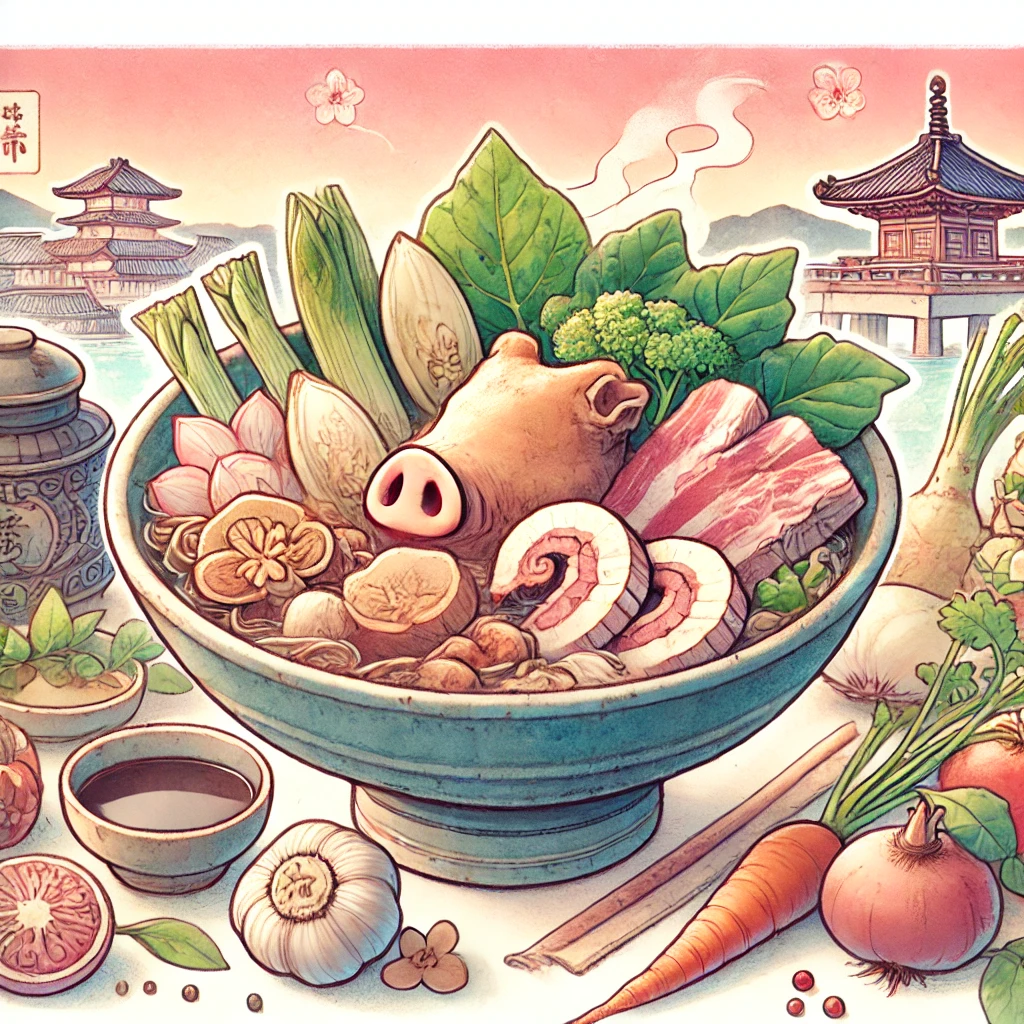
When you think of Okinawa, many people picture its blue seas, white sandy beaches, and unique food culture. One of the dishes that best represents Okinawa’s culinary heritage is “Tebichi.” In the local dialect, Tebichi refers to pig’s feet, and it is a traditional regional dish prepared by simmering them for a long time.
At first glance, pig’s feet might seem tough and unappetizing. However, through the wisdom and creativity of Okinawan people, they transform into a delicacy with a melt-in-your-mouth texture and a rich, deep flavor. The unique texture and savory taste of Tebichi leave a lasting impression that is hard to forget once experienced.
But the allure of Tebichi goes beyond its deliciousness. This dish embodies the Okinawan spirit of “mottainai” (a sense of not wasting anything) and the value placed on family and community connections. The time spent slowly simmering Tebichi and the moments shared around the table with family and friends are invaluable to the people of Okinawa.
Moreover, Tebichi offers delightful benefits for beauty and health. Rich in collagen, it is said to enhance skin elasticity and support joint health. Recently, more young women have started eating Tebichi for its beauty benefits.
Nowadays, Tebichi is undergoing a modern transformation. Beyond the traditional simmered dish, new variations like Tebichi burgers and Tebichi pizzas are emerging to cater to the younger generation’s tastes. These creative adaptations are also trending on social media!
If you ever visit Okinawa, be sure to try authentic Tebichi. But even if you can’t make the trip, you can still enjoy Tebichi at Okinawan restaurants nationwide. It’s also available as ready-to-eat or frozen products, and we will provide easy recipes in this article for you to try at home.
Exploring Tebichi allows you to delve deep into Okinawa’s rich food culture. It can help you appreciate the essential meaning of food and the importance of human connections. This article will cover everything from the history of Tebichi to the latest trends, uncovering its many charms. You’ll learn the best ways to enjoy Tebichi, the heartfelt stories behind it, and its surprising health benefits.
The more you know about Tebichi, the more you’ll be drawn to the island of Okinawa and its people. Let’s embark on a journey into the fascinating world of Tebichi! By the end of this article, you’ll likely find yourself captivated by this unique dish.
Introduction
When it comes to Okinawan cuisine, many people think of dishes like Goya Champuru, Umibudo, and Awamori. However, to truly understand the depth of Okinawa’s food culture, one must look beyond these well-known dishes. A prime example of this deeper culinary heritage is “Tebichi.” In this article, we will explore the charm and secrets of Tebichi. From the secrets of its deliciousness to easy-to-make recipes at home, we’ll cover everything in detail.
What is Tebichi?
Tebichi is one of the most popular traditional dishes in Okinawa. Its unique texture and rich flavor are unforgettable once you’ve tried it. However, many people may not be familiar with Tebichi in detail. Here, we will provide a comprehensive explanation, from the basics of Tebichi to its distinctive characteristics.
Definition of Tebichi
Tebichi refers to pig’s feet in the Okinawan dialect. It corresponds to what is known as “pig trotters” in standard Japanese. However, Tebichi often refers to a dish that is prepared using unique Okinawan cooking methods and seasoning. While Tebichi mainly uses the front feet, the hind feet can also be used.
The term “Tebichi” is derived from “Te” meaning hand and “Bichi” meaning foot. So, literally translated, it means “hand and foot,” but it actually refers to the whole pig’s feet. This naming convention reflects the Okinawan people’s respect for pigs, using every part of the animal thoughtfully.
Tebichi offers a variety of textures in one dish, including skin, fat, muscle, and cartilage. These different textures harmonize to create a unique and delicious culinary experience.
Parts and Characteristics of Tebichi
Tebichi consists of several characteristic parts, each with its own texture and flavor, enhancing the overall appeal of the dish.
- Skin: Rich in collagen, the skin becomes tender and gelatinous when simmered. It’s a popular part for its beauty benefits.
- Fat: The moderate amount of fat adds depth of flavor to the dish. When cooked for a long time, it becomes melt-in-your-mouth tender.
- Muscle: Firm and flavorful, the muscle releases more taste with each bite and is rich in protein.
- Cartilage: Known for its crunchy texture, cartilage is also high in calcium. The more you chew, the more flavor it releases.
The coexistence of these parts within one dish creates the unique texture and flavor of Tebichi. Long simmering extracts umami components from each part, resulting in a rich and concentrated taste.
Tebichi often uses the front feet of the pig, which contain less muscle and more fat and skin compared to the hind feet, offering a more gelatinous texture. The higher cartilage content also contributes to a satisfying crunch.
The Role of Tebichi in Okinawan Food Culture
Tebichi is not just a dish; it is deeply intertwined with Okinawa’s food culture, history, and the daily lives of its people. Here, we will explore the significance of Tebichi in Okinawan food culture.
Tebichi as Traditional Home Cooking
Tebichi is a common dish in many Okinawan households, appearing on both special occasions and everyday meals. There are several reasons for its popularity:
- Nutritional Value: Tebichi is rich in collagen, protein, and calcium. It fits well with Okinawa’s food culture, which emphasizes balanced nutrition.
- Economy: Originally developed as a way to make delicious meals from less expensive parts of the pig, Tebichi is a testament to the ingenuity of Okinawan people.
- Preservation: As a simmered dish, Tebichi can be made in advance and stored, which is particularly useful in Okinawa’s hot climate.
- Flavor Depth: The long cooking time results in a deep, rich flavor, which appeals to the Okinawan palate.
These factors make Tebichi an ideal home-cooked dish in Okinawa, beloved across generations and passed down as a traditional recipe.
Association with Festivals and Celebrations
Tebichi is not only a daily meal but also an essential part of various Okinawan festivals and celebrations. It plays a significant role in events such as:
- Obon (Lunar July): During this important festival to honor ancestors, Tebichi is prepared both as an offering and as a family meal.
- New Year (Lunar): Tebichi is a staple in the celebratory feasts during the Lunar New Year in Okinawa.
- Eisa: After the traditional dance performances, Tebichi is often enjoyed at the celebrations, providing nutritional recovery for the dancers.
- Harvest Festivals: Tebichi is sometimes served during these festivals to celebrate the bounty of the harvest.
- Family Gatherings: Birthdays, longevity celebrations, and family reunions often feature Tebichi as a significant dish.
The use of Tebichi in these events is symbolic. Since Tebichi refers to “feet,” it represents the support and stability of family and community bonds. Sharing a meal of Tebichi helps strengthen these ties, providing an opportunity for extended conversations and deeper connections.
Thus, Tebichi is more than just a dish; it is a mirror reflecting the lives, culture, and hearts of Okinawan people. Understanding Tebichi is not only about exploring Okinawan cuisine but also about appreciating the values and mindset of its people.
The appeal of Tebichi extends beyond its flavor. It is a profound dish deeply connected to Okinawa’s history, culture, and daily life. In the next section, we will delve further into the history and cultural background of Tebichi, exploring the depth of Okinawa’s food culture through this unique dish.
History and Cultural Background of Tebichi
Tebichi, an essential dish in Okinawan cuisine, is more than just a culinary delight; it carries with it a rich history and deep cultural significance. Here, we delve into how Tebichi became an integral part of Okinawan food culture, exploring its historical evolution and cultural importance. Through Tebichi, we will uncover the wisdom, ingenuity, and culinary ethos of the Okinawan people.
Traditions from the Ryukyu Kingdom Era
The history of Tebichi dates back to the Ryukyu Kingdom era. During this period, Okinawa engaged in active trade with China and mainland Japan, introducing various cultures and technologies, including the practice of consuming pork. Tebichi emerged and developed within this pork-eating culture, becoming one of the staple dishes of Okinawan cuisine.
The Origins of Tebichi
While pinpointing the exact origins of Tebichi is challenging, it is generally believed that pig farming began in Okinawa around the 16th century. With this development, Tebichi cooking methods evolved. Several factors contributed to the creation of Tebichi:
- Utilization of Ingredients: In historical Okinawa, wasting food was not an option. Even seemingly inedible parts like pig’s feet were ingeniously transformed into delicious dishes.
- Nutritional Value: Rich in collagen and protein, Tebichi provided a vital source of nutrition for the people of Okinawa, who often faced food shortages.
- Preservation: Long-simmered Tebichi had good preservation qualities, making it suitable for the hot Okinawan climate.
- Chinese Influence: The influence of Chinese cuisine might have introduced the concept of using pig’s feet in cooking.
These factors collectively helped Tebichi become deeply rooted in Okinawan food culture. Initially a product of commoners’ ingenuity, Tebichi’s deliciousness and nutritional benefits eventually won it widespread popularity across various social strata.
The Importance of Pigs in the Ryukyu Kingdom
During the Ryukyu Kingdom period, pigs were more than just food; they played significant economic and cultural roles.
- Ritual Use: Pigs were important offerings to the gods, with pig heads being considered sacred and used in many rituals.
- Diplomatic Gifts: Pigs were also crucial gifts in tributary trade with China, making pig farming essential for diplomacy.
- Status Symbol: Consuming pork was a sign of social status, indicating a certain level of affluence.
- Medicinal Use: Various parts of the pig were used in traditional Chinese medicine.
Given these roles, pigs were highly valued in the Ryukyu Kingdom. Tebichi, as a way to use pig’s feet, reflected the broader practice of making full use of the animal. It is possible that the dish was refined by the royal chefs, who combined Chinese and Japanese culinary techniques with local ingredients to create a more sophisticated and delicious dish.
Minbuta and Okinawa’s Pork Culture
The indigenous Okinawan pig, Minbuta, played a crucial role in the development of Tebichi. Here, we explore the characteristics of Minbuta and its impact on Okinawan food culture.
Characteristics and History of Minbuta
Minbuta is a native breed of pig well-suited to Okinawa’s climate and environment. Its features and history include:
- Size: Minbuta are relatively small, weighing about 100 kg even as adults, about half the size of modern commercial pigs.
- Meat Quality: The meat is finely marbled with fat and rich in collagen, making it ideal for Tebichi.
- Resilience: Minbuta are hardy and resistant to heat and disease, well adapted to Okinawa’s conditions.
- Ease of Rearing: They are not picky eaters and can thrive on scraps and leftover food.
Minbuta have been bred in Okinawa since at least the 14th century, likely evolving from pigs brought from China. These pigs became integral to Okinawan households for several reasons:
- Household Rearing: Many families raised Minbuta in their backyards, providing a crucial food source and an additional income stream.
- Influence on Food Culture: The presence of Minbuta helped shape Okinawa’s pork-centric food culture.
- Emotional Value: Minbuta were often treated as part of the family, not just livestock.
However, the introduction of larger, faster-growing Western pig breeds after World War II led to a decline in Minbuta numbers. Today, Minbuta are an endangered breed, with efforts underway to protect and revive them.
Reasons Behind the Deep-Rooted Pork Culture in Okinawa
Several factors contributed to the deep-rooted pork culture in Okinawa, which also fostered the development of Tebichi:
- Geographical Factors:
- Okinawa’s island geography was not conducive to raising large livestock, making smaller pigs like Minbuta more practical.
- The subtropical climate made it difficult to preserve meat, so the smaller size of Minbuta, which could be consumed quickly, was advantageous.
- Cultural Factors:
- Intensive interaction with China during the Ryukyu Kingdom era introduced pork-eating customs to Okinawa.
- Unlike mainland Japan, where Buddhist influences discouraged meat consumption, Okinawa had fewer such restrictions, allowing pork to become a staple.
- Economic Factors:
- Minbuta were economically efficient, providing not just meat but also fertilizer from their manure.
- They were also considered “walking savings banks,” easily convertible to cash in times of need.
- Nutritional Factors:
- Pork is a high-quality protein source, crucial in a region where nutritional resources were often scarce.
- Collagen-rich Tebichi was particularly valued for its health and beauty benefits.
These factors interwove to create Okinawa’s distinctive pork culture, within which Tebichi holds a special place.
The significance of Tebichi lies in several aspects:
- Mottainai Spirit: Okinawans have always cherished the “mottainai” spirit of not wasting any part of the food. Tebichi exemplifies this, turning seemingly inedible parts into a culinary delight.
- Nutritional Value: Rich in collagen and gelatin, Tebichi has long been appreciated for its nutritional benefits.
- Cooking Effort: Preparing Tebichi requires long hours of simmering, fostering family and community bonding through the shared cooking process.
- Preservation: Tebichi’s long shelf life made it a practical choice in Okinawa’s hot climate.
Thus, Tebichi transcends mere food; it embodies the wisdom, creativity, and attitude toward food of the Okinawan people.
Today, Tebichi remains a beloved dish in Okinawa, representing the island’s culinary heritage. It is also served in restaurants catering to tourists, promoting Okinawan food culture to the outside world. Recently, Tebichi has gained attention as a health food, with more people consuming it for its collagen content. As such, Tebichi continues to be a central part of Okinawan cuisine, adapting to modern needs while preserving its traditional essence.
Understanding the history and cultural background of Tebichi reveals how deeply embedded this dish is in the lives of Okinawans. It is not just a delicious meal but a reflection of Okinawa’s history and culture. In the next section, we will delve deeper into the appeal of Tebichi, exploring its unique texture, rich flavor, nutritional value, and health benefits.
The Appeal of Tebichi Cuisine
Tebichi, one of Okinawa’s representative local dishes, captivates with its unique texture, deep flavor, and abundant nutritional value. Here, we delve into the reasons why Tebichi continues to enchant so many people. By discovering the allure of Tebichi, you are sure to become a fan of Okinawan cuisine!
Unique Texture and Deep Flavor
The primary appeal of Tebichi lies in its unique texture, which cannot be found in other dishes, and the rich flavor that comes from long simmering. One bite will immediately explain why this dish has been beloved by Okinawans for so long.
Gelatinous, Collagen-Rich Texture
The distinctive texture of Tebichi comes from the collagen abundantly found in pig’s feet. When simmered for an extended period, this collagen transforms into gelatin, creating a unique “bouncy” texture.
- Skin: The most gelatinous part, offering a smoothness comparable to high-quality pudding.
- Meat: Becomes tender and melts in the mouth after slow cooking.
- Cartilage: Retains a crunchy texture that releases more flavor with each bite.
These different textures harmonize within a single dish to create an unparalleled culinary experience. It’s like having a dance party in your mouth.
Moreover, this gelatinous texture is visually appealing. The glossy and translucent finish not only whets the appetite but also makes for great photos. Posting a picture of Tebichi on social media will surely earn you plenty of “likes.”
Rich Umami from Slow Cooking
The charm of Tebichi is not limited to its texture. The rich umami that develops from long, slow cooking is another significant feature of this dish.
The cooking process of Tebichi involves the following steps:
- Pre-treatment: Thoroughly wash the pig’s feet and remove excess hair.
- Blanching: Boil the pig’s feet to remove excess fat and impurities.
- Main simmering: Simmer for several hours with seasonings like soy sauce, Awamori (Okinawan distilled liquor), and sugar.
This lengthy simmering process is the secret to Tebichi’s deep flavor. Several chemical changes occur during cooking:
- Extraction of Umami: Glutamic acid and inosinic acid are extracted from the meat and bones.
- Collagen Breakdown: Collagen converts to gelatin, adding thickness and deep flavor.
- Maillard Reaction: Proteins and sugars react to form complex, deep flavors.
Furthermore, Okinawa’s unique seasonings and spices add additional depth to the flavor:
- Awamori: Traditional Okinawan distilled liquor adds a distinctive aroma and umami.
- Island Chili: Adds a spicy kick that sharpens the overall flavor.
- Island Soy Sauce: Okinawan soy sauce contributes a mild saltiness and deep umami.
The perfect balance of these elements creates the profound flavor unique to Tebichi. One bite will send waves of umami cascading over your palate.
Additionally, Tebichi remains delicious even when cooled. In fact, the flavor often deepens as it sits, making it perfect for meal prepping in our busy modern lives.
Nutritional Value and Health Benefits
The appeal of Tebichi extends beyond its taste. It is also a highly nutritious food with numerous health benefits. Tebichi is an ideal food that combines deliciousness with health.
Collagen and Beauty Benefits
The primary nutritional feature of Tebichi is its high collagen content. Collagen is an essential protein that makes up about one-third of the proteins in our bodies. Specifically, the following beauty benefits can be expected:
- Improved Skin Elasticity: Collagen helps maintain skin elasticity, potentially improving skin firmness and radiance.
- Wrinkle Prevention: Collagen retains moisture in the skin, preventing dryness and reducing wrinkle formation.
- Enhanced Wound Healing: Collagen plays a crucial role in wound healing, potentially promoting skin turnover when consuming Tebichi.
- Maintaining Healthy Nails and Hair: Collagen is a key component of nails and hair, potentially improving their strength and shine.
Notably, the collagen in Tebichi is “low molecular collagen.” Typically, collagen has a large molecular size, making it difficult for the body to absorb. However, simmering Tebichi for a long time breaks down collagen into smaller molecules, improving its absorption.
In addition, Tebichi contains other nutrients beneficial for beauty:
- Hyaluronic Acid: Important for skin hydration.
- Elastin: A protein crucial for maintaining skin elasticity.
- Vitamin E: An antioxidant that helps prevent skin aging.
These nutrients work synergistically to make Tebichi a food with comprehensive beauty benefits.
Rich in Protein and Various Minerals
The nutritional value of Tebichi is not limited to collagen. It is a well-balanced food rich in various essential nutrients. Here are the main nutrients in Tebichi and their benefits:
- Protein:
- Essential for muscle formation and maintenance.
- Contributes to immune function.
- Promotes metabolism, aiding in weight management.
- Calcium:
- Important for bone and teeth formation.
- Involved in muscle contraction and nerve transmission.
- Effective in preventing osteoporosis.
- Iron:
- Essential for red blood cell formation.
- Helps prevent anemia.
- Aids in fatigue recovery.
- Zinc:
- Important for maintaining taste and smell.
- Contributes to skin health.
- Enhances immune function.
- B Vitamins:
- Promote energy metabolism.
- Important for nervous system health.
- Contribute to healthy skin and hair.
With these abundant nutrients, Tebichi is truly a “nutritional treasure trove.” Particularly noteworthy is the balanced presence of these nutrients in one food. This makes Tebichi exceptionally valuable.
Furthermore, Tebichi offers the following health benefits:
- Joint Health: Rich in collagen and glucosamine, Tebichi may help reduce joint pain and improve joint mobility.
- Improved Gut Health: The gelatin in Tebichi can serve as a food source for gut bacteria, promoting a healthy gut environment.
- Enhanced Liver Function: Glycine, an amino acid in Tebichi, is believed to improve liver function.
- Fatigue Recovery: Rich in protein and minerals, Tebichi can be effective for recovering from intense exercise or labor.
Thus, Tebichi is not only delicious but also highly nutritious. Especially noteworthy is its ability to provide nutrients that are often lacking in modern diets, such as collagen and minerals.
However, Tebichi is also high in fat and calories. A typical Tebichi dish contains about 250-300 calories per 100 grams. Those on a diet or with calorie restrictions should consume it in moderation.
Additionally, Tebichi is high in sodium, so individuals with high blood pressure or kidney disease should be cautious about their intake. Consulting with a doctor or nutritionist is recommended for determining an appropriate amount.
The appeal of Tebichi lies in its unique texture, deep flavor, and rich nutritional value. This dish, loved by Okinawans for centuries, embodies the wisdom of combining deliciousness and health.
Next, we will explore various cooking methods and types of Tebichi to deepen our understanding of this dish. Knowing the diverse appeals of Tebichi will undoubtedly make you a fan of Okinawan cuisine. Stay tuned!
Types of Tebichi Dishes
Tebichi, a hallmark of Okinawan cuisine, is celebrated not only for its unique taste and texture but also for its versatile cooking methods. From classic stews to creative dishes, Tebichi offers a range of variations. Here, we will introduce the main types of Tebichi dishes, their characteristics, and even some popular restaurants where you can savor these delights. By the end of this, you’ll be well-versed in Okinawan cuisine!
Classic Stews
The quintessential Tebichi dish is the classic stew. By simmering it slowly over time, the rich flavors of the pork feet are fully extracted. There are mainly two types of stews.
Soy Sauce-Based Stew
The most common way to prepare Tebichi is in a soy sauce-based stew. This traditional method has been cherished by Okinawan families for generations, deeply embedded in their culinary memory.
Here are the basic ingredients and steps:
- Ingredients (for 4 servings):
- Tebichi (pig’s feet) 1kg
- Soy sauce 200ml
- Sugar 100g
- Awamori (Okinawan liquor) 100ml
- Ginger 1 piece
- Garlic 2 cloves
- Island chili 2 (optional)
- Cooking steps:
- Wash the Tebichi and remove any excess hair.
- Boil the Tebichi in a large pot of water to remove scum.
- In a separate pot, combine all seasonings and the Tebichi, then simmer on low heat for 3-4 hours.
- When the Tebichi becomes tender and shiny, it’s done.
The soy sauce-based stew is characterized by its deep flavor and glossy appearance. The long simmering time allows the soy sauce’s saltiness and sugar’s sweetness to permeate the meat perfectly. Adding Awamori enhances the complexity of the flavor with a unique aroma.
Key points for making this stew include:
- Initial Boil: Boiling the Tebichi initially helps remove excess fat and impurities, resulting in a cleaner taste.
- Simmering Time: Ideally, simmer for 3-4 hours, but using a pressure cooker can reduce the time.
- Seasoning Ratio: A 2:1 ratio of soy sauce to sugar is standard, but adjust to your taste.
The soy sauce-based stew pairs excellently with rice. Pouring the flavorful broth over rice makes for a satisfying meal. It’s also great for meal prep, as it remains delicious even when reheated.
Awamori-Based Stew
An Awamori-based stew offers an even deeper flavor than the soy sauce-based version. The unique aroma and umami of Awamori create a more complex and rich taste.
Here are the basic ingredients and steps:
- Ingredients (for 4 servings):
- Tebichi (pig’s feet) 1kg
- Awamori 300ml
- Soy sauce 100ml
- Sugar 50g
- Ginger 1 piece
- Garlic 2 cloves
- Island chili 2 (optional)
- Kombu (kelp) 10cm piece
- Cooking steps:
- Wash the Tebichi and remove any excess hair.
- Boil the Tebichi in a large pot of water to remove scum.
- In a separate pot, combine Awamori, soy sauce, sugar, ginger, garlic, island chili, and kombu.
- Add the Tebichi and simmer on low heat for 4-5 hours.
- When the Tebichi becomes tender and shiny, it’s done.
Key characteristics of the Awamori-based stew include:
- Rich Aroma: The distinctive aroma of Awamori infuses the entire dish, offering a richer flavor.
- Smooth Texture: The alcohol tenderizes the meat, resulting in a smooth and soft texture.
- Longevity: The alcohol enhances preservation, allowing the dish to stay delicious for up to a week in the refrigerator.
This stew pairs perfectly with Awamori. It’s common to see this dish enjoyed alongside Awamori in Okinawan izakayas (pubs). You can also substitute Awamori with other spirits like shochu for a different yet delicious result.
Note that both stews are high in salt and fat, so moderate consumption is recommended. For a balanced meal, pair Tebichi with vegetables.
Okinawa Soba Topping
Tebichi is also a popular topping for Okinawa soba. The combination of Tebichi and Okinawa soba is emblematic of Okinawan food culture.
Features of Tebichi Soba
Tebichi soba is a traditional Okinawa soba topped with Tebichi. Its characteristics include:
- Rich Umami: The collagen from the Tebichi melts into the broth, creating a rich and savory flavor.
- Satisfying Texture: The dish is more filling than regular Okinawa soba, providing a hearty meal.
- Visual Appeal: The large piece of Tebichi atop the soba is visually striking.
The basic components of Tebichi soba are:
- Okinawa soba noodles
- Broth made from pork bones and bonito flakes
- Simmered Tebichi
- Chopped green onions
- Pickled ginger (optional)
Tips for enjoying Tebichi soba include:
- Break the Tebichi with chopsticks: This makes it easier to mix with the noodles and broth.
- Taste the Broth: Savor the broth infused with Tebichi’s umami before mixing everything together.
- Combine Noodles and Tebichi: Eating the noodles and Tebichi together provides a delightful contrast in textures.
Tebichi soba is popular year-round, even in Okinawa’s warm climate. Its rich flavor and nourishing qualities make it a beloved dish among many.
Popular Tebichi Soba Restaurants
Many restaurants in Okinawa specialize in Tebichi soba. Here are three highly recommended ones:
- Yabigwa (Naha City)
- Features: Softly simmered Tebichi and rich broth.
- Recommended dish: Large Tebichi Soba 1,000 yen
- Hours: 11:00-21:00 (Last order 20:30)
- Closed: Irregular holidays
- Yunan Shokudo (Urasoe City)
- Features: Light broth contrasted with large Tebichi pieces.
- Recommended dish: Tebichi Soba 800 yen
- Hours: 11:00-15:00, 17:00-22:00
- Closed: Sundays
- Maruyasu (Naha City)
- Features: Over 60 years of tradition, preserving the classic flavor.
- Recommended dish: Tebichi Soba 850 yen
- Hours: 11:00-19:00
- Closed: Sundays
These restaurants often serve Tebichi as a standalone dish too. Enjoying Tebichi with Awamori after a bowl of soba is a quintessential Okinawan experience.
Some restaurants also offer cooking classes where tourists can learn to make Tebichi soba. This hands-on experience is perfect for those who want to deepen their understanding of Okinawan cuisine.
Other Creative Dishes
The appeal of Tebichi also lies in its versatility. Beyond classic stews and soba toppings, there are many creative dishes featuring Tebichi. Here are some new ways to enjoy Tebichi.
Stir-Fried Tebichi
Stir-fried Tebichi offers a different charm from traditional stews. It boasts a crispy texture and rich flavor.
Here are the basic ingredients and steps:
- Ingredients (for 4 servings):
- Boiled and chopped Tebichi 500g
- Garlic 3 cloves
- Ginger 1 piece
- Onion 1
- Green pepper 2
- Soy sauce 2 tablespoons
- Sake 2 tablespoons
- Sugar 1 tablespoon
- Sesame oil 1 tablespoon
- Cooking steps:
- Cut the Tebichi into small pieces and pre-boil.
- Mince the garlic and ginger, and cut the onion and green pepper into bite-sized pieces.
- Heat sesame oil in a frying pan and stir-fry the garlic and ginger.
- Add the Tebichi and stir-fry on high heat until browned.
- Add the onion and green pepper and stir-fry until the vegetables are cooked.
- Season with soy sauce, sake, and sugar.
- Once the flavors blend, it’s ready to serve.
The appeal of stir-fried Tebichi includes:
- Texture Contrast: Enjoy a crispy exterior and juicy interior, unlike stews.
- Vegetable Pairing: Combine with various vegetables for a nutritious dish.
- Quick Preparation: Easier and faster to prepare compared to long-simmering dishes.
Stir-fried Tebichi makes an excellent appetizer for beer or Awamori and pairs well with rice. Tebichi fried rice, using this stir-fry, is also popular.
Tebichi Curry
Tebichi curry is gaining attention as a new Okinawan specialty. The rich umami of Tebichi complements the spiciness of curry, creating a unique and delicious dish.
Here are the basic ingredients and steps:
- Ingredients (for 4 servings):
- Tebichi 1kg
- Onion 2
- Carrot 1
- Potato 2
- Curry roux 1 box
- Water 1.5L
- Salad oil 2 tablespoons
- Garam masala 1 teaspoon (optional)
- Cooking steps:
- Wash the Tebichi and remove excess fat.
- Boil the Tebichi in a large pot for about 2 hours, skimming off scum.
- Heat salad oil in a separate pot and sauté minced onions.
- Add diced carrots and potatoes and sauté.
- Add the boiled Tebichi and cooking water.
- Simmer for 30 minutes on low heat, then add the curry roux.
- Simmer for another 15 minutes and add garam masala if desired.
The characteristics of Tebichi curry include:
- Rich Flavor: The collagen from Tebichi enriches the curry, making it thick and flavorful.
- Tender Texture: Slow cooking makes the Tebichi incredibly tender.
- Nutritional Value: A well-balanced dish combining Tebichi’s nutrients with those of the vegetables.
Tebichi curry can be enjoyed with rice, or as a filling for curry udon or curry bread. Recently, ready-made Tebichi curry has also become a popular souvenir for tourists.
In Okinawa, some restaurants specialize in Tebichi curry, such as:
- Kariya Paya (Naha City)
- Features: Rich curry with concentrated Tebichi flavor
- Recommended dish: Tebichi Curry 1,000 yen
- Hours: 11:00-21:00 (Last order 20:30)
- Closed: Wednesdays
Tebichi can be enjoyed not only in traditional dishes but also in new, creative ways. These creative dishes are popular with younger generations and tourists, showcasing Tebichi from new angles.
Besides these, many other Tebichi dishes exist, such as:
- Grilled Tebichi
- Fried Tebichi
- Tebichi Ajillo (garlic and olive oil sauté)
- Tebichi Pizza Topping
These dishes can be found in Okinawan fusion restaurants and izakayas. Innovative chefs are continually exploring new possibilities with Tebichi, ensuring its culinary evolution.
The diversity of Tebichi dishes symbolizes the richness of Okinawan food culture. Respect for tradition combined with the incorporation of new ideas makes Okinawan cuisine even more appealing.
Next time, we will detail how to cook Tebichi at home, allowing you to enjoy professional-level Tebichi dishes right in your kitchen. Stay tuned!
Simple Tebichi Recipes You Can Make at Home
Tebichi, a traditional Okinawan dish, is renowned for its rich flavor and unique texture, leaving a lasting impression on those who taste it. Many people, however, may hesitate to make it at home, thinking it’s too difficult or time-consuming. The good news is, with the right tips and techniques, you can create delicious Tebichi right in your kitchen! This article will provide you with simple yet authentic Tebichi recipes that you can easily prepare at home. Enjoy making restaurant-quality Tebichi and impress your family and friends!
Ingredients and Preparations
The first step to making delicious Tebichi is selecting the right ingredients and performing thorough preparations. Here, we will explain how to choose the best pork feet and the necessary steps to prepare them before cooking.
Choosing the Right Tebichi
Selecting high-quality pork feet is crucial for making delicious Tebichi. Keep the following points in mind when shopping at your local supermarket or butcher:
- Freshness: Look for pork feet with bright, glossy skin. Avoid those that appear grayish or have a sticky surface.
- Size: Ideally, choose pork feet that are neither too large nor too small. Generally, those weighing between 300g to 500g per piece are recommended.
- Fat Content: Choose pork feet with a moderate amount of fat. Too much fat can make the dish overly greasy, while too little can result in a lack of flavor.
- Skin Condition: Ensure the skin is firm and free from cuts or discoloration. Good skin condition will result in a delightful, gelatinous texture when cooked.
- Pre-cut vs. Whole: Beginners may find pre-cut pork feet easier to handle compared to whole ones.
While frozen pork feet are widely available, fresh ones are preferable if you can find them. If using frozen pork feet, make sure to thoroughly thaw them before cooking.
Additionally, consider opting for pork feet from organically or pasture-raised pigs for a richer flavor, although these may be more expensive. These are perfect for special occasions or when aiming for a more authentic taste.
Prepping the Pork Feet
Proper preparation is key to making tasty Tebichi. Follow these steps to prep the pork feet:
- Cleaning: Rinse the pork feet thoroughly under running water to remove any dirt or excess fat.
- Hair Removal: Remove any remaining hair on the surface using tweezers or a hair remover. Beginners should avoid using fire for this step.
- Parboiling: Boil the pork feet in a large pot of water over high heat. Once boiling, reduce to medium heat and simmer for 10-15 minutes, skimming off any scum that rises to the surface.
- Cooling: Transfer the parboiled pork feet to an ice water bath to cool rapidly, which helps firm up the meat.
- Fat Removal: Once cooled, scrape off any solidified fat on the surface using a knife.
- Sizing: Cut the pork feet into manageable pieces if necessary.
Key points for pre-processing include:
- Thorough Cleaning: Removing surface impurities helps eliminate unwanted odors.
- Proper Parboiling Time: Parboiling for 10-15 minutes is ideal. Too short a time leaves odors, while too long diminishes flavor.
- Skimming Scum: Regularly skimming off scum during parboiling ensures a clean taste.
By carefully following these steps, you can significantly reduce any unpleasant odors and enhance the overall flavor of your Tebichi. Although it may seem labor-intensive, this preparation process is crucial for achieving the best results.
Cooking Instructions
With the ingredients prepped, you’re ready to start cooking. Here, we present a basic Tebichi stew recipe and a quicker pressure cooker version.
Basic Tebichi Stew Recipe
Let’s start with the traditional Tebichi stew recipe, loved by Okinawan families. This recipe involves slow cooking to bring out the full flavor of the pork feet.
Ingredients (for 4 servings):
- Prepared Tebichi (pork feet) 1kg
- Soy sauce 200ml
- Sugar 100g
- Awamori (or shochu) 100ml
- Water 1L
- Ginger (sliced) 1 piece
- Garlic (crushed) 2 cloves
- Green onion (green part) 1 stalk
- Island chili 2 (optional)
Cooking Steps:
- Place 1L of water and the prepared Tebichi in a large pot.
- Heat over medium heat, bringing to a boil, then skim off any scum.
- Once the scum is removed, add soy sauce, sugar, and Awamori.
- Add the ginger, garlic, green onion, and island chili.
- Bring to a boil again, then reduce to low heat, cover, and simmer for 2-3 hours.
- Occasionally skim off any scum while simmering, until the Tebichi is tender.
- When the Tebichi is tender and glossy, it’s ready to serve.
Key points for this recipe include:
- Slow Cooking: Simmering for 2-3 hours ensures the Tebichi becomes tender and flavorful.
- Skimming Scum: Regularly skimming off scum during cooking ensures a clean finish.
- Balancing Seasonings: Adjust the soy sauce and sugar to taste for the perfect balance.
This traditional Tebichi stew can be enjoyed on its own or served with rice. The flavorful broth also makes a delicious sauce for rice, a common way to enjoy it in Okinawa.
Pressure Cooker Tebichi Recipe
For those short on time, a pressure cooker can significantly reduce the cooking time. Here’s a quick Tebichi recipe using a pressure cooker.
Ingredients (for 4 servings):
- Prepared Tebichi (pork feet) 1kg
- Soy sauce 150ml
- Sugar 75g
- Awamori (or shochu) 75ml
- Water 500ml
- Ginger (sliced) 1 piece
- Garlic (crushed) 2 cloves
- Green onion (green part) 1 stalk
- Island chili 2 (optional)
Cooking Steps:
- Place all ingredients in the pressure cooker.
- Secure the lid and heat on high until pressure is achieved.
- Once pressurized, reduce to low heat and cook for 40 minutes.
- Turn off the heat and allow the pressure to release naturally.
- Open the lid, check the tenderness of the Tebichi, and simmer uncovered if needed to thicken the sauce.
- When the Tebichi is tender and the sauce has thickened, it’s ready to serve.
Key points for this pressure cooker recipe include:
- Adjusting Liquids: Use less liquid than traditional methods, as pressure cooking retains moisture.
- Cooking Time: 40 minutes is a general guideline; adjust based on the size of the Tebichi pieces.
- Final Simmering: Simmering uncovered after pressure cooking helps intensify flavors and thicken the sauce.
The pressure cooker method reduces the usual 3-hour cooking time to about 1 hour, making it ideal for busy individuals.
Tips and Tricks
Beyond the basic recipes, there are a few additional tips and tricks to ensure your Tebichi turns out perfectly. Here, we share some secrets for making Tebichi that rivals any professional chef’s creation.
Achieving Tender Texture
The hallmark of great Tebichi is its melt-in-your-mouth texture. Here are some tips to achieve that perfect tenderness:
- Long Simmering: The longer you simmer, the more tender the Tebichi becomes. Aim for at least 3 hours for the best results.
- Using a Pressure Cooker: A pressure cooker can quickly tenderize the meat.
- Temperature Control: Avoid boiling too vigorously as it can toughen the meat. Low, steady simmering is ideal.
- Resting Overnight: Allowing the cooked Tebichi to rest overnight in the refrigerator enhances tenderness and flavor.
- Adding Vinegar: Adding a tablespoon of vinegar during cooking can help tenderize the meat.
Temperature control is especially crucial. Boiling too hard can cause the meat to contract and become tough, so a gentle simmer is best.
For an additional trick, consider adding a teaspoon of baking soda to the boiling water during pre-cooking. This can help tenderize the Tebichi, but be careful not to overdo it as it can affect the flavor.
Eliminating Unpleasant Odors
One of the challenges in making Tebichi is dealing with its strong odor. Here are some effective methods to eliminate unpleasant smells:
- Proper Parboiling: The initial parboiling step helps remove a lot of the odor-causing impurities.
- Using Ginger: Ginger has powerful deodorizing properties. Adding extra ginger during cooking can help.
- Incorporating Alcohol: Awamori or sake can help neutralize odors and add a fragrant note.
- Adding Star Anise: Star anise, commonly used in Chinese cooking, can effectively mask strong odors. Add one or two pieces.
- Using Aromatic Vegetables: Onions, celery, and garlic can also help reduce odors.
Ginger and Awamori are particularly effective in neutralizing the strong smells without compromising the dish’s flavor.
Another important tip is to use the freshest pork feet possible, as fresher ingredients generally have less odor. Buying directly from a trusted butcher can ensure the best quality.
Additionally, choosing the right cookware can make a difference. Cast iron pots or earthenware pots are excellent for making Tebichi, as they distribute heat evenly and retain heat well, ensuring even cooking.
Here are some final tips for making the best Tebichi:
- Adjust Seasonings: Customize the seasoning to your taste. The balance of soy sauce and sugar is crucial.
- Resting the Dish: Letting the dish rest in the refrigerator overnight deepens the flavors.
- Pairing with Side Dishes: Tebichi’s rich flavor pairs well with simple vegetable sides like boiled bean sprouts or steamed bok choy.
- Serving Suggestions: Tebichi is typically eaten by pulling the meat off with chopsticks, but you can also serve it on a plate and use a fork to shred the meat.
Making Tebichi might seem daunting at first, but by following these tips and tricks, you can create a delicious dish at home. With practice, you’ll develop your own “perfect Tebichi” recipe.
Cooking Tebichi is not just about making a meal; it’s about experiencing Okinawan food culture and understanding its deeper meaning. Gather your family and friends, and enjoy the process of making and eating Tebichi together. It will surely be a memorable experience.
Here are some final safety tips for making Tebichi:
- Allow plenty of time for cooking as Tebichi requires long preparation and cooking times.
- Be mindful of the high fat content and eat in moderation.
- Handle the hot pot carefully to avoid burns, especially when opening the lid.
- Store any leftovers in the refrigerator and consume within 2-3 days.
Through Tebichi, we can appreciate the depth of Okinawan food culture. Enjoy the delicious taste of Tebichi and cherish the moments shared at the dining table.
Tebichi Cuisine and the Spirit of Okinawa
Tebichi cuisine is more than just a dish; it reflects the spirituality and values of the Okinawan people. In this section, we delve into the cultural significance of Tebichi cuisine and how it embodies the heart of Okinawa. Understanding Tebichi is understanding the spirit of Okinawa.
The Spirit of “Mottainai” and Efficient Use of Ingredients
The people of Okinawa have long cherished the spirit of “mottainai,” which means not wasting resources. This principle is deeply embedded in Tebichi cuisine.
The Culture of Using the Whole Pig
In Okinawa, there is a saying, “Eat the whole pig.” This is not just a phrase but a practice that has been carried out for generations. Tebichi, made from pig’s feet, is a prime example of this culture.
Pig’s feet might seem difficult to eat at first glance, but Okinawans have developed methods to make them delicious. By slow-cooking, the tough skin and tendons become tender and rich in collagen, resulting in a tasty dish.
This “mottainai” spirit is closely tied to Okinawa’s history. During the Ryukyu Kingdom era, Okinawa developed a self-sufficient mindset due to its limited resources as an island. The concept of using every part of the pig reflects this spirit of resourcefulness.
Through Tebichi, we learn the following Okinawan wisdom:
- Creativity: Turning seemingly inedible parts into delicious dishes
- Patience: Extracting the best flavors through long cooking times
- Resourcefulness: Valuing and making the most of all ingredients
- Circular Thinking: Viewing the entire process from pig rearing to cooking in a holistic manner
These values are crucial in today’s world, where food waste is a significant issue. Tebichi’s “mottainai” spirit teaches us the importance of sustainability.
Wisdom in Using Ingredients Fully
The wisdom of using ingredients fully, as seen in Tebichi, is a broader aspect of Okinawan cuisine. This approach stems not only from economic reasons but also from respect for food and harmony with nature.
Examples of this wisdom in Tebichi include:
- Using the Skin: The collagen-rich skin is cooked until it becomes gelatinous and nutritious.
- Utilizing Bones: After cooking, the bones are used to make stock for other dishes like Okinawa soba.
- Repurposing Cooking Broth: The nutritious broth from cooking Tebichi is used in various dishes, such as stir-fries and rice porridge.
- Recycling Fat: The rendered fat from Tebichi is used as a flavorful cooking ingredient.
This wisdom extends to other Okinawan dishes as well, such as:
- Goya Seeds and Pith: Often discarded, they are used in stir-fries.
- Fish Heads and Bones: Used for making broth or fried as a delicacy.
- Unripe Papaya Peel: Sliced thinly and used in stir-fries.
This approach provides valuable lessons for modern society, particularly in addressing global food waste. The “mottainai” wisdom of Okinawa serves as a model for sustainable living.
This philosophy also emphasizes deep understanding and respect for ingredients. By fully appreciating the potential of each ingredient, we can elevate our culinary skills. Professional chefs often draw inspiration from this mindset.
Through Tebichi, we learn to maximize the potential of ingredients and develop a sense of gratitude for nature’s bounty.
Strengthening Family and Community Bonds
Tebichi is not just a delicious dish; it plays a crucial role in strengthening family and community ties. Here, we explore how Tebichi brings people closer together in Okinawa.
Family Bonding Over Tebichi
In many Okinawan households, Tebichi is a staple for special occasions such as New Year’s, Obon, and birthdays. Why does Tebichi hold such a special place?
The reasons include:
- Long Cooking Time: The extended cooking process provides time for family members to gather and converse.
- Enjoyment of Shared Meals: Tebichi is best enjoyed with others, creating a festive atmosphere when shared.
- Generational Taste: The flavors of Tebichi evoke memories of family traditions, connecting past and present.
- High Nutritional Value: Tebichi’s rich nutrients reflect a wish
for family health and well-being.
Many Okinawans cherish memories of family gatherings around Tebichi. For example:
“When I was a child, my grandmother would cook a huge pot of Tebichi for New Year’s. The aroma filled the house, and we all got excited. We would gather around, eating and sharing our hopes for the year, and listening to stories. Tebichi tastes like family to me.” (Naha resident, 50s)
Tebichi is more than just a meal; it is a symbol of family unity, history, and shared experiences.
Additionally, the process of making Tebichi fosters intergenerational connections. Cooking techniques and flavor secrets are passed down, ensuring that family heritage and values continue.
Preparing Tebichi also encourages family cooperation, such as:
- Grandparents or parents handling the cooking
- Children helping with vegetable prep
- Younger generations suggesting new recipes
Thus, the act of making Tebichi itself strengthens family bonds.
Tebichi in Community Events
Tebichi’s importance extends beyond the family to the entire community. It is a key dish in many Okinawan regional events.
Main regional events featuring Tebichi include:
- Harvest Festivals (Puri): Celebrating the harvest with Tebichi as a central dish.
- Eisa: Enjoying Tebichi after traditional dances.
- Shimakusari: Post-community clean-up meals often feature Tebichi.
- Uukun: Tebichi is a staple at family gatherings and reunions.
Reasons for Tebichi’s prominence in these events include:
- Scalability: Tebichi can be cooked in large quantities, making it ideal for feeding many people.
- Preservation: As a stew, Tebichi can be made ahead of time, convenient for busy event preparations.
- High Nutritional Value: Tebichi’s nutrients help replenish energy after physical activities.
- Symbolic Meaning: Sharing Tebichi reinforces community bonds and traditions.
Particularly in harvest festivals, Tebichi holds significant meaning:
- Gratitude: Utilizing the whole pig symbolizes appreciation for nature’s bounty.
- Community Unity: Sharing Tebichi fosters community cohesion.
- Symbol of Abundance: The substantial meat represents plentiful harvests.
- Tradition Preservation: Eating Tebichi maintains cultural heritage.
Thus, Tebichi is a dish that goes beyond sustenance, representing cultural and community values.
Moreover, initiatives to revitalize communities through Tebichi are emerging, such as:
- Tebichi Cooking Contests: Promoting local produce and exploring new Tebichi recipes.
- Tebichi Cooking Classes: Elderly teaching younger generations, fostering intergenerational exchange.
- Tebichi Festivals: Food festivals centered around Tebichi, boosting local economy.
These initiatives highlight the unifying power of Tebichi within communities and its role in cultural promotion.
Tebichi’s ability to strengthen ties is especially valuable in today’s world. Amidst nuclear families and weakening community bonds, Tebichi encourages reconnection and cohesion.
For instance, Okinawans living in major cities like Tokyo and Osaka often form “hometown associations” where they gather to enjoy Tebichi and reminisce about their roots. The familiar aroma and taste of Tebichi help affirm their identity and connection to their homeland.
Additionally, Tebichi’s appeal is spreading through social media. Searching “#Tebichi” on platforms like Instagram reveals numerous posts showcasing homemade Tebichi. These posts share the dish’s charm beyond Okinawa, fostering broader interest in Okinawan culture.
In this way, Tebichi embodies the values and wisdom of Okinawan society. It represents the principles of “mottainai” and the importance of connections, offering lessons for modern society.
Through Tebichi, we learn:
- Resource Efficiency: The importance of not wasting food, crucial for sustainability.
- Value of Time: The significance of dedicating time to cooking, beyond just speed and efficiency.
- Communal Eating: Reinforcing the importance of shared meals.
- Cultural Heritage: Passing down traditions through cooking.
- Creative Innovation: Transforming challenging ingredients into delicious dishes.
Tebichi is more than a traditional dish; it is a cultural treasure reflecting Okinawan philosophy and values.
Understanding the spirit of Okinawa through Tebichi is meaningful in today’s globalized society. Respecting regional cultures and traditions fosters a diverse and inclusive world. Tebichi offers insights into Okinawan culture and inspires solutions for contemporary issues like food waste and social isolation.
Tebichi represents Okinawan wisdom, creativity, and heart. Through this dish, we appreciate the essence of eating and the importance of connections. Enjoy Tebichi and delve into the spirit of Okinawa, discovering new insights and inspirations.
Recent Evolution of Tebichi Cuisine
Tebichi, a beloved traditional Okinawan dish, has been cherished for generations. However, in recent years, it has undergone significant transformations to appeal to younger generations and increase its recognition outside Okinawa. Let’s explore how Tebichi cuisine has evolved and developed in recent times.
New Arrangements Popular with Younger Generations
Tebichi is no longer just a traditional braised dish. It has been reimagined to cater to the tastes of younger generations, making it more appealing to a broader audience. These new arrangements highlight the versatility of Tebichi and its potential to attract new fans.
Tebichi as Fusion Cuisine
Fusion dishes featuring Tebichi are gaining popularity. These dishes combine traditional Okinawan flavors with elements from other culinary traditions, creating unique and exciting new styles of Tebichi. Here are some popular fusion Tebichi dishes:
- Tebichi Pasta
This innovative dish blends Italian cuisine with Tebichi. The Tebichi is slow-cooked to create a rich ragù sauce that pairs perfectly with pasta. The deep umami of the Tebichi complements the chewy texture of the pasta, creating a delightful new flavor.
Recipe example:
- Braise Tebichi until tender and shred it.
- Sauté chopped onions, garlic, and celery.
- Mix the shredded Tebichi and vegetables with tomato sauce.
- Toss with cooked pasta and serve.
- Tebichi Tacos
This dish marries Mexican cuisine with Tebichi, offering an exotic twist. The braised Tebichi is shredded and used as a taco filling, complemented by salsa and guacamole, enhancing its rich flavor.
Recipe example:
- Braise Tebichi until tender and shred it.
- Fill taco shells with shredded Tebichi.
- Add lettuce, tomatoes, and cheese.
- Serve with salsa and guacamole.
- Tebichi Curry
This dish introduces Indian spices to Tebichi, resulting in a hearty and spicy curry. The combination of Tebichi’s richness and the bold flavors of curry spices has become a favorite among younger people.
Recipe example:
- Pre-cook and chop Tebichi into bite-sized pieces.
- Sauté chopped onions, garlic, and ginger.
- Add curry powder, garam masala, and other spices.
- Simmer with Tebichi and finish with coconut milk.
These fusion dishes not only bring out new aspects of Tebichi’s flavor but also make it more accessible to people unfamiliar with traditional Okinawan cuisine. Additionally, these visually appealing dishes are popular on social media platforms like Instagram.
The appeal of fusion cuisine lies in the new flavors created by blending different culinary traditions. Tebichi’s rich umami and tender texture pair well with various styles, expanding its culinary potential.
Moreover, these fusion dishes have opened new business opportunities. For example, a restaurant in Naha, “Tebichi Fusion,” offers various fusion Tebichi dishes, attracting many young tourists.
Trending Tebichi Dishes on Social Media
With the rise of social media, new ways to enjoy Tebichi have emerged. Here are some popular Tebichi dishes trending on platforms like Instagram and TikTok:
- Tebichi Burger
Shredded braised Tebichi is used as a burger patty. The rich flavor of Tebichi pairs perfectly with the burger bun, making it a popular dish under the hashtag #TebichiBurger.
Reasons for popularity:
- Visually impressive and social media-friendly
- A fresh fast-food style twist
- An innovative way to enjoy Tebichi
- Tebichi Pizza
Tebichi is used as a topping for pizza, shredded and combined with cheese. This unexpected combination can be found under the hashtag #TebichiPizza.
Reasons for popularity:
- A familiar dish with a surprising twist
- The compatibility of cheese and Tebichi
- Great for parties
- Tebichi Donburi
This dish features shredded Tebichi mixed with a special sauce over rice, popular among young people for its convenience. Look for posts under the hashtag #TebichiDonburi.
Reasons for popularity:
- Easy to eat, appealing to younger generations
- Enjoy Tebichi’s rich flavor directly
- Various variations possible (e.g., Tebichi yukhoe don, Tebichi mentaiko don)
These social media trends are helping to increase Tebichi’s popularity among younger generations. Key benefits include:
- Increased awareness: More young people discover Tebichi through social media.
- Image refresh: Moving away from being seen as an “old-fashioned” dish.
- Encouraging experimentation: More people try new ways to enjoy Tebichi, diversifying its culinary applications.
- Attracting tourists: Social media-friendly dishes draw interest from tourists.
These innovative Tebichi dishes are also being embraced by restaurants in Okinawa. For instance, “Tebichi Revolution” in Naha offers popular social media dishes like Tebichi burgers and pizzas, drawing young tourists.
At home, more people are recreating Tebichi dishes they see on social media, leading to a wider variety of Tebichi dishes and more opportunities to enjoy Tebichi daily.
Rising Recognition Outside Okinawa
Once known mainly within Okinawa, Tebichi cuisine is now gaining recognition beyond the prefecture. The Okinawan food boom and social media have significantly increased Tebichi’s visibility.
Popularity in Okinawan Restaurants Outside Okinawa
Okinawan restaurants in major cities like Tokyo and Osaka have made Tebichi a popular menu item. Here are some examples:
- Tokyo
Many Okinawan restaurants in Tokyo feature Tebichi as a signature dish. For example, “Okinawan Restaurant Kariyushi” in Shinjuku has Tebichi stew that regulars love. Owner Mr. Kinjo says:
“At first, some customers were hesitant because of the smell, but once they tried it, they were hooked. Now, many people come specifically for the Tebichi.”
In Shibuya, “Miei” serves Tebichi karaage, popular among young women for its crispy skin and melt-in-the-mouth texture.
- Osaka
In Osaka, Tebichi is also a hit in Okinawan restaurants. “Ryukyu Izakaya Masayoshi” in Namba offers both Tebichi stew and grilled Tebichi, both of which are popular. Manager Mr. Yamashiro notes:
“Osakans love rich flavors, so Tebichi’s deep taste suits them well. The grilled version is especially popular as a snack with drinks.”
- Other Regions
In cities like Fukuoka, Nagoya, and Sapporo, Tebichi is gaining popularity in Okinawan restaurants. Its collagen content and associated beauty benefits are particularly appealing to women.
For example, “Shima Uta” in Fukuoka offers a Tebichi collagen hot pot that is a hit for women’s gatherings. In Nagoya, “Okinawa Shokudo” features Tebichi soba, loved by locals who enjoy Okinawa soba.
The reasons behind Tebichi’s rising popularity outside Okinawa include:
- Authentic taste appeal: Okinawa travelers seek out the authentic flavors.
- Novelty: The rarity of the ingredient sparks curiosity.
- Collagen trend: Women are drawn to its beauty benefits.
- Social media buzz: Instagram-friendly appearance boosts its popularity.
- Recognition as an Okinawan staple: Establishing Tebichi as a quintessential Okinawan dish.
These factors contribute to
the growing popularity of Tebichi in Okinawan restaurants outside Okinawa, enhancing its recognition. Many restaurants use Tebichi shipped directly from Okinawa, appealing to those seeking authentic flavors.
Nationwide Distribution of Tebichi Products
As Tebichi gains popularity, products featuring Tebichi are becoming available nationwide. These products allow people to enjoy Tebichi conveniently, further raising its profile.
- Retort Packaged Tebichi
Retort-packed Tebichi stews are now sold in supermarkets and convenience stores nationwide. “Okinawa Ham” sells “Soft Tebichi,” popular on Amazon and Rakuten.
Features of retort Tebichi:
- Easy access to authentic flavors
- Long shelf life
- Popular as Okinawan souvenirs
- Useful as emergency food
- Frozen Tebichi
Frozen Tebichi from popular Okinawan shops is also in demand. “Nampu” offers frozen Tebichi shipped nationwide, with many repeat customers.
Advantages of frozen Tebichi:
- Recreate restaurant-quality dishes at home
- Defrost and use as needed
- Versatile for various dishes
- Popular as gifts
- Tebichi-flavored Snacks
Snack foods featuring Tebichi flavor are emerging. “Okiko” makes Tebichi-flavored rice crackers, popular as Okinawan souvenirs, and now available nationwide.
Features of Tebichi-flavored snacks:
- Enjoy Tebichi flavor easily
- Popular as snacks with drinks
- Appeal to a wide age range
- Unique souvenir item
- Beauty Products with Tebichi Extract
Beauty products incorporating Tebichi collagen are also being developed. “Chura Cosme” offers “Tebichi Collagen Serum,” sold nationwide and popular among beauty enthusiasts.
Features of Tebichi beauty products:
- Unique use of traditional ingredients
- Expect collagen benefits
- “Edible beauty serum” buzz
- Value as an Okinawan brand
The nationwide distribution of these products has led to several benefits:
- Everyday Tebichi: Retort and frozen products bring Tebichi to household tables more frequently.
- Diversification: Snacks and beauty products offer new ways to enjoy Tebichi.
- Increased Interest in Okinawan Culture: Tebichi products spark broader interest in Okinawan cuisine.
- Economic Contribution: Increased demand for Tebichi products boosts Okinawan food industry.
Moreover, these products encourage repeat tourism to Okinawa, as people who enjoy Tebichi products seek out the authentic experience on the island.
The evolution of Tebichi cuisine encompasses more than just new cooking methods. It extends to product development and tourism promotion, showcasing the richness and potential of Okinawan food culture. Tebichi has become a nationally recognized ingredient, symbolizing the vibrant culinary traditions of Okinawa.
The evolution and increased recognition of Tebichi demonstrate the richness and potential of Okinawan food culture. Maintaining tradition while adapting to contemporary needs, and building brand strength rooted in regional characteristics, Tebichi offers valuable lessons for other regional ingredients.
As Tebichi cuisine continues to evolve, further innovations in cooking methods, product offerings, and even international expansion are anticipated. Tebichi serves as a gateway to greater appreciation and understanding of Okinawan food culture.
In summary, the charm of Tebichi cuisine lies in its fusion of tradition and innovation. Its enduring appeal stems from a rich history combined with the flexibility to meet modern needs. Discovering Tebichi will reveal the deep and diverse world of Okinawan cuisine.
Summary
In this article, we’ve delved deeply into “Tebichi,” a traditional Okinawan dish, exploring its history and the latest trends. Tebichi is more than just a dish; it embodies the culture and spirit of Okinawa, showcasing a profound charm. Let’s recap the key points and reflect on the depth of Okinawan food culture that Tebichi represents.
Revisiting the Appeal of Tebichi Cuisine
The allure of Tebichi lies in its unique texture, rich flavor, high nutritional value, and cultural significance. Let’s revisit the main points that make Tebichi so special.
A Blend of Tradition and Innovation
The greatest charm of Tebichi cuisine is the perfect fusion of traditional deliciousness and modern innovation. This blend keeps the dish relevant and appealing across generations.
- Traditional Cooking Methods
The traditional method of slow-cooking Tebichi for hours brings out its full flavor. This method, passed down through generations, reflects the wisdom of Okinawa. For example, braising Tebichi with soy sauce and awamori is a distinctive feature of Okinawan cuisine.
- Modern Adaptations
Simultaneously, Tebichi has evolved to meet modern food trends. New dishes like Tebichi burgers and Tebichi pizza have expanded its appeal, particularly among younger generations. These new cooking styles highlight different aspects of Tebichi’s charm.
- Health and Wellness Focus
Tebichi is rich in collagen, which is beneficial for beauty and health. Its value is being reevaluated not just as a food item but also from a health and wellness perspective, leading to the development of beauty products containing Tebichi extracts.
This blend of tradition and innovation is one reason why Tebichi continues to captivate so many people. It’s an age-old dish that always offers new delights, which is part of its incredible appeal.
A Symbol of Okinawan Food Culture
Tebichi is more than a dish; it’s a symbol of Okinawan food culture. Here are some reasons why:
- Embodiment of the “Mottainai” Spirit
Tebichi makes delicious use of pig’s feet, a part that might otherwise be considered unappetizing. This reflects the Okinawan “mottainai” spirit, which values not wasting resources. Tebichi encapsulates the wisdom of making the most of limited resources.
- Fostering Family and Community Bonds
Tebichi has been a staple at family gatherings and community events. People bond over the long cooking process, sharing stories and strengthening connections. In this way, Tebichi serves as more than just food—it’s a tool for communication and unity.
- Reflection of Okinawan History
The history of Tebichi is closely linked to Okinawa’s history. From the pork-eating culture of the Ryukyu Kingdom era to the post-war era of food scarcity, and now adapting to globalization, the evolution of Tebichi offers insights into Okinawa’s historical journey.
Thus, Tebichi serves as a microcosm of Okinawan food culture, offering a lens through which we can learn about the values, wisdom, and history of the Okinawan people.
The Depth of Okinawan Food Culture
Through Tebichi, we glimpse the depth of Okinawan food culture. Tebichi encapsulates many characteristics of Okinawan cuisine, making it an ideal subject for understanding the broader culinary landscape of Okinawa. Let’s consider the features of Okinawan food culture as seen through Tebichi and the future potential of Tebichi cuisine.
The Culinary Wisdom of Okinawa through Tebichi
Tebichi is a repository of culinary wisdom accumulated over generations in Okinawa. This wisdom provides valuable lessons for modern times.
- Maximizing Use of Ingredients
The principle of using every part of an ingredient, as exemplified by Tebichi, challenges modern issues like food waste. For example, using the broth from Tebichi for other dishes or making stock from the bones can help reduce household food waste.
- Attention to Nutritional Balance
Tebichi is rich in collagen, protein, and various minerals. The Okinawan wisdom of preparing highly nutritious and delicious dishes is relevant to today’s health-conscious consumers. Combining Tebichi with vegetables can create well-balanced meals.
- Innovative Cooking Techniques
The method of slow-cooking tough parts until tender, as done with Tebichi, can be applied to other ingredients, teaching us how to make tasty, nutritious meals even from less expensive ingredients.
- Preservation Techniques
Long cooking times enhance the shelf-life of Tebichi, a wisdom from times before refrigeration. This method could be valuable for disaster preparedness and food storage.
These pieces of wisdom, carried through Tebichi cuisine, showcase the timeless relevance of Okinawan culinary traditions. The depth of Okinawan food culture lies in these universal truths passed down from ancestors.
Future Potential of Tebichi Cuisine
Tebichi cuisine holds potential for further evolution. Let’s explore some possible future developments:
- Global Expansion
While Tebichi’s appeal is spreading across Japan, there’s potential for international expansion. In many Asian countries, pork feet dishes are already popular, providing a receptive market for Tebichi. Additionally, as part of the global interest in Japanese cuisine, Tebichi could gain recognition as a new facet of Japanese culinary culture.
- Development of New Cooking Methods
Innovative Tebichi dishes will continue to emerge. For example, using sous-vide techniques or creating Tebichi smoothies could introduce new ways to enjoy Tebichi, leveraging the latest culinary technologies and trends.
- Health and Beauty Applications
The collagen in Tebichi, known for its beauty benefits, could drive the development of health foods and beauty products. Products like Tebichi extract supplements or Tebichi collagen face masks could expand Tebichi’s applications beyond food.
- Environmental Considerations
Given the focus on reducing food waste, dishes like Tebichi that use “leftover” parts of animals could gain more attention. Initiatives to turn Tebichi cooking by-products into compost could also emerge, reflecting a commitment to environmental sustainability.
- Educational Value
Using Tebichi in food and cultural education could become more prevalent. For instance, incorporating Tebichi dishes into school meals and teaching about Okinawan culture and history could provide valuable educational experiences.
These possibilities suggest that Tebichi cuisine will continue to transcend its traditional role, adding new value and insights. Its evolution not only reaffirms the depth of Okinawan food culture but also hints at new avenues for value creation.
In summary, Tebichi cuisine teaches us many lessons:
- Respecting Tradition and Embracing Innovation: The importance of preserving traditions while evolving to meet modern needs.
- Maximizing Resource Utilization: The wisdom of using resources fully and minimizing waste.
- Strengthening Community Bonds: The significance of connecting people and deepening relationships through food.
- Appreciating Cultural Diversity: The value of respecting and rediscovering the worth of regional food cultures.
- Encouraging Creativity and Flexibility: The importance of accepting new ideas and remaining adaptable.
Tebichi is more than just a “pig’s foot dish.” It encapsulates Okinawan history, culture, and the ingenuity and creativity of its people. Experiencing Tebichi allows us to rediscover the essential meanings of eating and the importance of human connections.
We encourage everyone to try Tebichi and experience the profound depth of Okinawan food culture. This will be more than just enjoying a delicious meal; it will offer new insights and a deeper understanding of life. Discovering the charm of Tebichi will deepen your appreciation and love for Okinawa.
The allure of Tebichi cuisine is endless. As it continues to evolve, we invite you to keep an eye on its journey. And if possible, visit Okinawa to taste authentic Tebichi. You will encounter unparalleled deliciousness and depth, furthering your understanding of Okinawan culinary excellence. Through Tebichi, we hope more people can appreciate the beauty of Okinawan food culture.
Q&A
What is Tebichi, and why is it popular in Okin awa?
Tebichi refers to pig’s feet in Okinawan dialect and is a traditional dish made by simmering the pig’s feet for a long time. It is characterized by its unique texture and rich flavor, abundant in collagen. Tebichi is popular in Okinawa because of its high nutritional value, embodiment of the “mottainai” spirit, and its role in fostering family and community bonds.
How is Tebichi traditionally prepared?
The basic preparation of Tebichi involves: 1. Thoroughly washing and removing excess hair from the pig’s feet. 2. Pre-boiling in a large pot to remove scum. 3. Adding seasonings like soy sauce, sugar, and awamori, and simmering for 2-3 hours. 4. Cooking until the Tebichi becomes tender and glossy. The key is to simmer it slowly for a long time to dissolve the collagen and enhance the flavor.
What are some recent trends and new Tebichi dishes?
Recent trends in Tebichi cuisine include various innovative dishes. Examples include: 1. Tebichi Burger: Shredded Tebichi used as a burger patty. 2. Tebichi Pizza: Tebichi as a pizza topping. 3. Tebichi Pasta: Tebichi ragu sauce with pasta. 4. Tebichi Curry: Spicy curry with Tebichi. These new dishes are particularly popular among the younger generation and have gained attention on social media.
What are the nutritional and health benefits of Tebichi?
Tebichi is highly nutritious and offers various health benefits: 1. Collagen: Improves skin elasticity and joint health. 2. Protein: Essential for muscle formation and maintenance. 3. Calcium: Important for bones and teeth. 4. Iron: Helps prevent anemia. 5. B Vitamins: Promotes energy metabolism. The collagen in Tebichi also has beauty benefits, making it popular for those focused on skincare.
How is Tebichi connected to Okinawan culture?
Tebichi is deeply intertwined with Okinawan culture: 1. “Mottainai” Spirit: Reflects the wisdom of making the most of ingredients without waste. 2. Strengthening Family and Community Bonds: Tebichi is a staple at gatherings, fostering connections. 3. Historical Reflection: Reflects Okinawa’s pork-eating culture since the Ryukyu Kingdom era. 4. Festive Food: A traditional dish for important occasions like New Year’s and Obon. 5. Creativity and Ingenuity: Shows the innovation of making delicious dishes from seemingly tough ingredients. Thus, Tebichi represents the values and cultural heritage of Okinawa.
Summary of This Article
In this article, we’ve explored the charm and depth of “Tebichi,” a traditional Okinawan dish made from pig’s feet. This dish, characterized by its unique texture and rich flavor, has captivated many people.
The appeal of Tebichi goes beyond its taste. It embodies the “mottainai” spirit, symbolizing Okinawan food culture. Tebichi is also rich in collagen and protein, making it highly nutritious.
The traditional preparation method involves simmering Tebichi with soy sauce and awamori for a long time. Recently, various innovative Tebichi dishes have emerged, such as Tebichi burgers and Tebichi pizza, gaining popularity among younger generations and on social media.
Tebichi also plays a vital role in strengthening family and community bonds. It’s a staple at family gatherings and community events, fostering connections and communication.
Recently, Tebichi’s appeal has spread beyond Okinawa, becoming popular in Okinawan restaurants nationwide. Retort and frozen Tebichi products are also available, making it easier to enjoy this dish.
Tebichi cuisine encapsulates Okinawa’s history, culture, and the ingenuity of its people. It’s not just a “pig’s foot dish” but a representation of Okinawan values and wisdom.
Looking ahead, Tebichi cuisine holds potential for global expansion, new cooking methods, and applications in health and beauty. This evolution reaffirms the depth of Okinawan food culture and hints at new value creation avenues.
Through Tebichi, we can rediscover the essential meanings of eating and the importance of human connections. We invite everyone to experience the profound depth of Okinawan food culture through Tebichi. Discovering its charm will deepen your appreciation for Okinawa.
The allure of Tebichi cuisine is endless. As it continues to evolve, keep an eye on its journey. If possible, visit Okinawa to taste authentic Tebichi. You will encounter unparalleled deliciousness and depth, furthering your understanding of Okinawan culinary excellence. We hope more people can appreciate the beauty of Okinawan food culture through Tebichi.


コメント