
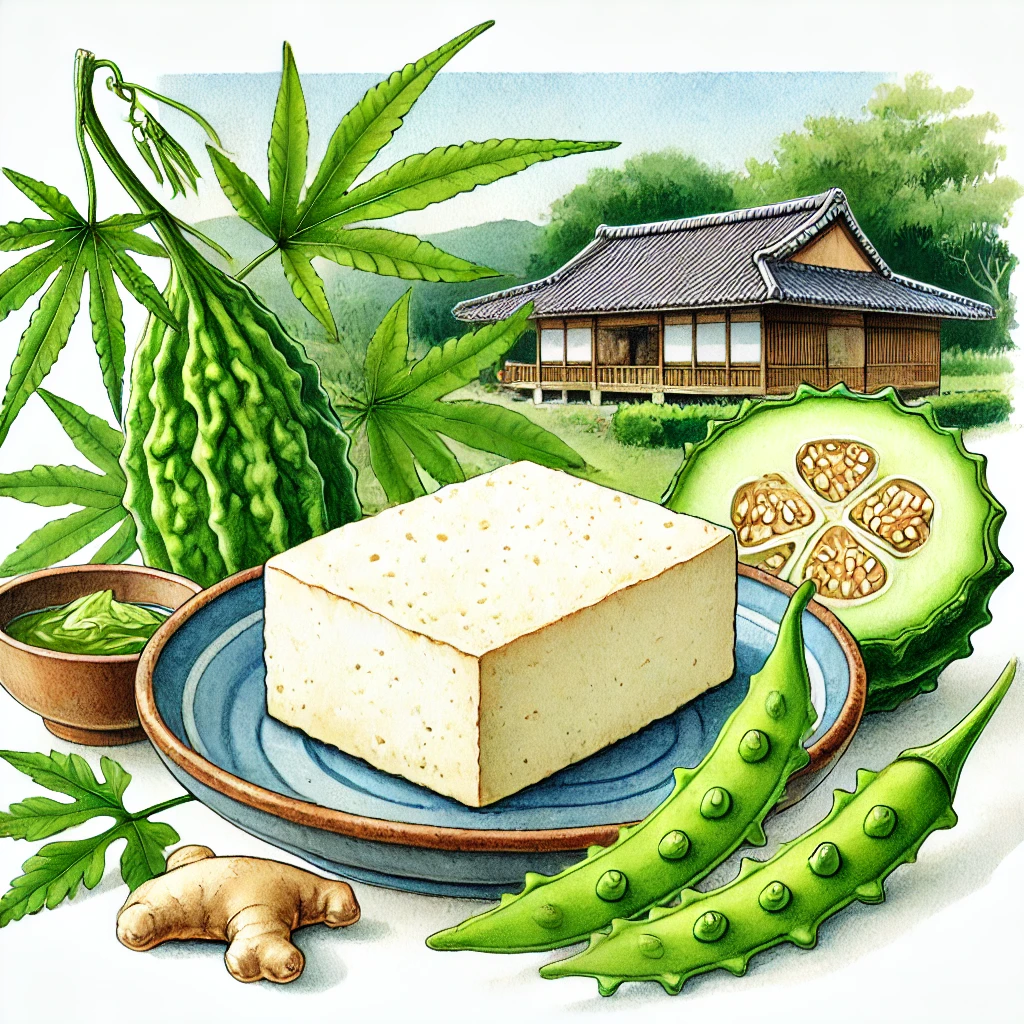
When you think of Okinawa, what comes to mind? Its beautiful beaches, unique culture, and its renowned reputation as a land of longevity. At the heart of the diet that supports this impressive longevity is a remarkable food known as Shima Tofu. Though it might appear similar to regular tofu at first glance, Shima Tofu possesses qualities and benefits that far exceed our usual expectations.
What do you usually think about when you eat tofu? A healthy choice? Or perhaps something bland? Shima Tofu is a surprising ingredient that completely overturns the common perceptions of tofu.
Containing almost twice the protein of regular tofu, Shima Tofu has a firm texture and rich flavor. Due to its high nutritional value, it’s often referred to as a “longevity food.” This seemingly simple ingredient is a testament to the wisdom, ingenuity, and cultural heritage of the Okinawan people.
So, why is Shima Tofu so different from regular tofu? The secret lies in its unique production process, developed to adapt to Okinawa’s hot and humid climate. In such conditions, creating and preserving nutrient-rich food was a challenge that led to the invention of Shima Tofu.
But the appeal of Shima Tofu goes beyond its nutritional value. It plays a vital role in the daily lives of Okinawans, featuring prominently in traditional events like Obon and helping to strengthen community bonds. Shima Tofu is, in many ways, a symbol of Okinawan culture itself.
In this article, we will thoroughly explore the allure of Shima Tofu. From its differences from regular tofu to its nutritional value and health benefits, and its significance in Okinawan culture. Understanding Shima Tofu means gaining insight into the lifestyle, wisdom, and deep cultural roots of the Okinawan people.
Your dining table may not have seen Shima Tofu before, but after reading this article, you will likely want to try it. A single bite might just transport you into the rich world of Okinawa’s culinary traditions.
So, let’s embark on this journey into the fascinating world of Shima Tofu. By the end of this journey, you’ll have a broader perspective on food, health, and culture. The wisdom embedded in Shima Tofu offers valuable insights that can enrich our daily lives.
- Introduction
- Characteristics of Shima Tofu
- History and Cultural Background of Shima Tofu
- How to Make Shima Tofu
- Delicious Ways to Enjoy Shima Tofu
- Nutritional Value and Health Benefits of Shima Tofu
- The Importance of Shima Tofu in Okinawan Food Culture
- Summary
Introduction
When it comes to Okinawan cuisine, popular dishes such as Goya Champuru, Rafute, and sea grapes often come to mind. Among these, an indispensable ingredient is tofu. Particularly, Okinawa’s unique “Shima Tofu” stands out as a distinctly appealing ingredient, markedly different from the tofu found on the mainland. In this article, we will delve into the differences between Shima Tofu and regular tofu, shedding light on the charm of Shima Tofu, an essential element in understanding Okinawan food culture.
The Role of Tofu in Okinawan Food Culture
In Okinawan food culture, tofu is more than just an ingredient. Rich in nutrients and versatile in various dishes, tofu has long been valued as a crucial food supporting the health and longevity of the Okinawan people. Particularly, Shima Tofu holds a special place on the Okinawan dining table, deeply ingrained in daily life.
Traditional Okinawan Diet and Tofu
The traditional Okinawan diet, often highlighted as a “secret to longevity,” places tofu at its center due to its rich plant-based protein content. Shima Tofu is a primary protein source for the Okinawan people, incorporated into their daily meals.
The traditional meal structure in Okinawa typically includes grains (mainly polished rice) as the staple food, tofu or fish as the main dish, and vegetables as side dishes. In this structure, Shima Tofu plays a vital role as the main dish. Its high protein content and low calorie count make Shima Tofu an ideal ingredient for supporting a healthy diet.
Furthermore, the traditional Okinawan diet is deeply rooted in the concept of “ishoku-dogen,” which means that food and medicine share the same source. This philosophy emphasizes that daily meals contribute to maintaining health and preventing illness. Shima Tofu embodies this concept, being a beloved food that represents the Okinawan way of life.
Versatile Uses of Tofu
The appeal of tofu in Okinawan food culture lies in its versatile uses. Shima Tofu, with its unique texture and flavor, is utilized in a variety of dishes.
For instance, in one of Okinawa’s representative dishes, Goya Champuru, Shima Tofu is an essential ingredient. Its firm texture and rich taste complement the bitterness of goya (bitter melon), creating a quintessential Okinawan flavor.
Another unique dish featuring Shima Tofu is “Yushi Tofu.” This dish involves dissolving Shima Tofu in warm broth, offering a silky texture and rich taste. It can be enjoyed chilled in the summer or warmed in the winter, making it a versatile dish suitable for different seasons.
Additionally, “Tofu Yo” is a fermented food unique to Okinawa, made by aging Shima Tofu in Awamori (Okinawan rice liquor). With a rich, cheese-like flavor and distinctive aroma, it was once a delicacy reserved for royalty and nobility. Today, it is widely enjoyed as a representative Okinawan delicacy.
Thus, Shima Tofu adds color to Okinawan cuisine through its various uses. These diverse applications stem from its unique properties, setting it apart from mainland tofu.
Shima Tofu vs. Regular Tofu: Fundamental Differences
While Shima Tofu and regular tofu may look similar at first glance, they differ significantly in many aspects. These differences span the types of soybeans used, production methods, appearance, and texture. Let’s explore these differences in detail.
Differences in Ingredients
The most fundamental difference between Shima Tofu and regular tofu lies in the type of soybeans used.
Shima Tofu: Primarily uses imported soybeans (from the United States, Canada, etc.) due to Okinawa’s climate being unsuitable for soybean cultivation. The selected soybeans are high in protein, making them ideal for tofu production.
Regular Tofu: Often uses domestically grown soybeans, especially in traditional tofu shops that emphasize local ingredients. However, large-scale production may use imported soybeans for cost reasons.
This difference in ingredients leads to variations in taste and texture. Shima Tofu achieves a richer, deeper flavor by using high-protein soybeans.
Differences in Production Methods
Shima Tofu and regular tofu also differ significantly in their production methods.
Shima Tofu:
1. Soybeans are soaked in water to soften, then ground to make soy milk.
2. The soy milk is heated to a high temperature (about 90-100°C).
3. Nigari (magnesium chloride) is added to coagulate the mixture.
4. The mixture is molded and pressed with weights to shape the tofu.
This method, characterized by high-temperature heating and strong pressing, creates Shima Tofu’s firm texture and rich flavor.
Regular Tofu:
1. Soybeans are soaked in water to soften, then ground to make soy milk.
2. The soy milk is heated to about 70-80°C.
3. Coagulants like nigari or calcium sulfate are added to coagulate the mixture.
4. The mixture is molded without strong pressing.
The regular tofu production method involves lower temperature heating and gentler molding, resulting in a softer, smoother texture.
These production method differences lead to variations in texture and shelf life. Shima Tofu, with its high-temperature heating and strong pressing, has less moisture and concentrated protein, making it firm and long-lasting.
Differences in Appearance and Texture
Shima Tofu and regular tofu also have distinct differences in appearance and texture.
Shima Tofu:
– Appearance: Square rectangular shape with firm ridges on the surface and a slightly yellowish color.
– Texture: Very firm with a chewy texture. In the mouth, it delivers a rich, full-bodied flavor.
– Features: It holds its shape well when cut and is easy to handle in cooking. It doesn’t melt easily when heated, making it suitable for stir-fries and stews.
Regular Tofu:
– Appearance: Square rectangular shape with a relatively smooth surface and white color.
– Texture: Soft and smooth with a gentle mouthfeel. Compared to Shima Tofu, it has a more subtle flavor.
– Features: Its softness requires careful handling. It is best suited for dishes like chilled tofu or hot tofu soup.
These differences result from variations in ingredients and production methods. Shima Tofu’s firmness and rich flavor come from using high-protein soybeans and a high-temperature, high-pressure production process. In contrast, regular tofu’s smoothness and subtle flavor are products of lower temperature production and gentle molding.
Thus, Shima Tofu and regular tofu have distinct differences in ingredients, production methods, appearance, and texture. These differences give each type of tofu its unique characteristics, making them suitable for different dishes and ways of eating. Understanding these unique features of Shima Tofu is crucial for appreciating Okinawan food culture. Shima Tofu is a product of Okinawa’s climate, history, and culture, truly embodying the spirit of the island.
Characteristics of Shima Tofu
Shima Tofu, a representative ingredient of Okinawan cuisine, boasts unique characteristics distinct from mainland tofu. These features span its production method, taste, texture, and nutritional value. Here, we will delve into the fascinating aspects of Shima Tofu, exploring why it is beloved by the people of Okinawa and celebrated as a food contributing to longevity.
Unique Production Method
The first notable characteristic of Shima Tofu is its unique production method, which significantly differs from that of mainland tofu. This distinct process is crucial to Shima Tofu’s special taste and texture.
Use of Nigari
An essential component in the production of Shima Tofu is “nigari,” a liquid byproduct left after salt is extracted from seawater, primarily composed of magnesium chloride.
In making Shima Tofu, a substantial amount of natural nigari is used as a coagulant. This higher usage compared to mainland tofu contributes to Shima Tofu’s unique taste and texture.
The benefits of using nigari include:
- Enhancing the natural flavor of soybeans
- Adding minerals to the tofu
- Improving the tofu’s preservation qualities
The abundant and high-quality nigari from the surrounding rich seas of Okinawa supports the production of Shima Tofu, reflecting the geographical features of Okinawa in its food culture.
High-Temperature and High-Pressure Production
Another distinctive feature of Shima Tofu’s production is the use of high-temperature and high-pressure methods, which contribute to its firm texture and rich flavor.
The specific production process includes:
- Soaking soybeans in water to soften them (typically 12-15 hours)
- Grinding the softened soybeans to produce soy milk
- Heating the soy milk to a high temperature (90-100°C)
- Adding nigari to coagulate the mixture
- Molding and pressing the mixture with strong pressure to shape the tofu
Steps 3-5 are particularly critical, with high-temperature heating and strong pressing defining the characteristics of Shima Tofu.
Advantages of high-temperature heating:
- Ensuring the protein in soybeans coagulates firmly
- Improving the tofu’s preservation qualities
- Transferring more soybean nutrients to the tofu
Advantages of high-pressure molding:
- Reducing the water content, resulting in a richer flavor
- Creating a firmer texture
- Making the tofu less prone to crumbling when cut
This high-temperature and high-pressure production method was developed to create tofu that could be preserved well in Okinawa’s hot and humid climate, embodying the wisdom adapted to local conditions.
Differences in Taste and Texture
The most striking characteristics of Shima Tofu are its unique taste and texture, markedly different from mainland tofu, captivating many and becoming indispensable in Okinawan cuisine.
Rich and Full-Bodied Flavor
Shima Tofu’s flavor can be described as “rich and full-bodied,” attributed to the following factors:
- Using high-protein soybeans
- Concentrating soybean components through high-temperature and high-pressure methods
- High usage of nigari
This rich flavor allows Shima Tofu to be used in various dishes:
- It is delicious enough to be eaten on its own
- It retains its flavor well even when used in stir-fries and stews
- Minimal seasoning is required to enjoy its taste
In particular, in Okinawa’s iconic dish “Goya Champuru,” the rich flavor of Shima Tofu perfectly complements the bitterness of goya (bitter melon), creating a distinctive taste.
The rich flavor of Shima Tofu also makes it suitable for Okinawa’s traditional fermented food, “Tofu Yo,” where the tofu is aged in Awamori, resulting in a cheese-like deep flavor.
Firm Texture
Another significant feature of Shima Tofu is its firm texture, which is distinctly different from mainland tofu, especially silken tofu.
Characteristics of Shima Tofu’s texture:
- Very firm
- Elastic
- Has a substantial bite
- Does not crumble easily in the mouth
This firm texture offers several advantages:
- Easy to handle in cooking (does not crumble when cut)
- Retains shape even in stir-fries and stews
- Tastes great when diced and added to salads
- Can be used for grilled tofu dishes
Many Okinawan home-cooked dishes take advantage of this texture. For instance:
- Tofu Champuru: Diced Shima Tofu stir-fried with vegetables
- Miso-marinated Tofu: Shima Tofu marinated in miso, eaten raw or grilled
- Tofu Steak: Thick slices of Shima Tofu grilled and served with ponzu or grated daikon sauce
Thus, the firm texture of Shima Tofu is deeply integrated into Okinawan food culture, inspiring a variety of dishes.
Nutritional Value Comparison
Shima Tofu’s features are not limited to taste and texture; they also extend to its nutritional value. Shima Tofu is known to be more nutritious than mainland tofu. Here, we will compare the nutritional values of Shima Tofu and regular tofu in detail.
Protein Content
Regarding protein, the primary nutrient in tofu, Shima Tofu significantly surpasses regular tofu.
- Shima Tofu: Approximately 11-13g per 100g
- Regular Tofu (firm tofu): Approximately 6-7g per 100g
- Regular Tofu (silken tofu): Approximately 4-5g per 100g
Shima Tofu contains about twice the protein of regular tofu, due to:
- Using high-protein soybeans
- Concentrating soybean components through high-temperature and high-pressure methods
- Low water content
Benefits of high protein content:
- Effective for muscle maintenance and growth
- Provides a sense of fullness (useful for dieting)
- Promotes body repair and regeneration
- Enhances immune function
These high-protein characteristics contribute to Shima Tofu being recognized as a longevity food in Okinawa.
Calcium Content
Shima Tofu also surpasses regular tofu in calcium content.
- Shima Tofu: Approximately 150-200mg per 100g
- Regular Tofu (firm tofu): Approximately 120-150mg per 100g
- Regular Tofu (silken tofu): Approximately 80-100mg per 100g
Reasons for high calcium content in Shima Tofu:
- High usage of nigari (magnesium chloride)
- Calcium is easily incorporated into the tofu through high-pressure methods
Benefits of high calcium content:
- Important for maintaining bone and dental health
- Necessary for muscle contraction and nerve transmission
- Effective in preventing high blood pressure
- Reduces the risk of osteoporosis
The high bone density reported among Okinawan elderly may be related to the high calcium content of Shima Tofu.
Isoflavone Content
Isoflavones, a type of phytoestrogen found in soybeans, offer various health benefits. Shima Tofu is known to contain more isoflavones than regular tofu.
- Shima Tofu: Approximately 30-40mg per 100g
- Regular Tofu (firm tofu): Approximately 20-30mg per 100g
- Regular Tofu (silken tofu): Approximately 15-20mg per 100g
Reasons for high isoflavone content in Sh
ima Tofu:
- Using high-protein soybeans
- Isoflavones are less likely to be lost during the production process
- Low water content leads to relative concentration
Health benefits of isoflavones:
- Alleviation of menopausal symptoms
- Maintenance and improvement of bone density
- Reduction of cardiovascular disease risk
- Potential reduction in the risk of breast and prostate cancers
- Anti-aging effects due to antioxidant properties
These nutritional differences significantly contribute to Shima Tofu being recognized as a longevity food in Okinawa. Its high protein, calcium, and isoflavone content have been key factors in supporting the health and longevity of Okinawan people.
However, Shima Tofu has higher calories than regular tofu due to its lower water content and concentrated protein and fat.
Calorie comparison:
- Shima Tofu: Approximately 150-180kcal per 100g
- Regular Tofu (firm tofu): Approximately 70-90kcal per 100g
- Regular Tofu (silken tofu): Approximately 50-60kcal per 100g
Despite its higher calorie content, Shima Tofu’s nutritional density means that a small amount can provide ample nutrients, allowing for reduced overall food intake. Its high protein content also provides a sense of fullness, potentially leading to lower calorie consumption overall.
Thus, Shima Tofu is a highly nutritious food, intricately linked with Okinawa’s traditional food culture, playing a crucial role in supporting the health and longevity of its people.
Uses of Shima Tofu
Now that we understand the characteristics of Shima Tofu, let’s explore how it is used. Shima Tofu, with its unique taste, texture, and high nutritional value, is utilized in a variety of dishes.
Traditional Dishes
Many traditional Okinawan dishes feature Shima Tofu. Here are some representative examples:
- Goya Champuru: A stir-fry dish with Shima Tofu, goya, and eggs. The rich flavor of Shima Tofu balances the bitterness of goya, creating a harmonious taste.
- Tofu Yo: A fermented food made by aging Shima Tofu in Awamori. The rich flavor of Shima Tofu develops a deep, cheese-like taste.
- Jushi: Okinawan-style mixed rice. Finely chopped Shima Tofu enhances the nutritional value and flavor of the dish.
- Tofu Nbushee: A stir-fry dish with finely chopped Shima Tofu, vegetables, and fish, highlighting the tofu’s texture.
Modern Recipe Adaptations
Modern recipes also creatively incorporate Shima Tofu, taking advantage of its unique characteristics:
- Shima Tofu Caprese: Shima Tofu used in place of mozzarella cheese, paired with tomatoes and basil for a refreshing appetizer.
- Shima Tofu Gratin: Shima Tofu used instead of white sauce, offering a rich flavor while keeping calories low.
- Shima Tofu Tiramisu: Shima Tofu replaces mascarpone cheese for a healthy dessert.
- Shima Tofu Smoothie: Adding Shima Tofu to smoothies for a protein-rich breakfast option.
These recipes utilize Shima Tofu’s unique qualities while aligning with contemporary food trends. The possibilities for Shima Tofu are endless, and new culinary methods continue to emerge.
Cooking Tips
Here are some tips for cooking with Shima Tofu to enhance its flavor and texture:
- No Need to Drain: Shima Tofu has low water content, so it doesn’t require draining like regular tofu.
- Ideal for Stir-Fries: Its firmness prevents it from crumbling, making it perfect for high-temperature stir-fries like Champuru.
- Minimal Seasoning Needed: Shima Tofu has a rich flavor, so use minimal seasoning to let its natural taste shine.
- Grilling Tips: When grilling Shima Tofu, start on low heat to remove moisture, then increase to medium-high heat for a crispy exterior.
Shima Tofu is a versatile ingredient, suitable for traditional and modern recipes. Understanding its characteristics and choosing the right cooking methods can maximize its inherent charm.
Learning about Shima Tofu is not just about knowing one ingredient. It connects you to the climate, history, and culture of Okinawa. Shima Tofu embodies the wisdom and ingenuity of the Okinawan people. Its rich flavor, firm texture, and high nutritional value illustrate the richness of Okinawan food culture.
Using the features and uses of Shima Tofu introduced here, try incorporating it into your cooking. You will surely discover new angles of Okinawa’s deep and appealing food culture.
History and Cultural Background of Shima Tofu
Shima Tofu is indispensable when discussing Okinawan food culture. Its unique taste and texture have been cultivated through a long history and cultural background. Here, we will explore the history of Shima Tofu and its deep connection to the spiritual world of the Okinawan people.
Tradition from the Ryukyu Kingdom Era
The history of Shima Tofu dates back to the Ryukyu Kingdom era. At that time, Okinawa prospered as a crucial maritime trading hub in East Asia, where various cultures and technologies flowed in. It is believed that the method of making tofu was also introduced from China during this period.
Introduction of Tofu
It is thought that tofu was introduced to Okinawa around the 14th to 15th centuries. The Ryukyu Kingdom maintained a tributary relationship with China’s Ming Dynasty, with frequent exchanges of envoys. Through these interactions, the method of making tofu was conveyed.
Background of tofu introduction:
- Close relationship between the Ryukyu Kingdom and China
- Influx of Chinese culture and technology
- The importance of the Ryukyu Kingdom in maritime trade
However, the initially introduced method of making tofu was different from today’s Shima Tofu. It evolved uniquely to adapt to Okinawa’s climate and geographical features.
Factors leading to the evolution of Shima Tofu:
- Okinawa’s hot and humid climate
- Need for improved preservation
- Fusion with local ingredients and cooking methods
For instance, in Okinawa’s hot and humid climate, soft tofu spoiled easily, making preservation difficult. Therefore, efforts were made to make the tofu firmer. Additionally, increasing the amount of nigari (a coagulant) used enhanced its preservation qualities.
As a result of these efforts, the firm and rich Shima Tofu we know today was born. It is truly a local product, tailored to the unique environmental conditions of the Okinawan islands.
Use in the Royal Court
Shima Tofu was also incorporated into the royal court cuisine of the Ryukyu Kingdom and valued as a high-quality ingredient. Particularly, “Tofu Yo” was considered a delicacy only available to royalty and nobility.
Examples of Shima Tofu use in the royal court:
- Tofu Yo: A fermented food made by aging Shima Tofu in Awamori (Okinawan rice liquor)
- Uchina Soup: A soup made with Shima Tofu, part of the Ryukyu royal court cuisine
- Goya Champuru: Though now known as a common dish, it is said to have originated as a court dish
Tofu Yo, in particular, became a symbol of Ryukyu’s culinary culture due to its unique production method and flavor. Aging in Awamori enabled long-term preservation and deepened the flavor, reflecting the ingenuity of the Okinawan people.
Additionally, Shima Tofu was used in hospitality meals for Chinese envoys during the Ryukyu Kingdom era. Its rich flavor and unique texture surprised the envoys, leaving a strong impression of the richness of Ryukyu’s food culture.
Thus, Shima Tofu held an important position in the culinary culture of the Ryukyu Kingdom. It was not only a food ingredient but also played a role in representing Ryukyu’s culture and diplomacy.
Shima Tofu and the Spiritual World of Okinawa
Shima Tofu is more than just a food ingredient; it is deeply connected to the spiritual world of the Okinawan people. This connection is rooted in Okinawa’s unique values and life philosophy.
The Philosophy of “Food as Medicine”
In Okinawa, there is an old saying, “Kusuimun de suimun,” which means “food is medicine.” This philosophy emphasizes that daily meals maintain health and prevent illness. Within this framework, Shima Tofu occupies an important position.
Relation between the philosophy of “food as medicine” and Shima Tofu:
- High protein and low calorie: Foundation of a healthy diet
- Rich in isoflavones: Various health benefits
- High calcium content: Maintenance of bone health
- Easy digestion and absorption: Less burden on the digestive system
The Okinawan people see Shima Tofu not merely as a side dish but as an essential ingredient for maintaining health. Incorporating Shima Tofu into daily meals has been a practice for ensuring balanced nutrition.
For instance, the traditional Okinawan meal pattern consists of staple foods (grains), main dishes (fish or tofu), and side dishes (vegetables). In this structure, Shima Tofu plays a crucial role as the main dish. Its rich protein content and lower fat compared to animal protein make it an ideal protein source.
The isoflavones in Shima Tofu are associated with various health benefits:
- Alleviation of menopausal symptoms
- Maintenance and improvement of bone density
- Reduction of cardiovascular disease risk
- Reduced risk of certain cancers
These health benefits are increasingly supported by modern scientific research, validating the empirical wisdom of the Okinawan people.
Furthermore, the easy digestion and absorption of Shima Tofu align with the “food as medicine” philosophy. In Okinawa’s warm climate, foods that are hard to digest can lead to health issues. Shima Tofu, being gentle on the digestive system, is an ideal component of daily meals.
Shima Tofu and Longevity
Okinawa is renowned as one of the world’s leading longevity regions, and Shima Tofu is considered one of the secrets to this longevity. The relationship between Shima Tofu and longevity is explained by the following points:
- Quality of Protein: The protein in Shima Tofu is well-balanced in essential amino acids, making it efficiently utilized by the body. This contributes to muscle maintenance, enhanced immune function, and extending healthy life expectancy.
- Low Calorie and High Nutrition: Despite its low calorie content, Shima Tofu is nutritionally rich, helping prevent obesity while ensuring adequate nutrient intake. This contributes to the prevention of lifestyle-related diseases.
- Effect of Isoflavones: The abundant isoflavones in Shima Tofu have antioxidant properties and help maintain bone density, preventing various age-related issues.
- Rich in Calcium: Shima Tofu contains more calcium than regular tofu, aiding in the prevention of osteoporosis and reducing the risk of fractures in the elderly.
In fact, traditional Okinawan diets prominently feature Shima Tofu. It is not uncommon to include Shima Tofu in at least one dish per meal, supporting the health and longevity of the Okinawan people.
Studies on the dietary habits of Okinawan elders report that those who consume more Shima Tofu have better overall health. This includes maintaining bone density, muscle strength, and preventing cognitive decline, suggesting the beneficial impact of Shima Tofu.
Additionally, the plant-based protein diet centered around Shima Tofu is noted for its lower environmental impact compared to animal protein diets. This aspect highlights the traditional Okinawan diet as a sustainable model for a longevity society, drawing global attention.
Shima Tofu and Okinawan Food Culture
Shima Tofu is central to Okinawan food culture, linked to various dishes and events. Its presence goes beyond being just an ingredient, embodying cultural significance.
Relationship between Shima Tofu and Okinawan food culture:
- Daily meals: Such as Goya Champuru
- Festive foods: During Obon and New Year
- Rituals: Celebrations and memorial services
- Preserved foods: Like Tofu Yo
For instance, Goya Champuru, a staple of Okinawan home cooking, always includes Shima Tofu. The bitterness of goya and the richness of Shima Tofu create a perfect match, symbolizing Okinawan cuisine. Through such daily dishes, Shima Tofu is deeply rooted in the lives of Okinawan people.
During festive occasions like Obon and New Year, dishes featuring Shima Tofu are a common sight. For example, it is customary to add Shima Tofu to “Jushi,” a mixed rice dish served during Obon, considered an important meal for welcoming ancestral spirits.
Shima Tofu is also essential in celebratory meals like weddings or housewarming ceremonies. “Tofu Bukubuku,” a soup made with Shima Tofu, is a traditional celebratory dish symbolizing prosperity through its bubbles
(bukubuku).
Conversely, Shima Tofu is also used in memorial services and funerals, serving as a key component of “shojin ryori” (Buddhist vegetarian cuisine), reflecting on the deceased. In this way, Shima Tofu accompanies both the joys and sorrows of life, deeply connecting with the spiritual life of Okinawan people.
The cultural importance of Shima Tofu is also evident in its role as preserved food, exemplified by Tofu Yo. Originally a valuable preserved food, Tofu Yo is now a renowned Okinawan delicacy popular among tourists.
Thus, Shima Tofu plays multifaceted roles in Okinawan food culture, symbolizing more than just nutrition. It embodies a cultural symbol deeply intertwined with the lives and spiritual world of Okinawan people.
Shima Tofu and Traditional Okinawan Values
Shima Tofu is also closely linked to traditional Okinawan values, particularly the spirit of “yuimaaru” (mutual help) and the optimistic life philosophy of “nankurunaisa” (everything will be alright).
Relationship between “yuimaaru” and Shima Tofu:
- Community involvement in tofu making
- Strengthening community ties through tofu
- Culture of sharing food
In the past, tofu making in Okinawa often involved community collaboration. Tasks like grinding soybeans, squeezing soy milk, and coagulating were shared among community members, reinforcing communal bonds. This practice embodies the spirit of “yuimaaru.”
The tradition of sharing tofu with neighbors also reflects the spirit of “yuimaaru.” Shared tofu was more than just food; it played a role in deepening bonds between people.
The philosophy of “nankurunaisa” is also related to Shima Tofu. Shima Tofu, being affordable yet highly nutritious, provided a means to maintain a healthy diet even during economic hardships. This experience contributed to the optimistic outlook encapsulated in “nankurunaisa.”
The versatility of Shima Tofu also ties into the “nankurunaisa” spirit. Whether eaten raw, stir-fried, stewed, or fermented, Shima Tofu is delicious. This flexibility reflects the resilient and adaptive spirit of Okinawan people.
Shima Tofu and Modern Okinawan Culture
The cultural significance of Shima Tofu continues in modern Okinawa, evolving in new forms.
Modern roles of Shima Tofu:
- Reevaluation as a health food
- Branding of Okinawan cuisine
- Utilization as a tourism resource
- Creation of new food cultures
With the rise in health consciousness, Shima Tofu is reevaluated as a health food. Its high protein and low-calorie characteristics and rich isoflavones are gaining popularity as diet and beauty foods.
The branding of Okinawan cuisine also highlights Shima Tofu as a key element. Promoted as “traditional Okinawan health food,” it is marketed extensively outside the prefecture and abroad.
In tourism, Shima Tofu plays an important role. Activities like Tofu Yo making experiences and cooking classes featuring Shima Tofu dishes are popular among tourists, offering a taste of Okinawan food culture.
New culinary creations using Shima Tofu are also emerging. Innovative dishes like Shima Tofu tiramisu or Shima Tofu cheesecake blend tradition with innovation, perpetuating the cultural value of Shima Tofu in contemporary society.
Conclusion: Shima Tofu as a Reflection of Okinawan History and Culture
Exploring the history and cultural background of Shima Tofu allows us to glimpse the rich food culture of Okinawa and the wisdom and values behind it.
From the Ryukyu Kingdom era to the present, Shima Tofu has been a constant companion in the lives of Okinawan people. Over time, it has become more than just a food ingredient, deeply connecting with Okinawa’s culture and spiritual world.
The philosophy of “food as medicine,” its relation to longevity, and its connection to values like “yuimaaru” and “nankurunaisa” are all crucial perspectives for understanding Okinawan culture through Shima Tofu.
Today, Shima Tofu continues to play a role in Okinawan culture in new ways. Its reevaluation as a health food, use as a tourism resource, and the creation of new food cultures demonstrate that the cultural value of Shima Tofu remains vibrant and relevant in modern society.
Learning about Shima Tofu not only involves understanding one food ingredient but also gaining insight into the lifestyle, values, and rich cultural heritage of the Okinawan people.
When you have the opportunity to visit Okinawa, be sure to taste Shima Tofu. Each bite carries the history and culture of Okinawa, offering an experience that transcends mere food, leading to a deeper understanding of the region and its people.
How to Make Shima Tofu
Shima Tofu is a quintessential part of Okinawan cuisine, known for its unique flavor and texture. The secret lies in its traditional production method. Here, we will detail the traditional method of making Shima Tofu as well as provide a simple recipe you can try at home. Understanding the intricacies of Shima Tofu production will deepen your appreciation for Okinawan food culture.
Traditional Method
The traditional method of making Shima Tofu is a culmination of the wisdom of the Okinawan people, developed over a long history. This method differs significantly from that of mainland tofu, giving Shima Tofu its distinct characteristics.
Selection and Preparation of Soybeans
The first step in making Shima Tofu is selecting the right soybeans.
Characteristics of soybeans suitable for Shima Tofu:
- High protein content (ideally over 40%)
- Moderate fat content (around 20%)
- Good water absorption rate
Typically, soybeans from the United States or Canada are used. This is because Okinawa’s climate is not suitable for soybean cultivation, leading to a long history of using imported soybeans.
Steps for preparing soybeans:
- Selection: Remove any damaged beans or foreign objects.
- Washing: Rinse the beans 2-3 times in clean water.
- Soaking: Soak the beans in water for 8-12 hours (refrigerate in summer).
- Draining: Drain the beans in a colander for about 30 minutes.
The soaking time may need adjustment based on the type of soybeans and the temperature. The beans should swell to more than twice their original size and be easily crushed between your fingers. This soaking process is crucial for achieving the desired texture and flavor of Shima Tofu.
Extracting Soy Milk
The process of extracting soy milk from the prepared soybeans is a vital step that determines the flavor and nutritional value of Shima Tofu.
Steps for extracting soy milk:
- Grinding: Grind the soaked soybeans in a mixer or mortar.
- Adding water: Add water to the ground soybeans (1.5-2 parts water to 1 part soybeans).
- Heating: Heat the mixture to about 70-80°C.
- Straining: Use a cloth to separate the okara (soy pulp) from the soy milk.
A distinctive feature of Shima Tofu is the high-temperature heating (90-100°C) during soy milk extraction, which offers several benefits:
- Advances protein denaturation, creating richer soy milk
- Transfers more nutrients from the soybeans to the soy milk
- Reduces the beany smell of the soy milk
It is also important to press firmly during straining to obtain rich soy milk, resulting in a richer Shima Tofu.
Adding Nigari and Molding
The final step to turn the extracted soy milk into Shima Tofu involves adding nigari (a coagulant) and molding. This step gives Shima Tofu its characteristic firmness and texture.
Steps for adding nigari and molding:
- Preparing nigari: Dilute natural nigari (magnesium chloride) with water (adjust concentration based on soy milk thickness).
- Heating soy milk: Heat the soy milk to 90-100°C.
- Adding nigari: Gradually add nigari to the heated soy milk while gently stirring.
- Coagulation: Let the mixture sit for 5-10 minutes to coagulate.
- Molding: Pour the coagulated mixture into a mold.
- Pressing: Place a weight on top and press for 6-12 hours to remove excess water.
A notable feature of Shima Tofu is the use of a higher amount of nigari compared to mainland tofu, resulting in a firmer, richer tofu. The pressing pressure is also stronger than that used for mainland tofu.
The amount of nigari and pressing strength significantly influence the final texture and flavor of Shima Tofu. Artisans rely on their experience and intuition, adjusting these factors based on the day’s temperature, humidity, and the state of the soy milk.
Thus, the production method of Shima Tofu is adapted to Okinawa’s climate and environment, refined through years of trial and error. Each step embodies the wisdom and ingenuity of the Okinawan people.
Simple Recipe for Home
While the traditional method showcases the depth of Shima Tofu production, it may be challenging to replicate at home due to the need for specialized equipment and skills. Here, we introduce a simple Shima Tofu-inspired recipe that you can try at home.
Tools and Ingredients Needed
First, let’s review the tools and ingredients needed to make Shima Tofu-inspired tofu at home.
Necessary tools:
- Large bowl
- Pot
- Mixer or food processor
- Cheesecloth or muslin cloth
- Colander
- Weights (1-2 kg)
- Mold (a cut milk carton can be used)
Ingredients (serves 4):
- Soybeans: 200g
- Water: 1L
- Nigari: 2 tablespoons (magnesium chloride or calcium chloride)
These tools and ingredients are commonly found in most households or can be easily obtained at supermarkets. This accessibility makes it easy to try making Shima Tofu-inspired tofu at home.
Step-by-Step Instructions
Let’s go through the steps in detail.
- Preparing the soybeans
- Wash the soybeans and soak them in water overnight (8-12 hours).
- Drain the soaked soybeans in a colander for about 30 minutes.
- Making soy milk
- Put the soaked soybeans and fresh water (twice the amount of soybeans) into a mixer and blend until smooth.
- Transfer the blended soybeans to a pot and heat over medium heat.
- Heat until just before boiling, then simmer on low heat for about 5 minutes.
- Straining the soy milk
- Strain the hot soy milk through a cheesecloth-lined colander.
- Squeeze the soy pulp firmly to extract as much soy milk as possible.
- Adding nigari
- Return the strained soy milk to the pot and heat it gently (70-80°C).
- Once warmed, turn off the heat and gradually add the nigari while stirring gently.
- Molding
- Pour the nigari-mixed soy milk into a mold.
- Place cheesecloth over the top, and add weights.
- Leave it in the refrigerator for 6-12 hours.
- Completion
- Remove the tofu from the mold, cut it into desired sizes, and it’s ready to serve.
While this homemade tofu may not be as firm or rich as authentic Shima Tofu, it will be richer and more flavorful than regular tofu, allowing you to enjoy a taste reminiscent of Shima Tofu.
Tips for Success
Here are some tips to ensure your homemade tofu turns out delicious.
- Choosing and Soaking Soybeans
Use the freshest soybeans possible. Old soybeans absorb water poorly, affecting the quality of the soy milk. Adjust the soaking time based on the season, soaking in the refrigerator during summer and at room temperature during winter.
- Making Soy Milk
Grind the soybeans as finely as possible. Take your time to ensure a smooth blend for richer soy milk. Stir constantly while heating to prevent burning.
- Adding Nigari
Add the nigari while the soy milk is still hot. If the soy milk cools too much, it may not coagulate properly. Add nigari gradually while stirring gently.
- Pressing the Tofu
To achieve the firm texture characteristic of Shima Tofu, it is important to press out as much water as possible. Use weights between 1-2 kg, adjusting based on your preference for firmness.
- Storing the Tofu
Store the finished tofu in a clean container, submerged in water, in the refrigerator. Consume within 2-3 days for the best quality.
By following these tips, you can make tofu that closely resembles the rich and firm texture of Shima Tofu. While achieving the exact qualities of authentic Shima Tofu at home may be challenging, the freshness and satisfaction of homemade tofu are unparalleled.
Skills of Professional Shima Tofu Artisans
So far, we have explored the traditional method of making Shima Tofu and a simple recipe that can be made at home. However, creating truly delicious Shima Tofu requires the skills of professional artisans. Let’s delve into the techniques and secrets of these Shima Tofu craftsmen.
Artisan Skills and Experience
Each step of Shima Tofu making incorporates the expertise of artisans honed over years of experience.
- Selection of Soybeans
Professional artisans consider factors such as daily temperature, humidity, season, and even the harvest period of the soybeans to select the optimal beans. They can discern subtle differences in protein content and water absorption rates, relying on their extensive experience.
- Adjusting Soaking Time
The soaking time for soybeans needs to be finely adjusted based on temperature, humidity, and the type of soybeans. Artisans assess the state of the soybeans by sight and touch to determine the optimal soaking time, which significantly impacts the final texture of Shima Tofu.
- Adjusting Soy Milk Concentration
The concentration of soy milk is crucial in determining the taste and texture of Shima Tofu. Artisans use their fingers to check the viscosity and color of the soy milk, adjusting it to the perfect concentration. This precise adjustment results in the rich flavor of Shima Tofu.
- Adding Nigari
The amount and timing of adding nigari are particularly challenging aspects of Shima Tofu making. Artisans consider the temperature and concentration of the soy milk, as well as the day’s weather, to decide the optimal amount and timing of nigari addition, creating the characteristic firmness and texture of Shima Tofu.
- Adjusting Pressing
The final step, pressing, determines the firmness of Shima Tofu. Artisans carefully adjust the pressure and duration based on the state of the tofu, resulting in the distinctive firm texture of Shima Tofu.
Tradition and Innovation
While the craft of making Shima Tofu is rooted in long-standing traditional techniques, modern innovations are also incorporated.
- Traditional Techniques
- Hand selection of soybeans
- Use of natural nigari
- Molding with wooden frames
- Adjusting each step based on the artisan’s intuition
- Modern Innovations
- Implementation of temperature control systems
- Strict hygiene management
- Improved soybean quality testing technologies
- Advances in packaging technology to enhance shelf life
Balancing tradition with innovation, artisans continually strive to produce even more delicious Shima Tofu.
Passing Down the Craft of Shima Tofu
The techniques for making Shima Tofu have been handed down from master to apprentice over the years. However, there is currently a concern about the shortage of successors.
Challenges in passing down Shima Tofu making skills:
- Requires long periods of apprenticeship
- Involves work during late-night or early-morning hours
- Difficulty in mechanization, requiring much physical labor
- Competition with mass-produced products on price
Various initiatives are being implemented to address these challenges:
- Training programs for young artisans
- Re-evaluating the cultural value of Shima Tofu making
- Offering Shima Tofu making experience programs in conjunction with tourism
- Branding Shima Tofu as a high-value product
Through these efforts, it is hoped that the tradition of Shima Tofu making will be preserved for future generations.
Modern Approaches to Shima Tofu Making
While preserving traditional methods, Shima Tofu making also incorporates modern approaches. Let’s look at the features and challenges of contemporary Shima Tofu production.
Mechanization and Efficiency
Some steps in Shima Tofu making have been mechanized. However, complete mechanization is difficult, and the skill of artisans remains crucial.
Mechanized processes:
- Washing and selecting soybeans
- Extracting soy milk
- Temperature control
- Packaging
Processes still reliant on artisan skills:
- Determining soybean soaking time
- Adjusting soy milk concentration
- Deciding nigari addition timing and amount
- Adjusting pressing strength and duration
By balancing mechanization and artisanal skills, efficient production is achieved.
Quality and Hygiene Management
Quality and hygiene management are emphasized in modern Shima Tofu making.
Main aspects of quality management:
- Checking soybean quality (protein content, water absorption rate, etc.)
- Measuring soy milk concentration
- Checking the firmness, texture, and taste of finished products
- Setting shelf life through preservation tests
Main aspects of hygiene management:
- Implementation of HACCP (Hazard Analysis Critical Control Point)
- Regular disinfection of the workspace
- Hygiene education for employees
- Bacterial testing at each stage of production
These measures ensure the production of safe and high-quality Shima Tofu.
New Product Development
While traditional Shima Tofu forms the foundation, new products are also being developed.
Examples of new products:
- Shima Tofu smoothies
- Desserts made with Shima Tofu (pudding, tiramisu, etc.)
- Smoked Shima Tofu
- Shima Tofu pickles
- Dressings made with Shima Tofu
These new products explore the potential of Shima Tofu and convey its appeal to younger generations and tourists.
Conclusion: The Depth of Shima Tofu Making
Having explored the making of Shima Tofu in detail, you can appreciate its depth. Shima Tofu making is not just about food production; it is a cultural practice adapted to Okinawa’s climate and refined through years of trial and error.
While preserving traditional methods, Shima Tofu continues to evolve by incorporating modern approaches. Behind this evolution are artisans passionate about Shima Tofu and committed to passing down its culture to the next generation.
Learning about the process of making Shima Tofu is more than just understanding a food production method. It is about appreciating the depth of Okinawan food culture and the wisdom and ingenuity of its people.
Next time you taste Shima Tofu, savor each bite, recognizing the artisans’ skills and Okinawan culture embodied in it. You may discover new flavors you hadn’t noticed before. If you have the opportunity, try making Shima Tofu yourself; it will deepen your understanding of its charm.
Shima Tofu is a symbol of Okinawan food culture. Knowing how it is made deepens your understanding of Okinawa and its people. Through Shima Tofu, you can experience a part of Okinawa’s rich food culture.
Delicious Ways to Enjoy Shima Tofu
Shima Tofu, a staple of Okinawan cuisine, is renowned for its rich flavor and unique texture. It can be enjoyed in a variety of dishes. Here, we will explore delicious ways to enjoy Shima Tofu, from traditional recipes to modern twists. Understanding how to best savor Shima Tofu will deepen your appreciation of Okinawan food culture.
Traditional Recipes
Shima Tofu is an essential ingredient in traditional Okinawan cuisine. The time-honored methods of preparation have been perfected to highlight the tofu’s unique qualities.
Yushi Tofu
Yushi Tofu is a simple dish where Shima Tofu is warmed in a dashi broth. This method allows you to fully appreciate the rich flavor of Shima Tofu.
How to make Yushi Tofu:
- Cut Shima Tofu into 1-2 cm cubes.
- Warm dashi broth made from katsuobushi (bonito flakes) or kombu (kelp).
- Add the Shima Tofu to the warm broth and gently stir until the tofu is about half dissolved.
- Add your favorite garnishes such as chopped green onions, grated ginger, or yuzu zest.
Tips for Yushi Tofu:
- Keep the broth temperature between 60-70°C to prevent the tofu from fully dissolving.
- Stir gently to keep the tofu half-dissolved, creating a delightful contrast in texture.
- Enjoy it cold in summer for a refreshing dish, and warm in winter to heat the body.
Yushi Tofu offers a way to enjoy the inherent flavors of Shima Tofu. The combination of the savory dashi and the rich tofu creates a dish that is both robust and refreshing, with a unique texture that is part creamy and part solid.
Shima Tofu Chanpuru
Chanpuru means “to mix” in Okinawan and is a popular dish where Shima Tofu is stir-fried with vegetables, eggs, and meat.
A typical Shima Tofu Chanpuru recipe:
Goya Chanpuru
Ingredients (serves 2):
- Shima Tofu: 1 block (about 300g)
- Goya (bitter melon): 1/2
- Pork belly: 50g
- Eggs: 2
- Salt: a pinch
- Pepper: a pinch
- Salad oil: 1 tbsp
Instructions:
- Cut Shima Tofu into 1 cm thick slices and lightly pat dry with paper towels.
- Cut goya in half lengthwise, remove seeds and pith, and slice thinly.
- Cut pork belly into 1 cm wide strips.
- Heat oil in a frying pan and cook the pork belly.
- Add goya to the pan and stir-fry until softened.
- Add Shima Tofu and stir-fry until warmed through.
- Pour in beaten eggs and mix until just set.
- Season with salt and pepper to taste.
Tips for Goya Chanpuru:
- Do not over-drain the tofu. Some moisture helps it blend well with other ingredients.
- If you dislike the bitterness of goya, rub it with salt before cooking to reduce bitterness.
- Add the eggs at the end to keep them soft and creamy.
- Season simply with salt and pepper, but a splash of soy sauce can be added for extra flavor.
Goya Chanpuru highlights the creamy richness of Shima Tofu and the unique bitterness of goya, making it a quintessential Okinawan dish. Shima Tofu holds its shape well when cooked, making it perfect for stir-fry dishes. Combining the vitamin C of goya with the protein of Shima Tofu makes this a nutritious meal.
Tofu Yo
Tofu Yo is a traditional Okinawan fermented dish where Shima Tofu is marinated in Awamori (a local distilled spirit) and aged. Once considered a delicacy for the nobility, it is now enjoyed as a unique Okinawan treat.
Characteristics of Tofu Yo:
- Rich and creamy texture
- Deep, cheese-like flavor
- Aromas and flavors of Awamori
- Long shelf life
Ways to enjoy Tofu Yo:
- As an appetizer or snack
- On crackers or bread
- As a dip for vegetable sticks
- As a hidden flavor in pasta sauces or dressings
Tofu Yo, often called “Eastern cheese,” combines the rich texture of Shima Tofu with the complex flavors imparted by Awamori and fermentation. Its intense umami makes it a versatile ingredient and a perfect accompaniment for drinks.
Modern Adaptations
In addition to traditional dishes, Shima Tofu is also being creatively adapted into modern recipes. Its rich flavor and unique texture add a new dimension to various contemporary dishes.
Shima Tofu Caprese
This recipe is a twist on the Italian Caprese salad, using Shima Tofu instead of mozzarella. This makes for a healthier yet equally delicious dish.
Ingredients (serves 2):
- Shima Tofu: 1/2 block (about 150g)
- Tomato: 1
- Basil leaves: about 10
- Extra virgin olive oil: 2 tbsp
- Balsamic vinegar: 1 tbsp
- Salt: a pinch
- Black pepper: a pinch
Instructions:
- Cut Shima Tofu into 1 cm thick slices and lightly pat dry with paper towels.
- Slice the tomato into 1 cm thick slices.
- Arrange Shima Tofu and tomato slices alternately on a plate.
- Scatter basil leaves on top.
- Drizzle with olive oil and balsamic vinegar, then sprinkle with salt and pepper.
Tips for Shima Tofu Caprese:
- Do not over-drain the tofu; some moisture helps maintain a smooth texture.
- Use ripe tomatoes for the best balance of sweetness and acidity.
- Add the basil just before serving to retain its aroma.
- Use high-quality extra virgin olive oil to enhance the flavors.
Shima Tofu Caprese combines the rich flavors of Shima Tofu with the freshness of tomatoes and the aromatic touch of basil, creating a delightful fusion of Italian and Okinawan cuisines. It is also a low-calorie, high-protein dish, making it an excellent choice for health-conscious individuals.
Shima Tofu Gratin
This gratin recipe uses Shima Tofu instead of the traditional white sauce, creating a creamy yet lower-calorie dish.
Ingredients (serves 2):
- Shima Tofu: 1 block (about 300g)
- Chicken breast: 100g
- Broccoli: 1/2 head
- Shimeji mushrooms: 1/2 pack
- Milk: 100ml
- Consomme granules: 1 tsp
- Salt: a pinch
- Pepper: a pinch
- Pizza cheese: 50g
- Bread crumbs: 2 tbsp
Instructions:
- Place Shima Tofu in a bowl and whisk until smooth.
- Add milk and consomme granules, mixing well, and season with salt and pepper.
- Cut chicken breast into bite-sized pieces and season with salt and pepper.
- Separate broccoli into small florets and break apart shimeji mushrooms.
- In a frying pan, cook the chicken until done, then add broccoli and mushrooms and lightly sauté.
- Transfer the mixture to a gratin dish and pour the Shima Tofu sauce over it.
- Top with pizza cheese and bread crumbs, then bake in a preheated oven at 200°C for about 15 minutes.
Tips for Shima Tofu Gratin:
- Mix the Shima Tofu thoroughly to achieve a creamy texture.
- Adjust the amount of milk based on the moisture content of the tofu; add more milk if the mixture is too thick.
- Feel free to substitute the ingredients with seafood or other vegetables according to your preference.
- Choose a mild cheese to complement the tofu’s flavor.
Shima Tofu Gratin is an innovative dish that integrates Okinawan ingredients into a Western-style recipe. The rich tofu serves as a substitute for white sauce, providing a creamy texture with fewer calories. This dish is perfect for those looking to enjoy a comforting meal without the extra calories.
Shima Tofu Smoothie
A Shima Tofu smoothie is a nutritious and high-protein option for breakfast or a snack. The creamy tofu blends perfectly with the natural sweetness of the fruit.
Ingredients (serves 1):
- Shima Tofu: 1/4 block (about 75g)
- Banana: 1
- Frozen mixed berries: 1/2 cup
- Soy milk: 100ml
- Honey: 1 tbsp (optional)
- Ice cubes: 4-5
Instructions:
- Combine all ingredients in a blender.
- Blend until smooth.
- Pour into a glass and serve.
Tips for Shima Tofu Smoothie:
- Use Shima Tofu without draining; the moisture helps achieve a smooth blend.
- Choose a ripe banana for extra sweetness.
- Substitute soy milk with your preferred plant-based milk, such as almond or oat milk.
- Adjust honey to taste; it may not be needed if the fruit is sweet enough.
- Modify the amount of ice based on your preferred thickness.
A Shima Tofu smoothie is a convenient way to consume a balanced meal packed with protein, vitamins, and minerals. The rich tofu gives the smoothie a satisfying creaminess, making it both nutritious and delicious.
Tips for Enjoying Shima Tofu
To fully savor the unique taste and texture of Shima Tofu, there are a few key tips to keep in mind. Here, we will share essential pointers for making the most of your Shima Tofu experience.
Proper Storage Methods
Knowing how to store Shima Tofu properly is crucial for maintaining its freshness and flavor.
- Store in water: After opening, transfer the tofu to a clean container, submerge it in water, and keep it in the refrigerator. Change the water daily.
- Consume promptly: Ideally, consume the tofu within 2-3 days of opening.
- Do not freeze: Freezing Shima Tofu alters its texture significantly, so avoid freezing it.
- Avoid direct sunlight: Even when unopened, store Shima Tofu in a cool place away from direct sunlight.
Draining Shima Tofu
Unlike regular tofu, Shima Tofu has less water content, so draining is usually unnecessary. However, lightly patting it dry can enhance certain dishes.
- For stir-fries: Lightly pat the tofu with paper towels to remove surface moisture, preventing oil splatter and achieving a nice sear.
- For salads: Thoroughly pat the tofu dry to help dressings adhere better.
- For frying: Press the tofu lightly with a weight for about 30 minutes to remove excess moisture, resulting in a crispier finish.
Cutting Shima Tofu
The way you cut Shima Tofu can enhance its texture and flavor in different dishes.
- Thick slices: Cut into 1-2 cm thick slices to enjoy the firm texture without crumbling.
- Diced: For stir-fries, cut into 1-1.5 cm cubes for easy mixing with other ingredients.
- Thin slices: For chilled dishes or salads, slice into 5 mm thick pieces for ease of eating.
- Mashed: Mash with a fork for dips or sauces to achieve a smooth texture.
Temperature Management
The flavor of Shima Tofu varies with temperature, so adjust it according to your dish.
- Serve chilled: For summer dishes like chilled tofu or Shima Tofu Caprese, serve cold for a refreshing taste.
- Serve at room temperature: To enjoy the natural flavors, serve Shima Tofu at room temperature.
- Serve warm: For hot dishes like tofu stew or gratin, warm the tofu thoroughly to enhance its rich flavor.
Choosing the Right Seasonings
Given Shima Tofu’s rich taste, the choice of seasonings is crucial.
- Simple seasonings: To highlight the tofu’s natural flavor, use simple seasonings like salt, soy sauce, or ponzu.
- Aromatic vegetables: Ingredients like green onions, ginger, and garlic complement Shima Tofu well.
- Olive oil: Shima Tofu pairs well with olive oil, making it great for salads or Caprese-style dishes.
- Spices: Adding spices like curry powder or chili flakes can introduce new flavors to Shima Tofu.
Healthy Recipes with Shima Tofu
Rich in nutrients, Shima Tofu is an excellent addition to a healthy diet. Here are a few healthy recipes featuring Shima Tofu.
Shima Tofu Salad Bowl
Ingredients (serves 1):
- Shima Tofu: 1/4 block (about 75g)
- Leaf lettuce: 2-3 leaves
- Cherry tomatoes: 5
- Cucumber: 1/2
- Avocado: 1/4
- Boiled egg: 1
- Olive oil: 1 tbsp
- Lemon juice: 2 tsp
- Salt: a pinch
- Black pepper: a pinch
Instructions:
- Cut Shima Tofu into 1 cm cubes.
- Tear lettuce into bite-sized pieces, halve the cherry tomatoes, and slice the cucumber thinly.
- Cut the avocado into 1 cm cubes and quarter the boiled egg.
- Arrange all ingredients in a bowl for a colorful presentation.
- Mix olive oil, lemon juice, salt, and pepper to make the dressing and drizzle over the salad.
This salad bowl is a nutritious meal combining the protein from Shima Tofu with vitamins and minerals from the vegetables. The rich tofu and fresh vegetables create a satisfying dish.
Healthy Shima Tofu Dip
Ingredients:
- Shima Tofu: 1/2 block (about 150g)
- Avocado: 1/2
- Lemon juice: 1 tbsp
- Olive oil: 1 tbsp
- Grated garlic: 1 clove
- Salt: a pinch
- Black pepper: a pinch
Instructions:
- Mash Shima Tofu and avocado with a fork.
- Add lemon juice, olive oil, garlic, salt, and pepper, and mix well.
- Chill in the refrigerator for about 30 minutes before serving.
This dip combines the creaminess of Shima Tofu and avocado, making a healthy and delicious snack. Serve with vegetable sticks or crackers for a nutritious treat or party food.
Conclusion: Endless Possibilities with Shima Tofu
We have explored various ways to enjoy Shima Tofu, from traditional dishes to modern recipes. The rich flavor and unique texture of Shima Tofu offer endless culinary possibilities. By mastering the tips for storing, draining, cutting, temperature management, and seasoning, you can enhance the deliciousness of Shima Tofu manifold.
Shima Tofu is not only a symbol of Okinawan food culture but also a highly nutritious food suitable for a healthy lifestyle. Incorporate it into salads or dips to enjoy its health benefits while delighting in its taste.
Shima Tofu represents the rich heritage and innovative spirit of Okinawan cuisine. By blending traditional methods with new ideas, the charm of Shima Tofu continues to shine brightly. Explore the recipes and tips shared in this article to find your unique way of enjoying Shima Tofu. Through Shima Tofu, rediscover the depth of Okinawan food culture and the joy of cooking. Shima Tofu is more than just a food item; it is a treasure trove of Okinawa’s history, culture, and wisdom.
FAQ for Enjoying Shima Tofu
To wrap up, here are some frequently asked questions and answers about enjoying Shima Tofu.
Can Shima Tofu be used the same way as regular tofu?
Yes, you can use Shima Tofu similarly to regular tofu, but keep in mind that Shima Tofu is firmer and has a richer flavor. It is particularly suitable for stir-fries and stews due to its robust texture. Additionally, its richness makes it a great ingredient for gratin sauces and dips, which might be challenging with regular tofu.
Can Shima Tofu be frozen?
Freezing Shima Tofu is not recommended as it significantly alters its texture, making it spongy upon thawing. It is best to consume Shima Tofu fresh.
Can Shima Tofu be eaten raw?
Yes, Shima Tofu can be eaten raw. It is delicious in dishes like cold tofu or salads. However, make sure to consume it soon after opening for the best taste and freshness.
What is the shelf life of Shima Tofu?
Unopened Shima Tofu has a shelf life of about one week from the production date. Once opened, it is best to consume within 2-3 days. Store it in clean water in the refrigerator, changing the water daily.
Is Shima Tofu only available in Okinawa?
While Shima Tofu used to be available only in Okinawa, its popularity has grown, and it can now be found in supermarkets on the mainland and online shops. For the best quality, choose the freshest possible products.
Are there any Western-style dishes that use Shima Tofu?
Yes, there are. Besides the gratin and Caprese mentioned in this article, you can make dishes like Shima Tofu lasagna, Shima Tofu quiche, and Shima Tofu mousse. The rich flavor of Shima Tofu adds a unique twist to these Western-style recipes.
What are the nutritional benefits of Shima Tofu?
Shima Tofu is higher in protein and calcium compared to regular tofu. It also contains beneficial soy isoflavones, which contribute to maintaining good health. Its low-calorie and high-nutrient profile makes it an excellent choice for those on a diet or looking for nutritious food options.
Shima Tofu is cherished in Okinawa for its unique flavor, texture, and nutritional value. By following the recipes and tips in this article, you can fully enjoy the rich flavors of Shima Tofu. Whether sticking to traditional preparations or trying new recipes, Shima Tofu offers endless culinary possibilities. Exploring its diverse uses allows you to appreciate the depth of Okinawan food culture and discover new, delightful flavors. Shima Tofu is more than just food; it embodies the history, culture, and wisdom of Okinawa. Savoring Shima Tofu is an experience that connects you to the rich heritage of Okinawa, offering both culinary and cultural enrichment.
Nutritional Value and Health Benefits of Shima Tofu
Shima Tofu, a staple of Okinawan cuisine, is renowned not only for its distinct taste and texture but also for its high nutritional value and numerous health benefits. This section delves into the nutritional aspects of Shima Tofu and explores its health benefits from a scientific perspective, shedding light on why it is considered a key component of Okinawa’s longevity diet.
High Protein and Low Calorie
One of the standout features of Shima Tofu is its high protein content coupled with low calorie levels, making it an essential part of a healthy diet.
Quality and Quantity of Protein
Shima Tofu is known to have significantly higher protein content compared to regular cotton tofu or silken tofu.
Protein content comparison (per 100g):
- Shima Tofu: Approximately 12-15g
- Cotton Tofu: Approximately 6-8g
- Silken Tofu: Approximately 4-5g
As evident, Shima Tofu contains more than twice the protein of regular tofu. This high protein content is due to the manufacturing process, which involves high temperatures and pressures, along with thoroughly pressing out excess water, leading to a more concentrated protein profile.
Additionally, the quality of protein in Shima Tofu is superior. Derived from soybeans, the protein in Shima Tofu contains a balanced profile of essential amino acids, making it highly efficient for use by the body. Notably, it includes:
- Lysine: Abundant in Shima Tofu, this amino acid complements grains which are typically low in lysine.
- Leucine: Plays a crucial role in muscle protein synthesis.
- Arginine: Helps in vasodilation and improving blood flow.
These characteristics of Shima Tofu protein contribute to several health benefits:
- Muscle maintenance and growth: Particularly beneficial for preventing sarcopenia (muscle loss) in the elderly.
- Enhanced immune function: As protein is a key component of antibodies, it helps in maintaining a robust immune system.
- Sustained satiety: Protein takes longer to digest, helping you feel fuller for longer periods.
- Boosted metabolism: The digestion of protein requires more energy, thus aiding in metabolic activation.
These benefits are believed to play a significant role in the health and longevity of the Okinawan people. In particular, muscle strength maintenance and immune function enhancement are crucial for extending healthy life expectancy.
Comparison of Fat Content
Shima Tofu is high in protein while maintaining relatively low fat content. This characteristic contributes to its reputation as a low-calorie yet highly nutritious food.
Comparison of fat content (per 100g):
- Shima Tofu: approximately 5-7g
- Cotton Tofu: approximately 4-5g
- Silken Tofu: approximately 3-4g
Although Shima Tofu has a slightly higher fat content than regular tofu, this is due to its lower water content, resulting in a relative increase. When we look at the calorie content, it breaks down as follows:
Comparison of calorie content (per 100g):
- Shima Tofu: approximately 120-150kcal
- Cotton Tofu: approximately 70-90kcal
- Silken Tofu: approximately 50-60kcal
The calorie content of Shima Tofu is higher than that of regular tofu, but most of these calories come from protein, making it a nutritionally dense food. Furthermore, it’s important to consider the quality of the fat in Shima Tofu:
- Unsaturated Fatty Acids: Most of the fat in Shima Tofu is unsaturated fatty acids, particularly a good balance of omega-3 (alpha-linolenic acid) and omega-6 (linoleic acid) fatty acids.
- Lecithin: Soy-derived lecithin is known to help lower cholesterol levels.
These characteristics contribute to several health benefits:
- Reduced Risk of Cardiovascular Diseases: Unsaturated fatty acids help lower bad cholesterol (LDL) and raise good cholesterol (HDL).
- Anti-Inflammatory Effects: Omega-3 fatty acids have anti-inflammatory properties that may reduce the risk of chronic inflammatory diseases.
- Enhanced Brain Function: Lecithin serves as a precursor for neurotransmitters, potentially improving cognitive functions.
Thus, Shima Tofu, with its high-protein and low-calorie profile, also boasts high-quality fats. Together, these characteristics make Shima Tofu an essential part of a healthy diet.
Evaluated as a Longevity Food
Okinawa is renowned for its high life expectancy, and traditional dietary habits, including Shima Tofu, are considered a significant factor. Let’s explore the scientific reasons why Shima Tofu is regarded as a longevity food.
Antioxidant Properties
Shima Tofu is rich in components with powerful antioxidant properties, which help reduce oxidative stress in the body, thereby potentially slowing aging and reducing the risk of various diseases.
Main antioxidant components in Shima Tofu:
- Isoflavones: A type of flavonoid unique to soy, possessing strong antioxidant properties.
- Saponins: These compounds, responsible for the foaming properties of soy, have antioxidant and anti-inflammatory effects.
- Vitamin E: A fat-soluble vitamin known for its potent antioxidant capabilities.
These antioxidants contribute to various health benefits:
- Prevention of Cellular Oxidative Damage: Reducing damage caused by free radicals, potentially delaying aging.
- Reduced Risk of Chronic Diseases: Lowering the risk of heart disease, cancer, and diabetes.
- Maintenance of Cognitive Function: Protecting brain cells from oxidative damage, which may reduce the risk of dementia.
- Skin Health: Reducing skin damage from UV radiation, potentially slowing skin aging.
Isoflavones, in particular, offer unique benefits:
- Alleviation of Menopausal Symptoms: Isoflavones can mimic estrogen, helping reduce symptoms such as hot flashes.
- Bone Density Maintenance: They can inhibit bone resorption and promote bone formation, reducing the risk of osteoporosis.
- Reduced Risk of Hormone-Related Cancers: Isoflavones may lower the risk of breast and prostate cancers.
These benefits contribute to long-term health and longevity. Studies on elderly populations in Okinawa have shown that those who consume more soy products, including Shima Tofu, tend to live longer and healthier lives.
Prevention of Osteoporosis
Shima Tofu is rich in nutrients essential for maintaining bone health, contributing to the higher bone density observed among Okinawan elderly populations.
Key nutrients in Shima Tofu for bone health:
- Calcium: Shima Tofu contains more calcium than regular tofu, with about 150-200mg per 100g.
- Soy Protein: An essential component of bones, crucial for maintaining bone density.
- Isoflavones: Inhibit bone resorption and promote bone formation.
- Vitamin K: Facilitates the incorporation of calcium into bones.
These nutrients work synergistically to offer osteoporosis-preventive benefits:
- Maintaining Bone Density: Providing calcium and protein to strengthen bones.
- Inhibiting Bone Resorption: Isoflavones suppress the activity of osteoclasts, which break down bone tissue.
- Promoting Bone Formation: Isoflavones stimulate osteoblast activity, enhancing new bone formation.
- Enhancing Calcium Utilization: Vitamin K promotes the efficient incorporation of calcium into bones.
Studies indicate that higher consumption of soy products, including Shima Tofu, is associated with greater bone density among Okinawan elderly, suggesting its effectiveness in preventing osteoporosis. Additional factors enhancing these benefits include:
- Alkaline Nature: Shima Tofu’s alkalinity helps prevent body acidification, which can lead to calcium leaching from bones.
- Low Salt Content: Low in salt, Shima Tofu helps prevent excessive calcium loss due to high salt intake.
- Plant-Based Protein: Compared to animal proteins, plant-based proteins reduce urinary calcium excretion.
Thus, Shima Tofu supports bone health through multiple mechanisms, making it a crucial part of the Okinawan diet, especially for the elderly.
Reduction of Cardiovascular Disease Risk
Shima Tofu contains numerous components that may help reduce the risk of cardiovascular diseases, which are a leading cause of death globally. In Okinawa, traditional dietary practices, including Shima Tofu consumption, are linked to lower rates of these diseases.
Key components in Shima Tofu for reducing cardiovascular disease risk:
- Soy Protein: Known to improve cholesterol levels.
- Unsaturated Fatty Acids: Increase HDL (good cholesterol) and decrease LDL (bad cholesterol).
- Isoflavones: Help maintain vascular flexibility and stabilize blood pressure.
- Dietary Fiber: Inhibits cholesterol absorption and stabilizes blood sugar levels.
These components collectively contribute to the following cardiovascular benefits:
- Improvement of Cholesterol Levels:
- Soy protein suppresses cholesterol synthesis in the liver.
- Unsaturated fatty acids reduce LDL and increase HDL.
- Dietary fiber binds cholesterol in the gut, promoting its excretion.
- Stabilization of Blood Pressure:
- Isoflavones improve endothelial function and maintain vascular elasticity.
- High potassium content helps balance sodium, stabilizing blood pressure.
- Prevention of Atherosclerosis:
- Isoflavones’ antioxidant properties reduce oxidative stress on blood vessels.
- Soy saponins inhibit platelet aggregation, preventing blood clots.
- Stabilization of Blood Sugar Levels:
- Dietary fiber slows glucose absorption, preventing spikes in blood sugar.
- Soy protein may improve insulin sensitivity.
These effects are
supported by multiple scientific studies. For instance, a 2020 meta-analysis reported that soy food consumption significantly reduces total cholesterol and LDL cholesterol levels. Another study indicated that soy isoflavones could lower blood pressure.
Additional features of Shima Tofu enhancing cardiovascular benefits include:
- Low Salt Content: Helps prevent hypertension caused by excessive salt intake.
- Low Calorie: High in protein yet low in calories, aiding in obesity prevention—a major risk factor for cardiovascular diseases.
- Plant-Based: Contains less saturated fat and no cholesterol compared to animal-based foods.
In summary, Shima Tofu can significantly contribute to reducing cardiovascular disease risk through various mechanisms. Its regular inclusion in the Okinawan diet plays a vital role in the cardiovascular health of the local population.
Detailed Nutritional Profile of Shima Tofu
To fully understand the nutritional value of Shima Tofu, let’s delve into its key nutrients and their health benefits.
Protein
Shima Tofu contains approximately 12-15g of protein per 100g, more than twice that of regular tofu.
Characteristics of Shima Tofu protein:
- Complete Protein: Contains all nine essential amino acids in balanced proportions.
- High Digestibility: Comparable to animal proteins in terms of digestibility and absorption.
- Rich in Branched-Chain Amino Acids (BCAAs): Essential for muscle synthesis and repair, including leucine, isoleucine, and valine.
Health benefits:
- Maintenance and increase of muscle mass
- Enhanced immune function
- Improved metabolism
- Extended satiety, aiding in weight management
Fats
Shima Tofu contains approximately 5-7g of fat per 100g.
Characteristics of Shima Tofu fats:
- Rich in Unsaturated Fatty Acids: Contains omega-3 (alpha-linolenic acid) and omega-6 (linoleic acid) fatty acids.
- Contains Lecithin: Essential for cell membrane health and cognitive function maintenance.
- Contains Plant Sterols: Known to inhibit cholesterol absorption.
Health benefits:
- Reduced risk of cardiovascular diseases
- Anti-inflammatory effects
- Improved brain function
- Enhanced cholesterol levels
Carbohydrates
Shima Tofu contains approximately 2-3g of carbohydrates per 100g, most of which are dietary fibers.
Characteristics of Shima Tofu carbohydrates:
- Low in Sugars: Contains minimal sugars, preventing rapid spikes in blood sugar levels.
- Rich in Dietary Fiber: Balanced content of insoluble and soluble fibers.
Health benefits:
- Stabilization of blood sugar levels
- Maintenance of digestive health
- Improved cholesterol levels
- Enhancement of gut microbiota
Vitamins and Minerals
Shima Tofu is rich in various vitamins and minerals.
Key vitamins and minerals and their amounts per 100g:
- Calcium: Approximately 150-200mg
- Iron: Approximately 2-3mg
- Magnesium: Approximately 50-70mg
- Zinc: Approximately 1-2mg
- Vitamin E: Approximately 1-2mg
- Vitamin K: Approximately 20-30μg
- Folic Acid: Approximately 30-40μg
Health Benefits:
- Maintains bone health (Calcium, Vitamin K)
- Prevents anemia (Iron)
- Supports muscle function (Magnesium)
- Boosts immune function (Zinc)
- Provides antioxidant effects (Vitamin E)
- Promotes cell renewal and repair (Folic Acid)
Functional Components
In addition to the above nutrients, Shima Tofu contains various functional components.
Main functional components:
- Isoflavones: Genistein, Daidzein, Glycitein, etc.
- Saponins: Soy saponins A, B, E groups, etc.
- Polyphenols: Chlorogenic acid, Caffeic acid, etc.
Health Benefits:
- Antioxidant effects
- Anti-inflammatory effects
- Estrogen-like effects (alleviation of menopausal symptoms)
- Maintains bone density
- Reduces cardiovascular disease risk
- Reduces the risk of certain cancers
As seen above, Shima Tofu is a highly nutritious food with a wide range of health benefits. The combined action of these nutrients contributes to the health and longevity of the Okinawan people. By incorporating Shima Tofu into your daily diet, you can achieve a balanced nutritional intake and enjoy various health benefits.
Relationship Between Shima Tofu and Longevity in Okinawa
Okinawa is known as one of the world’s leading longevity regions, and traditional dietary practices, including Shima Tofu, are considered significant factors. Here, we will explore the scientific connection between Shima Tofu and Okinawan longevity.
Epidemiological Studies
Numerous epidemiological studies have been conducted on the longevity and diet of Okinawans, with interesting findings related to the consumption of soy products, including Shima Tofu, and health longevity.
Key study results:
- Okinawa Centenarian Study: This study of people aged 100 and older found that those who consumed more soy products had better cognitive and physical functions.
- Okinawa Health and Longevity Study: A long-term follow-up study of people aged 65 and older showed that those who consumed more soy products had a lower risk of all-cause mortality.
- Large-Scale Cohort Study of Japanese People: This study found that higher consumption of soy products was associated with a lower risk of cardiovascular disease and certain cancers.
These findings strongly suggest that soy products, including Shima Tofu, may contribute to the longevity of Okinawans. Notably, these studies highlight that it’s not just about living longer but also about extending healthy life expectancy.
Physiological Mechanisms
Several hypotheses have been proposed regarding the physiological mechanisms through which Shima Tofu contributes to longevity. Here are the main hypotheses:
- Inhibition of Cellular Aging Through Antioxidant Effects
- Antioxidants like isoflavones and vitamin E in Shima Tofu may reduce oxidative stress and delay aging.
- Oxidative stress is a risk factor for many age-related diseases, including cancer, cardiovascular diseases, and dementia. Reducing oxidative stress could extend healthy lifespan.
- Suppression of Chronic Inflammation
- Soy protein and isoflavones in Shima Tofu have been reported to have anti-inflammatory effects.
- Chronic inflammation is a fundamental factor in many age-related diseases. Its suppression may contribute to extending healthy lifespan.
- Maintenance of Telomere Length
- Some studies suggest that soy isoflavone intake is associated with the maintenance of telomere length.
- Telomeres, located at the ends of chromosomes, shorten with each cell division and are linked to cell lifespan.
- Activation of Sirtuin Genes
- Research suggests that soy isoflavones promote the expression of sirtuin genes (also known as longevity genes).
- Sirtuin genes are involved in cell survival and metabolic regulation, potentially extending lifespan.
- Improvement of Gut Microbiota
- The dietary fiber and oligosaccharides in Shima Tofu may help balance gut microbiota.
- A healthy gut microbiota is essential for boosting immune function and reducing chronic inflammation, contributing to overall health.
Lifestyle Factors
When considering the relationship between Shima Tofu consumption and longevity, it is also essential to understand its role within the broader context of lifestyle. In traditional Okinawan diets, Shima Tofu plays the following roles:
- Source of Plant-Based Protein: Shima Tofu serves as a primary protein source, helping to prevent excessive consumption of animal proteins.
- Low-Calorie Food: High in protein yet low in calories, Shima Tofu helps maintain a healthy weight.
- Versatile in Cooking: Shima Tofu is used in various dishes, enhancing dietary diversity. Diverse diets contribute to improved nutritional balance.
- Cultural Significance: The culinary culture centered around Shima Tofu strengthens family and community bonds, contributing to mental health.
These factors collectively make Shima Tofu an integral part of Okinawan longevity culture.
Conclusion: Nutritional Value and Health Benefits of Shima Tofu
We have explored the nutritional value and health benefits of Shima Tofu. Here are the key points summarized:
- High Protein, Low Calorie: Shima Tofu is rich in high-quality protein while being low in calories, aiding in muscle maintenance, metabolism improvement, and healthy weight management.
- Rich in Functional Components: Contains isoflavones, saponins, and polyphenols, providing antioxidant and anti-inflammatory effects.
- Reduces Cardiovascular Disease Risk: Improves cholesterol levels and stabilizes blood pressure, potentially reducing the risk of cardiovascular diseases.
- Maintains Bone Health: The calcium and isoflavones in Shima Tofu help maintain bone density and reduce the risk of osteoporosis.
- Supports Cognitive Function: Antioxidant and anti-inflammatory effects may help maintain brain health.
- Reduces Cancer Risk: Particularly for hormone-related cancers such as breast and prostate cancer.
- Associated with Longevity: Epidemiological studies link soy product consumption, including Shima Tofu, with longevity.
Shima Tofu is more than just a food item; it is a crucial element supporting Okinawa’s longevity culture. Its high nutritional value and diverse health benefits make it a valuable addition to modern health-conscious diets.
However, Shima Tofu alone does not provide all health benefits. It should be incorporated into a balanced diet, along with regular exercise and adequate sleep, to achieve overall health and longevity.
The charm of Shima Tofu lies not only in its nutritional value and health benefits but also in its embodiment of Okinawan culinary culture and tradition. Eating Shima Tofu is not just about nutrition but also about experiencing the wisdom of Okinawan longevity. By incorporating Shima Tofu into your daily meals, you can enjoy a healthy and rich diet while appreciating the depth of Okinawan food culture.
The Importance of Shima Tofu in Okinawan Food Culture
Shima Tofu is indispensable when discussing Okinawan food culture. Its unique production method and flavor are jewels created by Okinawa’s climate, natural environment, and history. Here, we will explore the importance of Shima Tofu in Okinawan food culture from various perspectives.
Role as a Daily Staple
Shima Tofu is an essential part of the daily meals of the Okinawan people, providing nutritional support and culinary versatility that form the backbone of Okinawan cuisine.
Use in Breakfast
In traditional Okinawan breakfasts, Shima Tofu plays a crucial role. Many households incorporate Shima Tofu in the following ways:
- Yushi Tofu: A dish where Shima Tofu is mixed into warm dashi broth, making it a staple breakfast item.
- Chilled Shima Tofu: In summer, chilled Shima Tofu is served with soy sauce, green onions, and ginger.
- Shima Tofu Chanpuru: A simple stir-fry dish with vegetables and eggs, often enjoyed in the morning.
These breakfast dishes offer the following benefits:
- Good Nutritional Balance: Shima Tofu is high in protein and low in calories, making it ideal for breakfast. Combining it with vegetables and eggs enhances nutritional balance.
- Easy Digestion: Shima Tofu is gentle on the stomach, making it suitable for morning consumption.
- Easy Preparation: Dishes like Yushi Tofu and chilled Shima Tofu are easy to prepare, providing a quick yet nutritious meal for busy mornings.
- Seasonal Adaptability: Yushi Tofu is best enjoyed hot in winter, while chilled Shima Tofu is refreshing in summer, offering seasonal eating variations.
By incorporating Shima Tofu into breakfast, Okinawans start their day with a well-balanced meal, contributing to their overall health and vitality.
Use as Main and Side Dishes
Shima Tofu is also widely used as a main or side dish for lunch and dinner, thanks to its versatility in various cooking methods.
Examples of use:
- Goya Chanpuru: A signature Okinawan dish, stir-fried with Shima Tofu, bitter melon, eggs, and pork.
- Shima Tofu Atsuage: Thick slices of Shima Tofu, deep-fried and simmered in dashi broth.
- Shima Tofu Steak: Thick slices of Shima Tofu, grilled and served with ponzu sauce or grated radish sauce.
- Shima Tofu Shiraae: Mashed Shima Tofu mixed with spinach, carrots, and other vegetables.
These dishes are characterized by:
- High Protein, Low Calorie: Using Shima Tofu as the main ingredient provides sufficient protein while limiting meat consumption.
- Good Compatibility with Vegetables: Shima Tofu pairs well with various vegetables, making it easy to create balanced meals.
- Diverse Cooking Methods: Shima Tofu can be stir-fried, deep-fried, grilled, or mashed, offering endless culinary possibilities.
- Cost-Effective: Shima Tofu is relatively inexpensive, making it a budget-friendly choice for daily meals.
Thus, Shima Tofu plays a vital role in Okinawan daily meals, both as a main and side dish. Its high nutritional value and culinary versatility allow Okinawans to enjoy balanced and healthy meals every day.
The Use of Shima Tofu in Traditional Events and Festivals
Shima Tofu plays a significant role not only in daily meals but also in Okinawa’s traditional events and festivals. Its use goes beyond being a mere ingredient; it carries cultural and spiritual significance.
Role During Obon
Obon in Okinawa (held from July 13th to 15th in the lunar calendar) is a crucial event for welcoming and honoring ancestral spirits. During this period, Shima Tofu is used in various offerings and dishes.
Main uses of Shima Tofu during Obon:
- Jushi: A traditional dish of rice cooked with Shima Tofu, vegetables, and kelp, commonly served during Obon.
- Uchikabi (offerings): Shima Tofu is cut into squares and offered along with other items to the ancestors.
- Naberaanbushi: A dish of sautéed sponge gourd and Shima Tofu, often eaten during Obon.
- Sumachi (vegetarian dishes): Shima Tofu is included in vegetarian dishes consumed during the Obon period.
Significance of Shima Tofu during Obon:
- Purity: As a plant-based food, Shima Tofu is suitable for vegetarian dishes, considered pure and appropriate for welcoming ancestral spirits.
- Symbol of Abundance: Offering Shima Tofu, a nutritious and daily staple, symbolizes the family’s wish for abundance and health.
- Tradition: Preparing and consuming dishes with Shima Tofu helps pass down Okinawan food culture and respect for ancestors to future generations.
- Unity: Family and relatives gather to cook and eat dishes with Shima Tofu, strengthening familial bonds.
Thus, the use of Shima Tofu during Obon is not just about food but also symbolizes Okinawa’s culture and spirituality. Through Shima Tofu, the people of Okinawa feel connected to their ancestors and deepen their family ties.
Use in Weddings and Celebrations
Shima Tofu also plays an essential role in weddings, housewarming parties, and other celebrations, embodying the hopes for happiness and prosperity of the Okinawan people.
Main uses of Shima Tofu in celebrations:
- Tofu Bukubuku: A soup made with Shima Tofu, often served at weddings and housewarming parties.
- Uchikabi (offerings): Shima Tofu is also offered during celebrations, cut into squares.
- Shima Tofu Atsuyaki: A special dish of thickly sliced and grilled Shima Tofu served at celebrations.
- Tofuyo: Fermented Shima Tofu marinated in Awamori, served as a special treat on significant occasions.
Significance of Shima Tofu in celebrations:
- Symbol of Prosperity: The bubbles in Tofu Bukubuku symbolize family and business prosperity.
- Wish for Longevity: Consuming the nutritious Shima Tofu is believed to promote longevity.
- Expression of Purity: The white color of Shima Tofu represents purity and cleanliness at the beginning of a new life.
- Community Bonding: Sharing dishes made with Shima Tofu strengthens the bonds within the community.
Furthermore, the use of Shima Tofu in weddings and celebrations holds cultural significance:
- Passing Down Traditions: Serving traditional dishes with Shima Tofu helps preserve and pass down Okinawan food culture to future generations.
- Expression of Local Identity: Using Shima Tofu emphasizes Okinawan uniqueness and strengthens regional identity.
- Good Luck Symbol: Shima Tofu symbolizes “longevity” and “health,” and incorporating it into celebrations expresses the wish for a happy future.
Thus, the use of Shima Tofu in weddings and celebrations reflects Okinawa’s culture and values. Through Shima Tofu, the people of Okinawa share joy and hope for a prosperous future.
Shima Tofu and Okinawan Food Culture
Shima Tofu is more than just a food ingredient; it has a deep connection with Okinawa’s entire food culture. This connection is closely tied to Okinawa’s history, climate, and people’s way of life.
Historical Background
The history of Shima Tofu is closely related to the development of Okinawan (Ryukyu Kingdom) food culture.
Key historical points:
- Introduction of Tofu: The method of making tofu was introduced to Okinawa around the 14th century through trade with China.
- Unique Development: Shima Tofu evolved to become firmer and more flavorful, adapting to Okinawa’s climate.
- Use in Royal Court: During the Ryukyu Kingdom era, Shima Tofu was included in court cuisine and considered a luxury food.
- Spread to the Common People: Over time, the method of making Shima Tofu spread, becoming a staple in the diet of the common people.
This historical background explains the current importance of Shima Tofu in Okinawan food culture:
- Cultural Identity: Shima Tofu symbolizes Okinawa’s identity, having evolved alongside its history.
- Technological Heritage: The method of making Shima Tofu has been passed down through generations, becoming a crucial part of Okinawan food culture.
- Diverse Cuisine: The development of Shima Tofu has enriched and diversified Okinawan cuisine.
- Link to Longevity: A diet centered around Shima Tofu is one of the foundations of Okinawa’s longevity culture.
Relationship with Climate
The characteristics of Shima Tofu are closely related to Okinawa’s unique climate.
Climate-related aspects:
- Adaptation to Hot and Humid Climate: The firmness and rich flavor of Shima Tofu make it less prone to spoilage in Okinawa’s hot and humid climate.
- Use of Seawater: The use of natural nigari (bittern) from abundant seawater contributes to Shima Tofu’s unique flavor.
- Subtropical Climate: The warm climate year-round is ideal for soybean fermentation and tofu production.
- Island Nature: The need to efficiently use limited resources led to the development of nutrient-dense Shima Tofu.
The relationship with the climate influences Okinawan food culture centered around Shima Tofu in the following ways:
- Role as a Preserved Food: Shima Tofu can be stored relatively long even in Okinawa’s climate, making it an essential preserved food.
- Efficient Nutrient Intake: The nutrient-dense Shima Tofu allows for efficient nutrient intake with limited resources.
- Diverse Cooking Methods: The unique characteristics of Shima Tofu have led to the development of various cooking methods, broadening Okinawan cuisine.
- Unique Food Culture: The development of Shima Tofu, adapted to the local climate, has significantly contributed to the formation of Okinawa’s unique food culture.
Position in Okinawa’s Dietary Patterns
Shima Tofu occupies a vital position in Okinawa’s traditional dietary patterns.
Role of Shima Tofu in Okinawa’s traditional dietary patterns:
- Primary Source of Protein: In a diet with relatively low animal protein intake, Shima Tofu serves as a crucial protein source.
- Daily Consumption: Shima Tofu appears in various forms in breakfast, lunch, and dinner.
- Diverse Culinary Applications: Shima Tofu is used in stir-fries, stews, salads, and more.
- Complementing a Plant-Based Diet: Shima Tofu plays a crucial role in balancing a vegetable-centric diet.
This dietary pattern is believed to contribute to the health and longevity of Okinawans:
- Low-Calorie, High-Nutrition: A diet
centered around Shima Tofu is low in calories but high in nutrients.
- Plant-Based Diet: By making Shima Tofu the primary protein source, Okinawans achieve a healthy, plant-based diet.
- Balanced Nutrition: Combining Shima Tofu with vegetables ensures balanced nutrient intake.
- Prevention of Lifestyle Diseases: A diet centered around Shima Tofu helps prevent obesity, heart disease, hypertension, and other lifestyle diseases.
Cultural Significance of Shima Tofu
Shima Tofu transcends its role as a food ingredient, symbolizing Okinawa’s culture and spirituality. Its cultural significance is manifold and deeply intertwined with the lives and values of the Okinawan people.
Transmission of Tradition and Innovation
Shima Tofu plays a crucial role in both preserving tradition and fostering innovation.
Preserving Tradition:
- Transmission of Techniques: The traditional methods of making Shima Tofu have been passed down through generations.
- Transmission of Food Culture: Traditional recipes and ways of eating Shima Tofu are passed down in families and communities.
- Role in Ceremonial Foods: Shima Tofu is used in ceremonial foods during events like Obon and weddings.
- Transmission of Craftsmanship: The skills of making Shima Tofu are passed down from tofu artisans to the next generation.
Fostering Innovation:
- Development of New Cooking Methods: Modern recipes incorporating Shima Tofu have been created alongside traditional methods.
- Advancement of Production Technology: Contemporary production techniques have been introduced, building on traditional methods.
- Development of New Products: New foods and processed products made from Shima Tofu have been developed.
- Reevaluation as a Health Food: Shima Tofu’s nutritional value is being reevaluated to match modern health trends.
This balance of tradition and innovation enhances the cultural significance of Shima Tofu:
- Maintaining Cultural Identity: By preserving tradition while embracing innovation, Okinawa’s cultural identity is maintained and strengthened.
- Intergenerational Connection: Shima Tofu fosters intergenerational dialogue about Okinawan food culture and history.
- Contribution to Regional Economy: The traditional Shima Tofu industry, along with new related industries, is an essential part of the regional economy.
- Tourism Resource: The culture of Shima Tofu, blending tradition and innovation, is a valuable tourism resource in Okinawa.
Strengthening Community Bonds
Shima Tofu strengthens community bonds in Okinawa.
Role of Shima Tofu in the community:
- Collaborative Efforts: Historically, communities would make tofu together, strengthening communal bonds.
- Sharing Food: The practice of sharing dishes made with Shima Tofu enhances neighborhood relationships.
- Role in Ceremonial Foods: Shima Tofu plays a significant role in community events like Obon and celebrations.
- Source of Community Pride: Shima Tofu is a regional specialty that instills pride in the community.
These roles impact the community in the following ways:
- Promoting Intergenerational Interaction: Knowledge and skills related to Shima Tofu are passed down from older to younger generations.
- Fostering Mutual Support: Collaborative tofu making and food sharing foster a spirit of mutual support.
- Strengthening Cultural Identity: Shima Tofu reinforces the cultural identity of the region.
- Revitalizing the Regional Economy: The Shima Tofu industry generates employment and revitalizes the local economy.
The Future and Challenges of Shima Tofu
While Shima Tofu holds an essential position in Okinawan food culture, it faces challenges due to modern societal changes. At the same time, new opportunities are emerging.
Challenges and Measures for Succession
Here we look at the challenges in passing down the tradition of Shima Tofu and measures to address them.
Main challenges:
- Lack of Successors: Fewer young people are learning the traditional methods of making Shima Tofu.
- Changing Eating Habits: The westernization of diets and an increase in eating out have reduced home consumption of Shima Tofu.
- Competition with Mass-Produced Products: Handmade Shima Tofu faces price competition from mass-produced products.
- Loss of Traditional Knowledge: Traditional knowledge and cooking methods related to Shima Tofu are being lost.
Measures to address these challenges:
- Educational Programs: Offering opportunities to learn about the history, methods, and nutritional value of Shima Tofu in schools and communities.
- Support for Training Young Artisans: Providing support programs for young people to learn the skills of making Shima Tofu.
- Promoting Branding: Re-evaluating the value of Shima Tofu and promoting it as a high-value product.
- Collaboration with Tourism: Organizing tofu-making experiences and factory tours linked to tourism.
- Recording and Sharing Recipes: Documenting traditional Shima Tofu recipes and making them available in books and online.
- Promoting Food Education: Integrating Shima Tofu into school meals and promoting food education for younger generations.
Through these measures, efforts are being made to preserve the tradition of Shima Tofu while adapting to modern society.
New Possibilities
Despite challenges, new possibilities for Shima Tofu are emerging.
New developments for Shima Tofu:
- Reevaluation as a Health Food: Its high-protein, low-calorie characteristics are gaining attention, and it is being re-evaluated as a diet and health food.
- Application to Functional Foods: Developing functional foods utilizing the nutritional components of Shima Tofu.
- Global Expansion: The popularity of Okinawan cuisine worldwide is opening up possibilities for the global expansion of Shima Tofu.
- Development of New Products: Creating new products like desserts and processed foods using Shima Tofu.
- Contribution to Sustainability: Recognized as an environmentally friendly food as a plant-based protein source.
These new developments could impact the future of Shima Tofu as follows:
- Revitalizing the Industry: Exploring new markets could revitalize the Shima Tofu industry.
- Reevaluation of Culture: Reevaluation as a health food could create opportunities for rethinking Shima Tofu culture.
- Increasing International Recognition: Global expansion could spread Okinawan food culture worldwide.
- Promoting Innovation: Developing new products could drive innovation in the food industry.
- Contributing to a Sustainable Society: As an environmentally friendly food, Shima Tofu could contribute to achieving the SDGs (Sustainable Development Goals).
Conclusion: The Essence of Okinawan Food Culture Reflected in Shima Tofu
So far, we have explored the importance of Shima Tofu in Okinawan food culture from various angles. Finally, let’s consider the essence of Okinawan food culture embodied in Shima Tofu.
Symbol of Harmony and Adaptation
Shima Tofu symbolizes the spirit of “harmony and adaptation” in Okinawan food culture.
- Harmony with Nature: The production methods of Shima Tofu adapt to Okinawa’s climate, maximizing local resources.
- Harmony of Tradition and Innovation: While preserving traditional methods, Shima Tofu adapts to modern needs.
- Harmony in Nutritional Balance: Shima Tofu achieves an ideal balance of high protein and low calories.
- Cultural Adaptation: The tofu culture introduced from China was adapted and developed uniquely in Okinawa.
Embodiment of Sustainability
Shima Tofu embodies the principles of sustainability in Okinawan food culture.
- Efficient Use of Resources: Shima Tofu maximizes the use of soybeans, creating a highly nutritious food.
- Environmental Consideration: As a plant-based protein source, Shima Tofu has a low environmental impact.
- Cultural Continuity: The skills and culture of Shima Tofu are passed down through generations, sustaining Okinawan food culture.
- Sustaining Health: Its high nutritional value contributes to the health and longevity of the Okinawan people.
Symbol of Community Bonds
Shima Tofu symbolizes the bonds within Okinawan communities.
- Tradition of Collaboration: The communal practice of making tofu strengthened community bonds.
- Sharing Food: Sharing dishes made with Shima Tofu deepens relationships within the neighborhood.
- Intergenerational Connection: Passing down knowledge and skills about Shima Tofu creates intergenerational connections.
- Cultural Identity: Shima Tofu is a part of Okinawa’s cultural identity and a source of regional pride.
In Conclusion
Shima Tofu is more than just a food ingredient; it embodies the essence of Okinawan food culture. Its history, production methods, uses, and cultural significance all reflect the wisdom and spirit of the Okinawan people.
Through Shima Tofu, we can learn the following:
- Wisdom in maximizing local resources
- Flexibility in preserving tradition while embracing innovation
- Importance of diet in supporting health and longevity
- The power of food in strengthening community bonds
- Methods for maintaining and developing cultural identity
The culture of Shima Tofu offers insights into many contemporary challenges—health, environment, community sustainability. Its presence tells the rich and profound story of Okinawan food culture.
In the future, Shima Tofu will continue to be a central part of Okinawan food culture. Its value will be recognized not only in Okinawa but throughout Japan and the world. Through Shima Tofu, we can re-examine the essential meaning of food and the power of culture.
Summary
In this article, we have explored the differences between Shima Tofu and regular tofu, focusing on Shima Tofu as a symbol of Okinawan food culture. Shima Tofu, with its unique production methods, stands apart from regular tofu in terms of its firmer texture and richer flavor. Its high-temperature, high-pressure production process and thorough removal of moisture result in protein content that is about twice as high as that of regular tofu.
Nutritionally, Shima Tofu is high in protein and low in calories, and it is also rich in calcium and isoflavones. These nutritional characteristics contribute to maintaining bone density, reducing cardiovascular disease risk, and alleviating menopausal symptoms. This is believed to be one of the reasons for Okinawa’s longevity culture.
Shima Tofu is indispensable in Okinawan cuisine, used in dishes such as Goya Champuru and Yushi Tofu. It also plays an important role in traditional events such as Obon and weddings, reflecting the culture and spirituality of Okinawa.
Furthermore, Shima Tofu offers insights into the wisdom and values of the Okinawan people. From adapting to the environment and maximizing limited resources to maintaining health and longevity, Shima Tofu embodies practices that are relevant to contemporary society.
Despite facing challenges such as a lack of successors and competition with mass-produced products, Shima Tofu also holds new possibilities. Reevaluation as a health food, global expansion, and the development of new products point to a promising future. By preserving tradition while adapting to modern needs, Shima Tofu is expected to continue evolving as a sustainable food culture.
In conclusion, Shima Tofu is more than just a food; it is a treasure filled with Okinawa’s history, culture, and wisdom. Understanding Okinawan food culture through Shima Tofu provides a valuable opportunity to reflect on our own dietary habits and societal values.


コメント