
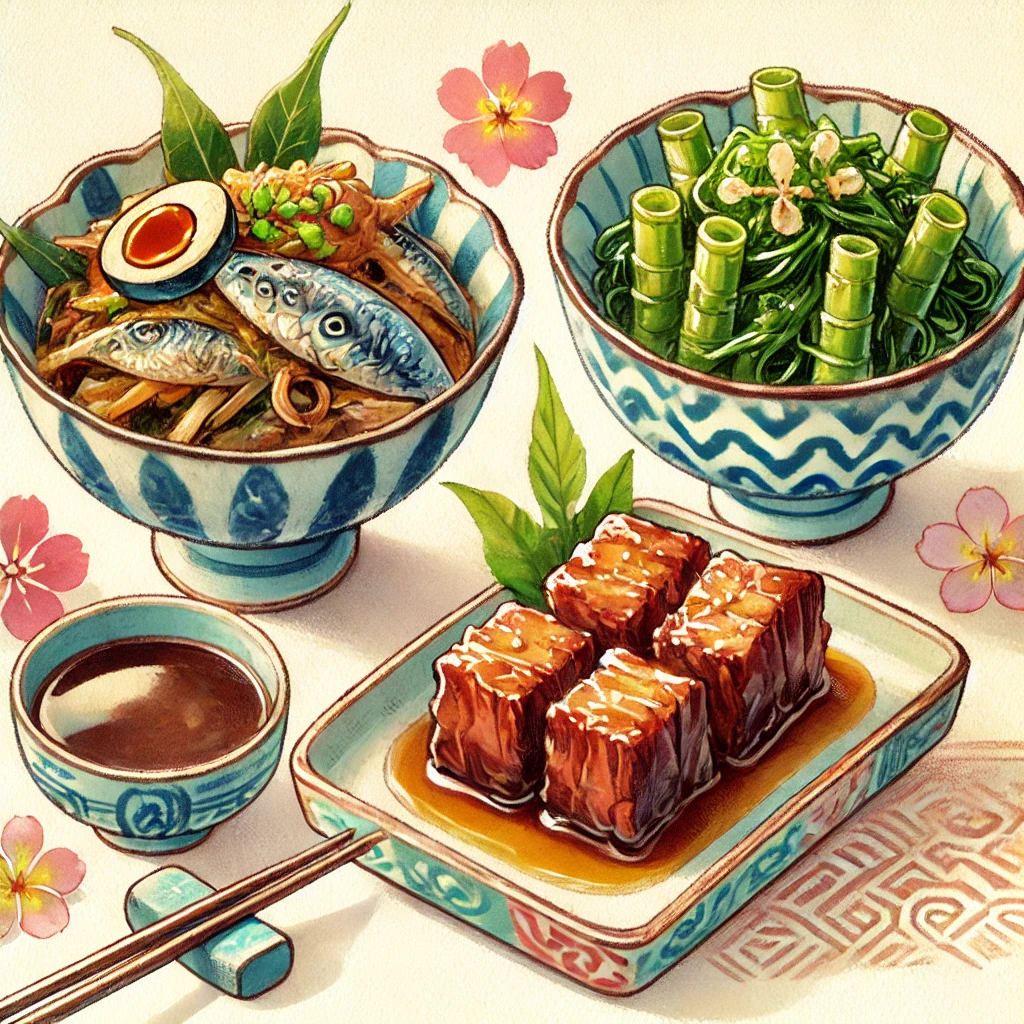
When you think of Okinawa, you probably imagine its blue seas, white sandy beaches, and unique culture. However, there is much more to Okinawa’s charm. The true treasure that deeply reflects the history and culture of Okinawa is the “Ryukyu Court Cuisine” passed down from the Ryukyu Kingdom era.
Imagine a lavish banquet hall in Shurijo Castle, where royalty savored exquisite dishes. What they enjoyed was not just delicious food but a culmination of Ryukyu’s history, diplomacy, and the wisdom and creativity of its people.
Take, for example, Rafute, a dish of braised pork belly. Known for its tender texture and rich flavor, it is now one of Okinawa’s signature dishes, originating from court cuisine. The method of slow-cooking with awamori (Okinawan liquor) reflects the spirit of “mottainai” (waste not) and “chimudaka” (hospitality).
Another example is Kubuirichi, a stir-fried kelp dish introduced through trade with China, which Ryukyu adapted uniquely. This dish tells the story of how Ryukyu embraced foreign cultures while developing its own.
Ryukyu Court Cuisine teaches us valuable lessons beyond its rich history. Practices like local consumption, efficient use of ingredients, and the principle of “ishoku-dogen” (food and medicine from the same source) provide insights into modern issues like food waste and health.
In this article, we delve into the allure of Ryukyu Court Cuisine. We’ll explore the exquisite dishes that captivated royalty, their historical context, and their significance today. Additionally, we’ll share how to enjoy authentic flavors during your Okinawa trip and tips for recreating these dishes at home.
Learning about Ryukyu Court Cuisine is more than just discovering delicious food. It’s an immersive experience in Ryukyu’s history and culture, offering a fresh perspective on our modern dietary habits.
Embark on a journey into the enchanting world of Ryukyu Court Cuisine. It will undoubtedly change how you view Okinawa. On your next trip, along with enjoying the beautiful sea and traditional crafts, make Ryukyu Court Cuisine a highlight. Welcome to the world of Ryukyu’s grandeur and the wisdom of Okinawa’s people.
- Introduction
- The History and Development of Ryukyu Court Cuisine
- The Establishment and Prosperity of the Ryukyu Kingdom
- The Influence of China and Japan on Ryukyu Cuisine
- The Development Process of Court Cuisine
- Learning Ryukyu’s History and Culture Through Court Cuisine
- The Living Tradition of Court Cuisine in Modern Times
- Ways to Experience Ryukyu Court Cuisine Today
- Conclusion: The Allure of Ryukyu Court Cuisine
- Lessons from Ryukyu Court Cuisine for Modern Times
- Tips for Experiencing Ryukyu Court Cuisine
- The Future of Ryukyu Court Cuisine
- In Conclusion: What Ryukyu Court Cuisine Teaches Us
- Characteristics of Ryukyu Court Cuisine
- Representative Dishes of Ryukyu Court Cuisine
- Kuubu Irichii (Stir-Fried Kelp)
- Rafute (Braised Pork Belly)
- Naaberaanbushi (Simmered Sponge Gourd)
- Minudaru (Fish Miso Mix)
- Experiencing Ryukyu Court Cuisine Today
- Conclusion: The Charm of Ryukyu Court Cuisine
- Tips for Fully Enjoying Ryukyu Court Cuisine
- Rediscovering the Allure of Okinawa Through Ryukyu Court Cuisine
- The Atmosphere of Banquets in the Ryukyu Court
- Introducing Recipes of Ryukyu Court Cuisine
- Summary
- Q&A
Introduction
Shurijo Castle stands proudly in Naha City, Okinawa, with its red-tiled roofs and majestic stone walls narrating the glory of the former Ryukyu Kingdom. However, to truly understand the history and culture of the Ryukyu, one must look beyond the visible. The unseen treasure of this legacy is the Ryukyu Court Cuisine, an essential part of Okinawa’s heritage.
What comes to mind when you think of Okinawan cuisine? Goya Champuru? Soki Soba? While these are iconic modern Okinawan dishes, delving deeper into their rich and profound origins inevitably leads us to the court cuisine of the Ryukyu Kingdom era.
This article will explore Ryukyu Court Cuisine, from its historical background to its influence on contemporary culture. By understanding the roots of Okinawan cuisine, you can enrich your experience and enjoyment of both Okinawa travel and food.
Overview of the Ryukyu Kingdom and Court Cuisine
The Ryukyu Kingdom flourished for approximately 450 years, from 1429 to 1879. During this time, Ryukyu thrived as a crucial hub of maritime trade in East Asia, fostering unique cultural exchanges with China, Japan, and Southeast Asia. One of the finest expressions of this rich culture is the court cuisine.
Ryukyu Court Cuisine was more than just “meals.” It embodied the kingdom’s history, culture, diplomacy, and spirituality, making it an art form in itself.
Formation and Prosperity of the Ryukyu Kingdom
The history of the Ryukyu Kingdom began in 1429 when King Sho Hashi unified the three kingdoms of Hokuzan, Chuzan, and Nanzan. This unification marked the beginning of the Ryukyu Kingdom, which took a significant step forward in its development.
The prosperity of the Ryukyu Kingdom was closely tied to its geographic location. Positioned in the East China Sea, Ryukyu served as an essential intermediary in maritime trade connecting China, Japan, Korea, and Southeast Asia. The 15th to 16th centuries were known as the “Great Age of Trade,” during which Ryukyu flourished as a central hub in East Asian maritime commerce.
This prosperity greatly influenced Ryukyu’s food culture, bringing in rare ingredients and cooking methods from various regions, which enriched and diversified the court cuisine.
Definition and Characteristics of Court Cuisine
What exactly was the Ryukyu Court Cuisine like?
Court Cuisine refers to the meals served in the royal court. However, Ryukyu Court Cuisine was not merely “lavish meals for royalty.” It was a crucial element of “diplomacy through food,” reflecting the prestige of the Ryukyu Kingdom.
Ryukyu Court Cuisine can be characterized by the following three points:
- Diversity: It used local ingredients as well as rare ingredients brought from China, Japan, and Southeast Asia.
- Complexity: It featured intricate cooking methods and delicate flavors, requiring highly skilled chefs.
- Symbolism: The content and presentation often included auspicious symbols and meanings.
For example, there is a dish called “Kubuirichi,” which is stir-fried kelp with pork and vegetables. It is not just a simple stir-fry; kelp is considered a symbol of longevity, making it an indispensable dish for court celebrations.
Another example is “Rafute” (braised pork belly), a representative court dish. This dish, made by slow-cooking pork, is cherished for its tender texture and rich flavor, often serving as the centerpiece for entertaining guests.
These dishes have been passed down to contemporary Okinawan cuisine. When you visit Okinawan izakayas or fine dining restaurants, remember that some of these dishes have their roots in Ryukyu Court Cuisine. Each bite will connect you to 450 years of history.
Historical and Cultural Significance of Court Cuisine
Ryukyu Court Cuisine was more than just “delicious food.” It was a living heritage that embodied the history and culture of the Ryukyu Kingdom.
The Role of Court Cuisine in Diplomacy
Throughout most of its history, the Ryukyu Kingdom maintained a tributary relationship with China, while also being under the control of the Japanese Satsuma Domain from the 17th century. In this complex international context, court cuisine played a vital role as a diplomatic tool.
Particularly during banquets for Chinese envoys, the finest Ryukyu culinary traditions were showcased. One notable example is the luxurious “Dragon Cuisine,” named after the Chinese emperor symbol. This banquet featured the highest quality ingredients and sophisticated cooking techniques, demonstrating Ryukyu’s cultural prowess and respect for China.
Similarly, when hosting Japanese envoys, Ryukyu served dishes blending traditional Ryukyu cuisine with Japanese influences. This demonstrated Ryukyu’s unique culture while showing respect for Japanese traditions, exemplifying sophisticated diplomacy through food.
Thus, court cuisine was not just “meals” but an essential component of Ryukyu’s diplomatic strategy. Just as sharing meals can strengthen relationships in today’s business world, Ryukyu used food to build international relations.
Symbolizing Ryukyu’s Food Culture
Ryukyu Court Cuisine was not merely for royalty and nobility. It represented and symbolized the broader Ryukyu food culture.
One defining feature of court cuisine was its use of local ingredients. Fresh seafood from Okinawan waters, unique vegetables from the subtropical climate, and local pork (Agu) were indispensable in these dishes.
For example, “Minudaru” is a dish made with finely chopped fish mixed with miso. The type of fish used changes with the seasons, such as bonito in summer and tuna in winter, showcasing Ryukyu’s sensitivity to nature’s bounty.
Moreover, court cuisine incorporated unique Ryukyu seasonings and cooking methods. Dishes using “shima miso” (Ryukyu’s unique miso) and “awamori” (Ryukyu’s distilled liquor) highlight the distinctiveness of Ryukyu’s food culture.
Even the presentation and manner of eating reflected Ryukyu’s cultural values. For instance, the dish “Chinpin” (thin mochi) was traditionally eaten by tearing it with the hands, embodying the Ryukyu respect for the “hand” as a symbol of sincerity and kindness.
Therefore, court cuisine embodied Ryukyu’s nature, culture, and spirituality. Many modern Okinawan dishes trace their roots back to this cuisine, making the enjoyment of Okinawan food an immersive experience in Ryukyu’s history and culture.
When you visit Okinawa, try viewing its cuisine through this lens. You’ll discover a new depth of history and culture in each dish.
Summary: The Allure of Ryukyu Court Cuisine
We have explored Ryukyu Court Cuisine, its history, and its cultural significance. Here is a brief summary of its appeal:
- Rich History: Embodies the glory of the Ryukyu Kingdom’s 450-year history.
- Diversity: Unique flavors combining local ingredients and international influences.
- Culinary Mastery: Intricate cooking techniques and artistic presentation.
- Cultural Symbolism: Reflects Ryukyu’s views on nature, values, and spirituality.
- Modern Legacy: Traditions passed down in contemporary Okinawan cuisine.
Ryukyu Court Cuisine is not just a relic of the past. It continues to live on in modern Okinawan food, offering a connection to Ryukyu’s history and culture.
On your next trip to Okinawa, seek out dishes with roots in Ryukyu Court Cuisine. Let each bite tell you the story of Ryukyu’s past. You will undoubtedly discover new charms in Okinawa.
Okinawan food culture truly represents a “taste of history.” Its profound flavors carry the stories of Ryukyu’s glory, struggles, and revival.
The Significance of Ryukyu Court Cuisine Today
What significance does Ryukyu Court Cuisine hold in the modern era? Let’s consider its importance from three perspectives:
- Cultural Heritage: Ryukyu Court Cuisine is a vital part of Ryukyu cuisine, which is recognized as a UNESCO Intangible Cultural Heritage, highlighting its global cultural value.
- Tourism Appeal: For visitors to Okinawa, Ryukyu Court Cuisine offers a unique way to experience Ryukyu’s history and culture through food.
- Source of Identity: For the people of Okinawa, the tradition of court cuisine is an important aspect of their heritage and pride.
From a tourism perspective, Ryukyu Court Cuisine greatly enhances Okinawa’s appeal. Food is a major part of the travel experience, and tasting Ryukyu Court Cuisine offers tourists a profound cultural experience beyond just “delicious food
.”
Tips for Enjoying Ryukyu Court Cuisine
Here are some tips to help you fully enjoy Ryukyu Court Cuisine:
- Pre-Study: Learning about Ryukyu’s history and culture beforehand will deepen your understanding of the stories behind the dishes.
- Seasonal Awareness: Ryukyu Court Cuisine emphasizes seasonality. Enjoy dishes that align with the time of your visit.
- Local Interaction: Engage with chefs and locals to hear interesting anecdotes about the cuisine.
- Use All Senses: Enjoy the taste, appearance, aroma, texture, and even the feel of the dishes.
- Take Photos: Capture the beautifully presented Ryukyu Court Cuisine as wonderful memories to share on social media.
What Encountering Ryukyu Court Cuisine Offers
Encountering Ryukyu Court Cuisine offers more than just a “meal.” It provides a connection to the 450-year history of the Ryukyu Kingdom, the island’s rich maritime trade culture, and the enduring pride of Okinawa’s people.
If you are planning a trip to Okinawa or are interested in Okinawan cuisine, step into the world of Ryukyu Court Cuisine. You will find a rich and diverse culinary world beyond your imagination.
In the next article, we will delve deeper into the history of the Ryukyu Kingdom and the development of court cuisine. By tracing the evolution of court cuisine alongside Ryukyu’s history, you will gain even deeper understanding and interest. Stay tuned!
Where to Experience Ryukyu Court Cuisine
For those interested in experiencing Ryukyu Court Cuisine, here are some recommended places:
- Shurijo Castle Park Restaurant “Shurimori”: Located within Shurijo Castle grounds, offering authentic Ryukyu Court Cuisine.
- Ryukyu Cuisine “Bimi” (Naha City): An over 70-year-old establishment serving traditional Ryukyu dishes.
- Ryukyu Cuisine “Kame Senin” (Naha City): Enjoy court cuisine in an atmosphere recreating the Ryukyu Kingdom era.
- Ryukyu Cuisine Cooking Class “Nakayukui”: Experience making Ryukyu dishes yourself.
Experience the world of Ryukyu Court Cuisine at these locations, and your Okinawa trip will become even more memorable.
The History and Development of Ryukyu Court Cuisine
When discussing the culinary culture of Okinawa, it is impossible to overlook the court cuisine of the Ryukyu Kingdom era. Behind the rich flavors and exquisite presentations lies the long history of the Ryukyu Kingdom and its interactions with neighboring countries. Let’s explore how Ryukyu court cuisine developed alongside the kingdom’s history.
The Establishment and Prosperity of the Ryukyu Kingdom
The history of the Ryukyu Kingdom dates back to the early 15th century. At that time, Ryukyu was divided into three regions: Hokuzan (Northern Mountain), Chuzan (Central Mountain), and Nanzan (Southern Mountain). This period is known as the “Three Kingdoms Era.”
From Unification to the Satsuma Invasion
In 1429, Sho Hashi of Chuzan unified the three regions, marking the birth of the Ryukyu Kingdom. Centered around Shurijo Castle, the kingdom began to develop its unique culture.
During this period, court cuisine was still in its early stages, primarily featuring local ingredients in simple yet robust dishes. For instance, the prototype of “rafute” (braised pork belly), now a representative Okinawan dish, originated during this time.
The Birth and Evolution of Rafute
Rafute is a dish made by simmering pork for a long time. Through interactions with China, the practice of eating pork became established in Ryukyu. Initially, pork was preserved by salting and then simmered for consumption. Over time, the cooking methods became more refined.
In the royal court, pork was simmered with awamori (a distilled liquor from Ryukyu) to enhance its deep flavors. This technique laid the foundation for modern rafute, a dish known for its tender texture and rich taste, making it a staple at court banquets.
Ryukyu’s Golden Age of Trade
From the 15th to the 16th centuries, Ryukyu experienced a period of prosperity known as the “Great Age of Trade.” Leveraging its strategic location in the East China Sea, Ryukyu engaged in active trade with China, Japan, Korea, and Southeast Asia.
During this time, Ryukyu flourished as a central hub of international trade, often referred to as the “bridge of nations.” This economic prosperity significantly influenced Ryukyu’s food culture.
The Culinary Revolution Brought by Trade
With the development of trade, Ryukyu received various exotic ingredients and cooking techniques from different countries. For example:
- Influences from China: The techniques for making tofu, soy sauce, and noodles were introduced.
- Influences from Southeast Asia: Spices like pepper and cinnamon, as well as the use of coconut, were adopted.
- Influences from Japan: The methods for making miso and dried fish were integrated.
These new ingredients and techniques were creatively adapted by court chefs, leading to the development of unique Ryukyu dishes.
The Development and Refinement of Court Cuisine
The prosperity of trade greatly contributed to the advancement and refinement of court cuisine. With access to abundant ingredients and new cooking methods, court chefs continuously created innovative dishes.
For instance, “kubuirichi,” a dish made by stir-frying finely chopped kelp with pork and vegetables, has its origins in the golden age of trade. The dish began with dried kelp imported from China, which was then cooked using unique Ryukyu methods.
Kubuirichi is characterized by the following:
- High nutritional value: Rich in minerals from kelp and protein from pork.
- Long shelf life: Made with dried kelp, which can be stored for a long time.
- Symbolic significance: Kelp symbolizes “happiness” and is essential at celebratory feasts.
Thus, the integration of trade-brought ingredients with Ryukyu’s unique culture led to the evolution of distinct court cuisine.
The Influence of China and Japan on Ryukyu Cuisine
Throughout Ryukyu Kingdom’s history, China and Japan played particularly significant roles. The relationships with these countries greatly influenced not only Ryukyu’s politics but also its food culture.
Relations with China Under the Tributary System
From 1372 to 1879, Ryukyu maintained a tributary relationship with China, where the Chinese emperor officially recognized Ryukyu’s king. Under this system, Ryukyu regularly sent missions to China to pay tribute.
The Visits of Chinese Envoys and Court Cuisine
A key aspect of the tributary relationship was the visit of Chinese envoys to Ryukyu. When these envoys arrived, the royal court held grand banquets to welcome them, showcasing the finest Ryukyu court cuisine.
The banquets for the envoys featured:
- Luxurious ingredients: The finest ingredients were used generously.
- Complex cooking methods: Advanced techniques influenced by Chinese cuisine were employed.
- Beautiful presentation: Great attention was given to the appearance of the dishes.
- Unique Ryukyu performances: Dishes were served with traditional Ryukyu dance and music.
For example, the dish “Yaeyama Kuba” is a steamed dish wrapped in leaves of the fan palm, filled with fish paste and vegetables. This dish symbolizes the fusion of Ryukyu’s natural bounty and Chinese culinary techniques, representing the essence of Ryukyu court cuisine.
Culinary Techniques Brought from China
Through the tributary relationship, many Chinese cooking techniques were introduced to Ryukyu. Notably, the following techniques significantly contributed to the development of Ryukyu court cuisine:
- Steaming techniques: Delicate steaming methods using bamboo steamers.
- Braising methods: Techniques for long, slow simmering to extract flavors.
- Use of seasonings: Effective use of soy sauce and spices.
- Aesthetic presentation: Techniques for artistically arranging dishes.
These techniques were combined with local ingredients to create unique Ryukyu court dishes.
Interactions with Japan Through the Satsuma Domain
In 1609, the Satsuma Domain of Japan invaded Ryukyu. As a result, Ryukyu maintained a nominal tributary relationship with China while being effectively under Satsuma’s control. This complex international situation significantly influenced Ryukyu’s food culture.
The “Two Faces” of Ryukyu Cuisine
Despite being under Satsuma’s control, Ryukyu continued its tributary relationship with China. This dual status meant Ryukyu had to present itself as a tributary state to China and a subordinate state to Japan.
This duality was reflected in its court cuisine:
- Chinese-style dishes: Extravagant dishes for entertaining Chinese envoys.
- Japanese-style dishes: Adapted dishes for entertaining Satsuma officials.
- Unique Ryukyu dishes: Dishes that incorporated elements from both China and Japan, creating a distinct Ryukyu flavor.
This “two-faced” culinary culture was a driving force behind the diversity and uniqueness of Ryukyu cuisine.
Influences from Japanese Food Culture
Through its relationship with Satsuma, Japanese food culture also made its way to Ryukyu. Key influences included:
- Rice cooking methods: Introduction of Japanese-style rice cooking techniques.
- Miso-making techniques: Adoption of Japanese miso-making methods.
- Fish preparation methods: Techniques for preparing sashimi and grilled fish.
- Tea culture: Introduction of Japanese tea ceremony practices, influencing Ryukyu’s tea rituals.
These Japanese culinary elements merged with Ryukyu’s local ingredients and cooking methods, creating new and innovative dishes.
The Development Process of Court Cuisine
Throughout the history of the Ryukyu Kingdom, court cuisine evolved significantly, reflecting the kingdom’s historical progression.
Early Court Cuisine: Focus on Local Ingredients
In the early days of the Ryukyu Kingdom, court cuisine primarily featured local ingredients. Characteristics of this period included:
- Abundant use of seafood: Utilizing the rich bounty of the surrounding sea, with a focus on seafood dishes.
- Use of subtropical vegetables: Developing
dishes with unique Okinawan vegetables like goya (bitter melon), hechima (sponge gourd), and papaya.
- Introduction of pork: Pork cooking methods introduced from China gradually evolved into Ryukyu’s unique styles.
A representative dish from this period is “irabu-jiru,” a soup made with sea snake meat, believed to have strengthening properties and highly valued at the court.
How to Make Irabu-jiru
- Remove the skin and internal organs of the sea snake and cut it into appropriate pieces.
- Place water and kelp in a pot to make the broth.
- Add the sea snake and ginger to the broth and simmer.
- Skim off any scum and continue to simmer until tender.
- Season with salt to taste.
This dish exemplifies early court cuisine, making the most of Ryukyu’s natural resources.
Diversification of Ingredients Through Trade
During the Great Age of Trade from the 15th to the 16th centuries, Ryukyu’s court cuisine underwent significant evolution. Features of this period included:
- Increase in imported ingredients: Exotic ingredients from China and Southeast Asia were incorporated into court dishes.
- Diversification of cooking methods: Techniques from various regions were integrated with local ingredients to create new dishes.
- Development of seasonings: Techniques for making soy sauce and miso were introduced, adding complexity to flavors.
A notable dish from this period is “muchi,” a Ryukyu sweet made from steamed glutinous rice, representing the fusion of Chinese steaming techniques and local ingredients.
How to Make Muchi and Its Significance
- Soak glutinous rice in water and pound it into a sticky paste.
- Add sugar or brown sugar to sweeten the paste.
- Divide the paste into small portions and add fillings such as red beans or brown sugar.
- Wrap the portions in leaves of the shell ginger plant and steam them.
Muchi is an essential part of the “Year Night” celebration on the 8th day of the 12th lunar month, believed to strengthen teeth and promote longevity.
The development of trade not only diversified ingredients but also linked Ryukyu’s culinary traditions with cultural and religious practices.
Refinement and Establishment of Culinary Techniques
From the 17th century onwards, as the Ryukyu Kingdom entered a period of stability, court cuisine became more refined. Characteristics of this period included:
- Systematization of techniques: Culinary techniques previously held by individual chefs were documented and organized.
- Enhanced aesthetics: Greater attention was paid to the presentation and choice of serving dishes.
- Integration with rituals: Specific dishes became integral to court rituals and annual events.
A representative dish from this period is “wasabi-ae” (wasabi-dressed fish), a dish incorporating Japanese wasabi with Ryukyu’s own twist.
Characteristics and Preparation of Wasabi-ae
- Finely chop fresh fish (typically tuna or bonito).
- Mix the chopped fish with grated wasabi, soy sauce, and mirin.
- Add finely chopped green onions to enhance the flavor.
This dish reflects the influence of Japan while retaining a distinct Ryukyu flavor. For example, finely chopping the fish makes it less likely to spoil in Ryukyu’s hot climate. Adding green onions imparts a unique Ryukyu aroma and flavor.
Thus, court cuisine evolved into an “art of food,” reflecting the political, cultural, and environmental contexts of each era.
Learning Ryukyu’s History and Culture Through Court Cuisine
As we have seen, Ryukyu court cuisine is more than just “food.” It serves as a mirror reflecting Ryukyu’s history and culture. Through court cuisine, we can learn:
- History of international exchange: The traces of interactions with China, Japan, and Southeast Asia are vividly present in the dishes.
- Adaptation to the environment: Cooking methods and preservation techniques developed to suit the subtropical climate.
- Cultural fusion: The ability to integrate foreign influences while maintaining Ryukyu’s unique identity.
- Aesthetic sensibility: Emphasis on not just taste but also the appearance, aroma, and sequence of eating.
The Living Tradition of Court Cuisine in Modern Times
Although the Ryukyu Kingdom ended in 1879, the tradition of court cuisine continues to thrive in modern Okinawan cuisine. For instance:
- Influence on home cooking: Dishes like rafute and kubuirichi, once court dishes, are now beloved home-cooked meals.
- Use in the tourism industry: Luxury hotels and restaurants offer modern adaptations of court cuisine.
- Cultural heritage value: Ryukyu cuisine is recognized as an important cultural heritage of Okinawa, with efforts to preserve and pass it on.
Ways to Experience Ryukyu Court Cuisine Today
If you are interested in Ryukyu court cuisine, here are some ways to experience it:
- Dining at specialized restaurants: In Naha City, there are several restaurants that specialize in court cuisine. For example, at “Shurimori-kan,” you can enjoy modern interpretations of Ryukyu court dishes.
- Participating in cooking classes: Various cooking classes in Okinawa teach the techniques of making court cuisine, providing a deeper understanding of Ryukyu’s culinary culture.
- Eating at historical sites: At the restaurant “Shurimori” within Shurijo Castle Park, you can savor court cuisine while experiencing the atmosphere of the Ryukyu Kingdom.
- Attending themed events: Okinawa hosts regular events focused on court cuisine, offering tastings and educational insights into the history and cultural background of the dishes.
Conclusion: The Allure of Ryukyu Court Cuisine
Ryukyu court cuisine is not just about delicious food; it is a “culinary art” that encapsulates the history and culture of Ryukyu. By tracing its development, we can learn about Ryukyu’s history, international relations, environmental adaptations, and aesthetic sensibilities.
For us today, court cuisine is not merely a “relic of the past.” It is the root of Okinawa’s rich food culture and continues to influence modern Okinawan cuisine. When you visit Okinawa, try tasting court cuisine or dishes influenced by it. Each bite will connect you to Ryukyu’s long history and rich culture.
Lessons from Ryukyu Court Cuisine for Modern Times
Ryukyu court cuisine transcends being merely delicious food, offering valuable lessons for modern society:
- Cultural fusion and creativity: The ability to embrace foreign influences while creating a unique culture is relevant in today’s globalized world.
- Harmony with the environment: Using local ingredients and developing climate-appropriate cooking methods serve as models for sustainable food culture.
- Aesthetic and spiritual appreciation: Viewing food not just as nutrition but as an aesthetic and spiritual experience reminds us of the essence of dining, often lost in modern busy life.
- Historical continuity: Learning about Ryukyu’s history through court cuisine underscores the importance of cultural preservation.
Tips for Experiencing Ryukyu Court Cuisine
When experiencing Ryukyu court cuisine, consider the following to enhance your understanding and enjoyment:
- Pre-study importance: Learning about Ryukyu’s history and culture beforehand deepens the appreciation of the stories behind the dishes.
- Enjoy with all senses: Pay attention to the taste, appearance, aroma, texture, and even the feel of the dishes.
- Notice the sequence: The order of eating dishes in court cuisine has significance. Follow the recommended sequence if possible.
- Engage with locals: Interact with chefs and locals to hear fascinating anecdotes about the cuisine.
- Modern adaptations: Appreciate not only traditional court dishes but also modern interpretations, reflecting Okinawa’s evolving food culture.
The Future of Ryukyu Court Cuisine
Though
the Ryukyu Kingdom is a part of the past, its culinary culture continues to evolve. Current efforts to preserve and promote court cuisine include:
- Training young chefs: Programs to pass traditional techniques to younger generations.
- Modern adaptations: Creating new Okinawan dishes based on court cuisine elements.
- International promotion: Efforts by Okinawa Prefecture and local businesses to share the appeal of Ryukyu cuisine worldwide.
- Academic research: Ongoing studies on the historical and cultural background of Ryukyu court cuisine.
In Conclusion: What Ryukyu Court Cuisine Teaches Us
Ryukyu court cuisine is not just a relic of the past; it is a living cultural heritage that teaches us many things:
The willingness to accept foreign influences while maintaining a unique identity, the harmonious relationship with the environment, and the aesthetic and spiritual approach to food. These are all valuable lessons in today’s globalized and environmentally conscious world.
If you have the opportunity to visit Okinawa, be sure to try Ryukyu court cuisine or dishes influenced by it. Each bite will allow you to taste the rich history, abundant nature, and the wisdom and creativity of the Ryukyu people. This experience will undoubtedly enrich your perspective on food.
Ryukyu court cuisine serves as a bridge connecting the past, present, and future. We have the responsibility to pass on this rich culinary culture to future generations.
Characteristics of Ryukyu Court Cuisine
If you are planning a trip to Okinawa, have an interest in Okinawan cuisine, or have a passion for food culture and history, then Ryukyu court cuisine is a topic that will captivate you. This article delves into the unique characteristics of Ryukyu court cuisine. Understanding this distinctive culinary culture, which developed alongside the history of the Ryukyu Kingdom, will allow you to appreciate Okinawa’s charm on a deeper level.
Selection of Ingredients and Cooking Methods
The first notable aspect of Ryukyu court cuisine is the meticulous selection of ingredients and the unique cooking methods. During the Ryukyu Kingdom era, court chefs selected the finest ingredients and used distinctive cooking techniques to create dishes that delighted the royal family and nobles.
Highly Valued Ingredients: Pork, Kelp, Seafood
Several ingredients were particularly important in Ryukyu court cuisine, including pork, kelp, and an abundance of seafood. Let’s explore why these ingredients were so significant.
Pork: The Star of Ryukyu Cuisine
Pork holds a special place in Ryukyu cuisine. There is a saying in Okinawa that “every part of the pig is used, from the feet to the nose,” reflecting a culture of utilizing every part of the pig. In court cuisine, pork was an essential ingredient.
- Rafute (Braised Pork Belly): This is one of the most iconic dishes in court cuisine. It involves simmering pork belly for a long time to achieve a tender texture and rich flavor, making it a centerpiece for entertaining guests.
- Tebichi (Pig’s Feet): Rich in collagen, pig’s feet were treasured in court cuisine. They were simmered for hours to create a melt-in-the-mouth texture.
- Mimiga (Pig’s Ear Salad): Thinly sliced pig’s ears marinated in vinegar, known for their crunchy texture, were a staple at court banquets.
These dishes are still enjoyed in modern Okinawan cuisine. When you visit Okinawa, be sure to savor these authentic flavors.
Kelp: The Symbol of Longevity
Kelp was a high-class ingredient imported from China during the Ryukyu Kingdom era. Valued for its nutritional benefits, it became a symbol of longevity and was an essential part of court cuisine.
- Kubuirichi (Stir-Fried Kelp): Finely chopped kelp stir-fried with pork and vegetables, this dish was a must at celebratory feasts in the royal court.
- Kelp Rolls: Fish or vegetables wrapped in kelp and simmered, these rolls were not only delicious but also added a touch of elegance to the court’s dining experience.
Dishes featuring kelp are still popular in modern Okinawan celebrations, possibly contributing to the region’s reputation for longevity.
Seafood: Bounty of the Island Nation
As an island nation, the Ryukyu Kingdom had abundant access to fresh and diverse seafood, which played a significant role in court cuisine.
- Irabu Iritchi (Stir-Fried Moray Eel): Moray eel stir-fried in a soy sauce base, considered to have strengthening properties, was highly valued in the court.
- Minudaru (Fish with Miso): Fresh fish finely chopped and mixed with miso. The type of fish used changed with the seasons, allowing for the enjoyment of seasonal flavors.
- Jīmāmi Dofu (Peanut Tofu): Though not seafood, this unique tofu made from peanuts sometimes included fish paste and was cherished as a court delicacy.
These dishes showcase the rich bounty of the sea that surrounded the Ryukyu Islands. When visiting Okinawa, be sure to try dishes made with fresh seafood.
Distinctive Cooking Techniques: Stir-Frying, Simmering, Marinating
The distinctive cooking techniques of Ryukyu court cuisine are also noteworthy. Three key methods are stir-frying, simmering, and marinating.
Stir-Frying: Enhancing the Flavor of Ingredients
Stir-frying is a cooking method that brings out the best flavors of the ingredients. Influenced by Chinese cuisine, unique stir-frying techniques developed in Ryukyu court cuisine.
- Champuru Dishes: “Champuru” means “mixed together” in the Okinawan dialect. Various ingredients are stir-fried together to enhance their flavors. Goya Champuru, made with bitter melon, is a representative dish.
- Iritchi Dishes: Iritchi refers to stir-frying and simmering dishes like Kubuirichi (stir-fried kelp) and Nabeera Anbushi (stir-fried sponge gourd).
These stir-fried dishes require skill to balance the flavors and enhance the ingredients’ natural tastes. Court chefs mastered these techniques to satisfy the palates of the royal family and nobles.
Simmering: Infusing Flavors Deeply
Simmering is a method that infuses ingredients with deep flavors over time. In Ryukyu court cuisine, techniques for long, slow simmering were highly developed to maximize the umami of the ingredients.
- Rafute (Braised Pork Belly): As mentioned earlier, this dish is a staple of court cuisine, involving long simmering with awamori to create a tender texture and rich flavor.
- Inamuduchi (Pork and Shiitake Miso Soup): A dish of pork, shiitake mushrooms, and konnyaku simmered in miso. The flavors of the ingredients meld together to create a rich and satisfying dish.
These simmered dishes are a testament to the patience and skill of court chefs. They remain popular in modern Okinawan cuisine and are cherished as home-cooked favorites.
Marinating: Enjoying Fresh Flavors
Marinating is a technique that highlights the fresh flavors of ingredients. Unique marinated dishes were developed in Ryukyu court cuisine, utilizing local ingredients.
- Mimiga (Pig’s Ear Salad): As mentioned earlier, thinly sliced pig’s ears marinated in vinegar provide a refreshing and crunchy texture, making it a staple at court banquets.
- Sunshii (Mozuku Seaweed Salad): Mozuku seaweed marinated in vinegar and sugar, offering a light and refreshing taste perfect for the hot Okinawan climate.
These marinated dishes are characterized by their light and refreshing flavors, well-suited to the subtropical climate of Okinawa. Court chefs used these dishes to add a cooling element to the meal.
Distinctive Seasonings and Condiments
Another significant feature of Ryukyu court cuisine is its unique seasonings and condiments. Court chefs utilized a variety of seasonings to create distinct flavors.
Dishes Using Awamori
Awamori, a distilled liquor representing the Ryukyu Kingdom, played a significant role in cooking. Its high alcohol content and unique aroma made it a valuable ingredient.
Characteristics and Uses of Awamori
Awamori is a rice-based distilled liquor with the following characteristics:
- High Alcohol Content: Usually over 30%, it effectively removes unwanted flavors from ingredients.
- Unique Aroma: Made with black koji mold, it imparts a distinct aroma to dishes.
- High Preservability: The high alcohol content enhances the preservability of dishes.
Notable dishes using awamori include:
- Rafute (Braised Pork Belly): Awamori helps eliminate the pork’s odor and adds depth to the flavor.
- Chiraga (Boiled Pig’s Face Skin): The skin is simmered in awamori, making it rich in collagen and beneficial for beauty.
- Awamori Pickles: Fish and meat pickled in awamori gain unique flavors and increased preservability.
These dishes demonstrate the clever use of awamori to create distinct Ryukyu flavors. When visiting Okinawa, look out for dishes incorporating this unique liquor.
Using Island Miso
Island miso, unique to Ryukyu, played a significant role in court cuisine, known for its distinct flavor and high salt content.
Characteristics and Uses of Island Miso
Island miso has the following characteristics:
- High Salt Content: Higher salt content than regular miso, enhancing its preservability.
- Distinct Flavor: A sweet flavor due to a high ratio of koji.
- High Nutritional Value: As a fermented food, it is rich in vitamins and minerals.
Notable dishes using island miso include:
- Minudaru (Fish with Miso): Fresh fish finely chopped and mixed with island miso, allowing the enjoyment of seasonal flavors.
- Nabeera Anbushi (Sponge Gourd with Miso): Sponge gourd stir-fried with island miso, combining the gourd’s light flavor with the rich taste of miso.
- Juushii (Okinawan Mixed Rice): Rice cooked with island miso, characterized by its unique flavor and umami.
These dishes utilize island miso to create unique Ryukyu flavors. When in Okinawa, be sure to try dishes featuring this special miso.
Use of Spices: Chili Peppers, Ginger, Garlic
Various spices were skillfully used in Ryukyu court cuisine, with chili peppers, ginger, and garlic playing key roles.
Chili Peppers: The Origin of Kōrēgusu
Chili peppers are essential in Ryukyu cuisine, especially in making Kōrēgusu, a chili pepper vinegar that played a significant role in court cuisine.
- Characteristics of Kōrēgusu: Made by soaking chili peppers in awamori or vinegar, it has a distinctive spicy and tangy flavor.
- Uses in Dishes:
- Served with Sōki Soba (pork rib noodle soup)
- Added to stir-fries and simmered dishes for extra flavor
- Drizzled over sashimi and salads
Kōrēgusu enhanced the flavors of court cuisine and is still a staple in modern Okinawan kitchens.
Ginger: Adding Freshness
Ginger added freshness and aroma to Ryukyu court cuisine.
- Benefits of Ginger:
- Aids digestion
- Warms the body
- Eliminates unpleasant odors from ingredients
- Uses in Dishes:
- Ginger Tea: A traditional Okinawan health drink
- Sāta Andāgī (Okinawan doughnuts) with ginger
- Served with fish dishes to neutralize odors
Ginger not only added flavor but was also valued for its medicinal properties in Ryukyu court cuisine.
Garlic: Adding Depth
Garlic added depth and umami to Ryukyu court cuisine.
- Benefits of Garlic:
- Antibacterial properties
- Improves blood circulation
- Helps in recovery from fatigue
- Uses in Dishes:
- Rafute (Braised Pork Belly): Adding garlic enhances the dish’s flavor
- Champuru Dishes: Used as a basic seasoning for stir-fries
- Garlic Miso: A versatile condiment combining garlic and island miso
Garlic was valued for both its flavor-enhancing qualities and its health benefits in Ryukyu court cuisine.
Aesthetics of Tableware and Presentation
The beauty of Ryukyu court cuisine is not only in its flavors but also in the aesthetics of its tableware and presentation. During the Ryukyu Kingdom era, court cuisine embodied the fusion of “food” and “beauty.”
The Use and Design of Lacquerware
Ryukyu lacquerware is one of the representative crafts of the Ryukyu Kingdom. This beautiful lacquerware was prominently used in court cuisine.
Characteristics of Ryukyu Lacquerware
- Durability: Multiple layers of lacquer make it extremely durable and long-lasting.
- Beautiful Decorations: Adorned with gold, silver, and mother-of-pearl inlays, it is known for its opulent decorations.
- Unique Colors: Predominantly red and black, decorated with motifs inspired by Ryukyu’s natural beauty.
Types and Uses of Ryukyu Lacquerware
- Ozen: A serving tray for multiple small dishes.
- Jikiro: A lidded container used to keep dishes warm.
- Sakazuki: Cups for drinking awamori, essential for banquets.
These lacquerware items not only enhanced the flavors of the dishes but also expressed the court’s opulence and aesthetic sensibilities. Even today, high-end Okinawan restaurants sometimes use Ryukyu lacquerware.
Colorful Presentation
The presentation of Ryukyu court cuisine is characterized by its vibrant colors. This not only represents the natural beauty of Ryukyu but also enhances the visual appeal of the dishes.
Symbolism of Colors
- Red: Symbolizing happiness and joy, represented by ingredients like shrimp and red sweet potatoes.
- Green: Symbolizing vitality and youth, represented by bitter melon and island vegetables.
- Yellow: Symbolizing abundance and prosperity, represented by pumpkin and papaya.
- White: Symbolizing purity and sanctity, represented by daikon and tofu.
- Black: Symbolizing solemnity and depth, represented by seaweed and black sesame.
Techniques for Presentation
- Goshoku-mori: A technique of using five colors (red, green, yellow, white, black) in presentation, known for its auspiciousness.
- Tabane-mori: A technique of bundling vegetables or fish to add height and create a festive look.
- Chirashi-mori: A technique of scattering ingredients across the plate to express natural beauty.
These colorful presentations make Ryukyu court cuisine visually delightful. This tradition continues in modern Okinawan cuisine, where beautiful presentations are a common sight.
Expressing Seasonal Themes
Expressing the seasons was another important aspect of Ryukyu court cuisine, reflecting the Ryukyu aesthetic of harmony with nature.
Seasonal Ingredients
- Spring: Mugwort, bamboo shoots, wild vegetables
- Summer: Bitter melon, papaya, mango
- Autumn: Sweet potatoes, chestnuts, mushrooms
- Winter: Daikon, napa cabbage, tangerines
Techniques to Express Seasonal Themes
- Using Flowers and Leaves: Adding seasonal flowers and leaves to enhance the seasonal feel.
- Choosing Seasonal Tableware: Selecting tableware with colors and shapes that reflect the season.
- Adjusting Dish Temperatures: Serving cold dishes in summer and hot dishes in winter to express the season.
These seasonal expressions made Ryukyu court cuisine more than just a meal; they allowed diners to experience the beauty of the changing seasons through food.
Conclusion: The Allure of Ryukyu Court Cuisine
As we have seen, Ryukyu court cuisine is characterized by:
- The selection of rich ingredients and unique cooking methods
- Distinctive seasonings using awamori and island miso
- Flavorful use of spices like chili peppers, ginger, and garlic
- The use of beautiful lacquerware and colorful presentations
- An emphasis on seasonal aesthetics
These characteristics reflect the long history and rich culture of Ryukyu. Ry
ukyu court cuisine is more than just “food”; it is truly “culinary art.”
If you have the opportunity to visit Okinawa, be sure to try Ryukyu court cuisine and dishes influenced by it. Each bite will give you a taste of Ryukyu’s history, culture, and the wisdom and creativity of its people. Through Ryukyu court cuisine, you will gain a deeper understanding and appreciation of Okinawa’s allure.
Representative Dishes of Ryukyu Court Cuisine
If you are planning a trip to Okinawa, interested in Okinawan cuisine, or passionate about food culture and history, Ryukyu court cuisine is a fascinating topic. This article delves into the representative dishes cherished in the Ryukyu Kingdom’s court. By learning about these dishes, you can gain a deeper understanding of Okinawan food culture and enjoy your travels even more.
Kuubu Irichii (Stir-Fried Kelp)
Kuubu Irichii is one of the most famous dishes in Ryukyu court cuisine. “Kuubu” means kelp, and “irichii” means stir-fry in Okinawan dialect. This nutritious dish, featuring kelp as the main ingredient, was indispensable at court banquets.
Historical Background and Significance
The history of Kuubu Irichii is deeply intertwined with the relationship between the Ryukyu Kingdom and China.
- Trade with China: Kelp did not grow in Okinawa naturally. It was imported as a high-end ingredient through trade with China.
- Symbol of Longevity: Kelp is rich in nutrients, particularly iodine, and was treasured as a symbol of longevity.
- Diplomatic Use: Kuubu Irichii was served at banquets to entertain Chinese envoys, showcasing the culinary skills of the Ryukyu court.
Ingredients and Preparation
The basic ingredients and preparation method for Kuubu Irichii are as follows:
Ingredients (for 4 servings)
- Dried kelp: 50g
- Pork belly: 100g
- Carrot: 1/2
- Island tofu: 1/4 block
- Seasonings (soy sauce, sugar, mirin, sake): 1 tablespoon each
- Vegetable oil: as needed
Preparation Steps
- Rehydrate the dried kelp in water and cut into thin strips.
- Cut the pork belly into 1 cm cubes.
- Thinly slice the carrot.
- Cut the island tofu into 1 cm cubes.
- Heat oil in a pan and stir-fry the pork until browned.
- Add the carrot and kelp, and continue stir-frying.
- Add the seasonings and mix well.
- Finally, add the tofu and lightly stir-fry to finish.
This dish features a perfect harmony between the texture of kelp and the umami of pork, balanced with the sweetness of carrots and the mildness of tofu.
Enjoying Kuubu Irichii Today
Kuubu Irichii remains a beloved dish in modern Okinawa. When visiting Okinawa, you can enjoy it in various places:
- Traditional Okinawan Restaurants: Many long-established Okinawan restaurants in Naha’s Kokusai Street area serve Kuubu Irichii.
- Hotel Buffets: Many high-end resort hotels offer Kuubu Irichii at their breakfast or dinner buffets.
- Cooking Classes: Learn how to make Kuubu Irichii at traditional Okinawan cooking classes.
You can also purchase ingredients from local supermarkets and try making it yourself to experience the taste of Okinawan home cooking.
Rafute (Braised Pork Belly)
Rafute is a particularly popular dish in Ryukyu court cuisine. This dish, made by simmering pork belly for a long time, captivates many with its tenderness and rich flavor.
Historical Background and Significance
The history of Rafute is closely linked to the food culture of Ryukyu:
- Influence from China: The culture of eating pork was introduced to Ryukyu through interactions with China.
- Importance of Pork: In Ryukyu, the saying “eat every part of the pig from head to tail” highlights the importance of pork.
- Evolution into Court Cuisine: Originally a commoner’s dish, Rafute was refined by court chefs into a luxurious court delicacy.
Ingredients and Preparation
The basic ingredients and preparation method for Rafute are as follows:
Ingredients (for 4 servings)
- Pork belly: 500g
- Awamori: 100ml
- Sugar: 2 tablespoons
- Soy sauce: 3 tablespoons
- Ginger: 1 piece
- Garlic: 2 cloves
- Island chili: 2 (optional)
Preparation Steps
- Cut the pork belly into 3 cm cubes.
- Boil the pork in water, skimming off any scum that rises to the surface.
- Transfer the pork to a separate pot.
- Add awamori, sugar, soy sauce, sliced ginger and garlic, and island chili.
- Simmer over low heat for 2-3 hours, skimming off any scum.
- When the meat is tender and glossy, it’s ready to serve.
Rafute is characterized by its melt-in-the-mouth tenderness, with the flavors of awamori and soy sauce deeply infused into the meat.
Enjoying Rafute Today
Rafute is widely enjoyed as a staple of modern Okinawan cuisine. When visiting Okinawa, you can savor it in various settings:
- Izakayas (Japanese Pubs): Most izakayas in Okinawa have Rafute on their menu, making it a popular appetizer even when cold.
- High-End Ryukyu Restaurants: Near Shuri Castle, upscale Ryukyu restaurants offer refined Rafute as part of their court cuisine offerings.
- Souvenirs: Vacuum-packed Rafute is available at many souvenir shops, allowing you to enjoy the taste of Okinawa at home.
Rafute is also relatively easy to make at home, so you might want to try cooking it during your stay in Okinawa.
Naaberaanbushi (Simmered Sponge Gourd)
Naaberaanbushi is a Ryukyu court dish featuring sponge gourd (naabera). Despite its simple seasoning, it highlights the unique texture and flavor of sponge gourd.
Nutritional Value and Benefits of Sponge Gourd
One reason Naaberaanbushi was treasured as a court dish is the nutritional value and health benefits of sponge gourd:
- Low in Calories: Sponge gourd is very low in calories, making it popular as a diet food.
- Rich in Vitamin C: High vitamin C content offers benefits for skin health.
- High in Potassium: Its potassium content helps reduce swelling and prevent high blood pressure.
- Rich in Dietary Fiber: High fiber content aids digestion.
These nutritional benefits made Naaberaanbushi a valuable dish for maintaining the health of court members.
Ingredients and Preparation
The basic ingredients and preparation method for Naaberaanbushi are as follows:
Ingredients (for 4 servings)
- Sponge gourd: 1 (about 300g)
- Pork belly: 100g
- Island tofu: 1/2 block
- Dashi stock: 200ml
- Soy sauce: 1 tablespoon
- Salt: to taste
- Bonito flakes: as needed
Preparation Steps
- Halve the sponge gourd lengthwise, remove the seeds, and cut into thin slices.
- Cut the pork belly into 1 cm strips.
- Cut the island tofu into 1 cm cubes.
- In a pot, bring the dashi stock to a boil, add the sponge gourd and pork, and simmer.
- Once the sponge gourd softens, season with soy sauce and salt.
- Add the tofu and
simmer briefly.
- Serve in a bowl, topped with bonito flakes.
Naaberaanbushi is known for its unique texture and the mild flavor of dashi, enriched by the umami of pork and the softness of tofu.
How It Was Served in the Court
Naaberaanbushi was served in the court in various ways:
- Chilled: It was sometimes served chilled to suit the hot Okinawan climate.
- With Condiments: Ginger and green onions were added to enhance the flavor and nutritional value.
- Serving Order: Often served early in the meal to aid digestion.
Enjoying Naaberaanbushi Today
Naaberaanbushi remains a popular dish in modern Okinawa. You can find it at various places during your visit:
- Okinawan Restaurants: Many Okinawan restaurants include Naaberaanbushi on their menus, especially in summer.
- Local Eateries: Small eateries frequented by locals often serve this dish.
- Roadside Stations: You can sometimes find Naaberaanbushi made with local vegetables at roadside station eateries.
You can also find fresh sponge gourd at Okinawan supermarkets, making it a fun dish to prepare yourself during your stay.
Minudaru (Fish Miso Mix)
Minudaru is a Ryukyu court dish made by finely chopping fresh fish and mixing it with miso. Despite its simplicity, it offers a deep and rich flavor, making it a staple at court banquets.
Types of Fish Used
The fish used in Minudaru varies depending on the season and availability:
- Tuna: The most commonly used fish, preferred for its fatty red meat.
- Bonito: Often used during its peak season in early summer.
- Parrotfish (Humphead Wrasse): A fish commonly found in Okinawan waters, known for its unique flavor.
- Gurukun (Banana Fish): One of Okinawa’s representative fish, noted for its mild taste.
The court would select the freshest and best-quality fish to make Minudaru, reflecting the season and ensuring the best flavor.
Technique for Mixing with Miso
The key to Minudaru’s flavor lies in the technique of mixing with miso. Here are the steps:
Ingredients (for 4 servings)
- Fresh fish fillets: 200g
- Island miso: 2 tablespoons
- Awamori: 1 tablespoon
- Sugar: 1 teaspoon
- Island chili: 1 (optional)
- Green onions: a little
Preparation Steps
- Finely chop the fish fillets and mince them into a paste using a knife.
- Mix the island miso, awamori, and sugar to make the seasoning.
- Combine the chopped fish with the seasoning and mix thoroughly.
- Optionally, add finely chopped island chili.
- Serve in a bowl, garnished with chopped green onions.
Minudaru is distinguished by the freshness of the fish and the rich flavor of island miso, complemented by the aromatic touch of awamori.
How It Was Served in the Court
Minudaru was served in the court with several distinctive features:
- As an Appetizer: Its rich flavor made it a popular starter in small portions.
- As a Sake Snack: Its compatibility with awamori made it a favored snack during banquets.
- Decorative Presentation: Meticulous attention was given to its presentation, often adorned with seasonal flowers and leaves.
Enjoying Minudaru Today
Minudaru is a popular menu item in modern Okinawan cuisine. When visiting Okinawa, you can find it in various places:
- Izakayas: Many Okinawan izakayas serve Minudaru, making it a perfect pairing with awamori.
- High-End Ryukyu Restaurants: Enjoy a refined version of Minudaru as part of a luxurious court cuisine meal.
- Fish Markets: Fresh fish markets like Naha’s Tomari Iyumachi sometimes offer freshly prepared Minudaru.
Minudaru is also relatively easy to prepare, so you might want to try making it yourself with fresh Okinawan fish.
Experiencing Ryukyu Court Cuisine Today
We have explored four representative dishes of Ryukyu court cuisine: Kuubu Irichii, Rafute, Naaberaanbushi, and Minudaru. These dishes remain popular in modern Okinawa, making them must-try experiences during your visit.
Here are some ways to enjoy Ryukyu court cuisine today:
Dining at Ryukyu Cuisine Specialty Restaurants
Okinawa boasts many restaurants specializing in Ryukyu cuisine. Highly recommended are the following establishments:
- Shuri Mukan: A high-end Ryukyu restaurant near Shuri Castle, offering authentic court cuisine.
- Ryukyu Cuisine Bien: An established Ryukyu restaurant in Naha City, offering traditional dishes with a modern twist.
- Okashi Goten: Famous for Ryukyu sweets, some locations also feature restaurants serving Ryukyu cuisine.
These restaurants provide not only authentic Ryukyu court cuisine but also a glimpse into the historical atmosphere of the Ryukyu Kingdom.
Participating in Ryukyu Cuisine Cooking Classes
For those interested in hands-on experience, cooking classes are an excellent option:
- Chura Kaji: A cooking school in Naha City where you can learn the basics of Ryukyu cuisine.
- Yachimun no Sato Ryukyu Cuisine Experience: Located in Yomitan Village, this facility offers both Ryukyu cuisine and pottery experiences.
- Okinawa Karate Kaikan Ryukyu Cuisine Class: A unique program combining traditional Okinawan karate and Ryukyu cuisine.
These classes provide insights into the cultural and historical background of Ryukyu cuisine alongside cooking techniques.
Enjoying Ryukyu Cuisine Buffets at Hotels
Many high-end resort hotels in Okinawa offer lavish buffets featuring Ryukyu cuisine:
- The Naha Terrace: A hotel in Naha City where Ryukyu dishes are featured in the breakfast buffet.
- Hotel Nikko Alivila: A resort hotel in Yomitan Village offering Ryukyu cuisine in its dinner buffet.
- Kafuu Resort Fuchaku Condo-Hotel: Located in Onna Village, this resort offers an Okinawan cuisine buffet centered around Ryukyu dishes.
These hotel buffets allow you to enjoy a variety of Ryukyu dishes in one sitting, comparing them with other cuisines to appreciate their unique characteristics.
Exploring Local Family-Style Restaurants
For a more down-to-earth experience, try family-style restaurants frequented by locals:
- Yuunaangii: A popular family restaurant in Naha City offering daily specials based on Ryukyu cuisine.
- Shima Yasai Kafuu: A farm restaurant in Okinawa City using fresh local vegetables in Ryukyu dishes.
- Akemo Dorou: A renovated traditional house in Nago City serving Ryukyu cuisine in a historical setting.
These places allow you to experience how Ryukyu court cuisine has been adapted and cherished by the local populace.
Conclusion: The Charm of Ryukyu Court Cuisine
Ryukyu court cuisine symbolizes the rich food culture of Okinawa. Dishes like Kuubu Irichii, Rafute, Naaberaanbushi, and Minudaru encapsulate the history and culture of Ryukyu in each bite.
Through these dishes, we can learn:
- Harmony with Nature: Maximizing the use of local ingredients and creating seasonal dishes reflect a harmonious relationship with nature.
- Cultural Fusion: The creativity of Ryukyu in developing unique culinary traditions while incorporating influences from China and Japan.
- Transmission of Skills: The techniques of court cuisine have been passed down and continue to evolve today.
- Spirit of Hospitality: The essence of Ryukyu hospitality, which honors and delights guests through food, is evident in these dishes.
When visiting Okinawa, be sure to taste these Ryukyu court dishes. Each bite will allow you to experience the history, culture, wisdom, and creativity of the people of Ryukyu.
Tips for Fully Enjoying Ryukyu Court Cuisine
Finally, here are some tips to enhance your experience of Ryukyu court cuisine:
- Focus on Ingredients: Pay attention to the ingredients used and how they are prepared. You will appreciate the natural bounty of Ryukyu.
- Savor the Seasonings: Notice the flavors of island miso and awamori. Understanding their impact on the dishes will deepen your appreciation of Ryukyu cuisine.
- Enjoy the Presentation: The visual aspect of Ryukyu court cuisine is also important. Notice the colors and the use of tableware.
- Engage with Locals: If possible, talk with the chefs and locals. You may learn interesting stories about the dishes.
- Pair with Awamori: Ryukyu cuisine pairs excellently with awamori. Enjoy them together for a complete experience.
Rediscovering the Allure of Okinawa Through Ryukyu Court Cuisine
Ryukyu court cuisine is not just about delicious food; it is a “culinary art” that embodies the history and culture of Okinawa. Through dishes like Kuubu Irichii, Rafute, Naaberaanbushi, and Minudaru, we can experience the rich food culture of Okinawa.
Enjoying these dishes offers a wonderful opportunity to rediscover the charm of Okinawa. While Okinawa is known for its beautiful seas, white sandy beaches, unique music, and dance, Ryukyu court cuisine is another facet that encapsulates the island’s allure.
Consider planning a food-centric journey focused on Ryukyu court cuisine for your next trip to Okinawa. Enjoy authentic court cuisine at traditional Ryukyu restaurants, try your hand at cooking in a class, and relish the flavors loved by the locals. Through such a journey, you will undoubtedly encounter new aspects of Okinawa’s charm.
Ryukyu court cuisine is not a relic of the past. It continues to evolve, bringing fresh vibrancy to Okinawa’s food culture. By understanding its rich flavors and deep cultural background, your appreciation and affection for Okinawa will grow even deeper. Discover the new charms of Okinawa through Ryukyu court cuisine.
The Atmosphere of Banquets in the Ryukyu Court
For those planning a trip to Okinawa, those interested in Okinawan cuisine, and those fascinated by food culture and history, the banquets of the Ryukyu Kingdom era offer a captivating topic. This article provides a detailed look into the court banquets of the Ryukyu Kingdom, covering the types and purposes of these banquets, seating arrangements, food serving methods, and the etiquette and customs observed. By understanding these aspects, you can gain a deeper appreciation of Ryukyu culture and enhance your enjoyment of modern Okinawan cuisine.
Types and Purposes of Banquets
During the Ryukyu Kingdom era, various types of banquets were held at the court, each with specific purposes and different methods of progression and food offerings. Let’s explore the main types and purposes of these banquets.
Banquets for Entertaining Chinese Envoys
The banquets for entertaining Chinese envoys, known as “sapposhi,” were among the most significant diplomatic events for the Ryukyu Kingdom. These envoys represented the Chinese emperor.
Characteristics of Banquets for Entertaining Envoys
- Purpose: To confirm friendly relations with China and to have the legitimacy of the Ryukyu Kingdom recognized.
- Frequency: Held whenever a new king ascended the throne, typically every few years.
- Scale: The largest banquets, often spanning several days.
- Cuisine: The finest Ryukyu cuisine, incorporating elements of Chinese cooking.
At these banquets, a special meal known as “Ukanshinryori” was served, representing the pinnacle of Ryukyu cuisine:
- Luxurious Ingredients: Use of the finest ingredients, such as shark fin and premium seafood.
- Beautiful Presentation: Meticulous attention to the appearance, with vibrant and artistic plating.
- Chinese Influence: Incorporation of Chinese culinary elements to appeal to the envoys.
The banquet for entertaining envoys was a major event showcasing the prestige of the Ryukyu Kingdom. It featured not only elaborate cuisine but also Ryukyu dance and music, highlighting the cultural richness of the kingdom.
Banquets for Annual Festivals
Throughout the year, the Ryukyu Kingdom celebrated various festivals, each accompanied by court banquets. These banquets served as important occasions for royal and noble socializing.
Main Annual Festivals and Banquets
- New Year Banquet (Sogwachi Uimi):
- A gathering of royals and nobles to celebrate the New Year.
- Notable dishes: Symbolic foods like black beans and kelp were commonly served.
- Boys’ Festival (Tango no Sekku):
- Held on May 5th to celebrate the growth of boys.
- Notable dishes: Traditional rice cakes and Kashiwamochi were served.
- Tanabata Banquet (Tanabata Uimi):
- Held on July 7th, featuring cultural and artistic performances.
- Notable dishes: Somen noodles and seasonal fruits were commonly served.
- Chrysanthemum Festival (Choyo no Sekku):
- Held on September 9th to celebrate longevity.
- Notable dishes: Dishes featuring chrysanthemums and longevity-symbolizing ingredients were served.
Each of these festival banquets featured special dishes reflecting the festival’s significance. For example, during the New Year banquet, “Tonjijushi,” a traditional rice dish cooked with pork, kelp, and shiitake mushrooms, symbolized good fortune for the coming year.
These banquets were not just about food; they included Ryukyu dance, music, and poetry readings, turning them into comprehensive cultural events. The Tanabata banquet, in particular, focused on showcasing cultural and artistic talents, emphasizing the court’s cultural richness.
Seating Arrangements and Serving Methods
Seating arrangements and serving methods at Ryukyu court banquets were meticulously planned to reflect the social hierarchy and cultural values of the kingdom.
Seating Based on Social Status
Seating at court banquets was strictly determined by the participants’ social status, ensuring order and reflecting the hierarchical structure of Ryukyu society.
Key Features of Seating Arrangements
- King’s Position: The king sat at the most prominent or elevated position, symbolizing supreme authority.
- Royal Family: The royal family sat near the king, with seats assigned based on succession order.
- Three Senior Officials: The top government officials sat close to the king and the royal family.
- Local Lords: Local lords were seated based on their rank and relationship with the king.
- Foreign Envoys: Envoys from other countries, such as the Chinese envoys, were seated in high positions, second only to the king, highlighting the importance of diplomacy.
These seating arrangements reaffirmed each participant’s social status and symbolized the order and stability of the Ryukyu Kingdom.
Serving Methods and Order
The methods and order of serving dishes at court banquets were carefully regulated, not just for efficiency but also to create the banquet’s overall flow and atmosphere.
Characteristics of Serving Methods
- Role of Servers: Specialized servers, trained in court etiquette, handled the food.
- Serving Order: Typically, dishes were served to the king and the highest-ranking guests first.
- Simultaneous Service: Efforts were made to serve all guests at the same table simultaneously.
- Aesthetic Considerations: Care was taken to ensure the dishes’ visual appeal was maintained during serving.
Order of Serving Dishes
The order of serving dishes at court banquets followed unique Ryukyu traditions, distinct from modern full-course dinners:
- Tea (Ucha): Banquets typically began with tea, setting a calm and orderly tone.
- Appetizers: Light appetizers, such as seasonal vegetable salads or light fish dishes, were served.
- Soup: Soup dishes like irabu-jiru (sea snake soup) were offered.
- Sashimi: Fresh seafood dishes were served next.
- Grilled Dishes: Grilled fish or meat followed.
- Stewed Dishes: Dishes like rafute (braised pork) were served.
- Pickled Dishes: Pickled dishes served as palate cleansers.
- Rice Dishes: Rice dishes such as juushi (Okinawan mixed rice) were served.
- Desserts: The meal concluded with Ryukyu sweets like chinsuko.
This order could vary depending on the banquet’s purpose and the season. For instance, banquets for entertaining Chinese envoys might incorporate Chinese serving styles.
Etiquette and Manners at Banquets
Etiquette and manners were crucial at Ryukyu court banquets, reflecting the culture and values of the Ryukyu Kingdom. Participants were expected to be well-versed in these customs and adhere strictly to them.
Greetings and Toasting
Greetings and toasting at court banquets had special significance and specific methods, creating the banquet’s atmosphere and strengthening bonds among participants.
Etiquette for Greetings
- Entrance Greetings: Participants greeted according to their rank when entering the banquet hall, with the most respectful greetings directed at the king.
- Seating Greetings: Before taking their seats, participants typically bowed slightly to those around them.
- Verbal Greetings: Phrases like “Mensore” (welcome) and “Nifee Debiru” (thank you) were used in Okinawan dialect.
Etiquette for Toasting
- Toast Leader:
Typically, the king or the highest-ranking person led the toast.
- Holding the Cup: Cups filled with awamori were held with both hands respectfully.
- Raising the Cup: With the toast, all participants raised their cups slightly.
- Drinking: It was considered polite to sip slowly rather than gulping down the drink.
These greeting and toasting customs marked the official start of the banquet and unified the participants.
Manners for Serving and Eating
The manner of serving and eating also followed strict etiquette, emphasizing the beauty of the meal and showing respect for fellow diners.
Serving Etiquette
- Order: Food was typically served first to the king and the highest-ranking guests.
- Portion Size: It was polite to take small portions at a time rather than large amounts.
- Using Chopsticks: Food was taken using the thicker ends of the chopsticks to maintain cleanliness.
- Serving Others: When serving from shared dishes, the clean ends of the chopsticks were used.
Eating Etiquette
- Posture: Participants sat upright and ate with grace.
- Speed: Eating slowly and savoring each bite was encouraged.
- Conversation: Conversations were kept minimal, and talking with food in the mouth was avoided.
- Noise: Efforts were made to avoid making noise while eating.
- Chopstick Use: It was forbidden to point with chopsticks or stick them upright in the food.
These customs displayed the elegance and order of the court and provided an opportunity for participants to showcase their refinement and education.
Modern Influence of Court Banquets
The customs and styles of Ryukyu court banquets continue to influence modern Okinawa in various ways. Here are some examples of their impact and how to experience them today.
Influence on Modern Okinawan Cuisine
- Types of Dishes: Dishes like rafute and kuubu irichii, rooted in court cuisine, remain popular in Okinawa today.
- Cooking Techniques: Techniques such as long simmering from court cuisine have been passed down to modern Okinawan cooking.
- Presentation: The emphasis on vibrant and beautiful plating reflects the influence of court cuisine.
Influence on Modern Okinawan Banquet Culture
Modern Okinawan weddings and important celebrations often reflect the influence of court banquets:
- Toasting: The custom of toasting with awamori harks back to court banquets.
- Order of Dishes: The sequence of dishes in modern Okinawan banquets sometimes mirrors that of court banquets.
- Entertainment: The tradition of enjoying Ryukyu dance and music during banquets continues from court practices.
Modern Experiences of Court Banquets
Tourists in Okinawa can experience reenactments of Ryukyu court banquets through various programs:
- Shurijo Castle Park: The restaurant “Shurimui” in Shurijo Castle Park offers modern adaptations of Ryukyu court cuisine.
- Ryukyu Mura: Located in northern Okinawa, Ryukyu Mura occasionally hosts events reenacting court banquets.
- Luxury Hotel Dinner Shows: High-end resorts in Okinawa sometimes host dinner shows featuring Ryukyu court cuisine alongside traditional dance and music.
Conclusion: The Charm of Ryukyu Court Banquets
Ryukyu court banquets were more than mere dining events; they embodied the culture, diplomacy, social structure, and aesthetics of the Ryukyu Kingdom. The various types and purposes of the banquets, seating arrangements, food serving methods, and strict etiquette all reflect the richness and sophistication of the Ryukyu Kingdom.
When visiting modern Okinawa, consider the traditions of these court banquets while enjoying Okinawan cuisine. Savoring rafute, for instance, can be a way to taste over 450 years of history and culture. During a toast at an Okinawan social gathering, you might reflect on the elegance of the historical court banquets.
The traditions of Ryukyu court banquets continue to live on in Okinawa’s food culture and social customs. Understanding this heritage can enrich your experience of Okinawan cuisine and make your travels in Okinawa more profound and enjoyable. Embrace the charm of Ryukyu court banquets and indulge in the rich culinary heritage of Okinawa.
Introducing Recipes of Ryukyu Court Cuisine
For those planning a trip to Okinawa, those interested in Okinawan cuisine, and those fascinated by food culture and history, the recipes of Ryukyu court cuisine are an enticing topic. This article provides a detailed introduction to some of the representative dishes loved in the Ryukyu Kingdom’s court. By learning these recipes, you can gain a deeper understanding of Okinawan food culture and even recreate Ryukyu court cuisine at home.
How to Make Kuba Irichi
Kuba Irichi is one of the most famous dishes of Ryukyu court cuisine. In Okinawan dialect, “kuba” means kelp, and “irichi” means stir-fry. This dish, which features kelp as the main ingredient, is highly nutritious and was an indispensable part of court banquets.
Ingredients and Preparation
Let’s start by looking at the ingredients and preparation for Kuba Irichi in detail.
Ingredients (for 4 servings)
- Dried kelp: 50g
- Pork belly: 100g
- Carrot: 1/2
- Shima tofu: 1/4 block
- Kamaboko (fish cake): 50g
- Dried shiitake mushrooms: 3 pieces
- Seasoning A (Soy sauce: 2 tbsp, Sugar: 1 tbsp, Mirin: 1 tbsp, Sake: 1 tbsp)
- Seasoning B (Salt: 1/4 tsp, Pepper: a pinch)
- Vegetable oil: as needed
Preparation
- Preparing the kelp: Soak the dried kelp in water until soft, then cut it into 1cm-wide strips.
- Preparing the pork: Cut the pork belly into 1cm cubes.
- Preparing the vegetables: Cut the carrot into thin strips.
- Preparing the tofu: Cut the shima tofu into 1cm cubes.
- Preparing the fish cake: Slice the kamaboko thinly.
- Preparing the shiitake mushrooms: Soak the dried shiitake mushrooms in water, then slice them thinly.
By thoroughly preparing these ingredients, you can ensure a smooth cooking process. Pay special attention to soaking the kelp; soaking it for 30 minutes to an hour is ideal. Soaking it too long can make the kelp too soft, so be careful.
Cooking Instructions
Next, let’s go through the detailed steps for cooking Kuba Irichi.
- Frying the pork: Heat vegetable oil in a frying pan, add the pork, and stir-fry over medium heat. When the pork changes color and starts to release fat, proceed to the next step.
- Adding the vegetables: Add the carrot and rehydrated shiitake mushrooms and stir-fry for 2-3 minutes until the vegetables are cooked through.
- Adding the kelp: Add the sliced kelp and lightly stir-fry. The kelp will still be firm at this stage, so it will be simmered in the next step.
- Adding the seasonings: Add Seasoning A and simmer over medium heat for 5-7 minutes until the kelp is tender and the seasonings are absorbed.
- Adding tofu and fish cake: Finally, add the shima tofu and kamaboko, and lightly stir-fry. Handle the tofu gently to avoid breaking it.
- Adjusting the taste: Adjust the flavor with Seasoning B. Add salt and pepper to taste as needed.
- Finishing: Lightly mix the entire dish to harmonize the textures of the kelp and the flavors of the pork.
Plating Tips
The presentation of Kuba Irichi is crucial to reflect the aesthetic sense of Ryukyu court cuisine. Pay attention to the following points when plating:
- Choosing the dish: Use Okinawan dishes like Ryukyu bingata or Ryukyu glassware to create an authentic atmosphere.
- Color balance: Consider the color contrast of the ingredients, such as the black of the kelp, the orange of the carrot, and the white of the kamaboko.
- Plating: Avoid mixing too much so that each ingredient is visible.
- Garnishing: Sprinkle finely chopped green onions or red chili for added color and visual appeal.
By focusing on these points, you can create a visually appealing dish that captures the essence of authentic Ryukyu court cuisine.
How to Cook Rafute
Rafute, a beloved dish of Ryukyu court cuisine, is known for its tender, richly flavored pork belly simmered for a long time. This dish has captivated many with its soft texture and deep flavors.
Choosing and Preparing the Pork
The key to delicious Rafute lies in selecting the right pork and preparing it correctly.
Choosing the Pork
- Cut: Choose pork belly, which has a good balance of fat and meat.
- Amount: For 4 servings, about 600-800g is ideal.
- Freshness: Select pork with a good color and white fat.
Preparation Steps
- Washing: Rinse the pork thoroughly under running water to remove blood and impurities.
- Blanching: Boil the pork in a large pot of water for 2-3 minutes to remove excess fat and odor.
- Cooling: Transfer the blanched pork to ice water to cool quickly, which will firm up the meat.
- Drying: Pat the pork dry with paper towels.
- Cutting: Cut the pork into 4-5cm cubes for easy eating and a good appearance.
These preparation steps are crucial for making delicious Rafute. Pay particular attention to the blanching step, as it significantly impacts the final taste and texture.
Secrets of Simmering
The key to Rafute’s deliciousness is the slow simmering process. Here are detailed steps and tips for simmering.
Ingredients (for 4 servings)
- Prepared pork belly: 600-800g
- Awamori (Okinawan liquor): 200ml
- Sugar: 100g
- Soy sauce: 200ml
- Water: 500ml
- Ginger: 1 piece (sliced)
- Garlic: 2 cloves (crushed)
- Shima togarashi (Okinawan chili): 2 (optional)
Simmering Steps
- Marinating: Sprinkle the prepared pork with awamori and let it sit for 30 minutes to infuse flavor and tenderize the meat.
- Assembling: In a large pot, combine the pork, awamori, sugar, soy sauce, water, ginger, garlic, and chili.
- Bringing to a boil: Bring the mixture to a boil over high heat, then skim off any foam or scum.
- Simmering: Reduce the heat, cover, and simmer on low heat for 2-3 hours, occasionally turning the meat and basting with the sauce.
- Checking flavor: After about 2 hours, check the meat’s tenderness and flavor. Adjust with more soy sauce or sugar if needed.
- Reducing the sauce: In the last 30 minutes, remove the lid to reduce the sauce, giving the meat a glossy finish and richer flavor.
Simmering Tips
- Heat control: Simmer on low heat to keep the meat tender; high heat can make it tough.
- Skimming: Remove scum thoroughly at the beginning for
a clean finish.
- Basting: Occasionally baste the meat with the sauce to ensure even flavor distribution.
- Role of awamori: Awamori helps tenderize the meat and adds a unique aroma to the dish.
Serving Suggestions
Here are some tips for serving Rafute to enhance its flavors.
Recommended Side Dishes
- Boiled water spinach: Its light flavor complements the rich Rafute.
- Shredded cabbage: Adds a refreshing crunch.
- Boiled bean sprouts: Light and nutritious.
- Mustard greens pickles: Traditional Okinawan pickles add a tangy contrast.
Serving Tips
- Temperature: Serve Rafute warm for the best taste, though it also tastes good cold, making it great for meal prep.
- Cutting: Although it should be tender enough to break with chopsticks, cut it into bite-sized pieces if needed.
- Using the sauce: Baste the meat with the sauce when serving for extra flavor. The sauce can also be poured over rice, a traditional Okinawan way to enjoy it.
- Combining with sides: Pair Rafute with fresh vegetables to balance its rich flavor.
Following these tips can help you enjoy the authentic taste of Rafute. While it is popular as Okinawan home cooking, it originates from court cuisine. Even when cooking at home, be mindful of its heritage, cook it carefully, and savor it gracefully.
Other Ryukyu Court Cuisine Recipes
Besides Kuba Irichi and Rafute, there are many other delightful dishes in Ryukyu court cuisine. Here are a few representative recipes.
Nabera-nbushi (Simmered Sponge Gourd)
Nabera-nbushi is a Ryukyu court dish featuring sponge gourd (nabera). Despite its simple seasoning, this dish highlights the unique texture and flavor of the sponge gourd.
Ingredients (for 4 servings)
- Sponge gourd: 1 (about 300g)
- Pork belly: 100g
- Shima tofu: 1/2 block
- Dashi stock: 200ml
- Soy sauce: 1 tbsp
- Salt: a pinch
- Bonito flakes: to taste
Cooking Steps
- Cut the sponge gourd in half lengthwise, remove the seeds, and slice diagonally.
- Cut the pork belly into 1cm strips.
- Cut the shima tofu into 1cm cubes.
- In a pot, combine the dashi stock, sponge gourd, and pork belly, and bring to a simmer.
- Once the sponge gourd becomes tender, season with soy sauce and salt.
- Add the tofu and lightly simmer.
- Serve in bowls and garnish with bonito flakes.
Minudaru (Fish in Miso)
Minudaru is a Ryukyu court dish where fresh fish is finely chopped and mixed with miso. Despite its simplicity, it boasts a deep flavor and was a staple at court banquets.
Ingredients (for 4 servings)
- Fresh fish fillets: 200g (tuna or bonito recommended)
- Island miso: 2 tbsp
- Awamori: 1 tbsp
- Sugar: 1 tsp
- Island chili: 1 (optional)
- Green onions: to taste
Cooking Steps
- Finely chop the fish fillets, traditionally making them into a paste by pounding with a knife.
- Mix the island miso, awamori, and sugar to make a seasoning paste.
- Add the seasoning paste to the chopped fish and mix well.
- Add finely chopped island chili to taste, if desired.
- Serve in a bowl and garnish with chopped green onions.
Tips for Enjoying Ryukyu Court Cuisine at Home
Ryukyu court cuisine may seem difficult to prepare at home due to its historical background and high-end image. However, with basic skills and the right mindset, you can enjoy it at home. Here are some tips for enjoying Ryukyu court cuisine at home.
Choosing Ingredients
- Use local ingredients: Whenever possible, use local Okinawan ingredients. Island vegetables and tofu, in particular, have unique flavors.
- Consider the season: Ryukyu court cuisine values seasonality. Using seasonal ingredients can make your dishes more authentic.
- Focus on quality: Choose high-quality ingredients, especially for key items like the pork for Rafute.
Using the Right Cooking Tools
Having the right tools can help you recreate authentic Ryukyu court cuisine:
- Heavy-bottomed pots: Ideal for slow-cooking dishes like Rafute.
- Mortar and pestle: Used for dishes like Minudaru that require grinding ingredients.
- Ryukyu lacquerware: Using traditional Okinawan lacquerware for serving can enhance the authenticity.
Using Seasonings
Here are some tips on using seasonings that are key to Ryukyu court cuisine:
- Island miso: Okinawan island miso is saltier and has a unique flavor compared to regular miso. Adjust the quantity accordingly.
- Awamori: This Okinawan liquor adds depth and aroma to dishes. Use it in small amounts for stews and marinades.
- Sugar: Used frequently in Ryukyu cuisine, sugar adds not just sweetness but also a glossy finish to dishes.
Plating and Presentation
The presentation of Ryukyu court cuisine is crucial to its appeal:
- Color balance: Consider the color scheme of the ingredients and arrange them attractively.
- Choosing dishes: Use Ryukyu lacquerware or glassware for an authentic Okinawan touch.
- Setting the scene: Enhance the atmosphere with Ryukyu music and Okinawan flowers on the table.
Conclusion: The Charm of Ryukyu Court Cuisine and How to Enjoy It Today
Ryukyu court cuisine, with its deep history and cultural background, continues to captivate many. Each dish, from Kuba Irichi and Rafute to Nabera-nbushi and Minudaru, is steeped in the history and culture of the Ryukyu Kingdom.
Recreating these dishes at home allows you to experience the following charms of Ryukyu court cuisine:
- Rich food culture: Experience the rich food culture passed down from the Ryukyu Kingdom.
- Unique flavors: Enjoy unique flavors using island miso and awamori.
- Seasonality: Feel the Okinawan seasons by using seasonal ingredients.
- Healthy meals: Enjoy healthy meals rich in vegetables, tofu, and fish.
Enjoying Ryukyu court cuisine at home is not just about eating delicious food but also experiencing the history and culture of Okinawa. From preparing the ingredients to cooking and plating, each step can connect you to the thoughts and techniques of the people of the Ryukyu Kingdom.
Additionally, adding modern twists to these recipes can be fun. For example, try making Kuba Irichi into a gratin with cheese or using Rafute as a sandwich filling. The possibilities for creative adaptation are endless.
Rediscover the depth of Okinawan food culture through Ryukyu court cuisine. When you next visit Okinawa, use this knowledge to enjoy Okinawan cuisine from a deeper perspective. You are sure to discover new aspects of Okinawa’s charm.
Summary
For those planning a trip to Okinawa, those interested in Okinawan cuisine, and those fascinated by food culture and history, Ryukyu court cuisine is an incredibly appealing topic. This article has provided a detailed exploration of the court cuisine from the Ryukyu Kingdom era. Here, we will summarize the content discussed and highlight the charm and significance of Ryukyu court cuisine in the modern era. Additionally, we will offer practical advice on how to enjoy Ryukyu court cuisine.
The Charm and Value of Ryukyu Court Cuisine
Ryukyu court cuisine is more than just delicious food; it is a condensed “art of food” that embodies the history and culture of the Ryukyu Kingdom. Its charm and value are multifaceted.
Court Cuisine as a Crystallization of History and Culture
Ryukyu court cuisine represents the history and culture of the Ryukyu Kingdom, which lasted about 450 years. Its historical and cultural value stands out in several ways:
- Evidence of International Exchange: The influence of exchanges with China, Japan, and Southeast Asia is reflected in the cuisine. For example, the methods of preparing tofu from China and the use of soy sauce from Japan are integrated.
- Diplomatic Strategy of Ryukyu: Court cuisine was an essential diplomatic tool used to entertain envoys. Special dishes, known as “御冠船料理” (Okanshin Ryori), showcased Ryukyu’s sincerity and culinary skills.
- Reflection of Social Hierarchy: The types of dishes and dining etiquette reflected the social hierarchy of the Ryukyu Kingdom. For instance, there were dishes exclusively for royalty and different tableware used according to one’s status.
- Expression of Traditional Values: The Ryukyu spirit, known as “肝高” (chimudaka), is expressed through the cuisine. This includes the wisdom of using every part of the ingredients and the spirit of hospitality embedded in the dishes.
These elements intertwine complexly, making Ryukyu court cuisine more than just “meals” but a cultural heritage. When visiting Okinawa, be mindful of this historical background while savoring the cuisine. You will likely taste the long history and rich culture of Ryukyu in every bite.
Unique Flavors and Aesthetic Sense
The charm of Ryukyu court cuisine also lies in its unique flavors and beautiful presentation. The following features set Ryukyu court cuisine apart from other cuisines:
- Use of Island Vegetables: Okinawa-specific vegetables like goya (bitter melon) and sponge gourd are skillfully used. These vegetables have unique bitterness and textures that add depth to the dishes.
- Abundance of Seafood: Surrounded by the sea, Okinawa’s fresh seafood is frequently used. Fish like miibai (grouper) and gurukun (double-lined fusilier) reflect the richness of Okinawa’s marine resources.
- Unique Seasonings: Distinct Okinawan seasonings like awamori (Okinawan liquor) and island miso are used, giving Ryukyu court cuisine its deep, unique flavors.
- Colorful Presentation: The “五色” (goshiki) principle, featuring five colors—red, yellow, green, white, and black—is a hallmark of Ryukyu cuisine, making the dishes visually appealing.
- Beautiful Tableware: The use of Ryukyu lacquerware and Ryukyu glass enhances the overall aesthetic, turning the dishes into comprehensive works of art.
These features make Ryukyu court cuisine enjoyable not only through taste but also through sight and smell, engaging all five senses. High-end restaurants in Okinawa, such as “Ryukyu Cuisine Bien” in Naha, maximize these features to offer a complete culinary experience. Here, you can enjoy beautifully presented appetizers on Ryukyu lacquerware and dishes like rafute (braised pork belly) seasoned with awamori, combining traditional flavors with modern aesthetics.
Significance of Court Cuisine in the Modern Era
The Ryukyu Kingdom may be a thing of the past, but the traditions of its court cuisine continue to thrive in various forms in modern Okinawa. The contemporary significance of Ryukyu court cuisine can be summarized as follows:
Expression of Okinawan Identity through Food Culture
For the people of modern Okinawa, Ryukyu court cuisine serves as a vital source of identity:
- Cultural Pride: The existence of Ryukyu court cuisine allows Okinawans to recognize and take pride in their rich cultural heritage. For example, Okinawan school lunches often feature Ryukyu dishes, giving children a sense of pride in their culinary culture.
- Historical Continuity: The cuisine helps to pass on the history and culture of the Ryukyu Kingdom to future generations. Cooking classes like those offered at “Ryukyu Cooking Experience” in Naha teach not only cooking techniques but also historical contexts.
- Community Bonding: Traditional festive foods strengthen community bonds. For instance, “Okinawa Soba,” eaten during the lunar New Year, brings families and community members together.
Thus, Ryukyu court cuisine is not merely “food from the past” but a crucial element shaping the identity of modern Okinawans. When visiting Okinawa, try to engage with locals and feel their pride and sentiments toward Ryukyu cuisine. This interaction will deepen your understanding of Okinawan culture.
Value as an Intangible Cultural Heritage to Be Preserved for the Future
Due to its historical and cultural significance, Ryukyu court cuisine is recognized as an important intangible cultural heritage that must be preserved for the future:
- UNESCO Intangible Cultural Heritage Registration: Okinawa Prefecture is working towards registering Ryukyu cuisine as a UNESCO Intangible Cultural Heritage. This effort aims to gain global recognition for the value of Ryukyu cuisine.
- Preservation of Traditional Techniques: Efforts are being made to pass down the traditional knowledge of cooking techniques and ingredient selection. For instance, Okinawa Prefectural University of Arts offers courses focused on the research and preservation of Ryukyu cuisine.
- Utilization in Food Education: The knowledge and techniques of Ryukyu court cuisine are being integrated into modern food education. Many schools in Okinawa include Ryukyu cuisine in their comprehensive learning programs, teaching children the importance of food and culture.
- Wisdom for Health and Longevity: The ingredients and cooking methods used in Ryukyu court cuisine contain elements that contribute to health and longevity. Utilizing this wisdom in modern times helps promote healthy eating habits.
The preservation of Ryukyu court cuisine is not just about protecting the past; it also holds the potential to address contemporary issues. For example, the Okinawa Chubu Hospital incorporates Ryukyu culinary wisdom into its hospital meals, gaining attention as an innovative approach that blends traditional food culture with modern healthcare.
Advice for Enjoying Ryukyu Court Cuisine
To enjoy Ryukyu court cuisine more deeply, consider the following advice:
Experiencing Ryukyu Court Cuisine During Your Okinawa Trip
When visiting Okinawa, you can experience Ryukyu court cuisine in the following ways:
- Dining at High-End Ryukyu Restaurants: Enjoy authentic court cuisine at high-end restaurants like “Ryukyu Cuisine Kinjo Shuritenro” or “Ryukyu Cuisine Bien” in Naha. These establishments offer dishes based on traditional recipes, adapted to modern tastes.
- Participating in Ryukyu Cooking Classes: Join cooking classes at places like “Ryukyu Cooking Experience Chura Kaze” or “Yachimun no Sato” to learn how to prepare Ryukyu cuisine yourself. These classes provide insights into both the cooking techniques and the historical background of the dishes.
- Experiencing Court Cuisine at Shuri Castle: At “Shurijo Park Restaurant Shurimori,” located within Shurijo Park, you can enjoy court cuisine in an atmosphere reminiscent of the Ryukyu Kingdom. Dining like royalty will be a unique experience.
- Visiting Awamori Distilleries: Understanding the production process of awamori, an essential element of Ryukyu court cuisine, deepens your cultural experience. For instance, “Zuisen Distillery” in Naha offers tours and tastings.
Through these experiences, you can enjoy Ryukyu court cuisine in a comprehensive way, encompassing both its flavors and its cultural and historical background.
Enjoying Ryukyu Court Cuisine at Home
Even if you don’t have the opportunity to visit Okinawa, you can still enjoy Ryukyu court cuisine at home:
- < strong>Using Ryukyu Cuisine Recipe Books: Refer to recipe books like “The World of Ryukyu Court Cuisine” by Noriko Chinen or “Easy Ryukyu Cuisine” by Hyakusuho Hagama to try cooking at home.
- Buying Okinawan Ingredients Online: Purchase Okinawan ingredients such as island tofu, mozuku, goya, and awamori online from sites like “Okinawa Souvenir Online Shop Okinawa Marche” or “Okinawa Select Shop Kariyushi Web.”
- Joining Online Ryukyu Cooking Classes: Participate in online cooking classes, which are increasingly available through platforms like “Okinawa Food Life” or “Okinawa Cooking Class Kajimaya.”
- Using Frozen Foods from Ryukyu Cuisine Specialty Stores: Enjoy authentic Ryukyu cuisine with frozen food products from well-known stores like “Ryukyu Cuisine Kinjo” or “Ryukyu Cuisine Bien,” which replicate their flavors.
Combining these methods allows you to experience the world of Ryukyu court cuisine from the comfort of your home. For instance, you can create dishes using Okinawan ingredients purchased online, enjoy awamori, and listen to Ryukyu music for a comprehensive “Okinawa experience.”
Lessons from Ryukyu Court Cuisine
Ryukyu court cuisine teaches us more than just the enjoyment of delicious food. Here are some important lessons we can learn from it:
Understanding Other Cultures through Food
Ryukyu court cuisine, a unique food culture born from intercultural exchange, teaches us the following:
- Possibilities of Cultural Fusion: Ryukyu court cuisine, influenced by China, Japan, and Southeast Asia, created its own culture. This shows the potential for new values to emerge from cultural encounters.
- Diplomacy through Food: The Ryukyu Kingdom used court cuisine skillfully as a diplomatic tool, illustrating the significant role of food in building international relations.
- Importance of Regional Characteristics: Ryukyu court cuisine reflects Okinawa’s geographical and climatic features, highlighting the close connection between food culture and regional characteristics.
For example, Kuba Irichi (stir-fried kelp) is a dish that symbolizes Ryukyu’s adaptability by incorporating kelp introduced from China into a uniquely Okinawan preparation method.
Wisdom of Sustainable Food Culture
Ryukyu court cuisine contains sustainable food culture wisdom that we should learn from:
- Wisdom of Using Ingredients Without Waste: The saying “use every part of the pig from nose to tail” embodies the wisdom of utilizing ingredients fully. This hints at a solution to modern food waste issues.
- Practice of Local Production for Local Consumption: Ryukyu court cuisine primarily uses locally sourced ingredients, demonstrating a sustainable way of eating that supports local economies and reduces transport energy.
- Harmony with Nature: Ryukyu court cuisine emphasizes seasonal ingredients, teaching the importance of a diet in tune with nature’s rhythms.
For instance, Nabera-nbushi (simmered sponge gourd) uses summer-season sponge gourd, exemplifying the practice of eating in harmony with the seasons.
Relationship Between Food and Health
Ryukyu court cuisine forms the foundation of the food culture in Okinawa, known for its longevity. It teaches us about the close relationship between food and health:
- Importance of Nutritional Balance: Ryukyu court cuisine uses a variety of ingredients to achieve balanced nutrition, demonstrating the basics of a healthy diet.
- Philosophy of Food as Medicine: Ryukyu court cuisine incorporates the concept of “food as medicine,” emphasizing the connection between daily diet and health.
- Moderation: The principle of “eating until 80% full” is embedded in Ryukyu food culture, highlighting the importance of avoiding overeating and maintaining moderate food intake.
For example, the frequent use of turmeric in dishes reflects its health benefits, embodying the philosophy of “food as medicine.”
Conclusion: Experience the Charm of Ryukyu Court Cuisine
Ryukyu court cuisine is rich in history and culture, unique flavors, and modern wisdom. Through this article, you have hopefully gained a deeper understanding of its depth and contemporary significance.
When you have the opportunity to visit Okinawa, be sure to experience authentic Ryukyu court cuisine. Whether dining at high-end restaurants, participating in cooking classes, or experiencing court cuisine at Shurijo Castle, there are many ways to immerse yourself in this culinary world. Through these experiences, you will feel the history, culture, wisdom, and spirit of the Ryukyu people embedded in the cuisine.
Even if you can’t visit Okinawa, you can still enjoy Ryukyu cuisine at home by cooking, joining online classes, or using frozen food products. Ryukyu court cuisine offers insights into intercultural understanding, sustainable food culture, and the relationship between food and health that are relevant to modern society.
Rediscover the depth of Okinawan food culture through Ryukyu court cuisine. Let this experience be an opportunity to reflect on the importance of food culture and the potential for intercultural understanding through food. Ryukyu court cuisine continues to evolve as a living culture, teaching us valuable lessons beyond its historical heritage.
Q&A
Could you tell me about three representative dishes of Ryukyu court cuisine?
Three representative dishes of Ryukyu court cuisine are:
1. Rafute (Braised Pork Belly): This dish features pork belly slow-cooked for a long time and typically includes awamori (Okinawan distilled liquor), which adds a unique depth of flavor.
2. Kubuirichi (Stir-Fried Kelp): This dish involves finely sliced kelp stir-fried with pork and vegetables, symbolizing longevity due to its nutritious properties.
3. Minudaru (Miso-Marinated Fish): This dish consists of fresh fish finely chopped and marinated in miso. It was an essential part of court banquets. These dishes continue to significantly influence modern Okinawan cuisine and are enjoyed by many families and restaurants.
What are the distinctive seasonings used in Ryukyu court cuisine?
Distinctive seasonings in Ryukyu court cuisine include:
1. Awamori: This Okinawan distilled liquor is used to eliminate unwanted odors from ingredients and to enhance the depth of flavors in dishes.
2. Shima Miso: This local miso has a higher salt content and a unique flavor compared to regular miso.
3. Koregusu: This seasoning is made by infusing chili peppers in awamori or vinegar, adding spiciness and flavor to dishes. These seasonings give Ryukyu court cuisine its unique taste and are key elements that define Okinawa’s culinary culture.
How can one experience Ryukyu court cuisine in Okinawa?
There are several ways to experience Ryukyu court cuisine in Okinawa:
1. Dining at High-End Ryukyu Restaurants: Places like “Ryukyu Cuisine Kinjo Shuritenro” and “Ryukyu Cuisine Bien” in Naha offer authentic court cuisine.
2. Participating in Ryukyu Cooking Classes: Classes at “Ryukyu Cooking Experience Chura Kaze” and “Yachimun no Sato” allow you to learn and cook Ryukyu dishes yourself.
3. Experiencing Court Cuisine at Shuri Castle: The “Shurijo Park Restaurant Shurimori” within Shurijo Park provides a setting to enjoy court cuisine while appreciating the historical atmosphere.
4. Ryukyu Cuisine Buffets at Hotels: High-end resort hotels often offer Ryukyu cuisine buffets where you can sample various court dishes in one sitting. By combining these experiences, you can gain a deeper and more comprehensive understanding of Ryukyu court cuisine.
What does the “chimudaka” spirit in Ryukyu court cuisine mean?
“Chimudaka” is a term that symbolizes the spiritual culture of Ryukyu and Okinawa, meaning “high spirit.” In Ryukyu court cuisine, the spirit of “chimudaka” encompasses the following elements:
1. Sincerity: This is expressed through the careful and respectful handling of ingredients.
2. Thoughtfulness: The spirit of hospitality and caring for the health of others is embedded in the cooking.
3. Dignity: This is reflected in the beautiful presentation and refined flavors of the dishes.
4. Pride: Valuing and taking pride in Ryukyu culture and traditions is an essential aspect of preparing these dishes. The “chimudaka” spirit elevates Ryukyu court cuisine beyond mere sustenance, making it an important expression of Okinawa’s cultural identity.
What contemporary values can be learned from Ryukyu court cuisine?
Contemporary values that can be learned from Ryukyu court cuisine include:
1. Sustainable Food Culture: The wisdom of using ingredients without waste and practicing local production for local consumption offers insights into addressing modern food waste and environmental issues.
2. Understanding and Integrating Different Cultures: The history of Ryukyu cuisine, influenced by various cultures, serves as a model for cultural exchange in a globalized world.
3. Relationship Between Food and Health: Balanced nutrition and the philosophy of “food as medicine” align with modern health-conscious trends.
4. Spirit of Hospitality: The culture of using food to welcome and connect people remains a valuable practice in today’s society.
5. Balancing Tradition and Innovation: The approach of preserving traditions while incorporating new interpretations serves as a model for cultural preservation and development. These values demonstrate that Ryukyu court cuisine is not just a historical artifact but also offers wisdom relevant to modern society.

コメント