
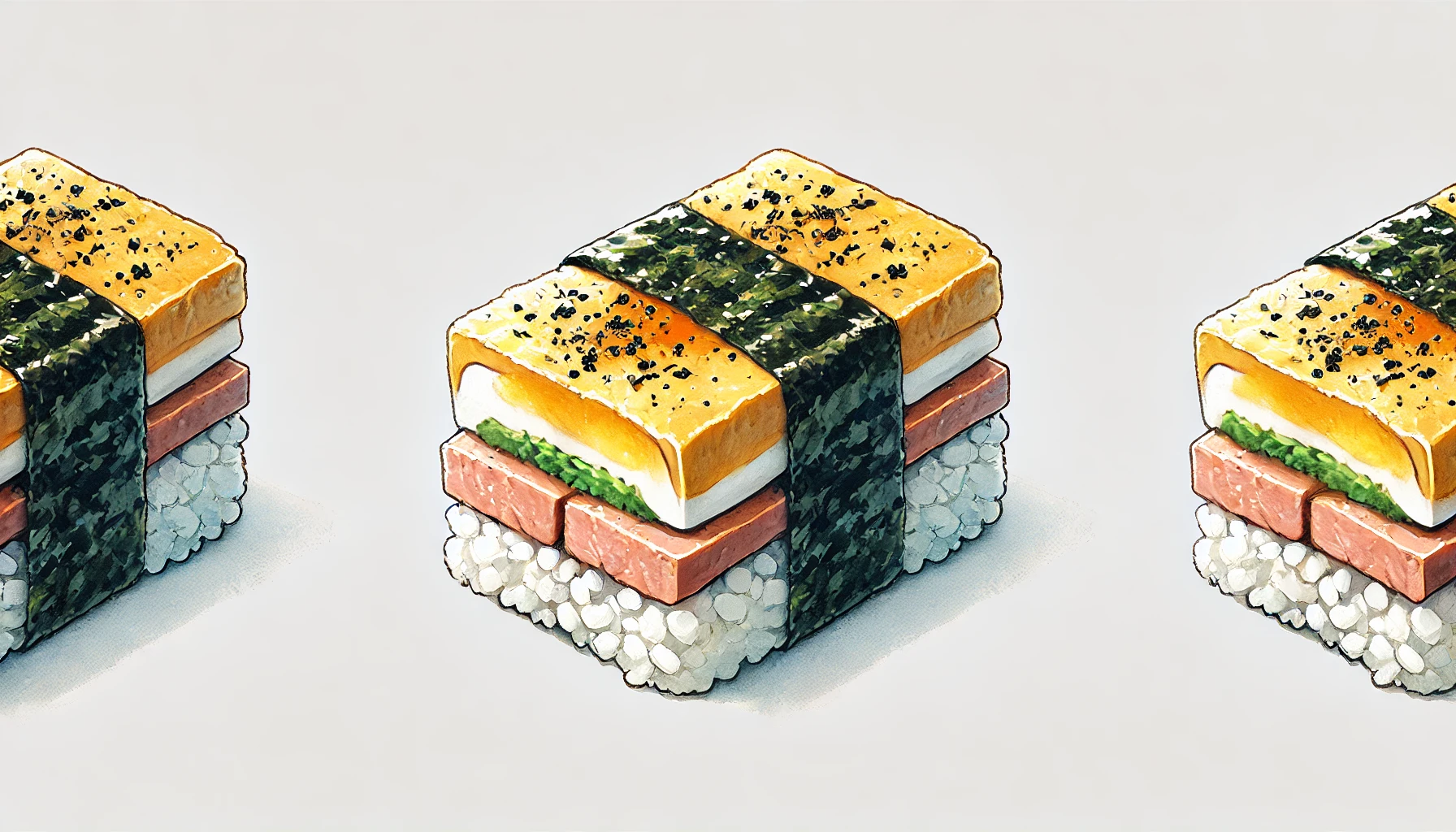
When you think of the blue sea and sky of Okinawa, what flavors come to mind? Perhaps it’s a taste that evokes the refreshing sea breeze, mixed with a sense of nostalgia and warmth. That taste might just be the beloved “Pork and Egg Onigiri.”
Simply hearing the name Pork and Egg Onigiri is enough to bring a smile to the faces of those who have visited Okinawa. And for those who haven’t tried it yet, the intriguing name alone sparks curiosity.
Within this simple snack lies the rich history and culture of Okinawa, as well as the wisdom and warmth of its people. Through this onigiri, you can feel the spirit of Okinawa, a land that overcame the hardships of the post-war era by embracing different cultures and evolving in unique ways.
In this article, we’ll delve deep into the charm of Pork and Egg Onigiri. From its origin story to the reasons it’s cherished by locals and the magical taste that captivates tourists, we’ll uncover it all. We’ll also share authentic recipes you can try at home and tips on how to fully enjoy this treat during your Okinawan travels.
Pork and Egg Onigiri is more than just a snack. It’s an edible cultural heritage that embodies the optimistic spirit of “nankurunaisa” (everything will be alright) and the cooperative ethos of “yuimaru” (helping each other) that define Okinawa.
Through this onigiri, your understanding of Okinawa will deepen, and your love for the island will grow even stronger. You might even find yourself planning your next trip to Okinawa—or perhaps you’ll head straight to the kitchen to make some Pork and Egg Onigiri.
So, why not dive into the world of Pork and Egg Onigiri, filled with the flavors and heart of Okinawa? Let this onigiri be a delicious, warm bridge that connects you with Okinawa.
- Introduction: What is Pork and Egg Onigiri?
- The History of Pork and Egg Onigiri
- The Cultural Significance of Pork and Egg Onigiri
- Simple Recipe for Pork and Egg Onigiri
- Enjoying Pork and Egg Onigiri
- Pork and Egg Onigiri: A Reflection of Okinawan Food Culture
- Q&A
- Summary of the Article
Introduction: What is Pork and Egg Onigiri?
If you’ve ever visited Okinawa or have an interest in Okinawan cuisine, you’ve likely heard of “Pork and Egg Onigiri.” This uniquely named rice ball has become a symbol of Okinawan food culture, beloved by locals and tourists alike.
Pork and Egg Onigiri is exactly what the name suggests: a nourishing snack that combines pork (usually in the form of Spam or similar processed pork) and egg, all wrapped in a rice ball. While the combination might seem simple at first glance, the flavor and satisfaction it offers are exceptional. This delicacy is a product of Okinawa’s warm climate and its rich, unique food culture.
Let’s take a closer look at Pork and Egg Onigiri, exploring its place in Okinawan food culture, its distinct characteristics, and its undeniable appeal.
The Role of Pork and Egg Onigiri in Okinawan Snack Culture
Okinawan food culture has developed in a way that’s distinct from mainland Japan, shaped by its geographical location and historical background. Within this context, Pork and Egg Onigiri is a relatively recent addition, yet it has quickly become a staple in the daily lives of Okinawans.
Characteristics of Okinawan Food Culture
When discussing Okinawan food culture, the concept of “Champuru Culture” is indispensable. “Champuru” is an Okinawan word meaning “mix” or “stir together,” and it reflects the island’s tradition of blending different influences to create something new and uniquely Okinawan.
Okinawan cuisine has been heavily influenced by this Champuru Culture. Traditional food practices from the Ryukyu Kingdom era have evolved through the incorporation of influences from mainland Japan, as well as American culture after World War II, resulting in a distinct culinary evolution.
Pork and Egg Onigiri is a product of this very Champuru Culture. It combines the traditional Japanese concept of onigiri with Okinawa’s beloved ingredients—pork and eggs—and often incorporates elements like Spam, reflecting American influence.
Another key aspect of Okinawan food culture is the “Nucha Culture.” “Nucha” is an Okinawan term for “today,” embodying the philosophy of living each day with care and joy. This mindset is also reflected in the local food culture, where simple, enjoyable snacks and meals are valued.
Pork and Egg Onigiri fits perfectly into this Nucha Culture. It’s easy to prepare, convenient to eat anywhere, and provides a tasty, nutritious meal that suits the busy lives of modern Okinawans. This makes it an ideal snack that can be enjoyed throughout the day, whether you’re in the midst of a busy workday or taking a leisurely break.
The Spread and Popularity of Pork and Egg Onigiri
Several factors have contributed to the widespread popularity of Pork and Egg Onigiri in Okinawa.
First, there’s the perfect balance of convenience and satisfaction. Onigiri is inherently portable and easy to eat anywhere, making it an ideal choice for busy individuals. The combination of pork and egg, both high in nutritional value, ensures that even a small portion can be incredibly satisfying.
Next, the climate of Okinawa plays a role in its popularity. Okinawa enjoys a warm climate year-round, with particularly hot and humid summers. In such weather, people tend to prefer lighter meals, and Pork and Egg Onigiri offers the perfect balance of nutrition and lightness, making it a fitting choice even in the heat.
Additionally, Pork and Egg Onigiri aligns with the Okinawan lifestyle, particularly the practice of “Yukushi,” which refers to a snack taken between meals, either between breakfast and lunch or lunch and dinner. Pork and Egg Onigiri has become an ideal choice for this purpose, providing a convenient, satisfying option for those who need a little something to tide them over.
Furthermore, the snack has gained popularity among tourists as well. For visitors to Okinawa, Pork and Egg Onigiri serves as an easy and accessible way to experience the island’s culinary culture. It’s widely available at convenience stores, supermarkets, and specialty shops, making it a readily accessible taste of Okinawa for tourists.
The convergence of local demand and tourist interest has solidified Pork and Egg Onigiri as a significant element of Okinawan snack culture.
The Distinct Features and Appeal of Pork and Egg Onigiri
The charm of Pork and Egg Onigiri lies in its unique shape, the combination of its ingredients, and its excellent nutritional balance. Let’s explore these features in more detail.
Unique Shape and Ingredients
One of the most notable features of Pork and Egg Onigiri is its appearance. Unlike the typical triangular or cylindrical onigiri found elsewhere in Japan, Pork and Egg Onigiri is often oval or rectangular in shape. This design is intentional, ensuring that the ingredients are well-contained and that the onigiri is easy to eat.
The main ingredients consist of:
1. **Rice**: Usually made from sticky, high-quality varieties like Okinawa-grown Koshihikari or Hitomebore, which hold together well.
2. **Pork (Spam)**: Thin slices of pork, typically seasoned with soy sauce, sugar, and mirin, are stir-fried for flavor. In Okinawa, Spam or similar processed pork products are often used, reflecting American influence.
3. **Egg**: A thin omelette or scrambled eggs are used, adding a soft, rich texture.
These ingredients are wrapped in nori (seaweed), which helps hold everything together and adds a savory flavor.
The arrangement of the ingredients is also distinctive. The rice serves as the base, with layers of pork and egg on top. This ensures that each bite delivers a harmonious blend of flavors, creating a balanced and satisfying taste experience.
Nutritional Balance and Satisfaction
One of the key appeals of Pork and Egg Onigiri is its excellent nutritional balance.
1. **Carbohydrates**: The rice provides a steady source of energy, helping to keep you fueled throughout the day.
2. **Protein**: The pork and egg offer high-quality protein, supporting muscle maintenance and overall bodily repair.
3. **Vitamins and Minerals**: Eggs provide essential B vitamins, while the pork contributes minerals like iron, supporting various bodily functions.
4. **Dietary Fiber**: The seaweed is a good source of dietary fiber, aiding in digestive health.
Thanks to this balance, even a small Pork and Egg Onigiri can provide substantial nutrition and satiety. The high protein content, in particular, helps to keep hunger at bay for longer periods.
Moreover, the combination of flavors is another highlight. The salty richness of the pork, the creamy texture of the egg, and the umami of the seaweed come together in a simple yet profound way, offering a deeply satisfying taste.
Additionally, the portability of Pork and Egg Onigiri adds to its appeal. It can be eaten with your hands, without the need for utensils, making it an ideal snack for busy lifestyles.
These factors combine to make Pork and Egg Onigiri a beloved snack in Okinawa, cherished by both locals and visitors. It’s a unique culinary creation that captures the essence of Okinawan culture and the wisdom of its people.
When you visit Okinawa, be sure to try Pork and Egg Onigiri. By experiencing its appeal firsthand, you’ll gain a deeper understanding of Okinawan food culture and the ingenuity that has gone into creating this delicious snack. Alternatively, making it at home can also be a rewarding experience. Through this simple yet profound snack, you can explore the rich cultural landscape of Okinawa and appreciate the warmth and creativity of its people.
The History of Pork and Egg Onigiri
Pork and Egg Onigiri has become an indispensable part of Okinawa’s culinary identity. By exploring the history of this beloved snack, one can gain a deeper understanding of Okinawan culture and the lives of its people. Let’s journey through the origins of Pork and Egg Onigiri, tracing its development alongside the history of Okinawa itself.
The Origins: Connection to the American Occupation Era
The birth of Pork and Egg Onigiri is closely tied to a significant turning point in Okinawa’s history—the American occupation that followed World War II. This period marked the beginning of a new chapter in Okinawan food culture, influencing the creation of what would become one of its most iconic dishes.
Post-War Okinawa and Food Supply Challenges
In 1945, as World War II came to an end, Okinawa fell under American control. During this time, the people of Okinawa faced severe food shortages. Much of the agricultural land had been destroyed during the war, making it difficult to maintain the traditional diet that Okinawans were accustomed to.
Under these dire circumstances, the food supplies provided by the American military became an essential source of nutrition for the Okinawan people. These rations included ingredients that were previously uncommon in Okinawa. Among these was canned pork—most famously, Spam—which became a crucial source of protein due to its high nutritional value and long shelf life.
The influence of the American military also led to an increase in egg consumption. Before the occupation, eggs were considered a luxury item in Okinawa, rarely eaten on a daily basis. However, with the development of poultry farming under American influence, eggs became more readily available, becoming a more common part of the Okinawan diet.
During this period, Okinawans were driven by necessity to make the most of the limited ingredients available to them, leading to the creation of new culinary practices. It was within this context that the early form of Pork and Egg Onigiri began to take shape.
The Influence of American Culture and Changes in Ingredients
The American occupation period brought significant changes to Okinawan food culture. Traditional Okinawan cuisine began to blend with American food practices, creating a unique culinary fusion.
One of the most impactful influences was the widespread adoption of Spam, a canned pork product. Due to its high protein content, long shelf life, and ease of preparation, Spam quickly became popular among Okinawans. Numerous dishes featuring Spam emerged during this time, and one of these innovations was the precursor to the modern Pork and Egg Onigiri.
The introduction of bread also had a profound impact on Okinawan eating habits. As bread began to replace rice in some meals, new culinary creations were developed. For example, the pork and egg sandwich is often cited as an inspiration for Pork and Egg Onigiri.
Furthermore, various condiments and cooking techniques were introduced to Okinawa through the American military bases. Items like ketchup, mayonnaise, and dishes such as French fries and hamburgers brought new flavors and ideas into Okinawan kitchens.
The fusion of these new elements with Okinawa’s traditional food culture led to the creation of innovative and nutritionally rich dishes like Pork and Egg Onigiri.
Evolution and Integration into Okinawan Food Culture
Since its inception, Pork and Egg Onigiri has evolved and secured its place as a staple in Okinawan food culture. Here, we explore how this simple yet profound snack became deeply ingrained in the daily lives of Okinawans.
From a Homemade Dish to a Popular Snack
The early version of Pork and Egg Onigiri first gained popularity as a homemade dish. In the post-war era, when food was scarce, this dish was a product of ingenuity, using limited ingredients to create a meal that was both nutritious and easy to prepare. It quickly became a household favorite due to its high nutritional value and simplicity.
Initially, the dish consisted of basic ingredients like Spam or fried pork and eggs, used as fillings for rice balls. However, over time, various improvements were made to enhance the flavor and convenience of this snack.
For instance, the arrangement of ingredients was optimized so that all the flavors could be enjoyed in a single bite, and the addition of nori (seaweed) made it easier to transport and eat. These innovations gradually transformed Pork and Egg Onigiri from a humble homemade meal into a widely recognized and beloved snack.
During the late 1960s and 1970s, as Okinawa’s economy began to recover, the restaurant industry also started to flourish. It was during this period that specialized eateries and diners began offering Pork and Egg Onigiri, further solidifying its status as a popular local dish.
Particularly after Okinawa’s reversion to Japan in 1972, the growth of the tourism industry brought greater recognition to Pork and Egg Onigiri as a quintessential “taste of Okinawa.” Many tourists now include it as a must-try item on their culinary itinerary when visiting the island.
Contemporary Significance and Recent Developments
Today, Pork and Egg Onigiri has become an integral part of Okinawan food culture. Let’s take a closer look at its current role and the recent changes it has undergone.
1. **Established as a Daily Snack**
Pork and Egg Onigiri has become deeply embedded in the daily lives of Okinawans. It is enjoyed in various settings, from breakfast and lunchboxes to snacks throughout the day. Its convenience and balanced nutrition have also made it increasingly popular among younger generations, fitting well with the fast-paced lifestyles of today.
2. **A Recognized “Okinawan Gourmet” for Tourists**
For tourists visiting Okinawa, Pork and Egg Onigiri has become one of the must-try local foods. It is frequently highlighted in travel guides and websites, firmly establishing itself as a culinary experience that visitors look forward to during their trips.
3. **Diversification of Sales Channels**
While Pork and Egg Onigiri was once primarily available at specialty shops and diners, it is now sold in a variety of locations.
– **Convenience Stores**: In Okinawan convenience stores, Pork and Egg Onigiri has become a staple item, widely available and easy to purchase.
– **Supermarkets**: It can also be found in the prepared food sections of supermarkets, where it is a regular part of the local diet.
– **Airports and Train Stations**: Packaged versions of Pork and Egg Onigiri are popular as souvenirs, allowing travelers to take a piece of Okinawa with them.
4. **Variety in Recipes**
While the basic ingredients and preparation methods remain consistent, various new versions of Pork and Egg Onigiri have emerged in recent years.
– **Ingredient Variations**: Some recipes use Okinawan pork instead of Spam, or experiment with different ways of cooking the eggs.
– **Innovative Seasoning**: Some versions include mayonnaise or special sauces for added flavor.
– **Size Options**: There are now mini versions as well as larger, more filling options to cater to different appetites.
5. **Adaptations for Health Consciousness**
In response to the growing trend toward healthier eating, new variations of Pork and Egg Onigiri have been developed.
– **Use of Whole Grains**: Some versions use brown rice or mixed grains instead of white rice.
– **Low-Calorie Alternatives**: Ingredients with lower calorie counts are being used to create lighter versions of the dish.
– **Inclusion of Vegetables**: Some recipes incorporate vegetables to boost the vitamin and mineral content.
6. **Popularity on Social Media**
With the rise of platforms like Instagram, aesthetically pleasing Pork and Egg Onigiri has garnered attention online. Specialty shops have begun to focus on presentation and packaging to appeal to a broader audience, contributing to the dish’s popularity among new customer demographics.
7. **Expansion Beyond Okinawa**
Recently, Pork and Egg Onigiri has begun to make its way to major urban centers outside of Okinawa, with specialized shops opening in cities across Japan. Coupled with the growing trend of Okinawan cuisine, Pork and Egg Onigiri is steadily gaining nationwide recognition.
8. **Revival of Home Cooking**
The increase in time spent at home during the COVID-19 pandemic has led to a resurgence of interest in home cooking, including making Pork and Egg Onigiri. Numerous recipes and tutorial videos are now available online, making it easier than ever for people to recreate this Okinawan favorite at home.
Through these ongoing changes and adaptations, Pork and Egg Onigiri continues to evolve while remaining a central part of Okinawan food culture. Far more than just a snack, it symbolizes the history and culture of Okinawa, standing as a culinary emblem that reflects the island’s resilience and creativity.
When you visit Okinawa, be sure to try Pork and Egg Onigiri at various locations to fully experience its diverse flavors. Making it at home can also be a delightful way to connect with Okinawa’s rich culinary heritage. In every bite, you’ll taste the history and ingenuity of the Okinawan people, deepening your appreciation for this unique and vibrant culture.
The Cultural Significance of Pork and Egg Onigiri
Pork and Egg Onigiri is more than just a simple snack. This seemingly modest dish encapsulates the history, culture, and values of Okinawa. Let’s delve deeper into the cultural significance of Pork and Egg Onigiri to uncover the rich meanings and traditions it represents.
The Okinawan Perspective on Food
Okinawan food culture has been shaped by its unique history and geographical conditions. The values and attitudes of the Okinawan people toward food are vividly reflected in Pork and Egg Onigiri.
The Spirit of “Nankurunaisa” and Food Culture
Have you ever heard of the phrase “Nankurunaisa”? It’s an Okinawan expression meaning “it’ll work out” or “everything will be okay.” This phrase embodies the optimistic and flexible mindset of the Okinawan people, a philosophy that has significantly influenced their food culture.
Pork and Egg Onigiri is a perfect manifestation of this “Nankurunaisa” spirit. Consider its origins—born out of necessity during the post-war food shortages, this dish exemplifies the resourcefulness and ingenuity of the Okinawan people as they sought to create nutritious meals from limited ingredients.
This is not just about satisfying hunger; it’s about the resilience and adaptability of the Okinawan people, who found ways to move forward despite adversity. The idea of “we’ll make do, so let’s be creative” is beautifully embodied in the creation of Pork and Egg Onigiri.
This spirit continues to thrive today. For example, the ingredients and preparation methods of Pork and Egg Onigiri have evolved over time, adapting to changing circumstances while always striving for the best possible outcome. This reflects the Okinawan people’s enduring attitude of flexibility and resourcefulness.
Moreover, the “Nankurunaisa” spirit is also evident in how food fosters community bonds. Sharing food has always been an important cultural practice among Okinawans, especially during difficult times. Simple yet nutritious foods like Pork and Egg Onigiri have played a crucial role in sustaining this tradition of sharing.
Even today, it’s common to see Okinawans sharing Pork and Egg Onigiri with family and friends. This practice is a testament to how the “Nankurunaisa” spirit continues to strengthen bonds and create a sense of togetherness through food.
The Importance of Pork and Eggs in Okinawan Culture
The main ingredients of Pork and Egg Onigiri—pork and eggs—hold significant cultural importance in Okinawa. Let’s explore the deep connections the Okinawan people have with these ingredients and their cultural backgrounds.
First, let’s consider pork. In Okinawa, there is a strong cultural emphasis on pork, so much so that it is often referred to as the “pork culture.” The phrase “pork is a walking medicine cabinet” reflects the high nutritional value and health benefits that Okinawans have long attributed to pork.
The roots of this pork culture can be traced back to the Ryukyu Kingdom era. Through trade with China, pig farming techniques were introduced to Okinawa, leading to the widespread practice of pig farming. Over time, pork became a crucial source of protein for Okinawans and was incorporated into a variety of dishes.
One particularly notable aspect is the concept of “using every part of the pig.” From the head to the tail, Okinawans developed the wisdom to utilize every part of the pig, leaving nothing to waste. This reflects the Okinawan people’s deep resourcefulness and their ability to maximize the use of limited resources.
The use of pork (or canned Spam) in Pork and Egg Onigiri is a direct extension of this pork culture. As a convenient and high-protein food, it has become a beloved ingredient in Okinawa.
Next, let’s look at eggs. In Okinawa, eggs are often referred to as “Nuchigusui,” meaning “life medicine,” and have been treasured for their ability to promote health and longevity.
In traditional Okinawan diets, animal protein intake was relatively low, making eggs a precious source of protein. Eggs were recognized for their high nutritional value and were seen as essential for maintaining good health.
For example, during childbirth or recovery from illness, a traditional tonic called “Tamagozake” (an egg mixed with Awamori, an Okinawan spirit) was often consumed for its nourishing properties. This practice highlights the importance placed on eggs for their health benefits.
The inclusion of eggs in Pork and Egg Onigiri reflects this Okinawan egg culture. As a highly nutritious and easily accessible food, eggs are an indispensable part of this dish.
In this way, the two key ingredients of pork and eggs are deeply rooted in Okinawan food culture. By combining these ingredients into a single dish, Pork and Egg Onigiri embodies the essence of Okinawan culinary wisdom and cultural practices.
It’s not just about the nutritional value; Pork and Egg Onigiri represents the deep knowledge and ingenuity of the Okinawan people, who have always sought to make the most of their available resources.
The “Yuimaaru Spirit” and Pork and Egg Onigiri
In Okinawa, there is a term called “Yuimaaru.” This word represents a traditional value of mutual assistance and community support. Understanding the “Yuimaaru Spirit” is key to appreciating the cultural significance of Pork and Egg Onigiri.
The Culture of Shared Meals and “Osusowake”
One of the defining features of Okinawan food culture is the practice of “shared meals,” where food is not eaten alone but enjoyed together with family, friends, or the community. This culture of shared meals has served as a practical expression of the “Yuimaaru Spirit.”
Pork and Egg Onigiri is particularly well-suited to this shared meal culture for several reasons:
1. **Simplicity**: Pork and Egg Onigiri is easy to make and convenient to carry. This allows people to gather and share a meal wherever and whenever they like.
2. **Ease of Sharing**: The shape of onigiri makes it easy to divide and share, perfectly aligning with the practice of “Yuimaaru” or sharing food with others.
3. **Balanced Nutrition**: Pork and Egg Onigiri provides a good balance of carbohydrates, protein, and fats, ensuring that everyone involved in a shared meal gets the necessary nutrition.
4. **Cross-Generational Appeal**: Its flavor and texture appeal to a wide range of ages, from children to the elderly, making it ideal for promoting intergenerational meals.
Additionally, Okinawa has a custom known as “Osusowake,” which involves sharing food with others. This practice is another concrete expression of the “Yuimaaru Spirit.”
Pork and Egg Onigiri is perfectly suited to this custom of Osusowake. Consider the following scenarios:
– Bringing homemade Pork and Egg Onigiri to a neighbor who is hosting unexpected guests.
– Sharing your homemade Pork and Egg Onigiri with colleagues or friends during lunch at work or school.
– Preparing Pork and Egg Onigiri together at a community event and sharing it with all participants.
These actions do more than just distribute food; they strengthen bonds and foster a sense of community. The simplicity and accessibility of Pork and Egg Onigiri make it a key element in sustaining the practice of “Yuimaaru.”
The Role of Pork and Egg Onigiri in the Community
Pork and Egg Onigiri plays a significant role in Okinawan communities, far beyond just providing nutrition. It strengthens bonds, preserves culture, revitalizes regions, and promotes health, all while embodying the “Yuimaaru Spirit.”
1. **Promoting Intergenerational Exchange**
Pork and Egg Onigiri, with its simple preparation and familiar taste, serves as a bridge between generations. It’s not uncommon to see grandparents teaching their grandchildren how to make Pork and Egg Onigiri.
This is more than just passing on cooking skills. Through the process of making Pork and Egg Onigiri, younger generations naturally absorb Okinawan food culture, history, and the values embodied in the “Yuimaaru Spirit.”
2. **Use in Community Events**
Pork and Egg Onigiri is frequently featured in many community events across Okinawa, such as:
– Sales at school sports days or cultural festivals.
– Food stalls at local festivals.
– Snacks provided after community clean-up activities.
By offering Pork and Egg Onigiri at these events, participants share the same food, fostering a sense of unity. The preparation of the onigiri often involves community collaboration, further strengthening communal ties.
3. **Tourism and Regional Revitalization**
In recent years, Pork and Egg Onigiri has gained popularity among tourists as a representative Okinawan snack. This has led to several positive effects:
– **Revitalization of Local Markets and Shopping Districts**: Increased tourist demand for Pork and Egg Onigiri boosts local commerce.
– **Promotion of Local Produce**: Ingredients used in Pork and Egg Onigiri, such as locally sourced pork and eggs, gain wider recognition.
– **Cultural Exchange**: Tourists learn about Okinawan food culture and history through their experience with Pork and Egg Onigiri.
4. **Role as an Emergency Food Supply**
Given Okinawa’s frequent exposure to typhoons and natural disasters, preparedness is key. Pork and Egg Onigiri, with its excellent shelf life and balanced nutrition, is also valued as an emergency food.
Many households and community centers keep stocks of ingredients like canned Spam and dried eggs to prepare Pork and Egg Onigiri in case of disaster. This practice reflects the community’s disaster preparedness, grounded in the “Yuimaaru Spirit.”
5. **Contribution to Health Promotion**
Okinawa is known
for its longevity, but in recent years, lifestyle-related diseases have become a growing concern. Pork and Egg Onigiri contributes to health promotion by offering a convenient way to achieve balanced nutrition.
Many nutritionists and health educators in Okinawa use Pork and Egg Onigiri in their outreach activities. Examples include:
– Offering Pork and Egg Onigiri in school lunches alongside lessons on nutrition.
– Conducting cooking classes for seniors, where participants learn to make Pork and Egg Onigiri.
– Featuring healthier versions of Pork and Egg Onigiri at local health events.
Through these efforts, Pork and Egg Onigiri transcends its role as a food item, becoming a tool for promoting healthy living.
6. **Symbol of Cultural Identity**
For Okinawans, Pork and Egg Onigiri is more than just a meal—it’s a symbol of cultural identity. As a dish that embodies Okinawa’s history and culture, it serves as a nostalgic “soul food” for Okinawans living outside the prefecture or overseas.
At gatherings of Okinawan expatriates, such as those organized by Okinawan associations outside the prefecture, Pork and Egg Onigiri is almost always present. It offers a taste of home, reinforcing cultural identity and providing a shared experience for Okinawans worldwide.
7. **Environmental Considerations and Sustainability**
In today’s world, where environmental consciousness is increasingly important, Pork and Egg Onigiri is also gaining attention as an eco-friendly food choice.
– **Reducing Food Waste**: Pork and Egg Onigiri can be made using leftover rice and vegetables.
– **Minimal Packaging**: Often, Pork and Egg Onigiri is sold with minimal or no packaging.
– **Promoting Local Consumption**: Using locally sourced ingredients helps reduce the environmental impact of transportation.
Thus, Pork and Egg Onigiri functions as a model of sustainable food culture that respects and preserves the environment.
8. **Economic Impact**
Pork and Egg Onigiri also plays a vital role in Okinawa’s economy.
– **Supporting Local Agriculture**: The demand for Pork and Egg Onigiri supports local pork, poultry, and rice farming industries.
– **Creating Small Business Opportunities**: Specialty shops and food trucks dedicated to Pork and Egg Onigiri are creating new business opportunities.
– **Contributing to Tourism**: As mentioned earlier, the popularity of Pork and Egg Onigiri among tourists contributes to regional economic development.
In summary, Pork and Egg Onigiri plays an essential role in Okinawan communities, preserving food culture, promoting intergenerational exchange, revitalizing regions, enhancing health, maintaining cultural identity, supporting the environment, and boosting the economy.
All of these roles are deeply rooted in the “Yuimaaru Spirit.” Through Pork and Egg Onigiri, people continue to support each other, collaborate, and pass down Okinawan culture and values to future generations.
Pork and Egg Onigiri is much more than a simple snack—it’s a vital part of Okinawan life and culture. Its straightforward preparation and familiar taste are imbued with the history, culture, and wisdom of the Okinawan people.
When you visit Okinawa, be sure to try Pork and Egg Onigiri. As you savor each bite, take a moment to appreciate the thought, care, and “Yuimaaru Spirit” that have been infused into this humble dish. It’s not just about enjoying delicious food; it’s about experiencing the heart and soul of Okinawa.
Simple Recipe for Pork and Egg Onigiri
Pork and Egg Onigiri is a quintessential Okinawan snack, cherished for its delightful taste and simplicity. It’s a beloved dish among many, not just for its flavor but also for how easy it is to make. Here, we’ll guide you through a straightforward recipe to create authentic Pork and Egg Onigiri right at home. Whether you’re a seasoned cook or a complete beginner, this recipe will help you recreate the flavors of Okinawa without any trouble. Let’s dive in and enjoy the taste of Okinawa together!
Preparing Ingredients and Tools
First, let’s gather all the necessary ingredients and tools for making Pork and Egg Onigiri. This recipe will yield four onigiri, perfect for sharing or for a quick meal.
List of Essential Ingredients
1. **Rice**: 2 cups (about 300g)
– Ideally, use Okinawan rice or any Japanese short-grain rice with a sticky texture.
2. **Pork**: 150g
– Use thinly sliced pork belly or pork loin.
– For an authentic Okinawan taste, you can also use Spam (pork luncheon meat).
3. **Eggs**: 3 large eggs
4. **Nori (Seaweed)**: 2 sheets
– Use large sheets of roasted nori.
5. **Seasonings**:
– Soy sauce: 2 tablespoons
– Mirin: 1 tablespoon
– Sugar: 1 teaspoon
– Salt: a pinch
– Pepper: a pinch
6. **Vegetable oil**: As needed
7. **Optional**: Green onions, sesame seeds, or other toppings of your choice.
These ingredients can be easily found at most supermarkets. To achieve a more authentic flavor, try to use Okinawan ingredients if possible.
Check Your Cooking Tools
Next, let’s ensure you have all the necessary cooking tools. Basic kitchen utensils will suffice, but having the following items will make the process smoother:
1. **Rice cooker**
– Alternatively, you can use a pot.
2. **Frying pan**
– For cooking the pork and eggs.
3. **Mixing bowl**
– To beat the eggs.
4. **Chopsticks or spatula**
– For cooking and mixing.
5. **Cutting board and knife**
– To cut the pork into suitable pieces.
6. **Onigiri mold (optional)**
– Triangular or cylindrical molds are helpful, but you can shape the onigiri by hand as well.
7. **Plastic wrap**
– For shaping the onigiri.
8. **Kitchen scissors**
– To cut the nori.
These tools are common in most households, so no special equipment is required. Feel free to give it a try even if you’re new to cooking.
Now that everything is prepared, let’s move on to the actual cooking process. Making Pork and Egg Onigiri involves three main steps: 1. Cooking the rice, 2. Preparing the fillings (pork and egg), and 3. Shaping the onigiri. We’ll guide you through each step in detail, so follow along and enjoy making this delicious Okinawan dish.
Step-by-Step Cooking Instructions
Here, we’ll walk you through the detailed steps for preparing Pork and Egg Onigiri. Even if it’s your first time, don’t worry—we’ll break down each step to ensure you can follow along with ease.
Cooking the Pork
Let’s start by preparing one of the key ingredients for the onigiri—the pork.
1. **Preparing the Pork**:
– Cut the pork into strips about 1 cm wide. Be careful not to make the pieces too large, as they can be difficult to fit into the onigiri.
2. **Heating the Frying Pan**:
– Add a small amount of vegetable oil (about 1 tablespoon) to the frying pan and heat it over medium heat.
3. **Stir-frying the Pork**:
– Once the pan is hot, add the pork and stir-fry until the surface changes color.
– Stir occasionally with chopsticks or a spatula to ensure even cooking.
4. **Adding the Seasonings**:
– Once the pork is cooked on the surface, add 1 tablespoon of soy sauce, 1 tablespoon of mirin, and 1 teaspoon of sugar.
– Continue to stir-fry until the pork is well coated with the sauce.
5. **Adjusting the Flavor**:
– Add a pinch of salt and pepper to taste.
– If you prefer a stronger flavor, feel free to season it more heavily.
6. **Cooling the Pork**:
– Once the pork is cooked and the sauce has thickened, remove the pan from heat and let it cool slightly.
Tips:
– Be careful not to overcook the pork, as it can become tough.
– Avoid over-reducing the sauce to prevent it from becoming too salty.
– If using Spam, simply slice it thinly and lightly fry it. No additional seasoning is necessary.
Cooking the Eggs
Next, we’ll prepare the eggs, the other essential filling for our onigiri.
1. **Preparing the Eggs**:
– Crack the eggs into a mixing bowl, add a pinch of salt and pepper, and beat them well.
– Mix gently to avoid creating bubbles.
2. **Preparing the Frying Pan**:
– Wipe the frying pan used for the pork to remove excess oil.
– Add a small amount of fresh vegetable oil (about 1 teaspoon) and heat over medium heat.
3. **Cooking the Eggs**:
– Pour the beaten eggs into the pan once it’s hot, and stir gently with chopsticks or a spatula to create soft, scrambled eggs.
– Cook the eggs until they are slightly underdone and still a bit runny.
4. **Stopping the Cooking Process**:
– As soon as the eggs reach a soft, slightly undercooked consistency, remove the pan from heat.
– The residual heat will finish cooking the eggs, so be sure to stop cooking while they’re still soft.
5. **Cooling the Eggs**:
– Let the eggs cool slightly in the pan. They should remain warm but not hot, so they mix well with the rice without hardening.
Tips:
– Be careful not to overcook the eggs; stop cooking while they are still soft and slightly runny.
– Use medium heat to prevent the eggs from burning.
– Feel free to add green onions or cheese to the eggs for extra flavor.
Shaping the Onigiri
Finally, we’ll assemble the onigiri using the cooked rice and prepared fillings.
1. **Preparing the Rice**:
– Transfer the cooked rice to a large mixing bowl and sprinkle lightly with salt (about 1/2 teaspoon).
– Gently mix the rice with a rice paddle or spoon to evenly distribute the salt.
2. **Mixing in the Fillings**:
– Add the cooked pork and eggs to the rice.
– Gently mix everything together, being careful not to crush the rice grains.
3. **Shaping the Onigiri**:
– Lay out a piece of plastic wrap and place a portion of the rice mixture (about 1/4 of the total) on it.
– Shape the rice into an oval or rectangular form, pressing gently with your hands or using a mold if you have one.
4. **Preparing the Nori**:
– Cut the nori sheets in half lengthwise to wrap the onigiri.
5. **Wrapping the Onigiri with Nori**:
– Wrap the shaped onigiri with a strip of nori, ensuring it covers the rice well.
– To keep the nori crisp, wrap it around the onigiri just before eating.
6. **Finishing Touches**:
– Repeat the process to make four Pork and Egg Onigiri.
Tips:
– Aim for a bite-sized onigiri that’s easy to eat.
– Wrap the nori just before serving to maintain its crunchy texture.
– You can sprinkle sesame seeds or chopped green onions on top for extra flavor.
And that’s it! You’ve just made your very own Pork and Egg Onigiri. With practice, you’ll be able to prepare four onigiri in about 20 minutes. They make a perfect breakfast, lunch, or snack, so don’t hesitate to try making them at home.
Variation Ideas and Tips
Once you’ve mastered the basic recipe, why not experiment with different variations? Pork and Egg Onigiri is incredibly versatile, allowing you to explore a wide range of flavors. Here, we’ll share some ideas for ingredient variations and cooking tips to elevate your onigiri game.
Ingredient Variations
1. **Pork Variations**:
– **Spam**: For a more authentic Okinawan taste, use Spam. Simply slice and lightly fry it for a delicious filling.
– **Char Siu**: For a richer flavor, chop up store-bought char siu (Chinese BBQ pork) and use it as a filling.
– **Bacon**: Chopped bacon adds a smoky flavor that pairs wonderfully with the eggs.
– **Tuna**: For a lighter option, replace the pork with canned tuna for a refreshing taste.
2. **Egg Variations**:
– **Dashi-Maki Tamago**: Use a Japanese-style rolled omelet seasoned with
dashi for a more traditional flavor.
– **Omelet Style**: Add cheese and vegetables to create a Western-style omelet filling.
– **Onsen Tamago**: A soft-boiled onsen egg adds a creamy, rich texture to your onigiri.
3. **Vegetable Additions**:
– **Green Onions**: Finely chopped green onions add a fresh, zesty note.
– **Kimchi**: Chopped kimchi gives your onigiri a spicy kick.
– **Takana**: Pickled mustard greens (takana) add a robust flavor and crunch.
4. **Cheese Options**:
– **Melting Cheese**: Mix in some melting cheese for a creamy, savory taste.
– **Grated Cheese**: Sprinkle grated cheese over the filling for extra richness.
5. **Nori Alternatives**:
– **Lettuce**: Wrap the onigiri in lettuce instead of nori for a crisp, refreshing bite.
– **Shiso Leaf**: Wrapping in shiso leaf adds a fragrant, herbal note.
These variations are easy to try—just mix and match your favorite ingredients with the basic recipe. Creating your own unique Pork and Egg Onigiri can be a fun activity to share with family and friends.
Flavoring with Different Seasonings
Enhance the flavor of your onigiri by experimenting with various seasonings. Here are a few ideas to inspire you:
1. **Japanese Flavors**:
– **Wasabi Soy Sauce**: Mix wasabi with soy sauce for a spicy, sharp Japanese flavor.
– **Yuzu Ponzu**: Add a splash of yuzu ponzu for a citrusy, refreshing taste.
2. **Western Flavors**:
– **Garlic Butter**: Sauté the pork in garlic-infused butter for a rich, aromatic taste.
– **Basil Sauce**: A blend of basil, olive oil, and garlic creates an Italian-inspired filling.
3. **Ethnic Flavors**:
– **Fish Sauce**: A dash of Thai fish sauce (nam pla) gives an umami-rich, exotic flavor.
– **Sweet Chili Sauce**: Use sweet chili sauce for a sweet and spicy Thai twist.
4. **Korean Flavors**:
– **Gochujang**: Stir-fry the pork with gochujang (Korean chili paste) for a spicy kick.
– **Bibimbap Sauce**: Ready-made bibimbap sauce adds a bold, authentic Korean flavor.
5. **Chinese Flavors**:
– **Oyster Sauce**: Cook the pork with oyster sauce for a deep, savory Chinese flavor.
– **Five-Spice Powder**: Add a pinch of Chinese five-spice powder for a fragrant, complex taste.
6. **Okinawan Flavors**:
– **Koregusu**: A few drops of Koregusu (Okinawan chili-infused awamori) add authentic Okinawan heat.
– **Awamori**: Stir-frying the pork with a splash of Awamori (Okinawan liquor) gives a distinctive local aroma.
By experimenting with these seasonings, you can enjoy a variety of global flavors all within the humble Pork and Egg Onigiri. Discover your favorite combinations and create a signature recipe that’s uniquely yours.
Cooking Tips and Troubleshooting
To ensure your Pork and Egg Onigiri turns out perfectly every time, here are some helpful tips and solutions to common problems.
1. **Rice Tips**:
– **Cooking**: Slightly undercooking the rice helps it hold its shape better when mixed with fillings.
– **Temperature**: Shape the onigiri while the rice is still warm for easier handling.
– **Salt**: Adjust the amount of salt in the rice according to the saltiness of the fillings.
Troubleshooting: Rice too sticky?
→ Use slightly less water when cooking the rice or let it steam for a bit longer after cooking.
2. **Pork Cooking Tips**:
– **Cutting**: Cut the pork into bite-sized pieces to prevent the onigiri from falling apart.
– **Heat Control**: Cook the pork quickly over medium heat to retain its juiciness.
Troubleshooting: Pork too tough?
→ Lower the heat and shorten the cooking time to keep the pork tender.
3. **Egg Cooking Tips**:
– **Mixing**: Stir the eggs gently to avoid incorporating air bubbles.
– **Heat Control**: Cook over medium heat and stop cooking while the eggs are still slightly runny.
Troubleshooting: Eggs too firm?
→ Stop cooking earlier and let the residual heat finish the eggs.
4. **Shaping the Onigiri**:
– **Hand Temperature**: Wet your hands slightly to prevent the rice from sticking.
– **Pressure**: Gently press the rice to shape the onigiri without crushing the grains.
Troubleshooting: Onigiri falls apart easily?
→ Use plastic wrap for shaping or finely chop the fillings to help them blend with the rice.
5. **Handling Nori**:
– **Wrapping Time**: Wrap the nori just before serving to keep it crisp.
– **Storage**: Store the nori separately from the rice to avoid sogginess.
Troubleshooting: Nori too soggy?
→ Keep the nori separate until ready to eat and wrap it just before serving.
6. **Adjusting Flavor**:
– **Balance**: Ensure the seasoning of the fillings complements the saltiness of the rice.
– **Tasting**: Sample a small portion before finalizing the onigiri to adjust seasoning if needed.
Troubleshooting: Flavor too mild?
→ Serve with extra soy sauce or dipping sauce on the side for customization.
By following these tips and troubleshooting advice, you’ll soon be making perfect Pork and Egg Onigiri that suit your personal taste.
Finally, Pork and Egg Onigiri are just as delicious when cold, making them ideal for packed lunches or picnics. If you plan to make them ahead of time, store the rice mixture and nori separately, and shape the onigiri just before eating to keep everything fresh.
Pork and Egg Onigiri is a versatile dish that’s both fun to make and a joy to eat. Use this guide as a starting point, and feel free to get creative with your own versions. Whether you’re cooking solo or with friends and family, making Pork and Egg Onigiri is sure to be a delightful experience.
Enjoy the taste of Okinawa and its rich culture as you craft your onigiri. It’s bound to become a new favorite at your dining table!
Enjoying Pork and Egg Onigiri
Pork and Egg Onigiri is a beloved snack in Okinawa, cherished for its delicious taste and convenience. However, there are many ways to enjoy this delightful treat beyond simply eating it. In this section, we’ll explore various methods to elevate your experience with Pork and Egg Onigiri, along with tips on how to savor it during your Okinawan travels.
Recommended Pairings and Ways to Enjoy
While Pork and Egg Onigiri is certainly delicious on its own, pairing it with other foods or beverages can enhance the overall culinary experience. Below are some suggested pairings that complement the flavors of Pork and Egg Onigiri, making your meal even more enjoyable.
Pairing with Traditional Okinawan Beverages
1. **Sanpin Tea (Jasmine Tea)**
Sanpin Tea, a type of jasmine tea popular in Okinawa, pairs beautifully with Pork and Egg Onigiri. The aromatic flavor of the tea perfectly balances the savory taste of the onigiri.
– **Recommended Drinking Method**: Prepare a warm cup of Sanpin Tea and sip it slowly after each bite of Pork and Egg Onigiri. The tea’s fragrance will fill your mouth, enhancing the onigiri’s flavors.
– **Pairing Tip**: The refreshing aroma of Sanpin Tea helps cleanse the palate, cutting through the richness of the pork and egg, allowing you to savor each bite to the fullest.
2. **Hirami Lemon (Shikuwasa) Juice**
Hirami Lemon, also known as Shikuwasa, is a citrus fruit native to Okinawa, and its juice is an excellent complement to Pork and Egg Onigiri.
– **Recommended Drinking Method**: Pour Hirami Lemon juice into a glass with ice, and top it off with sparkling water. Sip it gradually as you enjoy your onigiri.
– **Pairing Tip**: The citrusy acidity of Hirami Lemon juice balances the richness of the onigiri, leaving a refreshing aftertaste. It’s also packed with vitamin C, making it a nutritious addition to your meal.
3. **Awamori**
Awamori, a traditional Okinawan distilled liquor, pairs exceptionally well with Pork and Egg Onigiri.
– **Recommended Drinking Method**: Awamori is typically enjoyed on the rocks, but it can also be diluted with water or served warm. Take small sips of Awamori while slowly eating the onigiri.
– **Pairing Tip**: The deep, aromatic flavors of Awamori enhance the savory richness of the onigiri. The higher alcohol content also helps to cut through the onigiri’s oiliness, providing a balanced tasting experience.
Incorporating Pork and Egg Onigiri into Picnics and Lunches
Thanks to its convenience and excellent shelf life, Pork and Egg Onigiri is perfect for picnics and lunchboxes. Here are some creative ways to enjoy Pork and Egg Onigiri on the go.
1. **Beach Picnic**
There’s nothing quite like enjoying Pork and Egg Onigiri on Okinawa’s beautiful beaches.
– **What to Bring**:
– Pork and Egg Onigiri (2-3 per person)
– A cooler bag
– Bottled tea or water
– A beach mat
– A parasol for shade
– Wet wipes
– **How to Enjoy**:
1. Upon arriving at the beach, set up your parasol to create some shade.
2. Lay out your beach mat to create a comfortable space to relax.
3. After some fun in the water, clean your hands thoroughly.
4. Take the Pork and Egg Onigiri out of the cooler bag and enjoy them while gazing at the ocean.
5. Sip on your tea or water as you slowly savor the onigiri.
– **Tip**: The combination of salty onigiri and the ocean breeze makes for an unforgettable meal. Plus, the salt in the onigiri helps replenish electrolytes after swimming.
2. **Lunch While Sightseeing**
Pork and Egg Onigiri makes a convenient and delicious lunch option while exploring Okinawa’s many attractions.
– **What to Bring**:
– Pork and Egg Onigiri (2-3 per person)
– A bento box
– Mini bottles of Sanpin Tea or Hirami Lemon juice
– Disposable wet wipes
– Chopsticks
– **How to Enjoy**:
1. Find a park or bench near a sightseeing spot.
2. Take out the Pork and Egg Onigiri from the bento box.
3. Enjoy the onigiri alongside your favorite drink.
4. Take in the scenery while slowly savoring your meal.
– **Tip**: Bringing your own lunch can save you time and money, especially when restaurants at tourist spots are crowded or expensive. Plus, you can enjoy a peaceful meal while soaking in the local atmosphere.
3. **Work or School Lunch**
Pork and Egg Onigiri is also an excellent option for lunch at work or school.
– **What to Bring**:
– 2-3 Pork and Egg Onigiri
– A thermos of hot Sanpin Tea
– A lunch box
– A napkin or wet wipe
– **How to Enjoy**:
1. When it’s time for lunch, invite your coworkers or friends to join you in the break area.
2. Take out the Pork and Egg Onigiri from your lunch box.
3. Pour some hot Sanpin Tea from your thermos.
4. Enjoy a leisurely meal while chatting with your colleagues.
– **Tip**: Pork and Egg Onigiri tastes great even when it’s cold, making it an ideal choice for a packed lunch. Since it can be eaten by hand, you won’t need utensils, which adds to its convenience.
By incorporating these ideas, you can make your Pork and Egg Onigiri experience even more enjoyable and practical. Try different methods depending on your location and situation to find your perfect way to enjoy this beloved Okinawan snack.
Experiencing Pork and Egg Onigiri in Okinawa: Must-Visit Spots
One of the highlights of traveling to Okinawa is the opportunity to enjoy authentic local cuisine that you can’t find anywhere else. Pork and Egg Onigiri is no exception. Below, we introduce some of the best places in Okinawa where you can savor the real taste of Pork and Egg Onigiri.
Popular Specialty Shops
1. **Pork Tamago Onigiri Main Store (Naha City)**
Located on Naha’s bustling Kokusai Street, this popular shop is a must-visit.
– **Features**:
– A long-established shop that has preserved its original flavor since its founding.
– Uses Okinawan pork and eggs in its onigiri.
– You can enjoy freshly made onigiri right in the store.
– **Recommended Menu Items**:
– Classic Pork Tamago Onigiri
– Spam Tamago Onigiri (a must-try for Spam lovers)
– Goya Tamago Onigiri (a taste of authentic Okinawan flavor)
– **Access**:
– Located on Kokusai Street, about a 5-minute walk from Makishi Station.
– Open from 8:00 AM to 9:00 PM.
– **Tip**: The shop opens early, making it a convenient stop for breakfast or a quick bite before starting your day.
2. **Omusubi Gombe Okinawa Kokusai Street Store (Naha City)**
Although part of a nationwide chain, this onigiri specialty store offers Okinawa-exclusive menu items.
– **Features**:
– A wide variety of onigiri made with Okinawan ingredients.
– The diverse menu allows you to try different flavors.
– Perfect for takeout, making it easy to grab a quick meal while sightseeing.
– **Recommended Menu Items**:
– Pork Tamago Onigiri (Okinawa-exclusive)
– Goya Champuru Onigiri
– Umi Budo Onigiri (Sea Grapes Onigiri)
– **Access**:
– Located on Kokusai Street, about a 3-minute walk from Makishi Station.
– Open from 7:00 AM to 11:00 PM.
– **Tip**: Enjoy comparing the Okinawa-exclusive items with the standard nationwide menu.
3. **Pork Tamago Onigiri Minato (Naha City)**
This popular local spot is near Naha Port.
– **Features**:
– Offers onigiri featuring fresh seafood, reflecting the port town’s unique character.
– Enjoy the taste of Okinawan sea delicacies alongside your Pork Tamago Onigiri.
– A local favorite, known for its authentic flavors.
– **Recommended Menu Items**:
– Special Pork Tamago Onigiri
– Umi Budo Pork Tamago Onigiri
– Mozuku Pork Tamago Onigiri
– **Access**:
– About a 10-minute walk from Naha Port.
– Open from 6:00 AM to 8:00 PM.
– **Tip**: Since the shop opens early, it’s a great spot to grab a bite before catching a ferry to the nearby islands.
4. **Onigiriya Takara (Miyako Island)**
This beloved local shop on Miyako Island is known for its commitment to local ingredients.
– **Features**:
– Offers onigiri made with locally sourced ingredients from Miy
ako Island.
– Besides Pork Tamago Onigiri, you can also enjoy onigiri featuring other island specialties.
– A popular spot for both locals and tourists alike.
– **Recommended Menu Items**:
– Miyako Island Pork Tamago Onigiri
– Miyako Beef Onigiri
– Miyako Umi Budo Onigiri
– **Access**:
– About a 15-minute drive from Miyako Airport.
– Open from 7:00 AM to 7:00 PM.
– **Tip**: Be sure to stop by during your visit to Miyako Island to experience the island’s unique flavors.
5. **Onigiri Cafe Rikka Rikka (Ishigaki Island)**
Located on Ishigaki Island, this trendy onigiri cafe offers a relaxed, stylish dining experience.
– **Features**:
– Uses ingredients sourced from Ishigaki Island in its onigiri.
– The cafe setting allows you to enjoy your meal in a cozy atmosphere.
– Known for its Instagram-worthy presentation.
– **Recommended Menu Items**:
– Ishigaki Beef Pork Tamago Onigiri
– Mango Onigiri (seasonal)
– Pineapple Onigiri
– **Access**:
– About a 10-minute drive from Ishigaki Port.
– Open from 9:00 AM to 6:00 PM.
– **Tip**: Try their unique onigiri made with local Ishigaki Island produce.
At these specialty shops, you can savor Pork Tamago Onigiri that’s been crafted with unique twists and local ingredients. Whether you’re on Okinawa’s main island or venturing out to Miyako or Ishigaki Island, you’ll discover diverse and delicious variations of this beloved snack.
Guide to Buying Pork and Egg Onigiri at Local Supermarkets
Another great way to enjoy authentic Pork and Egg Onigiri during your Okinawa trip is by purchasing it from local supermarkets. This approach allows you to experience what the locals eat daily, offering a deeper understanding of Okinawan food culture. Here’s a guide to help you navigate your purchase of Pork and Egg Onigiri at local supermarkets.
1. **San-A**
The largest supermarket chain in Okinawa, San-A offers a wide selection of local products.
– **Features**:
– Most locations have a deli section where you can find freshly made Pork and Egg Onigiri.
– The use of local ingredients ensures an authentic taste.
– Prices are generally reasonable.
– **Recommended Products**:
– Handmade Pork Tamago Onigiri
– Spam Tamago Onigiri
– Goya Champuru Onigiri
– **Shopping Tips**:
– Visit in the morning or around lunchtime, as popular items may sell out quickly.
– Combine your purchase with other Okinawan delicacies from the deli section for a varied meal experience.
2. **Ryubo Store**
A supermarket chain based mainly in Naha City, Ryubo is known for its local focus.
– **Features**:
– A wide variety of Okinawan ingredients and ready-to-eat foods.
– Popular for its original Pork and Egg Onigiri recipes.
– Some stores offer freshly made onigiri.
– **Recommended Products**:
– Ryubo’s Special Pork Tamago Onigiri
– Pork Tamago Onigiri with Greens
– Fusion-style Mentaiko Pork Tamago Onigiri
– **Shopping Tips**:
– Avoid peak shopping times to enjoy a relaxed shopping experience.
– Consider picking up some Okinawan snacks or drinks to complement your onigiri.
3. **Town Plaza Kanehide**
With locations throughout Okinawa, Kanehide offers products tailored to regional tastes.
– **Features**:
– Regional specialties are highlighted in their product offerings.
– The deli section offers a variety of onigiri.
– Some locations offer made-to-order onigiri.
– **Recommended Products**:
– Kanehide’s Special Pork Tamago Onigiri
– Spicy Pork Tamago Onigiri with Island Chili
– Mozuku Pork Tamago Onigiri
– **Shopping Tips**:
– Each store has different offerings, so it’s worth visiting multiple locations.
– Ask the deli staff for recommendations or the day’s best-selling items.
4. **MaxValu**
A nationwide chain, MaxValu in Okinawa combines national quality standards with local flair.
– **Features**:
– A balance of quality control and regional product offerings.
– Pork Tamago Onigiri is available in the deli section.
– Some locations are open 24 hours, allowing you to purchase onigiri at any time.
– **Recommended Products**:
– MaxValu Okinawa Limited Pork Tamago Onigiri
– Mini Pork Tamago Onigiri (perfect for tasting a variety of flavors)
– Seasonal Pork Tamago Onigiri (varies by season)
– **Shopping Tips**:
– Stores near tourist attractions often carry packaged products perfect for souvenirs.
– Consider signing up for a loyalty card, which can be used on future trips to Okinawa.
General Tips for Buying Pork and Egg Onigiri at Local Supermarkets:
1. **Check Freshness**:
– Always check the production date on the packaging and select the freshest onigiri available.
– Pay attention to the appearance and smell to ensure freshness.
2. **Compare Prices**:
– Prices may vary between stores, so it’s worth comparing to find the best deal.
3. **Observe Locals**:
– Popular items that locals frequently purchase are likely to be delicious. Follow their lead when choosing your onigiri.
4. **Take Advantage of Samples**:
– Some stores offer samples. If available, try them to decide which onigiri to buy.
5. **Ask Staff for Help**:
– Don’t hesitate to ask store staff if you have any questions. Okinawan people are known for their hospitality and will gladly assist you.
6. **Think About Pairings**:
– Pair your Pork and Egg Onigiri with other Okinawan side dishes or drinks for a more satisfying meal.
7. **Pay Attention to Storage**:
– If you don’t plan to eat the onigiri right away, store it properly using a cooler bag, especially in Okinawa’s warm climate, to prevent spoilage.
Purchasing Pork and Egg Onigiri from local supermarkets allows you to experience Okinawa’s everyday food culture, different from the offerings at tourist-oriented shops. It’s also a budget-friendly option during your travels.
As you explore different areas of Okinawa, be sure to visit local supermarkets to discover unique variations of Pork and Egg Onigiri. Each location might offer something new and surprising, adding to your culinary adventure. Then, take your onigiri to a nearby park or beach and enjoy it while admiring the beautiful Okinawan scenery—an experience that will surely become a cherished memory of your trip.
Through Pork and Egg Onigiri, you’ll gain a deeper, more intimate understanding of Okinawan food culture. The taste and experience will undoubtedly become an unforgettable part of your Okinawa journey.
Pork and Egg Onigiri: A Reflection of Okinawan Food Culture
Pork and Egg Onigiri is much more than just a snack; it encapsulates the essence of Okinawa’s rich food culture and history. As we reflect on what we’ve discussed so far, let’s summarize the unique appeal and significance of Pork and Egg Onigiri, reaffirming its importance in Okinawan culinary traditions.
Revisiting the Appeal of Pork and Egg Onigiri
The charm of Pork and Egg Onigiri lies not only in its flavor but also in its deep connection to Okinawa’s history, culture, and the wisdom of its people. Here, we’ll revisit the key aspects that make Pork and Egg Onigiri so special and explore how these characteristics have developed over time.
Unique Flavor and Texture
The most striking feature of Pork and Egg Onigiri is its distinctive taste and texture.
1. **The Umami of Pork**:
Pork holds a significant place in Okinawan cuisine, and the umami-packed Pork and Egg Onigiri is a perfect representation of this. The rich, savory taste of pork elevates the entire onigiri, offering a quintessential Okinawan experience in every bite.
2. **The Creaminess of Egg**:
The soft, creamy texture of the semi-cooked egg adds a delightful contrast to the savory pork. The harmony between the salty pork and the smooth egg creates a balanced flavor profile that captivates the palate.
3. **Perfect Pairing with Rice**:
Using Okinawan or sticky Japanese rice ensures that the flavors of the ingredients are well absorbed, creating a cohesive taste experience. The combination of the rice’s texture with the fillings offers a satisfying bite each time.
4. **The Aroma of Nori**:
Wrapping the onigiri in nori (seaweed) adds a toasty, fragrant layer to the flavor, enhancing the overall taste while also improving its portability. This makes it a practical and enjoyable meal, wherever you are.
These elements come together to make Pork and Egg Onigiri more than just a simple snack—it’s a uniquely Okinawan delicacy with a complex and captivating flavor.
Convenience and Nutritional Balance
Another significant appeal of Pork and Egg Onigiri is its convenience and excellent nutritional balance.
1. **Portability**:
Its compact shape and handheld convenience make Pork and Egg Onigiri an ideal food for eating on the go. It’s perfect for a quick snack while sightseeing or during a busy day.
2. **Shelf Life**:
When stored properly, Pork and Egg Onigiri can stay delicious for several hours, making it a great choice for lunchboxes or picnics.
3. **Nutritional Balance**:
With a balanced mix of carbohydrates (rice), protein (pork and egg), and vitamins and minerals (nori), this onigiri offers a wholesome meal in one convenient package.
4. **Energy Boost**:
Providing just the right amount of calories, Pork and Egg Onigiri is an excellent source of energy for active days spent exploring or working.
This combination of convenience and nutritional value makes Pork and Egg Onigiri a staple in the diets of both locals and tourists alike, fitting perfectly into modern, busy lifestyles.
Cultural Significance
Pork and Egg Onigiri is not just a food; it carries deep cultural significance.
1. **Reflection of History**:
Born during the post-war era of food shortages and shaped by American cultural influence, yet deeply rooted in traditional Okinawan ingredients, Pork and Egg Onigiri embodies Okinawa’s modern history.
2. **Symbol of “Champuru Culture”**:
The fusion of traditional Japanese onigiri with Okinawan ingredients and American-influenced foods like Spam represents the “champuru” (mixed) nature of Okinawan culture, highlighting its unique ability to blend and adapt.
3. **Embodiment of the “Nankurunaisa” Spirit**:
The resourcefulness in creating a nutritious meal from limited ingredients reflects the Okinawan “nankurunaisa” spirit—an optimistic belief that everything will work out.
4. **Expression of Community Bonds**:
The tradition of sharing food like Pork and Egg Onigiri with family and friends reflects the Okinawan spirit of “yuimaaru,” or mutual support and community solidarity.
In this way, Pork and Egg Onigiri can be seen as an “edible cultural heritage” that encapsulates the history and culture of Okinawa.
The Role of Pork and Egg Onigiri as a Gateway to Understanding Okinawan Culture
Pork and Egg Onigiri serves as an important entry point for understanding Okinawan culture. Let’s explore why this dish is so significant in deepening one’s appreciation of Okinawan traditions and how it can open the door to a broader cultural understanding.
Understanding Culture Through Food
Food is one of the most direct ways to connect with a region’s culture, history, and way of life. Through Pork and Egg Onigiri, one can gain insight into various aspects of Okinawan culture:
1. **Okinawan Ingenuity in Ingredient Selection**:
The choice of pork and eggs—nutrient-rich and accessible ingredients—reflects the wisdom and resourcefulness of the Okinawan people. In an environment where resources were limited, Pork and Egg Onigiri represents a solution to the challenge of creating a balanced meal.
2. **Cultural Fusion in Cooking Methods**:
The blending of traditional Japanese onigiri with Spam, influenced by American culture, showcases Okinawa’s “champuru” approach to cultural integration. This ability to blend different influences is a key aspect of Okinawan history and character.
3. **Okinawan Values Reflected in Eating Habits**:
The ease of sharing and consuming Pork and Egg Onigiri embodies the Okinawan values of “yuimaaru” (helping each other) and “nankurunaisa” (an optimistic outlook). Through these eating habits, one can glimpse the values and philosophies that shape Okinawan life.
4. **Understanding the Natural Environment**:
The ingredients and cooking methods used in Pork and Egg Onigiri are well-suited to Okinawa’s climate and geography. For example, the use of preserved ingredients reflects the challenges of food preservation in Okinawa’s subtropical climate.
The Connection Between Tourism and Culinary Culture
Pork and Egg Onigiri also plays a vital role in linking Okinawan tourism with its culinary traditions.
1. **Experiencing Authentic Okinawan Culture**:
For tourists, eating Pork and Egg Onigiri is one of the easiest and most direct ways to experience the essence of Okinawa. The flavors, textures, and the context in which it’s eaten all embody the spirit of Okinawa.
2. **Connecting with the Local Community**:
Buying Pork and Egg Onigiri from local supermarkets or specialty shops allows tourists to engage with the everyday life of the region, offering a cultural experience that goes beyond just visiting tourist spots.
3. **Creating Opportunities for Cultural Exchange**:
Pork and Egg Onigiri can serve as a conversation starter, leading to deeper cultural exchanges. Asking locals about the history or preparation of the dish can open doors to learning more about Okinawa.
4. **Creating Memorable Travel Experiences**:
The experience of eating Pork and Egg Onigiri—whether it’s the taste, the setting, or the company—often leaves a lasting impression. This sensory experience becomes a cherished memory of one’s trip to Okinawa.
Sparking Interest in Okinawan Culture
Pork and Egg Onigiri can also serve as a “gateway” to a broader interest in Okinawan culture.
1. **Culinary Curiosity**:
Tasting Pork and Egg Onigiri can ignite an interest in other Okinawan dishes, leading to a deeper appreciation of Okinawa’s rich culinary heritage.
2. **Historical Awareness**:
Learning about the origins of Pork and Egg Onigiri can spark curiosity about Okinawa’s post-war history, including the American occupation and its lasting impacts.
3. **Linguistic Interest**:
The name “Pork Tamago” itself reflects the linguistic blend of Japanese and English in Okinawa. This might encourage further exploration of Okinawan dialects and language culture.
4. **Interest in Daily Life and Values**:
Understanding that Pork and Egg Onigiri is a part of everyday life in Okinawa can lead to a broader interest in the daily practices, habits, and values of Okinawan people.
In this way, Pork and Egg Onigiri serves as a crucial entry point for exploring Okinawan culture. Its accessibility and appeal make it an inviting way for many people to engage with Okinawan traditions, from which interest can naturally expand to other cultural aspects.
Understanding Okinawan culture through Pork and Egg Onigiri is not just about learning the history of a food item; it’s about gaining insights into Okinawa’s history, culture, daily life, and values. This understanding fosters empathy and respect for different cultures, enriching one’s worldview.
Whether you have the opportunity to visit Okinawa or not, I encourage you to try making Pork and Egg Onigiri at home. In doing so, you’ll experience Okinawan ingredients, cooking methods, and flavors firsthand. Sharing the onigiri with family or friends allows you to experience the Okinawan “yuimaaru” spirit in your own home.
Pork and Egg Onigiri is not only a representative dish of Okinawan cuisine, but it also serves as a gateway to a deeper understanding of Okinawan culture. I hope that this small but significant onigiri will inspire you to explore and appreciate the richness and depth of Okin
awa’s culture.
As you enjoy this culinary journey, may it spark a desire to visit Okinawa, deepen your cultural understanding, and create meaningful connections through the shared experience of food. Pork and Egg Onigiri is more than just a tasty treat—it’s a bridge connecting you to the heart of Okinawa.
Q&A
What is the origin of Pork Tamago Onigiri?
The origin of Pork Tamago Onigiri dates back to the post-World War II period during the American occupation of Okinawa. Amid food shortages, the people of Okinawa used their ingenuity to create this dish, utilizing Spam (canned pork) and eggs provided by the U.S. military. It is a prime example of “Champuru culture,” a blend of traditional Japanese onigiri with ingredients influenced by American cuisine.
What are the basic ingredients of Pork Tamago Onigiri?
The basic ingredients of Pork Tamago Onigiri are rice, pork (or Spam), eggs, and nori (seaweed). For seasoning, soy sauce, mirin, sugar, salt, and pepper are used. The pork is usually thinly sliced pork belly or loin, and the eggs are cooked to a soft, semi-set consistency. These ingredients are mixed with freshly cooked rice and wrapped in nori to create the final onigiri.
What is the cultural significance of Pork Tamago Onigiri?
Pork Tamago Onigiri is a symbol of Okinawa’s food culture. Its cultural significance includes representing Okinawa’s “Champuru culture,” embodying the “Nankurunaisa” spirit (the belief that everything will work out), and reflecting the “Yuimaaru” spirit (mutual support and cooperation). Additionally, it serves as a living reflection of Okinawa’s modern history and plays a role in strengthening community bonds. Through this onigiri, one can gain insight into Okinawa’s history, culture, and values.
What are some recommended ways to enjoy Pork Tamago Onigiri in Okinawa?
There are several recommended ways to enjoy Pork Tamago Onigiri in Okinawa. First, you can experience the authentic taste at specialty shops along Kokusai Street in Naha City. Alternatively, purchasing one from a local supermarket and enjoying it at a beautiful beach or park is a fantastic experience. Pairing it with traditional Okinawan drinks like Sanpin-cha (jasmine tea) or Hirami lemon (Shikuwasa) juice enhances the Okinawan flavor experience. If you visit the outlying islands, searching for unique variations of Pork Tamago Onigiri specific to each island can be an enjoyable adventure.
What are some ways to customize Pork Tamago Onigiri?
There are many ways to customize Pork Tamago Onigiri. For variety, you can replace Spam with ingredients like char siu or tuna, or use different egg preparations such as dashimaki tamago (Japanese rolled omelette) or onsen tamago (soft-cooked egg). You can also add vegetables like chopped green onions, kimchi, or takana (pickled mustard greens) to change the flavor. Experimenting with seasonings can create new tastes: try wasabi soy sauce or yuzu ponzu for a Japanese twist, or garlic butter and basil sauce for a Western flair. Wrapping the onigiri in lettuce or shiso leaves instead of nori offers a fresh texture and flavor variation.
Summary of the Article
Pork Tamago Onigiri is widely loved as a representative snack of Okinawan cuisine. Its origins trace back to the post-World War II era during the American occupation, born out of necessity during a time of food scarcity. The combination of pork (or Spam) and eggs as the main ingredients makes it a symbol of Okinawa’s “Champuru culture,” where diverse influences are blended together.
In this article, we have explored the historical background of Pork Tamago Onigiri, its cultural significance, how to make it, various ways to customize it, and the best ways to enjoy it in Okinawa. Beyond being just a snack, Pork Tamago Onigiri embodies the Okinawan spirit of “Nankurunaisa” and the community-oriented “Yuimaaru” ethos.
We also suggested ways to enjoy Pork Tamago Onigiri during an Okinawa trip, such as visiting specialty shops in Naha City or purchasing it from local supermarkets to enjoy at a beach picnic. Pairing it with Sanpin-cha or Hirami lemon juice adds a uniquely Okinawan touch to the experience. We also touched on the rich possibilities for customizing the onigiri, whether through different ingredients or seasonings, which can be a fun way to experiment when making it at home.
Finally, we emphasized how Pork Tamago Onigiri serves as an entry point for understanding Okinawan culture. Through this single dish, you can connect with Okinawa’s history, culture, and the values of its people, leading to a deeper appreciation of the region.
Pork Tamago Onigiri offers a valuable experience and learning opportunity, whether for tourists visiting Okinawa or those interested in Okinawan culture. It’s highly recommended to try it during your trip to Okinawa, or even to make it at home. Through Pork Tamago Onigiri, we hope you can gain a deeper understanding and appreciation of the rich cultural heritage of Okinawa.


コメント