
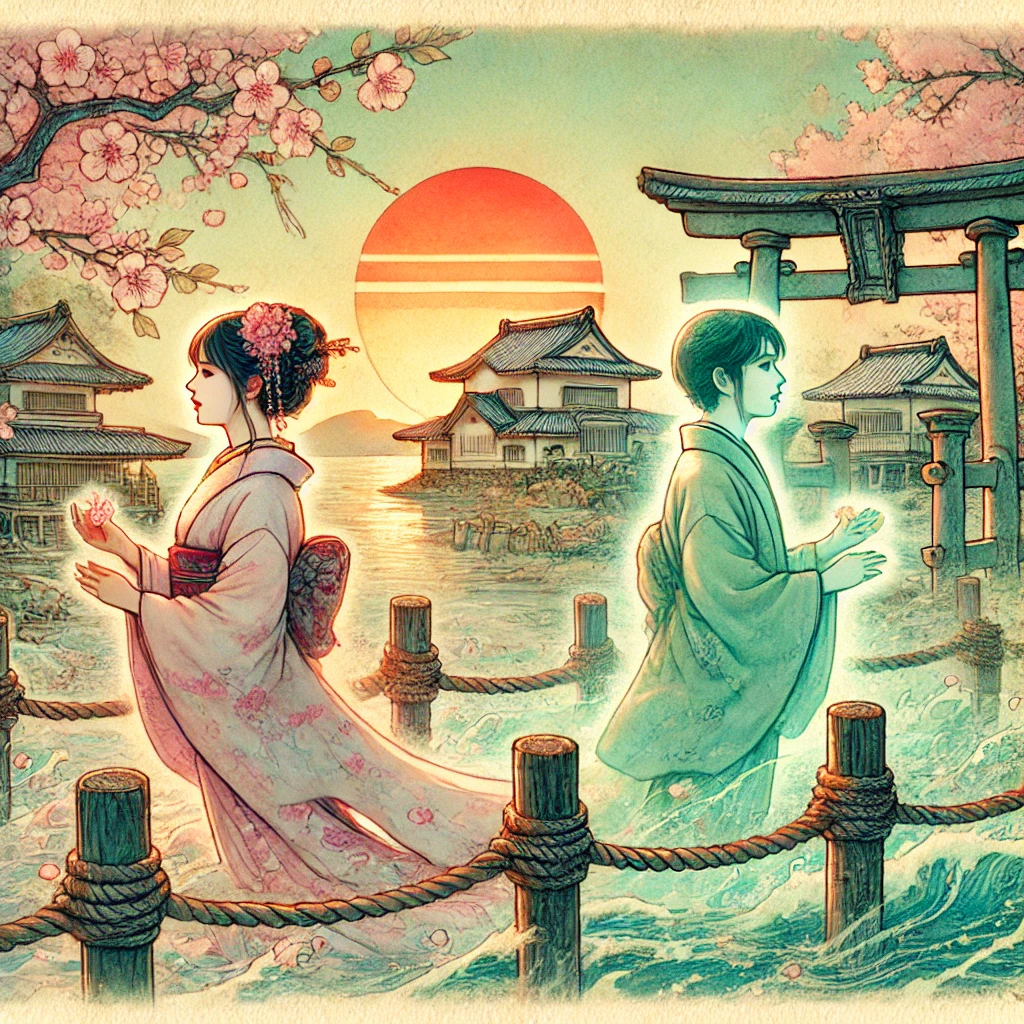
「Unable to Be with the One You Love」—this profound pain that many of us have experienced at least once in our lives is eloquently depicted in the sad legend of “The Curse of Seafar and Yunanzu” from Okinawa. The tragic fate of these two individuals, who had to suppress their emotions and give up on their loved ones to meet societal expectations, resonates deeply with our modern hearts.
This story is not merely a tale of tragic love. It weaves together universal themes that we face daily, such as the conflict between social norms and personal feelings, the inevitability of fate, and the power of words. It also reflects the spirituality, culture, and traditions of the Okinawan people, and the struggles of young people caught between these values and modern ideals.
What can we learn from the tragedy of Seafar and Yunanzu? Their story offers insights into balancing individual freedom with social stability, harmonizing tradition with modernity, and the importance of living true to one’s emotions. These themes prompt us to reflect on our own lives in today’s society.
Finding universal lessons in ancient legends—by listening to the wisdom of our ancestors, we can explore our own paths in life. The story of Seafar and Yunanzu may serve as a guide, illuminating the inner workings of the modern heart. As we follow their forbidden love, we too might confront our own lives and choices.
- “The Curse of Seafar and Yunanzu – A Tragic Legend of Forbidden Love”
- A Warning Against Forbidden Love
- Fate and Destiny
- Beliefs in Spirits and the Power of Curses
- Real Events and Folklore
- Lessons and Impact on Modern Society
- Q&A
- Summary
“The Curse of Seafar and Yunanzu – A Tragic Legend of Forbidden Love”
Long ago, in a small village in Okinawa, there lived a beautiful girl named Yunanzu. She was the most beautiful girl in the village, known for her kind heart and clear eyes. Yunanzu had a childhood friend and fiancé named Seafar. They were deeply in love and eagerly looked forward to their wedding day, blessed by everyone in the village.
However, fate subjected them to a cruel trial. One day, a young samurai visited the village and fell in love with Yunanzu at first sight. This samurai, endowed with power and wealth, persistently proposed to her. Despite Yunanzu’s repeated rejections, he did not give up.
The village elders feared that incurring the samurai’s wrath would endanger the village, and they pressured Yunanzu to accept his proposal. Despairing, Yunanzu reluctantly agreed to marry the samurai to protect the villagers.
Seafar, devastated by losing his beloved, left the village to train in martial arts. Meanwhile, Yunanzu endured an unhappy marriage with the samurai.
Years later, Seafar returned to the village as a distinguished warrior. When he and Yunanzu reunited, their strong love rekindled. However, Yunanzu now had a husband, and their love became a forbidden affair.
Secretly, they continued to meet, but eventually, the husband found out. Enraged, he whipped Yunanzu and challenged Seafar to a duel. After a fierce battle, Seafar defeated the husband but sustained fatal injuries himself.
Yunanzu, mourning the loss of both men she loved, took her own life. The villagers grieved their tragic end and held ceremonies to honor their spirits.
However, Yunanzu’s spirit could not find peace. It is said she left a curse, lamenting that her love had led to the deaths of both men. “Those who indulge in forbidden love like mine will meet an unhappy end,” she warned.
The villagers, fearing Yunanzu’s curse, refrained from forbidden love. Since then, the sad tale of Seafar and Yunanzu has been passed down as a cautionary tale among the villagers, serving as a warning to young lovers.
A Warning Against Forbidden Love
The Conflict Between Social Norms and Personal Feelings
The Gap Between Social Expectations and Personal Desires
In traditional Okinawan society, fulfilling the expectations of family and village often took precedence over personal romantic feelings. Young people were expected to choose their marriage partners according to the wishes of their parents and elders, rather than following their own hearts. The tragedy of Seafar and Yunanzu emerged precisely from the gap between societal expectations and personal desires.
Although they deeply loved each other, Yunanzu was betrothed to the samurai, and their love was forbidden by village laws. They struggled with the conflict between living true to their feelings and fulfilling their roles as expected by society. This gap between personal desires and social expectations remains a universal issue that many face today. The story of Seafar and Yunanzu perhaps urges us to listen to our hearts.
The Struggles of Those Bound by Norms
Traditional social norms have often restricted people’s actions and deprived them of personal freedom. The love between Seafar and Yunanzu was forbidden by village rules. Despite their love, they were bound by social norms, unable to be true to their feelings. This kind of bondage by norms continues to cause suffering in modern society.
For example, young people who strive to be with their loved ones despite family opposition echo the story of Seafar and Yunanzu. The struggle of being unable to live authentically due to societal norms is a timeless theme. This story teaches us the importance of facing ourselves by portraying the struggles of those bound by norms.
The Heart Torn Between Love and Duty
The Inner Turmoil Between Loving Someone and Fulfilling Social Responsibilities
Seafar and Yunanzu were torn between their deep love for each other and their social responsibilities. Yunanzu accepted marriage to the samurai to protect the village, yet she could not forsake her love for Seafar. Seafar, on the other hand, was anguished by losing Yunanzu and driven by a sense of duty to protect her through his martial training.
Such emotional turmoil between loving someone and fulfilling social responsibilities is a universal experience. Many people today face similar dilemmas, such as sacrificing their dreams for their families or balancing work and relationships. The story of Seafar and Yunanzu resonates with readers by depicting these universal emotional struggles.
Self-Sacrifice and Regret
Yunanzu sacrificed her happiness to protect the villagers by marrying the samurai. This act of self-sacrifice stemmed from her deep love for Seafar and her sense of responsibility. However, this decision brought her profound regret. When her love with Seafar rekindled upon their reunion, Yunanzu likely regretted her choice.
Feelings of self-sacrifice and regret are common in modern society. People often sacrifice their dreams for their families and later question if their decision was right. The story of Yunanzu portrays these universal emotions, prompting readers to reflect on their own lives and decisions.
Fate and Destiny
The Existence of Inescapable Fate Beyond Human Control
Resignation to the Inevitability of Fate
The tragic tale of Seafar and Yunanzu suggests the presence of a fate that cannot be altered by human power. Despite their deep love, external factors such as village laws and Yunanzu’s engagement to the samurai tore them apart, highlighting the inescapability of their fate. This sense of resignation to the inevitability of fate is deeply rooted in the psyche of the Okinawan people.
They accept that there are events in life beyond their control and possess the strength to surrender to destiny. In modern society, we too face unexpected occurrences such as illness, accidents, and heartbreak. The story of Seafar and Yunanzu teaches us the importance of accepting the inevitability of fate with resignation.
The Absurdity and Transience of Life
The tragic end of Seafar and Yunanzu underscores the absurdity and transience of life. Despite their love, they were separated and lost their lives due to an irrational fate, highlighting the absurdity of existence. Their sudden deaths also reflect the fleeting nature of human life.
Okinawans deeply understand life’s absurdity and impermanence. They accept that life includes irrational events and that life is fragile, holding the wisdom to live each day to the fullest. In modern society, we too face unexpected separations and failures. The story of Seafar and Yunanzu teaches us to accept life’s absurdities and impermanence and to cherish the present moment.
Acceptance of Tragic Fate
Embracing Tragedy as Destiny
The tragic conclusion of Seafar and Yunanzu’s story reflects the Okinawan mindset of embracing tragedy as destiny. They believe that the doomed love between the two was unavoidable and possess the strength to accept such fate. This mindset is deeply intertwined with Okinawa’s historical background.
Okinawa has historically faced many hardships, including war, poverty, and discrimination. These experiences have perhaps nurtured a mindset among Okinawans to accept tragedy as destiny. In modern society, we too encounter unavoidable sorrows. The story of Seafar and Yunanzu teaches us the importance of accepting tragedy as fate and finding the strength to move forward.
The Strength to Endure Hardships
Despite being buffeted by fate, Seafar and Yunanzu remained steadfast in their love until the end. They faced challenges such as village laws and Yunanzu’s engagement to the samurai but never gave up on their love. This strength to endure hardships is deeply rooted in the Okinawan psyche.
The people of Okinawa have endured many hardships historically, yet they have the resilience to overcome them. They possess the wisdom to persist in the face of suffering without losing hope. In modern society, we face various difficulties. The story of Seafar and Yunanzu teaches us the importance of having the strength to endure hardships.
Beliefs in Spirits and the Power of Curses
Faith in Spirits That Continue to Exist After Death
Ancestor Worship and Coexistence with Spirits
Okinawa has a deep-rooted belief in spirits that continue to exist after death. The story of Seafar and Yunanzu suggests that their spirits remain in the villagers’ memories even after their deaths, which is closely related to the traditional practice of ancestor worship in Okinawa.
Okinawans believe that the spirits of deceased ancestors watch over and guide their descendants. They cherish their ancestors’ spirits and have customs such as Obon and Higan to honor them. The story of Seafar and Yunanzu highlights the importance of ancestor worship. In modern society, losing loved ones reminds us of the significance of carrying their memories and moving forward with their spirit in our hearts.
Interaction Between the Living and the Spirit World
The story of Seafar and Yunanzu implies that their spirits interact with the villagers even after death. Okinawans believe in a close connection between the living world and the spirit world. They sometimes communicate with the deceased through spiritual mediums known as “yuta.”
This interaction between the living and the spirit world is a distinctive feature of Okinawan spirituality. They recognize and respect the existence of an invisible world. The story of Seafar and Yunanzu teaches us the importance of this interaction. It reminds us to cherish the thoughts of the deceased and use them as a guide for living.
The Fearsome Power of Curses
The Belief in the Spiritual Power of Words and the Fear of Curses
In the story of Seafar and Yunanzu, the curse left by Yunanzu significantly impacts the villagers. In Okinawa, there is a belief in “kotodama,” the spiritual power of words. Words are thought to have the power to bring about both good and bad events.
Curses, due to their fearsome power, instill a sense of fear in people. The story of Seafar and Yunanzu, by depicting the fear of curses, illustrates the significant power of words. In modern society, we must also be aware of the power of words and avoid saying things that can hurt others or bring about curses.
Customs and Rituals to Avoid Curses
While fearing the power of curses, Okinawans also have various customs and rituals to avoid them. For instance, placing shisa statues at entrances or sprinkling purifying salt to ward off evil spirits.
In the story of Seafar and Yunanzu, it is suggested that villagers performed various rituals to protect themselves from their curse. Such customs and rituals bring peace of mind. In modern society, we have various practices to find peace of mind. The story of Seafar and Yunanzu teaches the importance of these customs and rituals.
Real Events and Folklore
Occurrence of Similar Tragic Love Stories
Tragic Love Events That Happened in Reality
The story of Seafar and Yunanzu overlaps with real-life tragic love events that occurred in Okinawa. For example, the “Juurui no Haka” in Yomitan Village is said to be the site where a couple who fell in forbidden love committed suicide. Such tragic events have repeatedly occurred throughout Okinawan history.
These events highlight the conflict between social norms and personal feelings, as well as the inevitability of fate. By reflecting such real events, the story of Seafar and Yunanzu deeply resonates with people’s hearts. In modern society, we too sometimes find ourselves at the mercy of irrational fate. During such times, it is important to hold hands with our loved ones and overcome challenges together.
The Influence of Legends on Reality
The story of Seafar and Yunanzu has significantly influenced the values and behaviors of Okinawan people. This tale of tragic forbidden love has been passed down as a warning to young lovers. Consequently, some young people, fearing the legend, hesitated to pursue romantic relationships.
Thus, legends can influence the way people live. The story of Seafar and Yunanzu has prompted Okinawans to reevaluate their views on love and life. In modern society, we can learn various lessons from ancient legends. It is important to inherit the wisdom of our ancestors and live life in our own way.
Young People Giving Up on Love Due to Fear of Curses
Self-Restraint Born from the Fear of Curses
The curse in the story of Seafar and Yunanzu has greatly influenced Okinawan youth. They, fearing the curse, avoid forbidden love. As a result, some young people give up on becoming lovers even if they have feelings for each other.
This self-restraint reflects the conflict young people face between traditional values and personal feelings. The story of Seafar and Yunanzu highlights the problems of self-restraint born from fear. In modern society, we too sometimes suppress our true feelings due to concern for others’ opinions. However, living honestly with our emotions is of utmost importance.
The Hesitation of Young People to Fall in Love
Fear of curses is a major factor causing hesitation in young Okinawans to fall in love. They fear a tragic end like Seafar and Yunanzu and hesitate to step into romantic relationships. This hesitation reflects the struggles of young people caught between traditional and modern values.
The story of Seafar and Yunanzu, by depicting the psychology of hesitant young people, brings to light the anxieties and conflicts associated with love. In modern society, we too have various anxieties about love. However, it is important to face love with courage despite those fears. The story of Seafar and Yunanzu teaches us the importance of such courage.
Lessons and Impact on Modern Society
The Importance of Balancing Individual Happiness and Social Norms
Balancing Individual Freedom and Social Stability
The story of Seafar and Yunanzu highlights the importance of balancing individual freedom with social stability. They sacrificed their happiness due to societal norms. However, respecting individual freedom while maintaining social stability is essential for building a healthy society.
In modern society, we are also required to balance individual freedom and social norms. It is important to live authentically while fulfilling our responsibilities as members of society. The story of Seafar and Yunanzu teaches us the importance of this balance.
Fusion of Traditional and Modern Values
In traditional Okinawan society, social norms were prioritized over personal feelings. However, modern society tends to respect individual freedom and diversity. The story of Seafar and Yunanzu suggests the need for a fusion of traditional and modern values.
We must learn from traditional values while creating new ones that adapt to modern society. Aiming for a society that values both family
and community while respecting individuality and freedom is essential. The story of Seafar and Yunanzu teaches the importance of this fusion of values.
The Influence of Ancient Legends on Modern Society and the Need for Reinterpretation
How to Apply the Lessons of Legends to Modern Society
The story of Seafar and Yunanzu contains many lessons applicable to modern society. The tragedy of forbidden love depicts universal themes such as the conflict between social norms and personal feelings, the inevitability of fate, and the power of words. By applying these lessons to modern society, we can learn from the wisdom of our ancestors.
For example, the story teaches us the importance of living true to our feelings. We must not lose ourselves to societal norms. Additionally, being mindful of the power of words and using kind words is crucial. By applying the lessons of legends to modern society, we can lead richer lives.
Rediscovering the Universal Values in Legends
The story of Seafar and Yunanzu, despite being an old legend, holds universal values that resonate with modern society. The themes of emotional conflict between love and duty, the inevitability of fate, and the power of words transcend time and touch our hearts.
It is important for us living in modern society to rediscover the universal values in such ancient legends. By listening to the wisdom and teachings of our ancestors and adding our interpretations, legends gain new meaning in contemporary society. The story of Seafar and Yunanzu teaches us the importance of universal values.
The story of Seafar and Yunanzu is a legend deeply rooted in the hearts of Okinawan people. The tragedy of forbidden love depicts various universal themes such as the conflict between social norms and personal feelings, the inevitability of fate, and the fear of curses. This story continues to offer valuable lessons in modern society.
There is much to learn from the fusion of traditional and modern values, balancing individual freedom and social stability, and rediscovering universal values. We are called to create new values that adapt to modern society while learning from the wisdom of this old legend.
The love of Seafar and Yunanzu transcends time and appeals to our hearts. Their tragic fate prompts us to question the meaning of life and reconsider what is truly important. Through this legend, we can inherit the wisdom and thoughts of our ancestors and lead a richer life.
Q&A
Please explain the conflict between social norms and personal emotions as conveyed in the story of Seafar and Yunanzu.
The story of Seafar and Yunanzu illustrates the conflict between traditional societal norms, which prioritize family and village expectations over individual romantic feelings, and the personal desires to follow one’s heart. Although deeply in love, the two are bound by village laws and Yunanzu’s engagement, leading them to a tragic fate.
What does this story reveal about how the people of Okinawa perceive fate and destiny?
The tragic end of Seafar and Yunanzu suggests the existence of a fate beyond human control. Okinawans possess a mindset that accepts unavoidable fate and regards tragedy as destiny. They understand life’s absurdity and impermanence and have the strength to endure hardships.
What does the story teach about Okinawan beliefs in the spiritual power of words and curses?
In Okinawa, there is a belief in “kotodama,” the spiritual power of words. The story of Seafar and Yunanzu highlights this belief by showing how Yunanzu’s curse deeply affects the villagers, illustrating the terrifying power of words. Okinawans respect the power of curses and perform rituals and customs to avoid their negative effects.
What impact does the story of Seafar and Yunanzu have on modern youth?
The story of Seafar and Yunanzu, by depicting the tragedy of forbidden love, has been passed down as a cautionary tale for young lovers. The fear of curses leads some young people to hesitate in pursuing relationships, reflecting their struggle between traditional values and modern sensibilities. However, the story also teaches the importance of living true to one’s emotions.
What lessons can modern society learn from the story of Seafar and Yunanzu?
The story of Seafar and Yunanzu suggests the necessity of blending traditional and modern values. From this tale, we can learn the importance of balancing individual freedom with social stability, rediscovering universal values, and creating new values suited to contemporary society. Listening to the wisdom of our ancestors while adapting to modern life is crucial.
Summary
“The Curse of Seafar and Yunanzu – A Sad Legend of Forbidden Love” is a deeply rooted story in the hearts of the Okinawan people. This legend addresses universal themes such as the conflict between social norms and personal emotions, the inevitability of fate, and the power of words. The tragic fate of Seafar and Yunanzu highlights the difficulty of living true to one’s emotions within a society bound by traditional values.
However, this story is more than just a tale of tragic love. It deeply reflects the cultural and spiritual aspects of Okinawa, including their views on fate, destiny, and the spiritual power of words and curses. This legend continues to influence modern youth, mirroring their struggles between traditional and contemporary values.
The story of Seafar and Yunanzu offers many lessons to modern society. It emphasizes the importance of balancing individual freedom with social stability, integrating traditional and modern values, and rediscovering universal values. We are called to listen to the wisdom of our ancestors while exploring new ways of living in modern society.
The love of Seafar and Yunanzu transcends time, prompting us to question the meaning of life and reexamine what is truly important. Through this legend, we can inherit the wisdom and thoughts of our ancestors and lead richer lives.


コメント