
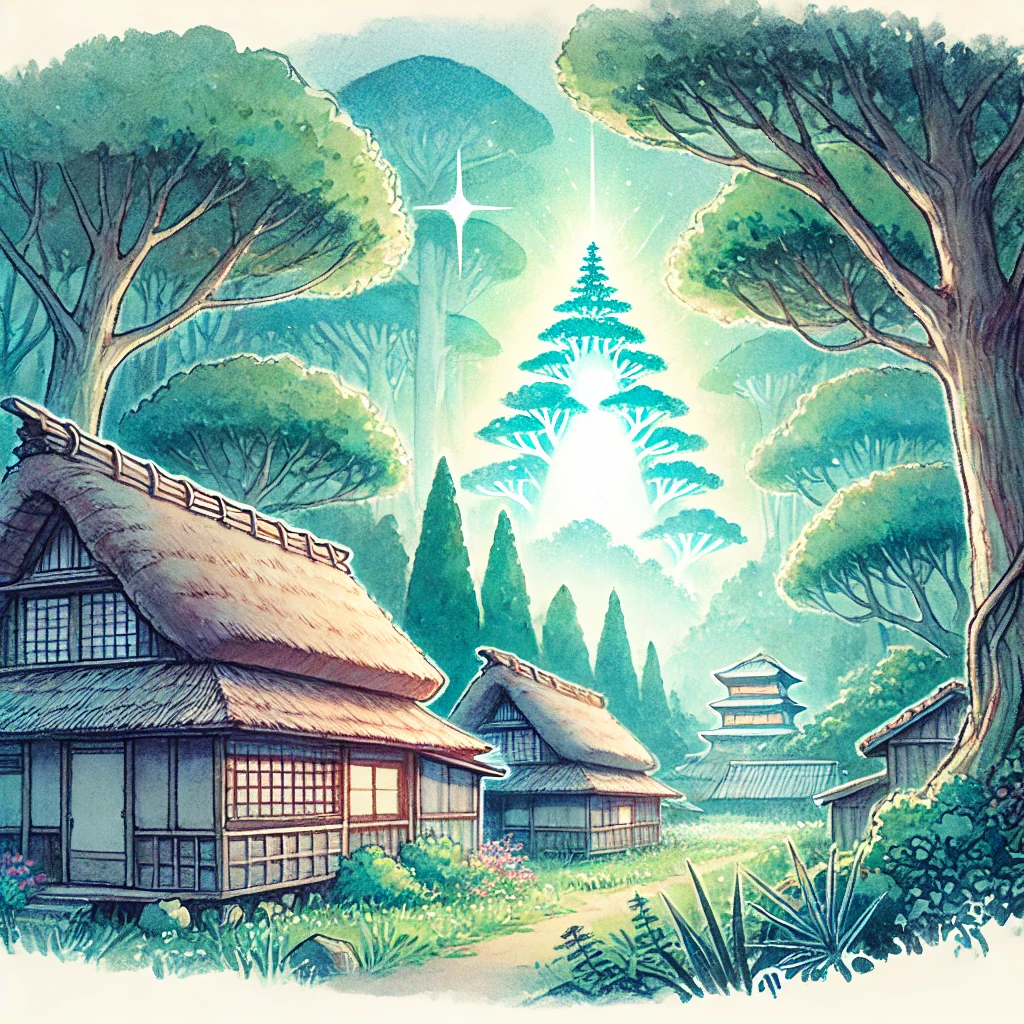
A remote mountain village shrouded in deep fog, where the inhabitants vanished overnight—
The legend of “Shittakamai’s Curse” from Okinawa is more than just a scary tale. This ancient story stimulates our imagination and offers profound insights into modern society, making it a valuable cultural heritage.
Have you ever deeply considered the dangers of underestimating the power of nature or the importance of human connections? In our rapidly changing modern world, have you noticed the essential things we are losing?
The legend of Shittakamai poses important questions to us. The curse that befell the villagers who coldly turned away a traveler might symbolize the dangers of excluding others and the importance of harmony with nature.
However, the allure of this legend goes beyond that. With the latest VR technology, immersive content, and new storytelling forms through social media, the story of Shittakamai continues to evolve with contemporary interpretations and expressions. Researchers from various fields such as psychology and geology are also delving into the mysteries of this legend.
Surprisingly, this ancient legend from Okinawa has now captivated the attention of people around the world. Why does a story from a distant land grip the hearts of so many?
This article will explore the deep meanings hidden in the legend of Shittakamai and its implications for modern society from multiple perspectives. Through this story, we can gain new insights into coexistence with nature, the bonds of community, and the diversity and universality of cultures.
Would you like to step into the world of Shittakamai’s curse? Unimagined discoveries and insights surely await you.
- Shittakamai’s Curse – The Terrifying Legend of Okinawa
- The Meaning of Curses in Okinawan Spirituality
- Why the Legend of Shittakamai is So Terrifying
- Connection to Okinawa’s Traditional Worldview
- The Significance of the Shittakamai Legend in Modern Society
- Comparative Analysis with Similar Legends
- Psychological Analysis
- Real Incidents and Testimonies Related to the Shittakamai Legend
- The Relationship Between Tourism and Legend
- Future Prospects
- Conclusion: Lessons from the Legend of Shittakamai
- Q&A
- Summary of This Article
Shittakamai’s Curse – The Terrifying Legend of Okinawa
In the northern part of Okinawa Island, in the region called Yanbaru, lies the old village site of Shittakamai. It is said that a small village once existed there, but now no one lives in this secluded mountain area. The name Shittakamai means “a place set below,” likely named after its geographical features.
According to legend, about 300 years ago, a traveler arrived at the village of Shittakamai one night. Exhausted, he asked the villagers for shelter, but they coldly turned him away. Lost and desperate in the rain, the traveler took refuge in a cave at the edge of the village.
The next morning, the villagers awoke to a shocking scene. The entire village was shrouded in thick fog, and an eerie silence prevailed. When the villagers checked each house, they found that many people had fallen ill with an unknown disease.
Within days, more than half of the villagers had died. The survivors, believing the curse was placed upon them by the traveler, fled the village in fear. Since then, Shittakamai has been despised as a cursed place.
Time passed, and the tragedy of Shittakamai was almost forgotten. However, about 100 years ago, a young couple moved to the area, unaware of the legend, enchanted by the beautiful land surrounded by rich nature.
The couple worked hard, built a small house, and began to cultivate the fields. Initially, peaceful days continued, but strange events soon began to occur. At night, eerie screams could be heard, and during the day, thick fog often enveloped the area. Despite feeling uneasy, the couple convinced themselves it was just their imagination.
One day, while working in the fields, the husband suddenly suffered from a severe headache. From that day on, his health rapidly deteriorated. Despite warnings from the village elders that this was Shittakamai’s curse, the couple refused to believe it.
However, the husband’s condition worsened daily until he eventually died. Grieving, the wife decided to stay on the land alone, unafraid of the curse, determined to protect the place filled with memories of her husband.
Months later, when villagers visited Shittakamai, the wife had vanished. The house was undisturbed, and her belongings remained intact, as if she had dissolved into the mist.
Since then, Shittakamai has again become a source of fear. Locals say that at night, they can hear a woman’s sad cries from the area, and there are frequent reports of seeing human figures in the fog.
Even today, Shittakamai exudes a mysterious atmosphere. Despite being a beautiful place surrounded by rich nature, it instills an indescribable unease in visitors. Locals avoid the area and warn their children to stay away.
The curse of Shittakamai is more than mere superstition. It represents a deeply rooted fear in people’s hearts and reverence for the power of nature. This legend, passed down through generations, continues to profoundly influence the spiritual world of Okinawans.
The Meaning of Curses in Okinawan Spirituality
Okinawa’s rich culture and unique spiritual world captivate many. Among them, legends about curses hold a special place. The curse of Shittakamai is one such story that symbolizes the Okinawan spiritual world. This article will delve into the unique worldview and values of the Okinawan people through the lens of Shittakamai’s curse.
Fear of Nature
Understanding the spirituality of Okinawans requires acknowledging their deep reverence for nature. This respect for nature is strongly reflected in the legend of Shittakamai’s curse.
The Perspective of Island Life
Okinawa’s geographical characteristics have fostered a unique perspective on nature. Living on islands surrounded by the sea, Okinawans frequently experience the power of nature, profoundly influencing their spirituality.
The thick fog and eerie screams in the Shittakamai legend symbolize the mystical natural phenomena of the island environment. The village shrouded in fog represents the unique weather conditions created by the sea’s moisture and the mountains, amplifying the story’s eeriness and anxiety.
The strange cries at night could be the sounds of wild animals inhabiting the island. However, interpreting them as supernatural phenomena reflects the Okinawan sensitivity to finding mystical power in nature.
Natural Disasters and Spirituality
Okinawa is frequently hit by typhoons and is an active seismic region. These natural disasters have significantly impacted the spirituality of its people.
The sudden calamity that struck the village in the Shittakamai legend symbolizes the fear of unexpected natural disasters. The image of villagers falling ill one after another represents the terror of daily life being destroyed by a typhoon or earthquake.
Interpreting the calamity as the traveler’s curse reflects a psychological attempt to link natural disasters with supernatural forces, a universal human tendency to find meaning in incomprehensible natural forces.
Okinawans have developed strength by coexisting with such natural disasters, respecting and accepting nature’s power. The Shittakamai story reflects this natural and disaster perspective.
The Duality of Nature’s Blessings and Threats
Okinawa’s nature brings blessings but also poses significant threats. This duality is skillfully woven into the Shittakamai legend.
Shittakamai, the story’s setting, is depicted as a beautiful place surrounded by rich nature, symbolizing the blessings of Okinawa’s environment. Fertile land, abundant water, and diverse flora and fauna are crucial foundations for people’s lives.
However, the same beautiful nature is also depicted as the source of a terrifying curse, representing nature’s threat. For example, dense forests can sometimes lead people astray, and abundant rain can cause floods.
The story of the young couple who moved to Shittakamai vividly expresses this duality. They were initially attracted by the blessings of nature but eventually faced the threatening aspect of nature.
This recognition of nature’s duality greatly influences how Okinawans interact with their environment. They respect nature, appreciate its blessings, and maintain a proper distance to acknowledge its power.
The Shittakamai story is a valuable window into the deep spirituality of Okinawans through this complex view of nature. Reverence for nature is not just about fear but also wisdom in seeking coexistence with nature.
The Importance of Human Relationships
The Shittakamai legend also reflects deep insights into human relationships held by Okinawans. Through this story, one can understand the importance of human connections in Okinawan society and the fear of losing those connections.
“Yui-maru” Spirit and Community Consciousness
In Okinawa, the spirit of mutual assistance known as “yui-maru” has long been established. This concept involves members of the community helping and supporting each other. The Shittakamai story paradoxically highlights the importance of this “yui-maru” spirit.
At the beginning of the story, the villagers coldly turn away the traveler, symbolizing a lack of “yui-maru” spirit. The disaster that befalls the village as a result suggests the tragedy that can occur when the bonds of community and consideration for others are lacking.
On the other hand, the villagers visiting each other’s homes in the face of disaster can be seen as an expression of the “yui-maru” spirit in times of crisis. However, the fact that it was too late to prevent the tragedy suggests the importance of practicing “yui-maru” in daily life.
This story plays a role in reminding Okinawans of the importance of the “yui-maru” spirit, emphasizing the value of community bonds and mutual help.
The Fear of Exclusion and Isolation
The Shittakamai story contains significant themes of exclusion and isolation, reflecting the deep fear of being cut off from the community in Okinawan society.
In the story, the traveler is coldly turned away by the villagers, symbolizing the exclusion by the community. The disaster that follows emphasizes the negative impact of such an exclusionary attitude.
The scenes of villagers falling ill and the eventual abandonment of the village illustrate the collapse of the community and individual isolation. The fear-driven abandonment of the village symbolizes the deep-seated fear of isolation.
The story of the young couple who moved in 100 years later also emphasizes the terror of isolation. They chose a secluded life despite warnings, leading to a tragic fate.
These depictions inversely highlight the importance of human connections in Okinawan society. The fear of being isolated from the community is deeply rooted in the spirituality of Okinawans.
The Power of Human Connections
The Shittakamai story, despite its tragic developments, also hints at a strong belief in the power of human connections.
The scene where villagers visit each other’s homes in the story represents the community’s power in times of crisis. Moreover, the fact that the tragedy of Shittakamai has been passed down for generations symbolizes the power of shared memories and community bonds.
The continued presence of this story in people’s hearts shows the power of community memory. The Shittakamai story offers common experiences and values, reinforcing the sense of community.
Through this story, Okinawans can reaffirm the importance of human connections and feel their power. It provides significant insights not only as a past lesson but also in considering modern human relationships.
The Shittakamai curse story reflects deep insights into human relationships held by Okinawans: the importance of the “yui-maru” spirit, the fear of exclusion and isolation, and the power of human connections. These themes make the story a valuable window into the essence of Okinawan society and culture.
The Concept of Karma
The Shittakamai curse story is steeped in the concept of karma. This idea forms a crucial part of the ethical and worldview of Okinawans. Through the story, we gain profound insights into the relationship between actions and their consequences and the significant impact of human behavior.
Ethics from the Ryukyu Kingdom Era
The karma reflected in the Shittakamai story is deeply rooted in the traditional ethics developed during the Ryukyu Kingdom era.
During the Ryukyu Kingdom era, Okinawa developed unique moral standards centered around the idea that “every human action has a corresponding result.” This concept goes beyond simple binary good-and-evil thinking, representing a sophisticated worldview where every action inevitably has its consequence.
The Shittakamai story vividly illustrates this idea. The villagers’ cold rejection of the traveler leads to a subsequent tragedy, embodying the concept of karma. The story suggests that human actions have profound impacts beyond simple lessons of good deeds leading to good outcomes and bad deeds to bad ones.
Additionally, the Ryukyu Kingdom’s ethics emphasized community harmony. The story’s outcome, where rejecting one traveler leads to a tragedy for the whole village, reflects the belief that individual actions affect the entire community.
This story offers modern Okinawans a chance to reaffirm traditional ethics and recognize the importance of their actions. It teaches the significance of consideration for others and community care through an ancient tale.
Influence of Buddhist Worldview
The Shittakamai story also reflects a strong influence of the Buddhist worldview. Okinawan spiritual culture, formed by a fusion of indigenous beliefs and foreign religions, has been significantly shaped by Buddhist teachings.
One of Buddhism’s fundamental teachings is the concept of “karma,” explaining the relationship between human actions and their consequences. The Shittakamai story can be interpreted as a narrative embodiment of this concept.
The villagers’ unkind act leading to subsequent tragedy in the story represents the working of “karma,” not as mere punishment but as a manifestation of the inevitable outcomes of actions, reflecting a Buddhist worldview that instills a deep sense of responsibility for one’s actions.
Buddhism’s concept of “dependent origination,” which suggests that all phenomena are interrelated, is also evident in the story. The small act of rejecting a traveler changes the entire village’s fate, illustrating this principle.
The story also hints at the Buddhist idea of “reincarnation,” with the young couple moving in 100 years later and facing a tragic fate, suggesting that past events influence present circumstances across time.
Thus, the Shittakamai story translates Buddhist concepts into an Okinawan context, conveying them in an accessible narrative form. It functions not only as religious education but also as ethical guidance in daily life.
Interpreting Karma in Modern Society
The concept of karma in the Shittakamai story continues to hold significant meaning in modern society, with interpretations and applications evolving over time.
In contemporary Okinawan society, the story is often interpreted in broader contexts rather than taken literally. It is used, for example, as a teaching tool to consider the impact of individual actions on the whole society.
The story’s principles are applied in raising awareness about environmental and social issues. Understanding how human actions impact the natural environment and the long-term consequences of social choices can be deeply comprehended through the context of the Shittakamai story.
In the business world, the karma concept is also utilized. The importance of corporate social responsibility (CSR) and sustainable management is often explained using the Shittakamai story as an example, emphasizing the need for long-term harmony with society and the environment rather than pursuing short-term profits.
In educational settings, the story plays an important role in teaching children about the responsibility and consequences of their actions, fostering ethical thinking.
Furthermore, in psychotherapy, the story’s ideas are sometimes used to help individuals understand the relationship between actions and outcomes, encouraging them to reassess their behavioral patterns.
In this way, the concept of karma in the Shittakamai story is interpreted and utilized in various forms in modern society, providing vital insights for addressing contemporary issues. It remains a living wisdom that continues to offer guidance.
The Shittakamai curse story vividly portrays the concept of karma in the spiritual world of Okinawans. With ethical views from the Ryukyu Kingdom era, Buddhist influences, and modern interpretations, this story provides deep insights and wisdom passed down through generations.
This story is not just a scary tale. It encourages deep thinking about human actions, relationships with others and society, and coexistence with nature, making it a valuable cultural heritage of Okinawa. Through the Shittakamai curse story, we can connect with the rich spiritual world of Okinawans and gain valuable insights for living in modern society.
Why the Legend of Shittakamai is So Terrifying
Among Okinawa’s legends, the curse of Shittakamai is known as a particularly frightening story. What is it about this legend that instills deep fear in people’s hearts? Beyond just a scary story, this tale touches on fundamental human fears. Let’s unravel its chilling appeal in detail.
Fear of the Unknown
One of the main reasons the Shittakamai legend is so terrifying is its ability to evoke fear of the unknown. This story suggests the existence of forces beyond our understanding, creating deep anxiety and fear.
Anxiety Over Unexplainable Phenomena
The Shittakamai legend features several phenomena difficult to explain scientifically. Mysterious diseases that suddenly strike the village, the village being shrouded in thick fog, and eerie screams heard at night—these occurrences are beyond our everyday experiences and knowledge.
For example, the legend says that the village of Shittakamai was enveloped in fog, and many villagers fell ill with an unknown disease the next morning. The rapid spread of this disease defies modern medical understanding, as infections typically have an incubation period and spread gradually, whereas in Shittakamai, it spread throughout the village overnight.
The eerie screams heard at night, too, defy rational explanation. Even if they are the calls of wild animals, why do they sound so unsettling and terrifying to people? This creates an anxiety that there might be something more than just mere sounds.
These unexplained phenomena evoke a fear that there might be something beyond our rational understanding. When faced with things that cannot be explained by science or reason, humans instinctively feel uneasy. The legend of Shittakamai skillfully stimulates this fundamental human fear.
Fear of Supernatural Beings
Although not directly mentioned, the legend of Shittakamai strongly suggests the intervention of supernatural beings. This fear of unseen forces makes the story even more terrifying.
In the legend, the villagers’ cold rejection of the traveler triggers the curse. This development suggests that the traveler might not have been just an ordinary human but a being with some supernatural power. For instance, in Japanese folklore, there are stories of gods disguising themselves as travelers to test people, and the Shittakamai traveler might have been such a being.
The tragedy of the young couple who moved in 100 years later also seems too coincidental, suggesting the presence of a force that continues to affect the land across time. This implies a fear of supernatural power that transcends even time.
Moreover, testimonies of seeing human figures in the mist and hearing a woman crying at night further hint at the intervention of invisible beings. These phenomena evoke the idea of ghosts or vengeful spirits, deepening the sense of fear.
Humans instinctively fear entities that they cannot control. The legend of Shittakamai instills a deep sense of awe in listeners by strongly suggesting the power of such supernatural beings.
Fear of the Unexplainable
In modern society, the advancement of science and technology has enabled us to explain many phenomena rationally. However, the legend of Shittakamai reminds us that there are realms beyond even scientific explanation.
For example, the mysterious phenomena experienced by visitors to Shittakamai are difficult to reproduce through scientific investigation or experiments. Sightings of human figures in the mist or cries heard at night are subjective experiences, making objective verification challenging.
Additionally, the mysterious illness that struck the villagers cannot be explained by modern medical knowledge. The symptoms that spread throughout the village in a single night, claiming many lives, differ significantly from any known disease.
Furthermore, the curse’s power, which transcends time and space, defies scientific explanation. This force, which operates on a scale beyond contemporary physics, suggests a realm that science cannot understand.
These elements remind us of the existence of realms that science cannot explain. The fear of this unexplainable domain enhances the terror of the Shittakamai legend.
Humans instinctively fear what they do not understand. The legend of Shittakamai evokes primal fear by suggesting the existence of mysteries that science cannot unravel.
Thus, the fear of unknown powers evoked by the Shittakamai legend is deeply rooted in human fundamental fears: anxiety over unexplained phenomena, fear of supernatural beings, and fear of realms that science cannot explain. These factors intertwine to give this legend more power than just a scary story, leaving a strong impression on listeners.
The Horror of Isolation and Rejection
Another critical reason the legend of Shittakamai instills deep fear in people is its touch on the fundamental human fear of isolation and rejection. This story vividly depicts the horror of being cut off from the community.
Fear of Being Cut Off from the Community
One of the most terrifying aspects of the Shittakamai legend is the process by which the characters become isolated from the community. This fear of isolation taps into a deep-seated human fear based on social instincts.
At the beginning of the story, the traveler is coldly turned away by the villagers, depicted as an isolated figure from society. Being denied shelter in an unfamiliar place is an experience that even modern readers can easily imagine as terrifying. The fear of being in a strange land with no help resonates deeply with many.
Furthermore, as the disaster strikes the village, the villagers themselves gradually become isolated. The fear of witnessing friends and family falling ill and eventually abandoning the village illustrates the collapse of the community and the individual’s isolation.
The story of the young couple who moved in 100 years later also emphasizes the fear of isolation. Ignoring warnings, they moved to Shittakamai, resulting in their isolation from society. The husband’s illness and the wife’s subsequent solitude maximize the fear of isolation.
Humans are inherently social animals. Being cut off from the community is not just inconvenient but is perceived as a threat to survival. The legend of Shittakamai skillfully portrays this fundamental fear, evoking deep anxiety in listeners.
Psychological Impact of Rejection by Others
The legend of Shittakamai strongly depicts the element of rejection by others, a crucial factor that makes the story more terrifying.
The story’s beginning, where the traveler is rejected, is the most symbolic scene. The deep emotional wound imagined from being turned away in a state of exhaustion speaks volumes. Experiences of rejection damage self-esteem and bring a deep sense of loneliness and powerlessness.
Additionally, the young couple’s move to Shittakamai despite warnings signifies a form of social rejection. Their decision cuts ties with others, isolating them as a result.
The process by which Shittakamai itself becomes a place shunned by society is also depicted in the legend. A once-inhabited place becoming despised and avoided symbolizes rejection of the place and those associated with it.
Rejection by others is an intense stressor for humans, perceived not just as an unpleasant experience but as a threat to survival. Evolutionary psychology suggests that being rejected by the group significantly reduced survival chances.
The legend of Shittakamai evokes deep anxiety by depicting this fear of rejection in multiple layers. We unconsciously project ourselves onto the characters’ experiences of rejection, reliving their psychological distress.
Fear of Dying Alone and Social Context
The image of dying alone, depicted in the legend, strongly evokes modern fears. The story of the young couple who moved in 100 years later parallels contemporary fears of dying alone.
After the husband’s illness, the wife’s solitude symbolizes the ultimate form of isolation: dying alone. The disappearance of the wife without a trace evokes the most terrifying image of dying unnoticed and unacknowledged.
This is particularly terrifying due to its resonance with the issue of solitary deaths in modern Japanese society. With an aging population and changing family structures, the risk of solitary deaths has become a recognized social problem.
Okinawa is not exempt from this trend. Although traditionally characterized by strong community bonds, Okinawan society is also undergoing changes due to urbanization and nuclear family trends. The legend of Shittakamai stimulates latent fears of solitary death in people’s minds.
The depiction of Shittakamai as a “forgotten place” amplifies this fear. Dying in an unknown, forgotten place is one of the most terrifying death images for many.
Thus, the legend of Shittakamai evokes deep fear by touching on fundamental human fears of isolation and rejection. The fear of being cut off from the community, the psychological impact of rejection by others, and the fear of dying alone intertwine to give this legend more power than just a scary story, resonating deeply with listeners.
In modern society, people face increasing risks of isolation. While digital technology bridges physical distances, psychological isolation is reportedly deepening. In this context, the legend of Shittakamai offers a chance to reconsider the importance of human connections.
The fear of isolation and rejection evoked by this legend paradoxically highlights the importance of bonds and community. Sharing scary stories can strengthen community ties through collective experiences.
The legend of Shittakamai not only instills fear but also conveys a significant message: the importance of human connections and mutual support. From this perspective, the legend serves as both a warning and a story of hope for modern society.
The Overwhelming Presence of Nature’s Power
The third critical reason the legend of Shittakamai instills deep fear is the overwhelming presence of nature’s power. This story vividly depicts human helplessness in the face of nature’s power, evoking primal fear.
The Mystique of Yanbaru’s Deep Forests
The setting of Shittakamai, the Yanbaru region, is a dense forest area in northern Okinawa. This rich natural environment gives the legend a unique atmosphere and mystique.
Yanbaru’s forests, known for their large subtropical broadleaf trees, are often called “green dams” due to their density. These deep forests have inspired various legends and folktales due to their imposing presence.
In the Shittakamai legend, the forest plays more than just a background role. It generates eerie mist and strange sounds, reflecting the unique atmosphere of Yanbaru’s forests.
Visitors to Yanbaru are often struck by its overwhelming presence. The sight of centuries-old giant trees highlights human insignificance. The silence upon entering the forest can sometimes feel eerie, adding to the mystique.
Yanbaru is also home to many endemic species. Rare birds like the Yanbaru kuina and Okinawa woodpecker, small animals like the Okinawa spiny rat, and numerous insects enhance the forest’s mystique. At night, an entirely different ecosystem emerges, with mysterious calls and sounds possibly inspiring the “eerie screams” in the Shittakamai legend.
Thus, the mystique of Yanbaru’s deep forests adds a unique fear factor to the Shittakamai legend. It reminds us of nature’s uncontrollable realms, evoking primal awe.
Fear Induced by Fog and Weather Changes
In the Shittakamai legend, fog and weather changes play crucial roles. These natural phenomena contribute to the story’s eerie atmosphere and instill deep unease.
According to the legend, the village of Shittakamai was shrouded in fog one morning, and many villagers fell ill with an unknown disease. The fog is portrayed not just as a weather phenomenon but as an omen of something sinister.
Indeed, fog is common in the Yanbaru region, particularly in the early morning and evening. The sight of mountains covered in mist can feel both fantastical and unsettling, lending strong credibility to the legend.
Fog obscures visibility, instinctively causing anxiety as it suggests potential unseen dangers. The Shittakamai legend skillfully uses this primal fear.
Sudden weather changes also add to the story’s sense of unease. Okinawa’s subtropical climate is known for its unpredictable weather, with sudden downpours and storms being common.
In the legend, such weather changes might foreshadow ominous events, like the husband’s illness worsening after abnormal weather patterns.
These natural phenomena are beyond human control. While we can predict the weather, we cannot change it. This helplessness makes the natural phenomena in the Shittakamai legend more terrifying.
Fog and weather changes can also distort the sense of time. In a fog-shrouded world, distinguishing between day and night becomes difficult. Heavy rain or storms alter the perception of time, enhancing the overall eeriness of the story.
Nature’s Power Highlighting Human Helplessness
The natural environment depicted in the Shittakamai legend strongly impresses human helplessness. This story vividly portrays human insignificance in the face of nature’s power, evoking deep awe.
The deep forests of Yanbaru, sudden weather changes, and the invisible force of the “curse” all symbolize nature’s uncontrollable power. The characters in the story are helpless against these forces, merely subject to fate.
The mysterious illness that struck the village, for instance, is depicted as something beyond contemporary medical knowledge. Even modern medicine cannot explain this phenomenon, highlighting human helplessness against nature (or supernatural forces).
The curse’s power, affecting the area across a century, symbolizes nature’s power beyond human measure. This force, operating on a scale far beyond human lifespan, reminds us of nature’s eternity and human transience.
Additionally, Shittakamai itself is depicted as a domain beyond human reach. It’s a place people avoid and do not approach, reminding us that there are natural realms beyond human control.
This theme of “human helplessness” resonates strongly even in modern society. Despite scientific advancements suggesting control over nature, we still face moments of helplessness against natural disasters like earthquakes, tsunamis, and typhoons.
The Shittakamai legend appeals to modern sensibilities. The depiction of human helplessness evokes deep-seated awe towards nature.
However, the story also suggests the importance of coexistence with nature. The tragedy of Shittakamai is portrayed as a result of underestimating and disrespecting nature’s power. It teaches the importance of respecting nature and humbly facing its power.
Thus, the overwhelming presence of nature’s power in the Shittakamai legend provides deep fear and an essential message. It highlights the importance of respecting nature and the necessity of coexistence. From this perspective, the Shittakamai legend is more than a scary story; it’s a warning and a story of wisdom for modern society.
The fear evoked by the legend of Shittakamai is deeply rooted in fundamental human fears: fear of unknown powers, fear of isolation and rejection, and the overwhelming presence of nature’s power. These elements intertwine, making the legend more powerful than just a scary story, resonating deeply with listeners.
At the same time, the story offers essential lessons. It teaches the importance of human connections, coexistence with nature, and recognizing human limitations and humility. These messages provide valuable insights for modern society.
The legend of Shittakamai is a precious cultural heritage born from Okinawa’s rich culture and natural environment, and the deep insights of its people. Through this story, we can confront our inner fears and deeply reflect on our relationships with life, society, and nature.
Connection to Okinawa’s Traditional Worldview
The curse of Shittakamai is more than just a scary story. This legend reflects Okinawa’s traditional worldview, deeply rooted in Ryukyuan culture. This article explores Okinawa’s unique spiritual world through the legend of Shittakamai.
The Presence and Role of Yuta (Spiritual Mediums)
Understanding Okinawa’s traditional worldview requires recognizing the presence of Yuta. Yuta are traditional spiritual mediums believed to communicate with gods, spirits, and ancestral souls. The legend of Shittakamai is closely tied to the worldview of Yuta.
Changes in the Social Position of Yuta
The social position of Yuta has significantly changed over time. During the Ryukyu Kingdom era, Yuta existed as folk spiritual mediums, distinct from the official religious figures like Noro (priestesses). They provided spiritual support closely connected to people’s daily lives.
However, from the Meiji era onwards, under the wave of modernization, Yuta were often dismissed as superstitions. Particularly after World War II, during the American occupation, Western values led to a period where Yuta were viewed negatively.
Despite this, deep-seated trust in Yuta persisted in the hearts of Okinawans. Today, Yuta are being reevaluated as part of Okinawa’s traditional culture and are also attracting attention as a tourist resource.
In the legend of Shittakamai, the presence of Yuta might be implied. For instance, the identification of the disaster’s cause as “the traveler’s curse” might have been by someone with spiritual abilities like Yuta. Similarly, the village elders who tried to stop the young couple from moving to Shittakamai might have included Yuta.
The Role of Yuta in Modern Society
Remarkably, Yuta continue to play an important role in modern Okinawan society. Despite urbanization and scientific advancements, many Okinawans still rely on Yuta.
Yuta provide counsel at life’s critical junctures, such as education, employment, marriage, and health. They offer spiritual solutions to problems beyond scientific explanation.
Regarding the Shittakamai legend, if mysterious phenomena occur near this area, locals might consult Yuta. For example, someone experiencing strange events near Shittakamai might seek Yuta’s insight.
Moreover, Yuta’s presence is also a tourist attraction. Tourists interested in Okinawa’s spiritual culture might visit Yuta, and the legend of Shittakamai draws people interested in such aspects.
Connecting with the Spiritual World Through Yuta
The primary role of Yuta is to act as mediators between this world and the spiritual world. In Okinawa’s traditional worldview, the physical and spiritual worlds are closely connected, with Yuta bridging the two.
The Shittakamai legend also highlights the blurred boundaries between this world and the spiritual world. Testimonies of seeing human figures in the mist or hearing a woman crying at night suggest the intermingling of these realms.
Yuta play a crucial role in such situations, communicating with spiritual entities and interpreting their intentions. If someone wanted to understand the curse of Shittakamai, they might ask a Yuta to connect with the spirit world.
In Okinawa, there is a ritual called “Ugami,” where Yuta communicate with spiritual beings. In the case of Shittakamai, a Yuta might perform Ugami to understand the intentions of spirits or gods residing there.
Thus, Yuta’s presence deeply intertwines with the legend of Shittakamai. Their spiritual abilities enhance the story’s mystique and provide a sense of authenticity to Okinawans.
Yuta’s presence makes the legend of Shittakamai more than just a scary story. They symbolize the spiritual world of Okinawans and continue to play an important role in modern society.
Ancestral Worship and Spiritual Connections
Ancestral worship holds a significant place in Okinawa’s traditional worldview. The legend of Shittakamai is deeply connected to this spirit of ancestral reverence.
Belief in “Onarigami” and Female Spiritual Power
One notable aspect of Okinawa’s traditional belief system is the “Onarigami” belief, which sanctifies the spiritual power of women, particularly sisters protecting their brothers.
The Shittakamai legend also reflects this “Onarigami” element. For instance, the wife’s decision to stay in Shittakamai after her husband’s death could be interpreted as fulfilling her role as an “Onarigami.”
The woman’s crying heard at night in the legend could also be an “Onarigami” manifestation. The guardian of Shittakamai (the land) cries out in sorrow due to its crisis.
The “Onarigami” belief has given Okinawan women special status and roles. The Shittakamai legend reflects this faith in female spiritual power.
Communication with Ancestors Through Memorial Tablets (Tōtōmē)
In Okinawan households, memorial tablets called “Tōtōmē” are cherished. These are not merely mementos of ancestors but are considered sacred vessels where ancestral spirits reside.
Relating this to the legend of Shittakamai, the fate of the Tōtōmē of the people who lived there becomes an intriguing question. According to the legend, the villagers fled in fear, abandoning their village. Did they take the Tōtōmē with them, or did they leave them behind in their haste to escape?
If it’s the latter, it implies that the spirits of the former villagers still reside in Shittakamai. This could be one reason why the place is considered “cursed.” The interruption of communication with ancestors through the Tōtōmē might have caused their spirits to remain unsettled.
In Okinawa, there is a custom called “Senko,” where the bones of the deceased are washed and transferred to clean urns after a certain period. This ritual is essential for purifying and ensuring the peaceful repose of ancestral spirits. In Shittakamai, the absence of such rituals might have left the spirits restless.
Significance of Grave Visits and Seimeisai
Okinawa retains a strong culture of honoring ancestral ties, evident in regular grave visits and the Seimeisai (Shimi) festival.
Seimeisai, a festival for ancestor worship, is held around March in the lunar calendar. Families and relatives gather at gravesites, hold feasts, and cherish time with their ancestors. This practice strengthens the connection between the living and their ancestors.
In the context of Shittakamai’s legend, the lack of opportunities to comfort the spirits of those buried there could be a cause of the “curse.” Without regular grave visits and Seimeisai, the spirits of ancestors might remain unappeased.
Some Okinawans believe that even “cursed places” like Shittakamai should be honored in some form. For instance, locals might request priests or Yuta to conduct special memorial services in such areas.
Thus, the legend of Shittakamai is deeply intertwined with Okinawa’s spirit of ancestor worship, emphasizing the bonds with ancestors, the spiritual power of women, and the importance of regular rituals.
Shittakamai’s story is more than just a scary tale. It reflects the spiritual world of Okinawans, serving as a precious cultural heritage that conveys the importance of ancestral connections.
Belief in the Spiritual Power of Places
In Okinawa’s traditional worldview, there is a strong belief in the spiritual power of specific places. The legend of Shittakamai is closely linked to this belief.
Utaki Faith and Sacred Places
Okinawa is home to many sacred sites called “Utaki,” considered dwelling places of gods and spirits and worshipped since ancient times. Many Utaki feature elements of nature like giant trees, unusual rocks, and springs, reflecting strong elements of nature worship.
Regarding Shittakamai’s legend, this place can be seen as a kind of “negative sacred site.” While typical Utaki are associated with positive spiritual power, Shittakamai is perceived as a place with ominous power.
Okinawan folk beliefs acknowledge both “good Utaki” and “bad Utaki.” Shittakamai might be considered a place that became a “bad Utaki” for some reason.
Interestingly, even such “negative sacred sites” hold significant meaning for Okinawans. Though avoided, their existence is seen as essential for maintaining the world’s balance.
Concept of Qi (Chi) in Homes and Land
In Okinawan traditional belief, homes and lands are thought to possess unique “Qi (Chi).” This Qi is shaped by the history of the place and the events that occurred there.
In Shittakamai’s case, the tragic events that transpired there might have accumulated a very strong negative Qi. The villagers’ tragic deaths and the unfortunate fate of the young couple 100 years later have decisively made Shittakamai’s Qi negative.
This concept of Qi helps explain why Shittakamai’s legend has lingered in people’s minds for so long. People sense the strong negative Qi of this place, hence feeling fear and awe.
In Okinawa, it is common to check the Qi of a land before building a new house or moving in. This practice is not merely superstitious but is based on a deep understanding that the history and environment of a place can impact the lives of its inhabitants.
Shittakamai’s legend vividly expresses this concept of Qi, highlighting Okinawans’ belief that the power of a place can significantly influence human destiny.
Taboos and Customs Related to Places
Okinawan traditional beliefs include various taboos and customs related to specific places, passed down as wisdom to respect and not disrupt the spiritual power or Qi of those places.
The legend of Shittakamai can be viewed as one of these taboos or customs, warning against the dangers of approaching this place.
For instance, many Okinawans might avoid approaching Shittakamai at night, not merely out of superstition but out of respect for the strong spiritual power of the place. If someone experiences something strange in Shittakamai, they might visit a Yuta for purification rituals.
Moreover, special considerations might be needed for developments or constructions near Shittakamai. For instance, before starting construction, locals might request special prayers from Yuta or priests.
These taboos and customs are not just superstitions or old practices. They recognize the power of places and embody the wisdom to live in harmony with it. Shittakamai’s legend plays a role in conveying this wisdom through its story.
Interestingly, these taboos and customs also help preserve the natural environment. The portrayal of Shittakamai as a “cursed place” has indirectly protected the area’s natural environment from development.
Thus, Shittakamai’s legend is deeply connected to Okinawa’s traditional worldview. The presence of Yuta, the spirit of ancestor worship, and the belief in the spiritual power of places all intertwine to form the backdrop of this legend.
Shittakamai’s story is more than a scary tale. It mirrors the spiritual world of Okinawans and serves as a precious cultural heritage that conveys the wisdom of living in harmony with nature, ancestors, and invisible forces.
Through this legend, we can touch the rich spiritual culture of Okinawa, offering insights and lessons for modern society, such as the importance of coexistence with nature, the value of ancestral connections, and respect for unseen forces.
The legend of Shittakamai also holds significant potential as a tourism resource. Recently, “dark tourism,” which involves visiting tragic or eerie sites, has gained attention worldwide. Shittakamai’s legend could open new possibilities for tourism in this context.
However, any tourism development should consider the local people’s beliefs and emotions. Shittakamai is not just a tourist spot
but a place deeply connected to the spiritual world of Okinawans.
Finally, the legend of Shittakamai might teach us the value of “not knowing.” In a world where we often believe we can know everything thanks to scientific advancements and access to information, Shittakamai’s story suggests that there are indeed things beyond our understanding.
It emphasizes the importance of approaching the world with awe. Rather than trying to understand and control everything, it teaches us to sometimes accept the unknown and approach it with reverence. This might be the most important message Shittakamai’s legend conveys to us today.
The legend of Shittakamai reflects Okinawa’s rich culture and spiritual world. Through this story, we can connect with the deep insights and wisdom of Okinawans, providing valuable perspectives for our modern lives.
The Significance of the Shittakamai Legend in Modern Society
The curse of Shittakamai is not just an old legend. This story holds significant meaning in modern society, offering many insights. This article explores the significance of the Shittakamai legend in contemporary times.
Strengthening Community Bonds
The legend of Shittakamai plays a vital role in strengthening community bonds. It provides a shared cultural foundation for local people, fostering intergenerational dialogue.
Solidarity Created by Shared Stories
The legend of Shittakamai functions as a shared story for the community, creating a strong sense of solidarity among its people.
For instance, when locals discuss Shittakamai, it’s more than just casual conversation. Through this dialogue, they reaffirm their shared cultural background and strengthen their identity as part of the community.
This story also provides shared values to the community. The lessons within the legend of Shittakamai, such as respect for nature and the importance of human connections, form the moral foundation of the community.
Moreover, the story provides a common “enemy,” referring to the invisible threat of Shittakamai’s curse. Facing this common threat further strengthens community bonds.
In fact, various activities centered around this legend take place in the region. For example, plays based on Shittakamai are performed at local festivals, and the legend is discussed in school lessons. These activities help convey the story to younger generations and strengthen community solidarity.
Promoting Intergenerational Dialogue
The legend of Shittakamai serves as an important medium for promoting intergenerational dialogue. Passed down from elders to youth, it creates opportunities for conversations across generations.
Imagine a grandparent sharing the story of Shittakamai with their grandchild. This interaction is not just about telling a scary tale; it includes the region’s history, culture, and life lessons.
Younger generations can touch upon ancestral wisdom through this story, learning the importance of coexistence with nature, community bonds, and respect for unseen forces—values still crucial today.
For elders, sharing this legend provides an opportunity to pass on their experiences and wisdom. They can reaffirm their values and gain new perspectives from the younger generation’s reactions.
This intergenerational exchange also plays a significant role in preserving and passing down regional history and culture. The legend of Shittakamai is intricately linked to the region’s environment, history, and people’s lives. By passing down this story, the entire rich cultural heritage of the region is preserved for future generations.
Formation and Maintenance of Regional Identity
The legend of Shittakamai plays an essential role in forming and maintaining regional identity. This story functions as a unique cultural symbol of the region, providing people with a strong sense of belonging.
Firstly, the legend distinguishes the region from others. The label “the region with the legend of Shittakamai” gives residents special pride and a sense of belonging.
This legend is also deeply connected to the region’s history. Knowing the story of Shittakamai means understanding the region’s history, making people realize their place in a long historical continuum, thus forming a stronger regional identity.
Moreover, the legend relates closely to the region’s natural environment. Descriptions of deep forests and mist in the story reflect the natural environment of the region, allowing people to feel more connected to their land.
Interestingly, the legend functions as a “negative heritage” of the region. While regional identity is often thought to be formed by proud history or beautiful cultural heritage, “scary stories” like the legend of Shittakamai also play a vital role in shaping regional identity.
Efforts to use this legend as a tourism resource are also seen in many areas. For instance, guided tours themed around Shittakamai and related souvenirs are being developed. These activities contribute to the local economy while strengthening regional identity.
Thus, the legend of Shittakamai is a crucial element in strengthening community bonds. It fosters solidarity through shared stories, promotes intergenerational dialogue, and helps form and maintain regional identity. Through these functions, this legend continues to hold significant meaning in modern society.
A Call for Environmental Protection
The legend of Shittakamai also functions as a powerful message advocating for the importance of environmental protection. This story provides deep insights into the relationship between humans and nature, urging the necessity of environmental conservation.
Deterring Excessive Development
The legend of Shittakamai serves as a warning against excessive development, strongly suggesting the dangers of disregarding nature.
According to the legend, Shittakamai was once a beautiful village surrounded by abundant nature. However, a tragedy turned it into a “cursed place,” symbolically expressing the significant impact of human actions on the natural environment.
In modern terms, this story warns of the dangers of uncontrolled development. Ignoring and excessively developing nature can lead to irreversible consequences.
In fact, the region around Shittakamai has refrained from large-scale development, partly due to the influence of this legend. The perception of it as a “cursed place” has indirectly contributed to the protection of the natural environment.
For example, when a resort development plan near Shittakamai emerged, locals cited the legend and launched a protest. They claimed the “curse of Shittakamai” would affect them, leading to the project’s cancellation.
Thus, the legend of Shittakamai is not just a scary story but functions as “wisdom” for environmental protection, serving as a psychological deterrent against excessive development and contributing to preserving the local natural environment.
Potential for Ecotourism
Interestingly, the legend of Shittakamai also holds potential for promoting ecotourism, encouraging people to recognize the importance of natural environments and consider more sustainable forms of tourism development.
Ecotourism focuses on experiencing and learning about natural environments and local cultures. The legend of Shittakamai aligns well with this philosophy.
Imagine a guided tour themed around Shittakamai, where participants listen to the
legend while exploring the rich natural surroundings. The guide not only tells the scary story but also explains the local ecosystem and environmental issues.
Through such tours, participants can gain more than just a sightseeing experience. By experiencing the power of nature through Shittakamai’s legend and directly engaging with the region’s rich ecosystem, they can deeply understand the importance of environmental conservation.
In fact, some regions in Okinawa have started such eco-tours. For instance, a popular night tour themed “The Curse of Shittakamai and the Nature of Yambaru” takes participants through the forest at night, sharing the legend and learning about the nocturnal ecosystem.
Such ecotourism initiatives also contribute to the local economy. Unlike large-scale resort developments, they provide sustainable tourism income without harming the natural environment.
Moreover, these initiatives raise environmental awareness among locals. By participating as guides in eco-tours, locals can re-recognize the value of their region’s natural environment.
Utilization in Environmental Education
The legend of Shittakamai holds great potential for use in environmental education, serving as an effective tool for teaching children the importance of natural environments.
The legend naturally attracts children’s interest with elements of “scary stories” and “curses,” stimulating their curiosity. This interest can be a gateway to deeper understanding of environmental issues.
Imagine a school lesson where the legend of Shittakamai is introduced. The teacher first tells the story, capturing the children’s attention, and then asks, “Why did Shittakamai become a cursed place?”
This question prompts children to think about the relationship between nature and humans. The tragedy of Shittakamai can be interpreted as a consequence of neglecting nature.
Further, the lesson can be expanded to discuss contemporary environmental issues. For instance, a discussion on “modern-day Shittakamai” can draw parallels to global problems like climate change, deforestation, and ocean pollution.
Activities such as creating plays or picture stories based on Shittakamai’s legend and environmental themes can also be effective. Through reinterpreting and expressing the story, children deepen their understanding of environmental issues.
Indeed, some schools in Okinawa have started incorporating the legend of Shittakamai into environmental education. For example, a local elementary school runs a “Shittakamai Environmental Project,” where children learn the legend while considering regional environmental issues.
These initiatives help children feel closer to environmental issues and develop the ability to think proactively. By linking a regional story to global environmental issues, children naturally adopt the principle of “Think globally, act locally.”
Moreover, such education influences family conversations. Children discussing what they learned about Shittakamai at school can spark discussions about environmental issues at home, enhancing overall community environmental awareness.
Thus, the legend of Shittakamai plays an important role in advocating for environmental protection, functioning as a deterrent against excessive development, promoting ecotourism, and being utilized in environmental education. This ancient story becomes a significant tool for environmental conservation in modern society.
Preservation and Transmission of Traditional Culture
The legend of Shittakamai plays a vital role in preserving and transmitting Okinawan traditional culture to future generations, holding significant meaning as a part of Okinawa’s rich cultural heritage in modern society.
Reaffirming the Importance of Oral Traditions
The legend of Shittakamai reminds us of the importance of oral traditions. In modern society, much information is transmitted through text and images, but oral culture has unique value.
The most notable feature of oral culture is the direct communication between the storyteller and the listener. Imagine a scene where the legend of Shittakamai is being told. The storyteller’s expressions, tone of voice, atmosphere, and the listener’s reactions all become part of the story.
This direct communication provides more than just information transmission. For example, the storyteller’s emotions directly reach the listener, making the story more impactful. Adjusting the storytelling based on the listener’s reactions also makes the delivery more effective.
Furthermore, oral culture has flexibility. The legend of Shittakamai will likely change slightly with each storyteller and era, not as a flaw but as a critical characteristic that allows the story to adapt and continue in modern times.
Indeed, in Okinawa, initiatives like the “Shittakamai Storytelling Group” are active. In such gatherings, people not only listen to the stories but also engage in discussions about storytelling techniques and interpretations. This helps keep the legend alive as a dynamic cultural practice rather than a relic of the past.
The significance of oral traditions is also highlighted as a means of communication during disasters. For instance, in the event of a large-scale blackout, oral communication skills can become crucial as they do not rely on electronic devices. The culture of passing down the legend of Shittakamai contributes to maintaining these essential communication abilities in times of crisis.
Sparking Interest in Local History and Culture
The legend of Shittakamai plays a key role in sparking interest in local history and culture, especially among younger generations. This story serves as a bridge between the past and the present of the region.
Firstly, the legend conveys the history of the region in a narrative form. For example, the depiction of the village and its inhabitants reflects what the area might have looked like in the past. This helps people feel more connected to the history of their hometown.
The legend also reflects cultural traits of the region. Elements such as the presence of the “yuta” (spiritual medium) and reverence for nature embody Okinawa’s traditional worldview. Through these elements, people can engage with their cultural roots.
Moreover, the legend provides insights into the region’s natural environment. Descriptions of the dense forest and fog reflect the local ecosystem, encouraging people to think more deeply about the nature surrounding them.
Interestingly, the legend’s elements of “curses” and “scary stories” naturally attract younger generations, stimulating their curiosity and leading to a deeper interest in local history and culture.
In fact, some schools in Okinawa use the legend of Shittakamai as a teaching material for local studies. Activities such as fieldwork related to the legend, where students visit the actual natural and historical sites, allow them to learn through hands-on experiences rather than just classroom lessons.
Additionally, regional events themed around the Shittakamai legend, such as the “Shittakamai Legend Night Walk,” where participants walk through the forest at night while listening to the story, offer opportunities to become more familiar with local history and culture.
Value and Preservation as Cultural Heritage
The Shittakamai legend is recognized as a significant cultural heritage, not just a scary story. It is considered part of Okinawa’s intangible cultural heritage, worthy of preservation and transmission.
Firstly, the legend is valued as a precious example of Okinawan oral literature. The structure, expressive methods, and transmission process of this story reflect the traditional storytelling culture of Okinawa, making it an important subject for linguistic and folkloric research.
Moreover, the legend offers crucial insights into the spiritual culture of Okinawa. The views on nature, human relationships, and spiritual entities embedded in the story reflect the worldview of Okinawan people, making it valuable from a cultural anthropology perspective.
Furthermore, the legend serves as a medium for conveying regional history. The historical settings and landscape descriptions in the story reflect the past appearance of the region, making the legend valuable for regional historical research.
Recognizing its cultural heritage value, efforts are being made to preserve and transmit the Shittakamai legend. For example, local education boards are considering designating storytellers as “intangible cultural property holders” to officially acknowledge their skills and support their transmission.
Efforts are also underway to record and archive the legend through audio and video recordings. This ensures that even if the storytellers are no longer around in the future, the legend can still be accurately transmitted.
Additionally, while using the legend as a tourism resource, there are efforts to preserve its cultural value. For instance, tours related to the legend are designed to explain its cultural and historical significance rather than just presenting it as a scary story.
Thus, the legend of Shittakamai continues to hold significant relevance in modern society. Through strengthening community bonds, advocating for environmental conservation, and preserving and transmitting traditional culture, this ancient story remains alive, offering many insights.
The legend of Shittakamai serves as a bridge connecting the past, present, and future. Through this story, we can experience Okinawa’s rich cultural heritage and gain profound insights into the symbiosis with nature and the role of community in modern society. By passing this legend on to future generations, we can protect and develop Okinawa’s cultural identity.
Comparative Analysis with Similar Legends
The curse of Shittakamai is unique to Okinawa, but similar legends of “cursed places” exist worldwide. Comparing these legends highlights the unique and universal aspects of the Shittakamai story. This article explores the distinctiveness of the Shittakamai legend by comparing it with similar legends from mainland Japan and around the world.
Commonalities with Cursed Places in Mainland Japan
Mainland Japan also has numerous legends of “cursed places” similar to the Shittakamai legend. Comparing these can highlight the characteristics of Japanese horror stories and the unique elements of Okinawa.
Formation of Haunted Spots
The formation process of haunted spots in mainland Japan shares similarities with the Shittakamai legend. Often, a tragic event or mysterious phenomenon sparks rumors, eventually establishing the place as “cursed.”
For example, the famous haunted spot “Old Inunaki Tunnel” in Tokyo is said to have been cursed due to numerous worker deaths during its construction, followed by continuous mysterious phenomena. This parallels the Shittakamai legend, where villagers gradually succumbed to a mysterious fate.
Similarly, the legend of “Kanna’s Water” in Gunma Prefecture tells of a child who drowned while playing by the water, leading to sightings of the child’s ghost. This is reminiscent of the Shittakamai legend’s reports of shadowy figures in the mist.
Thus, the process of a specific tragic event leading to the recognition of a place as “cursed” is a common feature across haunted spots in Japan.
However, the Shittakamai legend differs in that the cause of the “curse” is explicitly stated. In Shittakamai, the curse is triggered by the villagers’ cold treatment of a traveler, suggesting the curse is a “retribution” for their actions. This “cause-and-effect” element reflects Okinawan traditional worldview.
Similarities and Differences with Urban Legends
The Shittakamai legend also shares characteristics with urban legends, which are modern folklore or ghost stories spread through oral tradition. These stories often reflect contemporary fears and anxieties.
For instance, the well-known Japanese urban legend “Mermaid House” tells of a house with a mermaid’s corpse in its bathroom, reflecting fear of the unknown and the darker aspects of human curiosity.
Similarly, the Shittakamai legend is often told as a “true scary story,” reflecting people’s fears and anxieties about unseen forces. The fear of “invisible forces” in the Shittakamai story symbolizes modern fears of uncertainty.
However, the Shittakamai legend and typical urban legends differ significantly. While many urban legends involve modern settings (e.g., convenience stores, cell phones), the Shittakamai legend is set in an ancient time, indicating its long-standing tradition.
Additionally, many urban legends are set in anonymous urban areas, whereas the Shittakamai legend is closely tied to a specific region. This highlights that the Shittakamai story is more than just a scary tale; it reflects the history and culture of its locality.
Furthermore, while many urban legends reflect contemporary social anxieties and contradictions, the Shittakamai legend deals with more universal themes like coexistence with nature and the importance of human relationships. This suggests that the Shittakamai story offers deeper lessons beyond mere fright.
Elements Reflecting Regional Characteristics
The Shittakamai legend is deeply influenced by the characteristics of Okinawa. This distinguishes it from the haunted spots and urban legends found on the Japanese mainland, adding unique charm.
Firstly, the natural descriptions in the Shittakamai legend reflect Okinawa’s rich environment. The deep forests and thick fog in the story evoke the landscape of northern Okinawa, particularly the Yanbaru region. This contrasts with many mainland haunted spots set in urban or artificial environments like ruins or tunnels.
Additionally, the Shittakamai legend incorporates Okinawa’s traditional spiritual culture. The presence of the “yuta” (spiritual medium) in the story illustrates Okinawa’s unique religious perspective. Although mainland legends also feature spiritual mediums, the “yuta” is a distinctly Okinawan figure that lends the story a unique atmosphere.
The Shittakamai legend also reflects the concept of “retribution,” rooted in Okinawan culture. The story’s narrative, where the villagers’ mistreatment of a traveler brings about a curse, mirrors the Okinawan value of “yui-mar,” or mutual aid. This indicates that the legend embodies the reciprocal ethics deeply embedded in Okinawan society.
Furthermore, the legend includes elements of Okinawan history. The story’s setting, reminiscent of the Ryukyu Kingdom era, suggests that Okinawa has followed a distinct historical path from mainland Japan. This historical context adds depth to the narrative.
In these ways, the Shittakamai legend shares many features with haunted spots and urban legends of mainland Japan but also contains unique Okinawan elements. It serves as more than just a scary story; it reflects Okinawa’s nature, culture, and history. This regional specificity makes the Shittakamai legend a uniquely compelling narrative.
Comparisons with Similar Legends Worldwide
The Shittakamai legend also shares many commonalities with “cursed place” legends from around the world. At the same time, it contains unique elements specific to Okinawa, occupying a unique position in a global context. Here, we compare the Shittakamai legend with similar legends from around the world to explore its universality and uniqueness.
Comparison with Western Ghost Town Legends
The Shittakamai legend shares similarities with the “ghost town” legends commonly found in the West. Ghost towns are abandoned towns that were once thriving but are now deserted for various reasons, often accompanied by eerie legends.
For instance, consider the legend of “St. Elmo” in Colorado, USA. This town flourished as a mining town in the late 19th century but declined after the mines were depleted, eventually being abandoned. According to legend, the spirits of the former residents still haunt the town.
The similarities with the Shittakamai legend are clear. Both involve places that were once inhabited but were abandoned for some reason, subsequently becoming feared as “cursed places.”
However, there are significant differences. Many Western ghost towns were abandoned for economic reasons (e.g., depletion of mines) or natural disasters, whereas Shittakamai was abandoned due to a “curse,” a supernatural cause. This suggests that the Shittakamai legend carries deeper spiritual and moral significance rather than being a mere reflection of historical facts.
Furthermore, while many Western ghost town legends are set in relatively recent times (19th century onwards), the Shittakamai legend is set in a much older era. This indicates that the Shittakamai story has a longer history and is more deeply rooted in the region’s culture.
Additionally, while Western ghost town legends often feature visible ghosts, the Shittakamai legend emphasizes the presence of “invisible forces.” This reflects Okinawa’s traditional spiritual worldview.
Commonalities with Cursed Stories in Other Asian Countries
The Shittakamai legend shares many commonalities with “cursed” stories from other Asian countries. Comparing these stories highlights the shared cultural elements in the Asian cultural sphere and the unique features of Okinawa.
For instance, consider the Thai legend of “Nang Nak.” This story involves the ghost of a woman who died in childbirth and then torments her husband and villagers. Like the Shittakamai legend, “curses” play a crucial role here.
Another example is the Korean legend of the “Nine-Tailed Fox” (Gumiho), a fox that can transform into a woman and bring misfortune to people. This, too, involves a supernatural being causing harm to humans, similar to the Shittakamai legend.
These Asian legends and the Shittakamai legend share several commonalities. Firstly, the concept of “retribution” is strongly reflected. The narrative that human actions (good or bad) lead to supernatural consequences is a common feature across the Asian cultural sphere.
Additionally, the close relationship between nature and supernatural forces is a shared theme. The depictions of fog and forests in the Shittakamai legend resonate with the natural descriptions in Thai and Korean legends.
Moreover, these legends are not just scary stories but also carry social norms and moral lessons. Just as the Shittakamai legend emphasizes the importance of human connections, many Asian legends also contain moral teachings.
However, the Shittakamai legend has unique elements that distinguish it from other Asian legends. For example, the presence of the “yuta” (spiritual medium) is a distinct feature reflecting Okinawa’s unique spiritual culture.
Furthermore, while many Asian legends are not tied to specific locations, the Shittakamai legend is closely connected to a particular place. This shows that the Shittakamai legend is deeply intertwined with the history and culture of Okinawa.
Additionally, the Shittakamai legend reflects the historical background of the Ryukyu Kingdom era. This historical context is crucial, indicating that Okinawa has followed a distinct historical path, different from mainland Japan and other Asian regions.
In these ways, the Shittakamai legend shares many commonalities with Asian curse stories but also contains unique elements specific to Okinawa. It serves as an interesting example of Okinawa’s cultural uniqueness within the Asian cultural sphere.
Interpretation Differences Due to Cultural Backgrounds
When comparing the Shittakamai legend with similar legends from around the world, it is essential to consider the differences in interpretation due to cultural backgrounds. The same “cursed place” stories can be perceived and understood very differently depending on the culture.
For example, many Western ghost town legends are viewed as “relics of the past” or “historical testimony.” These places are often developed into tourist attractions where people visit to experience the “atmosphere of the past.”
In contrast, the Shittakamai legend is perceived as a part of a living culture. For the local people, Shittakamai is not just a relic of the past but a “living” presence that continues to influence their current lives. This reflects the deeply rooted spiritual culture and natural view
among the Okinawan people.
Moreover, while many Western ghost town legends are treated as subjects of “thrill” or “adventure,” the Shittakamai legend is handled with a greater sense of reverence. This indicates the deep respect Okinawan people have for nature and unseen forces.
Additionally, while many Asian curse stories involve the motif of “exorcising bad spirits,” the Shittakamai legend lacks such “solution” motifs. This suggests that Okinawan people tend to accept “curses” as part of nature rather than something to be simply eliminated.
The differences in cultural backgrounds also manifest in the social functions these legends serve. While many Western ghost town legends function as “lessons from the past” or “warnings from history,” the Shittakamai legend emphasizes current social norms and the importance of coexistence with nature.
Furthermore, while “cursed place” legends in many cultures tend to be consumed as mere entertainment, the Shittakamai legend also functions as a source of regional identity and cultural pride. This indicates that the people of Okinawa reaffirm their cultural uniqueness and take pride through this legend.
These interpretation differences reflect the varying worldviews and values of each culture. The characteristics seen in the interpretation of the Shittakamai legend provide important clues about how the Okinawan people view nature, supernatural forces, and human society.
The Uniqueness of the Shittakamai Legend
The comparative analysis reveals that while the Shittakamai legend shares many commonalities with similar legends worldwide, it also possesses unique features. Here, we delve deeper into the distinctiveness of the Shittakamai legend.
Influence of Okinawa’s Unique Natural Environment
One of the major characteristics of the Shittakamai legend is the influence of Okinawa’s unique natural environment on the story. This aspect sets the Shittakamai legend apart from similar legends in other regions.
Firstly, the natural descriptions in the Shittakamai legend heavily reflect Okinawa’s subtropical climate. The deep forests and thick fog in the story are characteristic of the northern Okinawa Yanbaru region. This rich and mysterious natural environment lends a unique atmosphere to the story.
For example, the depiction of fog enveloping Shittakamai reflects Okinawa’s climatic features. The high humidity in Okinawa’s subtropical climate often leads to fog, especially in mountainous areas during mornings and evenings. This natural phenomenon adds a mystical and eerie atmosphere to the Shittakamai story.
The rich forests described in the story also reflect Okinawa’s natural environment. The Yanbaru region houses one of the largest subtropical evergreen forests in Japan, known for its biodiversity. The Shittakamai legend unfolds against this lush natural backdrop.
Furthermore, Okinawa’s island environment also influences the story. The isolation of an island amplifies the fear of “no escape.” The situation where one cannot escape the curse because the vast sea surrounds the island heightens the story’s terror.
Additionally, Okinawa’s natural disaster characteristics are reflected in the story. Being prone to typhoons and having earthquake and tsunami risks, the “calamity” that struck Shittakamai resonates with these natural disaster images, adding a realistic layer of fear.
In these ways, the Shittakamai legend is deeply intertwined with Okinawa’s unique natural environment. It is not just a background setting; it influences the story’s structure, atmosphere, and conveyed fears. This makes the Shittakamai legend distinct from similar legends in other regions.
Elements Reflecting the History of the Ryukyu Kingdom
Another significant characteristic of the Shittakamai legend is its reflection of the history of the Ryukyu Kingdom. This historical backdrop adds depth and complexity to the story.
The Shittakamai legend is set in a time reminiscent of the Ryukyu Kingdom era. The village’s depiction and the people’s lifestyles in the story reflect the social structure and way of life during the Ryukyu Kingdom period. For instance, the portrayal of villagers functioning as a community evokes the village communities of the Ryukyu Kingdom era.
The presence of “travelers” in the story also reflects the social conditions of the Ryukyu Kingdom period. The Ryukyu Kingdom flourished through maritime trade, attracting travelers and merchants from various regions. The travelers in the Shittakamai legend symbolize this historical backdrop.
Furthermore, the concept of “retribution” in the story reflects the moral and ethical values of the Ryukyu Kingdom period. The Ryukyu Kingdom nurtured a unique spiritual culture, influenced by both China and Japan, yet developed its own ethical views. The narrative in the Shittakamai legend, where the lack of hospitality leads to calamity, reflects these unique Ryukyu ethics.
The presence of “yuta” (spiritual mediums) in the story also continues the tradition from the Ryukyu Kingdom period. Yuta have existed since the Ryukyu Kingdom era and significantly influenced people’s spiritual lives. Including yuta in the Shittakamai legend adds depth to the story, reflecting Okinawa’s spiritual culture.
The natural view in the Shittakamai legend also continues the tradition from the Ryukyu Kingdom period. The Ryukyu people have long revered nature as sacred and emphasized coexistence with nature. The awe of nature depicted in the Shittakamai story reflects this traditional Ryukyu worldview.
In these ways, the Shittakamai legend reflects various aspects of the Ryukyu Kingdom’s history. It is not just a historical backdrop; it influences the story’s structure, themes, and conveyed messages. This historical context adds depth and complexity to the Shittakamai legend, making it distinct from similar legends in other regions.
Features Seen in Modern Society Connections
The uniqueness of the Shittakamai legend can also be seen in its connections to modern society. Examining how this old story is received and its role in contemporary Okinawan society highlights its distinctive features.
Firstly, it is noteworthy that the Shittakamai legend continues to live on in modern Okinawan society. While many old legends are being forgotten in other regions, the Shittakamai story is still passed down among people today. This suggests that the legend contains universal values and lessons relevant to contemporary society.
For instance, the Shittakamai legend is sometimes interpreted in the context of modern environmental issues. The natural threats depicted in the story are understood in relation to current environmental destruction and climate change problems. In this regard, the Shittakamai legend provides important perspectives for considering contemporary social issues.
The Shittakamai legend is also noteworthy in its connection to Okinawa’s tourism industry. In the context of “dark tourism,” where people visit sites of tragedy or eerie places, Shittakamai has gained attention as a new tourism resource. However, efforts are being made to utilize it respectfully, preserving the local culture and history rather than merely commercializing it.
Furthermore, the Shittakamai legend is used in modern educational settings. It serves as teaching material for learning about regional history and culture and as a topic for environmental and moral education. This shows that the Shittakamai legend is recognized as a cultural heritage with educational value, not just entertainment.
Additionally, the Shittakamai legend is featured in modern media. Through TV programs, websites, and social media, the story is spreading in new forms. This media coverage highlights that the Shittakamai legend is not just a regional scary story but an important narrative symbolizing Okinawa’s culture and history.
In this way, the Shittakamai legend continues to live on while maintaining various connections with modern society. It is not just about preserving an old story; it is about discovering new meanings and values in contemporary contexts. This feature is a significant aspect of the Shittakamai legend, distinguishing it from similar legends in other regions.
The Shittakamai legend shares many similarities with similar legends worldwide. However, its unique natural environment in Okinawa, the history of the Ryukyu Kingdom, and its distinctive relationship with modern society give it a singular uniqueness. This legend stands as an essential cultural heritage, symbolizing Okinawa’s culture and history, far beyond just being a scary tale or local folklore.
This uniqueness elevates the Shittakamai legend from mere folklore to an important element that symbolizes Okinawa’s cultural identity. It allows the people of Okinawa to reaffirm their cultural roots and re-recognize their regional uniqueness.
Moreover, the uniqueness of the Shittakamai legend highlights its universal values. While it contains regional elements, it also addresses universal themes such as the relationship between humans and nature, the importance of community, and the concept of retribution. These themes allow the legend to resonate with people’s hearts across generations.
Furthermore, the uniqueness of the Shittakamai legend also sparks interest in Okinawa’s culture and history. Through this legend, many people can experience the rich natural environment, unique history, and enduring spiritual culture of Okinawa.
Thus, the uniqueness of the Shittakamai legend elevates it beyond a simple scary story, making it a vital cultural heritage symbolizing Okinawa’s culture and history. For the people of Okinawa, it is a source of cultural identity and pride, while for outsiders, it serves as an entry point to Okinawa’s rich culture.
Comparing the Shittakamai legend with similar legends worldwide has clarified its universality and uniqueness. While it portrays universal human fears and anxieties, it also richly reflects Okinawa’s unique nature, history, and culture, making it a singular narrative.
For the people of Okinawa, the Shittakamai legend is an opportunity to reaffirm their cultural roots and re-recognize their regional uniqueness. At the same time, for outsiders, it is a precious window into Okinawa’s rich culture, history, and enduring spiritual traditions.
The Shittakamai legend holds meanings far beyond being a mere scary story or local tradition. It mirrors Okinawa’s nature, history, culture, and people’s spirituality, providing valuable insights to modern society.
Through this legend, we can touch upon Okinawa’s rich cultural heritage and deeply contemplate universal themes such as the relationship between humans and nature, the importance of community, and the concept of retribution. The fact that this old story continues to live in modern society with new interpretations and meanings demonstrates the strength and flexibility of culture.
The Shittakamai legend acts as a bridge connecting the past, present, and future. Through this story, we can gain profound insights into the coexistence with nature and the nature of community in modern society. Passing this legend on to the next generation helps preserve and develop Okinawa’s cultural identity.
The Shittakamai legend is a crucial cultural heritage symbolizing Okinawa’s culture and history. For the people of Okinawa, it is a proud cultural legacy, while for outsiders, it provides a valuable opportunity to experience Okinawa’s rich culture. Through this unique narrative, we can glimpse the depth and richness of Okinawan culture and the universal aspects of humanity.
Psychological Analysis
The curse of Shittakamai holds deep psychological significance beyond being a mere scary story. By examining the legend’s impact on people’s minds and exploring why such a story was created and passed down through generations, we can delve into the depths of the human psyche.
Group Psychology and the Spread of Fear
One of the powers of the Shittakamai legend lies in its vivid depiction of fear spreading through group psychology. This phenomenon holds significant psychological interest.
Mechanisms of Rumor Spread
The background to the long-lasting transmission of the Shittakamai legend involves the mechanisms of rumor spread rooted in human psychology. This phenomenon is studied in social psychology under the theory of rumor transmission.
First, the “ambiguity” of the Shittakamai legend is a crucial factor. The details of the legend can vary depending on the storyteller, but this very ambiguity stimulates people’s imaginations and promotes the spread of rumors. Psychologists Gordon Allport and Leo Postman pointed out that ambiguity in information promotes the spread of rumors.
For example, the exact events in Shittakamai and why the villagers fell ill one after another can vary based on the storyteller’s and listener’s interpretations. This ambiguity stimulates curiosity, leading to further speculation and imagination.
The “importance” of the Shittakamai legend also promotes the spread of rumors. The legend is not just a scary story but contains important messages directly related to people’s lives and values. Themes such as the importance of caring for others and reverence for nature are deeply relevant to people’s daily lives.
Psychologist Nicholas DiFonzo noted that people are more likely to share information they deem important. The significant messages of the Shittakamai legend motivate people to actively share it.
Furthermore, the “anxiety-provoking” nature of the legend is a key factor in spreading rumors. The Shittakamai story contains many elements that tap into people’s latent anxieties and fears, such as the fear of unknown forces, the fear of isolation, and the threat of nature.
Psychologist Ralph Rosnow pointed out that anxiety-provoking information tends to spread rapidly among people. The anxiety and fear evoked by the Shittakamai legend create a desire among people to share the story.
Thus, the spread of the Shittakamai legend involves complex mechanisms rooted in human psychology. Ambiguity, importance, and anxiety-provoking elements interact, allowing the story to be passed down through generations.
Interestingly, these mechanisms continue to function effectively in modern society. With the development of social media and the internet, the speed of information dissemination has dramatically increased. However, the fundamental mechanisms remain unchanged. The Shittakamai legend continues to be a topic on social media, evolving and spreading with new interpretations and imaginations.
For instance, posts about Shittakamai sometimes “go viral” on social media. This phenomenon can be seen as a modern version of rumor spread. Personal experiences, new interpretations, and even creative elements are added, causing the legend to further evolve and spread.
Understanding these mechanisms of rumor spread is crucial to uncovering why the Shittakamai legend continues to captivate people’s hearts. At the same time, this understanding might provide valuable insights into preventing the spread of false information and rumors in modern society.
Possibility of Mass Hysteria
The reactions of the villagers depicted in the Shittakamai legend suggest the possibility of “mass hysteria” from a psychological perspective. Mass hysteria refers to the rapid spread of anxiety and fear within a specific group, leading to abnormal behaviors.
In the Shittakamai story, the villagers fall ill one after another for unknown reasons. This phenomenon can be seen as a typical example of mass hysteria.
Psychologist Robert Bartholomew identified several conditions for the occurrence of mass hysteria:
-
- A group experiencing strong stress or anxiety
-
- A closed environment
-
- Lack
of information from authoritative figures or institutions
- Lack
-
- Strong bonds within the group
The Shittakamai legend meets all these conditions. The villagers likely felt guilt or anxiety about their cold treatment of the traveler. Shittakamai is depicted as a small, isolated village in the mountains. There was likely no authoritative figure (such as a doctor or government) to provide appropriate explanations or solutions for the sudden events. Lastly, as a small village, the villagers likely had strong ties with each other.
These conditions created a situation conducive to the occurrence of mass hysteria in Shittakamai.
The process of mass hysteria typically follows these stages:
-
- An initial triggering event
-
- Appearance of initial symptoms or abnormal behaviors
-
- Rapid expansion and spread of symptoms
-
- Amplification of fear and anxiety within the group
-
- Eventual collapse or flight of the group
The Shittakamai legend vividly depicts this process. The cold rejection of the traveler triggers the events, initial symptoms (possibly the illness of a few villagers) appear and rapidly spread throughout the village. Ultimately, the surviving villagers, driven by fear, abandon the village.
Interestingly, this depiction of mass hysteria shares many similarities with historical cases. For example, the “Dancing Plague” in medieval Europe and the Salem witch trials in America followed similar processes.
The Shittakamai legend, by expressing the process of mass hysteria in the form of a story, vividly illustrates human psychological vulnerability and the loss of reason within a group.
This depiction offers important insights for modern society. For example, the rapid spread of misinformation through social media can be seen as a form of mass hysteria. The Shittakamai legend addresses universal human psychology, applicable to contemporary issues.
Moreover, this depiction of mass hysteria helps explain why the Shittakamai legend resonates deeply with people. We all have the potential to lose reason within a group and be consumed by fear and anxiety. The Shittakamai story evokes deep empathy and fear by illustrating this fundamental human vulnerability.
Relationship Between Social Anxiety and Legends
The Shittakamai legend can be seen as reflecting the social anxieties of its time. Legends are not just stories; they serve as symbolic expressions of people’s underlying fears and anxieties.
First, the fear of “unseen forces” depicted in the Shittakamai legend reflects a universal anxiety towards uncontrollable powers. This symbolizes various uncertainties faced by people, such as natural disasters, epidemics, and rapid social changes.
For example, the “curse” that struck Shittakamai might overlap with the images of natural disasters or epidemics experienced by people at the time. Okinawa is a typhoon-prone area and has historically experienced various epidemics. The Shittakamai legend might symbolically express fears of such natural threats and diseases as a “curse.”
The theme of “community collapse” depicted in the Shittakamai legend reflects anxiety about social changes. In the legend, villagers fall ill one after another, leading to the abandonment of the village, symbolizing fears of losing communal bonds.
This might reflect the transformation of traditional village communities during the dismantling of the Ryukyu Kingdom and modernization. The Shittakamai legend expresses these social anxieties symbolically, giving shape to vague fears within people’s hearts.
The presence of the “traveler” in the Shittakamai legend can be interpreted as symbolizing anxiety towards external influences. During the Ryukyu Kingdom period, Okinawa prospered through maritime trade but also faced invasions and interference from external forces. The “traveler” might represent ambivalent feelings (expectations and anxieties) towards external forces.
Interestingly, these expressions of social anxiety have been handed down with new interpretations over time. For example, in the modern context, the Shittakamai legend is sometimes interpreted as a warning against environmental destruction. The village’s collapse is seen as a critique of modern society’s loss of harmony with nature.
Additionally, with the advancement of globalization, the loss of regional identity is also expressed through the Shittakamai legend. The “cursed place” depicted in the legend can be interpreted as a warning against the loss of traditional culture in modern society.
Thus, the Shittakamai legend transcends time, reflecting and expressing the social anxieties of each era. This is why the legend holds meaning beyond a mere scary story, continuing to resonate deeply with people.
Psychologist Carl Jung interpreted such stories as manifestations of the “collective unconscious.” The Shittakamai legend might function as one such “archetype,” expressing the collective unconscious of the Okinawan people.
From this perspective, passing down the Shittakamai legend carries more meaning than merely preserving tradition. It is a process of symbolically expressing and sharing social anxieties and fears, fostering collective wisdom to cope with them.
The fact that this legend continues to live in modern society suggests that fundamental human anxieties and fears remain universal across time. Despite advances in technology and changes in social systems, the deep-seated anxieties and fears in the human psyche remain fundamentally unchanged.
The Shittakamai legend, by expressing these universal human anxieties and fears within Okinawa’s cultural context, continues to powerfully resonate with people’s hearts.
Through this legend, we can objectively and symbolically grasp our society’s anxieties and challenges. It provides an opportunity to consider contemporary societal issues from new perspectives.
For example, interpreting the Shittakamai legend in the context of environmental issues can prompt deeper reflection on coexistence with nature. The theme of community collapse allows us to consider the weakening of human relationships and the problem of isolation in modern society.
In this way, the Shittakamai legend functions as a mirror of society, offering valuable opportunities to reflect on our society and psyche.
Trauma and Intergenerational Transmission
The Shittakamai legend’s long-standing transmission may involve the psychological mechanism of intergenerational transmission of trauma. Analyzing the legend from this perspective helps us understand its deep meaning and its impact on people’s minds.
Impact of Historical Trauma
The Shittakamai legend symbolically expresses the historical trauma experienced by the people of Okinawa. Okinawa has faced numerous hardships and tragedies throughout its long history, including the dismantling of the Ryukyu Kingdom, intense battles during World War II, and post-war US military governance. These events left deep scars on the hearts of Okinawan people.
Psychologist Maria Yellow Horse Brave Heart refers to trauma resulting from collective experiences as “historical trauma,” suggesting it can be transmitted across generations. The Shittakamai legend might serve to express and transmit such historical trauma through storytelling.
For example, the sudden collapse of Shittakamai due to a “curse” might reflect the collective memory of Okinawan people who experienced sudden destruction during the war or rapid social changes. The depiction of villagers falling ill mirrors the tragic experiences during wartime and the chaotic post-war period.
The portrayal of Shittakamai as a “forgotten place” is also intriguing. It might symbolize the nostalgic longing for lost homelands and traditional cultures destroyed by war and social
changes. Passing down the Shittakamai legend can be seen as a collective expression of mourning for what was lost and a determination not to forget.
Additionally, the presence of the “traveler” in the legend might reflect ambivalent feelings towards external influences and interventions. This could be connected to experiences of social transformation caused by the dismantling of the Ryukyu Kingdom and post-war US military governance.
Thus, the Shittakamai legend serves to symbolically express and transmit the historical trauma experienced by the people of Okinawa. It functions not merely as a scary story but as a significant medium for preserving and passing on collective memories and emotions to future generations.
Psychologist Vamik Volkan refers to this collective trauma transmission as “chosen trauma,” emphasizing its crucial role in shaping collective identity. The Shittakamai legend might contribute to forming the identity of the Okinawan people.
By passing down this legend, the people of Okinawa might be reaffirming their historical experiences and strengthening their sense of solidarity as a group. Simultaneously, by symbolically re-experiencing past hardships through this story, they might gain the power to transcend and overcome their traumas.
However, intergenerational trauma transmission has cautionary aspects. Psychologists Nicholas Abraham and Maria Torok warned that unresolved trauma might “haunt” the next generation like a ghost. It is essential that the Shittakamai legend functions as a means to understand and overcome trauma rather than merely reproducing past traumas.
Thus, it is necessary to critically re-examine and reinterpret this legend to align it with modern contexts when passing it down to future generations. This effort can transform the Shittakamai legend from merely reproducing old stories to a living cultural heritage imbued with new meanings and values.
Transmission Through Family Systems
The transmission of the Shittakamai legend across generations involves mechanisms of transmission through family systems. Analyzing the legend from this perspective helps us understand its social function and its impact on people’s psychology.
Murray Bowen, one of the founders of family systems theory, viewed families as emotional units in which patterns of emotions and behaviors are transmitted across generations. The Shittakamai legend has likely been transmitted through such family systems.
First, consider that the Shittakamai legend has mainly been passed down within families. Often, this story is narrated by grandparents or parents to their children. In this process, more than just the story itself is transmitted—family values and worldviews are also conveyed.
For example, the Shittakamai legend’s message about the importance of hospitality is passed on as a family value to children. Through the story, lessons about valuing others and the importance of communal bonds are transmitted across generations.
Moreover, the attitudes and emotions of parents or grandparents while narrating the legend greatly influence the children. The tone of voice, facial expressions, and gestures used when telling the story convey emotions like reverence for nature and fear of the unknown more strongly than words alone.
From the perspective of attachment theory, proposed by psychologist John Bowlby, this process is also intriguing. Children internalize the content more deeply when they hear stories from trusted caregivers. The values and worldviews conveyed through the Shittakamai legend become firmly established in the child’s attachment system.
Additionally, the transmission through family systems includes the transmission of “family secrets” and “taboos.” Psychoanalysts Nicholas Abraham and Maria Torok suggested that unspoken “secrets” within a family can significantly affect the next generation.
The Shittakamai legend might transmit family “secrets” or “taboos” indirectly through its narration. The “curse” in the legend might symbolize specific traumatic events experienced by the family or community. While directly speaking about these events might be taboo, they are indirectly conveyed to the next generation through the legend.
This transmission through family systems endows the Shittakamai legend with strong vitality. It serves as more than just a story; it becomes an essential medium for conveying family identity and values.
However, this transmission process also has cautionary aspects. The content transmitted through family systems might sometimes include negative elements such as excessive fear, anxiety, or prejudice.
Therefore, when passing down the Shittakamai legend to future generations, it is crucial to critically re-examine its content and reinterpret it to fit modern contexts. This effort can transform the legend from merely reproducing old stories to a living cultural heritage with new meanings and values.
Formation Process of Collective Memory
The Shittakamai legend plays a crucial role in forming and maintaining the collective memory of the people of Okinawa. Analyzing the legend from this perspective helps us understand its social function and impact on people’s psychology.
Sociologist Maurice Halbwachs’ concept of “collective memory” is very useful for understanding the Shittakamai legend. Collective memory refers to the shared memories of past events and experiences by a specific social group. The Shittakamai legend functions as a medium to form and maintain this collective memory.
First, consider how the Shittakamai legend contributes to forming collective memory. This legend symbolically expresses the historical experiences and cultural values shared by the people of Okinawa. For example, the village’s collapse mirrors Okinawa’s social changes and wartime memories. Themes such as reverence for nature and the importance of communal bonds reflect traditional Okinawan values.
Psychologist Daniel Schacter pointed out that “schemas” play a crucial role in the memory formation process. Schemas are frameworks of knowledge formed based on past experiences. The Shittakamai legend provides important schemas for the people of Okinawa. Through this story, people gain frameworks for organizing and understanding their experiences and values.
The fact that the Shittakamai legend has been passed down orally is also significant. Oral culture researcher Walter Ong analyzed the characteristics of memory in oral cultures. Stories transmitted orally are always re-created through interactions between the storyteller and the listener. This makes the Shittakamai legend a “living memory” that is flexibly interpreted and changes its meaning according to the times and situations.
Furthermore, the role of the Shittakamai legend in maintaining collective memory is also crucial. Psychologist Daniel Wegner’s concept of “transactive memory” helps better understand this function. Transactive memory refers to the phenomenon where memory is distributed and retained within a group.
The Shittakamai legend functions as part of the transactive memory among the people of Okinawa. Not everyone remembers the details of the legend, but as a group, they retain and recall this story when needed. This allows the collective memory to be maintained beyond the limitations of individual memory.
Interestingly, the Shittakamai legend also functions as a “site of memory.” French historian Pierre Nora’s concept of “lieux de mémoire” refers to places or stories that serve as crystallization points for collective memory. Shittakamai, both as a place and a legend, serves precisely this function.
By recounting the Shittakamai legend, people reaffirm and strengthen their collective memory. For instance, when this legend is told during family or regional events, it is not merely a retelling of a story. It is a reaffirmation and sharing of Okinawa’s history, culture, and values among participants.
Moreover, the role of the Shittakamai legend in forming collective memory is closely related to identity formation. From the perspective of social identity theory proposed by social psychologist Henri Tajfel, this legend plays a crucial role in helping the people of Okinawa form and maintain their identity as “Okinawans.”
By sharing the Shittakamai legend, people confirm that they are part of a group with the same cultural background and historical experiences. This function is particularly important considering Okinawa’s complex historical background. For the people of Okinawa, who have experienced the era of the Ryukyu Kingdom, annexation by Japan, war, and American governance, confirming cultural identity has a significant impact on self-recognition and social belonging.
Furthermore, the role of the Shittakamai legend in forming collective memory is also important from the perspective of intergenerational communication. Psychologist Erik Erikson pointed out that intergenerational interaction plays a crucial role in individual identity formation.
The Shittakamai legend functions precisely as a medium for this intergenerational communication. By telling this story to younger generations, elders are transmitting more than just a tale—they are conveying Okinawan culture, history, and values. Through this process, younger generations learn about their roots and cultural background, incorporating it into their identity.
However, the process of forming collective memory requires caution. Research by social psychologists like Elizabeth Loftus has shown that memory is highly plastic and susceptible to external influences. The Shittakamai legend, too, may change and sometimes be distorted in the retelling process.
Therefore, it is essential to critically examine the accuracy and validity of the collective memory formed through this legend. This is not just about preserving tradition but also about creatively reinterpreting tradition in the modern context and finding new meanings.
In this way, the Shittakamai legend plays an important role in forming and maintaining the collective memory of the people of Okinawa. It is not just a scary story but a vital medium for conveying Okinawan culture, history, and values and shaping people’s identities.
At the same time, the collective memory formed through this legend is always in the process of reinterpretation and recreation. How this legend is interpreted and what new meanings are found in the context of modern society is closely tied to how the people of Okinawa perceive and develop their cultural identity.
The Healing Power of Stories
The Shittakamai legend holds significance beyond merely instilling fear. This story has the function of healing people’s hearts and providing the strength to overcome difficulties. Here, we will explore the healing power of the Shittakamai legend from a psychological perspective.
Catharsis Effect and Psychological Purification
The Shittakamai legend has a strong cathartic effect on its listeners. Catharsis, from the Greek word for “purification,” in psychology, refers to the phenomenon where expressing and releasing emotions purifies the mind.
Sigma Freud, the founder of psychoanalysis, believed that expressing repressed emotions leads to psychological purification. The Shittakamai legend functions based on this principle to purify people’s minds.
First, this story vividly expresses people’s latent fears and anxieties. For example, the fear of unknown forces, anxiety about community collapse, and the threat of nature are graphically depicted in the story. These elements concretely express the vague fears and anxieties that usually do not surface in consciousness.
Listening to the story allows people to safely re-experience these fears and anxieties. As psychologist Carl Jung pointed out, experiencing fear symbolically can increase one’s tolerance to real fear.
The Shittakamai legend also includes emotions such as sadness and regret, in addition to fear. For instance, the regret of coldly turning away the traveler and the sorrow over the village’s collapse. By re-experiencing these emotions through the story, listeners can safely express and release similar feelings within themselves.
Research by psychologist James Pennebaker has shown that verbalizing and expressing traumatic experiences positively affects psychological and physical health. Telling the Shittakamai legend facilitates this process.
Additionally, the story contains didactic elements, such as the importance of compassion for others and harmony with nature. These lessons allow people to reassess their actions and values, leading to positive changes. This can also be seen as a form of psychological purification.
Interestingly, the Shittakamai legend provides a collective cathartic experience. Sharing this story allows people to express and release emotions collectively. As sociologist Emile Durkheim noted, such collective emotional experiences strengthen social cohesion.
The legend being passed down through generations is also significant. From the perspective of Erik Erikson’s life cycle theory, passing down this legend functions as an expression of generativity, where elders impart their experiences and wisdom to the next generation. This storytelling serves as a catharsis for the storytellers, offering them a chance to reaffirm the meaning of their lives.
Thus, the Shittakamai legend brings about a cathartic effect on its listeners, promoting psychological purification. It is not merely a scary story but an important medium for expressing and releasing deep-seated emotions. Through this story, people safely express their fears, anxieties, and sorrows, gaining the strength to face them.
Simultaneously, the cathartic effect of this legend may be increasingly important in modern society. As digitalization progresses and direct human relationships diminish, opportunities to share stories and express emotions become precious. The Shittakamai legend continues to serve as an important cultural resource offering such opportunities.
Fostering Solidarity Through Shared Experiences
Sharing the Shittakamai legend fosters a strong sense of solidarity among people, beyond merely hearing a story. Let’s consider the psychological significance of this shared experience and its impact on society.
Social psychologist Irving Janis’s concept of “group cohesiveness” is useful for understanding the effects of sharing the Shittakamai legend. Group cohesiveness refers to the forces that attract group members to each other and keep them within the group.
Sharing the Shittakamai legend enhances group cohesiveness. For example, during family or regional events where this story is told, participants share the same emotional experience. By collectively experiencing fear, surprise, and relief at the story’s conclusion, strong bonds form among participants.
Psychologist William Swann’s self-verification theory suggests that people have a desire to confirm and maintain their self-concept. Sharing the Shittakamai legend provides an opportunity for participants to confirm and strengthen their self-concept as “Okinawans” or “residents of this region.”
This shared experience also enhances “collective efficacy.” This concept, proposed by social psychologist Albert Bandura, refers to the belief that a group can accomplish something together. By collectively experiencing the Shittakamai legend and sharing its lessons, people reinforce their belief that they can overcome difficulties together.
Furthermore, this shared experience provides “social support.” Psychologist Sidney Cobb’s concept of social support refers to the psychological and material assistance individuals receive from others. By sharing the Shittakamai legend, people provide each other with emotional support, achieving psychological stability.
Interestingly, this shared experience also contributes to the formation of “collective memory.” Sociologist Maurice Halbwachs’s concept refers to the shared memories of a group about past events. By sharing the Shittakamai legend, people reaffirm their common cultural background and historical experiences, strengthening their group identity.
This shared experience also functions as a “ritual.” As anthropologist Victor Turner pointed out, rituals play a crucial role in strengthening social cohesion and transmitting cultural values. The act of telling and listening to the Shittakamai legend functions precisely as such a ritual.
Moreover, this shared experience contributes to the formation of “narrative identity.” Psychologist Dan McAdams’s concept refers to the process by which individuals understand and give meaning to their lives as a story. By sharing the Shittakamai legend, people can place their experiences within a larger cultural context, finding meaning in them.
Thus, the shared experience of the Shittakamai legend fulfills important social functions beyond merely transmitting a story. It fosters a strong sense of solidarity among people, strengthens group identity, and provides individuals with psychological stability and meaning.
At the same time, the significance of this shared experience may become increasingly important in modern society. As digitalization and globalization progress, direct human relationships and community connections are diminishing. In this context, experiences such as sharing the Shittakamai legend provide people with precious opportunities for “belonging” and “connection.”
For instance, when the Shittakamai legend is shared through digital platforms like social media, it is not merely the dissemination of information. Through comments and reaction functions, people share their impressions and interpretations, engaging in mutual interaction. This can be seen as a new form of “shared experience” in the digital space.
Additionally, opportunities for outsiders to encounter the Shittakamai legend are increasing through tourism. This not only promotes Okinawan culture externally but also fosters a new form of solidarity with people from different cultural backgrounds.
Thus, the shared experience of the Shittakamai legend continues to hold significant meaning in modern society. It provides people with a “sense of belonging” and “connection,” playing a crucial role in offering a common cultural foundation in an increasingly diverse and individualized society.
Analysis from the Perspective of Narrative Therapy
From the perspective of narrative therapy, the Shittakamai legend is a fascinating subject of analysis. Narrative therapy is a psychological approach that helps people address their problems by understanding and reconstructing their lives and experiences as “stories.”
Michael White, one of the founders of narrative therapy, emphasized the importance of “externalizing” problems and distancing oneself from them. The Shittakamai legend functions precisely in this way.
For example, the “curse” in Shittakamai can be interpreted as a symbolic expression of various difficulties and misfortunes that people face. Through this legend, people can externalize their problems in the form of a “curse,” allowing them to gain psychological distance to confront these issues.
Narrative therapy also emphasizes the importance of “alternative stories.” These are stories that find new possibilities and hopes in contrast to the “dominant stories” focused on problems.
The Shittakamai legend is not merely a tragic story. For instance, the depiction of villagers uniting to face difficulties and the process of later generations learning lessons from this story function as “alternative stories.” This allows listeners to find new perspectives and solutions to their problems.
Moreover, the concept of “re-membering” in narrative therapy is significant. This refers to re-evaluating past experiences and relationships to find new meanings. The act of passing down the Shittakamai legend is precisely this process of “re-membering.”
Through this legend, people re-evaluate their past and cultural roots, finding new meanings. For example, reinterpreting the lesson of the importance of hospitality in the context of modern society provides people with opportunities to reassess their values and actions.
Narrative therapy also proposes the concept of “collective narrative practice.” This involves sharing and reconstructing stories within the entire community. The process of passing down and interpreting the Shittakamai legend is an example of this “collective narrative practice.”
Through this practice, the community can find new perspectives and solutions to its problems, such as the decline of traditional culture or the transformation of local society.
From the perspective of narrative therapy, the “polyphony” of the Shittakamai legend is also significant. This story offers various interpretations, with different meanings found by each storyteller and listener. This polyphony enhances the story’s healing power.
For instance, one person might see the legend as a story about the importance of harmony with nature, while another might view it as a tale emphasizing the importance of community bonds. The legend’s diverse interpretative possibilities make it a “healing story” applicable to various contexts and situations.
Finally, David Epston, one of the founders of narrative therapy, proposed the concept of “community work.” This involves reinterpreting individual problems within a social and cultural context and addressing them as a community.
The process of passing down and interpreting the Shittakamai legend is a form of “community work.” Through this process, individual problems are reinterpreted within a social context, recognized as challenges for the entire community to address.
Thus, from the perspective of narrative therapy, the Shittakamai legend is more than just a scary story; it is a deeply healing “narrative.” It serves as a vital tool for externalizing individual and community problems and finding new perspectives and solutions.
This analysis also suggests new possibilities for the Shittakamai legend in modern society. For instance, it could be used in psychotherapy to support clients in solving their problems. Additionally, workshops using this legend as part of community work to address local issues could be considered.
In this way, the Shittakamai legend continues to hold significant meaning and function in the modern context, healing people’s hearts and strengthening social cohesion. It is not merely an old story but a living cultural heritage with essential significance in modern society.
Real Incidents and Testimonies Related to the Shittakamai Legend
The curse of Shittakamai is not just a legend. Actual incidents and testimonies related to this story are still recounted among the people of Okinawa. These cases add new depth and realism to the Shittakamai legend, further enhancing its influence. Here, we will explore real events and personal experiences related to Shittakamai in detail.
Mysterious Disappearances
Several mysterious disappearances have been reported in connection with the Shittakamai legend. These incidents are passed down among the locals as evidence of the existence of the “curse” depicted in the legend.
Disappearances in Historical Records
Disappearances around Shittakamai are also found in old records. In the process of reorganizing Okinawa’s administration after the Ryukyu Disposition in 1879 (Meiji 12), Japanese government documents contain intriguing mentions related to Shittakamai.
One document states, “Several residents went missing near Shittakamai village. Searches yielded no clues.” The specific number of people and details are unknown, but it indicates multiple disappearances occurred around Shittakamai during this period.
Even further back, similar mentions can be found in historical documents from the Ryukyu Kingdom period. The historical book “Kyuyo” from 1762 (Qianlong 27) includes, “In a northern mountain village, several dozen residents disappeared overnight. Feared to be the work of evil spirits,
villagers were terrified.” Although the village name is not specified, the location and situation suggest this might refer to Shittakamai.
These old records suggest the Shittakamai legend might be based on real events. Of course, historical records might contain inaccuracies or exaggerations. However, the mere existence of these records indicates something special happened at Shittakamai.
Interestingly, the features of these recorded disappearances are consistently reported in modern testimonies. Phrases like “overnight” and “no clues” are common elements in contemporary witness accounts. This consistency suggests the Shittakamai “curse” has operated in a consistent manner across ages.
The very fact these records exist shows the significance of the Shittakamai legend. Normally, the events of a small village would rarely be recorded in official histories. Nevertheless, the events at Shittakamai were recorded and preserved, indicating they were considered significant even at the time.
Furthermore, the survival of these records to the present day shows that the Shittakamai legend has been treated as a historically backed phenomenon, not just an oral tradition. This enhances the legend’s credibility, giving it a stronger influence among people.
Mysterious Incidents in Modern Times
Mysterious incidents related to Shittakamai continue to be reported in modern times. Particularly since the 1980s, people visiting the Shittakamai area have reported strange experiences.
One famous incident occurred in August 1985 when a group of local high school students camped near Shittakamai. One student left the tent at night to use the bathroom and never returned. His friends searched desperately, but they could not find him.
The police joined the search, but the student’s whereabouts remain unknown. What’s puzzling is that there were no traces of the student within a few hundred meters of his last known location. There were no footprints or personal items, no clues at all.
This incident was widely reported in local media at the time, with headlines like “Is it the Curse of Shittakamai? The Mystery of the Disappearing High School Student,” causing a significant stir in the community.
A similar incident occurred in 2003 when three members of a local hiking club were walking on a mountain path near Shittakamai. One member suddenly disappeared. The two in front turned around, only to find their companion missing.
A large-scale search was conducted, but the missing person was not found. One police officer involved in the search later testified, “It felt like some mysterious force was at work in that place.”
Common to these modern cases is that no one witnesses the moment of disappearance. Additionally, there are no traces of the missing persons. These characteristics match the features of the “curse” depicted in the Shittakamai legend.
Notably, the locations of these incidents are all near the presumed site of the legendary Shittakamai village. This suggests that the Shittakamai “curse” might be concentrated in a specific area.
Another noteworthy feature is the timing of these incidents. Both the 1985 and 2003 incidents occurred around the seventh month of the lunar calendar, known as “Obon” in Okinawa, when the spirits of ancestors are believed to return to the living world. This timing suggests that the Shittakamai “curse” might be related to spiritual phenomena.
These modern cases give new realism to the Shittakamai legend, maintaining people’s interest as an ongoing mystery rather than just an old tale.
These incidents have also significantly impacted the local community. The area around Shittakamai, once a popular hiking destination, saw a sharp decline in visitors after these incidents. Locals have become more aware of the saying, “It’s best to avoid Shittakamai.”
On the other hand, these incidents attract those interested in the Shittakamai legend. Mystery enthusiasts and occult fans visit Shittakamai, hoping to uncover the truth.
Thus, modern mysterious incidents related to Shittakamai breathe new life into the legend, enhancing its influence. It remains a present-day mystery, stimulating people’s imagination.
Police and Administrative Responses and Perspectives
How have the police and administrative authorities responded to the mysterious incidents related to Shittakamai? Their perspectives provide important insights for objectively understanding this phenomenon.
First, let’s look at the police response. The police treat disappearance cases around Shittakamai like any other missing person case, conducting large-scale searches and questioning related parties.
Interestingly, most of these investigations yield no results. One police officer involved in the 2003 disappearance case spoke anonymously:
“In a typical missing person case, you would find some clues. But in the Shittakamai cases, it’s as if the person vanished into thin air, with no traces left. Honestly, even among the investigators, there were voices suggesting that there might be something special about this place.”
This testimony suggests that even within the police force, there’s a sense that something beyond simple crime or accident is at play at Shittakamai.
On the other hand, the administrative response is more cautious. An official from the Okinawa Prefectural Cultural Promotion Division stated:
“The Shittakamai legend is an important cultural heritage of Okinawa. However, the mysterious incidents related to it are difficult to scientifically verify. We recognize the cultural value of this legend while ensuring safety considerations.”
This statement shows that the administration acknowledges the cultural significance of the Shittakamai legend while taking a neutral stance on the related phenomena.
Indeed, Okinawa Prefecture is considering designating the area around Shittakamai as a “Cultural Landscape Protection Area.” This aims to protect the natural environment that is the setting for the legend while recognizing its cultural value. However, due to safety concerns, they are also considering restricting general access to the area.
Local municipalities are also addressing Shittakamai. For instance, local education boards include the Shittakamai legend as part of cultural education, emphasizing it is “just a legend with no scientific evidence of actual danger.”
Conversely, the tourism sector is considering utilizing the Shittakamai legend as a regional tourist resource. Ideas such as “mystery tours” and “ghost spot tours” have been proposed but have not materialized due to safety concerns.
Thus, police and administrative responses reflect society’s complex attitude toward the Shittakamai phenomenon. They balance seeking scientific and rational explanations while recognizing its cultural and spiritual value.
Interestingly, these public responses add new layers to the Shittakamai legend. For example, the police’s inability to find results enhances the legend’s mystique. Administrative restrictions emphasize the place’s “taboo” nature.
Thus, the responses and perspectives of police and administrative authorities are crucial elements reflecting the complexity and influence of the Shittakamai phenomenon. They illustrate how society grapples with this phenomenon at the intersection of legend and reality.
Sightings of Spirits and Paranormal Phenomena
Numerous reports of spirit sightings and paranormal phenomena are related to the Shittakamai legend. These testimonies, seen as evidence of the “curse” depicted in the legend, attract considerable interest from many people.
Gathering Testimonials from Local Residents
Numerous mysterious experiences have been reported by local residents living around Shittakamai. These accounts span from stories passed down through generations to relatively recent experiences. Here are some particularly notable testimonies:
First, there’s the testimony of Mr. A, an 80-year-old elder. Mr. A grew up in a village near Shittakamai during his childhood. He recounts:
“When I was a child, sometimes at night, we could see strange lights coming from the direction of Shittakamai. The lights were pale blue and seemed to take the shape of a person. The adults would warn us children not to look in that direction, saying it was the ghost of Shittakamai.”
This testimony suggests that the legend of Shittakamai is not just a story but is linked to actual phenomena. While the nature of the blue light is unknown, it’s clear that local people interpreted it as a supernatural occurrence.
Next is the account of Ms. B, a woman in her 60s, who had a mysterious experience near Shittakamai about 30 years ago:
“I went mountain vegetable picking with my husband. Suddenly, I felt like the air around us changed. Then, I saw an old village in front of me. People in kimonos were walking around, and it felt like we had slipped back in time to the Edo period. When I called my husband, the scene disappeared.”
This testimony suggests a possibility of time distortion occurring around Shittakamai. Ms. B’s experience resembles what is often described as a “time slip” or a “parallel world sighting.”
There’s also a recent account from Mr. C, a man in his 40s:
“Five years ago, I was camping with friends near Shittakamai. At night, we heard a ‘kata, kata’ sound outside the tent. When I peeked out, I saw human figures sitting around a hearth where there shouldn’t have been anyone. We got scared and left immediately.”
Mr. C’s testimony suggests that the “curse” of Shittakamai may still be active. The ‘kata, kata’ sound is particularly interesting as it aligns with the origin of the name “Shittakamai,” adding a layer of authenticity to the legend.
These testimonies share a common recognition that something “unnatural” happens around Shittakamai. The witnesses cannot rationally explain their experiences, thus attributing them to supernatural causes like “curses” or “ghosts.”
It’s also noteworthy that these testimonies span generations, from 80-year-old elders to those in their 40s. This indicates that the phenomena of Shittakamai might have persisted over a long period.
Additionally, the shared feelings of “fear” and “awe” among these witnesses are significant. They perceive the phenomena not just as unusual occurrences but as something beyond human understanding. This sentiment helps sustain Shittakamai’s legend as a living cultural heritage, not just a mere story.
However, objectively evaluating these testimonies is challenging. Many testimonies are based on personal subjective experiences, making scientific verification difficult. The prior knowledge of Shittakamai’s legend might also influence their interpretations.
Despite these limitations, these testimonies greatly impact the Shittakamai legend. They add realism to the legend, stimulate imagination, and garner further interest.
Sightings by Tourists and Outsiders
Strange experiences related to the Shittakamai legend have also been reported by tourists and outsiders. These testimonies offer an intriguing perspective different from that of local residents.
For instance, Ms. D, a 35-year-old woman from Tokyo, who visited Okinawa in 2010, reported the following experience:
“I was intrigued by the Shittakamai legend and decided to visit the place. I wasn’t expecting much, but I had a strange experience. The surrounding trees suddenly seemed to move. There was no wind, but it felt like someone was shaking the trees. Then, I heard a sound like a flute from somewhere.”
Ms. D’s testimony suggests that the Shittakamai phenomena might affect not just locals but also outsiders. The simultaneous occurrence of visual and auditory phenomena is particularly interesting.
Mr. E, a 28-year-old American tourist who visited Shittakamai in 2015, also reported a strange experience:
“I was hiking with a friend on the Shittakamai trail. Suddenly, the temperature dropped sharply. Then, I saw a woman in a kimono standing in front of me. She seemed to be saying something, but I couldn’t hear her voice. When I called out to my friend, the woman disappeared.”
Mr. E’s testimony suggests that the phenomena at Shittakamai can transcend cultural and linguistic barriers. Despite having little knowledge of Japanese history or culture, he witnessed a figure typically associated with Japanese ghosts.
Furthermore, Mr. F, a 26-year-old graduate student who visited Shittakamai in 2018 for research, shared his experience:
“I was recording at night around Shittakamai for research. When I played back the recording, I heard what seemed like human voices. No one should have been around. The voices sounded like an old Ryukyu dialect, but I couldn’t understand what was being said.”
Mr. F’s testimony suggests that the phenomena at Shittakamai might be captured by scientific equipment. The “voices” recorded provide potentially valuable objective evidence.
Common to these outsider testimonies is that they experienced phenomena with little prior knowledge of the legend. This suggests that their experiences might not be influenced by preconceptions, increasing the possibility that these phenomena are objective occurrences.
Interestingly, these witnesses connected their experiences to the “curse of Shittakamai.” Initially considering the legend a mere tourist attraction, they became believers after their experiences.
However, these outsider testimonies also differ from local accounts. Their experiences are often brief and not based on prolonged observation or multiple encounters. Additionally, elements like “taboos” or “forbidden actions,” emphasized by locals, are less prevalent in outsider accounts.
These differences suggest that Shittakamai phenomena might be deeply intertwined with local culture and beliefs. What outsiders perceive as “unusual experiences” might hold more profound significance for locals.
Moreover, outsider testimonies add new dimensions to the Shittakamai legend. As these stories spread, Shittakamai is evolving from a regional legend into a more universal “mystery spot,” attracting wider interest and potentially more visitors.
This rising external interest presents new challenges. Some locals are concerned about the commercialization of a sacred site. Increased visitation might also harm the fragile natural environment.
Thus, outsider testimonies bring new developments to the Shittakamai legend while raising complex issues of preservation and utilization.
Possibilities and Limitations of Scientific Explanations
Efforts have been made to scientifically explain the mysterious phenomena reported at Shittakamai. However, these efforts come with both possibilities and clear limitations.
First, various scientific hypotheses have been proposed to explain the visual phenomena reported at Shittakamai (e.g., strange lights, human figures).
For example, Dr. G, a geologist, hypothes
izes:
“Investigating the geological structure around Shittakamai, we found a high concentration of certain minerals in the area. These minerals could become electrically charged in the atmosphere and emit light under certain conditions. This might explain the ‘ghosts’ or ‘strange lights.’
This hypothesis might explain some visual phenomena seen at Shittakamai. Similar geological features have been reported in other haunted locations worldwide.
Meteorologist Mr. H focuses on the unique weather conditions around Shittakamai:
“The area, being close to both mountains and the sea, is prone to unique air currents. This can cause phenomena like fog or mirages, leading to sightings of ‘human figures’ or ‘old villages.’
Mr. H’s points suggest that some visual phenomena at Shittakamai could be explained as natural occurrences.
Auditory phenomena (e.g., strange sounds, voices) are also being examined from an acoustic perspective. Acoustic engineer Mr. I states:
“Detailed surveys of the terrain around Shittakamai show that certain spots can easily reflect sound. This could make distant sounds seem closer or allow typically inaudible sounds to be heard.”
Mr. I’s explanation might scientifically explain some “strange sounds” reported at Shittakamai.
Psychologists also offer explanations for the Shittakamai phenomena. Psychologist Mr. J analyzes:
“People visiting Shittakamai with prior knowledge of the legend may unconsciously expect ‘something strange to happen.’ This expectation can cause them to interpret trivial occurrences as ‘supernatural events.’
Mr. J suggests that psychological factors might explain some experiences reported at Shittakamai.
While these scientific approaches offer possible explanations for some Shittakamai phenomena, they also have clear limitations.
Firstly, these explanations are individual hypotheses and do not provide a unified explanation for all phenomena reported at Shittakamai. For instance, geological explanations might account for some visual phenomena but not for auditory phenomena or disappearances.
Additionally, these scientific explanations might not fully consider the cultural and spiritual aspects of the Shittakamai phenomena. For locals, the Shittakamai legend carries deep cultural and spiritual significance beyond mere strange phenomena. Scientific explanations alone might not fully capture this aspect.
Moreover, many reported phenomena at Shittakamai lack reproducibility and objective verification, posing significant challenges for rigorous scientific investigation.
Thus, the scientific approach to the Shittakamai phenomena highlights both possibilities and limitations, suggesting the phenomena lie at the intersection of science, culture, rationality, and mystery.
Rather, these scientific attempts and their limitations might add further depth and allure to the Shittakamai legend. It remains an unresolved mystery, continuously stimulating people’s imagination.
Testimonials from Local Residents
Numerous testimonies from local residents exist regarding the Shittakamai legend. These accounts significantly bolster the legend’s credibility. Here, we explore some particularly impactful testimonies in detail.
Testimonies from Long-term Residents
Testimonies from long-term residents around Shittakamai are particularly valued. Their prolonged experience and observations provide crucial insights into the long-term trends of Shittakamai phenomena.
For instance, 92-year-old Mr. K has lived around Shittakamai for over 70 years. He recounts:
“Since childhood, we were told not to go near Shittakamai, especially during the seventh month of the lunar calendar (Obon season). One year, curiosity got the better of me, and I went with friends. Suddenly, we were enveloped in fog and completely lost our sense of direction. We wandered for hours but found out only 30 minutes had passed when we returned to the village.”
Mr. K’s testimony suggests time distortion and spatial anomalies at Shittakamai. Notably, this experience happened over 70 years ago, indicating the phenomena’s long-term persistence.
Moreover, 88-year-old Mr. L shared an intriguing story passed down from his grandfather:
“My grandfather told me that a god once lived in Shittakamai, bringing good harvests. However, the villagers once mistreated the god, who cursed the village in anger, turning Shittakamai into a fearful place.”
Mr. L’s testimony provides fascinating insights into the origins of the Shittakamai legend. This story suggests the “curse” of Shittakamai arose as retribution for human actions.
Additionally, 85-year-old Mr. M described a peculiar ritual related to Shittakamai:
“When I was young, the village had a custom of offering sacrifices towards Shittakamai on the 15th day of the seventh lunar month. A young man chosen by lottery would take the offering near Shittakamai without looking back, believing that turning around would invite the curse of Shittakamai.”
Mr. M’s testimony shows that the Shittakamai legend influenced actual customs and rituals. This custom can be seen as an attempt to appease the “curse” of Shittakamai.
Common among these elder testimonies is a deep sense of awe towards Shittakamai. They view it not just as a strange place but as a mysterious realm beyond human control. This perception elevates the Shittakamai legend to a cultural and spiritual entity beyond just a scary story.
These testimonies also contain information passed down through generations, showing that the Shittakamai legend has been maintained as an oral tradition over a long period.
Additionally, these elders’ testimonies suggest that the Shittakamai legend is not merely a collection of personal experiences but a cultural memory shared by the entire community, reflecting collective experiences and wisdom.
However, evaluating these testimonies objectively is challenging. Long-term memories can become inaccurate or mixed with other information. Also, many testimonies contain second-hand information, making their truthfulness difficult to verify.
Despite these limitations, these elder testimonies significantly impact the Shittakamai legend. Their accounts add historical weight to the legend, enhancing its cultural value.
These testimonies show that the Shittakamai legend is a living cultural heritage deeply intertwined with the lives and beliefs of the local people. It has been passed down through generations, shaping people’s worldviews and values.
New Experiences of the Younger Generation
The Shittakamai legend also lives on among the younger generation. Their experiences add new elements to the traditional narrative, helping reinterpret the legend in a modern context.
For instance, 17-year-old high school student Mr. N shared his experience from two years ago when he visited Shittakamai with friends:
“Five of us went to Shittakamai. We were pretty nervous because of the scary stories. At night, relying on our phone lights, we walked around. Suddenly, our phone batteries, which were fully charged, started draining rapidly and were dead within minutes. We managed to find our way back and left quickly.”
Mr. N’s testimony suggests that the Shittakamai phenomena might affect electronic devices. This example shows how modern elements have been added to the traditional
legend.
Ms. O, a 21-year-old university student, shared her experience participating in the “Shittakamai Challenge” that gained popularity on social media:
“There was a trend on social media offering ‘1 million yen if you can spend a night at Shittakamai.’ I joined with friends. While live-streaming in our tent, the screen suddenly got noisy, and the audio started cutting out. Eventually, a strange woman’s face seemed to appear on the screen, and we got scared and left.”
Ms. O’s experience shows how the Shittakamai legend is spreading in new forms through social media, becoming a “challenge” among young people. This demonstrates the integration of traditional legend with modern digital culture.
Furthermore, 28-year-old Mr. P, who works for a local IT company, reported his experience while working on a 3D mapping project of Shittakamai:
“Our company was doing a 3D mapping project of Shittakamai using drones. While processing the images, I noticed a strange occurrence. Data kept missing from specific areas, no matter how many times we shot. It was technically inexplicable.”
Mr. P’s testimony suggests that Shittakamai phenomena might affect even modern technology, presenting a new challenge in verifying the legend scientifically.
Common among these younger generation testimonies is their experience and interpretation of the Shittakamai legend in a modern context. Elements like smartphones, social media, and drones integrate with the traditional legend, creating new stories.
These testimonies also show that the Shittakamai legend continues to have a strong influence among the younger generation. They perceive it not just as an old story but as a “living” culture closely tied to their lives and interests.
These new experiences add new layers to the Shittakamai legend. For instance, phenomena affecting electronic devices and digital data anomalies are new elements not seen in traditional legends. This complexity and multidimensionality of the legend will likely draw more interest from people.
However, these new testimonies also show differences from traditional legends. For example, elements like social media “challenges” have a more entertaining aspect, differing from the traditional notions of taboo or awe. This suggests changes in how different generations perceive and interpret the legend.
These younger generation testimonies also provide important insights into how the Shittakamai legend is positioned and functions in modern society. For instance, phenomena like the “Shittakamai Challenge” show how modern youth consume and reinterpret traditional culture.
These new testimonies also pose new challenges for preserving and passing on the Shittakamai legend. As the legend is reinterpreted in a modern context, it raises questions about how to maintain its essential meaning and value.
In this way, the new experiences of the younger generation vividly illustrate how the Shittakamai legend evolves and changes over time. It shows that this legend is not just a relic of the past but a “living cultural heritage” that continues to gain new meanings.
Reliability and Verification of Testimonies
The numerous testimonies regarding the Shittakamai legend raise various discussions about their truthfulness and reliability. Evaluating and verifying these testimonies is crucial for understanding the Shittakamai phenomena.
Firstly, the reliability of the witness is key in assessing the reliability of testimonies. Testimonies from long-term residents like elders are recognized for their reliability based on long-term observations and experiences. For example, the testimonies of Mr. K, Mr. L, and Mr. M are treated as important sources due to their extensive experience and status in the community.
On the other hand, testimonies from the younger generation or outsiders need to be evaluated more cautiously. These testimonies are often based on single experiences and might be influenced by preconceptions or expectations.
One way to enhance the reliability of testimonies is to compare and examine multiple independent accounts. For example, the phenomenon of time distortion at Shittakamai is reported not only by Mr. K but also by several other witnesses. Such consistency among multiple testimonies strengthens the reliability of the phenomenon.
Furthermore, the specificity and detail of a testimony are crucial in evaluating its reliability. For instance, Mr. P’s account of drone imaging includes specific technical details, making objective evaluation more feasible.
Various approaches have been attempted for verifying testimonies:
From a scientific approach, experiments have been conducted to replicate phenomena mentioned in the testimonies. For example, tests involving multiple electronic devices were carried out to investigate the reported electronic anomalies at Shittakamai. However, these experiments have not consistently reproduced the phenomena, indicating challenges in reproducibility.
Geological and meteorological surveys of the locations mentioned in the testimonies have also been conducted. Some researchers attempt to provide natural scientific explanations for certain phenomena described in the testimonies, such as the occurrence of fog or peculiar acoustic effects.
From a psychological perspective, analyses of the witnesses’ mental states and cognitive processes have been conducted. For instance, studies on perceptual distortions in suggestible states (e.g., heightened fear or expectation) are applied to evaluate the testimonies.
Additionally, from a folkloric approach, efforts are made to interpret the content of the testimonies within the cultural and historical context of the region. For example, Mr. L’s story about the god is analyzed in relation to traditional Okinawan belief systems.
These multifaceted approaches are gradually enhancing the understanding of the reliability and truthfulness of Shittakamai testimonies. However, it is also becoming clear that complete verification and explanation remain challenging.
Many testimonies are based on single experiences, posing issues of reproducibility. Additionally, the subjective nature of many testimonies makes objective verification difficult.
Moreover, if the phenomena at Shittakamai are fundamentally “supernatural,” then complete elucidation using current scientific methods may be impossible.
In this context, there are various perspectives on how to handle Shittakamai testimonies.
Some argue that these testimonies should be treated skeptically until scientific verification is possible. Others believe that recognizing the limits of scientific verification and respecting these phenomena as cultural and spiritual occurrences is essential.
Some researchers advocate a more anthropological approach, treating these testimonies as “cultural texts” reflecting people’s experiences and interpretations rather than as “facts.” They seek to explore the social and cultural significance of these narratives.
For instance, cultural anthropologist Dr. Q states:
“Evaluating Shittakamai testimonies solely from a factual standpoint overlooks their cultural value. These testimonies are valuable cultural expressions of how Okinawans understand and experience the world. In that sense, these testimonies are ‘true.'”
This viewpoint allows for reinterpreting Shittakamai testimonies not merely as reports of strange phenomena but as important clues to understanding Okinawan culture and spirituality.
On the other hand, discussions on the reliability and verification methods of testimonies add new dimensions to the Shittakamai legend itself. These discussions become part of the legend, further attracting people’s interest.
For instance, debates over the veracity of testimonies are lively among mystery enthusiasts and occult fans, generating significant buzz on the internet. Additionally, scientific attempts to verify the legend add a scientific aspect to Shittakamai, drawing interest from a broader audience.
Furthermore, the verification process itself generates new “stories.” For example, reports of research teams encountering inexplicable phenomena while investigating Shittakamai become new “testimonies,” adding depth to the legend.
Thus, discussions about the reliability and verification methods of Shittakamai testimonies not only aim to clarify the truth but also enrich and develop the legend itself.
Simultaneously, these discussions raise important questions about the nature of “truth” and “knowledge” in modern society. How should phenomena that cannot be scientifically verified be treated? What are cultural and spiritual “truths”? These issues extend beyond the Shittakamai legend, posing significant challenges to our worldview and knowledge systems.
In conclusion, the issue of the reliability and verification of Shittakamai testimonies is not easily resolved. Instead, this issue itself is a significant factor enhancing the charm and value of the Shittakamai legend. It symbolizes the complex challenges of modern society, situated at the intersection of science and culture, rationality, and mystery.
The real events and testimonies related to the Shittakamai legend hold more than just reports of strange phenomena. They are a living cultural heritage that deeply reflects Okinawan culture, history, and spirituality.
These testimonies have been passed down through generations, continually evolving with new interpretations and elements. From the traditional narratives of elders to the modern experiences of the younger generation, the Shittakamai legend continues to generate new stories.
At the same time, these testimonies provide deep insights into the relationship between science and culture, rationality, and spirituality in modern society. The discussions surrounding Shittakamai phenomena offer opportunities to reconsider our concepts of knowledge and truth and our worldview.
Finally, the testimonies and events related to the Shittakamai legend highlight the special allure and importance of this place. It is not just a tourist spot or haunted location but a sacred place deeply rooted in the hearts of Okinawans. Through this legend, we can experience Okinawa’s rich cultural heritage and gain new perspectives on the relationship between humans, nature, and unseen forces.
The Shittakamai legend will continue to captivate people’s imaginations, generating new stories. It is an inexhaustible source of narrative, continually stimulating our sense of wonder and imagination.
The Relationship Between Tourism and Legend
The curse of Shittakamai is more than just a frightening legend. This mystical story brings new possibilities to Okinawa’s tourism industry while also raising important issues regarding the preservation and utilization of cultural heritage. Here, we will explore the relationship between the Shittakamai legend and tourism in detail.
The Potential of Dark Tourism
The Shittakamai legend holds significant potential from the perspective of “dark tourism,” which has recently been gaining attention. Dark tourism refers to a form of tourism that involves visiting places associated with tragedy, disaster, or mystery. Shittakamai, with its mystical atmosphere and eerie legend, is an ideal target for dark tourism.
Current State of Shittakamai Tours
Currently, there are no official tours to Shittakamai. However, unofficial guided tours and individual visitors are increasing. Local tour guide Mr. R states:
“Recently, inquiries about Shittakamai have surged. Particularly, some overseas tourists visit Okinawa specifically to see Shittakamai. They are driven by a strong curiosity to experience Japan’s ‘cursed places.’
In response to this growing demand, some travel agencies are considering tours that include Shittakamai. For instance, the local travel company “Okinawa Mystery Tours” began trial operations of a “Haunted Spots in Okinawa” tour that includes Shittakamai in 2022.
This tour involves participants traveling by bus to areas near Shittakamai, listening to explanations about the legend, and strolling around the vicinity. At the end of the tour, participants perform a “curse-avoiding ritual” at an observatory overlooking Shittakamai.
Mr. S, who planned the tour, says:
“The Shittakamai tour is not just about providing a scary experience. It’s also important to let participants feel the rich culture, history, and nature of Okinawa. Through the Shittakamai legend, we hope participants can sense the depth of Okinawan spiritual culture.”
Since its inception, this tour has attracted more interest than anticipated, particularly among young people in their 20s and 30s and international tourists.
On
the other hand, there are rumors about planning more intense tours for tourists seeking a more authentic dark tourism experience, such as the “Overnight Stay at Shittakamai” tour. This tour involves participants camping near Shittakamai and experiencing the legendary site overnight.
However, concerns about safety and ethics have been raised regarding such extreme tours. Mr. T from the local tourism association warns:
“Shittakamai is not just a tourist spot. It is a sacred place for local people and has actual dangerous terrain. To protect tourists’ safety and local culture, unregulated tour development should be avoided.”
Considering these concerns, the local government is currently drafting guidelines for Shittakamai tourism. These guidelines will include specific directives on safety management, environmental protection, and cultural consideration.
Ethical Considerations and Impact on the Community
Making Shittakamai a target for dark tourism involves numerous ethical issues and potential impacts on the local community that require careful consideration.
Firstly, Shittakamai is not just a scary place but a sacred site with deep spiritual significance for the local people. Ethical issues arise from making such a place a tourist attraction.
Local Shinto priest Mr. U says:
“Shittakamai is a place our ancestors have protected. Invisible deities reside there. Treating such a place merely as a tourist attraction could lead to a disregard for our culture.”
This viewpoint represents those cautious about Shittakamai’s tourism development. They are concerned that tourism could compromise the sacredness of the place.
Conversely, appropriately managed tourism might protect and preserve the local culture. Local cultural researcher Mr. V argues:
“Indeed, unregulated tourism development is problematic. However, well-managed tourism can raise awareness of Shittakamai’s cultural value and generate funds for preservation. By fostering understanding and respect among tourists, tourism could contribute to cultural preservation.”
This opinion suggests the possibility of balancing tourism and cultural preservation. Many sacred sites and cultural heritage worldwide manage to coexist with tourism while ensuring preservation.
The impact of Shittakamai tourism on the local community must also be considered. While an increase in tourists might benefit the local economy, it could also threaten the local living environment.
Mr. W from the local chamber of commerce states:
“The increase in Shittakamai tours positively impacts the local economy. There are rising sales in accommodations and restaurants, and new jobs are being created. However, there are also negative aspects, such as issues with tourists’ manners and increased traffic congestion.”
Given such situations, initiatives are beginning to harmonize the coexistence of the local community and the tourism industry. For example, establishing the “Shittakamai Cultural Preservation Fund” has been proposed, where a portion of tour revenues would be allocated to cultural preservation and environmental maintenance in the region.
There are also plans to implement educational programs to help tourists understand the local culture and customs. These programs will educate tour participants about Shittakamai’s history, cultural significance, and appropriate behavior.
Moreover, attempts are being made to create opportunities for interaction between local residents and tourists. For instance, the “Shittakamai Legend Storytellers’ Association” provides chances for local elders to directly share the legend with tourists. This enables tourists to gain a deeper understanding of Shittakamai’s culture and offers local residents opportunities to pass down their culture.
Thus, the balance of cultural preservation and tourism development in Shittakamai’s dark tourism requires careful consideration of various factors. It is a challenge to explore the balance between culture and economy, tradition and innovation, rather than merely developing tourism.
Educational Value and Potential as a Tourism Resource
The Shittakamai legend holds deep educational value beyond being just a scary story. Through this legend, one can learn about Okinawa’s history, culture, and natural environment. Therefore, Shittakamai has the potential to be an educational tourism resource.
Mr. X from the local board of education says:
“The Shittakamai legend encapsulates Okinawan views on nature, spiritual culture, and history. It includes important lessons that resonate with modern society, such as respect for nature and the importance of community bonds.”
Indeed, some schools have started using the Shittakamai legend as educational material. For example, a local high school has implemented the “Shittakamai Learning Program,” where students learn about Okinawan culture and history through the legend.
This program involves investigating historical facts behind the legend and conducting fieldwork on-site. Students are given opportunities to think deeply about Okinawa’s culture, nature, and history, rather than just learning the legend as a scary story.
Additionally, Shittakamai is noted as a subject for environmental education. The rich natural environment, which serves as the setting for the legend, allows learning about ecosystem conservation and sustainable development.
Environmental education expert Mr. Y states:
“The Shittakamai legend provides deep insights into the relationship between humans and nature. Through the story, one can intuitively understand the dangers of disregarding nature and the importance of ecological balance.”
With this educational value in mind, movements are emerging to position Shittakamai as a destination for “educational tourism.” For example, the “Shittakamai Eco-Museum Concept” involves protecting the natural environment of the legendary setting while creating an experiential tourism facility for learning about Okinawan culture and nature.
Mr. Z, who promotes this concept, says:
“We aim to position Shittakamai not just as a tourist destination but as a ‘learning site.’ We want visitors to experience the depth of Okinawa’s nature and culture and gain new insights.”
Moreover, the Shittakamai legend attracts attention as a research subject in cultural anthropology and folklore studies. Researchers worldwide visit Shittakamai to study the cultural and social factors underlying the legend.
This academic interest also suggests new forms of tourism. For example, the “Shittakamai International Folklore Conference” is under consideration, potentially increasing opportunities for researchers and students worldwide to visit Shittakamai.
Thus, Shittakamai is a tourism resource with diverse possibilities beyond being a target for dark tourism. It could become a model case of tourism blending entertainment and learning, and tourism and research.
However, the diverse possibilities of Shittakamai necessitate careful balancing in its tourism development. Balancing entertainment and educational value, tourism and research, and economic development and cultural preservation are crucial for sustainable utilization of Shittakamai.
This requires cooperation among various stakeholders, including local residents, tourism operators, researchers, and administrative bodies, to maximize Shittakamai’s value while preserving its essence.
The Shittakamai legend is a microcosm of complex modern society, intersecting tourism and culture, education and economy. The various initiatives surrounding this legend hold significance beyond developing a single tourist site. They represent a challenge to the universal issue of how to utilize cultural heritage in modern society and pass it on to future generations.
Value and Preservation as Cultural Heritage
The Shittakamai legend holds important value as cultural heritage beyond being just a scary story or tourist resource. This legend reflects Okinawa’s history, culture, and spirituality, making it an intangible cultural
heritage. However, it also presents the challenge of balancing its preservation and utilization.
Potential for Intangible Cultural Heritage Registration
Efforts to register the Shittakamai legend as intangible cultural heritage have been active in recent years. Intangible cultural heritage, as defined by UNESCO (United Nations Educational, Scientific and Cultural Organization), includes “oral traditions and expressions,” “performing arts,” “social practices, rituals, and festive events,” and other cultural practices and expressions.
A member of Okinawa’s Cultural Properties Protection Committee says:
“The Shittakamai legend symbolically expresses Okinawans’ worldview, nature view, and community bonds. It is more than just a story; it is an essential element shaping Okinawan cultural identity. Therefore, it is necessary to protect and pass down this legend as intangible cultural heritage.”
Indeed, since 2023, Okinawa Prefecture has begun preparations for the Shittakamai legend’s registration as intangible cultural heritage. This initiative includes the following stages:
-
- Detailed recording and analysis of the legend
-
- Survey of rituals and customs related to the legend
-
- Research on the role of the legend in the community
-
- Formulating plans for the legend’s preservation and transmission
-
- Registration as a national cultural property
-
- Preparation for UNESCO application
This process involves interviewing local elders, collecting related historical materials, and recording rituals associated with the legend.
Additionally, some cultural anthropologists explain the significance of registering the Shittakamai legend as intangible cultural heritage:
“Registration as intangible cultural heritage not only acknowledges its cultural value but also promotes specific efforts to protect and transmit that culture. For example, funding for recording and researching the legend becomes more accessible, and educational programs for younger generations can be enhanced.”
However, challenges exist on the path to intangible cultural heritage registration. For example, there are discussions on whether elements such as “fear” and “curses” are appropriate for cultural heritage.
In response, a folklorist argues:
“Elements such as ‘fear’ and ‘curses’ express fundamental human emotions and spirituality. Many intangible cultural heritages worldwide contain similar elements. The crucial point is understanding these elements’ cultural significance and impact on people’s lives.”
There is also a concern that registering as intangible cultural heritage might “fix” the legend. One of the Shittakamai legend’s attractions is its gradual change over time, with new interpretations added. How can we ensure this dynamism is not lost?
On this point, a cultural property protection expert suggests:
“Protecting intangible cultural heritage does not mean ‘freezing’ that culture. Instead, it is crucial to create an environment where culture can continue to live and develop. For the Shittakamai legend, a flexible preservation plan that maintains the basic story framework while leaving room for new interpretations and expressions is necessary.”
Thus, registering the Shittakamai legend as intangible cultural heritage is not only about recognizing its value but also tackling the significant challenge of how to protect, utilize, and pass down the legend to future generations.
Balancing Preservation and Utilization
Preserving the legend of Shittakamai as cultural heritage while simultaneously utilizing it as a tourism resource requires a delicate balance. Finding the optimal solution between those who prioritize preservation and those who emphasize utilization is a significant challenge.
From the preservation perspective, there is a belief that the legend of Shittakamai and the natural environment that serves as its stage should be maintained in as untouched a state as possible. Mr. EE, a representative of a local environmental protection group, argues:
“The value of Shittakamai lies in its mysterious atmosphere. If hordes of tourists flock to the site or facilities are constructed, its essential value could be lost. We believe Shittakamai should be preserved as it is, allowing only a limited number of people to visit with special permission.”
Conversely, the utilization standpoint suggests that Shittakamai’s value should be widely shared, generating economic benefits as well. Mr. FF, the president of the local tourism association, states:
“The legend of Shittakamai is a precious cultural resource of Okinawa. By utilizing it appropriately, we can share the depth of Okinawan culture with many people, while also contributing to the region’s economic development. Of course, we must avoid uncontrolled development, but I believe that planned and sustainable utilization is possible.”
Efforts to strike a balance between these opposing views have begun. For instance, the “Shittakamai Cultural Protection and Utilization Council” has been established, where representatives of local residents, government officials, tourism operators, and researchers gather to discuss and collaborate.
One member of this council suggests the following approach:
“We adopt the idea of ‘utilization for preservation.’ This means that by appropriately utilizing Shittakamai, we can secure the funds and human resources necessary for its protection, ensuring its long-term preservation. Specifically, we are considering initiatives such as:
-
- Conducting guided tours with admission limits
-
- Developing virtual reality programs for simulated experiences
-
- Implementing environmental education programs around Shittakamai
-
- Creating storytelling programs led by local residents
-
- Introducing a special permit system for researchers
These initiatives aim to protect the essential value of Shittakamai while communicating its charm to many people and contributing to regional development.”
Such efforts demonstrate the potential to utilize the legend of Shittakamai not merely as a tourism resource but also as a platform for education, research, and cultural exchange. It represents a pioneering approach to a new model of cultural heritage utilization.
However, these efforts also face challenges. For example, determining the acceptable level of utilization and defining the boundaries is a significant issue. Additionally, there are questions about how to distribute the economic benefits derived from utilization and reinvest them in the preservation of cultural heritage.
To address these challenges, the development of the “Shittakamai Sustainability Index” is underway. This index will comprehensively evaluate factors such as environmental impact, maintenance of cultural value, economic effects, and social impact on the local community. Regular evaluations using this index will help adjust utilization methods as needed.
Mr. HH, an expert in cultural property protection, evaluates this approach as follows:
“The Shittakamai case could become a new model for balancing the preservation and utilization of cultural heritage. Particularly, the participatory decision-making process involving the local community and continuous evaluation based on scientific indicators are excellent practices that could be applied to the management of other cultural heritage sites.”
Thus, the search for a balance between the preservation and utilization of Shittakamai’s legend holds broader significance beyond the management of a single cultural heritage site. It represents a challenge to address the universal issue of how to preserve and utilize traditional culture in a rapidly changing modern society.
International Recognition and Raising Awareness
In recent years, the legend of Shittakamai has been gaining international attention. Its unique narrative and cultural background have captivated researchers and cultural enthusiasts worldwide.
For instance, at the International Folklore Conference held in 2022, a special session on the legend of Shittakamai was organized, where researchers from around the world engaged in discussions. An American folklorist evaluated it as follows:
“The legend of Shittakamai holds deeper meaning beyond just a local scary story. It encompasses universal themes such as human relationships with nature, communal bonds, and awe of unseen forces. At the same time, it serves as a valuable example of how these themes are expressed within Okinawa’s unique cultural context.”
Additionally, in 2023, the BBC documentary program “World’s Mysterious Legends” featured the Shittakamai legend, garnering global attention. The program’s producer, Mr. JJ, commented:
“The legend of Shittakamai made a significant impact on our viewers. Its mystical atmosphere and profound cultural background stimulated the imagination of people worldwide. After the broadcast, inquiries about visiting Okinawa surged.”
This kind of international recognition and awareness elevation enhances the value of Shittakamai as cultural heritage. At the same time, it introduces new challenges.
For example, the increasing number of foreign tourists visiting Shittakamai due to its rising international profile has both positive and negative impacts. While it boosts the local economy, it also raises concerns about the commercialization of culture and its impact on the local community.
In response, a local cultural preservation group stated:
“We welcome the international recognition of Shittakamai. However, it is crucial to ensure that the essential value of this legend is not lost. We believe it is necessary to make efforts to help foreign tourists understand the cultural background of Shittakamai and its connection with the local community correctly.”
To address these issues, the establishment of the “Shittakamai International Cultural Exchange Center” is being planned. This center will provide multilingual information about the legend of Shittakamai, conduct cultural experience programs, and facilitate exchanges with international researchers.
The chairperson of the center’s preparatory committee, Mr. LL, states:
“Through this center, we aim to communicate the true value of the Shittakamai legend to the world. At the same time, we plan to advance comparative studies with similar legends and cultural heritage sites around the world, helping to understand and evaluate Shittakamai within a broader context.”
Thus, the international recognition and raising awareness of Shittakamai’s legend not only bring new value and potential to this cultural heritage but also present new challenges in its preservation and utilization. It suggests a response to the universal question of how to protect and develop regional culture in the face of globalization.
The relationship between tourism and cultural heritage surrounding the legend of Shittakamai carries broader implications beyond a single region. It represents a grand experiment in balancing cultural preservation and utilization, tradition and innovation, and regionalism and globalization.
The outcomes of these efforts have the potential to provide new perspectives and methodologies for managing and utilizing cultural heritage globally. The legend of Shittakamai is evolving into a pioneering example of how cultural and tourism, tradition and modernity can intersect in the 21st century’s approach to cultural heritage.
Future Prospects
The curse of Shittakamai goes beyond a mere terrifying legend; it has become a valuable cultural heritage that deeply reflects the culture, history, and spirituality of the people of Okinawa. This legend forms an important part of Okinawa’s narrative from the past to the present and into the future. Its future prospects are highly intriguing. Here, we explore how the legend of Shittakamai might develop in the future and how it could impact our society and culture.
Scientific Verification of the Legend
The legend of Shittakamai has stimulated the imagination of people for many years. However, in the 21st century, attempts to scientifically verify this legend have become more serious. These efforts are not only aimed at clarifying the truth of the legend but also at uncovering the wisdom of the people embedded in it and its relationship with natural phenomena, making this an important undertaking.
Psychological Analysis Approach
Research is being conducted to analyze the psychological impact of the Shittakamai legend on people. The Department of Psychology at Okinawa Prefectural University explains:
“Understanding why the legend of Shittakamai has remained deeply engraved in people’s minds for so long from a psychological perspective is a fascinating challenge. Our research team is investigating how this legend affects people’s anxiety, fear, and sense of community.”
This research team embarked on a large-scale five-year study in 2023. The study involves the following methods:
-
- Interview surveys with people who know the legend of Shittakamai
-
- Experiments measuring psychological state changes before and after hearing the legend
-
- Comparative analysis of the psychological states of residents near Shittakamai and those from other areas
-
- Observation of brain activity using fMRI while listening to the legend
Some of the survey results were published in 2024, drawing attention. A particularly interesting finding was that people who know the legend of Shittakamai tend to have a stronger sense of belonging to their local community.
This finding was explained as follows:
“The legend of Shittakamai seems to provide a common cultural foundation for people, strengthening community cohesion. This suggests that traditional narratives continue to hold significant social functions in modern society.”
Moreover, research using fMRI revealed that listening to the legend of Shittakamai activates brain regions related not only to fear and anxiety but also to empathy and social cognition.
Another research team commented on this result:
“This is a very intriguing finding. The legend of Shittakamai seems to not only evoke fear but also stimulate the listener’s social cognition abilities. This suggests that the legend may play a role in nurturing social and empathetic abilities among people.”
These research results suggest that the legend of Shittakamai holds profound psychological and social significance beyond being a mere scary story. Future research will delve further into how this legend affects people’s mental health and social behavior.
Additionally, these research findings are being considered for the development of new psychological therapies using the legend. For example, programs aimed at enhancing community spirit and resilience to stress using the legend of Shittakamai are being developed.
Furthermore, this research provides new perspectives in the field of cultural psychology. The study of the legend of Shittakamai is becoming a valuable case for understanding how culturally unique narratives impact people’s psychology.
The psychological analysis approach to the legend of Shittakamai is expected to continue evolving, potentially revealing the deep psychological meanings of our culture and tradition and reevaluating the role of traditional culture in contemporary society.
Importance of Folkloric Research and Documentation
In the efforts to scientifically verify the legend of Shittakamai, the importance of folkloric research and documentation has been reaffirmed. Investigating and recording the origins, evolution, and relationship with the local community of this legend is essential to understanding its essence.
The Department of Folklore at Okinawa International University has launched a large-scale folkloric research project on the legend of Shittakamai. They explain the significance of this project as follows:
“The legend of Shittakamai is a valuable cultural heritage that reflects the worldview and values of the people of Okinawa. However, as modern society changes, the cultural contexts behind this legend are being lost. Our research aims to meticulously record this precious cultural heritage for future generations.”
This project involves various research activities, including:
-
- Detailed interviews with local elders
-
- Collection and analysis of historical documents and materials related to the legend
-
- Documentation of rituals and customs associated with the legend
-
- Geographical and ecological surveys of the locations featured in the legend
-
- Collection and comparative analysis of different versions of the legend
One particularly noteworthy effort is tracing the “oral genealogy” of the legend of Shittakamai, investigating how the legend has been passed down from person to person.
A research team member explains the importance of this investigation:
“Tracing the oral genealogy helps us understand how the legend has changed and developed over time. It reveals which elements have been consistently passed down and which parts have been newly added.”
This research process has led to several interesting discoveries. For instance, it has been revealed that there are multiple “variants” of the legend of Shittakamai, with slight differences in the story details and morals depending on the region and storyteller.
This finding is explained as follows:
“The existence of these ‘variants’ shows that the legend of Shittakamai is a living cultural heritage. This legend is not a fixed story but has flexibly changed and adapted according to the times and regional circumstances. It is a valuable example of the dynamism of traditional culture.”
Furthermore, the research has uncovered new insights into how the concept of the “curse” in Shittakamai’s legend connects with traditional Okinawan spiritual beliefs.
The results of these folkloric studies have significant implications beyond academic value. They also influence the preservation and utilization of the legend of Shittakamai. For example, based on these research findings, educational programs are being developed to convey the legend to future generations more accurately and profoundly.
Additionally, this research project is gaining attention as a participatory effort involving the local community. Reports indicate that local people, participating as research collaborators, have deepened their understanding and attachment to their cultural heritage.
A local high school student, A, shared their experience of participating in the research project:
“I conducted detailed interviews with my grandparents about the legend of Shittakamai. Through this process, I learned a lot about the history and culture of our region that I didn’t know before. This experience made me appreciate the richness of our culture.”
Thus, folkloric research and documentation efforts play a dual role: scientifically verifying the legend of Shittakamai and strengthening the cultural identity of the local community while promoting intergenerational dialogue.</ p>
In the future, a comprehensive database of the legend of Shittakamai, based on these research findings, is planned to be constructed. This database will be made publicly accessible in an open-access format, available to both researchers and the general public.
A folklore professor describes the significance of this database:
“This database will become a treasure trove of knowledge about the legend of Shittakamai. For researchers, it will be a valuable research resource, and for the general public, it will be an entry point to deeply understand their cultural heritage. It is also expected to be a place for cultural exchange, allowing people worldwide to learn about the legend of Shittakamai.”
Thus, folkloric research and documentation efforts are laying a crucial foundation for the future of the legend of Shittakamai. They represent an essential step in perceiving, preserving, and utilizing this legend not just as a relic of the past but as a dynamic cultural heritage that continues to live in the present and future.
Possibilities and Challenges of Interdisciplinary Research
In the endeavor to scientifically verify the legend of Shittakamai, the potential of interdisciplinary research has been particularly highlighted. Researchers from various fields, including psychology, folklore, geology, ecology, history, and cultural anthropology, are collaborating to unravel the comprehensive picture of the Shittakamai legend.
The “Shittakamai Interdisciplinary Research Center” established at Ryukyu University in 2024 explains this approach as follows:
“The legend of Shittakamai is a highly multifaceted and complex phenomenon. To fully understand it, we must integrate knowledge from various fields. At our center, researchers from different disciplines collaborate, bringing their expertise together to uncover new aspects of the Shittakamai legend.”
The center is conducting several interdisciplinary research projects, including:
-
- Research on the relationship between Shittakamai’s geography and its legend, conducted by geologists and folklorists
-
- Analysis of the interaction between Shittakamai’s natural environment and local beliefs by ecologists and cultural anthropologists
-
- Tracing the historical changes of the legend and the corresponding psychological impacts by psychologists and historians
-
- Analysis of the narrative structure and literary value of the Shittakamai legend by linguists and literature researchers
These interdisciplinary studies have brought new discoveries about the Shittakamai legend. For instance, collaboration between geology and folklore has suggested that the unique geological formations around Shittakamai may scientifically explain some of the “mysterious phenomena” described in the legend.
A geologist involved in the research team stated:
“There are rock layers around Shittakamai containing special minerals. These minerals might emit light or produce unique sounds under certain conditions, potentially explaining the ‘strange lights’ and ‘odd noises’ mentioned in the legend.”
Meanwhile, a cultural anthropologist explained the cultural significance of this finding:
“This discovery shows that the Shittakamai legend is not just a product of imagination, but a reflection of how people have interpreted and ascribed meaning to actual natural phenomena. It offers valuable insights into the interaction between human culture and the natural environment.”
Thus, interdisciplinary research helps to view the Shittakamai legend from multiple angles, contributing to a comprehensive understanding of its complex entirety. However, this approach also presents several challenges.
One of the main challenges is communication and mutual understanding between different fields. Differences in terminology and research methods can sometimes hinder collaborative efforts.
To address this, the Shittakamai Interdisciplinary Research Center regularly organizes cross-disciplinary workshops and researcher exchange programs. These initiatives aim to help researchers understand each other’s specialties and find a common language.
Another challenge is how to integrate the findings of interdisciplinary research and convey them clearly to the public. Plans to create documentary films and interactive exhibitions based on research findings are underway to address this issue.
Furthermore, conflicts between traditional knowledge and scientific findings sometimes arise during interdisciplinary research. For example, attempts to scientifically explain parts of the legend have been met with criticism from locals who feel that the mystical nature of the legend is being undermined.
In response, another doctor stated:
“Our goal is not to discredit the value of the legend. Rather, by adding a scientific perspective, we can more clearly demonstrate the deep wisdom and insights of the people. We aim to enhance the value of both science and traditional knowledge through dialogue between the two.”
Thus, interdisciplinary research on the Shittakamai legend encompasses various possibilities and challenges. It serves not only to elucidate a single legend but also to create new knowledge that transcends academic boundaries and fosters dialogue between science and traditional culture.
This interdisciplinary research could further develop by incorporating the latest technologies such as AI and machine learning for large-scale data analysis, potentially uncovering overlooked patterns and connections.
Additionally, comparing insights from Shittakamai legend research with similar legends from other cultural areas might reveal universal cultural patterns and provide new understandings of cultural diversity.
Thus, interdisciplinary research on the Shittakamai legend holds the potential for a more inclusive and profound understanding that a single discipline cannot achieve. It suggests a new academic approach for the 21st century, linking tradition and science, past and present, regional specificity, and universality.
Using Digital Technology to Preserve Traditions
In passing down the legend of Shittakamai to future generations, digital technology is expected to play a crucial role. By utilizing the latest technology, traditional oral culture can be revitalized, allowing more people to appreciate the charm of this legend.
Developing Experiential Content Using VR and AR
Development is underway for content that allows people to experience the legend of Shittakamai using Virtual Reality (VR) and Augmented Reality (AR) technologies. These technologies enable users to immerse themselves in the legend’s world and understand the story more deeply.
The leader of the Shittakamai VR Project at Okinawa Institute of Technology shares:
“Using VR technology, people can not only listen to the legend of Shittakamai but actually experience it. For example, they can see and hear the mysterious phenomena described in the legend, as if they were actually there. This helps to deeply understand and vividly remember the legend’s world.”
In this VR content, users can experience the story as the protagonist. They can wander through the mist-covered village of Shittakamai, interact with villagers, and witness mysterious phenomena firsthand.
Additionally, an AR-based mobile app is being developed. Using this app, users can explore the area around Shittakamai while viewing the legend’s world through their smartphones or tablets. For example, by pointing their device at a specific location, characters from the legend might appear, or scenes from the past might overlay the current landscape.
Local elders are also cooperating in the development of these digital contents. Their stories and memories are being used to recreate the legend’s world as accurately as possible.
A participant in this project, Mr. A (85), shared his thoughts:
“At first, I was unsure about using such new technology to pass down old legends. But experiencing the completed VR content was amazing. It felt like stepping into the stories I heard as a child. It’s wonderful to see young people learn about the legend in this way.”
These VR and AR contents are also being used in educational settings. Local schools use these tools as part of their local studies programs, allowing students to experience the legend of Shittakamai firsthand.
A local middle school teacher commented:
“The students’ reactions have been very positive. Experiencing the legend through VR and AR helps them understand and remember the story much better than just listening to it. It has also sparked their interest in local history and culture.”
However, there are challenges in using these digital technologies. For example, VR and AR experiences might weaken the connection with the actual natural environment and local community.
Professor XX, a cultural anthropologist, warns:
“While digital technology is certainly effective, we must not rely solely
on it. The essence of the Shittakamai legend lies in its connection with the land, nature, and people. We need to balance VR and AR experiences with real visits to the site and interactions with the local community.”
To address this, programs combining VR/AR experiences with field trips are being developed. These include tours that visit the Shittakamai area after a VR experience and guided tours using AR apps led by local guides.
These initiatives aim to leverage the benefits of digital technology while maintaining connections to the actual place and people, creating a new form of cultural experience.
A New Form of Oral Tradition Utilizing SNS
The spread of social media has significantly changed how the legend of Shittakamai is passed down. Platforms like Twitter, Instagram, and TikTok are used to share and perpetuate this legend in new ways.
This phenomenon, referred to as “digital oral tradition,” is explained as follows:
“Social media has become a modern space for ‘oral’ traditions. Legends that were once shared in village gatherings or family circles are now shared, discussed, and even created and evolved on social media. This is the contemporary version of traditional oral culture.”
For example, the hashtag “#ShittakamaiChallenge” has become popular on Twitter, where users share their interpretations or creative stories related to the Shittakamai legend.
On Instagram and TikTok, short videos set in Shittakamai are gaining popularity. Users create and share plays or horror-themed video pieces inspired by the legend.
A local high school student, B, shared his experience:
“I learned about the Shittakamai legend through social media. Initially, I was interested in it as a scary story, but as I saw more posts, I realized it had deeper meanings. I made and posted my own video based on the legend, and it was great to see so many people watch it.”
These activities on social media play a significant role in spreading the legend of Shittakamai to younger generations. At the same time, the legend itself continues to evolve with new interpretations and elements.
However, there are challenges with passing down traditions via social media. There is a risk of distorting the essence of the legend or spreading incorrect information.
To address this, the Okinawa Prefecture Cultural Promotion Division has established the “Shittakamai Legend Official Account” to disseminate accurate information and moderate discussions on social media.
The Cultural Promotion Division states:
“We respect the creativity that thrives on social media while ensuring the essential value of the legend is not lost. Through our official account, we aim to provide accurate information and engage in dialogue with users about new interpretations and contemporary significance of the legend.”
Additionally, local schools are incorporating the Shittakamai legend into “SNS Literacy Education.” Students learn to gather information about the legend from social media, evaluate its credibility, and share it appropriately.
In this way, using social media as a new form of oral tradition plays a vital role in adapting the Shittakamai legend to modern society and passing it on to more people, especially the younger generation. It also fosters the fusion of traditional culture and digital technology, enhances information literacy, and promotes intergenerational communication.
Preservation and Sharing through Digital Archiving
To preserve and share the legend of Shittakamai with future generations, the construction of a digital archive is underway. Utilizing the latest digital technology allows for the effective preservation and accessible presentation of various information and materials related to the legend.
The leader of the Shittakamai Digital Archive Project at the University of the Ryukyus’ Department of Library and Information Science explains:
“The digital archive is a crucial platform for comprehensively collecting, organizing, preserving, and sharing information related to the legend of Shittakamai. This allows not only researchers but also the general public to access a wealth of information about the legend.”
This digital archive includes a variety of content such as:
-
- Audio and video recordings of storytellers narrating the legend
-
- Digitized versions of ancient documents and historical records related to the legend
-
- Maps, photographs, and 3D scans of the Shittakamai area
-
- Research papers and reports on the legend
-
- Experiences and stories from local residents and visitors
-
- Artistic and creative works inspired by the legend
These data are available on a website with advanced search functions, allowing anyone to freely access and utilize the information. The archive also features multilingual support and text-to-speech capabilities to cater to a wide range of users.
One unique feature of this digital archive is its user-generated content creation system. Users can submit their experiences and creative works to the archive, which are reviewed by experts before being published.
The significance of this system is explained as follows:
“This system ensures that the legend of Shittakamai remains ‘alive’ by including interpretations and experiences from both experts and the general public. This approach captures the diverse aspects of the legend.”
This digital archive is also being utilized in educational settings. Local schools use the archive for research projects, allowing students to conduct investigative learning and submit their findings to the archive.
A local high school teacher shares:
“Using the digital archive, students can independently search for information, analyze it, and generate new knowledge. This provides an excellent opportunity not only to learn about the local legend but also to develop information literacy and research skills.”
Furthermore, this digital archive functions as a platform for international cultural exchange. Researchers and cultural enthusiasts worldwide use the archive to learn about the legend of Shittakamai and exchange ideas.
Conclusion: Lessons from the Legend of Shittakamai
The Curse of Shittakamai transcends mere folklore or a regional legend, offering profound insights and implications for contemporary society. By delving deeply into this legend, we can learn much about the relationship between humans and nature, the importance of community, and the balance between tradition and innovation. Here, we will explore the key lessons the Shittakamai legend imparts to us.
The Importance of Coexistence and Harmony
The legend of Shittakamai emphasizes the critical importance of harmony and coexistence among humans, and between humans and nature. Through this story, we can glean essential lessons that remain relevant in our modern world.
Reevaluating the Human-Nature Relationship
The Shittakamai legend provides deep insights into the human-nature relationship, highlighting the dangers of disregarding or losing respect for nature. This theme is closely related to contemporary environmental issues and sustainability challenges.
The Environmental Studies Department at Okinawa International University explains:
“The legend of Shittakamai teaches us to view nature not merely as a resource to be exploited or conquered, but as a partner to live with. The tragic outcomes for those who underestimated the power of nature in the legend serve as a warning relevant to today’s environmental issues.”
Indeed, the natural environment around Shittakamai has been carefully preserved by the local people for generations, with reverence for the legend playing a significant role in protecting a rich ecosystem.
A member of a local environmental protection group shares their experience:
“Since childhood, we were told not to approach Shittakamai. This has helped preserve the surrounding forests from development, making it a haven for rare flora and fauna. The legend has played a part in environmental conservation.”
This example illustrates the importance of cultural beliefs and traditions in environmental conservation. In contemporary society, approaches that incorporate cultural values alongside scientific knowledge are gaining attention for effective environmental preservation.
Furthermore, the Shittakamai legend invokes a sense of awe towards the unknown forces within nature. Despite the advancements in science and technology, many mysteries of nature remain unsolved. This legend reminds us to approach these mysteries with humility and curiosity.
The Philosophy Department at Ryukyu University notes:
“The enduring fascination with the Shittakamai legend likely stems from our innate sense of awe and reverence for the unexplained. This feeling drives scientific inquiry and fosters a harmonious relationship with nature.”
Thus, the Shittakamai legend offers a valuable opportunity to reconsider our relationship with nature, providing important insights into modern challenges such as environmental protection and sustainable development.
The Importance of Community Bonds
The Shittakamai legend also delivers a powerful message about the importance of human connections and community bonds. The narrative illustrates that the breakdown of communal unity can lead to tragedy, providing significant insights into modern issues of social isolation and weakened interpersonal relationships.
The Sociology Department at Okinawa Prefectural Nursing University analyzes this as follows:
“In the legend of Shittakamai, the villagers’ cold rejection of a traveler initiates the tragedy. This warns against the dangers of excluding others. In today’s society, exclusion and division cause various problems, making the legend’s lesson highly pertinent.”
Sharing the legend of Shittakamai has strengthened community bonds. A local resident shares their experience:
“Every year, we hold traditional events related to Shittakamai, which serve as crucial opportunities for community bonding. Both young and old deepen their connections and foster a sense of attachment to our region through these events.”
Thus, perpetuating the legend and its associated traditions plays a significant role in reinforcing community bonds in contemporary society.
Additionally, the Shittakamai legend teaches the importance of respecting diversity and inclusivity. The story’s tragedy, sparked by the villagers’ refusal to accept an outsider, underscores the necessity of embracing and coexisting with differences.
A cultural anthropologist at Okinawa International University states:
“The Shittakamai legend warns against the dangers of a closed community. Interaction with outsiders and the acceptance of new elements are crucial for maintaining a community’s vitality.”
This perspective is particularly relevant in the context of globalization, where the importance of coexistence and cooperation among people with diverse cultures and values is emphasized.
Recognizing Inner Strength
The Shittakamai legend also highlights the importance of inner strength, particularly imagination and creativity. The fact that this story has been passed down for generations, evolving with new interpretations and elements, is a testament to human creativity.
The Psychology Department at Ryukyu University offers this analysis:
“The ambiguity and mysticism of the Shittakamai legend stimulate imagination. This imagination is crucial not only for enjoying the story but also for addressing real-world problems. The creativity and flexible thinking nurtured by the legend are valuable assets for tackling complex contemporary challenges.”
Indeed, various artistic creations inspired by the Shittakamai legend contribute to regional cultural promotion. A local artist shares:
“The Shittakamai legend is a rich source of inspiration for my creative work. By reinterpreting the story’s deep symbolism and multiple meanings in a modern context, I explore new artistic possibilities.”
Thus, the Shittakamai legend stimulates human creativity and imagination, serving as a catalyst for generating new cultural values.
Additionally, this legend teaches about inner strength, particularly resilience. The characters who face the curse in the story provide courage and hope for contemporary audiences.
A psychological counselor explains:
“Through the Shittakamai legend, people can recognize their inner strength. The characters’ courage in confronting unknown forces serves as a role model when facing real-life difficulties. This legend instills confidence, reminding us that we have the power to overcome challenges.”
Thus, the Shittakamai legend teaches the importance of inner strength, creativity, and resilience—qualities that are crucial for navigating the rapidly changing and unpredictable challenges of modern society.
Fusion of Tradition and Modernity
The Shittakamai legend provides important insights into harmonizing and integrating tradition with modernity. The way this ancient story continues to live on and gain new interpretations and expressions in contemporary society makes us reflect on the balance between cultural preservation and innovation.
Modern Interpretations of Ancient Wisdom
By reinterpreting the ancient wisdom embedded in the Shittakamai legend within a modern context, we can discover new values and meanings. This process suggests ways to leverage traditional culture for addressing contemporary societal challenges.
The Department of Cultural Studies at Okinawa Prefectural University of Arts explains:
“The lessons of ‘respect for nature’ and ‘importance of community bonds’ in the Shittakamai legend offer significant insights into modern issues such as environmental degradation and social fragmentation. Reinterpreting and applying this ancient wisdom can contribute to building a sustainable
society.”
For example, an environmental education program based on the Shittakamai legend is being implemented in local schools. This program links the legend’s themes of coexistence with nature to contemporary environmental issues.
A high school student who participated in the program shares their experience:
“Learning about environmental issues through the Shittakamai legend helped me understand the impact of our actions on nature more deeply. I realized that the wisdom of the past can provide hints for solving today’s problems.”
Moreover, attempts are being made to reinterpret the concept of “curse” in the Shittakamai legend in a modern context. A psychologist explains:
“The ‘curse’ in the legend can be seen as the unforeseen negative consequences of human actions. Environmental destruction and social division, for example, can be considered modern ‘curses.’ This perspective encourages us to consider the long-term and holistic impacts of our actions.”
Thus, reinterpreting the ancient wisdom in the Shittakamai legend helps us gain new perspectives and problem-solving approaches. It leads to the creation of new cultural values through the fusion of tradition and modernity.
Possibilities for New Cultural Creation
The Shittakamai legend suggests possibilities for creating new culture based on tradition. By merging this ancient story with modern technology and media, entirely new forms of cultural expression are emerging.
The Department of Media Arts at Okinawa Institute of Science and Technology explains:
“The fusion of tradition and the latest technology, such as VR content based on the Shittakamai legend and new forms of storytelling through social media, is creating new cultural expressions. This process involves not just presenting an old story through new media but creatively reinterpreting the essence of the legend in contemporary contexts.”
Indeed, various creative activities inspired by the Shittakamai legend are taking place. For instance, the local artist group “Shittakamai Creative” creates contemporary art based on the legend, gaining attention both domestically and internationally.
The group’s leader shares:
“The Shittakamai legend is a rich source of inspiration for our creativity. By reinterpreting this ancient story with modern sensibilities, we can elevate it into new artistic expressions, showcasing a unique fusion of tradition and innovation from Okinawa to the world.”
Moreover, contemporary music and performing arts inspired by the Shittakamai legend are thriving. Innovative works such as “Shittakamai Soundscape,” blending traditional Ryukyu music with electronic music, and the experimental theater “Shittakamai Remix,” reinterpret the legend in modern contexts.
These new cultural creation efforts contribute not only to artistic value but also to reconstructing regional identity and revitalizing the tourism industry. The Okinawa Prefectural Cultural Tourism Bureau states:
“Contemporary cultural creation based on the Shittakamai legend significantly contributes to building a new brand image for Okinawa. The fusion of tradition and innovation captures the interest of many, opening new possibilities for cultural tourism.”
Thus, the Shittakamai legend acts as a catalyst for new cultural creation, generating unique cultural values through the fusion of tradition and modernity. It suggests answers to how regional cultures can develop in a globalized world.
The Significance of Regional Culture in the Era of Globalization
The Shittakamai legend offers important insights into the significance of regional culture in an increasingly globalized world. The global attention this legend has garnered demonstrates the universal value and appeal of local cultures.
The Department of Global Cultural Studies at Okinawa International University analyzes:
“The international interest in the Shittakamai legend is due to its universal themes. The relationship between humans and nature, community bonds, and awe towards the unknown are themes that resonate globally. At the same time, the unique cultural context of Okinawa adds a distinct flavor, stimulating curiosity worldwide.”
Indeed, the Shittakamai legend has been gaining recognition overseas. In 2023, a prominent American folklorist published a research book titled “Sittakamai: A Window to the Okinawan Soul,” drawing academic attention.
The folklorist writes in their book:
“The Shittakamai legend serves as a mirror reflecting Okinawan worldviews and values while addressing universal human themes. Through this legend, we can learn about both cultural diversity and commonality.”
Furthermore, the Shittakamai legend serves as a medium for international cultural exchange. For example, the “Shittakamai International Cultural Forum” brings together researchers and artists from around the world to discuss and create works inspired by this legend.
The forum’s organizing committee states:
“Through the Shittakamai legend, people worldwide are introduced to Okinawan culture while discovering similarities and differences with their own. This promotes genuine cultural dialogue and mutual understanding.”
Thus, the Shittakamai legend suggests new possibilities for regional culture in the era of globalization. It demonstrates the ability of local cultures to broadcast their universal values globally while engaging in reciprocal cultural exchanges.
Moreover, the Shittakamai legend reminds us of the importance of cultural diversity, often threatened by globalization. The Okinawa Prefectural Cultural Promotion Division states:
“The international interest in the Shittakamai legend shows that cultural diversity, not uniformity, is the source of human richness. Through this legend, we can reaffirm our cultural identity while deepening dialogue with other cultures.”
In this way, the Shittakamai legend provides multifaceted insights into the significance of regional culture in the globalized world. It offers perspectives on balancing cultural diversity and universality, harmonizing local and global influences, and promoting international understanding through culture.
The Power of Human Imagination and Storytelling
One reason the Shittakamai legend continues to captivate hearts is its ability to deeply stimulate human imagination, bringing profound emotions and insights. This legend teaches us about the power of storytelling and the remarkable nature of human imagination.
Legend as a Fertile Ground for Creativity
The Shittakamai legend serves as fertile ground for stimulating and nurturing creativity. Its multi-layered meanings, symbolism, and mystical atmosphere spark imagination, giving rise to new creative endeavors.
The Department of Creative Writing at Okinawa Prefectural University of Arts analyzes:
“The Shittakamai legend functions as a ‘catalyst for creativity.’ Its ambiguity and mysticism stimulate imagination, leading to various interpretations and creations. This process not only reproduces the story but also generates new cultural values.”
Indeed, various creative activities inspired by the Shittakamai legend are flourishing across literature, music, visual arts, and theater.
Young novelist A shares about their creative process:
“The Shittakamai legend is a vital source of inspiration for my writing. Its deep symbolism and the blurred line between reality and fantasy provide rich material for new stories. The human struggles and relationship with nature depicted in the legend add depth to contemporary narratives.”
Educational settings also utilize the Shittakamai legend to foster creativity. Local elementary schools incorporate creative activities based on the legend to develop children’s imagination and expression skills.
A teacher explains:
“We have children listen to the Shittakamai legend and then create their own continuations. This activity reveals remarkable creativity and unique ideas, helping children recognize their imaginative potential and build confidence. The legend serves as an excellent tool for drawing out children’s latent creativity.”
Thus, the Shittakamai legend stimulates creativity, generating new cultural values. It suggests that cultural heritage can lead to innovation, showing the potential of tradition not just for preservation but also for creative transformation.
Stories as Clues to Solving Social Issues
The legend of Shittakamai offers valuable insights and hints for addressing various challenges faced by modern society. Within this ancient tale lies wisdom that can be applied to contemporary problems.
The Sociology Department at Okinawa University analyzes the legend as follows:
“The Shittakamai legend symbolically represents modern societal issues. For instance, the tragedy brought about by the villagers’ rejection of a traveler reflects the problems of exclusionism and division in today’s society. Similarly, the consequences of disregarding nature’s power echo themes relevant to current environmental issues. By interpreting these elements of the story in a modern context, we can discover new perspectives and approaches to solving social problems.”
In practice, efforts are being made to utilize the Shittakamai legend in solving social issues. For example, a regional community revitalization project interprets the concept of “community bonds” depicted in the legend and applies it to contemporary community-building efforts.
Mr. A, involved in the project, explains:
“We are applying the ideas of community bonds and coexistence with nature from the Shittakamai legend to modern community-building efforts. This includes activities like collaborative environmental protection initiatives and intergenerational exchange events, where the teachings of the legend are put into practice in a contemporary form. As a result, a sense of solidarity in the community is growing, providing a foundation for collaboratively addressing various social challenges.”
Additionally, some businesses are incorporating the wisdom of the Shittakamai legend into their management strategies. Local long-established companies are adopting the lessons from the legend into their corporate philosophies, practicing sustainable management.
The CEO of one such company, Mr. C, states:
“We have integrated the values of ‘coexistence with nature’ and ‘contribution to the community,’ learned from the Shittakamai legend, into the core of our management philosophy. This includes developing environmentally friendly products and engaging in collaborative projects with the local community. By applying the lessons from the legend to modern business practices, we feel that we are achieving sustainable growth and fulfilling our social responsibilities.”
Furthermore, educational institutions are using the Shittakamai legend for problem-based learning. At a local high school, students are encouraged to think about contemporary societal issues through project-based learning centered on the legend.
Mr. D, a teacher involved in this initiative, explains:
“We have students interpret the Shittakamai legend in the context of modern society and use the insights they gain to develop solutions for actual regional issues. For instance, they might analyze the ‘curse’ in the legend as a metaphor for modern environmental problems and then plan and implement community-based environmental protection activities. Through this process, students are able to connect traditional wisdom with contemporary scientific knowledge, fostering creative problem-solving skills.”
Thus, the Shittakamai legend provides important hints and insights for addressing modern societal challenges. It demonstrates the effectiveness of reinterpreting and applying the universal wisdom of ancient stories in contemporary contexts.
The Potential of Shared Human Experiences in Stories
The fact that the Shittakamai legend has garnered worldwide attention suggests its universal appeal and the potential for shared human experiences through stories. This legend, which resonates across cultural and linguistic barriers, teaches us about the possibilities for mutual understanding and cultural exchange through storytelling.
The Department of Comparative Culture at Okinawa International University analyzes:
“The themes of ‘human-nature relationships,’ ‘community bonds,’ and ‘awe of the unknown’ in the Shittakamai legend are common to many cultures worldwide. This legend expresses these universal themes within the unique cultural context of Okinawa, which resonates with people globally. It shows that mutual understanding beyond cultural differences is possible through stories.”
In practice, international cultural exchange programs based on the Shittakamai legend are yielding significant results. The “Shittakamai Storytelling Project” brings together participants from various countries to reinterpret and share the legend within their own cultural contexts.
The project coordinator explains:
“In the process of reinterpreting and sharing the Shittakamai legend in their own cultural contexts, participants discovered many commonalities and interesting differences. For example, the sense of awe towards nature was common across many cultures, but the expressions of this reverence varied widely. Through this project, participants deepened their understanding of their own cultures while also fostering empathy for others.”
Additionally, the Shittakamai legend offers insights into cultural identity in the age of globalization. As the legend gains global attention, the people of Okinawa are re-recognizing their cultural uniqueness and its universal value.
The Okinawa Prefectural Cultural Promotion Division states:
“The international interest in the Shittakamai legend has helped us in Okinawa re-recognize the value of our culture. At the same time, it has made us aware of the universal elements in this legend that can be shared with people worldwide. This offers an answer to how we can position and develop regional culture in a globalized world.”
In this way, the Shittakamai legend demonstrates the potential of shared human experiences in stories. It emphasizes the importance of respecting cultural diversity while sharing universal values.
Moreover, this legend provides important insights into various challenges faced by the modern global society. For example, its values of “coexistence with nature,” “respect for cultural uniqueness,” and “community bonds” offer effective directions for addressing environmental issues, cultural homogenization, and the breakdown of communities.
Ultimately, the most important lesson from the Shittakamai legend is the power of stories and the remarkable nature of human imagination. The fact that this ancient story continues to captivate people and inspire new creations and reflections highlights the limitless potential of human imagination.
It also teaches us the true value of cultural heritage. The Shittakamai legend is not just a relic of the past to be preserved but a living source of wisdom that enriches the present and the future. Through this legend, we can learn from the past, live in the present, and create the future.
The Shittakamai legend teaches us many things: the importance of coexistence and harmony, the fusion of tradition and modernity, and the power of human imagination and stories. These lessons provide crucial guidance for us living in a rapidly changing and increasingly complex modern society.
Through this legend, we gain new perspectives and insights into various challenges faced by modern society, such as coexistence with nature, community bonds, cultural diversity and universality, fostering creativity, and solving social issues.
The Shittakamai legend serves as a bridge connecting the past, present, and future. Through this story, we can experience Okinawa’s rich cultural heritage and gain deep insights into the ways of coexisting with nature and the role of community in modern society. By passing this legend on to the next generation, we can preserve and develop Okinawa’s cultural identity.
The Shittakamai legend is more than just a scary story or local folklore. It reflects Okinawa’s nature, history, culture, and the spirituality of its people, while also providing valuable insights for those living in modern society. We hope that this legend will continue to live on in people’s hearts, inspiring new creations and insights.
Q&A
What is the Shittakamai legend?
The Shittakamai legend is an ancient Okinawan folktale about a cursed village. It tells the terrifying story of villagers who face destruction after
cruelly rejecting a traveler.
How does the Shittakamai legend impact modern society?
The legend provides insights into various contemporary issues, such as environmental conservation, community bonds, and cultural identity. It also serves as a source of inspiration for new artistic creations and tourism resources.
Has the Shittakamai legend been scientifically examined?
Researchers from fields such as psychology, folklore studies, and geology have attempted to scientifically examine the legend. However, a complete explanation has not been achieved, and the legend’s mystique remains intact.
How is the Shittakamai legend being passed on to the next generation?
The legend is being passed on through various methods, including VR and AR technology for immersive experiences, social media for new forms of storytelling, and integration into school education.
Is the Shittakamai legend internationally recognized?
Yes, the legend has garnered international interest. Its universal themes and unique Okinawan cultural elements attract people worldwide, serving as a medium for cultural exchange.
Summary of This Article
The Shittakamai legend, beyond being a mere scary tale, is a rich cultural heritage of Okinawa. This story expresses universal themes such as human-nature relationships, community bonds, and awe of the unknown within the unique cultural context of Okinawa.
This article explored the deep meanings and contemporary implications of this legend from various angles. The Shittakamai tale offers insights into environmental conservation, cultural identity, creativity, and various contemporary challenges.
Moreover, the legend acts as a catalyst for new cultural creation. Innovations such as VR and AR experiences, social media storytelling, and contemporary art inspired by the legend demonstrate the fusion of tradition and modernity.
Additionally, the Shittakamai legend has gained international attention, functioning as a medium for cultural exchange. Through this story, people around the world connect with Okinawan culture, discovering both commonalities and differences with their own cultures.
Meanwhile, scientific examinations of the legend continue. Researchers from various fields are working together to unravel the mysteries of Shittakamai, yet the legend’s mystique continues to captivate the imagination.
The Shittakamai legend serves as a bridge connecting the past, present, and future. Through this story, we engage with Okinawa’s rich cultural heritage and gain insights into modern societal issues such as coexistence with nature and community structure.
The most important lesson from the Shittakamai legend is the power of stories and the remarkable nature of human imagination. This story is not just a relic to be preserved but a living source of wisdom that enriches the present and the future. We hope this legend will continue to inspire new creations and insights in people’s hearts.


コメント