
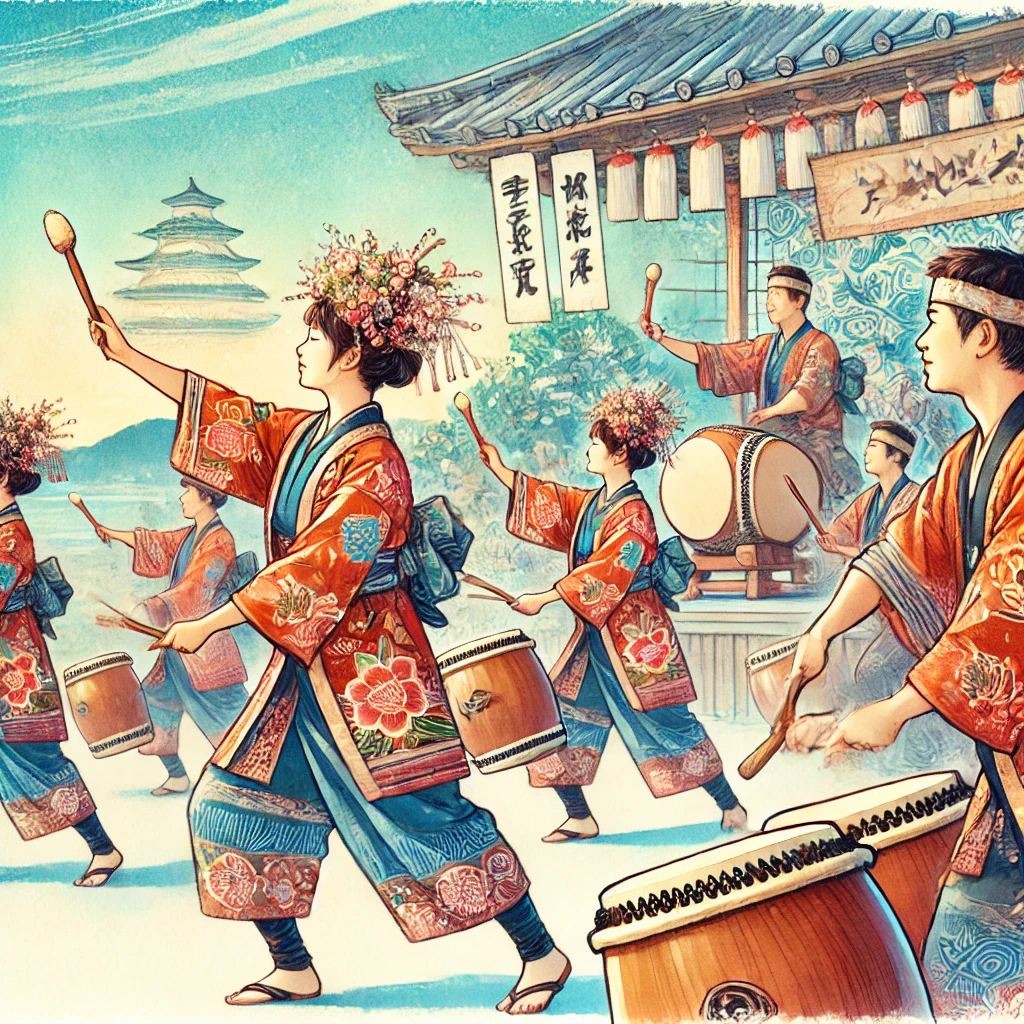
- The Powerful Sound of Drums and the Dynamic Movements of Dancers
- Introduction
- Origins and History of Taiko Eisa
- Features and Allure of Taiko Eisa
- Types of Taiko Eisa
- Taiko Eisa and the Spiritual World of Okinawa
- Legends and Anecdotes Surrounding Taiko Eisa
- The Role of Taiko Eisa in Modern Society
- Experiencing Taiko Eisa
- Conclusion
- Q&A
- Summary of This Article
The Powerful Sound of Drums and the Dynamic Movements of Dancers
The traditional Okinawan performance art known as “Eisa” holds a mesmerizing power that captivates and moves the hearts of its audience. With the thunderous beat of drums, the vibrant and energetic movements of the dancers, and the electric atmosphere shared with the spectators, Eisa is much more than a simple performance. It embodies the spirit of the Okinawan people and the essence of a culture preserved through generations.
A Journey to Discover Your Cultural Roots
Have you ever felt the desire to explore your cultural roots and discover a new side of yourself? Or perhaps you seek an emotional and awe-inspiring experience that takes you away from the hustle and bustle of daily life? Eisa offers a captivating cultural experience that quenches this thirst in your heart.
Exploring the Depths of Eisa
In this article, we will delve into the rich history of Eisa and explore its innovative practices in the modern era. You might find messages from the Okinawan ancestors who have cherished and preserved this tradition through the ages. Witnessing the younger generation express themselves and connect with the world through Eisa reveals the boundless potential of cultural traditions.
Experiencing Eisa Firsthand
We will also provide detailed information on where and how you can experience Eisa yourself. Donning the vibrant costumes and striking the drums, you might find yourself united with the spirit of the Okinawan people and discover a new facet of your identity in the process.
A Bridge Connecting Past, Present, and Future
Eisa serves as a bridge connecting Okinawa’s past, present, and future. Through this article, we invite you to become part of this bridge and feel the heart of Okinawa. Guided by the sound of the drums, embark on a journey into the enchanting world of Eisa.
Introduction
The powerful rhythm of the drums, the elegant yet dynamic movements of the dancers, and the fusion of reverence for ancestors with the breath of modernity—that is the essence of the Taiko Eisa. This article aims to introduce the charm and distinctive features of Taiko Eisa to tourists visiting Okinawa and those interested in Japanese culture. Through Eisa, we will delve deep into the heart and cultural layers of Okinawa.
What is Taiko Eisa?
Taiko Eisa is one of Okinawa’s most representative traditional performing arts. Originally performed during the Obon festival, which occurs from the 13th to the 15th of the seventh month in the lunar calendar, it has now become a cultural symbol of Okinawa, showcased throughout the year in various settings. The rhythmic sound of the drums and the energetic movements of the dancers are captivating and enchanting for the audience.
Definition of Eisa
Originally, Eisa referred to dances performed during the Obon period to console the spirits of ancestors. There are various theories about the origin of the word “Eisa,” with one popular belief being that it is derived from the sound of the chant “Nam-myoho-renge-kyo,” which evolved into “Eisa.” Taiko Eisa refers to the form of Eisa that incorporates drum performances.
Eisa is characterized by the following elements:
- Rhythmic performances using drums and hand dances
- Accompaniment by the sanshin (a traditional Okinawan three-stringed instrument)
- Unique shouts and songs
- Colorful costumes
- Group performances
These elements combine to create the overwhelming impact and emotional resonance that Eisa brings to its viewers.
Basic Components of Taiko Eisa
To fully appreciate the allure of Taiko Eisa, it is important to understand its basic components. Here, we will delve into the major elements that define Taiko Eisa.
1. Drums
The core of Eisa is the drum. The primary types of drums used are:
- Paranku: A small handheld drum played while dancing.
- Chondara: A medium-sized drum carried on the shoulder.
- Oodaiko: A large drum usually played in a fixed position, producing a deep, resonant sound.
The complex rhythms created by these drums are the driving force behind Eisa’s energetic performance.
2. Dance
The dance in Eisa is a unique physical expression synchronized with the drum beats. Key features include:
- Powerful stomping of the feet
- Stable, low postures
- Spins and jumps while beating the drum
- Formation changes in group dances
These movements combine to create the distinct vibrancy and intensity of Eisa.
3. Costumes
The costumes in Eisa are eye-catching with their vibrant colors and unique designs. Typical costumes include:
- Hantan: Short-sleeved tops predominantly in red or blue
- Hachimaki: Bright cloth bands tied around the forehead
- Kubagasa: Hats made from the leaves of the buri palm
These costumes enhance the visual appeal of the dancers’ movements.
4. Music
The music in Eisa is not just about the drum rhythms; it also includes:
- Sanshin: The traditional Okinawan three-stringed instrument that plays the melody
- Songs: Okinawan folk songs and newly created pieces
- Shouts: Unique calls like “Yasa-sa” and “Ha-iya” that add to the rhythm
Together, these musical elements create the rich soundscape unique to Eisa.
The Role of Taiko Eisa in Okinawan Culture
Taiko Eisa holds a significant place in Okinawan culture beyond being a traditional performing art. It is deeply connected to the identity and spirituality of the Okinawan people, serving as a living cultural heritage.
Importance as Traditional Performing Art
Taiko Eisa occupies a particularly important position among Okinawan traditional performing arts for several reasons:
- Historical Depth: Eisa’s origins date back hundreds of years, evolving alongside Okinawan history.
- Spiritual Significance: Initially, Eisa was performed for ancestor worship and continues to express the spirituality of Okinawan people.
- Cultural Concentration: Eisa encapsulates various elements of Okinawan culture, including music, dance, and costume.
- Intergenerational Inheritance: People of all ages participate in Eisa, playing a vital role in cultural transmission.
These elements together make Taiko Eisa a crucial representation of Okinawan culture.
Roles in Contemporary Okinawan Society
In modern Okinawan society, Taiko Eisa continues to play diverse roles beyond its traditional context. Let’s examine some of its key contemporary functions.
1. Strengthening Community Bonds
Eisa plays a vital role in connecting local communities:
- Central attraction at local festivals and events, promoting community interaction
- Opportunities for intergenerational bonding through practice and preparation
- Fostering a sense of pride and belonging among residents
Through these functions, Eisa continues to play an essential role in modern society by uniting people.
2. Expression of Cultural Identity
In today’s globalized world, Eisa serves as an important means for Okinawans to express their cultural identity:
- Embodies unique Okinawan culture, distinguishing it from other regions
- Symbolizes Okinawan heritage for those living outside the prefecture or overseas
- Encourages younger generations to rediscover and take pride in their culture
Thus, Eisa is indispensable for Okinawans to affirm and express their cultural identity.
3. Economic and Tourism Value
Taiko Eisa also plays a significant role in Okinawa’s tourism industry:
- Popular attraction at tourist shows and events
- Part of cultural experience programs for tourists
- Economic impact from sales of related merchandise and CDs
- Drawing tourists through large-scale Eisa festivals
From these aspects, Eisa greatly contributes to Okinawa’s economy.
4. Means of International Exchange
Recently, Eisa has been active in the realm of international cultural exchange:
- Featured at Okinawa festivals abroad, attracting attention
- Part of cultural diplomacy, introducing Japanese traditions internationally
- Participation in international arts festivals and cultural events, promoting Okinawan culture worldwide
In this way, Eisa serves as a cultural bridge connecting Okinawa to the world.
Overall, Taiko Eisa maintains its importance as a traditional art while also fulfilling diverse roles in contemporary society. It strengthens community bonds, expresses cultural identity, generates economic value, and serves as a means of international exchange, making it a living symbol of Okinawan culture.
In the next section, we will explore the origins and history of Taiko Eisa. Understanding its historical background will provide a clearer picture of the modern form of Taiko Eisa and deepen our appreciation of its rich heritage.
Origins and History of Taiko Eisa
Taiko Eisa has been nurtured within the rich cultural and historical context of Okinawa. Its origins date back to ancient times, evolving through various eras and continuing to be passed down to the present day. Here, we will examine the history of Taiko Eisa in detail. Understanding its history is crucial to comprehending the spirituality and cultural background of the Okinawan people.
Buddhist Influence and Ancestor Worship
The origins of Taiko Eisa are deeply tied to the introduction of Buddhism to Okinawa around the 15th century, leading to the birth of Eisa.
Connection to Nenbutsu Odori
The prototype of Eisa is believed to be the “Nenbutsu Odori,” a Buddhist dance characterized by:
- Chanting “Namu Amida Butsu” while dancing
- Using drums and bells
- Performing to console the spirits of ancestors
This dance merged with Okinawa’s unique culture and environment, leading to its distinctive development.
One intriguing aspect is the origin of the word “Eisa,” with a popular theory suggesting it evolved from the chant “Eesai” derived from “Namu Amida Butsu.”
Development as an Obon Event
One significant factor in the evolution of Eisa was its association with the Obon festival. Held from the 13th to the 15th of the seventh lunar month, Obon is a crucial period for welcoming and consoling ancestral spirits. Eisa became a staple performance during this festival, characterized by:
- Parades through villages (“Michijune”)
- Performances at homes to console ancestral spirits
- Youth-driven performances
These practices highlight Eisa’s role as a cultural activity deeply embedded in community life.
Development in Agricultural Society
Eisa evolved uniquely within Okinawa’s agrarian society, influenced by the rhythms of farm work and village social structures.
Strengthening Community Bonds
In rural society, Eisa played a crucial role in strengthening community bonds:
- Intergenerational Interaction: Opportunities for interaction between young and old during practice and performances
- Spirit of Cooperation: Community-wide cooperation needed for preparations, enhancing community spirit
- Cultural Transmission: Passing down regional history and culture to younger generations
Of particular interest is Eisa’s connection to “Yui Maru,” the Okinawan spirit of mutual assistance.
Role as Entertainment
Besides its sacred aspect, Eisa served as a valuable form of entertainment in rural society, offering:
- Special Occasions: A break from daily labor, providing special moments of enjoyment
- Opportunities for Youth Interaction: An important occasion for young people to meet and interact
- Expression of Creativity: A platform for creating new dances and songs
For young people especially, Eisa held significant meaning, as described by an elder:
“The Eisa season was eagerly anticipated by the youth. Despite the demanding daily labor, their eyes sparkled with excitement when Eisa practice began.”
Thus, Eisa provided both spiritual fulfillment and entertainment in rural society.
Post-War Transformation and Modern Role
World War II profoundly affected Okinawan culture, including Eisa. However, after the war, Eisa underwent revival and further development, adapting to new contexts.
Cultural Revival Under Occupation
During the American occupation, Eisa played a vital role:
- Maintaining Cultural Identity: Symbolizing Okinawan identity under occupation
- Rebuilding Communities: Helping to rebuild war-torn communities
- Healing Hearts: Offering hope and healing in post-war recovery
Notably, the All-Okinawa Eisa Contest, started in 1956, marked a significant cultural revival event.
Integration with Tourism
Since Okinawa’s reversion to Japan in 1972, Eisa has closely integrated with the tourism industry, leading to significant changes:
- Year-Round Performances: Presented throughout the year, not just during Obon
- Professionalization: Emergence of professional groups performing for tourists
- Enhanced Production: Incorporation of more visually appealing elements
- Creation of Modern Eisa: Development of new styles blending traditional and contemporary elements
This transformation reflects the balance between preserving tradition and embracing innovation.
Overall, Taiko Eisa has evolved through a rich history of Buddhist influence, agricultural development, post-war revival, and modern adaptation. This history mirrors the broader cultural and social changes in Okinawa, making Taiko Eisa a vital symbol of Okinawan culture.
In the next chapter, we will explore the distinctive features and allure of Taiko Eisa, including its rhythms, dance movements, and vibrant costumes, to fully appreciate why this art form captivates so many.
Features and Allure of Taiko Eisa
Taiko Eisa captivates with its unique rhythms, vibrant costumes, and powerful dances. Here, we will delve into the features and allure of Taiko Eisa, exploring why this performing art attracts so many admirers.
Unique Rhythm and Dynamism
The most striking feature of Taiko Eisa is its unique rhythm and dynamic energy. The sound of the drums resonates through the body, and the dancers’ movements synchronize perfectly with the music, drawing the audience into an overwhelming world.
Harmony with the Sanshin
The music of Taiko Eisa is not just about drums; it is beautifully harmonized with the traditional Okinawan instrument, the sanshin.
- Role of the Sanshin: The sanshin provides both melody and rhythm, forming the musical foundation of Eisa.
- Interaction between Drums and Sanshin: The rhythm of the drums and the melody of the sanshin intertwine to create a unique soundscape.
- Emotional Expression: The tone of the sanshin conveys a range of emotions, from melancholy to joy, adding depth to Eisa.
A music critic once said about Taiko Eisa’s music:
“The music of Taiko Eisa beautifully merges the powerful sound of the drums with the delicate tones of the sanshin. This harmony stirs the listeners’ hearts and creates an irresistible impulse to move along with the rhythm.”
Indeed, when listening to an Eisa performance, you might find yourself swaying unconsciously. This magical effect is the result of the perfect harmony between the drums and the sanshin.
The Role of Shouts
In Taiko Eisa, shouts are not just an accessory; they are an essential part of the performance, crucial for creating the overall atmosphere of Eisa.
- Emphasizing Rhythm: Shouts like “Yare!” and “Yassa!” emphasize the drum rhythms and add dynamism to the performance.
- Fostering Unity: Shouts enhance the sense of unity among the dancers and engage the audience.
- Expressing Spirit: Shouts can be seen as expressions of the Okinawan people’s spirit and emotions.
Tarō Yamashiro, an Eisa instructor, explains the importance of shouts:
“Shouts are the soul of Eisa. It’s not just about making noise; it’s about expressing feelings for ancestors, bonds with friends, and love for Okinawa. When these feelings reach the audience, Eisa shines brightest.”
Watching an Eisa performance, you can see how the shouts stir the audience and enhance the entire performance. Sometimes, the audience joins in, creating a moment of unity that is one of the true delights of Eisa.
The Splendor and Significance of Costumes
One of the charms of Taiko Eisa lies in its vibrant and unique costumes. These colorful costumes not only enhance the dancers’ movements but also carry deep meanings.
Features of Traditional Costumes
The traditional costumes of Eisa have distinct features:
- Hantanjin: Short-sleeved tops in red or blue, which enhance the dancers’ movements with their bright colors.
- Hachimaki: Bright cloth bands tied around the forehead, expressing the dancers’ spirit.
- Kubagasa: Hats made from the leaves of the buri palm, adding rhythm to the dance with their gentle sway.
These costumes each carry significant meanings. For example:
- Red: Symbolizes vitality and passion
- Blue: Represents the sea, sky, and harmony with nature
- White: Signifies purity and sacredness
Moritomi Shimabukuro, a folklorist, comments on Eisa costumes:
“Eisa costumes are not mere decorations; they encapsulate Okinawa’s views on nature and the universe. For instance, the red and blue colors represent the harmony of sun and shade, heaven and earth. Wearing these costumes, dancers feel a sense of unity with nature and the cosmos as they perform.”
Understanding Eisa costumes provides deeper insights into Okinawan culture and spirituality.
Modern Adaptations
While preserving tradition, Eisa costumes have evolved over time. Recently, new styles combining traditional designs with modern elements have emerged.
- Material Innovation: Incorporating modern, more flexible materials alongside traditional fabrics
- Diverse Designs: Introducing more refined designs based on traditional motifs
- Expanded Color Range: Using a wider range of colors while maintaining traditional bases
These modern adaptations play a key role in attracting younger generations to Eisa. Mayumi Yamaguchi, a fashion designer, notes:
“The balance between tradition and innovation is crucial in modern Eisa costumes. By incorporating contemporary design elements while retaining traditional aspects, we can effectively convey the appeal of Eisa to younger generations. Additionally, costumes that stand out on social media help raise awareness and appreciation for Eisa.”
Indeed, posts on social media featuring vibrant Eisa costumes have gained popularity, indicating that Eisa is becoming part of modern youth culture.
The Fusion of Drumming and Dancing
The greatest allure of Taiko Eisa is the seamless fusion of drumming and dancing. This integration creates a powerful and beautiful spectacle that captivates viewers.
Diverse Physical Expressions
Eisa dancing is not just about following set choreography; it encompasses rich physical expressions, showcasing each dancer’s individuality.
- Dynamic Movements: Characterized by large, sweeping arm movements and jumps.
- Delicate Hand Gestures: Meaningful, intricate finger movements.
- Facial Expressions: The dancers’ expressions are a vital part of Eisa.
Kyoko Higa, a professor at Okinawa Prefectural University of Arts, states:
“Eisa dance expresses Okinawa’s history and culture through the body. For example, the powerful stomping movements reflect respect for ancestors and a connection with the earth. The delicate hand gestures represent the rich nature and breeze of Okinawa.”
This diversity of physical expression elevates Eisa from mere dance to an art form.
Power of Group Performances
One of Eisa’s most impressive aspects is its powerful group performances. The sight of many dancers moving in perfect unison is truly breathtaking.
- Formation Changes: Creating various geometric patterns like circles and lines.
- Synchronized Movements: Moments of perfect synchronization are awe-inspiring.
- Contrast between Solo and Group: Skillfully combining solo and group performances for dynamic variety.
Tarō Kinjo, an Eisa instructor, explains:
“Eisa’s group performances embody the spirit of ‘Yui-maru’ (mutual aid) in Okinawa. Each person fulfills their role while maintaining overall harmony, reflecting Okinawan society itself. The audience is captivated by the beauty and power born from this unity.”
At large Eisa festivals, witnessing dozens or even hundreds of dancers performing in unison is an unforgettable experience. This is a unique charm of live Eisa performances that cannot be replicated on TV or video.
The features and allure of Taiko Eisa are diverse. The unique rhythm and harmony with the sanshin, the stirring shouts, the vibrant and meaningful costumes, and the seamless fusion of drumming and dancing—all these elements combine to create a captivating performance that captures the hearts of its audience.
However, the features and allure discussed here are just part of Taiko Eisa’s charm. Experiencing Eisa live offers an indescribable sense of excitement and emotion. If you visit Okinawa, attending an Eisa performance will allow you to truly feel the spirit, history, and soul of Okinawa embodied in this art form.
In the next chapter, we will explore the various types of Taiko Eisa, including regional differences and the characteristics of traditional versus creative Eisa. Let’s delve deeper into the rich diversity of Eisa.
Types of Taiko Eisa
Taiko Eisa is not a monolithic tradition. It has developed uniquely in various regions of Okinawa, evolving over time into new forms. Here, we will explore the diverse types of Taiko Eisa in detail. By understanding the different types of Eisa, you can gain a deeper appreciation for the depth and allure of this traditional performing art.
Traditional Eisa
Traditional Eisa has been shaped over a long history and is closely connected to the culture and climate of each region. These performances are primarily held during the Obon season, serving to honor ancestors and strengthen community bonds.
Youth Association Eisa
Youth Association Eisa is the most common form of traditional Eisa in Okinawa, passed down and performed by local youth associations.
- Characteristics: Performed mainly by local young people
- Purpose: Honoring ancestors, strengthening community bonds, and preserving tradition
- Performance Period: Primarily during Obon (July 13-15 in the lunar calendar)
The charm of Youth Association Eisa lies in its simplicity and strength. The dedication of the local youth, rather than professional performers, deeply touches the hearts of many.
Kenichi Yamashiro, President of the Okinawa Eisa Association, speaks about Youth Association Eisa:
“Youth Association Eisa embodies the spirit of Okinawa. The sincerity with which young people dance to honor their ancestors holds the true soul of Eisa. Even as Eisa becomes more commercialized, it is essential to preserve this pure form of the tradition.”
Notable aspects of Youth Association Eisa include:
- Strong Regional Identity: Reflects the history and culture of each region.
- Intergenerational Interaction: Involves community members of all ages in both preparation and performance.
- Tradition Transmission: Skills and spirit are directly passed from seniors to juniors.
Watching Youth Association Eisa, you can feel the dancers’ serious expressions and the sense of unity with the audience. This atmosphere is unique and different from professional performances.
Aza Eisa
Aza Eisa is performed by smaller administrative units called “aza.” It is even more localized than Youth Association Eisa and closely tied to the local community.
- Characteristics: Performed in smaller local units
- Participants: Entire community members, from children to the elderly
- Purpose: Strengthening community ties and preserving tradition
The appeal of Aza Eisa lies in its intimacy and warmth. Participants often know each other well, creating a genuine “local festival” atmosphere.
Mariko Maeda, a curator at the Okinawa Prefectural Museum, explains Aza Eisa:
“Aza Eisa reflects the traditional community spirit of Okinawa. Even amid urbanization, many regions maintain their community bonds through Aza Eisa. It also plays a crucial role in naturally introducing children to local culture.”
Distinctive features of Aza Eisa include:
- Unique Performances: Some aza have unique dances and songs specific to their community.
- Generational Participation: Involves a wide range of age groups from children to the elderly.
- Reflection of Local History: Local history and legends are often incorporated into the Eisa performances.
Opportunities to see Aza Eisa may be relatively rare for tourists. However, if you get the chance, it’s worth attending. You’ll experience the warmth of Okinawan community life and the continuity of its cultural heritage.
Creative Eisa
Creative Eisa is a modern form that integrates contemporary elements while rooted in traditional Eisa. It emerged in response to the development of the tourism industry and changes in young people’s interests, representing a new direction for Eisa.
Fusion with Modern Music
A significant feature of Creative Eisa is its fusion with modern music. In addition to traditional sanshin and drum sounds, contemporary instruments and music are incorporated.
- Instruments Used: Electronic instruments, drums, guitars, etc.
- Music Genres: Rock, pop, hip-hop, etc.
- Purpose: Attracting younger generations and modernizing Eisa
This fusion has made Eisa more accessible to a broader audience, especially the younger generation, who find it more relatable and engaging.
Sachiko Takara, leader of the creative Eisa group “New Wave Eisa,” says:
“While valuing tradition, we aim to create Eisa that resonates with the sensibilities of today’s youth. When the electric guitar sound merges with the sanshin, and the audience’s eyes light up, I feel the potential of new possibilities. I believe Eisa is an ever-evolving art form.”
Characteristics of Eisa’s fusion with modern music include:
- Diversification of Rhythms: Incorporates various modern rhythms alongside traditional ones.
- Enhanced Productions: Utilizes sound and lighting effects for more spectacular performances.
- Creation of New Choreography: Develops new movements and choreography to match modern music.
Watching a Creative Eisa performance, you will be impressed by its impact and novelty. It combines traditional elements and modern expressions into a compelling new form of entertainment.
Enhanced Performance Quality
Another major characteristic of Creative Eisa is the enhancement of its performance quality. While maintaining traditional Eisa elements, it aims for more visually striking and entertaining performances.
- Special Effects: Utilizes lighting, sound, and special effects.
- Choreography: Incorporates acrobatic movements and elements of modern dance.
- Costumes: Modern adaptations of traditional designs, creating more vibrant and contemporary looks.
This enhancement has attracted larger audiences and gained attention both domestically and internationally.
Kentaro Tanaka of the Okinawa Cultural Promotion Division evaluates Creative Eisa:
“Creative Eisa has evolved into a global entertainment form while preserving the soul of Okinawa. Its balance of Las Vegas-style glamour and Okinawan spirit is impressive. It plays a crucial role in promoting Okinawan culture in a new way.”
Enhanced performance quality in Creative Eisa includes:
- Storytelling Elements: Incorporates narrative elements into the performance.
- Collaborations with Other Genres: Collaborates with other performance genres like dance, acrobatics, and theater.
- Costume Variations: Features multiple costume changes within a single show.
Watching a Creative Eisa performance, you will be captivated by its power and splendor. Especially for international tourists, it provides an excellent opportunity to experience the charm of Okinawan culture comprehensively.
Regional Variations
Although Eisa is performed throughout Okinawa, its characteristics and styles vary by region. These differences reflect each area’s history, culture, and natural environment, showcasing the diversity and depth of Eisa.
Main Island Eisa
Main Island Eisa is the most widely known and frequently seen by tourists. It has regional variations within the main island itself.
- Northern (Yanbaru) Eisa: Characterized by movements that mimic nature.
- Central Eisa: Noted for powerful dances and complex formation changes.
- Southern Eisa: Known for its graceful and refined movements.
Folklore professor Kiyoko Shimabukuro explains Main Island Eisa:
“Main Island Eisa clearly reflects the history and culture of its regions. Northern Eisa embodies the rich history of coexistence with nature, Central Eisa showcases the martial culture of the Ryukyu Kingdom, and Southern Eisa reflects the refined culture centered around Shuri and Naha.”
Distinctive features of Main Island Eisa include:
- Diversity: Even within the main island, there are vastly different styles.
- Connection to Tourism: Many hotels and theme parks offer shows based on Main Island Eisa.
- Coexistence of Tradition and Innovation:
Traditional groups and those seeking new expressions coexist.
When watching Main Island Eisa, it’s interesting to focus on regional characteristics. For example, in northern regions rich in nature, you might see elegant movements mimicking waves and birds. In central areas, you’ll witness the strength and unity of traditional farming societies expressed through intense movements and complex formations.
Island Eisa
Each of Okinawa’s outlying islands has its unique form of Eisa, distinct from the Main Island’s style. These forms reflect the unique culture and history of each island.
- Miyako Island Eisa: Features masked dancers called “Paantu.”
- Ishigaki Island Eisa: Combines with traditional masked dance called “Angama.”
- Kume Island Eisa: Includes a unique dance called “Yakkoso-uran.”
Kazuhiko Ooshiro, head researcher in the Folklore Division at the Okinawa Prefectural Museum & Art Museum, comments on Island Eisa:
“Island Eisa is a precious cultural asset reflecting each island’s unique character. Due to their distance from the main island, they often preserve ancient forms or have developed uniquely. Through these Eisa, one can sense the depth of Okinawa’s culture.”
Distinctive features of Island Eisa include:
- Unique Rituals: Many island Eisa are tied to specific local beliefs and rituals.
- Language Differences: The unique dialects of the islands are reflected in the lyrics and shouts.
- Impact of Natural Environment: The island’s geography and climate influence Eisa’s movements and costumes.
Opportunities to see Island Eisa may be less frequent than Main Island Eisa. However, if you have the chance, it’s worth attending to glimpse the diversity of Okinawan culture.
For example, Miyako Island’s Eisa includes “Paantu,” dancers with mud-covered masks meant to ward off evil spirits, showcasing the island’s ancient rituals within Eisa. Ishigaki Island’s Eisa features “Angama,” masked dancers resembling ox horns, representing the island’s agricultural heritage.
Thus, Taiko Eisa includes a rich variety of forms, each with its unique charm. Traditional Eisa embodies the spirituality and communal bonds developed over centuries, while Creative Eisa explores new expressions by incorporating contemporary elements. Regional variations highlight Okinawa’s cultural diversity.
When enjoying Eisa, pay attention not just to its visual spectacle and dynamism but also to the background and significance of each type. From Traditional Eisa, you can sense the spirituality and community bonds of Okinawa’s people. From Creative Eisa, you can see the balance between tradition and innovation and the ongoing development of culture. Regional variations offer insights into the diverse history and culture of Okinawa.
Understanding the diversity of Eisa leads to a deeper appreciation of Okinawan culture. Knowing the characteristics and attractions of each type allows for a more enjoyable experience. Whenever possible, experience various forms of Eisa and feel the depth of Okinawan culture firsthand.
In the next chapter, we will delve deeper into the relationship between Taiko Eisa and Okinawa’s spiritual world, explaining how Eisa is not just a dance but an important cultural practice expressing the spirituality and worldview of the Okinawan people.
Taiko Eisa and the Spiritual World of Okinawa
Taiko Eisa is more than just a dance or music; it is a vital cultural practice embodying the spiritual world of the Okinawan people. In this chapter, we will delve into the deep connection between Taiko Eisa and the spiritual world of Okinawa. Through Eisa, we can understand the worldview, values, and profound spirituality that flows through the hearts of the Okinawan people.
Ancestor Worship and Community Spirit
Ancestor worship holds a significant place in Okinawan culture. Taiko Eisa strongly reflects this spirit of ancestor worship and plays a crucial role in fostering a strong sense of community.
The Identity of “Uchinanchu”
“Uchinanchu” refers to the people of Okinawa. Taiko Eisa strongly expresses and reinforces this identity.
- Preservation of Language: The lyrics and chants in Eisa often use Okinawan dialects.
- Historical Transmission: The dances and songs of Eisa sometimes incorporate historical events of Okinawa.
- Cultural Pride: Performing Eisa strengthens the pride and awareness of being Uchinanchu.
Miwa Yamashiro, a folklorist at the Okinawa Prefectural Museum and Art Museum, explains:
“Eisa has the power to awaken the DNA of the Uchinanchu. Many Okinawan descendants living abroad reconnect with their roots and reclaim their Uchinanchu identity through Eisa. Eisa truly awakens the soul.”
Indeed, Eisa is actively performed by Okinawan communities abroad, serving as a means to confirm and strengthen their identity. In places like Hawaii and Brazil, where many Okinawan descendants live, Eisa has become a significant cultural event.
For example, at the annual “Okinawa Festival” in São Paulo, Brazil, Okinawan descendants perform Eisa. Many young participants who hardly speak Okinawan feel a connection to their roots and develop a sense of pride as Uchinanchu through Eisa.
Forming Bonds Across Generations
Taiko Eisa plays an essential role in forming bonds across generations, laying the foundation for Okinawa’s strong sense of community.
- Transmission of Skills: Older generations pass down Eisa skills directly to the younger ones.
- Transmission of Spirituality: Eisa helps convey Okinawan spirituality and values to the next generation.
- Collaborative Work: Preparing and practicing for Eisa creates opportunities for intergenerational cooperation.
Masatoshi Shimabukuro, president of the Okinawa Eisa Promotion Association, emphasizes the importance of intergenerational exchange through Eisa:
“Eisa embodies the traditional Okinawan spirit of ‘Yui-maru’ (mutual aid). Young people learn techniques from their elders, and elders are inspired by the new ideas of the youth. This intergenerational exchange strengthens the Okinawan community.”
An example is the annual “Three-Generation Eisa” in a northern Okinawan village during Obon. Grandparents, parents, and children dance Eisa together, enhancing family bonds and community cohesion.
During Eisa practice, frequent interactions occur between the elderly and the youth, who usually have little contact. The elderly share the meaning and history of Eisa with the youth, who listen attentively, creating a live cultural transmission.
The Spirit of “Ichari-bachode”
“Ichari-bachode” means “Once we meet, we are all brothers.” This phrase reflects the warm, welcoming spirit of Okinawa, which is deeply rooted in mutual assistance. Taiko Eisa embodies and promotes this spirit.
Expression of Mutual Assistance
Taiko Eisa clearly expresses Okinawan mutual assistance, seen throughout its preparation and performance.
- Joint Preparation: Tasks such as preparing costumes and setting up practice spaces are shared by all.
- Mutual Teaching: Skilled members teach beginners, fostering a culture of mutual improvement.
- Emotional Support: Members support each other through pre-performance nerves and mistakes.
Folklorist Kiyomi Nakama at the Okinawa Prefectural University of Arts explains:
“Eisa embodies the spirit of ‘one for all, all for one.’ If one makes a mistake, the group covers for them. Conversely, the group celebrates an individual’s growth. This spirit of mutual assistance is the core of Okinawan culture.”
This mutual assistance is evident in Eisa groups. For instance, in a central Okinawan Eisa group, experienced members pair with beginners for practice, fostering skill transmission and deepening bonds.
During performances, the backstage support is crucial. Tasks such as costume dressing, equipment preparation, and audience guidance are shared, ensuring a successful performance through mutual cooperation.
Community Exchange through Eisa
Eisa plays a significant role in promoting community exchange, especially in the modern urbanized society, offering valuable opportunities for people to connect.
- Eisa as a Community Event: Eisa is a major event in many communities, particularly during summer festivals.
- Intergenerational Exchange: Eisa facilitates interactions between different generations who may not usually meet.
- Strengthening Community Cohesion: Preparing and performing Eisa enhances the sense of unity within the community.
Yuko Ooshiro, head of the Okinawa Cultural Promotion Division, highlights the importance of community exchange through Eisa:
“In modern society, where community bonds are weakening, Eisa plays a crucial role in rebuilding these connections. Through Eisa, residents who rarely meet interact and discuss community issues, strengthening local ties.”
An example is the “Apartment Complex Eisa” initiative in a southern Okinawan housing complex, where residents formed an Eisa group. This initiative strengthened resident connections and revitalized community activities such as crime prevention and elder care.
Outside Okinawa, Eisa performed by Okinawan associations also promotes community exchange. For example, the Tokyo Okinawan Association’s Eisa events involve both Okinawan natives and local residents, deepening cultural understanding and promoting international exchange.
Post-War Reconstruction and Cultural Identity
Okinawa suffered extensive damage during World War II and was under U.S. military administration for a long time afterward. During these challenging times, Eisa became a crucial support for the Okinawan people, playing a vital role in preserving cultural identity.
Eisa as a Symbol of Cultural Heritage
During the post-war chaos, Eisa symbolized the preservation and transmission of Okinawan culture to future generations.
- Preservation of Culture: Amid the loss of many cultural assets, Eisa played a key role in preserving Okinawan culture.
- Confirmation of Identity: Under U.S. administration, Eisa served as a means of affirming Okinawan identity.
- Symbol of Hope: In difficult times, Eisa provided hope and vitality to the people.
Masayoshi Sato, director of the Okinawa Peace Memorial Museum, comments on the post-war role of Eisa:
“During the chaotic post-war period, when many cultural assets were lost and Okinawan identity was shaken, Eisa embodied the heart of Okinawa. By performing Eisa, people reaffirmed their roots and found hope for the future.”
For instance, in the 1950s, Eisa was performed in refugee camps near U.S. bases. Despite material shortages, people improvised costumes and drums, symbolizing the strong will of the Okinawan people to preserve their culture.
In 1972, Eisa was prominently featured during Okinawa’s reversion to Japan, reaffirming cultural identity.
Expression of Okinawa’s Unique Culture
Eisa has developed as an important means of expressing Okinawa’s unique culture, particularly post-war, maintaining and asserting cultural distinctiveness.
- Unique Musicality: The distinctive rhythms and melodies using sanshin and drums represent Okinawan music.
- Unique Dance Movements: Eisa movements reflect Okinawa’s nature and lifestyle.
- Traditional Costume Designs: Eisa costumes incorporate traditional designs from the Ryukyu Kingdom era.
Kazuko Tamaki, a professor of music at the Okinawa Prefectural University of Arts, explains the cultural uniqueness of Eisa:
“Eisa is a performing art that condenses Okinawa’s history, nature, lifestyle, and spirituality. For instance, the intense rhythms of Eisa can be seen as reflecting Okinawa’s typhoon-prone climate, while the graceful hand movements
symbolize the calm sea. Through Eisa, one can experience the entire culture of Okinawa.”
The “All-Island Eisa Festival,” started in the 1970s, is an example of Eisa showcasing Okinawa’s cultural diversity and uniqueness. This event, where Eisa groups from across Okinawa gather, has become a platform for widely promoting Okinawan culture.
In the 2000s, “Creative Eisa” incorporating modern music and dance elements emerged, attracting younger generations. This innovation shows that Okinawan culture is not only preserving its past but also constantly creating new expressions.
Furthermore, Eisa plays a significant role in introducing Okinawan culture internationally. For example, in 2019, an Okinawan Eisa group performed at the “Japonismes 2018” event in Paris, receiving a great response. This performance highlighted the diversity of Japanese culture and sparked strong interest in Okinawan culture.
Thus, Taiko Eisa holds deep significance as a cultural practice embodying the spiritual world of Okinawa. It has played a central role in ancestor worship, community spirit, the “Ichari-bachode” philosophy, and the reconstruction of cultural identity post-war.
Through Eisa, we can understand the worldview, values, and deep spirituality flowing through the hearts of the Okinawan people. It is not just a dance or music but a true expression of the Okinawan soul.
When enjoying Eisa as a tourist, be mindful of this deep spirituality. Beyond the colorful costumes and dynamic performances, you can feel the history, thoughts, and soul of the Okinawan people. This awareness will allow you to enjoy Eisa more deeply and richly.
In the next chapter, we will explore fascinating traditions and anecdotes related to Taiko Eisa. These stories will deepen your understanding of Eisa’s mystique and charm.
Legends and Anecdotes Surrounding Taiko Eisa
Many fascinating legends and anecdotes have been nurtured over the long history of Taiko Eisa. These stories deepen Eisa’s allure and enhance its mystique. Here, we will explore notable legends and significant modern events related to Eisa.
The Legend of “Unke”
The legend of “Unke” is a well-known origin story of Eisa, highlighting its spiritual significance as a sacred ritual.
Origin of the Legend
The legend of Unke is mainly passed down in Yomitan Village, central Okinawa:
Once, there was a beautiful girl named Unke in Yomitan Village, known for her dancing skills. One day, Unke mysteriously disappeared. The villagers discovered that she had been taken to the Dragon Palace under the sea. They began dancing to console her spirit, marking the beginning of Eisa.
Zenpatsu Shimabukuro, a leading Okinawan folklorist, explains:
“The legend of Unke symbolizes Eisa’s spiritual aspect. Unke represents the spirits of ancestors, and the Dragon Palace symbolizes the afterlife. Through Eisa, Okinawans connect the living and the afterlife, consoling the spirits of their ancestors.”
This legend underscores Eisa’s role in ancestor worship. Many regions perform Eisa during Obon for this reason.
Interestingly, this legend varies slightly by region, reflecting local culture and environment:
- In Yomitan Village, some versions say Unke returned and taught the villagers to dance.
- In northern Okinawa, the story involves Unke being taken by a mountain deity.
- In Miyako Island, the protagonist is an elderly woman named “Upuya.”
These variations show the influence of local characteristics on the story, such as proximity to the sea or mountains.
Influence on Modern Eisa
The legend of Unke influences modern Eisa in various ways:
- Incorporation into Performances: Many Eisa groups have performances based on the Unke story.
- Costume Design: Costumes and props inspired by Unke are used.
- Transmission of Spirituality: The legend helps convey Eisa’s spiritual meaning to younger generations.
Miwa Yamashiro, a dance professor at Okinawa Prefectural University of Arts, comments on the modern significance of the Unke legend:
“The legend of Unke offers essential insights for modern Eisa performers. Eisa is not just about dancing well; it is a sacred act connecting with the spirits of ancestors and the community. Understanding this legend helps performers grasp Eisa’s essence and achieve deeper expression.”
Many Eisa groups start by teaching new members the Unke legend, emphasizing its spiritual significance.
Recently, modern creative Eisa inspired by the Unke legend has emerged. For example, the “Ryukyu Fire Festival” in 2018 featured a large-scale Eisa performance reinterpreting Unke’s story with modern music, dance, and lighting effects, captivating the audience.
The 1970 “Koza Riot” and Eisa
The “Koza Riot” on December 20, 1970, marked a turning point in Eisa’s history, transforming it from a traditional art into a significant cultural symbol of Okinawan identity.
Overview of the Event
The Koza Riot was a large-scale protest in Koza (now Okinawa City) sparked by a traffic accident involving a U.S. serviceman:
- Trigger: A U.S. serviceman’s vehicle hit an Okinawan citizen.
- Development: The gathered citizens’ protest escalated into a riot.
- Scale: About 5,000 citizens participated, destroying around 80 U.S. military vehicles.
- Background: Accumulated dissatisfaction and friction under U.S. administration.
Masayoshi Sato, director of the Okinawa Peace Memorial Museum, explains the significance of the Koza Riot:
“The Koza Riot was not a spontaneous event; it was an explosion of long-standing dissatisfaction and anger under U.S. administration, reflecting a strong desire for self-determination. It remains a symbolic event in Okinawans’ memory, representing their identity and dignity.”
The riot occurred two years before Okinawa’s reversion to Japan in 1972, amid heightened tensions and uncertainties about the future.
Key points about the riot include:
- Spontaneous Protest: An organic action without specific organization or leadership.
- Non-violent Aspects: Minimal personal injury (no serious injuries).
- Expression of Okinawan Identity: Eisa and Okinawan folk songs were spontaneously performed during the protest.
The third point is crucial in understanding the relationship between Eisa and the Koza Riot. Many testimonies report that participants spontaneously began dancing Eisa during the riot.
Peace Wishes Expressed Through Eisa
The performance of Eisa during the Koza Riot was not coincidental. It redefined Eisa as a vital means of expressing Okinawan identity and aspirations for peace.
Kenichi Yamashiro, a curator at the Okinawa Prefectural Museum and Art Museum, explains:
“Dancing Eisa during the Koza Riot was highly symbolic. Okinawans unconsciously chose Eisa to express their anger and dissatisfaction, showing it was a means of expressing the soul’s cry. Simultaneously, dancing Eisa in a violent situation was a way to express a desire for peace.”
After the Koza Riot, Eisa underwent significant changes:
- Political Significance: Eisa became a symbol of Okinawan identity and rights advocacy.
- Development of Creative Eisa: New forms incorporating modern elements emerged.
- International Attention: Eisa gained recognition as a representative of Okinawan culture.
The “Koza Youth Association Eisa” formed in 1971 is an example. This group presented creative Eisa expressing Okinawa’s current state and aspirations for peace, receiving significant attention.
The “All-Island Eisa Festival,” started in 1975, also symbolizes post-Koza Riot changes in Eisa. It provides a platform for reaffirming Okinawan cultural identity and expressing peace wishes through Eisa.
Creative Eisa based on the Koza Riot, like the 2010 “KOZA – Soul’s Cry” performance, illustrates these changes. This large-scale stage production depicted the riot’s events and emotions through intense Eisa rhythms and dances, leaving a strong impression on the audience.
The relationship between the Koza Riot and Eisa offers important insights into understanding Okinawa’s modern history. Eisa continues to evolve as a cultural symbol expressing Okinawan thoughts and aspirations.</ p>
These legends and anecdotes surrounding Taiko Eisa highlight its profound meaning and the strong spirituality embedded in Okinawan hearts. The legend of Unke conveys Eisa’s spiritual aspect and the importance of ancestor worship. The Koza Riot and Eisa relationship demonstrate that Eisa remains a vital means of expressing Okinawan identity and aspirations today.
Knowing these stories allows for a deeper understanding and richer appreciation of Eisa. When watching Eisa performances, consider not only the colorful costumes and dynamic dances but also the thoughts, history, and soul of the Okinawan people behind them. This perspective will enable you to enjoy Eisa in a new and enriching way.
In the next chapter, we will explore the roles of Taiko Eisa in modern society, including the balance between tradition and innovation, its value as a tourism resource, and its importance in international exchange.
The Role of Taiko Eisa in Modern Society
Taiko Eisa, a traditional performing art with a long history, continues to play significant roles in modern society. In this section, we will explore the various roles that Taiko Eisa fulfills today.
As a Tourism Resource
In Okinawa tourism, Taiko Eisa is an indispensable attraction. Many tourists are captivated by the dynamic performances and colorful costumes of Eisa, allowing them to experience the charm of Okinawan culture firsthand.
Hosting Eisa Festivals
Throughout the year, various Eisa festivals are held in Okinawa. These events provide excellent opportunities for tourists to experience Okinawan culture.
- All-Island Eisa Festival: The largest Eisa event in Okinawa, held every August.
- Naha Great Tug-of-War Festival: A traditional event in October that also features Eisa performances.
- Regional Eisa Festivals: Localized events held on the main island and remote islands of Okinawa.
Seiichi Takahashi (pseudonym), Director of the Okinawa Prefecture Tourism Promotion Department, commented on the tourism value of Eisa festivals:
“Eisa festivals provide a precious opportunity to experience Okinawan culture all at once. Particularly, the All-Island Eisa Festival attracts over 100,000 spectators every year, making it a significant attraction during Okinawa’s peak tourist season in August. Additionally, smaller regional Eisa festivals offer unique local culture and atmosphere, making them popular among many tourists.”
Indeed, the economic impact of these festivals is substantial. For instance, the All-Island Eisa Festival’s economic effect is estimated at approximately 2 billion yen annually, making it a crucial source of income for Okinawa’s summer tourism.
These festivals are not just tourist events but also vital cultural activities for local communities. Preparing and hosting these events brings residents together, strengthening community bonds and helping preserve cultural traditions.
Hotel Show Performances
Many resort hotels in Okinawa host cultural shows centered around Eisa. These shows offer tourists an easy way to experience Okinawan culture.
- Regular Performances: Many hotels host Eisa shows several times a week.
- Dinner Shows: Programs that combine Okinawan cuisine with Eisa performances are popular.
- Experience Programs: Workshops where tourists can try Eisa themselves.
Taro Yamada (pseudonym), Manager of the Entertainment Department at a major resort hotel in Okinawa, discussed the significance of hotel Eisa shows:
“Hotel Eisa shows provide an important opportunity for guests to easily experience the splendor of Okinawan culture. For many international visitors, Eisa becomes one of the most memorable experiences of their stay in Okinawa. Moreover, the post-show experience programs, where guests can dance Eisa themselves, allow them to understand and enjoy Okinawan culture more deeply.”
These hotel shows offer professional Eisa groups significant performance opportunities. Many Eisa performers build their careers through these shows, often leading to larger stages and international performances.
However, balancing traditional preservation with tourist demands in these performances can be challenging. While there is a call for more flamboyant presentations, it is essential to maintain the inherent charm and spirituality of Eisa.
Thus, Taiko Eisa plays a vital role as a tourism resource, conveying the charm of Okinawan culture to many people. At the same time, through tourism, Eisa itself continues to evolve, creating new expressions. Balancing tradition and innovation, Eisa serves as a critical medium for showcasing Okinawan cultural identity to the world.
Passing Down Culture to the Youth and New Challenges
Taiko Eisa offers young Okinawans a way to reconnect with their cultural roots and create new expressions. It also plays a role in passing on and developing Okinawan traditional culture.
Efforts in School Education
Many schools in Okinawa incorporate Eisa into their curricula and extracurricular activities. This provides young people with an opportunity to learn not only Eisa’s techniques but also the culture, history, and spirituality behind it.
- Classes in Elementary and Middle Schools: Learning Eisa in music and physical education classes.
- High School Clubs: Many high schools have Eisa clubs.
- University Circle Activities: Eisa circles are active in many universities.
Mika Shimabukuro (pseudonym), advisor of the Eisa Club at Okinawa Prefectural Shuri High School, spoke about the significance of Eisa in school education:
“Through Eisa, students can feel Okinawa’s culture and history firsthand. They also develop various skills such as cooperation, leadership, and expression through practice and performances. Additionally, interacting with local residents through Eisa fosters pride and responsibility towards their culture.”
Many school Eisa clubs and circles actively contribute to society by performing at local events and welfare facilities. Through these activities, young people recognize the value of their culture and actively engage in its preservation and development.
Innovation by Young Artists
Recently, young artists have brought fresh perspectives to Eisa, integrating modern elements while respecting tradition.
- Fusion with Modern Music: Works combining Eisa with rock, hip-hop, and other contemporary music genres.
- Fusion with Dance: Incorporating elements of contemporary dance into Eisa.
- Use of Digital Technology: Performances using projection mapping and other advanced technologies.
Kenta Yamashiro (pseudonym), a young Eisa artist, described his creative activities:
“Our generation has grown up in a global cultural environment. We see new possibilities by blending Eisa with various global cultures and expression methods. However, this does not mean disregarding tradition. We aim to understand the essence of tradition deeply and reinterpret and express it in a modern context.”
This new form of Eisa has garnered significant support, especially among young people. For instance, the “New Wave Eisa Fest” in Naha City in 2019 attracted a broad audience, including traditional Eisa fans, young people, and international tourists.
These innovative Eisa performances have also received high praise overseas. At the “Japan Week” in New York in 2018, contemporary Eisa performances drew enthusiastic responses from local audiences.
Innovation by young generations breathes new life into this traditional art, making Eisa a culturally appealing practice to a broader audience.
Bridging International Exchanges
Taiko Eisa plays a crucial role in promoting Okinawan culture worldwide. It is also a symbol of Japan’s cultural diversity in international exchanges.
Overseas Performances
In recent years, the number of overseas Eisa performances has increased, introducing Okinawan culture to the world.
- Participation in Cultural Festivals: Eisa groups are invited to cultural festivals worldwide.
- Sister City Exchanges: Eisa performances as part of cultural exchanges with sister cities.
- Japanese Cultural Events: Performances at events hosted by Japanese embassies and international exchange foundations.
Mariko Sato (pseudonym), Director of the International Exchange Division at the Okinawa Prefecture Department of Culture, Tourism, and Sports, spoke about the significance of Eisa’s overseas performances:
“Overseas Eisa performances are excellent opportunities to directly convey the appeal of Okinawan culture to the world. The dynamic nature of Eisa and its expressions embodying Okinawan history and spirituality resonate with audiences beyond language barriers. These performances also deepen cultural ties between Okinawa and various parts of the world, creating new exchange opportunities.”
Indeed, Eisa’s overseas performances have generated significant reactions. For example, at the “Japonismes 2018” event in Paris, an Okinawan Eisa group’s performance captivated local audiences, sparking increased interest in Okinawa and leading many French people to visit Okinawa.
Additionally, the “Virtual Okinawa Week in New York” in 2020, held online due to the COVID-19 pandemic, featured Eisa performances that attracted viewers worldwide. This initiative highlighted new ways to continue cultural exchanges even during a pandemic.
Contributing to Cultural Diplomacy
Eisa also plays a significant role in Japan’s cultural diplomacy, showcasing Japan’s cultural diversity on the international stage.
- Performances at National Events: Eisa performances at welcome events for foreign dignitaries visiting Japan.
- Japanese Culture Introduction Programs: Eisa featured in international exchange programs like the JET Program.
- Cultural Heritage Registration Efforts: Initiatives to register Eisa as
a UNESCO Intangible Cultural Heritage.
Ichiro Yamada (pseudonym), Director of the Cultural Exchange Division at the Ministry of Foreign Affairs, commented on the significance of Eisa in cultural diplomacy:
“Eisa effectively demonstrates Japan’s cultural diversity and richness to the world. Especially, Eisa, with its unique Okinawan historical and cultural background, exemplifies that Japan is a nation of diverse cultures. Eisa’s spirit of peace and coexistence aligns with Japan’s diplomatic principles, enhancing Japan’s soft power in the international community.”
Indeed, Eisa is showcased in various international settings as a representative of Japanese culture. For instance, at the cultural program of the G20 Summit in Tokyo in 2019, Eisa performances received high praise from participating world leaders.
The inclusion of Eisa in the opening and closing ceremonies of the Tokyo 2021 Olympic and Paralympic Games also provided a global audience with the opportunity to experience Okinawan culture, contributing to increased interest in Eisa worldwide.
Moreover, efforts to register Eisa as a UNESCO Intangible Cultural Heritage are underway. The Okinawa Prefecture and the Agency for Cultural Affairs are working together to achieve this registration as part of the “Ryukyu Performing Arts.” If realized, it is expected to further enhance Eisa’s international recognition and its significance in cultural diplomacy.
Thus, the role of Taiko Eisa in modern society is multifaceted. As a tourism resource, a platform for youth cultural transmission and innovation, and a bridge for international exchanges, Eisa conveys and develops the charm of Okinawan culture.
Eisa continues to create new expressions while balancing tradition and innovation. From captivating tourists with stunning shows to innovative creations by young people and international cultural exchanges, Eisa embodies and communicates Okinawan culture and spirit in various forms.
If you have the opportunity to watch Eisa, focus not only on the vibrant performances and dynamic music but also on the thoughts, history, and modern roles of the Okinawan people behind them. This perspective will allow you to enjoy Eisa more deeply and richly.
If possible, try experiencing Eisa yourself. Many hotels and cultural facilities offer experience programs. Dancing Eisa will help you feel its charm more directly.
Eisa is a vital cultural heritage connecting Okinawa’s past, present, and future. Understanding and enjoying its charm and significance will deepen your appreciation of Okinawan culture as a whole. Explore the rich cultural world of Okinawa through Eisa.
Experiencing Taiko Eisa
To truly understand the charm of Taiko Eisa, there’s nothing better than seeing, hearing, and if possible, experiencing it firsthand. For tourists visiting Okinawa, Eisa is not just an attraction but a precious opportunity to touch the heart and soul of Okinawan culture. Here, we will introduce various places and methods to experience Taiko Eisa.
Places to Watch Taiko Eisa in Okinawa
Okinawa offers numerous opportunities to watch Eisa throughout the year. From traditional village festivals to large-scale events and specialized theaters, there are many ways to enjoy Eisa.
Traditional Village Festivals
The traditional village festivals held in various regions of Okinawa are the best opportunities to experience the authentic form of Eisa. At these festivals, locals showcase the Eisa that has been passed down through generations.
- Obon Eisa: The most traditional Eisa, performed in the lunar month of July (mainly August in the Gregorian calendar).
- Regional Summer Festivals: Summer festivals held from July to September featuring Eisa performances.
- Harvest Festivals: Festivals celebrating the harvest, where Eisa often plays a significant role.
Mako Shimabukuro (pseudonym), a folklorist at the Okinawa Prefectural Museum, explained the significance of experiencing Eisa at village festivals:
“Eisa at village festivals is the purest form, condensing the history, culture, and sentiments of the region. Unlike tourist shows, you can see the locals sincerely honoring their ancestors and praying for a bountiful harvest. The atmosphere of the festival and interactions with local people will help you deeply understand the true meaning and role of Eisa.”
Tips for experiencing Eisa at village festivals:
- Check the schedule in advance, as many festivals follow the lunar calendar.
- Respect local customs and manners.
- If possible, have a local guide you.
- Obtain permission before taking photos.
Recommended village festivals:
- Yomitan Village Summer Festival: A large-scale festival held in mid-August where you can see traditional Eisa.
- Onna Village Eisa: Performed in various hamlets during the Obon period.
- Iheyajima Harvest Festival: A harvest festival in October where you can see unique island Eisa.
Specialized Theaters and Events
For those who prefer a more convenient and comfortable experience, specialized theaters and large-scale events are recommended. These venues feature refined Eisa performances by professional artists.
- National Theatre Okinawa: Regular Eisa performances.
- Ryukyu Mura: A theme park with traditional Okinawan houses where daily Eisa shows are held.
- All-Island Eisa Festival: The largest Eisa event in Okinawa, held annually in Naha City in August.
Takashi Yamashiro (pseudonym), Director of the Tourism Promotion Department at Okinawa Convention & Visitors Bureau, described the appeal of these venues and events:
“At specialized theaters and events, you can fully enjoy the artistic and entertaining aspects of Eisa. The high skills and expressiveness of professional performers, along with the latest sound and lighting equipment, bring out the charm of Eisa. Especially at the All-Island Eisa Festival, you can enjoy various styles of Eisa from different regions of Okinawa in one place.”
Features of each venue/event:
- National Theatre Okinawa
- Authentic performances by professional entertainers.
- Includes explanations about the history and significance of Eisa.
- Performances are available throughout the year, making it accessible anytime.
- Ryukyu Mura
- Enjoy Eisa in an environment that replicates traditional Okinawan streets.
- Multiple shows daily, making it easy to visit between other tourist activities.
- Also features other traditional Okinawan performing arts.
- All-Island Eisa Festival
- A large-scale event with participation from Eisa groups across Okinawa.
- Watch various styles of Eisa over two days.
- Includes a Eisa contest with passionate performances.
Tips for enjoying Eisa at these venues and events:
- Check the schedule and make reservations in advance.
- Sit as close to the front as possible to enjoy the expressions and detailed movements.
- Read the pamphlet to understand the meaning of each performance for a deeper appreciation.
- Arrive early for the All-Island Eisa Festival as it tends to be crowded.
Introducing Eisa Workshops and Classes
For those who want to understand Eisa more deeply and feel its charm firsthand, participating in Eisa workshops or classes is highly recommended. Okinawa offers various opportunities, from short-term programs for tourists to full-fledged practice sessions with locals.
Short-Term Experience Programs
Short-term programs are available for those who want to easily experience Eisa during their stay in Okinawa.
- Hotel Experience Programs: Many resort hotels offer Eisa experience classes for guests.
- Workshops at Cultural Experience Facilities: Regular Eisa workshops at places like Ryukyu Mura and Shurijo Castle Park.
- Eisa Group Experience Classes: Local Eisa groups offer short-term classes for tourists.
Misaki Sato (pseudonym), Activity Manager at a major resort hotel in Okinawa, spoke about the appeal of these short-term programs:
“Short-term experience programs are great opportunities to learn the basics of Eisa movements and drumming easily. They are especially popular with families and young people. By moving your body, you can directly feel the dynamism and unity of Eisa. Additionally, you can learn a bit about Okinawan culture and history, deepening your understanding of Okinawa.”
Features of short-term experience programs:
- Duration: Usually 30 minutes to 2 hours.
- Content:
- Practice basic Eisa movements.
- Learn simple drumming techniques.
- Practice and perform a short piece.
- Brief explanation of Eisa’s history and significance.
- Target Audience: Beginners, almost no age restrictions.
- What to Bring: Comfortable clothing, a towel (drums and costumes are usually provided).
Recommended short-term experience programs:
- The Busena Terrace Eisa Experience: A one-hour program held every Wednesday, with direct instruction from a professional.
- Ryukyu Mura Eisa Workshop: A 45-minute program held daily, set against the backdrop of traditional Okinawan streets.
- Naha City Traditional Performing Arts Center Eisa Class: A two-hour program held on the second and fourth Saturdays of each month, allowing you to learn with locals.
Long-Term Practice Opportunities
For those who want to learn Eisa more deeply or are staying in Okinawa for an extended period, joining regular practice sessions is recommended. Local Eisa groups and cultural centers offer general practice sessions.
- Join Local Eisa Groups: Many local groups welcome general participants.
- Regular Classes at Cultural Centers: Regular Eisa classes held at public halls and cultural centers.
- Professional Eisa Group Lectures: Some professional groups offer long-term courses for the general public.
Kentaro Uehara (pseudonym), representative of the long-established Eisa group “Ryukyu Taiko” in Naha City, discussed the significance of long-term practice:
“Eisa is not just about learning dance or drumming techniques. Through long-term practice, you can deeply understand Okinawan culture, spirituality, and people’s bonds. You will also experience personal growth in various aspects such as physical strength, concentration, and teamwork. Eisa allows you to connect with Okin
awan people’s way of life and values.”
Features of long-term practice:
- Frequency: Once to three times a week.
- Content:
- Intensive practice of basic movements and drumming techniques.
- Mastering complex pieces.
- Deep learning about Eisa’s history and spirituality.
- Participation in regional events and festivals.
- Target Audience: Many groups welcome participants of all ages and experience levels.
- What to Bring: Comfortable clothing, a towel (eventually, you may need your own drum and costume).
Advice for joining long-term practice:
- Since the atmosphere and content of practice vary by region and group, it’s a good idea to observe before deciding to join.
- Initial practice involves a lot of repetitive basic movements, so perseverance is important.
- Interest in Eisa’s spirituality and cultural background will lead to a deeper understanding and enjoyment.
- Actively participate in local festivals and events to experience Eisa’s essential role.
Recommended long-term practice places:
- Wakasa Community Center Eisa Class in Naha City: Held every Thursday evening, featuring a friendly atmosphere where you can learn with local residents.
- Okinawa City Central Community Center Eisa Course: Held twice a month on Saturdays, offering comprehensive content including lectures on Eisa’s history and culture.
- Ginowan City Eisa Youth Association: Holds practice three times a week, recommended for those who are passionate. Actively participates in local events.
Experiencing Taiko Eisa offers a unique opportunity to not only learn Okinawan traditional performing arts but also touch the heart and soul of Okinawa. Short-term programs are ideal for creating memorable experiences during your trip. On the other hand, joining long-term practice allows you to immerse yourself more deeply in the world of Eisa, building connections with Okinawan culture and people.
When experiencing Eisa, look beyond just the dance and drumming techniques. Pay attention to the history and spirituality behind them. For instance, ask instructors about the meaning behind each movement and how the drum rhythms mimic the sounds of nature. Additionally, if possible, participate in local festivals and events to see how Eisa is integrated into the lives and culture of the people.
Sharing your experiences and learnings about Eisa on social media can also be rewarding. By doing so, you can spread the charm of Eisa and Okinawan culture to a wider audience and connect with others who share your interest.
Finally, the experience of practicing Eisa not only deepens your understanding of Okinawan culture but also contributes to your personal growth. The concentration, teamwork, and expressiveness developed through Eisa can be valuable in daily life and work. It also serves as a catalyst for intercultural understanding and international exchange.
When you visit Okinawa, be sure to include an Eisa experience in your itinerary. It will be a memorable experience that goes beyond mere sightseeing. Through Eisa, you will deeply and richly appreciate the allure of Okinawa.
Conclusion
In this article, we have explored the multifaceted allure and features of Taiko Eisa, a traditional Okinawan performance art. Here, we will summarize the content discussed and reflect on how Taiko Eisa embodies the heart of Okinawa and the fusion of tradition and innovation that paves the way for the future.
The Heart of Okinawa as Expressed by Taiko Eisa
Taiko Eisa is much more than a dance or musical performance; it is a cultural practice rich with meaning, representing the spirituality, history, and future hopes of the Okinawan people.
Expression of Cultural Pride
Taiko Eisa serves as a crucial symbol of cultural identity for the Okinawan people. Its distinctive rhythms, vibrant costumes, and powerful movements encapsulate the rich cultural heritage of Okinawa.
- Historical Continuity: The historical elements and narratives embedded in Eisa connect the past of Okinawa with the present.
- Spiritual Expression: Eisa reflects the spirituality of the Okinawan people, including ancestor worship and harmony with nature.
- Regional Diversity: The unique styles of Eisa in different regions showcase the diversity of Okinawan culture.
Miwa Yamashiro (pseudonym), a professor of folklore at the Okinawa Prefectural University of Arts, discusses the cultural significance of Eisa:
“Eisa can be seen as an expression of the cultural memory etched into the DNA of the Okinawan people. Each movement, each beat of the drum, encapsulates Okinawa’s history, nature, and way of life. Dancing Eisa is a vital way for the people of Okinawa to reaffirm their roots and express their cultural pride.”
Indeed, for many Okinawans, Eisa holds meaning far beyond that of traditional performing arts. For example, there are numerous reports of Okinawans living abroad reconnecting with their identity and feeling a sense of belonging through Eisa.
Additionally, following the Great East Japan Earthquake in 2011, Eisa played a significant role in support activities conducted in the disaster areas by people from Okinawa. Eisa was used to bring hope and encouragement to those affected by the disaster, demonstrating its strength and vitality in uplifting spirits even in challenging times.
The Spirit of Coexistence and Harmony
Taiko Eisa richly reflects the Okinawan values of “coexistence and harmony,” which have been nurtured through the island’s history and geographical characteristics.
- Group Performance: The group performance aspect of Eisa symbolizes the bonds and cooperation within the community.
- Harmony with Nature: The movements and costume designs in Eisa express harmony with Okinawa’s natural environment.
- Intergenerational Transmission: Eisa facilitates cultural exchange and transmission across generations.
Masanobu Shimabukuro (pseudonym), president of the Okinawa Eisa Association, explains the spirit of coexistence and harmony embodied in Eisa:
“Eisa embodies the spirit of mutual assistance known as ‘yuimaaru’ in Okinawa. Each person fulfills their role to create beautiful harmony as a whole. This is a microcosm of the ideal society envisioned by the Okinawan people. Additionally, the natural movements and sounds expressed in Eisa reflect the traditional worldview of coexistence between humans and nature in Okinawa.”
This spirit of coexistence and harmony offers significant insights for contemporary society. For example, during the cultural program of the G8 Summit held in Okinawa in 2000, Eisa played a role in conveying the message of peace and coexistence to the world’s leaders.
In recent years, as awareness of environmental issues has increased, the harmonious philosophy of Eisa with nature has gained attention. The “Eco-Eisa Festival” held in Naha in 2019, which linked the spirit of Eisa with environmental protection activities, garnered significant attention.
The Future Brought by the Fusion of Tradition and Innovation
Taiko Eisa, with its long history, is a traditional performing art that continually evolves with the times. This fusion of tradition and innovation will shape the future of Eisa.
Eisa in the Era of Globalization
In the modern era of globalization, Eisa has become a crucial medium for sharing Okinawan culture with the world. It also finds new possibilities through cultural exchanges with diverse global traditions.
- Increasing International Recognition: Participation in overseas performances and international events has elevated the global profile of Eisa.
- Fusion with Other Cultures: New styles of Eisa are emerging through the integration of various global music and dance forms.
- Role in Cultural Diplomacy: Eisa plays a significant role in Japan’s cultural diplomacy.
Mariko Sato (pseudonym), director of international exchange at the Okinawa Department of Culture, Tourism, and Sports, speaks about the role of Eisa in the era of globalization:
“Eisa is an extremely effective tool for promoting Okinawan culture globally. Its dynamic performances have the power to transcend language barriers and resonate directly with people’s hearts. At the same time, Eisa continues to evolve through interactions with various global cultures. This interaction enriches Eisa, making it an even more captivating performing art.”
One notable example is the Eisa performance at “Japan Week” held in New York in 2018. Here, a novel interpretation incorporating elements of American hip-hop into traditional Eisa received enthusiastic support from local audiences.
In 2021, the “Virtual Eisa World Festival” was held online, attracting Eisa enthusiasts from around the globe. This event highlighted Eisa’s ability to transcend cultural boundaries and demonstrated new possibilities through the use of technology.
Passing Down to the Next Generation
The future of Eisa depends on how it is passed down and developed by the next generation. Currently, there is a vibrant movement among young people to respect tradition while exploring new expressions.
- Initiatives in Education: Efforts are expanding to incorporate Eisa into school education.
- Emergence of Young Artists: More young artists are interpreting Eisa in contemporary ways and creating new expressions.
- Use of Technology: Innovative forms of Eisa using technologies like VR and AI are being explored.
Ichiro Takahashi (pseudonym), a professor of contemporary music at Okinawa Prefectural University of Arts, offers his perspective on the future of Eisa with the next generation:
“The younger generation understands the essence of Eisa and is trying to interpret and express it in contemporary ways. Their challenges may sometimes be controversial, but they are the driving force that keeps Eisa vibrant. The key is to maintain a balance between tradition and innovation while preserving the heart of Okinawa that Eisa embodies.”
A notable initiative is the “NEXT Eisa Project” launched in 2020. In this project, young Eisa performers and creators explore new forms of Eisa using the latest technologies. For instance, motion capture technology is used to convert Eisa movements into 3D data, which is then recreated in virtual spaces.
In 2022, Okinawan high school students launched the “Eisa × SDGs” project, linking the spirit of Eisa with the principles of the Sustainable Development Goals (SDGs) to promote environmental and social initiatives. This project demonstrates that Eisa is not merely a traditional performing art but can also contribute to solving contemporary societal issues.
Thus, Taiko Eisa continues to convey the heart of Okinawa while evolving towards the future. By balancing tradition and innovation, Eisa promotes the charm of Okinawan culture worldwide and enriches itself through cultural exchanges.
Through Eisa, we can deeply understand Okinawa’s history, culture, and spirituality. Observing Eisa’s evolution also teaches us how traditional culture adapts to modern society and creates new values.
If you have the opportunity to visit Okinawa, be sure to watch an Eisa performance or participate in an experience program. You will feel the pride, passion, and hope for the future of the Okinawan people. Eisa is a living cultural heritage that connects Okinawa’s past, present, and future.
Ultimately, what Eisa teaches us is the power and potential of culture. As Eisa demonstrates, traditional culture is not static but evolves with the times, continually creating new values. This attitude provides valuable insights for finding creative solutions to various challenges we face.
The charm of Taiko Eisa lies not only in its vibrant performances and powerful music but also in the sentiments of the Okinawan people and the potential for the future it embodies. Through Eisa, we can reaffirm the power of culture and the wonderful artistry that connects people’s hearts.
Q&A
What is the origin of Eisa?
The origin of Eisa dates back to the Ryukyu Kingdom era. It is believed to have evolved from a Buddhist dance performed during the Obon season to honor and comfort the spirits of ancestors.
How can I experience Eisa?
Many resort hotels and cultural facilities in Okinawa offer short-term Eisa experience programs. Additionally, you can join long-term training sessions with local Eisa groups or at cultural centers.
Do Eisa costumes have special meanings?
Yes, Eisa costumes are imbued with various symbolic meanings. For instance, red represents vitality and passion, blue symbolizes the sea and sky, and white stands for purity and sacredness.
How has modern Eisa changed?
Modern Eisa has evolved to incorporate contemporary music, dance, and cutting-edge technology while maintaining traditional elements. It also plays a significant role in international cultural exchanges.
Why does Eisa hold special significance for the people of Okinawa?
Eisa is more than just a dance; it embodies the history, culture, and spirituality of Okinawa. It reflects values such as ancestor worship, community bonds, and harmony with nature, which are central to Okinawan culture.
Summary of This Article
Okinawa’s traditional performing art, “Taiko Eisa,” captivates many with its unique rhythms, vibrant costumes, and powerful dances. In this article, we have explored the multifaceted charm and characteristics of Eisa.
The origin of Eisa dates back to the Ryukyu Kingdom era, evolving from a Buddhist dance performed to honor ancestors during the Obon season. Over its long history, Eisa has become a symbol of Okinawa’s cultural identity, expressing the spirituality and values of its people.
Key features of Eisa include the harmony of taiko drums and the sanshin (a traditional Okinawan instrument), distinctive chants, vibrant costumes, and energetic dances. These elements come together to create a deeply moving experience for the audience.
In contemporary times, Eisa also plays a significant role as a tourism resource. Eisa festivals held across Okinawa and performances in hotels attract numerous tourists, showcasing the rich cultural heritage of the region. Additionally, the younger generation is making new attempts to innovate Eisa, balancing tradition with modernity and continuing its evolution.
Furthermore, Eisa has gained international attention as a medium of cultural exchange, promoting Okinawan culture globally. Through overseas performances and participation in international events, Eisa’s recognition has increased worldwide.
The article also introduced various ways to experience Eisa. From short-term programs to long-term training, there are numerous opportunities to learn and enjoy Eisa.
Eisa serves as a bridge connecting Okinawa’s past, present, and future. Its appeal lies not only in its spectacular performances and dynamic music but also in the deep emotions and future potential embedded within it. Through Eisa, we can rediscover the power of culture and the beauty of performing arts that connect people.
If you have the chance to visit Okinawa, be sure to watch an Eisa performance or participate in an experience program. You will feel the pride, passion, and hope for the future that the people of Okinawa embody. Eisa transcends being merely a traditional performing art; it is a living cultural heritage that teaches us the power and potential of culture.


コメント