
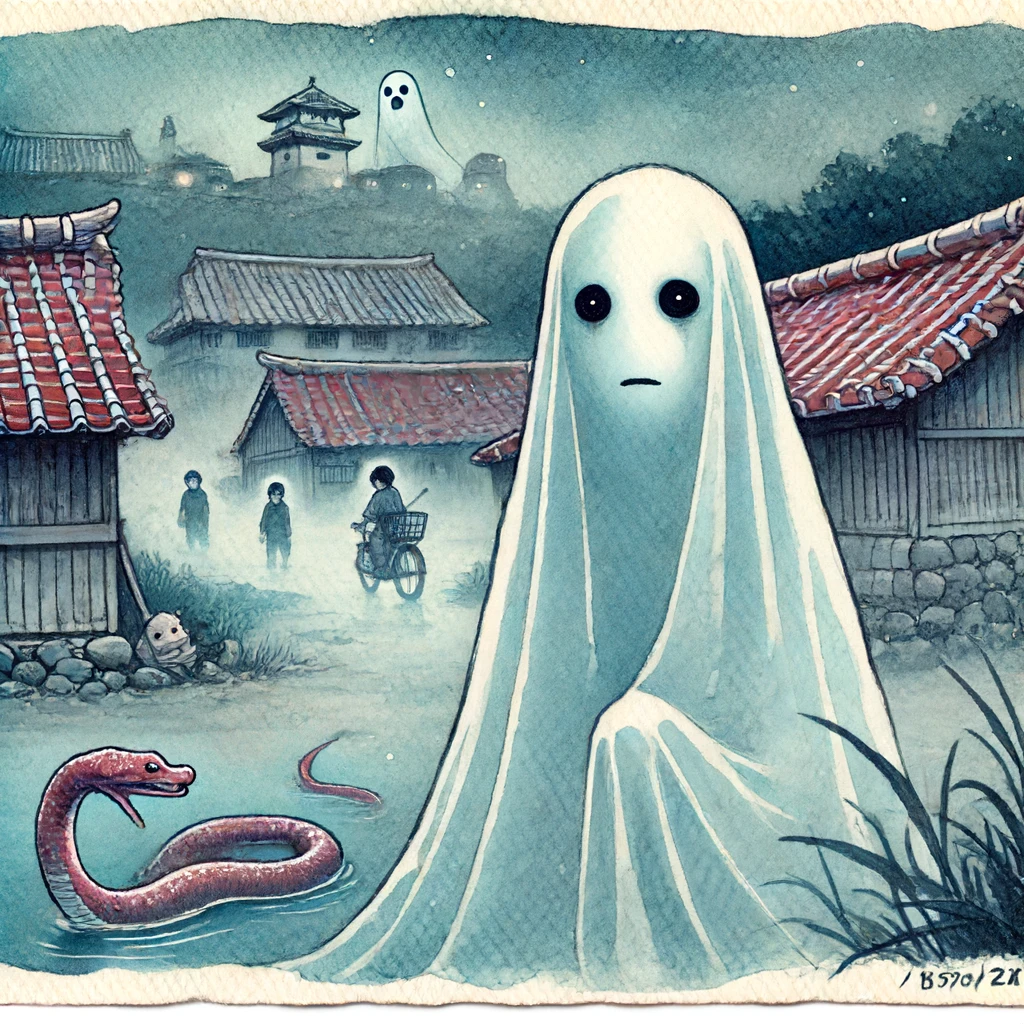
On the eerie nights in Okinawa, a ghostly shadow moves. It’s the figure of a yūrei—a ghost. When you see this yūrei, will you be struck by fear? Or will you feel a curious sensation in the gaze of the yūrei that seems to want to communicate something?
The yūrei of Okinawa differ from those on the mainland. They often appear in the form of animals and haunt specific places, seemingly trying to convey something rather than causing harm. Unique to the region, such as the child yūrei “Chirasan” and those resembling a habu snake, these ghosts are deeply connected to the local history and culture of Okinawa.
However, the fear of yūrei among the Okinawans isn’t just because of their spooky appearance. Yūrei are considered manifestations of the ancestors’ souls in this world, deserving of respect and memorial rites. The numerous superstitions and customs surrounding yūrei represent wisdom for coexisting with them and reflect the spiritual world of Okinawa.
The lore of yūrei in Okinawa is a treasure trove of wisdom. Tales of the habu yūrei speak to living in harmony with nature; stories of child yūrei remind us of the sanctity of life; and those about lovers’ ghosts question the nature of love and death. These tales are invaluable cultural heritage, passing down lessons from ancestors and preserving history and traditions.
This article delves into the true nature of Okinawa’s yūrei, exploring their characteristics, types, sightings, and why they are perceived as frightening, while also highlighting the significance and importance of yūrei folklore. Additionally, it discusses the future prospects of research on Okinawa’s yūrei.
Yūrei challenge us to question what defines Okinawa’s history, culture, and spirituality. From the wisdom and lessons of our forebears, what should we learn? Perhaps hidden in the gaze of the yūrei is a truth we ought to see.
Let’s step into the world of Okinawa’s yūrei together. What you will encounter is not just a simple ghost story; it is the tale of Okinawa’s soul.
What are Okinawa’s Yūrei (Ghosts)?
Okinawa is steeped in its own unique culture and customs, one of which includes beliefs surrounding yūrei (ghosts). Yūrei in Okinawa possess characteristics that differ from those on the mainland, and understanding their history and background is essential to comprehending Okinawan culture. This article will detail the definition and features of Okinawan yūrei, and explore the types unique to the region. Whether you are planning a trip to Okinawa or are simply interested in its culture, take this opportunity to learn about Okinawan yūrei. Through these ghosts, you can gain insight into the spiritual world and historical perspective of the Okinawan people.
Definition and Characteristics of Yūrei
What are Yūrei?
Yūrei are generally understood as the souls of the deceased who have returned to the mortal world for some reason. Often, these are souls of individuals who had strong attachments or who died suddenly. While yūrei are frequently depicted as frightening, they are also seen as ancestral spirits or guardian spirits. This is especially true in Okinawa, where yūrei are closely linked with ancestor worship and memorial practices. Understanding yūrei is the first step towards understanding the spiritual culture of Okinawa.
Characteristics of Okinawan Yūrei
Okinawan yūrei have several distinct characteristics compared to their mainland counterparts. Notably, many appear in the form of animals, with numerous sightings of yūrei resembling habu snakes. These yūrei are often associated with specific locations known as “yūrei spots.” Furthermore, Okinawan yūrei are perceived not so much as malevolent spirits but rather as trying to communicate something, which reflects their role not merely as vengeful spirits but as embodiments of ancestral souls and guardian spirits.
Unique Types of Okinawan Yūrei
Chirasan (Child Yūrei)
In Okinawa, there exists a type of child yūrei known as “Chirasan,” believed to be the souls of children who died from accidents or illness. These yūrei are often seen playing in front of houses at night, and their laughter and footsteps can sometimes be heard. It is thought that Chirasan appear near homes because they miss their families. The people of Okinawa not only fear Chirasan but also view them with sympathy, reflecting the community’s historical experiences with the deaths of children.
Habu Yūrei
There are many reported sightings of habu yūrei in Okinawa, believed to be the souls of those who died from habu snake bites and appear in the form of the snake. These yūrei are typically seen in forests or woodlands but can also appear near settlements. While habu yūrei do not attack people, their eerie presence continues to frighten many. The legend of the habu yūrei reflects the relationship between the Okinawan people and their natural environment, embodying their respect and awe for nature.
Other Unique Okinawan Yūrei
Apart from Chirasan and habu yūrei, Okinawa hosts a variety of other ghosts. For example, the “Yunabōzu,” a female ghost, is said to seduce travelers and push them off cliffs. The “Gusō,” a male ghost, is believed to be the spirit of a man who loved alcohol and is seen wandering at night while drinking. These yūrei are closely tied to the daily lives and customs of the Okinawan people, showcasing the diversity of Okinawan culture. Understanding these unique yūrei can provide deeper insights into the values and worldviews of the people of Okinawa.
Okinawa’s Ghost Sightings
Okinawa is home to numerous ghost sightings. These accounts are not just mere ghost stories but reflect Okinawa’s history, culture, and the spirituality of its people. This chapter introduces some of the most famous ghost sightings in Okinawa, explaining the folklore and meanings behind them, and also discusses modern sightings to explore how ghosts influence the lives of Okinawans today. Okinawan ghost stories are crucial for understanding the region’s culture and history, offering a glimpse into the spiritual world of its people.
Famous Sightings Introduced
The Ghost of Shuri Castle
Folklore Background
Shuri Castle, once the royal palace of the Ryukyu Kingdom, is now a major tourist attraction in Okinawa. However, it is also the site of a tragic legend involving a princess of the royal family. It is said that the princess, having fallen into a forbidden love, threw herself from the castle walls. Since then, her ghost is reported to haunt Shuri Castle. Sightings often describe her wandering the castle at night, dressed in white. This story has been passed down as a tale of tragic romance within the royal family.
Detailed Sightings
Ghost sightings at Shuri Castle continue to this day. According to one account, a tourist visiting the castle at night saw a woman in white attire walking along the castle walls before she threw herself off. This sighting closely resembles the traditional stories and suggests that the princess’s ghost still lingers at Shuri Castle. Additionally, security personnel at the castle have reported strange noises and sensations at night, further adding to its haunted reputation. The ghost of Shuri Castle might be seen as a symbol of Okinawa’s history and a bearer of its sorrowful tales.
The Habu Ghost
Folklore Background
The habu, a venomous snake native to Okinawa, has long been a threat to the locals. It is believed that the souls of those bitten and killed by habu become habu ghosts. These ghosts are primarily spotted in forests and woods but sometimes near settlements. While they do not attack humans, the eerie appearance of these habu ghosts has frightened many. The legend reflects the relationship between Okinawans and their natural environment, showing how locals have historically revered and feared nature.
Detailed Sightings
Reports of habu ghost sightings are widespread in Okinawa. In one account, a man walking a mountain path encountered a large habu. As he tried to escape, the snake pursued him but, curiously, did not harm him and eventually disappeared. This incident suggests that the habu ghost might be trying to communicate something rather than attack. Places known for habu ghost sightings often have related folklore and anecdotes, indicating that the habu ghost is a mysterious figure woven into Okinawa’s natural and cultural fabric.
Modern-Day Sightings
Hotel Ghost Sighting
Ghost sightings in Okinawa are not limited to old tales; they continue to be reported in modern times. In 2010, a ghost sighting occurred in a hotel in Naha city. A guest reported hearing strange noises at night, as if someone was walking around the room. When the guest investigated, the room temperature suddenly dropped, and they felt a chilling sensation. This incident was confirmed by the hotel staff and became a topic of much discussion. Even in contemporary society, the presence of ghosts casts a shadow over people’s minds.
Other Modern Sightings
Various other ghost sightings have been reported in Okinawa. For example, there are sightings of a female ghost suddenly appearing in the middle of the road or of children playing in front of houses at night. Like the traditional ghosts, these modern sightings evoke fear as well as pity and sympathy among the locals. These accounts indicate that Okinawans perceive ghosts as familiar presences. Moreover, they show that traditional beliefs and values persist strongly even as urbanization and modernization advance in Okinawa. In contemporary Okinawan society, ghosts are not just characters of folklore but integral parts of its culture and history.
Why Okinawans Find Ghosts Frightening
The fear of ghosts in Okinawa stems from more than just their eerie appearance. Deeply rooted in the spiritual world of Okinawa, ghosts hold a significant place in the local psyche. This chapter will explain the relationship between ghosts and the souls of ancestors or protective spirits, and explore the complex emotions Okinawans hold towards ghosts. Additionally, it will discuss the superstitions and customs related to ghosts and how these beliefs influence people’s behavior. Understanding why Okinawans find ghosts frightening provides crucial insight into the essence of Okinawan culture. Let’s delve into the depths of Okinawa’s spiritual world through its ghosts.
The Relationship Between Okinawa’s Spiritual World and Ghosts
The Connection Between Ghosts and Ancestral Souls
For Okinawans, ghosts are not merely terrifying entities. Rather, they are deeply connected to the souls of ancestors. The concept of ancestor worship is strong in Okinawa, where the souls of deceased family members are believed to protect their descendants. Ghosts are often interpreted as one form of these ancestral souls, trying to communicate something to their living relatives. Thus, Okinawans do not simply fear ghosts but also pay them respect and perform rituals to honor them. Understanding the connection between ghosts and ancestral souls is fundamental to grasping the core of Okinawa’s spiritual world and shapes how people perceive ghosts.
The Relationship Between Ghosts and Protective Spirits
Okinawans also view ghosts as a type of protective spirit. Protective spirits are believed to guard and guide people. In Okinawa, spiritual mediums known as Yuta communicate with protective spirits to offer advice to people. Ghosts, too, are seen as a form of protective spirit, believed to deliver advice and messages. For instance, it is not uncommon in Okinawa for ancestral ghosts to appear in dreams and reveal the causes of illnesses. In this way, ghosts are seen not only as frightening but also as guiding presences. Understanding this relationship is crucial for appreciating the depth of Okinawa’s spiritual world.
Superstitions and Customs Related to Ghosts
Taboos When Seeing Ghosts
There are many taboos in Okinawa regarding encounters with ghosts. For example, it is said that one should never look back if they see a ghost, as turning around could lead to possession. If one accidentally makes eye contact with a ghost, shouting “Hui!” loudly is believed to drive the ghost away. These taboos reflect people’s fear of ghosts but also represent wisdom for avoiding such encounters. These ghost-related taboos are deeply ingrained in the daily lives of Okinawans and express their complex emotions towards ghosts.
Festivals for Honoring Ghosts
Various festivals are held in Okinawa to honor ghosts. For instance, on July 15th of the lunar calendar, a “Ghost Festival” is celebrated across the region. During this festival, food, incense, and candles are offered to appease and honor the ghosts. Additionally, purification rituals are regularly performed at locations known for ghost sightings. These festivals show that Okinawans not only fear but also respect and cherish ghosts. Honoring ghosts is seen as a way to comfort the souls of ancestors and wish for the well-being of their descendants. The Ghost Festival is an indispensable event for understanding Okinawan spiritual culture.
Other Superstitions and Customs Related to Ghosts
Okinawa hosts various other ghost-related superstitions and customs. For instance, it is believed that whistling at night can attract ghosts. In areas known for ghost sightings, it is also forbidden to cut down trees, as doing so could destroy the ghosts’ dwelling places and bring about their wrath. Additionally, there is a superstition against eating bananas at night, believed to be a favorite food of ghosts. These superstitions reflect the reverence Okinawans have for ghosts and also serve as wisdom for coexisting with them. Understanding these beliefs is vital for appreciating the spirituality and worldview of the Okinawan people.
The Significance and Importance of Ghost Lore in Okinawa
Ghost lore in Okinawa is not merely about spooky tales; it is an invaluable treasury of wisdom that reflects the island’s history, culture, and spirituality. This chapter will delve into the lessons and wisdom imparted by ghost lore, highlighting teachings from the habu ghost stories and insights from other ghost lore, elucidating their significance. Additionally, this discussion will explore the role of ghosts within Okinawan culture, investigating how ghost lore contributes to the transmission of history and traditions. Ghost lore serves as a precious heritage that conveys the wisdom and values of our ancestors to us in the present day. Understanding its significance and importance connects us to the essence of Okinawan culture.
Lessons and Wisdom from Ghost Lore
Lessons from the Habu Ghost Lore
The lore of the habu ghost is more than just a horror story; it contains significant lessons about the interaction between Okinawans and their natural environment. The habu, as a part of Okinawa’s ecosystem, represents a threat to humans but also a member of nature. This ghost lore highlights the challenges of coexistence with nature and teaches the importance of respecting natural threats. The belief that the souls of those bitten by habu become ghosts serves as a warning not to underestimate the power of nature. From the habu ghost lore, we can learn how to interact with nature, which may be universally applicable wisdom in modern society.
Lessons from Other Ghost Lore
Apart from habu ghosts, there are various other ghost stories in Okinawa from which we can learn. For example, the lore of “Chirasan,” the child ghost, tells of Okinawa’s history of dealing with the deaths of children. This lore expresses the preciousness of children’s lives and the mourning for lost young ones. The lore about lovers’ ghosts invites reflection on the sorrow of losing loved ones and the blurred lines between the worlds of the living and the dead. These ghost stories might serve as mirrors reflecting various aspects of life, providing insights that can influence our way of living. Exploring the deep meanings of ghost lore can bring us closer to the truths of life.
The Role of Ghosts in Okinawan Culture
The Connection Between Ghosts and Ancestors
In Okinawan culture, ghosts symbolize the connection with ancestors. Okinawans believe that the souls of deceased family members watch over their descendants as ghosts. Ghosts are considered manifestations of ancestors’ souls in this world. This belief is intricately linked to Okinawa’s practices of ancestor worship. Households often have altars called “butsudan” where offerings are made and prayers are said to appease and honor these ancestral spirits. The connection between ghosts and ancestors forms the backbone of Okinawan spiritual culture, reflecting a unique worldview that underscores the bonds between the living and the dead.
Ghosts in the Transmission of History and Tradition
Ghost lore plays a crucial role in passing down Okinawa’s history and traditions because it vividly reflects the lifestyles, values, and beliefs of the people. For instance, ghost stories about female spirits like “Gusō” provide glimpses into the patriarchal structures of historical Okinawan society. Furthermore, ghost lore is etched with the history of hardships such as wars and natural disasters that Okinawans have endured. These stories serve as vessels for transmitting historical memories to future generations. Additionally, the rituals for appeasing and honoring ghosts have been maintained as part of Okinawa’s traditional culture. Thus, ghost lore supports the cultural heritage that sustains Okinawa’s history and traditions.
In Conclusion
This article has provided a detailed exploration of Okinawan ghosts, covering their characteristics, types, eyewitness accounts, why people find them frightening, and the importance and role of ghost lore in Okinawan culture. It has become clear that Okinawan ghosts are not merely characters in spooky tales but multifaceted entities that reflect the history, culture, and spirituality of Okinawa. Ghost lore is a precious cultural heritage that conveys the wisdom and teachings of our ancestors and holds significant meaning even in contemporary society. Through this article, it is hoped that readers have gained a deeper understanding of the true nature of Okinawan ghosts and the profundity of Okinawan culture. Let’s revisit each topic briefly.
Characteristics and Types of Okinawan Ghosts
Okinawan ghosts possess unique characteristics that differentiate them from mainland ghosts, such as appearing in animal forms, frequenting specific locations, and attempting to communicate rather than harm people. Additionally, Okinawa hosts unique types of ghosts like Chirasan (child ghosts) and habu ghosts, which are deeply connected to Okinawan history and environment, and are indispensable for understanding the local culture.
Significance of Ghost Sightings
Numerous ghost sightings in Okinawa are not just mere ghost stories but reflections of the island’s history, culture, and the spirituality of its people. These sightings convey images of ghosts as ancestral souls and protective spirits, showing how Okinawans perceive ghosts. The ongoing reports of ghost sightings in the modern era also indicate the strong persistence of traditional beliefs and values. Ghost sightings are crucial clues for understanding Okinawan spiritual culture.
Why Okinawans Find Ghosts Frightening
The fear of ghosts in Okinawa is not solely due to their fearsome appearance but also their deep connection with ancestral souls and protective spirits. Okinawans view ghosts as manifestations of their ancestors’ souls in this world, deserving respect and ritualistic honor. Various superstitions and customs surrounding ghosts also reflect the complex emotions Okinawans have towards ghosts, serving as wisdom for coexisting with them.
Importance of Ghost Lore and Its Role in Okinawan Culture
Ghost lore is a priceless treasury of wisdom reflecting Okinawan history, culture, and spirituality. From the habu ghost lore, we learn about coexisting with nature; from child ghost lore, the preciousness of life; and from lovers’ ghost lore, the themes of love and death. Additionally, ghost lore highlights the connection with ancestors and plays a role in the transmission of history and traditions. It is a vital cultural heritage that communicates the essence of Okinawan culture.
Future Prospects for Research on Okinawan Ghosts
Research on Okinawan ghosts still has much room for development, with potential contributions from various academic fields such as history, folklore, and psychology. Collecting and recording ghost lore is also a critical task. Lore evolves over time, and tracking these changes can reveal transformations in Okinawan culture. Furthermore, there is potential for applying ghost lore in modern society, such as developing tourism content based on ghost stories or incorporating lessons from ghost lore into contemporary education. Research on Okinawan ghosts is a vital academic field that leads to a true understanding of Okinawan culture.
In summary, this article has thoroughly discussed Okinawan ghosts, which serve as mirrors reflecting Okinawan history, culture, and spirituality, and as vessels for transmitting ancestral wisdom and teachings. It is hoped that this article has aided readers in deepening their understanding of Okinawan culture. The world of Okinawan ghosts remains full of mysteries, and continued research and new discoveries are eagerly anticipated.
Q&A
What are the characteristics of Okinawan ghosts?
Okinawan ghosts often appear in animal forms, frequent specific locations, and try to convey something rather than causing harm. This communicative intent is a distinctive feature of Okinawan ghosts.
What types of ghosts are there in Okinawa?
Okinawa is home to unique types of ghosts, such as Chirasan (child ghosts) and habu ghosts. These ghosts are deeply intertwined with Okinawa’s history and environment.
Why do Okinawans find ghosts frightening?
Okinawans find ghosts frightening not just because of their eerie appearance, but because of their deep connection with the souls of ancestors and protective spirits. Okinawans see ghosts as manifestations of their ancestors’ souls in this world, deserving of respect and ritual offerings.
What is the significance of ghost lore?
Ghost lore is a treasure trove of wisdom that reflects Okinawan history, culture, and spirituality, conveying the teachings of ancestors and serving as a valuable cultural heritage. It also illustrates the connection with ancestors and plays a role in transmitting history and traditions.
What are the future prospects for research on Okinawan ghosts?
Research on Okinawan ghosts requires approaches from various academic fields, such as history, folklore, and psychology. Collecting and recording ghost lore, as well as utilizing it in contemporary society, are important tasks. Research on Okinawan ghosts is a crucial academic field that contributes to a true understanding of Okinawan culture.
Summary
Okinawan ghosts are not merely characters in ghost stories but multifaceted beings that reflect the history, culture, and spirituality of Okinawa. They are characterized by appearing in animal forms, frequenting specific locations, and attempting to communicate with people. Unique types of ghosts, such as Chirasan (child ghosts) and habu ghosts, exist in Okinawa. Okinawans’ fear of ghosts stems from their deep connection with the souls of ancestors and protective spirits. Ghost lore is a repository of Okinawan wisdom and a valuable cultural heritage that helps transmit history and traditions. From ghost lore, we can learn about coexistence with nature, the sanctity of life, and themes of love and death. Research on Okinawan ghosts calls for multidisciplinary approaches, and the collection, recording, and modern application of ghost lore are significant challenges. Ghosts convey the essence of Okinawan culture, and studying them leads to a true understanding of this culture.


コメント