
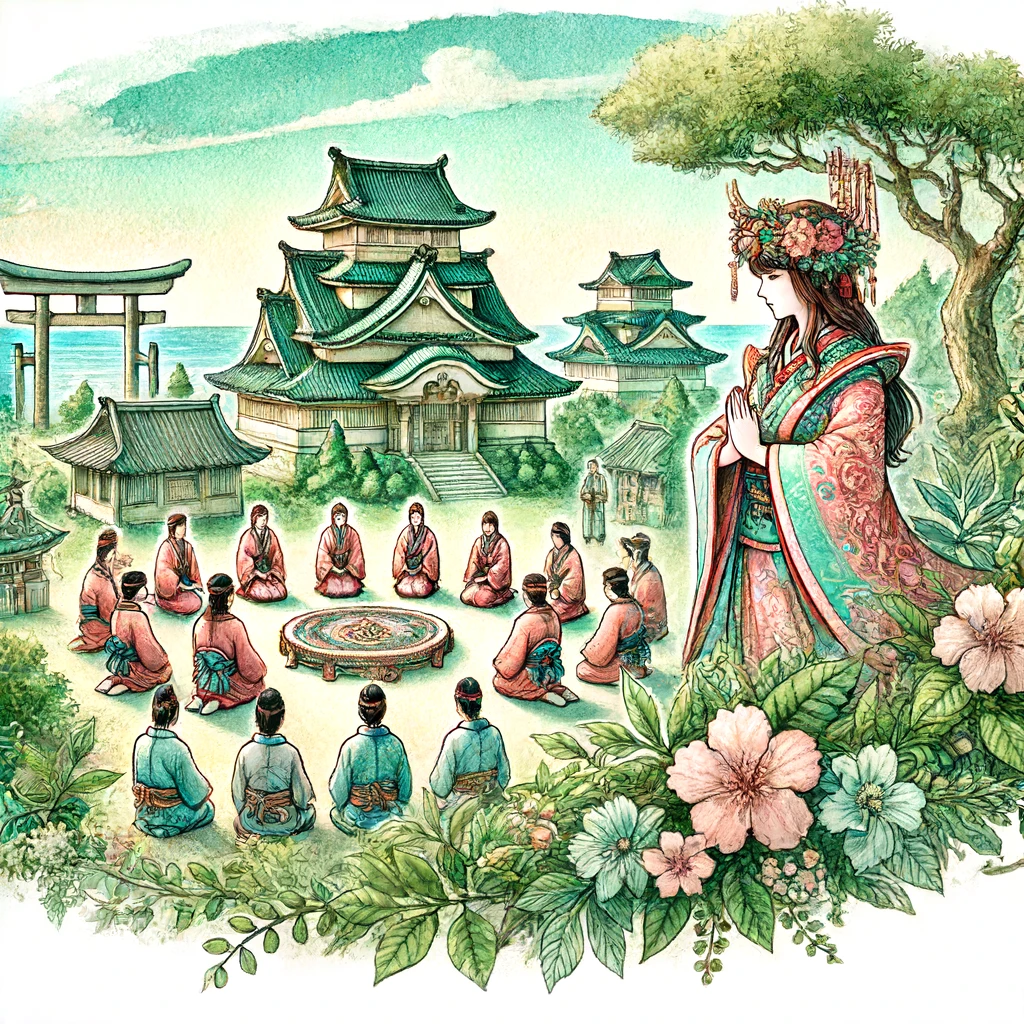
Let me take you on a journey into the mystical world of Okinawa.
Did you know that within the traditional culture of Okinawa, there exists a special entity called “Yuta”? Yuta are mediums or spiritual leaders who communicate with gods and ancestral spirits, conveying their messages. They are known to sometimes predict ominous events, and their words are deeply ingrained in the hearts of Okinawans.
Yuta’s prophecies are not mere superstitions or urban legends. Their predictions have shown an astonishing rate of accuracy throughout history, closely intertwined with Okinawa’s history and culture. Events such as the Pacific War and cholera outbreaks, predicted by Yuta, have indeed occurred and significantly impacted Okinawa.
The reason why Yuta’s prophecies are terrifying to Okinawans lies in the high accuracy of these predictions, their connection to past tragic events, and the special place Yuta holds in the spiritual world of Okinawa. Various factors intricately intertwine, making these prophecies deeply feared.
However, Yuta’s prophecies do not only foretell ominous events. They also reflect the unique worldview and values of Okinawa, emphasizing respect for nature and ancestral spirits, and the importance of living according to the will of the gods. Understanding Yuta’s prophecies is crucial for grasping Okinawa’s spirituality.
This blog will explore the profound and significant spiritual world of Okinawa behind Yuta’s prophecies from various perspectives. Through Yuta’s prophecies, you will touch a part of the grand narrative woven by Okinawa’s history, culture, and values.
Why not step into the mystical world of Okinawa guided by Yuta’s prophecies? I hope this blog will deepen your understanding of Okinawa and bring new discoveries and emotions.
Let’s embark on a journey to uncover the mysteries of Yuta’s prophecies together!
- What is Yuta?
- Ominous Events Predicted by Yuta
- Why Okinawans Find Yuta’s Prophecies Frightening
- The Impact of Yuta’s Prophecies on Okinawan Culture
- Conclusion
- Q&A
- Summary
What is Yuta?
Yuta are known as indispensable figures in Okinawan traditional culture, captivating people’s interest for centuries with their mystical powers and prophecies. What exactly are Yuta? This article delves into the definition, roles, and historical background of Yuta.
Definition and Role of Yuta
Origin and Meaning of the Word “Yuta”
The word “Yuta” in Okinawan dialect means “medium” or “spiritual leader.” Yuta play a vital role in communicating with gods and ancestral spirits, conveying their messages. Yuta is also referred to as “Uta,” derived from the word “Utaki,” which means “oracle” or “divine message.” Thus, Yuta are those who receive and convey messages from the gods.
Yuta are predominantly women, and it is believed that their powers are inherited within family lines. There are no specific rituals or training required to become a Yuta; they are considered to possess divine powers from birth.
Main Roles and Activities of Yuta
The main role of Yuta is to resolve people’s troubles and issues through communication with gods and ancestors. They provide advice on various matters, such as identifying the causes of illnesses or locating lost items. Additionally, Yuta perform divinations concerning important life events, such as marriage, construction, and travel.
Yuta conduct rituals and offer prayers and sacrifices to the gods, conveying people’s wishes. These rituals, known as “Ukui” or “Misechii,” are still cherished as traditional events in Okinawa.
Historical Background of Yuta
Origins and Development of Yuta
The exact origins of Yuta are unclear, but they have been present in Okinawa for a long time. Okinawa has a deep-rooted animistic belief system, where everything, including natural objects, animals, and ancestral spirits, is believed to house gods. Yuta have played the role of communicating with these gods and spirits against this backdrop.
During the Ryukyu Kingdom era, there were Yuta serving the royal family, involved in crucial national decisions. At the village level, Yuta were revered as village guardians, conducting various rituals and ceremonies.
Historical Yuta and Their Activities
Throughout history, many famous Yuta have existed, and their prophecies and activities are still talked about today. One notable figure is “Noro Oyakata,” who served during the reign of the last king of the Ryukyu Kingdom, Shō Tai. Noro Oyakata was responsible for overseeing important royal ceremonies, and their prophecies were said to have influenced the kingdom’s fate.
Another famous Yuta, “Shinkaneyaa,” predicted the tragedy of the Battle of Okinawa before World War II. Shinkaneyaa prophesied “red rain,” interpreted as the intense bombardment by American forces.
In this way, Yuta have been deeply intertwined with Okinawa’s history. Even today, Yuta continue to play a crucial role as a source of spiritual support for the people of Okinawa.
Ominous Events Predicted by Yuta
In Okinawan traditional culture, Yuta’s prophecies hold significant meaning. Particularly, prophecies concerning ominous events have always drawn strong interest. What kind of ominous events do Yuta predict? This section explores the characteristics, meanings, and specific examples of Yuta’s prophecies.
Meaning and Characteristics of Yuta’s Prophecies
Characteristics of Yuta’s Prophecies
Yuta’s prophecies are believed to be messages from gods or ancestral spirits. The content of these prophecies is often symbolic and difficult to interpret literally. For example, a prophecy like “red rain will fall” can be interpreted as a foretelling of a war involving much bloodshed.
Additionally, Yuta’s prophecies are not limited to specific times or places. They can predict future events and reveal the truth about past occurrences.
Interpretation and Reception of Prophecies
Due to their symbolic nature, Yuta’s prophecies can be interpreted in various ways. Different people might perceive the same prophecy differently. The interpretation of prophecies often reflects the social conditions and values of the time.
Furthermore, Yuta’s prophecies are seen as possibilities rather than absolute certainties. It is important to value one’s judgment and not take the prophecies at face value.
Types and Examples of Prophecies
Natural Disaster Prophecies
Typhoon Prophecies
Located in a typhoon-prone region, Okinawa has suffered significant damage from typhoons almost every year. Yuta sometimes predict the arrival of typhoons. Prophecies like “strong winds will blow” or “the sea will rage” are interpreted as warnings of approaching typhoons. There are reported cases where major typhoons hit Okinawa as prophesied by Yuta.
Earthquake Prophecies
Although Okinawa experiences fewer earthquakes, Yuta occasionally predict them. Prophecies like “the earth will shake” or “mountains will crumble” are seen as forewarnings of earthquakes. It is said that Yuta predicted the 1771 Yaeyama earthquake.
Prophecies of Illness and Death
Predictions of Epidemics
In the past, epidemics were a significant issue in Okinawa. Yuta sometimes predicted the outbreak of infectious diseases. Prophecies like “a bad wind will blow through the village” or “many people will fall” were interpreted as signs of an impending epidemic. It is said that Yuta predicted the 1919 Spanish flu outbreak.
Predictions of Individual Deaths
Yuta also predict individual deaths. Prophecies like “wearing a white kimono” or “going on a long journey” are interpreted as symbols of death. These prophecies can be shocking to the individuals and their families, but they also teach the importance of accepting fate.
Prophecies of War and Social Unrest
Predictions of the Pacific War
During the Pacific War, Okinawa suffered intense ground battles with many casualties. Before the war, Yuta predicted “red rain will fall” and “it will become a sea of fire,” interpreted as symbols of the horrors of war.
Predictions of Social Change and Unrest
Yuta also predict social changes and unrest. Prophecies like “the world will become noisy” or “people’s hearts will be disturbed” are interpreted as signs of social change or value confusion. It is said that Yuta predicted such changes around the time Okinawa was returned to Japan.
Yuta’s prophecies hold significant meaning for Okinawans. Predictions of ominous events serve as warnings, preparing people mentally. At the same time, the interpretation and reception of prophecies reflect the social conditions and values of the time. Yuta’s prophecies are an essential element in understanding Okinawan traditional culture and history.
Why Okinawans Find Yuta’s Prophecies Frightening
For Okinawans, Yuta’s prophecies are not mere superstitions but essential messages to be taken seriously. There are several reasons why many find these prophecies frightening. This section explores the high accuracy of prophecies, actual events related to them, and the relationship between Okinawa’s spiritual world and Yuta, explaining why Yuta’s prophecies are feared.
High Accuracy of Prophecies
Comparison of Past Prophecies and Actual Events
One significant reason Yuta’s prophecies are feared is their high accuracy. Comparing past Yuta’s
prophecies with actual events reveals that many predictions have indeed come true. For instance, before the Pacific War, Yuta predicted “red rain will fall,” interpreted as the bloodshed of war, which later became a reality.
Additionally, predictions about natural disasters are known for their high accuracy. There are numerous reports of Yuta predicting typhoons and earthquakes, which then occurred as prophesied. The high accuracy of these prophecies increases the trust in Yuta’s predictions while amplifying their fear.
Trust and Awe in Yuta’s Prophecies
Okinawans have strong trust in Yuta’s prophecies, believing Yuta possess the ability to communicate with gods and ancestral spirits. Yuta are thought to connect with a world invisible to ordinary people, and their prophecies are considered messages from the gods.
Thus, Yuta’s prophecies are often perceived as absolute truths rather than mere guesses or speculations. People tend to respect and fear Yuta’s prophecies, sincerely accepting their content. This trust and awe amplify the fear associated with Yuta’s prophecies.
Actual Events Related to Prophecies
Predictions of the Pacific War
Content of Predictions and Actual War Progress
Yuta’s prophecies regarding the Pacific War are particularly well-known. Before the war, Yuta predicted “red rain will fall” and “it will become a sea of fire,” interpreted as symbols of the bloodshed and intense bombings during the war.
During the Pacific War, Okinawa was devastated by fierce ground battles between Japanese and American forces, resulting in numerous casualties. Cities were reduced to ashes, truly becoming a “sea of fire.” Yuta’s prophecies accurately depicted the horrors of the war.
Impact of the War on Okinawa
The Pacific War brought immense devastation to Okinawa. Besides the direct damage, the post-war American military rule and ongoing base issues have continued to affect Okinawa.
Yuta’s prophecies foretold the tragedy of war. The special significance of these prophecies to Okinawans lies in their deep connection to the war’s horrors, leaving a lasting impression on their hearts.
Predictions of Cholera Outbreak
Content of Predictions and Actual Outbreak Situation
Yuta are also known for predicting the outbreak of infectious diseases. In 1879, Okinawa experienced a severe cholera outbreak with many casualties. It is said that Yuta predicted this outbreak shortly before it occurred, with prophecies like “a bad wind will blow through the village” and “many people will fall.”
The cholera spread rapidly, causing numerous deaths, and Yuta’s prophecies accurately depicted the situation. The predictions of the cholera outbreak impressed upon people the terror of infectious diseases.
Damage and Social Impact of Cholera
The cholera outbreak dealt a significant blow to Okinawan society. Besides the loss of lives, economic activities halted, plunging society into chaos. The outbreak exposed issues like poor sanitation and inadequate healthcare of the time.
Yuta’s prophecies can be interpreted as foreseeing these societal issues. The predictions carried deep meaning beyond mere forecasts of epidemics, highlighting the fragility of society.
Relationship Between Okinawa’s Spiritual World and Yuta
Traditional Okinawan Beliefs and Yuta’s Role
Okinawan traditional beliefs, rooted in animism, hold that gods reside in all things, including natural objects and ancestral spirits. Within this belief system, Yuta are positioned as special figures communicating with these gods and spirits.
Yuta have been revered as village guardians, conducting rituals and ceremonies. People believe that knowing the will of the gods through Yuta and following it leads to a peaceful and prosperous life.
Feelings of Awe and Fear Towards Yuta
Okinawans feel both reverence and fear towards Yuta. Yuta are seen as possessing mystical powers beyond ordinary understanding, connected to the divine and ancestral spirits.
Additionally, when Yuta’s prophecies are ominous, the fear of these prophecies coming true extends to a fear of Yuta themselves. Their words are often taken as absolute truths, even if they are ominous, compelling people to accept them sincerely.
These feelings of reverence and fear amplify the terror of Yuta’s prophecies. The fear is deeply connected to Okinawa’s spiritual world, making it more intense.
The reasons why Yuta’s prophecies are terrifying to Okinawans include the high accuracy of the predictions, their connection to past tragic events, and the special place Yuta holds in Okinawa’s spiritual world. Yuta’s prophecies are closely linked to Okinawa’s history, culture, and beliefs, and understanding their terror requires a broad view of Okinawa’s entire spiritual world.
The Impact of Yuta’s Prophecies on Okinawan Culture
Yuta’s prophecies have significantly influenced the lives and culture of the people of Okinawa. Depending on the content of the prophecies, people’s behavior might change, or traditional events might be altered. In this section, we will explore how Yuta’s prophecies impact Okinawan culture, providing specific examples.
Influence of Prophecies on People’s Behavior
Behavioral Changes to Avoid Prophecies
Yuta’s prophecies often foretell ominous events, prompting people to change their behavior to avoid these predictions. For instance, if a disaster is predicted to occur at a certain location, some people might avoid traveling there or consider relocating.
Similarly, if a prophecy foretells an individual’s death, that person might change their lifestyle or carry protective charms to avoid the prophecy. Yuta’s prophecies are regarded as crucial determinants of fate, so changes in behavior to avoid them are common in Okinawan society.
Preparations and Measures Based on Prophecies
Yuta’s prophecies sometimes warn of large-scale disasters, such as natural calamities, wars, or epidemics. In response, people take preemptive measures to minimize the impact of these events.
For example, if a typhoon is predicted, people might reinforce their homes and stockpile food. If a war is foretold, evacuation plans might be drawn up, and bomb shelters prepared. In the case of an epidemic prediction, measures like improving sanitation and implementing vaccinations are taken to prevent the spread of disease.
Thus, Yuta’s prophecies directly influence people’s actions. Behavioral changes to avoid prophecies and preparations based on them are vital means for Okinawans to face potential disasters.
Impact of Prophecies on Traditional Events and Customs
Changes or Cancellations of Events Based on Prophecies
Okinawa has numerous traditional events and festivals, but these can be changed or canceled due to Yuta’s prophecies. For example, if a natural disaster is predicted to occur on the day of a religious ceremony, the event might be postponed or canceled.
Similarly, if an ominous event is foretold, related festivities might be toned down or scaled back. Since Yuta’s prophecies are considered reflections of the gods’ will, altering traditional events based on these prophecies is seen as a sign of reverence for the deities.
Creation of New Customs Inspired by Prophecies
Yuta’s prophecies can also give rise to new customs and practices. For instance, if frequent natural disasters are predicted in a particular area, unique disaster-prevention rituals might emerge there.
Additionally, prayers, offerings, and charms related to prophecies can become established as new customs. Actions taken to avoid ominous prophecies and wish for a better future gradually take root as traditions.
In this way, Yuta’s prophecies significantly influence traditional events and customs. Changes in events and the birth of new customs inspired by prophecies are closely linked to the formation of Okinawan culture.
The impact of Yuta’s prophecies on Okinawan culture extends to people’s behavior, traditional events, and customs. Behavioral changes to avoid prophecies and preparations based on them are the wisdom of Okinawans in facing potential disasters. Additionally, altering traditional events and creating new customs due to prophecies demonstrate the diversity and adaptability of Okinawan culture.
Yuta’s prophecies are not mere superstitions but crucial elements closely tied to Okinawan culture and history. Understanding the impact of these prophecies is essential for grasping the essence of Okinawa’s spiritual world and culture.
Conclusion
In this article, we have explored the ominous events predicted by Okinawa’s Yuta from various angles, including their characteristics, historical background, types and examples of prophecies, reasons people fear them, and their impact on culture. Here, we will reflect on why Yuta’s prophecies are deeply rooted in Okinawan culture and the importance of understanding Okinawa’s spiritual world through these prophecies.
Reasons Yuta’s Prophecies are Deeply Rooted in Okinawan Culture
Historical Background and Faith
One reason Yuta’s prophecies are deeply rooted in Okinawan culture is the relationship between their historical background and faith. Animistic beliefs have long been ingrained in Okinawa, with the belief that gods reside in all things, including natural objects and ancestral spirits. Yuta have been positioned as special figures who communicate with these gods and spirits within this belief system.
During the Ryukyu Kingdom era, there were Yuta who served the royal family and were involved in important state decisions. Thus, Yuta have played a significant role historically, and their prophecies are closely tied to Okinawa’s history and culture, far from mere superstitions.
Accuracy of Prophecies and People’s Experiences
Another reason Yuta’s prophecies are deeply rooted in Okinawan culture is their high accuracy and people’s experiences. Comparing past Yuta prophecies with actual events reveals that many predictions have astonishingly come true.
For instance, Yuta’s prophecies regarding the Pacific War accurately depicted the horrors of war. Additionally, Yuta’s predictions about natural disasters and epidemics have precisely foretold events directly impacting people’s lives. This accuracy has deeply impressed upon people the truth of Yuta’s prophecies, solidifying their trust.
As Yuta’s prophecies come true repeatedly, people have come to realize their terror. Each experience of a prophecy becoming reality has further ingrained the awe of Yuta’s prophecies in Okinawan culture.
Importance of Understanding Okinawa’s Spiritual World Through Yuta’s Prophecies
Okinawa’s Unique Worldview and Values
Yuta’s prophecies reflect Okinawa’s unique worldview and values. Okinawa’s spirituality, which emphasizes respect for nature and ancestral spirits and living according to the will of the gods, is vividly expressed in Yuta’s prophecies.
For instance, prophecies concerning natural disasters highlight Okinawans’ attitude of revering nature. Prophecies of ominous events encourage people to mentally prepare for their fate, reflecting Okinawa’s distinctive values. Yuta’s prophecies are essential clues for understanding Okinawa’s spiritual world.
Preservation of Traditional Culture and Adaptation to Modern Society
Yuta’s prophecies play a crucial role in preserving Okinawan traditional culture. Changes in events and the birth of new customs inspired by prophecies show the diversity and flexibility of Okinawan culture, reflecting the attitude of adapting traditions to the times.
Even in modern society, Yuta’s prophecies continue to be a source of spiritual support. In times of rapid social change, when traditional values are shaken, Yuta’s prophecies provide ongoing mental support to people.
Understanding Okinawa’s spiritual world through Yuta’s prophecies is vital for exploring the essence of traditional culture and finding points of connection with modern society. Yuta’s prophecies are part of the grand narrative woven by Okinawa’s history, culture, and faith.
I hope this article has deepened your understanding of the profound and significant spiritual world behind Yuta’s prophecies in Okinawa. Yuta’s prophecies are not mere superstitions but precious heritage encapsulating Okinawa’s culture, history, and values.
Exploring the charm of Okinawa through the lens of Yuta’s prophecies should make your journey deeper and richer. If this article contributes to that, it would be my greatest joy.
Q&A
What is a Yuta?
A Yuta is a figure in Okinawan culture akin to a medium or spiritual leader, who communicates with gods and ancestral spirits to convey their will. Yuta are typically women, and it is believed that their powers are inherited within family lines.
What are the characteristics of Yuta’s prophecies?
Yuta’s prophecies are often symbolic and complex, making them difficult to interpret literally. They are not limited to specific times or places and can reveal future events as well as clarify the truth about past occurrences.
Why do Okinawans find Yuta’s prophecies frightening?
Okinawans find Yuta’s prophecies frightening due to their high accuracy and the occurrence of related actual events. Comparing past Yuta prophecies with real events shows that many prophecies have come true. Incidents such as the Pacific War and cholera outbreaks, which were predicted by Yuta, have indeed happened and caused significant damage to Okinawa, amplifying people’s fear.
How do Yuta’s prophecies influence Okinawan culture?
Yuta’s prophecies have a significant impact on the behavior of Okinawans, traditional events, customs, and the overall culture. Changes in behavior to avoid prophecies and preparations based on them are seen as wisdom for facing potential disasters. Additionally, prophecies can lead to changes in traditional events or the birth of new customs, demonstrating the diversity and flexibility of Okinawan culture.
What is the importance of understanding Okinawa’s spiritual world through Yuta’s prophecies?
Yuta’s prophecies reflect Okinawa’s unique worldview and values, emphasizing respect for nature and ancestral spirits and living according to the will of the gods. Understanding these prophecies is essential for grasping Okinawa’s spirituality. Yuta’s prophecies also play a crucial role in preserving traditional culture while adapting to modern times, providing spiritual support to people even in contemporary society.
Summary
In this blog titled “Ominous Events Predicted by Yuta,” we delve into the indispensable role of Yuta in Okinawan traditional culture and the ominous events they predict.
A Yuta is a medium or spiritual leader who communicates with gods and ancestral spirits to convey their will. Their prophecies are often symbolic and complex, revealing not only future events but also clarifying past occurrences.
Okinawans find Yuta’s prophecies frightening due to their high accuracy and the occurrence of related actual events, such as the Pacific War and cholera outbreaks. Yuta’s prophecies have greatly influenced people’s behavior, traditional events, customs, and the overall culture of Okinawa.
Yuta’s prophecies reflect Okinawa’s unique worldview and values, emphasizing respect for nature and ancestral spirits and living according to the will of the gods. Understanding these prophecies is essential for grasping Okinawa’s spirituality. Yuta’s prophecies also play a crucial role in preserving traditional culture while adapting to modern times, providing spiritual support to people even in contemporary society.
Through this blog, readers can gain a deeper understanding of the profound and significant spiritual world behind Yuta’s prophecies in Okinawa. Yuta’s prophecies are not mere superstitions but a precious heritage encapsulating Okinawa’s history, culture, and values.


コメント