
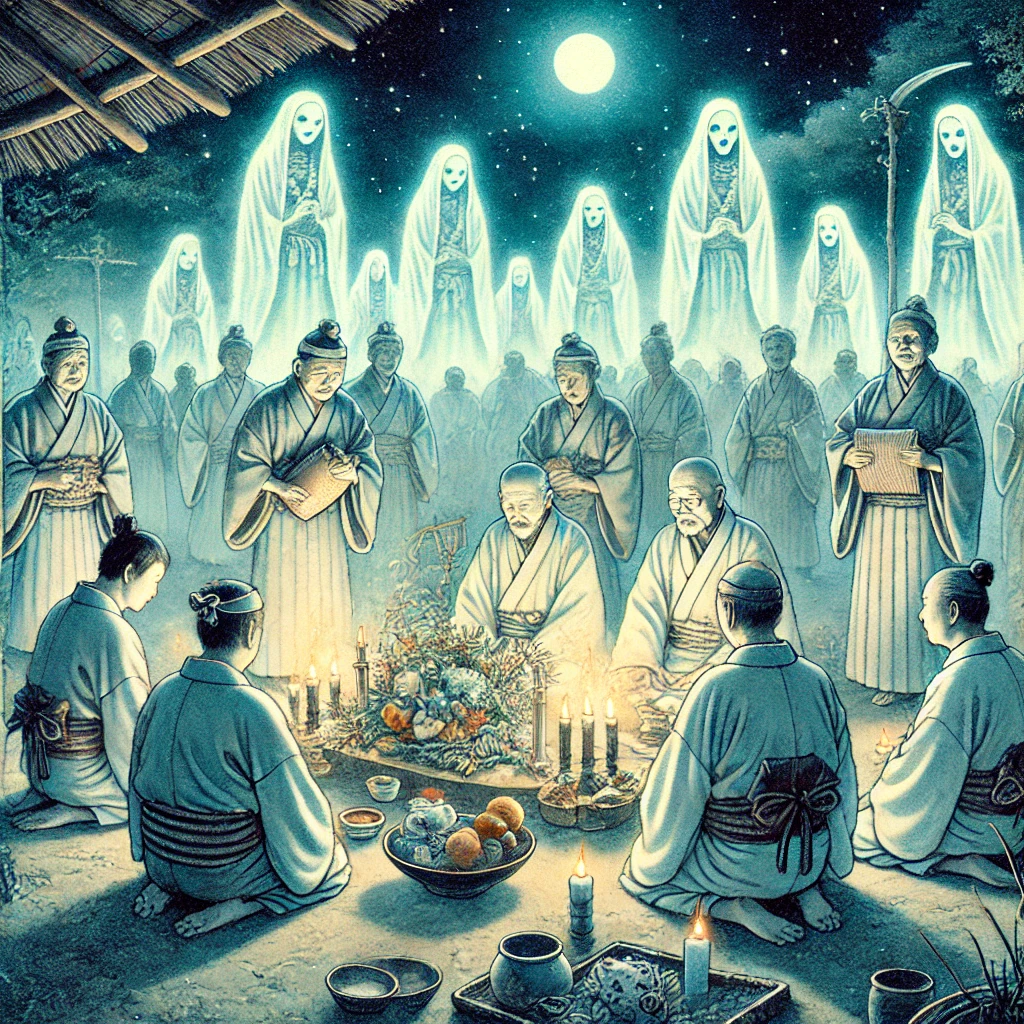
Are you aware that Okinawa has a unique funerary ritual called “Tuuruma”? Tuuruma is a traditional Okinawan ceremony intended to comfort the soul of the deceased and guide them to peace. However, Tuuruma also has a mysterious aspect that is often recounted as ghost stories.
In this article, we will explore the deep connection between Tuuruma and ghost stories. We will introduce some of the representative ghost stories associated with Tuuruma, such as “Yuta’s Prophecy” and “Cutting Hair,” while delving into the Okinawan views on life and death and the spiritual world behind these tales.
The ghost stories of Tuuruma are deeply imbued with fear and respect for the souls of the deceased. Okinawans believe that ancestral spirits protect their descendants, and through Tuuruma, they show reverence to their ancestors and seek their protection. Additionally, Tuuruma is an essential ceremony for healing grief and accepting death.
Even in modern society, Tuuruma plays a vital role in preserving Okinawa’s traditional culture and values, and in strengthening the bonds within families and communities. As urbanization and nuclear families become more prevalent, Tuuruma continues to provide spiritual solace to the people.
We hope this blog post will give readers an opportunity to experience the rich culture and spirituality of Okinawa, and to reflect on the connections with ancestors and the meaning of life and death. Step into the unique world of Tuuruma and its ghost stories; you will surely find inspiration and discovery in the depths of Okinawa’s soul.
- What is Tuuruma?
- The Ghost Stories of Tuuruma
- The Spiritual World of Okinawans and Tuuruma
- The Modern Significance of Tuuruma
- Conclusion
- Q&A
- Conclusion
What is Tuuruma?
The Meaning and Purpose of Tuuruma
Comforting the Soul of the Deceased
Tuuruma, a traditional Okinawan funerary custom, aims to comfort the soul of the deceased and guide them to peace. Okinawans believe that if a soul cannot find peace and wanders between this world and the afterlife, it can bring misfortune to the living. By performing Tuuruma, the soul is calmed and allowed to rest in peace. The rituals of Tuuruma include offering the deceased’s favorite foods and sharing memories of them. These ceremonies honor and comfort the soul, which is the main purpose of Tuuruma.
Soothing the Grief of the Bereaved
Tuuruma not only comforts the soul of the deceased but also helps alleviate the grief of the bereaved family and friends. Losing a loved one brings unbearable sorrow to anyone. By performing Tuuruma, the bereaved can remember the deceased and share their sorrow. The rituals include a practice called “Nakibichi,” where participants cry while recalling the deceased. Tuuruma provides a space for expressing emotions and helps the bereaved to overcome their grief, healing their emotional wounds by remembering and sharing their sorrow.
Strengthening Community Bonds
Tuuruma also plays an important role in strengthening community bonds. In Okinawa, Tuuruma is a significant event involving not only the family but also neighbors and friends. Everyone collaborates in the preparations and performs the rituals together, deepening the sense of community. Mourning the deceased and sharing sorrow enhance human connections. Through Tuuruma, intergenerational exchanges occur, passing down traditional culture. Thus, Tuuruma is not just about mourning the deceased but also fostering a sense of unity within the community.
The Origins and History of Tuuruma
Relation to Nirai Kanai Belief
The origins of Tuuruma are closely linked to the traditional Okinawan belief in Nirai Kanai. Nirai Kanai is thought to be an ideal world beyond the sea where the souls of the deceased go. Okinawans have believed that performing Tuuruma guides the souls of the deceased to Nirai Kanai. A custom called “Unke,” which involves sending the soul off on a boat, is part of the Tuuruma ritual. Tuuruma is deeply connected to Nirai Kanai belief and has developed as a significant ceremony for guiding souls to this ideal world.
The Development of Tuuruma
Throughout Okinawa’s history, Tuuruma has undergone various changes while evolving. Initially, it was performed at sacred sites called Gusoo or Utaki, but it gradually came to be conducted at home. The duration of Tuuruma, which was once 49 days, has often been shortened to three or seven days. However, the essential purposes of Tuuruma—to comfort the soul of the deceased, soothe the grief of the bereaved, and strengthen community bonds—remain unchanged. Even today, Tuuruma continues to be a cornerstone of Okinawan culture and an important traditional event.
The Ghost Stories of Tuuruma
Representative Ghost Stories of Tuuruma
The Ghost Story of “Yuta’s Prophecy”
The Sudden Death of a Young Woman
The ghost story of “Yuta’s Prophecy” begins with the sudden death of a young woman. In a certain village, a healthy and cheerful woman died without any warning, shocking the villagers. Unable to accept her death, the villagers sought guidance from the village Yuta (a spiritual medium), who prophesied that her soul was wandering. The Yuta warned that if Tuuruma was not performed, calamity would befall the village. Frightened by the prophecy, the villagers hurriedly prepared for Tuuruma.
The Ominous Prophecy of the Yuta
Despite performing Tuuruma, the woman’s soul could not find peace. The Yuta then delivered another ominous prophecy: “The woman’s soul is possessed by something. If this continues, great calamity will strike the village.” The villagers, already terrified by the inexplicable events following her death, feared that the village would be ruined if her soul was not appeased.
The Wandering Soul of the Woman
The villagers repeatedly performed Tuuruma to calm the woman’s soul, but she continued to wander. Unexplained incidents began to plague the village: livestock died, crops withered, and children fell ill with mysterious diseases. Believing these calamities were caused by the restless soul, the villagers grew increasingly fearful. The Yuta advised that a stronger ritual was necessary, but despite their efforts, the woman’s soul remained unappeased, and the village continued to suffer.
The Ghost Story of “Cutting Hair”
The Grandmother’s Tuuruma
The ghost story of “Cutting Hair” begins with the Tuuruma of a family’s grandmother, who was the pillar of the family for many years. Her death brought immense sorrow to the family, especially to her granddaughter, who could not accept the loss. Despite performing Tuuruma, the grandmother’s soul did not find peace, and strange events began occurring in the household.
The Possession by the Grandmother’s Soul
After the grandmother’s death, the granddaughter’s health deteriorated, with persistent high fever and strange behavior, such as speaking in her grandmother’s voice and craving her favorite foods. The family feared that the grandmother’s soul had possessed the granddaughter due to an insufficient Tuuruma. Seeking help, they consulted a Yuta.
The Ritual of Cutting Hair
The Yuta advised that performing a ritual of cutting and offering the grandmother’s hair would appease her soul. The family followed the instructions, cutting her hair and placing it on the altar with heartfelt prayers. However, during the ritual, an eerie event occurred: the offerings on the altar suddenly caught fire. Despite their fear, the family continued the ritual.
Strange Noises
That night, the house was filled with strange noises—dragging footsteps, knocking sounds, and moaning. The family, terrified, listened intently but could not identify the source. The next day, the granddaughter’s condition worsened, and the family believed the grandmother’s soul was angry and seeking revenge by possessing her. They decided to take further measures to calm the soul.
The Background of Tuuruma Ghost Stories
The Influence of Views on Life and Death and Ancestral Worship
The background of Tuuruma ghost stories lies in Okinawans’ views on life and death and ancestral worship. In Okinawa, it is believed that the souls of the deceased remain in this world to protect their descendants. Thus, honoring and comforting ancestral spirits has been emphasized. Tuuruma is a vital ceremony for this purpose. However, if Tuuruma is not properly performed, the souls cannot find peace and are believed to bring misfortune to their descendants. This belief has led to the creation of ghost stories surrounding Tuuruma, emphasizing its importance and the need to honor ancestral spirits.
The Fear of Improperly Performed Tuuruma
Tuuruma ghost stories reflect the fear of improperly performed rituals. Okinawans believe that performing Tuuruma correctly ensures the soul’s peace and protection for descendants. If Tuuruma is insufficient or incorrectly done, the souls may wander and bring harm. These stories highlight the fear of this potential danger, emphasizing the importance of performing Tuuruma properly and respecting the spirits.
The Spiritual World of Okinawans and Tuuruma
The Relationship Between Ancestral Worship and Tuuruma
Protection by Ancestral Spirits
Okinawans believe that ancestral spirits protect their descendants, wishing for their happiness and safeguarding them from danger. Thus, ancestral worship has been deeply ingrained in daily life, with photos of ancestors displayed in homes and offerings made daily. During the Obon festival, ancestral spirits are welcomed with special altars and offerings
. Tuuruma is closely connected to this worship, as it is performed to honor and seek protection from the ancestral spirits.
The Blessings of Ancestors Through Tuuruma
Tuuruma is a vital ceremony for seeking blessings from ancestors. Okinawans express gratitude and request protection through rituals, offering favorite foods and lighting incense. A ceremony called Ontoku-kou is also performed to honor the virtues of ancestors. Tuuruma strengthens the connection with ancestors, ensuring their guidance and protection, which is a significant source of spiritual support for Okinawans.
Fear and Respect for the Souls of the Deceased
Fear of the Souls of the Deceased
Okinawans fear and respect the souls of the deceased, believing they can move between this world and the afterlife. There is a fear that restless souls may possess the living or bring misfortune, especially if Tuuruma is not properly performed. This fear is reflected in Tuuruma ghost stories, which emphasize the power of the souls and the importance of respecting them.
Respect for the Souls of the Deceased
Alongside fear, there is profound respect for the souls of the deceased, who are seen as protectors. Tuuruma rituals are performed with utmost reverence, including daily offerings and prayers. This respect for the souls is foundational to Okinawan spirituality, maintaining connections with ancestors and providing a sense of peace.
Adjusting Relations Between the Living and the Dead Through Tuuruma
Tuuruma plays a crucial role in adjusting the relations between the living and the dead. Through Tuuruma, the living comfort and honor the deceased, ensuring their peace and seeking their protection. It provides a means to accept the reality of death and deepen connections within the family and community. Tuuruma is essential for harmonizing these relationships and fostering a sense of unity.
The Psychological Impact of Tuuruma
Tuuruma as a Means of Healing Grief
Tuuruma is a significant opportunity for healing grief. The deep sorrow of losing a loved one is gradually alleviated through the shared remembrance and rituals of Tuuruma. By recalling the deceased and expressing gratitude, the bereaved can find solace and strength to move forward.
Acceptance of Farewell to the Deceased
Tuuruma helps in accepting the farewell to the deceased. It involves rituals that express wishes for the deceased’s peace, helping the bereaved to gradually accept the loss and feel that the deceased continues to live in their hearts. Tuuruma is a vital ceremony for this acceptance process.
Strengthening Community Bonds
Tuuruma is an important occasion for strengthening community bonds. It involves the cooperation of family and community members in preparation and performance, fostering a sense of unity. It also promotes intergenerational exchanges, ensuring the transmission of traditional culture.
The Modern Significance of Tuuruma
Tuuruma as a Means of Cultural Continuity
Passing Tuuruma to Younger Generations
In modern Okinawa, Tuuruma plays a crucial role in cultural continuity. Knowledge and practices of Tuuruma are passed down from elders to younger generations within families and through community events and education. This ensures the preservation and transmission of Okinawan culture and values.
Preserving Okinawa’s History and Values
Tuuruma reflects Okinawan views on life and death and ancestral worship, passing these values to younger generations. It also serves as an occasion to share Okinawa’s history, fostering a sense of cultural identity and pride.
Cultivating Cultural Identity
Tuuruma helps cultivate a cultural identity among Okinawans, especially the younger generation. By participating in Tuuruma, they gain a deeper understanding of their heritage and develop a sense of belonging and pride in their culture.
The Role of Tuuruma in Modern Society
The Impact of Urbanization and Nuclear Families
Urbanization and the rise of nuclear families have changed the social landscape, making it challenging to perform Tuuruma in urban settings. Despite these changes, Tuuruma remains vital, providing a means to strengthen family and community bonds and offering a spiritual anchor.
Tuuruma as a Source of Solace
In contemporary society, where people face various stresses and anxieties, Tuuruma serves as a source of solace. It provides a space for mourning and remembrance, offering spiritual comfort and helping individuals cope with their grief.
Strengthening Family and Community Ties
Despite the weakening of family and community ties in modern society, Tuuruma strengthens these bonds through shared preparation and rituals. It fosters cooperation and mutual support, reinforcing the sense of community.
Providing Spiritual Comfort
Tuuruma offers spiritual comfort in a world where many struggle with mental fatigue and anxiety. It provides a sense of peace through the honoring of ancestors and the rituals performed, helping individuals find spiritual solace and strength to move forward.
Conclusion
The Relationship Between Tuuruma and Okinawa’s View on Life and Death
Tuuruma is deeply connected to Okinawa’s views on life, death, and the spiritual world. Okinawans believe that the souls of the deceased can find peace and protect their descendants. Tuuruma reflects these beliefs and the reverence for ancestors. Through Tuuruma, Okinawans honor and comfort the souls of the deceased and seek their protection for future generations. Tuuruma also helps adjust the relationship between the living and the dead and strengthens community bonds. In this way, Tuuruma is an essential ritual for understanding Okinawa’s views on life, death, and spirituality. By valuing Tuuruma, the rich spirituality of Okinawa is preserved and passed on to the next generation.
Fear and Respect Reflected in Tuuruma Ghost Stories
Tuuruma ghost stories reflect both fear and respect for the souls of the deceased. Okinawans have a deep-seated belief that if Tuuruma is not performed correctly, the souls of the deceased cannot find peace and may bring misfortune. This fear is reflected in the ghost stories. Additionally, various rituals are performed to calm the souls of the deceased, showing deep respect for them. Thus, Tuuruma ghost stories illustrate the Okinawan people’s fear and respect for the souls of the deceased. Through these stories, people recognize the power of the souls and reaffirm the importance of Tuuruma.
The Importance of Tuuruma in Modern Society
In modern society, Tuuruma continues to play an important role. Amidst urbanization and the rise of nuclear families, Tuuruma offers a precious opportunity to strengthen family and community bonds. It also serves as a source of spiritual solace for people living in contemporary society. Through Tuuruma, people share their sorrow and find mental peace. Moreover, Tuuruma plays a significant role in preserving and passing on Okinawa’s traditional culture and values. By valuing Tuuruma, Okinawa’s cultural identity is protected and transmitted to the next generation. Thus, Tuuruma remains an indispensable ritual in modern society.
Understanding Okinawan Culture Through Tuuruma
Understanding Tuuruma is crucial for deeply appreciating Okinawan culture. Tuuruma encompasses Okinawa’s views on life and death, spiritual world, history, and values. Through Tuuruma, one can grasp the Okinawan people’s reverence for ancestors and their fear and respect for the souls of the deceased. The ghost stories of Tuuruma also reflect Okinawa’s rich imagination and the strength of its oral traditions. Therefore, Tuuruma is an essential element for comprehensively understanding Okinawan culture. By valuing and exploring the meaning of Tuuruma, we can connect with Okinawa’s rich cultural and spiritual heritage. Tuuruma is a vital ceremony that embodies the soul of Okinawa.
The content above explores the relationship between Tuuruma, Okinawa’s views on life and death, and its spiritual world, as well as its modern significance. Tuuruma is a ceremony that comforts the souls of the deceased, helps the bereaved with their grief, and strengthens community bonds.
The origins of Tuuruma are closely linked to the Nirai Kanai belief, developed as a ritual to guide the souls of the deceased to an ideal world beyond the sea. Tuuruma ghost stories, such as “Yuta’s Prophecy” and “Cutting Hair,” reflect the fear and respect for the souls of the deceased.
Okinawans believe that ancestral spirits protect their descendants, and through Tuuruma, they honor their ancestors and seek their protection. Tuuruma also adjusts the relationship between the living and the dead, providing a means to heal and accept death.
In modern society, Tuuruma remains significant for strengthening family and community bonds and offering spiritual solace. Amidst urbanization and nuclear families, Tuuruma continues to preserve traditional culture and values and nurture cultural identity.
Understanding Tuuruma is essential for appreciating Okinawa’s rich culture and spirituality. It encapsulates views on life and death, history, and values, providing a window into the rich cultural and spiritual heritage of Okinawa. Through Tuuruma, we can reflect on our connections with ancestors and the meaning of life and death.
Q&A
What is Tuuruma?
Tuuruma is a traditional Okinawan funerary ritual intended to comfort the soul of the deceased and guide them to peace. It also serves to soothe the grief of the bereaved and strengthen community bonds.
What are the characteristics of Tuuruma ghost stories?
Tuuruma ghost stories reflect both fear and respect for the souls of the deceased. There is a belief that if Tuuruma is not performed correctly, the souls cannot find peace and may bring misfortune. These stories embody the fear of the souls and the importance of the rituals.
What role does Tuuruma play in modern society?
In modern society, Tuuruma serves as a precious opportunity to strengthen family and community bonds. It also provides spiritual solace by allowing people to share their sorrow and find mental peace.
How is Tuuruma related to Okinawan traditional culture?
Tuuruma plays a significant role in preserving and passing on Okinawa’s traditional culture and values. By valuing Tuuruma, Okinawa’s cultural identity is protected and transmitted to the next generation.
Why is it important to understand Tuuruma?
Understanding Tuuruma is crucial for appreciating Okinawan culture deeply. Tuuruma encapsulates views on life and death, the spiritual world, history, and values, allowing us to connect with Okinawa’s rich cultural and spiritual heritage.
Conclusion
“Ghost Stories of Tuuruma” explores the traditional Okinawan funerary ritual, Tuuruma, and its associated ghost stories. Tuuruma aims to comfort the souls of the deceased, guide them to peace, soothe the grief of the bereaved, and strengthen community bonds.
The origins of Tuuruma are closely tied to the Nirai Kanai belief, developed as a ritual to guide souls to an ideal world beyond the sea. Tuuruma ghost stories, such as “Yuta’s Prophecy” and “Cutting Hair,” reflect the fear and respect for the souls of the deceased.
Okinawans believe that ancestral spirits protect their descendants, and through Tuuruma, they honor their ancestors and seek their protection. Tuuruma adjusts the relationship between the living and the dead, providing a means to heal and accept death.
In modern society, Tuuruma remains significant for strengthening family and community bonds and offering spiritual solace. Amidst urbanization and nuclear families, Tuuruma continues to preserve traditional culture and values and nurture cultural identity.
Understanding Tuuruma is essential for appreciating Okinawa’s rich culture and spirituality. It encapsulates views on life and death, history, and values, providing a window into the rich cultural and spiritual heritage of Okinawa. Through Tuuruma, we can reflect on our connections with ancestors and the meaning of life and death.

コメント