
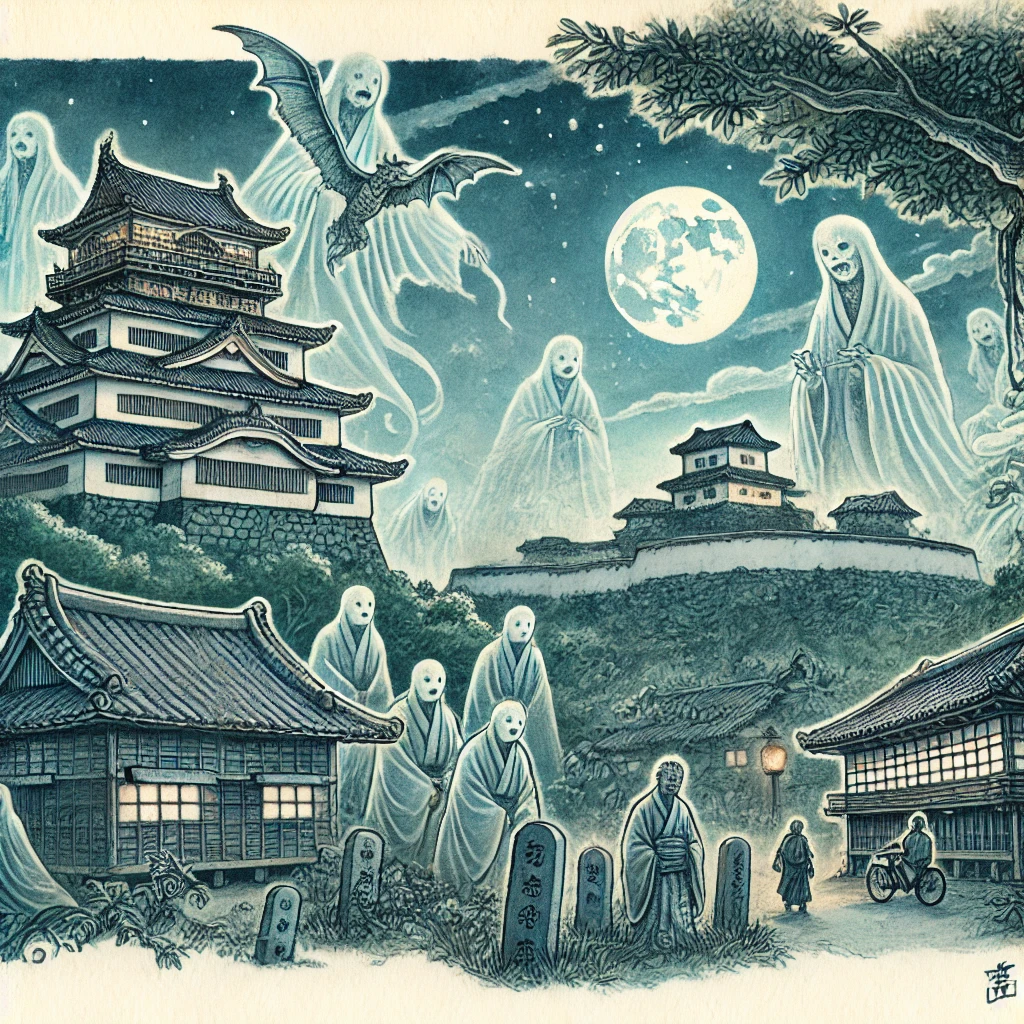
Are you familiar with the “Namakabe (Naha Shogunate) Ghost Stories” that have been passed down in Okinawa for centuries? The Namakabe were powerful rulers who controlled the city of Naha. Behind their immense power lurked corruption and abuse, which fueled the fears of the people and gave rise to numerous ghost stories.
Strange phenomena at Shuri Castle, mysterious illnesses, and misfortune befalling those who defied the Namakabe—all these tales reflect Okinawa’s unique spiritual world and traditional beliefs. Elements such as the connection between the present world and the otherworld, ancestor worship, and nature worship intertwine to create a sense of awe towards the Namakabe.
However, the Namakabe ghost stories are not just tales of fear. They serve as a warning against the dangers of power abuse and highlight the importance of traditional values. These stories, passed down through generations, provide deep insights into the experiences and lessons of our ancestors.
By unraveling the Namakabe ghost stories, we can delve into the depths of Okinawa’s history and culture. We can also find guidance for building a better society by reflecting on our inner selves.
Would you like to step into the world of “Namakabe Ghost Stories,” where fear and reverence, curses and lessons, intertwine? Let’s explore the truths hidden in the depths of Okinawa’s spiritual world together.
Namakabe (Naha Shogunate)
Historical Background
Naha during the Ryukyu Kingdom Period
During the Ryukyu Kingdom period, Naha flourished as the kingdom’s central hub. The city’s development was driven by trade with China and Japan, making Naha Port a vital trade center in East Asia. Naha was a vibrant city where diverse cultures blended, bustling with people and activity.
The backbone of Naha’s prosperity was Shuri Castle, the political and economic center of the kingdom. Shuri Castle was the residence of the Ryukyu kings and a symbol of the kingdom. The people of Naha revered Shuri Castle and took pride in its presence.
King Sho Gen and the Establishment of Namakabe
In 1555, King Sho Gen ascended to the throne, bringing significant changes to the governance structure of the Ryukyu Kingdom. To strengthen royal authority and manage Naha’s administration, he established the Namakabe (Naha Shogunate). The Namakabe was a governmental body responsible for Naha’s administration, directly overseen by the royal court.
The establishment of the Namakabe improved governance, ensuring better law enforcement and tax collection. It also acted as a liaison between the royal court and Naha, promoting smooth coordination between the two.
The Duration of Namakabe
The Namakabe existed for about 300 years, from its establishment in 1555 until the Ryukyu Disposition in 1879. During this period, it played a crucial role in governing Naha, contributing to the stability and development of the Ryukyu Kingdom.
However, with the annexation of the Ryukyu Kingdom by Japan in 1879, the Namakabe was dissolved. Its dissolution symbolized the end of the Ryukyu Kingdom and marked a significant turning point for the people of Okinawa.
Roles of the Namakabe
Maintaining Public Order
One of the most important roles of the Namakabe was maintaining public order in Naha. It functioned as the police force, cracking down on crime and resolving disputes. By patrolling the streets and ensuring order, the Namakabe guaranteed the safety and peaceful life of the citizens.
This role was vital for Naha’s development. A safe environment fostered active commercial activities and cultural exchanges, leading to the city’s prosperity.
Tax Collection
Another critical role of the Namakabe was tax collection. It collected taxes from Naha’s residents and merchants and submitted them to the royal court. Tax collection was essential for sustaining the kingdom’s finances, and the Namakabe diligently performed this duty.
Although tax collection was sometimes stringent, it was a necessary measure for the kingdom’s stability and growth. The Namakabe aimed to collect taxes fairly, gaining the understanding and cooperation of Naha’s people.
Judicial Authority
The Namakabe held judicial authority in Naha. It conducted trials for criminals and decided on punishments. This judicial power was crucial for maintaining order in Naha.
The Namakabe’s trials were known for their fairness and strictness. Those who committed crimes were severely punished, regardless of their social status. This strict enforcement of justice highlighted the importance of law and helped deter crime in Naha.
Mediator between the Royal Court and Naha
The Namakabe also played a vital role as a mediator between the royal court and Naha. It conveyed the royal court’s intentions to the people of Naha and reported Naha’s situation to the court. This mediation facilitated smooth communication and cooperation between the royal court and Naha.
Through the Namakabe, the people of Naha understood and cooperated with the royal court’s policies. Conversely, the royal court could implement appropriate measures based on reports from the Namakabe.
Ghost Stories of Namakabe (Naha Shogunate)
Overview of the Ghost Stories
Abuse of Power and Corruption
The Namakabe wielded significant power in governing Naha. However, this power was sometimes abused, leading to corrupt practices. Some Namakabe officials were known to exploit their positions for personal gain.
Such abuse of power and corruption led to discontent among the people, fostering resentment towards the Namakabe. The fear of the Namakabe’s corruption haunted the daily lives of the people.
The Authority and Fear of Namakabe
The Namakabe was an absolute authority and a source of fear for the people of Naha. Officials often approached the people with an intimidating attitude, sometimes making unreasonable demands. The people, unable to oppose the Namakabe, lived in fear of its power.
This fear and authority of the Namakabe were deeply ingrained in the minds of the people, becoming the foundation for many ghost stories and legends. These stories not only conveyed the terror of the Namakabe but also expressed the people’s dissatisfaction and fears.
Specific Incidents and Legends
The Mysteries of Shuri Castle
The Mysterious Death of a Namakabe Official
One night, a bizarre incident occurred at Shuri Castle. A high-ranking Namakabe official was found dead under mysterious circumstances. His neck bore several finger marks, as if he had been strangled. Yet, there was no trace of anyone else in the room, and the perpetrator was never found.
This incident shocked Shuri Castle and caused unrest among Namakabe officials. The true nature of the official’s death remains shrouded in mystery.
Continued Strange Occurrences in the Castle
Following the mysterious death of the Namakabe official, strange events continued to happen at Shuri Castle. Eerie footsteps echoed in the night, and objects in the officials’ rooms moved by themselves. Some even claimed to have seen the ghost of the deceased official.
These phenomena brought fear and unease to Shuri Castle. The Namakabe officials, frightened, feared they too might meet a mysterious end.
Connection to the Curse of Namakabe
The strange occurrences at Shuri Castle were rumored to be the result of the Namakabe’s curse. People believed the vengeful spirit of the deceased official haunted the castle. This curse was seen as divine retribution for the Namakabe’s corruption and abuse of power.
The belief in the Namakabe’s curse spread among the people of Naha, intensifying their fear of the Namakabe’s power. They thought defying the Namakabe would lead to being cursed, deepening their terror of the Namakabe.
The Curse of Namakabe
The Fate of Those Who Defied Namakabe
It was said that those who defied the Namakabe faced a doomed fate. One merchant who refused the Namakabe’s unjust demands saw his shop burn down, losing all his wealth. Another official who opposed the Namakabe succumbed to a mysterious illness and died in agony.
These stories underscored the absolute power of the Namakabe and enforced submission among the people. It was widely believed that defying the Namakabe would result in inevitable retribution.
Mysterious Illnesses and Misfortunes
The curse of the Namakabe manifested as mysterious illnesses and misfortunes. Those cursed by the Namakabe were struck by inexplicable diseases that even doctors could not cure. Sudden deaths of livestock and crop failures were also attributed to the Namakabe’s curse.
These mysterious illnesses and misfortunes illustrated the terrifying power of the Namakabe’s curse, instilling deep fear and respect among the people. The curse was believed to affect not only this world but also the afterlife.
The Great Power of the Namakabe
The Namakabe’s curse highlighted their immense power. They were believed to hold influence over both the physical and spiritual worlds. The Namakabe’s curse had the power to dictate people’s fates, making resistance seem futile.
This overwhelming power demanded absolute submission to the Namakabe. People believed that defying them would bring suffering not only in this life but also in the afterlife.
The Spiritual World of Okinawan People
Reasons for Fear
The Connection between Namakabe and the Otherworld
For the people of Okinawa, the Namakabe bridged the present world and the otherworld. They were believed to possess spiritual power, having deep connections not only with this world but also with the afterlife. This connection invoked awe and fear among the people.
The Namakabe were thought to communicate with the world of the dead, able to manipulate the spirits of the deceased. This relationship with the afterlife intensified the fear towards the Namakabe.
Namakabe as an Object of Reverence
The Namakabe were objects of reverence for the people of Okinawa. Their power was considered absolute, and defiance was seen as impossible. The curse of the Namakabe was believed to affect both this world and the next, making the people strive to avoid their wrath.
This reverence was deeply rooted in Okinawan spirituality. The Namakabe were seen as controlling the fates of the people, and resisting them was believed to bring misfortune.
Fear of Rulers
Fear towards the Namakabe was also tied to a general fear of rulers. As the governing authority of Naha, the Namakabe held immense power. People believed that angering the rulers would result in severe punishment, fostering a deep sense of fear and respect.
This fear of rulers was deeply embedded among the people, overlapping with their fear of the Namakabe. Defying the rulers was seen as inviting the Namakabe’s curse.
Awe of Invisible Powers
The people of Okinawa held a profound awe for invisible powers. The Namakabe’s curse was one such power, invoking fear and respect among the people. Invisible powers were seen as beyond human control, making defiance seem impossible.
This awe of invisible powers formed the foundation of Okinawan spirituality. People showed humility towards these powers, respecting and fearing them as crucial elements of their belief system.
Connection with Traditions and Beliefs
Traditional Okinawan Belief System
The Namakabe ghost stories are deeply intertwined with Okinawa’s traditional belief system. Okinawa has a unique belief system that respects gods, ancestors, and the forces of nature. The ghost stories reflect this traditional belief system and play a crucial role in shaping the spiritual world of the people.
In Okinawan traditional beliefs, the present world and the otherworld are closely connected. The Namakabe ghost stories embody this worldview, portraying the Namakabe as entities that bridge these worlds.
Elements of Ancestor Worship
Ancestor worship is a key element in the Namakabe ghost stories. In Okinawa, it is customary to honor ancestors and cherish their spirits. Some ghost stories feature the spirits of deceased individuals, reflecting the concept of ancestor worship.
Ancestors’ spirits were believed to protect their descendants but could also bring curses. In the Namakabe ghost stories, the spirits of deceased Namakabe officials appear to condemn their wrongdoing, intertwining ancestor worship with the narratives.
Elements of Nature Worship
Nature worship is also present in the Namakabe ghost stories. In Okinawa, respecting and harmonizing with the forces of nature is essential. The ghost stories often involve significant roles played by natural forces.
For example, crop failures caused by the Namakabe’s curse were seen as a manifestation of nature’s power. The stories often use natural settings like mountains, forests, and seas, linking them to nature worship.
Formation of the Spiritual World
The Namakabe ghost stories have been instrumental in forming the spiritual world of Okinawan people. These stories reflect and shape people’s values, beliefs, and worldviews, becoming integral to their spiritual world.
Incorporating elements of traditional beliefs, ancestor worship, and nature worship, the Namakabe ghost stories have created unique narratives. These stories have deeply embedded themselves in people’s hearts, becoming a vital part of Okinawa’s spiritual world.
Conclusion
The Importance of Namakabe Ghost Stories
The Namakabe ghost stories are not just tales of fear; they are crucial for understanding Okinawa’s history, culture, and spirituality. These stories reflect the realities of the Namakabe’s power and the people’s anxieties and fears, serving as valuable historical records.
Additionally, the ghost stories convey Okinawan traditional beliefs and values. Through these stories, people have learned about ancestor worship and nature worship, integrating them into their spiritual world.
Reflection of Okinawa’s Unique Worldview
The Namakabe ghost stories reflect Okinawa’s unique worldview. Okinawa has a concept where the present world and the otherworld are closely connected. The ghost stories embody this worldview, showcasing the people’s spiritual essence, including their awe of rulers and invisible powers.
These stories express the underlying fears, anxieties, and traditional values of Okinawan people, making them essential for understanding Okinawa’s unique worldview.
The Depth of History and Culture
The Namakabe ghost stories highlight the depth of Okinawa’s history and culture. These tales are not mere horror stories but are woven from the complex social situations, psychology, and belief systems of the time. By exploring these stories, we can appreciate the depth of Okinawa’s history and culture.
The ghost stories, passed down through generations, represent the wisdom of Okinawa’s ancestors. Their experiences and lessons are conveyed through these stories, becoming an integral part of Okinawan culture.
Insights Gained from the Stories
The Namakabe ghost stories offer valuable insights even to us living today. They warn against the dangers of power abuse and highlight the importance of traditional values. These stories bring to light the fears and anxieties hidden deep within human hearts, teaching us the significance of confronting them.
The lessons from the Namakabe ghost stories are not merely about instilling fear but about reflecting on our inner selves and cherishing traditional values while striving to build a better society. These stories provide deep insights, offering us opportunities to reconsider our lives.
The Namakabe ghost stories are crucial for understanding Okinawa’s history, culture, and spiritual world. They also offer valuable lessons for modern society, enabling us to reflect on the wisdom and teachings of our ancestors. The Namakabe ghost stories are a cherished cultural heritage of Okinawa, their value enduring through time.
Q&A
What is Namakabe (Naha Shogunate)?
The Namakabe was an administrative body established in 1555 by King Sho Gen during the Ryukyu Kingdom period to govern Naha. It was responsible for maintaining public order, collecting taxes, exercising judicial authority, and acting as a mediator between the royal court and Naha.
What are the characteristics of the Namakabe (Naha Shogunate) ghost stories?
The ghost stories of the Namakabe are said to have arisen from the abuse of power and corruption. They express the authority and fear associated with the Namakabe. Specific incidents and legends, such as the strange occurrences at Shuri Castle and the curses of the Namakabe, have been passed down through generations.
Why do the people of Okinawa fear the Namakabe?
For the people of Okinawa, the Namakabe was a bridge between the present world and the otherworld, and an object of reverence. The fear of rulers and awe of invisible powers amplified their fear of the Namakabe.
How are the Namakabe ghost stories related to Okinawan traditions and beliefs?
The Namakabe ghost stories are deeply connected to Okinawa’s traditional belief system, ancestor worship, and nature worship. Through these stories, people have learned traditional values and shaped their spiritual world.
What can we learn from the Namakabe ghost stories?
The Namakabe ghost stories warn of the dangers of power abuse and corruption, emphasizing the importance of traditional values. They also teach the significance of self-reflection and the importance of building a better society.
Conclusion
The “Namakabe (Naha Shogunate) Ghost Stories” are essential for understanding Okinawa’s history, culture, and spiritual world. The Namakabe was an administrative body that governed Naha during the Ryukyu Kingdom period, and its abuse of power and corruption gave rise to these ghost stories. The stories include specific incidents and legends, such as the strange phenomena at Shuri Castle and the curses of the Namakabe, making the Namakabe an object of fear that connected the present world and the otherworld for the people of Okinawa.
The Namakabe ghost stories are closely tied to Okinawa’s traditional belief system, ancestor worship, and nature worship, playing a crucial role in shaping the spiritual world of the people. These stories warn of the dangers of power abuse and corruption while emphasizing the importance of traditional values, self-reflection, and the building of a better society.
The Namakabe ghost stories are a valuable cultural heritage of Okinawa, offering many insights even to us living today. They are a precious part of Okinawa’s proud cultural legacy, providing timeless wisdom and guidance.

コメント