
- How Are You Living Your Life?
- What is Gusoo-gaki?
- Legends and Incidents Related to Gusoo-gaki
- Why Okinawans Fear Gusoo-gaki
- Understanding the Okinawan Spiritual World Through Gusoo-gaki
- Q&A
- Conclusion: “Gusoo-gaki: The Wisdom of Traditional Okinawan Customs for Modern Living”
How Are You Living Your Life?
Do you strive to do good and honor your ancestors?
In Okinawa, there is an ancient tradition called “Gusoo-gaki.” Gusoo-gaki is a sacred ritual where the deeds of the deceased are recorded, determining their treatment in the afterlife based on these records.
To modern eyes, this tradition might seem frightening. However, the values and spirituality that Gusoo-gaki conveys are timeless, offering teachings that can enrich and add meaning to our lives.
Gusoo-gaki emphasizes the importance of good deeds and honoring one’s ancestors. It teaches us to live with compassion and kindness towards others, rather than acting selfishly. By respecting our ancestors and deepening our connections with family and community, we can understand our roots and find a sense of belonging.
Furthermore, Gusoo-gaki redefines the concept of death, seeing it as a journey to a new world. By learning from death rather than fearing it, we can live our lives more positively.
In today’s society, where material wealth is often prioritized over spiritual richness, the teachings of Gusoo-gaki remind us of the importance of a rich inner life. By incorporating the values and spirituality of Gusoo-gaki into our lives, we can lead more fulfilling and meaningful lives.
This article delves into the wisdom of living conveyed by the traditional Okinawan practice of Gusoo-gaki. By learning from Gusoo-gaki, you can find hints to make your life richer and more meaningful.
What is Gusoo-gaki?
Meaning and Origin of Gusoo-gaki
Meaning of “Gusoo”
“Gusoo” in Okinawan dialect means “afterlife.” Okinawans value not only the present life but also the afterlife. Gusoo-gaki is one of the important customs related to this belief. Okinawans believe that even after death, the soul continues to live eternally, and the treatment of the soul in the afterlife is determined by one’s deeds in life. Gusoo-gaki records these deeds, playing a crucial role in deciding the fate of the soul in the afterlife.
Meaning of “Gaki”
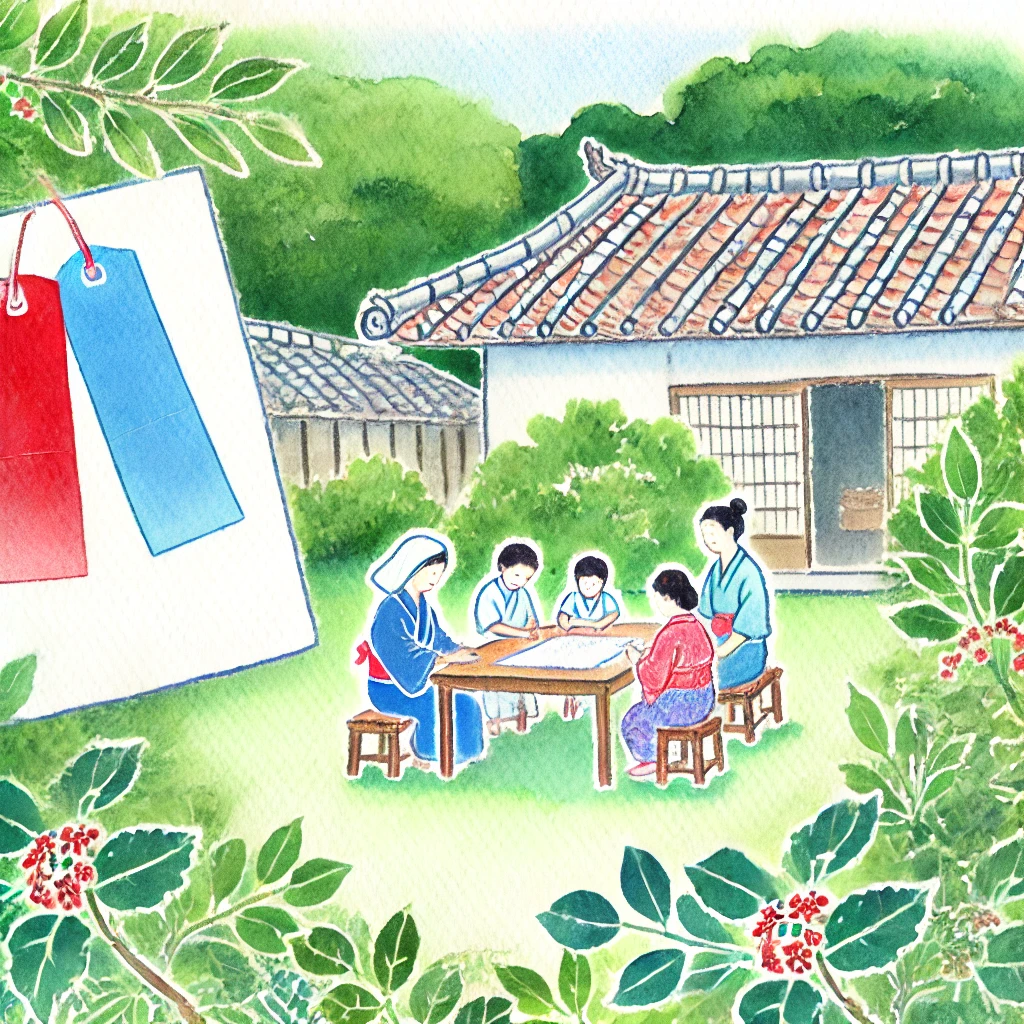
“Gaki” means “writing.” Therefore, “Gusoo-gaki” literally means “writing the afterlife.” It is a custom where the deeds of the deceased are recorded. Family, friends, and acquaintances gather to recall the good and bad deeds of the deceased, writing them down on paper. Good deeds are written on red paper, and bad deeds on blue paper. Thus, Gusoo-gaki is a significant ritual that reviews and evaluates the life of the deceased.
Details of the Gusoo-gaki Custom
How Gusoo-gaki is Conducted
Gusoo-gaki is usually performed during the funeral of the deceased. Relatives, friends, and acquaintances gather to discuss the deeds of the deceased, writing them on red and blue papers. Good deeds, such as filial piety, helping friends, and contributions to the community, are written on red paper. Bad deeds, such as lying, hurting others, and committing crimes, are written on blue paper. Gusoo-gaki, therefore, involves evaluating the life of the deceased by dividing their deeds into red and blue papers.
Significance of the Paper Colors Used in Gusoo-gaki
The colors of the papers used in Gusoo-gaki hold significant meanings. Red paper represents good deeds. In Okinawa, red is considered a sacred and celebratory color. Writing good deeds on red paper conveys the wish for the soul to be happy in the afterlife. On the other hand, blue paper represents bad deeds. Blue is considered an ominous and unfortunate color in Okinawa. Writing bad deeds on blue paper signifies the hope that the soul will not suffer in the afterlife. Thus, the colors of the papers used in Gusoo-gaki carry crucial meanings that influence the fate of the soul.
Relationship Between Gusoo-gaki and Burial
The red and blue papers written during Gusoo-gaki are placed in the coffin of the deceased and buried with them. Okinawans believe that the contents written on these papers determine the fate of the soul in the afterlife. If there are many red papers, it is believed that the soul will be happy in the afterlife. Conversely, if there are many blue papers, the soul is believed to suffer in the afterlife. Therefore, Gusoo-gaki is a vital ritual closely related to the burial, determining the fate of the soul in the afterlife.
Historical Background of Gusoo-gaki
Origin of Gusoo-gaki
The exact origin of Gusoo-gaki is unknown. However, it is clear that it has been practiced in Okinawa for a long time. Some say Gusoo-gaki has been conducted since around the 15th century when Okinawa was the independent Ryukyu Kingdom, which had unique customs and culture. Gusoo-gaki is one of the traditions passed down through the long history of the Ryukyu Kingdom.
Changes in Gusoo-gaki
Gusoo-gaki has evolved over its long history. Initially, it was mainly practiced among the upper classes, such as royalty and nobility, during their funerals. Over time, it spread among the general population. Today, Gusoo-gaki is performed in most regions of Okinawa, with slight variations in procedures and customs across different areas. However, the fundamental meaning and role of Gusoo-gaki remain unchanged and continue to be passed down.
Legends and Incidents Related to Gusoo-gaki
Famous Legends
Legend of Gusoo-gaki for Those Who Committed Evil
There are many legends and stories associated with Gusoo-gaki. One famous legend is about Gusoo-gaki for those who committed many evil deeds. According to this legend, the Gusoo-gaki of someone who committed many evil deeds in life is filled with blue papers, reflecting their bad deeds. It is said that the person’s soul will suffer greatly in the afterlife because of the many blue papers in their Gusoo-gaki. This legend serves as a moral lesson to encourage good deeds and warn against evil.
Legend of Lies in Writing Gusoo-gaki
Another well-known legend is about lying when writing Gusoo-gaki. According to this legend, lying while writing Gusoo-gaki is strictly forbidden. If someone hides the deceased’s bad deeds and writes only good deeds, the lie will be revealed, and the person who wrote it will be punished. This legend underscores the sacredness and importance of Gusoo-gaki, emphasizing that it is a solemn ritual to truthfully review and evaluate the life of the deceased.
Actual Incidents
1970s Gusoo-gaki-Related Murder Case
Gusoo-gaki is deeply ingrained in the hearts of Okinawans, sometimes leading to tragic incidents. A notable example is a murder case in the 1970s related to Gusoo-gaki. In this incident, a man, enraged by the many bad deeds written in his father’s Gusoo-gaki, killed the person who wrote it. This tragedy highlights the emotional impact Gusoo-gaki can have on people, showing it is more than just a ritual but something that can profoundly affect emotions.
Background and Impact of the Incident
The murder case related to Gusoo-gaki shocked Okinawan society. The background of the incident involved the strong feelings people have toward Gusoo-gaki. The man, angered by the negative evaluation of his father in Gusoo-gaki, killed the writer to protect his father’s honor. This incident showed that Gusoo-gaki is a crucial ritual linked to the honor and dignity of the deceased and their family. After the incident, discussions arose in Okinawan society about the conduct of Gusoo-gaki, emphasizing the need for careful and fair evaluations. However, many reaffirmed the importance and significance of Gusoo-gaki as an integral part of Okinawan culture, leading to a renewed consideration of its meaning and role.
Why Okinawans Fear Gusoo-gaki
Fear of the Afterlife
Okinawan Perception of the Afterlife
One reason Okinawans fear Gusoo-gaki is their fear of the afterlife. Okinawans view the afterlife as an extension of the present life, believing that the soul continues to live eternally and is rewarded or punished based on one’s deeds in life. Hence, how one’s deeds are evaluated in Gusoo-gaki directly affects their fate in the afterlife.
Gusoo-gaki and Treatment in the Afterlife
Gusoo-gaki is a ritual that determines the soul’s fate in the afterlife. A Gusoo-gaki filled with red papers signifies happiness in the afterlife, while one filled with blue papers indicates suffering. Therefore, the evaluation in Gusoo-gaki is a critical matter for Okinawans, who fear having their bad deeds recorded and the consequent suffering of their soul.
Concept of Karma
Idea of Karma
Another reason for the fear of Gusoo-gaki is the belief in karma. Okinawans strongly believe in the idea of karma, where good deeds lead to good outcomes, and bad deeds lead to bad outcomes, both in the present life and the afterlife. Therefore, they strive to do good and avoid bad deeds, knowing these will be evaluated in Gusoo
-gaki.
Role of Karma in Gusoo-gaki
Gusoo-gaki embodies the concept of karma. A Gusoo-gaki with many good deeds written means the person will receive good outcomes, while one with many bad deeds means bad outcomes. This belief in karma makes the evaluation in Gusoo-gaki a matter of great concern for Okinawans, as it determines their fate in the afterlife.
Fear of Collective Judgment
Strong Sense of Community in Okinawan Society
Okinawans have a strong sense of community, deeply valuing their roles and positions within family, relatives, and the local community. They fear disrupting the harmony of these groups or being ostracized. Thus, individual actions are seen not just as personal matters but also affecting the honor of their family and community.
Fear of Evaluation Through Gusoo-gaki
Gusoo-gaki is a public evaluation by the community, with the deceased’s deeds judged by family, relatives, and local people. A Gusoo-gaki with many bad deeds can dishonor not just the individual but their family and community. This fear of collective judgment makes Gusoo-gaki a source of anxiety, with the evaluation affecting the family’s and community’s reputation for generations.
Understanding the Okinawan Spiritual World Through Gusoo-gaki
Ancestor Worship and Views on Life and Death
Significance of Ancestor Worship in Okinawa
Gusoo-gaki is crucial for understanding the Okinawan spiritual world, as it is deeply connected to ancestor worship and views on life and death. Okinawans believe in honoring and valuing their ancestors, believing that the spirits of ancestors influence the living world.
Connection Between Gusoo-gaki and Ancestor Worship
Gusoo-gaki is part of ancestor worship, evaluating the deceased to determine if they are worthy of being honored as ancestors. A Gusoo-gaki with many good deeds signifies that the person will be revered as a guardian spirit for their descendants, while many bad deeds mean they are unworthy of such honor.
Views on Life and Death Reflected in Gusoo-gaki
Gusoo-gaki reflects Okinawan views on life and death, seeing death as a journey to a new world. Evaluating the deeds of the deceased in Gusoo-gaki determines how their soul will live in the afterlife. Thus, Gusoo-gaki helps Okinawans accept death as a transition and determine the fate of the soul in the afterlife.
Preserving Traditional Values
Importance of Good Deeds Conveyed by Gusoo-gaki
Gusoo-gaki plays a vital role in preserving traditional values, emphasizing the importance of good deeds. By celebrating the good deeds of the deceased on red paper, Gusoo-gaki teaches the value of living a virtuous life.
Continuation of Respect for Ancestors Through Gusoo-gaki
Gusoo-gaki also perpetuates the respect for ancestors, demonstrating the importance of honoring and valuing them. Through Gusoo-gaki, Okinawans learn to respect their ancestors, passing this value on to future generations.
Modern Significance of Gusoo-gaki
Changes and Continuation of Gusoo-gaki Tradition
Gusoo-gaki has evolved over time, with modern factors like nuclear families and urbanization making it less common. However, its fundamental meaning and role remain unchanged, continuing to support the spiritual world of Okinawans.
Impact of Gusoo-gaki on Modern Society
Gusoo-gaki still holds significant meaning in modern society, conveying traditional values and spirituality. It challenges the materialism of modern times by emphasizing good deeds and respect for ancestors, and it prompts a re-examination of the meaning of death. In this way, Gusoo-gaki remains a cornerstone of Okinawan spirituality and values, offering insights for living a meaningful life today.
Q&A
What is the custom of Gusoo-gaki?
Gusoo-gaki is a traditional Okinawan custom where the deeds of the deceased are recorded, determining their treatment in the afterlife based on these records. The good deeds of the deceased are written on red paper, while the bad deeds are written on blue paper. These papers are then placed in the coffin of the deceased and buried together.
What is the significance of the paper colors used in Gusoo-gaki?
In Gusoo-gaki, red paper represents the good deeds of the deceased, with the wish that their soul will find happiness in the afterlife. Conversely, blue paper represents the bad deeds, with the hope that their soul will not suffer in the afterlife.
Why do Okinawans feel fear towards Gusoo-gaki?
Okinawans fear Gusoo-gaki due to a combination of respect for the afterlife, belief in karma, and the strong sense of community and its judgments. Since the contents of Gusoo-gaki are believed to influence one’s treatment in the afterlife, receiving a bad evaluation means suffering not only in this world but also in the afterlife.
How does Gusoo-gaki impact modern society?
Gusoo-gaki plays an important role in conveying traditional Okinawan values and spirituality to modern society. By emphasizing the importance of good deeds and respecting ancestors, Gusoo-gaki challenges the materialistic focus of contemporary life and teaches the importance of spiritual richness.
What can we learn from Gusoo-gaki in our modern lives?
From Gusoo-gaki, we can learn the importance of good deeds, the value of respecting our ancestors, and the significance of reevaluating the meaning of death. Incorporating the values and spirituality of Gusoo-gaki into our lives can help us regain spiritual richness, deepen our connections with others, and lead more meaningful lives.
Conclusion: “Gusoo-gaki: The Wisdom of Traditional Okinawan Customs for Modern Living”
Gusoo-gaki is an ancient Okinawan custom where the deeds of the deceased are recorded on red paper (for good deeds) and blue paper (for bad deeds), determining their treatment in the afterlife. This custom reflects the Okinawan view of life and death, karma, and community judgment, making Gusoo-gaki a source of fear for many.
However, Gusoo-gaki is more than just a custom; it offers valuable insights for modern living. Gusoo-gaki emphasizes the importance of good deeds and respect for ancestors, teaching us to value spiritual richness alongside material wealth. It also encourages us to reevaluate the meaning of death, viewing it as a journey to a new world, thus fostering a positive approach to life.
While traditional customs like Gusoo-gaki are fading in modern society, their values and spirituality remain timeless. By learning from Gusoo-gaki and incorporating its teachings into our lives, we can regain spiritual richness, deepen our connections with others, and lead more meaningful lives.
The traditional Okinawan custom of Gusoo-gaki serves as a spiritual anchor and a guide for living a meaningful life. By applying the values and spirituality of Gusoo-gaki to modern society, we can walk a richer and more significant path in life.


コメント