
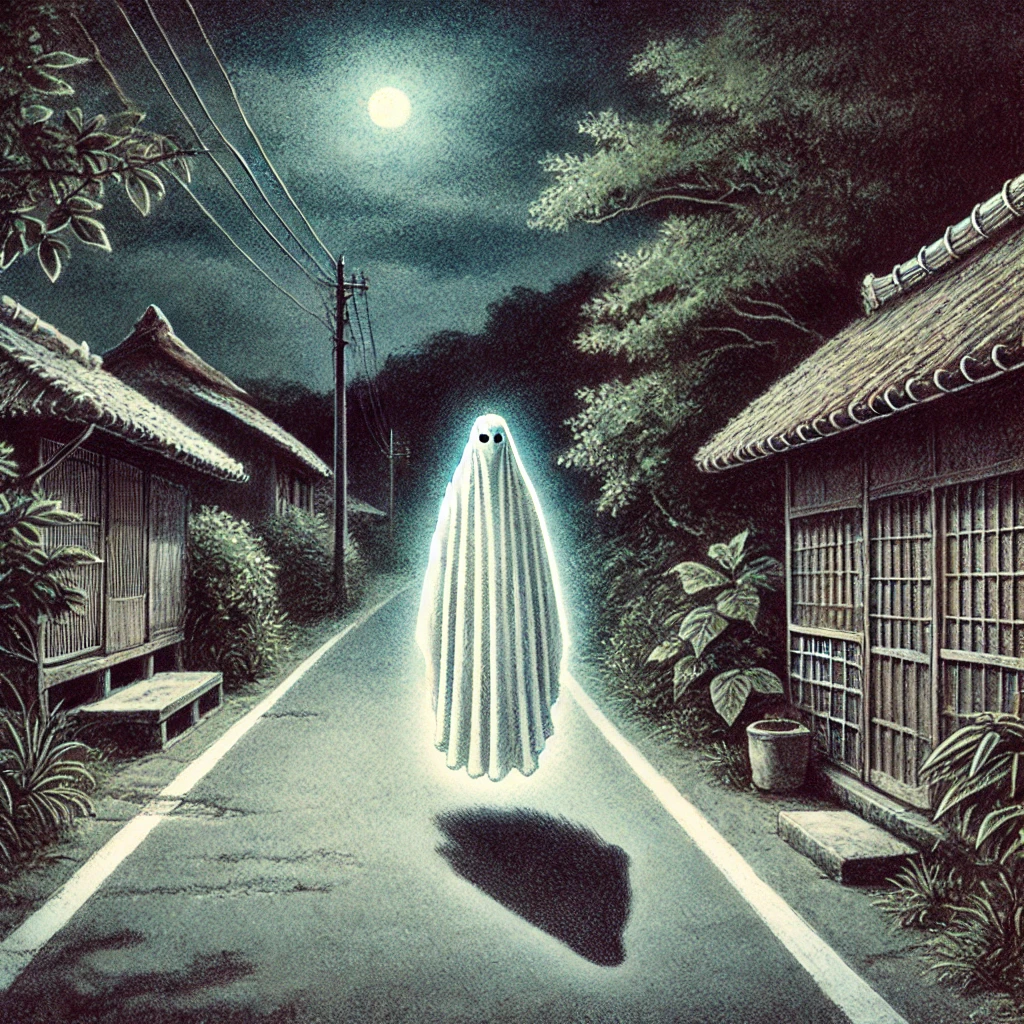
On an Okinawan night, a mysterious shadow stands by the roadside. Clad in white garments and floating above the ground, it appears like a ghost. This eerie figure is known in the Okinawan dialect as “Ashagi,” a terrifying presence.
Ashagi refers to the phenomenon where the souls of the dead manifest in the living world for various reasons. These spirits are believed to be those who did not die a natural death, were not adequately memorialized, or committed evil deeds during their lifetime. These souls wander with lingering attachments and regrets.
The fear Okinawans have of Ashagi is deeply rooted in their reverence for the souls of the deceased, the concept of karma, and the belief that Ashagi are omens of misfortune. Historically, Okinawans have held a profound respect and fear for the spirits of the dead, seeing Ashagi as manifestations of spirits that have not been properly memorialized.
However, Ashagi folklore is not merely a collection of ghost stories. Spiritual mediums known as Yuta play a crucial role in identifying the true nature of Ashagi, performing rituals to pacify them, and instructing on proper memorialization methods. Through these practices, people have found spiritual support and solace.
Moreover, Ashagi folklore holds universal significance even today. It teaches the importance of respecting and memorializing the dead and embodies the concept of karma, serving as a moral compass in contemporary society.
By delving into the truth behind Ashagi folklore, we can engage with the wisdom of our ancestors and reflect on our own lives. This exploration of the depths of Okinawa’s spiritual world offers valuable insights.
This blog will examine the reality of Ashagi, its historical context, and its modern-day relevance from various perspectives. It is recommended for anyone interested in Okinawa’s folk beliefs and spirituality, as well as those who wish to contemplate the importance of karma and memorialization. Additionally, the detailed explanation of Ashagi folklore serves as a valuable resource for anyone interested in Okinawa’s history and culture.
What is Ashagi?
Overview of Ashagi
Etymology of Ashagi
The term “Ashagi” in Okinawan dialect means “ghost” or “spirit.” It is said that the word derives from “ashi” (foot) and “age” (to lift), depicting the image of a ghostly figure walking with its feet off the ground. Okinawans have long believed in and feared the presence of Ashagi.
Definition of Ashagi
Ashagi refers to the phenomenon where the souls of the deceased appear in the living world for various reasons. Typically, it is believed that Ashagi are spirits of those who died unnatural deaths, were inadequately memorialized, or committed evil deeds during their lifetime. Because Ashagi can bring harm to the living, Okinawans have developed numerous customs to avoid their appearance.
Characteristics of Ashagi
Physical Appearance
The most well-known characteristic of Ashagi is their white attire, reminiscent of funeral garments. Despite retaining a semblance of their appearance in life, their faces are described as pale and expressionless, with hollow, lifeless eyes that seem devoid of a soul.
Behavioral Traits
Ashagi are often seen floating above the ground as if walking in the air. They tend to appear near places or people they were attached to during their lifetime. Although Ashagi do not directly harm the living, their eerie presence instills a deep fear in those who encounter them.
Impact of Encounters
Encountering Ashagi is believed to bring misfortune. Stories abound of those who saw Ashagi falling ill or experiencing a series of unfortunate events within their families. People possessed by Ashagi might display erratic behavior or suffer from mental instability. Consequently, Okinawans have long taken measures such as avoiding nighttime outings and consistently memorializing ancestors to prevent such encounters.
Folklore of Ashagi Appearances
Example from Gushichan Village
Details of the Incident
One night in Gushichan Village, a man returning from work saw a woman in white standing by the roadside. Approaching her out of curiosity, he noticed her feet were not touching the ground and fled in terror upon seeing her pale, smiling face.
Impact of the Folklore
This tale significantly affected the villagers, who started avoiding nighttime outings and performing regular rituals to appease the spirits. The story, passed down through generations, reinforced the fear of Ashagi and the importance of spiritual practices.
Example from Naha City
Details of the Incident
A woman walking home after a night out saw a headless figure in white. She fainted in terror and later fell ill with a high fever. This incident caused widespread fear, especially among women returning home late at night.
Impact of the Folklore
The incident led Naha residents to avoid walking alone at night and to carry protective charms. This story highlights how Ashagi folklore influences social behaviors and safety practices.
Examples from Other Regions
Northern Okinawa
In northern Okinawa, a tale recounts an Ashagi attempting to kidnap children. In response, the community placed protective charms at village entrances and avoided letting children out at night.
Southern Okinawa
In southern Okinawa, there are stories of Ashagi entering homes and stealing the souls of sleeping people. To prevent this, villagers clean their homes thoroughly and burn incense before bed, believing these practices ward off Ashagi.
Why Ashagi is Feared
Reverence for the Souls of the Deceased
Okinawan Views on Life and Death
Okinawans have traditionally revered and feared the souls of the deceased, seeing them as powerful entities that bridge the living and the dead. Proper memorialization ensures that spirits become benevolent ancestors, while neglected souls remain as harmful Ashagi.
Relationship Between Soul Reverence and Ancestor Worship
Ancestor worship is deeply rooted in Okinawan culture, with the belief that ancestral spirits protect their descendants. However, spirits that are not properly honored are thought to linger as Ashagi, bringing misfortune to the living.
Concept of Karma
Understanding Karma
Okinawans strongly believe in karma—the idea that good deeds bring good results and bad deeds bring bad outcomes, extending across lifetimes. This concept underpins the belief that Ashagi are the spirits of those who committed wrongdoings in their lives.
Connection Between Ashagi and Karma
The appearance of Ashagi is seen as a manifestation of karma. Ashagi are believed to be spirits suffering the consequences of their past actions, and encountering them is considered a result of one’s own karma.
Ashagi as Omens of Misfortune
Symbolism of Ashagi
Ashagi are viewed as omens of bad luck, with their appearance often preceding illness, accidents, or other misfortunes. Stories of Ashagi bringing disaster reinforce their fearsome reputation.
Factors Contributing to the Fear of Ashagi
The combination of reverence for the dead, belief in karma, and the perception of Ashagi as harbingers of misfortune all contribute to the profound fear of Ashagi among Okinawans. Tales of real-life encounters and the subsequent misfortunes have perpetuated this fear.
Okinawa’s Spiritual World and Ashagi
Relation to Ancestor Worship
Features of Okinawan Ancestor Worship
Okinawan ancestor worship is unique, emphasizing both blood and geographical ties. The belief that ancestors directly influence the lives of their descendants underscores the importance of proper memorialization.
Connection Between Ashagi and Ancestor Spirits
Ashagi are seen as the opposite of benevolent ancestor spirits. While ancestors protect their descendants, Ashagi harm the living. However, Ashagi can be transformed into ancestors through proper rites, highlighting their dual nature.
Role of Yuta (Spiritual Mediums)
Definition and Role of Yuta
Yuta are spiritual mediums in Okinawa who communicate with spirits and offer guidance. They diagnose and address spiritual issues, including the appeasement of restless spirits like Ashagi.
Importance of Yuta in Dealing with Ashagi
Yuta are crucial in dealing with Ashagi. They identify and pacify these spirits through rituals and provide instructions for proper memorialization, helping people cope with their fears and maintain spiritual balance.
Relation to Other Okinawan Folk Beliefs
Concept of Mabui (Soul) and Ashagi
In Okinawan belief, Mabui refers to the soul, which can detach from the body. Ashagi are seen as spirits whose Mabui remains in the living world. Encounters with Ashagi are thought to threaten one’s Mabui, necessitating spiritual protection.
Yuchi (Word Magic) and Ashagi
Okinawans believe in the magical power of words, known as Yuchi. Speaking of Ashagi or recounting encounters is believed to attract their presence or amplify their power, leading people to avoid discussing them.
Conclusion
Impact of Ashagi on Okinawan Culture
The fear of Ashagi has significantly shaped Okinawan cultural practices, influencing behaviors like avoiding nighttime outings and ensuring proper memorialization of ancestors. Ashagi also contribute to the development of unique spiritual practices and beliefs, including the roles of Yuta and ancestor worship.
Modern Significance of Ashagi Folklore
While belief in Ashagi has diminished in modern times, their folklore still holds universal significance. The tales emphasize the importance of respecting the dead and the concept of karma, offering moral lessons relevant to contemporary society.
Future Research Directions
Further research on Ashagi folklore is needed to explore regional variations and historical changes. Investigating the connections between Ashagi and other Okinawan folk beliefs can provide deeper insights into the island’s cultural and spiritual heritage.
This blog post aims to provide a comprehensive understanding of Ashagi, a significant aspect of Okinawan folklore. Ashagi represents the deep connections between life, death, and morality in Okinawan culture. Understanding these connections can enrich our appreciation of Okinawa’s unique spiritual world and its relevance to modern life.
Q&A
What is Ashagi?
Ashagi refers to spirits of the deceased appearing in the living world, typically of those who died unnaturally, were not properly memorialized, or committed wrongdoings in life. They are characterized by their white attire and floating appearance.
What are the characteristics of Ashagi?
Ashagi are known for their white attire, floating above the ground, and appearing near places or people they were attached to in life. Encounters with Ashagi are believed to bring misfortune, such as illness or accidents.
Why do Okinawans fear Ashagi?
The fear of Ashagi stems from reverence for the souls of the deceased, belief in karma, and the perception of Ashagi as omens of misfortune. These factors combine to create a deep-seated fear of these spirits.
What is the role of Yuta in dealing with Ashagi?
Yuta, or spiritual mediums, play a crucial role in dealing with Ashagi. They identify and pacify these spirits through rituals and provide guidance on proper memorialization, helping people maintain spiritual balance.
What is the modern significance of Ashagi folklore?
Ashagi folklore teaches the importance of respecting the dead and the concept of karma, offering moral lessons that remain relevant today. It symbolizes Okinawa’s spiritual heritage and provides insights into the island’s cultural values.
Summary
Ashagi, spirits of the deceased appearing in the living world, are a significant aspect of Okinawan folklore. Their characteristics include white attire and floating appearance. The fear of Ashagi is rooted in reverence for the dead, belief in karma, and the perception of Ashagi as omens of misfortune.
Yuta, or spiritual mediums, are essential in dealing with Ashagi. They identify and pacify these spirits and provide guidance on memorialization.
While belief in Ashagi has diminished, their folklore emphasizes the importance of respecting the dead and karma, offering moral lessons relevant to modern society. Understanding Ashagi can enrich our appreciation of Okinawa’s spiritual heritage and its relevance to contemporary life.
This blog aims to deepen readers’ understanding of Ashagi and its cultural significance. Future posts will continue to explore intriguing topics related to Okinawan folk beliefs and culture. Stay tuned!


コメント