
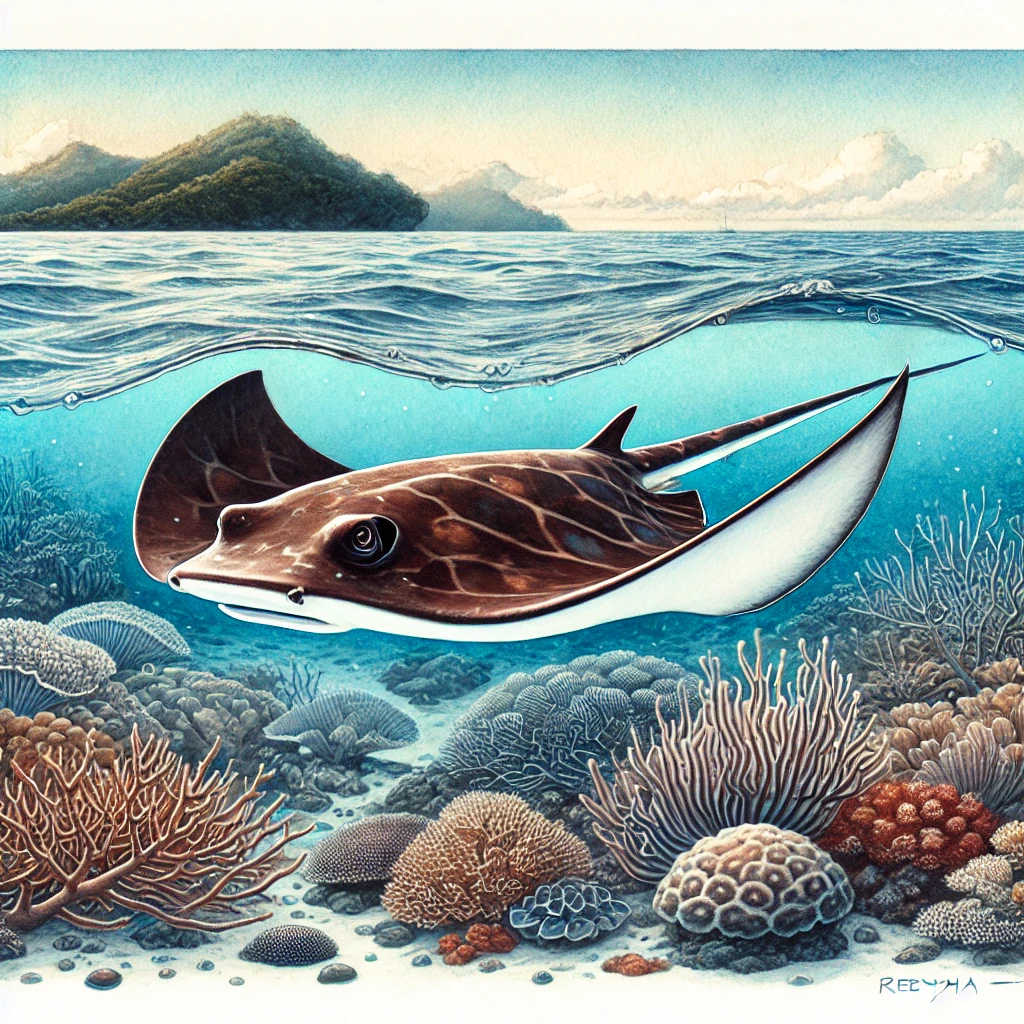
Did you know that the beautiful seas of Okinawa harbor terrifying legends? One such legend is the tale of the “Curse of the Masakabee,” a story about a certain type of ray.
The Masakabee has been considered a sacred creature by the people of Okinawa since ancient times. It is a grave taboo to take its life, and it is believed that those who harm a Masakabee will be cursed by its vengeful spirit. There have been reports of fishermen who caught Masakabee experiencing misfortunes and tourists who fell ill after eating Masakabee. These incidents may illustrate the terrifying power of the Masakabee’s curse.
However, the curse of the Masakabee is not merely a subject of superstition or fear. It symbolizes the deep respect and spiritual connection that the people of Okinawa have for nature. In modern society, where environmental destruction and the loss of traditional values are pressing issues, the curse of the Masakabee serves as a warning. It reminds us of the importance of preserving nature and our cultural heritage.
In this article, we will delve into the truth behind the legends of the Masakabee’s curse and explore the spiritual world of Okinawa that lies behind it. We aim to reflect on what we can learn from the curse of the Masakabee and how it can guide us in our lives today.
Valuing nature and tradition is a fundamental aspect of humanity that we must not forget. The curse of the Masakabee might be a message from the seas of Okinawa, urging us to recognize this truth.
What is the Masakabee?
The Ecology of the Masakabee
Classification and Characteristics
The Masakabee is a type of ray belonging to the family Myliobatidae, with the scientific name Aetobatus narinari. It can grow up to about one meter in length, with a dark brown to black upper body and a white underside. Its most distinctive feature is the one or two venomous spines on its long tail, used for self-defense. The Masakabee inhabits tropical and subtropical seas, including the waters around Okinawa.
Habitat and Lifestyle
Masakabee rays live in shallow marine areas such as coral reefs and sandy bottoms. During the day, they rest on the sea floor, becoming more active at night. They primarily feed on benthic organisms such as crustaceans and polychaetes, exploring the seabed in search of food. While they usually move alone, they sometimes form small groups, and during the breeding season, males and females pair up.
The Role of the Masakabee in Okinawa
Historical Background
In Okinawa, the Masakabee has been regarded as a special entity since ancient times. During the Ryukyu Kingdom period, the Masakabee was considered sacred, even appearing in the royal family’s crest. It was taboo to eat Masakabee, as doing so was believed to bring sickness and misfortune. This historical context has led the people of Okinawa to revere and fear the Masakabee as a respected and powerful presence.
Cultural Significance
The Masakabee plays an important role in Okinawan culture. For example, in the traditional Okinawan dance “Eisa,” there is a dance that mimics the graceful swimming of the Masakabee, symbolizing the importance of harmony with nature. The Masakabee also appears in Okinawan folktales, often serving as a warning against disrupting the natural order.
The Curse of the Masakabee
Origins of the Curse
The Taboo of Harming the Masakabee
In Okinawa, harming or killing a Masakabee has always been considered a grave taboo. The Masakabee is seen as a sacred creature, and taking its life is believed to go against the natural order. Those who harm a Masakabee are said to incur its vengeful curse, bringing disaster upon themselves. The people of Okinawa have long respected and protected the Masakabee to avoid invoking its curse.
The Mechanism of the Curse
The curse of the Masakabee is believed to arise primarily when humans harm or kill the creature. The Masakabee is thought to harbor a strong grudge against those who hurt it, and this grudge manifests as a curse that brings misfortune to the offenders. The people of Okinawa have lived in harmony with nature, respecting and protecting the Masakabee to avoid such curses.
Legends of the Curse
Curses Bringing Misfortune and Illness
There are various legends in Okinawa about the curse of the Masakabee, many of which involve misfortune or illness befalling those who harm the creature. For example, there is a story about a fisherman who caught a Masakabee and subsequently suffered a series of misfortunes. Another tale tells of a person who ate Masakabee and later experienced severe health issues. These stories illustrate the terrifying power of the Masakabee’s curse and teach the importance of living in harmony with nature.
Ways to Protect Against the Curse
Several methods have been passed down to protect against the curse of the Masakabee. The most crucial is to avoid harming or killing the Masakabee. If one accidentally harms a Masakabee, it is essential to return it to the sea immediately and offer sincere apologies. Some people believe that displaying images of the Masakabee or wearing amulets with its motif can protect them from the curse. These practices reflect the deep respect and reverence the people of Okinawa have for the Masakabee.
Reasons the Curse of the Masakabee is Feared
The Spiritual World of Okinawa
The Philosophy of Coexistence with Nature
The people of Okinawa have long held a worldview where nature and humans coexist. Nature is seen as a source of both blessings and potential threats. By respecting nature’s power and maintaining harmony with it, the people of Okinawa have sought to enjoy its benefits while avoiding its dangers. The curse of the Masakabee is perceived as a reminder of this philosophy, serving as a warning against disrupting the natural order.
The Role of Curses in Okinawan Spirituality
In Okinawa’s spiritual world, curses hold significant importance. They are seen as manifestations of negative emotions or actions that bring disaster upon humans. The curse of the Masakabee symbolizes a warning from nature against human actions that disrupt the natural balance. By fearing such curses, the people of Okinawa have maintained harmony with nature and lived in a way that respects its laws.
The Relevance of the Masakabee’s Curse in Modern Society
A Warning Against Environmental Destruction
In modern society, the destruction of the natural environment is a major issue, and Okinawa is no exception, facing problems such as coral reef destruction and marine pollution. The curse of the Masakabee serves as a warning against such environmental degradation. It symbolizes the importance of respecting and protecting nature, reminding us of the consequences of neglecting our environment.
The Crisis of Losing Traditional Values
There is also growing concern about the loss of traditional values in modern society. In Okinawa, traditional values like the philosophy of coexistence with nature are being eroded by rapid modernization. The curse of the Masakabee highlights the importance of these traditional values, urging us not to forget the respect and reverence for nature that has been passed down through generations.
Real Incidents Related to the Curse of the Masakabee
Case 1: The Fisherman and the Masakabee
The Fisherman’s Story
In the 1960s, a fisherman on a remote island in Okinawa caught a Masakabee with the intent of selling it for a high price, hoping to change his impoverished life. However, the Masakabee is a sacred creature in Okinawa, not to be harmed or captured. Ignoring this tradition, the fisherman prioritized monetary gain.
One night, under a full moon, the fisherman set his net and successfully caught a large Masakabee. But as he pulled it onto the boat, the unexpected happened. The Masakabee’s tail, equipped with venomous spines, deeply pierced the fisherman’s leg. He fell unconscious on the boat, overwhelmed by the intense pain.
Misfortune Befalls the Family
A few days later, the fisherman passed away in the hospital from the venom’s effects. His sudden death was a severe shock to his family. His wife fell into deep depression, unable to recover from the loss, and his children were too traumatized to continue their education.
Following the fisherman’s death, a series of misfortunes struck the family. The eldest son failed in business, accumulating significant debt. The eldest daughter separated from her partner, becoming a single mother. The youngest son was in a car accident, leaving him disabled. The wife became convinced these tragedies were the result of the Masakabee’s curse.
The family believed that the fisherman had incurred the Masakabee’s curse by capturing and harming it, and their subsequent misfortunes were the curse’s retribution. This story emphasizes the importance of respecting and valuing the Masakabee. Disrupting the natural order and ignoring traditions can lead to irreversible consequences, warning us of the importance of harmony with nature.
Case 2: The Tourist and the Masakabee
The Tourist’s Experience
In the early 2000s, a tourist from Tokyo visited
Okinawa and unknowingly ate Masakabee at a local restaurant. Fascinated by Okinawan cuisine, the tourist ordered a dish featuring the unfamiliar “Masakabee.” However, the tourist was unaware that Masakabee is a sacred creature in Okinawa, not meant to be consumed.
The restaurant owner, realizing the tourist did not understand the significance of the dish, felt compelled to serve it nonetheless. The unique flavor of Masakabee was unlike any other fish, and the tourist found it delicious. But shortly after the meal, the tourist fell severely ill with intense abdominal pain.
Consequences After the Meal
The tourist suffered from severe diarrhea and vomiting after eating the Masakabee, diagnosed with an unexplained food poisoning at the hospital. Despite the tourist not revealing they had eaten Masakabee, the doctor suspected something unusual about the meal. After a few days of treatment, the tourist recovered.
However, the misfortune didn’t end there. After returning to Tokyo, the tourist made a significant mistake at work and was harshly reprimanded by their boss. Additionally, a serious argument with their long-time partner led to a separation. The tourist began to suspect a connection between their misfortunes and the Masakabee meal.
Hearing about this incident, the people of Okinawa were reminded of the Masakabee’s curse’s terrifying power. The restaurant owner regretted not explaining the significance of the Masakabee to the tourist and vowed never to make the same mistake again. This story highlights the importance of understanding and respecting the traditions and culture of the places we visit. It reminds us to honor local customs and engage with the people in the places we travel to.
By understanding the curse of the Masakabee and its deep-rooted significance in Okinawan culture, we can appreciate the importance of living in harmony with nature and respecting the traditions that have been passed down through generations. The Masakabee’s curse is more than just a legend; it is a powerful message that calls us to protect our environment and preserve our cultural heritage.
In Conclusion
The Curse of the Masakabee and Okinawa’s Spiritual World
The curse of the Masakabee is an essential element in understanding the spiritual world of Okinawa. Within the worldview of Okinawa, based on the philosophy of coexistence between nature and humans, the Masakabee has been treated as a special entity. The curse of the Masakabee serves as a warning against disrupting the natural order, emphasizing the importance of respecting and cherishing nature.
The Significance of the Masakabee’s Curse in Modern Society
In modern society, the destruction of the natural environment and the loss of traditional values are significant issues. In this context, the curse of the Masakabee conveys important messages to us. It highlights the necessity of respecting and valuing nature and preserving traditional values, urging us to recognize their importance.
Lessons from the Curse of the Masakabee
We can learn many valuable lessons from the curse of the Masakabee. It teaches us the importance of a world where nature and humans coexist, the significance of preserving traditions, and the necessity of respecting and cherishing nature. The curse of the Masakabee reminds us of the importance of living in harmony with nature. As we face modern societal problems, it might be crucial for us to learn from Okinawa’s spiritual world.
Q&A
What kind of creature is the Masakabee?
The Masakabee is a type of ray belonging to the family Myliobatidae, found in the seas around Okinawa. It can grow up to about one meter in length and has one or two venomous spines on its tail.
What does the Masakabee mean to the people of Okinawa?
For the people of Okinawa, the Masakabee is a special and sacred creature. Historically, it has been taboo to harm or eat the Masakabee.
What is the curse of the Masakabee?
The curse of the Masakabee is believed to occur when a human harms or kills the creature. This curse is thought to bring misfortune and illness to those responsible.
What incidents are associated with the curse of the Masakabee?
Incidents include a fisherman who caught a Masakabee and died after being stung by its venomous spine, bringing misfortune to his family, and a tourist who fell ill after eating Masakabee and faced problems at work and home.
What is the significance of the Masakabee’s curse in modern society?
In modern society, the destruction of natural environments and the loss of traditional values are pressing issues. The curse of the Masakabee symbolizes the importance of respecting nature and preserving traditions.
Summary: The Curse of the Masakabee – A Terrifying Legend Hidden in Okinawa’s Sea
The Masakabee, a type of ray inhabiting the seas of Okinawa, has a curse that deeply resonates within the hearts of the people of Okinawa. Historically considered a sacred creature, harming or consuming the Masakabee has been taboo. The curse is believed to bring misfortune and illness to those who violate this taboo.
Incidents such as a fisherman dying after catching a Masakabee and the subsequent misfortunes that befell his family, as well as a tourist who fell ill after eating Masakabee and encountered problems in their personal and professional life, illustrate the terrifying power of the Masakabee’s curse.
However, the curse of the Masakabee is not merely a superstition. It symbolizes the Okinawan philosophy of coexistence with nature and the importance of traditional values. In today’s society, where environmental destruction and the loss of traditions are significant issues, the curse of the Masakabee calls attention to the importance of these values.
The curse of the Masakabee, lurking in the seas of Okinawa, hides behind its terrifying legend the crucial message of respecting nature and preserving traditions. The tales of the Masakabee prompt us to reconsider the importance of harmony with nature. Engaging with the spiritual world of Okinawa can help us address the challenges of modern society.


コメント