
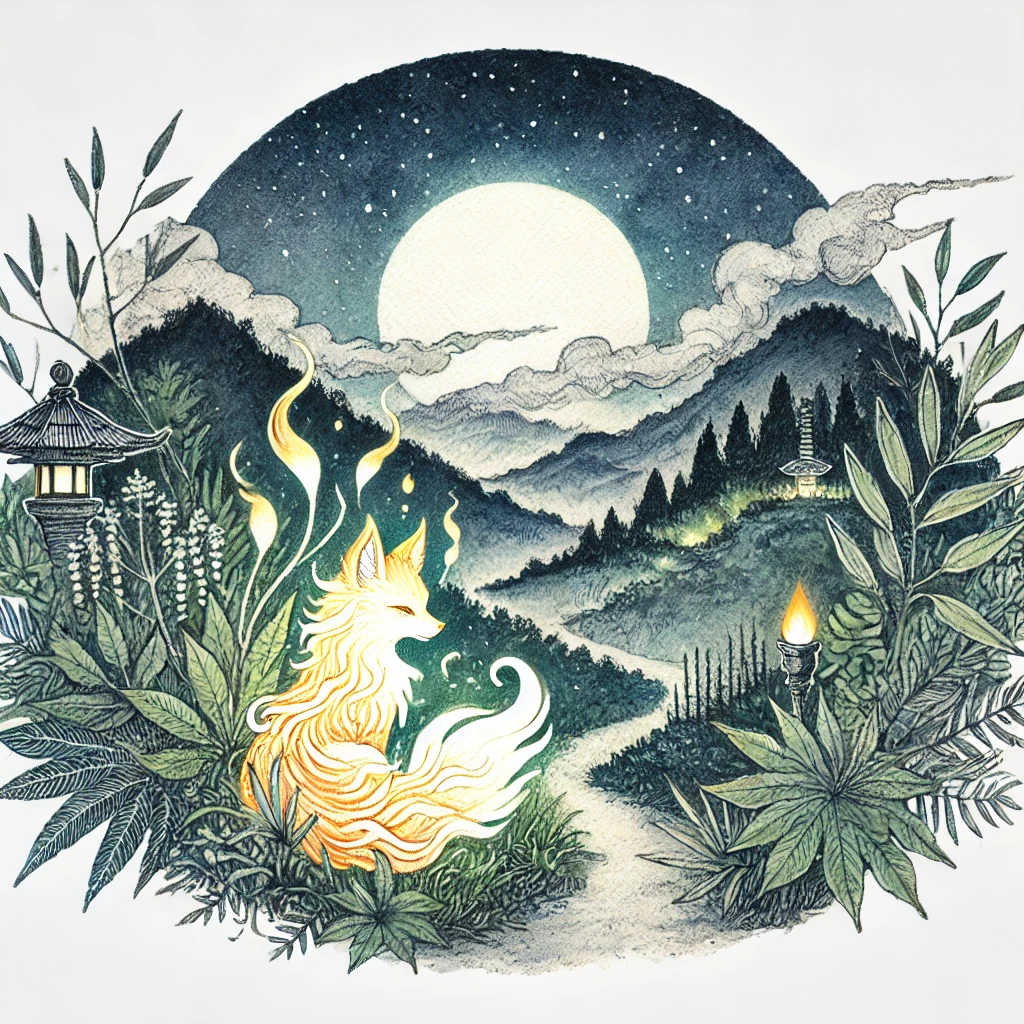
Okinawa, the mysterious island. Its rich nature and unique culture have captivated people for ages. Among the many intriguing phenomena of Okinawa, have you heard of the “Nanzan’s Foxfire”? This mysterious light appears in the mountains at night, sometimes guiding people and sometimes leading them astray.
The legend of the “Nanzan’s Foxfire” encapsulates the essence of Okinawa’s spiritual world. The reverence for nature, the dialogue with unseen realms, the blurred boundaries between good and evil, and the oral traditions passed down through generations—all of these are integral to understanding the Okinawan spirit.
In this blog, we delve into the depth of Okinawa’s spiritual culture through the lens of the “Nanzan’s Foxfire.” We explore the significance of sacred sites seen in the presence of shaman-like figures known as Yuta and the faith in Utaki (sacred groves). Furthermore, we interpret numerous legends and folk tales, uncovering insights into living harmoniously with nature and appreciating the richness of the heart that they offer to modern society.
Okinawa’s spiritual world conveys crucial messages to us: the harmony between nature and humans, respect for the unseen world, and the importance of inheriting the wisdom of our ancestors. These values, often overlooked in modern times, are vital for our collective well-being.
Let us embark on a journey into the spiritual world of Okinawa, guided by the mysterious light of “Nanzan’s Foxfire,” a tale preserved through the ages. This journey promises profound discoveries and insights into how we can live our lives.
Now, let’s open the doors to the spiritual culture of the mystical island of Okinawa. The “Nanzan’s Foxfire” will lead you to a new world.
- The Tale of “Nanzan’s Foxfire – The Mysterious Light in the Night Mountains”
- Nature Worship and Spirit Belief
- The Ambiguity and Duality of Good and Evil
- The Inheritance of Oral Tradition and Folk Belief
- The Unique Worldview and Values of Okinawa
- Specific Cases and Traditions
- Q&A
- Conclusion: “Nanzan’s Foxfire – An Invitation to Okinawa’s Spiritual World”
The Tale of “Nanzan’s Foxfire – The Mysterious Light in the Night Mountains”
In the southern part of Okinawa, approximately 20 kilometers south of Naha City, lies the Nanzan area of Nanjo City. This region has long been revered as a sacred place. It is said that at night, a mysterious light appears in the mountains of Nanzan. This is known as the “Nanzan’s Foxfire.”
Long ago, a fox lived in the mountains of Nanzan. This fox could speak human language and was worshipped as the guardian deity of the mountain. One day, a terrible disease spread through the village in Nanzan. Many people suffered and died. The villagers sought the fox’s help.
The fox heard their pleas and began searching for special medicinal herbs in the mountains. However, the mountains were pitch dark at night, making it extremely difficult to find the herbs. The fox decided to emit a mysterious light from its body to search for the herbs.
The fox’s light was as bright as a lantern, illuminating the mountain paths. It searched all night and eventually found the needed herbs. The fox brought the herbs to the villagers, who made medicine and cured the disease.
The villagers were grateful and worshipped the fox even more as the guardian deity of the mountain. Since then, the mysterious light emitted by the fox has been sighted in the mountains of Nanzan every night. People began calling this light “Nanzan’s Foxfire” and believed that the fox was protecting their village.
However, as time passed, some who witnessed the “Nanzan’s Foxfire” began to encounter misfortunes. Some fell ill, some met with accidents, and others went missing. The villagers started to fear that the “Nanzan’s Foxfire” was not just a protective symbol but also a malevolent entity that could lead people astray.
Whether the “Nanzan’s Foxfire” is good or evil remains uncertain to this day. However, the mysterious light that appears in the night mountains of Nanzan continues to captivate people’s hearts. The legend of the “Nanzan’s Foxfire” is an essential element in understanding the spiritual world of Okinawa.
Nature Worship and Spirit Belief
The Symbiotic Relationship Between Nature and Humans
Reverence for Nature
Okinawans have long held a deep reverence for nature. They view nature not merely as a resource or environment but as an equal or even superior presence to humans. This view is closely related to Okinawa’s rich natural environment, where forests, seas, and rivers are believed to be imbued with sacred power. People express gratitude for nature’s blessings and value living in harmony with it above all else. This reverence for nature forms the core of Okinawa’s spiritual world and manifests as nature worship.
Lifestyle Valuing Harmony with Nature
Okinawans, who revere nature, have led lifestyles that prioritize harmony with nature. They use nature’s blessings without waste and engage in farming and fishing according to nature’s rhythms. They also take utmost care not to harm or pollute nature. For example, when entering a mountain, they pray to the mountain gods for permission. This practice reflects the Okinawan attitude of recognizing nature’s sacredness and striving to maintain harmony with it. Such a symbiotic relationship with nature has greatly influenced Okinawan culture and values and continues to be passed down to this day.
Holy Presences Residing in Mountains, Forests, and Living Beings
Mountain Gods and Forest Spirits
Okinawans believe that holy presences reside in mountains and forests. Mountains, in particular, are considered the abodes of gods and are thought to connect the human world with the divine realm. Mountain gods are believed to protect the natural environment and respond to people’s prayers. Similarly, forest spirits are believed to inhabit forests, protecting the flora and fauna and bestowing blessings upon the people. These beliefs in holy presences are a crucial aspect of Okinawan nature worship, and people show respect to mountains and forests, striving to maintain harmony with nature.
Animal and Plant Spirits
In Okinawan spirit belief, animals and plants are also thought to have spirits. Animal spirits are considered sacred presences that inhabit specific animals and are believed to protect people. For instance, the “Amami Black Rabbit” has been revered as a guardian spirit of Amami Island. Plant spirits are considered sacred presences residing in plants, believed to bring blessings to people. For example, the “Banyan Tree” is revered as a sacred tree and regarded as a guardian deity of villages. These beliefs in animal and plant spirits indicate the deep connection between Okinawans and nature, reflecting an important aspect of nature worship.
The Unique Worldview Born from Nature Worship
The Ambiguity Between Nature and Humans
Okinawan nature worship creates a unique worldview where the boundary between nature and humans is blurred. Okinawans perceive nature and humans not as separate entities but as deeply interconnected beings. This worldview, which emphasizes harmony between humans and nature, is reflected in Okinawan culture and values, fostering interactions and symbiotic relationships beyond the boundaries between nature and humans. For example, the concept of “Niraikanai” suggests an ambiguous boundary between the present world and the otherworld, symbolizing the blurred lines between nature and humans.
Coexistence Awareness with Spirits
The unique worldview born from nature worship instills a coexistence awareness with spirits among Okinawans. They believe they live alongside various spirits present in nature, showing reverence and striving to coexist with them. By offering prayers and offerings to spirits, Okinawans maintain good relationships with them. They also seek the spirits’ assistance to heal illnesses or solve problems. This coexistence awareness with spirits is deeply rooted in Okinawans’ daily lives and has played a crucial role in maintaining harmony with nature. Coexistence with spirits is a distinctive feature of Okinawa’s spiritual world, reflecting an important aspect of nature worship.
The Ambiguity and Duality of Good and Evil
The Fox as a Guardian Deity
The Mysterious Powers of the Fox
In Okinawan folklore, foxes are revered as beings with mysterious powers. They are believed to understand human language and transform into human forms. Additionally, foxes are thought to have the power to grant people’s wishes and heal illnesses. Such mysterious powers inspire awe among Okinawans, leading to the worship of foxes as guardian deities. For instance, in “Kitsune Belief,” foxes are enshrined as household guardians, with offerings made to wish for family safety and business prosperity. Belief in the fox’s mysterious powers is an important element of Okinawa’s spiritual world, demonstrating the ambiguity and duality of good and evil.
The Dual Nature of the Fox
In Okinawan folklore, foxes are seen as possessing both good and evil qualities. While they have the aspect of guardian deities that bring blessings, they are also believed to deceive and mislead people. For example, in phenomena like “Kitsune Possession,” people possessed by foxes are said to exhibit abnormal behavior. Foxes are also believed to emit “foxfire,” which can mislead people. This dual nature of foxes symbolizes the ambiguity of good and evil in Okinawa’s spiritual world. Okinawans do not categorically judge beings like foxes as good or evil but respond flexibly according to the situation. The dual nature of foxes is a key feature of Okinawa’s worldview, illustrating an acceptance of the multifaceted nature of things.
The Dual Nature of Foxfire: Blessing and Calamity
The Fortunes and Misfortunes Brought by Foxfire
In Okinawan folklore, “Nanzan’s Foxfire” is seen as having both blessing and calamitous aspects. Foxfire is sometimes
believed to bring good fortune. For instance, those guided by foxfire may find treasures or solve difficult problems. Foxfire is also said to guide lost people back to safety. Conversely, foxfire can also bring misfortune or calamity. Stories tell of people who fell ill or met with accidents after seeing foxfire. This dual nature of foxfire symbolizes the ambiguity of good and evil in Okinawa’s spiritual world. Okinawans accept the dual nature of beings like foxfire without categorically judging them as good or evil.
Fear and Reverence for Foxfire
Belief in “Nanzan’s Foxfire” encompasses both fear and reverence. The mysterious power and unpredictability of foxfire instill fear. Tales of misfortune befalling those who see foxfire foster this fear. At the same time, foxfire is revered as a mystical power. Stories of fortune gained through foxfire foster reverence. This coexistence of fear and reverence is a feature of Okinawa’s spiritual world, reflecting the ambiguity and duality of good and evil. Okinawans maintain a certain distance from entities like foxfire while recognizing and respecting their mysterious powers.
The Unique Ethics Born from the Ambiguity of Good and Evil
The Absence of Absolute Good and Evil
In Okinawa’s spiritual world, a unique ethical perspective exists, where absolute standards of good and evil are absent. Good and evil are seen as ambiguous and situation-dependent. For instance, “Yuta,” or shamans, are revered as benevolent beings who help solve problems but are also feared for their potential to curse. Similarly, the concept of “Mabui” (soul) suggests that judgments of good and evil depend on the soul’s state. This ambiguity of good and evil is a key feature of Okinawa’s worldview, fostering a flexible approach to diverse values. Okinawans do not judge good and evil based on absolute standards but make judgments flexibly according to the situation.
Flexible Judgments Based on Situations
In Okinawa’s spiritual world, flexible judgments based on situations are emphasized. Good and evil standards are not absolute but are seen as situation-dependent. For instance, a curse by a “Yuta” is generally seen as evil but may be acceptable in justified cases. Similarly, the concept of “Niraikanai” suggests an ambiguous distinction between the present world and the otherworld, interpreted flexibly based on the situation. This situational flexibility in judgment highlights Okinawans’ adaptability, fostering a resilient approach to change. By applying good and evil standards flexibly, Okinawans have maintained social harmony.
The Inheritance of Oral Tradition and Folk Belief
Inheritance of the Spiritual World Through Legends and Folktales
The Importance of Oral Tradition
Okinawa’s spiritual world has been inherited through legends and folktales, known as oral traditions. Oral tradition refers to stories passed down directly from storyteller to listener without relying on written texts. In Okinawa, storytellers called “Yunta” have passed down legends and folktales for generations. Oral tradition plays a crucial role in conveying Okinawa’s history, culture, and values. Additionally, it strengthens community bonds and shapes identity. The legend of “Nanzan’s Foxfire” is one such story passed down through oral tradition, essential for understanding Okinawa’s spiritual world.
The Lessons and Wisdom of Stories
Legends and folktales convey the wisdom and lessons of ancestors. Stories are not merely entertainment but serve as guides for life and ethics. The legend of “Nanzan’s Foxfire” reflects Okinawa’s worldview, highlighting the relationship between nature and humans and the ambiguity of good and evil. Stories of gaining fortune through foxfire or encountering misfortune reveal life’s intricacies and the mysterious nature of fate. The lessons and wisdom in these stories have greatly influenced Okinawans’ way of life and values. Learning from stories through oral tradition is crucial for inheriting Okinawa’s spiritual world and leading a fulfilling life.
The Transformation of Traditional Beliefs in Modern Society
Urbanization and the Decline of Traditional Beliefs
The advancement of modern society has significantly transformed Okinawa’s traditional beliefs. Urbanization and lifestyle changes have led to the decline of traditional beliefs and customs. Rituals and festivals once centered around village communities are gradually disappearing in urban areas. Additionally, younger generations are increasingly losing interest in traditional beliefs, making their inheritance challenging. This situation poses a severe threat to the foundation of Okinawa’s spiritual world. The legend of “Nanzan’s Foxfire” is also being less frequently passed down due to urbanization, affecting the transmission of Okinawa’s culture and values.
Modern Interpretation and Adaptation of Traditional Beliefs
Despite the concern of declining traditional beliefs, efforts are being made to inherit these beliefs in a form that adapts to modern society. Modern interpretations of traditional beliefs and their adaptation to contemporary contexts are being explored. For example, the role of “Yuta” is increasingly emphasized as counselors or therapists. Traditional rituals and ceremonies are also being utilized as tourism resources. These modern interpretations and adaptations play a crucial role in maintaining and developing traditional beliefs. The legend of “Nanzan’s Foxfire” can gain new appeal through modern interpretations. The modern interpretation and adaptation of traditional beliefs open new possibilities for inheriting Okinawa’s spiritual world.
Establishing Identity Through the Inheritance of Folk Beliefs
The Sense of Community Created by Belief
Folk beliefs play a crucial role in strengthening community bonds and creating a sense of community. Sharing common beliefs fosters unity and mutual support among people. For example, belief in “Yuta” has played a significant role in solving community problems. Additionally, sacred sites called “Utaki” have functioned as spiritual anchors for communities. These beliefs have significantly influenced the formation of Okinawans’ identity. The legend of “Nanzan’s Foxfire” has also fostered a shared narrative among the people of Nanzan, promoting regional unity. The sense of community created by belief is a vital foundation supporting Okinawa’s spiritual world.
The Inheritance of Tradition and Cultural Pride
The inheritance of folk beliefs is crucial for nurturing cultural pride among Okinawans. Inheriting traditional beliefs and customs respects and continues the wisdom and values of ancestors. Passing down the legend of “Nanzan’s Foxfire” fosters pride in the history and culture of the Nanzan region. Additionally, participating in traditional rituals and ceremonies reinforces one’s sense of belonging to the community and establishes cultural identity. Inheriting tradition is essential for reasserting cultural uniqueness in a globalized modern society. The inheritance of folk beliefs is vital for Okinawans to live proudly and confidently.
The Unique Worldview and Values of Okinawa
The Existence and Role of Yuta (Shamans)
The Sacred Power and Responsibility of Yuta
In Okinawan folk beliefs, the presence of “Yuta,” or shamans, is indispensable. Yuta are believed to possess sacred powers through their interactions with gods, ancestors, and spirits. They enter a state called “Kami-Dari” (god-possession) to convey divine intentions and provide counsel. Yuta also perform rituals called “Miseceru” to communicate people’s wishes to the gods. This sacred power of Yuta holds significant influence within communities, providing spiritual support to the people. At the same time, Yuta bear significant responsibilities to use their power correctly and work for people’s well-being.
Yuta’s Role in Healing and Problem-Solving
Yuta also play a vital role in healing and problem-solving. In Okinawa’s traditional medicine, spiritual healing by Yuta holds an important place. Yuta identify the spiritual causes of illnesses and perform rituals and prayers for healing. They also assist in solving various problems people face, such as family issues and work-related concerns, offering advice from a spiritual perspective. This role of Yuta is sometimes combined with modern medicine and counseling, supporting Okinawans’ mental and physical health. The existence of Yuta reflects Okinawa’s unique worldview and values, essential for understanding its spiritual world.
Utaki Belief and the Significance of Sacred Sites
The Sanctity and Function of Utaki as Prayer Sites
“Utaki” are sacred sites scattered throughout Okinawa, serving as the focal points of community worship. Utaki are sacred spaces in nature, such as forests, rocks, and caves. They contain “Kami-Asagi” (worship places) where people offer prayers to the gods. Utaki are considered places where gods descend, connecting the human world and the divine realm. They also enshrine village guardian deities, offering prayers for community peace and prosperity. The sanctity of Utaki has been a cornerstone of Okinawans’ spiritual life, serving as essential sites for conveying people’s prayers to the gods.
Pilgrimages and Spiritual Cleansing
In Utaki belief, pilgrimages to sacred sites hold significant importance. People cleanse their minds and bodies by visiting various Utaki. Pilgrimages are opportunities to retreat from daily life and immerse in sacred spaces, fostering spiritual refinement. They also serve to comfort ancestors’ souls and purify one’s own soul. The Nanzan area, associated with the legend of “Nanzan’s Foxfire,” contains numerous Utaki, where people undertake pilgrimages related to foxfire, seeking spiritual cleansing. Pilgrimages are crucial practices supporting Okinawans’ spiritual world, embodying the essence of Utaki belief. Through pilgrimages, people reflect on their existence and achieve spiritual growth.
The Life Perspective Created by Okinawa’s Unique Worldview
The Continuity Between the Present and the Afterlife
In Okinawa’s worldview, the present life and the afterlife are seen as continuous. People believe that after death, souls continue to exist as ancestors, watching over their descendants. They also think that actions in the present life affect happiness in the afterlife. This continuity between the present and the afterlife significantly influences Okinawans’ life perspective. People value their way of life in the present while aiming to live in a manner that considers the afterlife. The legend of “Nanzan’s Foxfire,” where people’s destinies are guided by foxfire, symbolically demonstrates this continuity. Okinawa’s worldview fosters wisdom that perceives life from a long-term perspective.
Ancestor Worship and Views on Life and Death
Ancestor worship holds a crucial position in Okinawa’s life perspective. People honor and offer prayers to their ancestors’ souls, seeking their protection. They also inherit ancestors’ teachings and wisdom to find their life guidance. This ancestor worship is deeply connected to Okinawa’s views on life and death. Death is seen as a rite of passage to join the ancestors, with the deceased believed to become protectors of their descendants. The legend of “Nanzan’s Foxfire” sometimes portrays foxfire as symbolizing ancestors’ souls. Thus, ancestor worship and views on life and death are vital elements shaping Okinawans’ life perspective. They cherish their bonds with ancestors while walking their own life paths.
Specific Cases and Traditions
Experiences of Those Who Witnessed Foxfire
The Impact of Encounters with Foxfire
The experiences of those who witnessed “Nanzan’s Foxfire” reveal the impact of encounters with foxfire. Witnesses are often overwhelmed by the mystical sight, feeling awe. Some stories tell of people guided by foxfire to extraordinary experiences, such as lost children finding their way home safely or discovering treasures. Conversely, there are also accounts of misfortune following sightings of foxfire, such as illness or accidents. These encounters leave a strong impression, providing opportunities to experience Okinawa’s spiritual world firsthand.
Lessons and Warnings from Experiences
The experiences of those who witnessed foxfire convey various lessons and warnings. Stories of fortune gained through foxfire teach the importance of approaching gods and nature with sincerity. Conversely, tales of misfortune warn against underestimating nature’s power. These accounts highlight the existence of mysterious phenomena beyond human control, promoting humility. They also convey the principle of cause and effect, where good deeds bring fortune, and bad deeds bring calamity. Thus, these experiences play a crucial role in conveying the teachings and warnings of Okinawa’s spiritual world.
Other Legends and Folktales from the Nanzan Area
Stories About Nature and Spirits in Nanzan
The Nanzan area holds various stories about nature and spirits, besides the legend of “Nanzan’s Foxfire.” For instance, the legend of the “Mountain God” tells of a deity bringing blessings but punishing those who break nature’s laws. Similarly, the legend of the “Water God” depicts deities of rivers and seas supporting people’s lives. These stories reflect the rich natural environment of Nanzan and people’s deep connections with it. There are also numerous stories about spirits. For example, the legend of “Kodama” (tree spirits) tells of spirits communicating with people through trees. The legend of the “Wind Spirit” describes spirits controlling the wind to aid people’s journeys. These stories illustrate the worldview that regards Nanzan’s nature as sacred.
The Wisdom Embedded in Legends and Folktales
The legends and folktales of the Nanzan area are rich with ancestral wisdom. These stories are not merely entertainment but essential means of conveying lessons about coexistence with nature, ethics, and life teachings. For example, the legend of the “Mountain God” teaches the importance of respecting nature and following its laws. The legend of the “Water God” emphasizes gratitude for water’s blessings. Stories about spirits cultivate reverence for unseen presences and the necessity of maintaining nature’s balance. Thus, the legends and folktales of the Nanzan area are treasures of condensed wisdom. Through these stories, we can learn the importance of living harmoniously with nature and others.
The Depth of Okinawa’s Spiritual World Revealed by Cases and Traditions
The Rich Worldview Woven by Diverse Stories
Various cases and traditions, including the legend of “Nanzan’s Foxfire,” demonstrate the depth of Okinawa’s spiritual world. Okinawan stories, interweaving themes like nature worship, spirit belief, and the duality of good and evil, create a rich worldview. These stories reflect the unique development of Okinawa’s history, culture, and natural environment, showcasing distinct narratives. This diversity highlights the richness of Okinawa’s spiritual world. Stories stimulate imagination, cultivate inner worlds, and foster spiritual growth. They also strengthen community bonds and nurture identity. Okinawa’s spiritual world is supported by a rich worldview woven by diverse stories.
The Universality and Uniqueness of Okinawa’s Spiritual World
Okinawa’s spiritual world possesses both universality and uniqueness. Elements like nature worship, spirit belief, and ancestor worship are common across various cultures worldwide. Concepts like the continuity between the present and the afterlife and the principle of cause and effect are universal wisdom. Conversely, beliefs like Yuta and Utaki are unique to Okinawa, reflecting its distinct spiritual world. The legend of “Nanzan’s Foxfire” symbolizes the unique charm tied to Okinawa’s environment, history, and culture. Thus, Okinawa’s spiritual world is a profound realm combining universality and uniqueness. By engaging with it, we can learn universal human wisdom and savor the unique charm of Okinawa.
Q&A
What aspects of Okinawa’s spiritual world does the legend of “Nanzan’s Foxfire” reflect?
The legend of “Nanzan’s Foxfire” reflects various aspects of Okinawa’s spiritual world, including nature worship, spirit belief, and the duality of good and evil. It expresses the deep connection between nature and humans and reverence for the unseen, illustrating Okinawa’s unique worldview.
What role does Yuta (shamans) play in Okinawa’s spiritual world?
In Okinawa’s spiritual world, Yuta are vital figures who provide spiritual support by communicating with gods, ancestors, and spirits. They convey divine intentions through god-possession and perform rituals to fulfill people’s wishes. Yuta also play significant roles in healing and problem-solving from a spiritual perspective.
What wisdom is embedded in Okinawan legends and folktales?
Okinawan legends and folktales contain rich wisdom about coexistence with nature, ethics, and life teachings. They teach the importance of respecting nature, expressing gratitude for its blessings, and revering unseen presences, offering valuable lessons for harmonious living.
What insights does Okinawa’s spiritual world offer to modern society?
Okinawa’s spiritual world offers insights into the harmony between nature and humans, the richness of the heart, and community bonds. These values, often lost in modern times, provide crucial guidance for overcoming contemporary challenges and living fulfilling lives.
What is necessary to pass down Okinawa’s spiritual world to the future?
To pass down Okinawa’s spiritual world, it is essential to preserve and nurture legends, beliefs, and customs. Additionally, interpreting Okinawa’s worldview in modern contexts and incorporating it into contemporary life are crucial for its continued relevance and impact.
Conclusion: “Nanzan’s Foxfire – An Invitation to Okinawa’s Spiritual World”
Okinawa has a mystical legend known as “Nanzan’s Foxfire.” This legend reflects various aspects of Okinawa’s spiritual world, including nature worship, spirit belief, and the duality of good and evil. The destinies of those guided by foxfire teach us the importance of harmony with nature and reverence for the unseen world.
Exploring Okinawa’s spiritual world reveals unique beliefs and worldviews, such as Yuta (shamans) and Utaki (sacred groves), and the continuity between the present and the afterlife. Okinawan legends and folktales convey ancestral wisdom about coexistence with nature, ethics, and life teachings.
Okinawa’s spiritual world encompasses values crucial to modern society: harmony between nature and humans, the richness of the heart, and community bonds. These insights offer profound guidance for contemporary challenges.
Okinawa’s spiritual world is a life story that extends from the past to the present and into the future. It is our responsibility to preserve and nurture this heritage. Simultaneously, interpreting Okinawa’s worldview in modern contexts and integrating it into contemporary life is vital.
With the wisdom of ancestors embedded in the legend of “Nanzan’s Foxfire,” we should continue our dialogue with Okinawa’s spiritual world. By incorporating Okinawa’s rich worldview into our lives, we ensure the spiritual world’s enduring legacy.


コメント