
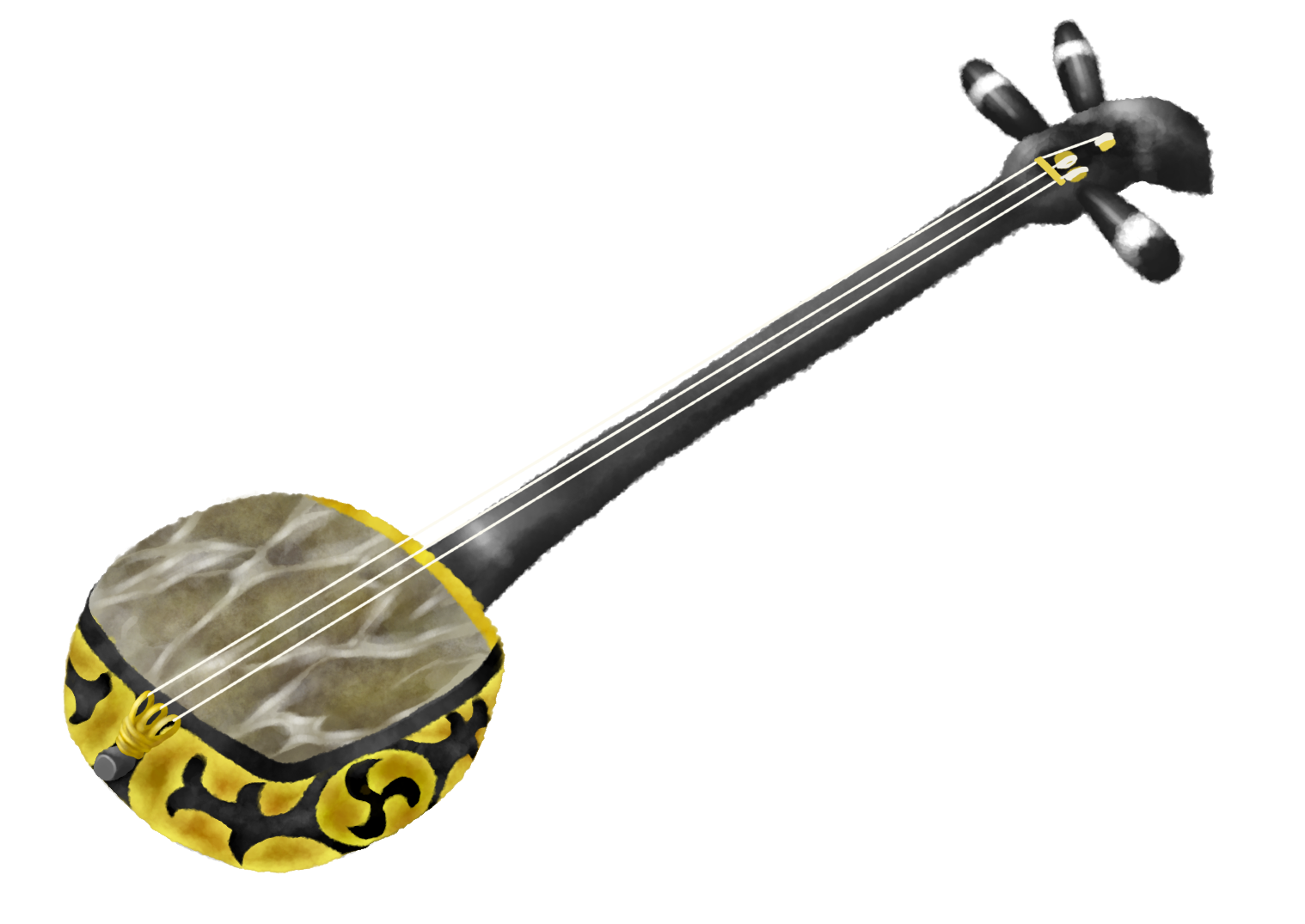
「Ting, Ran, Tun”—These distinctive sounds embody the very spirit of Okinawa. The sanshin, a traditional musical instrument, reflects Okinawa’s history and culture, showcasing its multifaceted charm. From clear high tones to powerful low ones, the sanshin’s melodies skillfully express the natural beauty, climate, and emotions of Okinawa’s people.
The history of the sanshin is ancient, stretching from the Ryukyu Kingdom era to the present day, always a close companion to the lives of Okinawan people. It has played a crucial role in festivals and rituals, comforting ancestral spirits and strengthening family bonds.
Even in modern society, the sanshin holds significant value as a symbol of Okinawan culture. Live performances in tourist spots and restaurants evoke the essence of Okinawa, captivating visitors. Furthermore, sanshin classes in schools provide children with opportunities to learn about Okinawan history and culture.
Learning the sanshin is not merely about acquiring musical skills. Through the sanshin, one can directly experience the joy of music, learn the importance of communication and cooperation, and connect with the history, culture, and sentiments of Okinawa’s people through its songs.
The preservation and development of the sanshin are entrusted to each of us. We are tasked with protecting tradition while exploring new possibilities. Let’s start by recognizing and appreciating the allure of the sanshin.
Now, listen closely to the sounds of the sanshin and embark on a journey to touch the heart of Okinawa. Undoubtedly, invaluable experiences and learning await you.
- Introduction
- Characteristics and Structure of the Sanshin
- How to Play the Sanshin
- Why the Sanshin is Deeply Rooted in Okinawan Culture
- The Present and Future of the Sanshin
- Conclusion
- Q&A
- Summary
Introduction
The Relationship Between Okinawa’s Unique Culture and the Sanshin
Characteristics of Okinawan Culture
Okinawa, a beautiful archipelago located at the southernmost tip of Japan, has fostered a unique culture. Blessed with blue seas, white sandy beaches, and rich nature, Okinawa has developed its distinctive traditions and history since the Ryukyu Kingdom era, influenced by China and Southeast Asia. The people of Okinawa, living in harmony with nature, have evolved their language (Ryukyu language), festivals, crafts, and music.
The Role of the Sanshin in Okinawan Culture
Music holds a particularly important place in Okinawan culture, with the sanshin, a representative traditional instrument, at its center. The sanshin has been played in various scenes, from Okinawan history and festivals to performing arts, expressing the emotions and values of its people. Its sound, reflecting the nature and hearts of Okinawa, simultaneously evokes both melancholy and joy. Thus, the sanshin is not just an instrument but an embodiment of Okinawan culture.
The History and Development of the Sanshin
The Origins and Introduction of the Sanshin
The origins of the sanshin date back to around the 15th century. The Ryukyu Kingdom thrived through trade with China and Southeast Asia, during which the sanshin was introduced. The prototype of the sanshin is believed to be the Chinese sanxian or the Vietnamese đàn tam. However, the people of Okinawa did not merely imitate these instruments; they made unique improvements to create a sanshin that suited Okinawa’s climate and sensibilities.
The Evolution and Changes of the Sanshin
The sanshin has undergone various changes from the Ryukyu Kingdom era to the present. By the 17th century, its shape and playing methods were almost established, playing a crucial role in court music and rituals. Although the sanshin faced a temporary decline after the fall of the Ryukyu Kingdom, the Okinawan people continued to protect it. Post-war, the value of the sanshin was re-evaluated, and today, it attracts global attention as a symbol of Okinawan culture.
The role of the sanshin in Okinawan culture is not limited to its musical aspect. It embodies Okinawa’s history, nature, spirituality, and the very identity of its people. In the next section, we will delve deeper into the characteristics and structure of the sanshin, exploring the secrets of its sound and tuning and the world of emotions it conveys.
Characteristics and Structure of the Sanshin
Appearance and Materials of the Sanshin
Size and Shape of the Sanshin
At a glance, the sanshin resembles a guitar or ukulele, but its size and shape have unique characteristics. Typically, the sanshin’s total length is about 90 cm, with the body measuring around 30 cm. This compact design contributes significantly to its portability and ease of playing. The body is a square box, covered with snake skin, a crucial element influencing the sanshin’s sound.
The neck (sao) is long and slender, with pegs (karakui) at the top for tuning. The neck has twelve frets (jitari), which serve as the equivalent of guitar frets. Pressing these frets produces various scales.
Materials Used in the Sanshin
The materials used in the sanshin are deeply connected to Okinawa’s nature. The body is often made from houtok (halek) wood, unique to Okinawa. Although light and easy to process, houtok wood is susceptible to humidity, so charcoal is sometimes placed inside the body for humidity control.
Traditionally, the neck was made from Ryukyu ebony, but today, it is commonly made from imported woods like ebony or rosewood, prized for their durability and beauty, which also influence the sanshin’s sound.
The snake skin covering the body is usually made from habu, a venomous snake native to Okinawa. The habu skin is tough and beautifully patterned, enhancing both the sound and appearance of the sanshin.
Sound and Tuning of the Sanshin
Sound Range and Characteristics of the Sanshin
The sanshin’s sound range is narrower than that of a guitar or ukulele, primarily producing mid to high tones. However, its sound is rich and expressive. The sounds are categorized into three types: “Ting,” “Ran,” and “Tun.”
“Ting” represents clear, high-pitched tones and is a trademark sound of the sanshin. “Ran” denotes nasal, mid-pitched tones, evoking melancholy and longing. “Tun” refers to deep, powerful low tones essential for rhythm. These sounds combine to express a wide range of emotions.
Tuning the Sanshin
Tuning the sanshin is unique. It has three strings, each tuned differently: the top string (Uuwē), the middle string (Nakawē), and the bottom string (Kuuwē). Typically, the top and middle strings are tuned to the same pitch (one octave apart), and the bottom string is tuned a fourth below.
To tune, start with the bottom string as the reference, then adjust the middle and top strings. Since the sanshin is sensitive to temperature and humidity, tuning must be checked before playing. Adjustments for specific songs, known as “modulation,” showcase the player’s skill.
The sanshin, a product of Okinawa’s nature and culture, boasts an unexpectedly rich sound and expressive power despite its compact appearance. In the next section, we will explore playing techniques, from basic methods to traditional songs. Let’s master the art of sanshin and fully appreciate its charm!
How to Play the Sanshin
Playing the sanshin might seem challenging at first, but with basic techniques, anyone can produce beautiful sounds. Here, we will explain how to play the sanshin in an easy-to-understand manner, even for beginners.
Basic Techniques and Skills
Right-Hand Techniques (Hatsusou Method)
The most crucial aspect of sanshin playing is the right-hand technique, known as “hatsusou.” There are two types: “Suji-bachi” and “Ufu-bachi.”
“Suji-bachi” involves plucking the strings upwards with the index finger, producing the characteristic sharp sound used for melodies. On the other hand, “Ufu-bachi” involves strumming downwards with the thumb, creating a strong sound for rhythms.
Combining these techniques allows for a diverse range of expressions. Beginners should practice each technique separately at a slow tempo, gradually increasing speed and combining both methods.
Left-Hand Techniques (Finger Placement)
The left hand changes the pitch by pressing the frets (jitari) on the neck. The basic scale includes five notes: Do, Mi, Fa, So, and La.
The thumb supports the neck from behind, while the other fingers press the frets. Use the pads of the fingers and avoid pressing too hard, as excessive force destabilizes the pitch.
Beginners should practice the basic five-note scale, focusing on finger placement and roles. Once familiar, try more complex scales and chords.
Traditional Songs and Playing Styles
Classical Music (Koten Sanshin)
Sanshin classical music, or “koten sanshin,” includes songs played in the royal court during the Ryukyu Kingdom era, such as “Asadoya Yunta,” “Kagiyadefu,” and “Noborikuchi.”
Koten sanshin is characterized by lyrical, slow melodies. When playing, it’s crucial to play each note meticulously. Adding “Yuru” (vibrato) can enhance the unique flavor.
Learning koten sanshin effectively requires direct guidance from a master. Observing and imitating a master’s performance helps acquire the unique expressive power of koten sanshin.
Folk Music (Minyo Sanshin)
Minyo sanshin, or folk sanshin, involves playing folk songs passed down among Okinawa’s common people, such as
“Haisai Ojisan,” “Tinsagu nu Hana,” and “Bashofu no Uta.”
Minyo sanshin features faster tempos and rhythmic playing compared to koten sanshin. Changing rhythm patterns (kunkuruwa) to match the song creates diverse expressions. Improvised playing (sabi) based on the lyrics is a highlight of minyo sanshin.
To learn minyo sanshin, mastering basic rhythm patterns is essential. Understanding the lyrics’ meaning and feeling the song’s atmosphere are also crucial. Minyo sanshin relies on the harmony between singing and sanshin.
Modern Arrangements and Applications
Collaboration with Pop and Other Genres
Recently, the sanshin has transcended traditional music, collaborating with various genres like pop, rock, jazz, and classical.
The sanshin’s unique sound adds a fresh touch to any music, and its rhythm enhances the groove of other genres. To attempt such collaborations, it’s essential to master basic playing techniques and explore other music genres, honing one’s sensibilities. Creative arrangements further expand the possibilities of the sanshin.
New Expressions Using the Sanshin
The sanshin, not confined to traditional styles, can explore new expressions. Using effects to modify its sound or employing loop machines for multi-track recording can create innovative sanshin expressions.
Collaborations with dance, theater, and other arts also draw attention. The sanshin’s sound can enhance the expressiveness of dancers and actors, creating artistic synergy.
To pursue new expressions with the sanshin, trust your intuition. Embrace free thinking and explore the sanshin with a fresh perspective. Such innovations will surely captivate many people.
The sanshin offers deep and diverse playing methods. Mastering basic techniques is crucial, and familiarizing oneself with classical and folk music enhances its traditional expressiveness. Venturing into modern arrangements and collaborations further expands the sanshin’s potential. To fully appreciate its charm, start by playing the sanshin. You’ll undoubtedly become enamored with it!
Why the Sanshin is Deeply Rooted in Okinawan Culture
The sanshin’s deep roots in Okinawan culture go beyond its musical appeal. It is intimately connected with Okinawa’s history, beliefs, and daily life. Here, we explore why the sanshin is indispensable in Okinawan culture.
The Connection Between Okinawan History and the Sanshin
The Role of the Sanshin in the Royal Court Era
The sanshin’s crucial role in Okinawan history dates back to the Ryukyu Kingdom era. Introduced from China around the 15th century, the sanshin became a symbol of high culture, integrated into the royal court’s music.
At court banquets, the sanshin’s sound was indispensable, soothing royalty and nobility and enhancing the festive atmosphere. It also played a vital role in welcoming foreign envoys, symbolizing the sophisticated culture of the Ryukyu Kingdom.
Thus, the sanshin demonstrated the court’s authority and was vital in diplomacy, securing its esteemed position in the royal culture.
The Spread and Development of the Sanshin Post-War
Despite Okinawa’s annexation by Japan and the devastation of World War II, the sanshin remained a source of solace for the Okinawan people. During the post-war turmoil, its sound gave hope and evoked nostalgia for home.
From the 1950s onwards, as Okinawa’s economy recovered, the sanshin became widespread among the general populace. Sanshin classes flourished, and many people began learning the instrument. The spread of radio and television also increased the sanshin’s presence in people’s lives.
Today, the sanshin is cherished globally as a representative instrument of Okinawa. Its appeal draws tourists, contributing significantly to Okinawa’s cultural dissemination.
The Sanshin’s Influence on the Spiritual World of Okinawans
The Connection Between the Sanshin and Festivals or Rituals
For Okinawans, the sanshin is more than an instrument. It is indispensable in festivals and rituals, marking significant life events.
For instance, in weddings, the sanshin’s sound blesses the newlyweds. During the Obon festival in the lunar calendar’s August, it is played to welcome ancestral spirits, believed to comfort them and strengthen family ties.
Thus, the sanshin is deeply tied to Okinawan spirituality, expressing emotions of joy, sadness, gratitude, and prayer. Its history is deeply etched in the hearts of Okinawans.
The Emotions and Values Expressed by the Sanshin
The sanshin’s sound serves as a vital means of expressing Okinawans’ emotions and values. Its songs convey a range of feelings, from love and parting to joy and sorrow.
For instance, “Asadoya Yunta” expresses feelings of love, with the sanshin’s melancholic tones capturing the nuances of affection. “Tinsagu nu Hana” is a song of mourning for those lost in war, with the sanshin conveying both sorrow and a wish for peace.
The sanshin’s melodies encapsulate the deep-seated emotions of Okinawans, sharing their joys and sorrows and deepening their bonds.
Sanshin Legends and Folklore
The Legend of “Nakagusuku Prince’s Sanshin”
One of the most famous sanshin legends is the story of “Nakagusuku Prince’s Sanshin.” Nakagusuku Prince was a real prince of the Ryukyu Kingdom in the 15th century.
According to the legend, the prince, a skilled sanshin player, disappeared from the royal palace. His retainers were advised by an old man to find him by following the sound of his sanshin. They eventually found the prince playing sanshin in the forest.
This legend illustrates the sanshin’s power to move hearts and its significance to royalty.
Other Sanshin Anecdotes and Legends
Numerous other sanshin stories and legends exist, such as the belief that playing the sanshin can summon dragons, suggesting its supernatural power.
Another tale says a master sanshin player could read others’ hearts through its sound, highlighting the instrument’s deep connection with human emotions.
Such stories underscore the sanshin’s special place in the hearts of Okinawans, representing history, culture, and spirituality.
The sanshin’s deep roots in Okinawan culture stem from various aspects: history, beliefs, daily life, and spirituality. From the royal court era to the present, it has been a companion to Okinawan people, an essential element in festivals and rituals, and a means of expressing emotions. Numerous legends and anecdotes further attest to its special status. The sanshin is not just an instrument but the very soul of Okinawa. Next, we will consider the role and future of the sanshin in modern society.
The Present and Future of the Sanshin
The sanshin, a symbol of Okinawan traditional culture, has a long history. However, its role in modern society is evolving. Here, we explore the current state of the sanshin and its future.
The Role of the Sanshin in Modern Society
The Sanshin as a Symbol of Okinawan Culture
In modern Okinawa, the sanshin is more than just an instrument. It symbolizes Okinawa’s history, culture, and identity.
Tourists visiting Okinawa often encounter sanshin performances at hotels, restaurants, and tourist spots, where its sound enhances the experience of Okinawa’s unique atmosphere, captivating visitors.
Additionally, the sanshin plays a crucial role in cultural education. In schools, sanshin lessons provide children with opportunities to learn about Okinawan history and culture, deepening their understanding and fostering their sense of identity.
The Sanshin’s Impact on Tourism and Economy
The sanshin significantly influences Okinawa’s tourism and economy. Many tourists look forward to sanshin performances, which are major attractions in various establishments.
Sanshin-themed merchandise is also popular. Accessories and souvenirs featuring sanshin motifs are highly appreciated by tourists. Items like T-shirts and bags with sanshin designs enhance Okinawa’s cultural appeal.
Moreover, sanshin performers and makers are vital to Okinawa’s economy. Performers earn income from concerts and events, while makers continue the traditional craft, producing high-quality sanshins that uphold Okinawa’s cultural heritage.
Efforts for the Preservation and Development of the Sanshin
Sanshin Education and Human Resource Development
To preserve the sanshin’s charm for future generations, education and human resource development are essential. Various educational institutions, from elementary to university level, offer sanshin classes, increasing opportunities for children to engage with the instrument and fostering their interest.
Training skilled performers is also crucial. Okinawa Prefectural University of Arts offers specialized curriculums to nurture sanshin experts, helping spread its appeal worldwide.
Additionally, preserving sanshin-making techniques is vital. Balancing traditional methods with new technologies ensures the production of better sanshins. Efforts to pass on craftsmanship to the next generation are ongoing.
Activities for Sanshin Promotion and Internationalization
Promoting the sanshin’s charm domestically and internationally requires concerted efforts. Numerous sanshin concerts and workshops are held in Okinawa, offering opportunities to experience its appeal firsthand.
The internet facilitates global dissemination of sanshin performances through platforms like YouTube and social media, attracting international learners.
International sanshin events, such as the “World Sanshin Festival,” bring together sanshin players from around the world, fostering cultural exchange and spreading the sanshin’s appeal globally.
The sanshin continues to play an essential role in modern society, influencing tourism and economy and requiring education, human resource development, and promotion for its preservation and development.
Balancing tradition with innovation is crucial for the sanshin
’s future. Recognizing and appreciating its value, let’s pass on its charm to future generations and share it with the world, enriching Okinawan culture further.
We hope the sanshin’s sound continues to resonate with the hearts of Okinawans and captivate people worldwide.
Conclusion
We have explored the charm of the sanshin, its playing methods, and its deep connection with Okinawan culture. Let’s review and reflect on the cultural value of the sanshin and the significance of learning it.
The Role of the Sanshin in Okinawan Culture
The Inseparable Relationship Between the Sanshin and Okinawan Culture
The sanshin is more than just an instrument. It is deeply intertwined with Okinawa’s history, beliefs, and performing arts, embodying Okinawan culture itself.
From the Ryukyu Kingdom era to the present, the sanshin has been a constant companion to Okinawan lives, playing crucial roles in festivals and rituals and marking significant life events. Its sound reflects Okinawa’s nature, climate, and people’s emotions.
Learning about the sanshin equates to understanding Okinawan culture. By tracing its history, one can grasp Okinawa’s journey.
The Cultural Value of the Sanshin
The sanshin holds immeasurable cultural value. It symbolizes Okinawa’s traditional culture and sustains its identity.
The sanshin’s sound evokes the essence of Okinawa, captivating visitors. Its live performances are indispensable in tourist spots and eateries, and sanshin-themed merchandise plays a crucial role in promoting Okinawan culture domestically and internationally.
In education, the sanshin significantly contributes to fostering a deeper understanding of Okinawan history and culture among children, passing on the spirit of Okinawa to future generations.
Thus, the sanshin is central to Okinawan culture, and its value spans various aspects. Preserving and nurturing it is synonymous with preserving and nurturing Okinawan culture.
The Charm and Significance of Learning the Sanshin
Experiences and Learning Through the Sanshin
Learning the sanshin is not just about acquiring musical skills; it offers a wealth of experiences and learning opportunities.
Playing the sanshin allows one to experience the joy of music firsthand. Listening to the sounds produced by one’s hands and playing with heart deepens the understanding of music. Additionally, playing with others teaches the importance of communication and cooperation.
Through sanshin songs, one can connect with Okinawan history, culture, and sentiments, getting closer to the Okinawan heart. Learning sanshin legends and anecdotes offers insights into Okinawa’s rich spiritual world.
Thus, learning the sanshin fosters both musical and personal growth, making it a lifelong treasure.
The Importance of Preserving and Developing the Sanshin
Preserving and developing the sanshin’s charm for future generations is a responsibility we all share.
Education and human resource development are essential for its preservation. Enhancing sanshin classes in schools and increasing children’s engagement are vital. Creating environments to nurture skilled performers and craftsmen is also crucial.
Promoting the sanshin domestically and internationally requires various initiatives, such as holding concerts and workshops, leveraging the internet for global outreach, and organizing international events to foster cultural exchange.
The preservation and development of the sanshin are critical to Okinawa’s cultural future. Balancing tradition with innovation is necessary. Let’s start by recognizing and appreciating the sanshin’s charm.
We have explored the charm, playing methods, and deep connection of the sanshin with Okinawan culture. The sanshin embodies Okinawa’s history and culture, its value immeasurable. Its sound expresses Okinawa’s nature, climate, and people’s emotions, profoundly moving our hearts. Learning the sanshin offers the joy of music and personal growth, connecting with the Okinawan heart.
Preserving and developing the sanshin is entrusted to each of us. Let’s start by recognizing and appreciating its charm and value, sharing the experiences and learning it offers with future generations.
We hope the sanshin’s sound continues to support Okinawan culture and resonate with hearts worldwide. Let’s share the sanshin’s charm with many.
Welcome to the world of the sanshin. Listen closely to its sound and embark on a journey to touch the heart of Okinawa. Undoubtedly, invaluable experiences and learning await you.
Q&A
What are the characteristics of the sanshin sounds “Ting,” “Ran,” and “Tun”?
“Ting” refers to clear high-pitched tones, “Ran” to nasal mid-pitched tones, and “Tun” to deep, powerful low tones.
Why is the sanshin important in Okinawan festivals and rituals?
The sanshin’s sound is believed to comfort ancestral spirits and strengthen family bonds, deeply connecting with Okinawan spirituality.
What activities promote the sanshin’s popularization and internationalization?
Sanshin concerts and workshops in Okinawa, global dissemination through the internet, and international events like the World Sanshin Festival are key activities.
What experiences and learning can be gained from learning the sanshin?
Experiencing the joy of music, learning the importance of communication and cooperation, and connecting with Okinawan history, culture, and sentiments are some key benefits.
What is important for the preservation and development of the sanshin?
Enhancing sanshin classes in schools, nurturing skilled performers and craftsmen, and promoting the sanshin domestically and internationally are essential.
Summary
The sanshin, a traditional Okinawan musical instrument, captivates with its unique sound and playing techniques, deeply connecting with Okinawan culture. Its history dates back to the Ryukyu Kingdom era, and today, it is cherished as a symbol of Okinawan culture. The sanshin’s sounds—“Ting,” “Ran,” and “Tun”—express various emotions. It plays a vital role in festivals and rituals, connecting deeply with Okinawan spirituality. In modern society, the sanshin influences tourism and the economy, and education and promotion activities are crucial for its preservation and development. Learning the sanshin provides the joy of music and personal growth, connecting with the Okinawan heart. Preserving and developing the sanshin for future generations is essential for Okinawa’s cultural future. The sanshin’s sound will continue to support Okinawan culture and resonate with hearts worldwide. Let’s share its charm with many.


コメント