
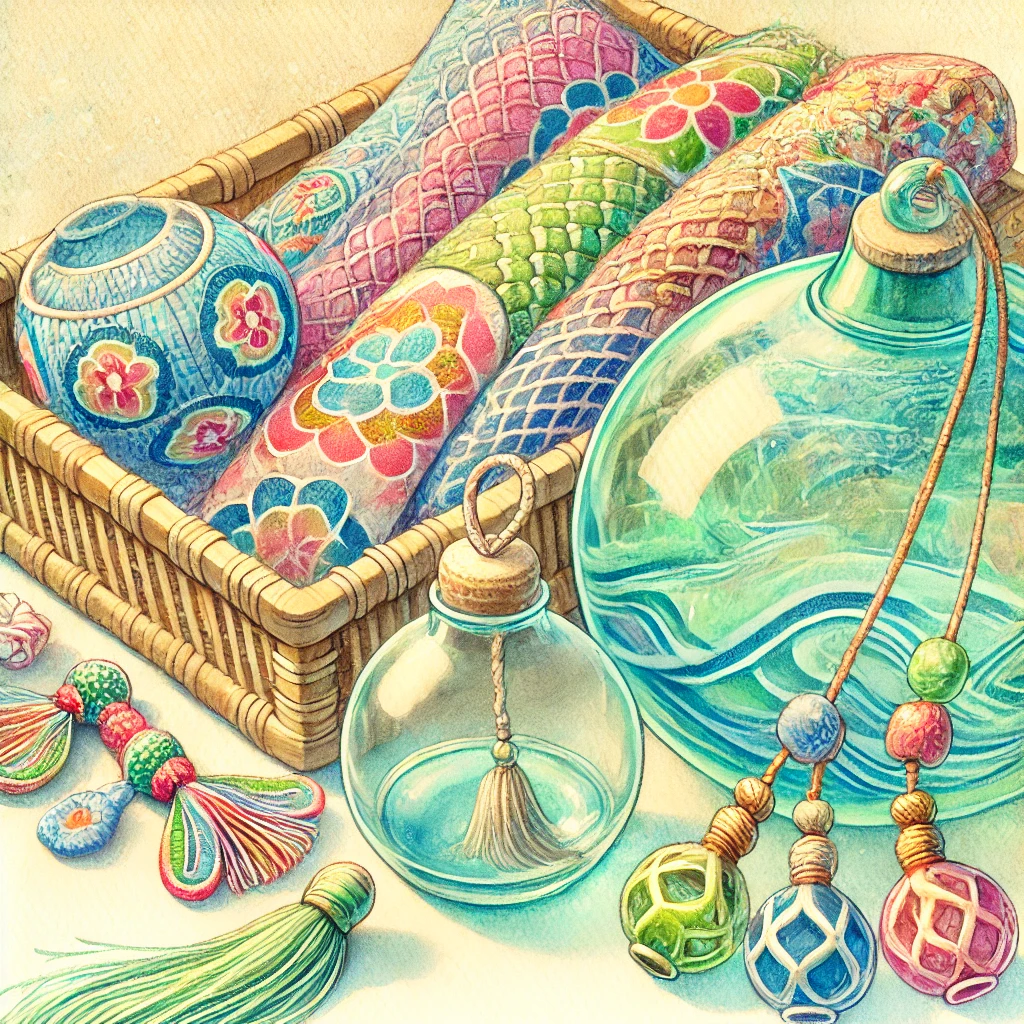
One of the joys of traveling in Okinawa is choosing souvenirs. Vivid Bingata fabrics, translucent Ryukyu glass, and handwoven protective charms. These traditional souvenirs invite us into the depths of Okinawan history and culture.
But wait a moment. Do you know the true meaning of these souvenirs? Have you ever touched the thoughts and feelings of the Okinawan people embedded in them, beyond their surface beauty?
In fact, Okinawa’s traditional souvenirs carry long histories, rich cultures, and the warm hearts of the people. The stories of the royal era engraved in Bingata, the colors of the sea and sky reflected in Ryukyu glass, and the family love and prayers for peace embedded in protective charms. These souvenirs speak to us about the spirit of Okinawa.
When we hold these souvenirs in our hands, we are not just purchasing items. We are touching the wisdom and skills of the Okinawan people who have lived in harmony with nature, feeling the weight of history, and engraving something precious in our hearts.
In this blog, we will explore the profound world of Okinawa’s traditional souvenirs. Focusing on Bingata, Ryukyu glass, and protective charms, we will carefully unravel their histories, production processes, and modern significance. Additionally, we will share ways to deepen your understanding of Okinawan culture through the selection of these souvenirs.
To make your memories of traveling in Okinawa deeper and more meaningful, why not discover together the charm and value of traditional souvenirs? Surely, your affection for Okinawa will deepen more than ever before.
Now, let’s set off into the world of Okinawa’s traditional souvenirs. Enjoy a special journey that lingers in your heart, feeling the breath of history and culture.
- Introduction
- Types of Traditional Okinawan Souvenirs
- The Spiritual World Embedded in Okinawa’s Traditional Souvenirs
- Anecdotes and Folklore of Traditional Souvenirs
- Modern Significance of Okinawa’s Traditional Souvenirs
- Conclusion
- Q&A
- Summary
Introduction
The Unique Culture of Okinawa and the Charm of Traditional Souvenirs
Historical and Cultural Background of Okinawa
Okinawa Prefecture, located at the southernmost tip of Japan, has long nurtured a unique culture. From ancient times, Okinawa traded with China and Southeast Asia, and during the Ryukyu Kingdom era, it developed a unique culture influenced by both Japan and China. This historical background has made Okinawa a region with particularly distinctive culture within Japan.
Diversity and Uniqueness of Traditional Souvenirs
Okinawa’s traditional souvenirs reflect its unique culture and are diverse. Bingata, Ryukyu glass, and protective charms, all embody Okinawa’s unique techniques, materials, and spirituality. These souvenirs are not just items, but convey the history, culture, and sentiments of the Okinawan people.
The Purpose and Structure of This Article
Introduction to Okinawa’s Traditional Souvenirs
In this article, we will delve into the representative traditional souvenirs of Okinawa, such as Bingata, Ryukyu glass, and protective charms, explaining their history, characteristics, and production processes in detail. By understanding how these souvenirs are made and their meanings, you can deepen your appreciation of Okinawan culture.
Explanation of the Meaning and Spiritual World Behind Souvenirs
Traditional souvenirs reflect the worldview and values of the Okinawan people. Their beliefs in living in harmony with nature, the importance of family and community, and the pride in their history and traditions can be felt through these souvenirs. This article will also explore these aspects in detail.
Anecdotes and Modern Significance of Traditional Souvenirs
Okinawa’s traditional souvenirs are associated with various anecdotes and folklore. Stories about the secret dyes of Bingata, the interaction between Ryukyu glass and the US occupation era, and the sorrowful tales related to protective charms and the Battle of Okinawa. Knowing these stories helps us appreciate the history and sentiments behind the souvenirs. Additionally, we will consider the modern significance of traditional crafts in terms of preservation, promotion, their role in tourism, and inheritance for future generations.
Okinawa’s traditional souvenirs are not merely products for tourists. They encapsulate the history, culture, and spirit of the Okinawan people. Through this article, we hope you can feel the depth and charm of Okinawa’s traditional souvenirs. Furthermore, we hope you will think about the preservation and development of Okinawan culture through these souvenirs.
So, let’s start exploring the representative traditional souvenirs of Okinawa, such as Bingata, Ryukyu glass, and protective charms, in the following chapters.
Types of Traditional Okinawan Souvenirs
Bingata
History and Characteristics of Bingata
Bingata is one of Okinawa’s representative traditional crafts, with a history dating back to the 15th century. During the Ryukyu Kingdom era, it developed based on dyeing techniques introduced from China. The characteristics of Bingata are its vivid colors and delicate patterns. Its beauty is highly acclaimed worldwide, making it one of the representative souvenirs of Okinawa today.
Production Process and Dyes Used in Bingata
The production process of Bingata is complex and time-consuming. First, a stencil with a carved pattern is applied to the fabric, and a resist paste is applied. Then, the stencil is removed, and the patterns are hand-painted before the fabric is dyed. This process is repeated multiple times to create the beautiful colors and patterns. While natural dyes were traditionally used, chemical dyes are also used today. However, many craftsmen still insist on using natural dyes to preserve traditional techniques.
Representative Patterns and Meanings of Bingata
The patterns of Bingata often feature natural motifs such as flowers, birds, and waves, each with its own meaning. For example, cherry blossoms symbolize beauty and transience, cranes symbolize longevity and happiness, and waves represent vitality and prosperity. Geometric patterns are also frequently used, symbolizing prayers and protection. Understanding the patterns of Bingata connects us to the sentiments of the Okinawan people.
Ryukyu Glass
Origins and Development of Ryukyu Glass
The history of Ryukyu glass dates back to the 15th century during the Ryukyu Kingdom era, when it developed based on glass-making techniques introduced from China. However, it temporarily disappeared due to the abolition of the Ryukyu Kingdom and World War II. After the war, the efforts of craftsmen who restarted from the ruins led to the current form of Ryukyu glass. Today, it is one of Okinawa’s representative traditional crafts, loved worldwide.
Characteristics and Production Techniques of Ryukyu Glass
The greatest characteristic of Ryukyu glass is the warmth and unique texture of handmade products. Each piece is handmade, giving it individuality that mass-produced products lack. While preserving traditional techniques, modern adaptations have also been made to continue evolving. For example, traditional blowing glass techniques incorporate new colors and patterns.
Symbolism of the Colors and Patterns of Ryukyu Glass
The colors of Ryukyu glass often evoke the beautiful sea and sky of Okinawa, using vivid colors like emerald green, turquoise blue, and cobalt blue. Patterns like bubbles and distortions, intentionally created, add the charm of handmade products. These colors and patterns symbolize the natural beauty and craftsmanship of Okinawa.
Protective Charms
Origins and Significance of Protective Charms
Protective charms are traditional Okinawan amulets. While their origins are unclear, they have long been made with the hope of family safety and health. Especially during childbirth or journeys, they are precious gifts passed from mother to child or grandmother to grandchild, filled with family love and bonds, and prayers for safety.
Materials and Making of Protective Charms
Protective charms are made using handwoven fabrics and natural materials. The fabrics often include traditional Okinawan textiles such as Bashofu or Minsa weaving. Inside, natural materials like rice, salt, and small stones are placed, believed to ward off evil and protect health and safety. The making of protective charms is entirely done by hand, with prayers embedded in each stitch.
Thoughts and Wishes Embedded in Protective Charms
Protective charms are not just amulets; they symbolize family love and bonds, and the wish for happiness and health. Passed from mother to child, grandmother to grandchild, they carry the thoughts of families over generations. Today, they are not only exchanged within families but also given as gifts to loved ones, always embodying the wish for the recipient’s happiness.
In the next chapter, we will delve deeper into the spiritual world behind these Okinawan traditional souvenirs, understanding the worldview and values of the Okinawan people reflected in them.
The Spiritual World Embedded in Okinawa’s Traditional Souvenirs
The Okinawan Worldview of Coexisting with Nature
Nature Worship and Legends of the Yaeyama Islands
The people of Okinawa have long revered nature, feeling the presence of deities within it. Especially in the Yaeyama Islands, the thought of nature worship is still deeply rooted. For example, Mount Omoto on Ishigaki Island is considered a sacred place where the island’s guardian deity resides, and it is customary to offer prayers to the gods when climbing. Additionally, on Taketomi Island, there is a rock called “Kanamaru Rock,” and sitting on it is said to bless one with children. Thus, the belief that deities dwell in nature is deeply rooted in the Yaeyama Islands.
Craftsmanship Utilizing Natural Materials
Okinawan traditional crafts have been made using the blessings of nature to the fullest. Natural dyes extracted from plants are used in Bingata, representing the beauty of nature. The sand used for Ryukyu
glass comes from Okinawa’s beautiful beaches. The fabrics used for protective charms are made from natural materials like banana fibers. Thus, Okinawan crafts have been born out of appreciation for and utilization of nature’s blessings.
Valuing Family and Community
Family Love Embedded in Protective Charms
Protective charms are traditional amulets created out of the wish for family safety and health. They are symbols of family bonds, passed from mother to child, grandmother to grandchild. Each stitch in a protective charm is embedded with prayers, born from deep love for the family. Nowadays, they are not only exchanged within families but also given as gifts to loved ones, still embodying the wish for the recipient’s happiness.
Collaborative Work and Solidarity in Bingata and Ryukyu Glass
The production of Okinawan traditional crafts requires collaborative work. In the production process of Bingata, multiple craftsmen cooperate in division of labor to create beautiful patterns. Similarly, various skilled craftsmen collaborate in the making of Ryukyu glass. These collaborative efforts not only increase efficiency but also deepen the solidarity among craftsmen, enhancing each other’s skills to produce better works. This spirit of collaboration reflects the Okinawan people’s cherished community bonds.
Pride in Inheriting History and Tradition
Inheritance and Innovation in Bingata
Bingata is a traditional craft that has continued since the Ryukyu Kingdom era. Its techniques have been cultivated over a long history, carefully inherited by craftsmen. Today, while preserving traditional methods, innovations such as new designs and colors are being incorporated, reflecting the pride of craftsmen in their heritage. Through Bingata, the history and traditions of Okinawa continue to live on in the present.
Revival and Development of Ryukyu Glass Making
Ryukyu glass making, which temporarily disappeared due to World War II, was revived through the efforts of craftsmen who rose from the ruins. Today, while preserving traditional techniques, further developments such as incorporating new colors and designs continue. This history of revival and development is a source of pride for the Okinawan people. The determination of craftsmen to protect and develop traditions even in difficult times is embedded in today’s Ryukyu glass.
Okinawa’s traditional souvenirs reflect a rich spiritual world of the Okinawan people, such as the worldview of coexisting with nature, valuing family and community, and pride in inheriting history and tradition. Holding Bingata, Ryukyu glass, or protective charms means not only purchasing souvenirs but also touching the heart of Okinawa.
In the next chapter, we will explore the anecdotes and folklore associated with these souvenirs, delving into the history and thoughts of the people behind them.
Anecdotes and Folklore of Traditional Souvenirs
Okinawa’s traditional souvenirs carry various anecdotes and folklore nurtured through history. These stories provide important clues for understanding the culture and thoughts behind the souvenirs. Here, we introduce interesting anecdotes and folklore related to Bingata, Ryukyu glass, and protective charms.
Secret Dyes of Bingata and Royal Era Anecdotes
Stories of Obtaining and Managing Precious Dyes
Among the dyes used in Bingata, the purple dye “Murasakine” was particularly precious. During the Ryukyu Kingdom era, it symbolized royal authority, and its use was strictly restricted. Various anecdotes remain about the acquisition and management of this dye.
One story tells of a family permitted to cultivate the purple root, keeping the cultivation method secret even from their daughters. The daughters, unaware of the secret, lived their lives without knowing the cultivation method, even after marriage. There are also tales of villages fighting over land suitable for cultivating the purple root.
Folklore Related to the Royal Family and Nobility
Bingata was used for the attire of the royal family and nobility during the Ryukyu Kingdom era. Its vibrant colors and delicate patterns symbolized high status. One folklore tells the story of a royal princess and a Bingata craftsman.
A royal princess fell in love with a Bingata craftsman but could not express her feelings due to their different statuses. She asked the craftsman to dye a pattern representing her emotions. The craftsman, understanding her feelings, created a beautiful pattern. The princess wore the Bingata and conveyed her feelings through it.
Ryukyu Glass and the Interaction with the US Occupation Era
Ryukyu Glass as Souvenirs for US Soldiers
After World War II, Okinawa was under US occupation. During this time, Ryukyu glass became popular as souvenirs for US soldiers. The vivid colors and warmth of handmade Ryukyu glass captivated the hearts of the soldiers.
Particularly popular were products in cobalt blue, reminiscent of the color of the US military uniforms. Soldiers also favored “sand art,” which enclosed Okinawan beach sand in glass, treasured as special keepsakes.
Impact of Cultural Exchange with Americans
During the US occupation era, Okinawan craftsmen deepened their interaction with Americans through the production of souvenirs. This exchange significantly influenced the development of Ryukyu glass.
For example, soldiers’ ideas for new designs and demands for larger glass products led craftsmen to face technical challenges. The cultural exchange also deepened their understanding of different cultures, contributing to the development of Ryukyu glass.
Protective Charms and the Sorrowful Tales of the Battle of Okinawa
Mothers’ Wishes After Losing Family in War
During the late stages of the Pacific War, many lives were lost in the Battle of Okinawa. This tragic event cast a shadow over the folklore of protective charms. Mothers who lost their husbands or children during the war created protective charms with the hope of never repeating the same tragedy.
One mother made a protective charm using a cloth left by her deceased son and entrusted it to her surviving children. She said, “This charm carries your brother’s soul. As long as you wear it, he will protect you, and there will be no more wars.”
Prayers for Peace Embedded in Protective Charms
After the war, protective charms became symbols of prayers for peace, beyond mere family safety. Those who experienced the tragedy of the Battle of Okinawa embedded their prayers for a world without war in the making of protective charms.
One folklore tells of a woman who wept continuously while making a protective charm shortly after the war. Her tears represented both sorrow for her lost family and a strong wish for no more wars. Her thoughts, embedded in the charm, were passed on to the next generation.
Thus, Okinawa’s traditional souvenirs are imbued with various anecdotes and folklore. The stories of secret dyes in Bingata, the interaction between Ryukyu glass and the US occupation era, and the sorrow and prayers for peace in protective charms. Knowing these stories can deepen the significance of these souvenirs.
In the next chapter, we will consider the modern significance and roles of traditional souvenirs. How should we connect the traditions inherited from our predecessors to the future?
Modern Significance of Okinawa’s Traditional Souvenirs
Okinawa’s traditional souvenirs, nurtured through long histories, reflect cultural crystallization. However, with the passage of time, the environment surrounding traditional crafts is also changing. Here, we consider the modern significance and roles of traditional souvenirs.
Protection and Promotion of Traditional Crafts
Support Measures by the Government and Local Authorities
Protecting and inheriting traditional crafts for future generations requires support from the government and local authorities. The national government has enacted the “Act on the Promotion of Traditional Craft Industries,” designating traditional crafts and providing subsidies. Okinawa Prefecture has also formulated the “Okinawa Prefecture Craft Industry Promotion Plan,” working on the protection and promotion of traditional crafts.
Specifically, measures include training programs for successors, holding exhibitions and sales events, and supporting overseas market expansion. These support measures significantly contribute to the sustainable development of traditional crafts.
Training Craftsmen and Inheriting Techniques
Inheriting traditional crafts requires the training of craftsmen. However, the shortage of successors is a serious issue today. Various initiatives are underway in Okinawa Prefecture to address this problem.
For example, “Okinawa Prefectural University of Arts” has established a craft department to train the next generation of craftsmen. Workshops across the region also accept apprentices, striving to pass on their skills. Craftsmen are making every effort to ensure the tradition’s flame does not extinguish by generously sharing their techniques.
The Role of Traditional Souvenirs in the Tourism Industry
Cultural Items Conveying the Charm of Okinawa
For tourists visiting Okinawa, traditional souvenirs offer precious opportunities to touch Okinawan culture. Bingata, Ryukyu glass, and protective charms embody the history and spirituality of Okinawa.
When tourists hold traditional souvenirs, they deepen their understanding and affection for Okinawa. The increase in Okinawa fans through souvenirs has significant meaning for the tourism industry.
Potential as a Means of Deepening Interaction with Tourists
Traditional souvenirs hold great potential as means of deepening interaction with tourists. Workshops and hands-on classes for Bingata and Ryukyu glass are popular among tourists.
Through direct interaction with craftsmen, tourists can understand the depth of traditional crafts and the thoughts embedded in them. This experience not only enhances the value of souvenirs but also deepens understanding and empathy towards Okinawa.
Inheritance of Traditional Culture to the Next Generation
Traditional Crafts in School Education
The role of school education is significant in inheriting traditional culture to the next generation. Okinawa Prefecture includes content related to traditional
crafts in the school curriculum.
For example, art classes involve Bingata or Ryukyu glass making experiences, and social studies classes teach the history and cultural background of traditional crafts. Through these initiatives, children deepen their understanding and affection for traditional culture.
Young Craftsmen’s Activities and Innovative Approaches
Recently, young craftsmen have been actively engaged in the traditional craft world. They strive to create new value with innovative designs and approaches while preserving traditional techniques.
For instance, some young Bingata craftsmen incorporate modern motifs and develop new products like interior items and accessories. Ryukyu glass craftsmen also create products suited to modern lifestyles while utilizing traditional techniques.
These young craftsmen’s challenges significantly expand the potential of traditional crafts. The fusion of tradition and innovation might be the key to connecting Okinawa’s traditional souvenirs to the future.
In summary, we have considered the modern significance of Okinawa’s traditional souvenirs. Protecting and promoting traditional crafts, their role in the tourism industry, and inheriting them to the next generation. It is crucial to reassess the significance and potential of traditional souvenirs from these perspectives.
Each of us recognizing the value of traditional crafts and widely conveying their charm contributes to the inheritance of traditional culture. The next chapter will summarize this article and provide suggestions for understanding Okinawan culture.
Conclusion
In this article, we explored the representative traditional souvenirs of Okinawa, such as Bingata, Ryukyu glass, and protective charms, delving into their histories, cultural backgrounds, production processes, and modern significance. Here, we summarize the content and provide suggestions for understanding Okinawan culture.
The Depth and Charm of Okinawa’s Traditional Souvenirs
Diverse Expressions Woven by History and Culture
Okinawa’s traditional souvenirs are not merely products for tourists. Each souvenir embodies a long history and rich culture. The influence from China and Southeast Asia seen in Bingata, the glory of the Ryukyu Kingdom and post-war revival reflected in Ryukyu glass, and the family love and prayers for peace embedded in protective charms. These are all diverse expressions woven by Okinawa’s history and culture.
Holding a souvenir offers a valuable opportunity to touch such history and culture. We need to look beyond the surface beauty of souvenirs and pay attention to the meanings and thoughts embedded in them. By doing so, we can discover the true charm of Okinawa’s traditional souvenirs.
The Beauty Created by Nature and People’s Livelihoods
The charm of Okinawa’s traditional souvenirs also lies in the beauty created by nature and people’s livelihoods. The vivid colors of natural dyes used in Bingata are nurtured by the subtropical sun and rich nature. The transparency and wave patterns of Ryukyu glass remind us of the beautiful sea and white sandy beaches. The handwoven fabrics used in protective charms convey the warmth of natural materials.
Thus, Okinawa’s traditional souvenirs are the fruits of the wisdom and techniques of people who have lived in harmony with nature. Through souvenirs, we can feel the beauty of Okinawa’s nature and the splendid livelihoods of its people.
As a Means to Understand Okinawan Culture
Feeling Okinawa’s Heart Through Souvenirs
Okinawa’s traditional souvenirs are wonderful clues to understanding Okinawan culture. The stories of the royal era embedded in Bingata, the post-war revival history reflected in Ryukyu glass, and the family love and prayers for peace in protective charms. These souvenirs convey the ways of life and thoughts of the Okinawan people.
When we hold souvenirs, we are not just purchasing items but touching the heart of Okinawa. That heart respects nature, values family and community, takes pride in history and traditions, and embodies the strength and kindness of overcoming difficult times.
Expectations for Inheriting and Developing Traditions
Okinawa’s traditional souvenirs are cultural crystallizations nurtured over long histories. However, their inheritance and development require our understanding and support.
Recognizing and valuing traditional crafts encourages craftsmen and drives the training of successors. Supporting the challenges of young craftsmen who incorporate innovation while preserving tradition opens the future for Okinawa’s traditional souvenirs.
We have a role in recognizing the depth and charm of Okinawa’s traditional souvenirs and widely conveying their value. Understanding Okinawan culture through souvenirs and supporting their inheritance and development might be the way to respond to the thoughts of our predecessors embedded in them.
We hope this article provides a stepping stone into the world of Okinawa’s traditional souvenirs. When you hold Bingata, Ryukyu glass, or protective charms, think about their history, culture, and the thoughts of the people behind them. It will surely be a special experience touching the heart of Okinawa.
Okinawa’s traditional souvenirs tell us many stories. By listening to their voices, we can deepen our understanding of Okinawan culture. We hope this article serves as a guide for such a journey.
When you visit Okinawa, cherish your encounters with traditional souvenirs. They carry the long history, rich culture, and warm hearts of the Okinawan people.
Q&A
What are the traditional Okinawan souvenirs with a history dating back to the royal era?
Bingata (Bingata) is a representative traditional craft of Okinawa that has continued since around the 15th century and was used for the attire of the royal family and nobility during the Ryukyu Kingdom era.
What are the characteristics of Ryukyu glass?
The characteristics of Ryukyu glass include the warmth and unique texture of handmade products and the vibrant colors that evoke the beautiful sea and sky of Okinawa.
What are the thoughts embedded in Okinawa’s protective charms?
Protective charms carry wishes for family safety and health, prayers for a world without war, and symbolize family love and bonds.
What initiatives are being undertaken to protect and promote traditional crafts?
Support measures by the government and Okinawa Prefecture, including training programs for successors, exhibitions, sales events, and overseas market expansion support, are being implemented to protect and promote traditional crafts.
What role do traditional Okinawan souvenirs play in the tourism industry today?
Traditional souvenirs convey the charm of Okinawa as cultural items and hold potential as means of deepening interaction with tourists.
Summary
In this blog titled “Okinawa’s Traditional Souvenirs and Their Meanings,” we explored the histories, cultural backgrounds, production processes, and modern significance of Bingata, Ryukyu glass, and protective charms. These souvenirs represent diverse expressions woven by Okinawa’s nature, history, and culture and the culmination of the wisdom and techniques of people living in harmony with nature. Additionally, they reflect the ways of life and thoughts of the Okinawan people, providing a means to understand Okinawan culture.
Protecting and promoting traditional crafts for future generations require support from the government, local authorities, and efforts in education and training successors. Recognizing and widely conveying the value of traditional crafts also contributes to their inheritance.
Okinawa’s traditional souvenirs tell us many stories. By listening to their voices, we can deepen our understanding of Okinawan culture. We hope this article serves as a guide for such a journey.
When you visit Okinawa, cherish your encounters with traditional souvenirs. They carry the long history, rich culture, and warm hearts of the Okinawan people.


コメント