
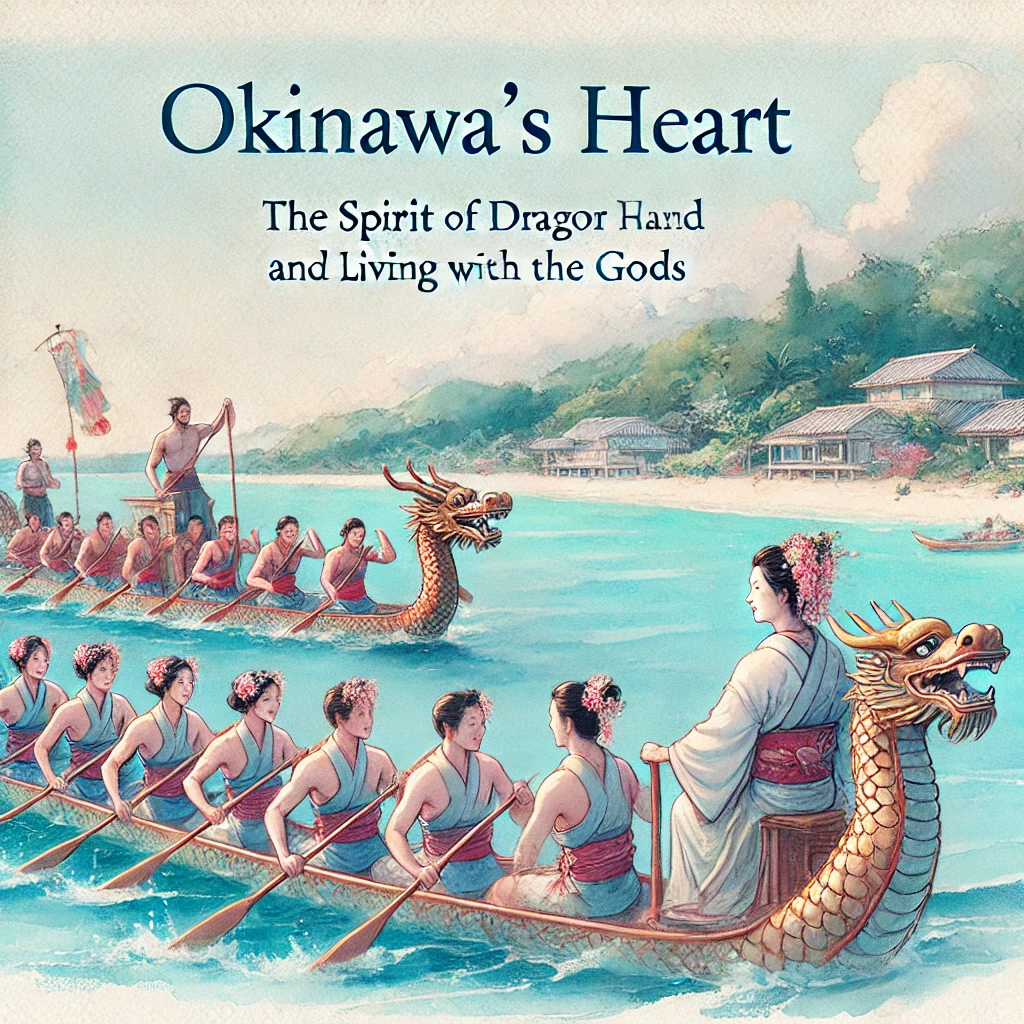
Okinawa’s traditional summer festival, the Hari, marks the arrival of the season with spectacular celebrations. Brave men row dragon boats in fierce competitions, while beautiful maidens glide across the sea in flower-adorned boats, captivating the hearts of all who watch. However, Hari is much more than just a festival. Its origins are ancient and are said to be derived from China’s Dragon Boat Festival.
Hari encapsulates the wisdom and heartfelt sentiments of the Okinawan people. It’s a time to express gratitude for the blessings of the sea, to pray to the gods and ancestors, and to strengthen communal bonds. Hari embodies Okinawa’s culture and spirituality.
In modern times, Hari faces the challenges of preserving its traditions while adapting to contemporary society. Efforts are being made to pass on these traditions to the next generation and to promote Hari as a valuable tourism resource.
Hari is an invaluable cultural heritage for the people of Okinawa. It is a crucial opportunity to connect with their roots and to form a sense of identity.
This article will thoroughly explore the origins and history of Hari, the boat races, the festival atmosphere, and the contemporary efforts to keep this tradition alive. Join us on a journey to discover the deep connection between the people of Okinawa and their rich natural environment through Hari. Let’s delve into the spirituality embedded in Hari, which includes reverence for the gods and ancestors and harmony with nature.
- Introduction
- The Origins of Hari
- The Content of Hari
- The Spirit of the Okinawan People in Hari
- Legends and Incidents Surrounding Hari
- Conclusion
- Q&A
- Summary
Introduction
Okinawa’s Rich Culture and Traditions
Unique Festivals and Customs of Okinawa
Okinawa, located at the southernmost tip of Japan, is a collection of beautiful islands that have cultivated their unique culture and traditions over centuries. Okinawan festivals and customs are distinct from those in other parts of Japan, deeply intertwined with the island’s rich natural environment. One of the most representative festivals is the Hari, held on the 4th day of the 5th lunar month, which features dragon boat races that symbolize inter-village interactions and prayers for abundant catches. Traditional performances such as Eisa and Shishimai (lion dance) are also essential elements of festivals, continuing to captivate the hearts of Okinawan people.
Okinawan festivals and customs are the culmination of wisdom and ingenuity nurtured over a long history, imbued with the thoughts of ancestors. Through these festivals and customs, the people of Okinawa express gratitude for nature and deepen the bonds within their communities. Even today, traditional festivals and customs are cherished, playing a vital role in shaping Okinawa’s cultural identity.
The Spirituality of Living in Harmony with Nature in Okinawa
Okinawan culture and traditions are deeply connected to its rich natural environment. The beautiful scenery, including blue seas, white beaches, and lush forests, has long soothed and inspired the people of Okinawa. The Okinawan people have always revered nature and valued living in harmony with it.
This spirituality is reflected in Okinawan festivals and customs. For instance, Hari is a festival that prays for bountiful catches and safe voyages, expressing gratitude for the blessings of the sea. Another festival, the Guso-nu-Sa-nu-Tachi, held from January to February in the lunar calendar, prays for a good harvest, reflecting the people’s hopes for the growth of crops.
Okinawans have regarded nature not merely as a resource but as a companion in life. Mountains, forests, seas, and rivers are believed to be inhabited by gods, and taking care of nature is seen as leading to spiritual richness. In contemporary society, this spirituality is carried on through efforts to address environmental issues and achieve a sustainable society.
An Overview of Hari
The Origins and Development of Hari
Hari, one of Okinawa’s representative traditional events, has ancient origins influenced by China. In China, dragon boat races are held during the Dragon Boat Festival, and this custom is said to have been introduced to Okinawa during the Ryukyu Kingdom era. However, Hari developed uniquely in Okinawa, differing from the Chinese dragon boat races.
During the Ryukyu Kingdom era, Hari was a grand event hosted by the royal government, with men selected from each village participating in the races. Hari served as an opportunity for inter-village exchange and unity, as well as an important event for praying for bountiful catches and harvests. It is believed that Hari was also used as a tool for control by the authorities.
Despite facing a decline during the Meiji era, Hari was preserved through the efforts of the Okinawan people. Today, Hari is celebrated annually around May 4th across Okinawa, featuring not only boat races but also parades and music events that attract many tourists.
The Modern Face of Hari
In contemporary times, Hari continues to evolve while preserving tradition. The races are now held not only between villages but also between companies and schools, with active participation from women and children. Hari has become a place for interaction across generations and genders.
Hari also plays a significant role as a symbol of Okinawan traditional culture and a tourist attraction. Every year, many tourists from both within Japan and abroad visit to experience Hari and learn about Okinawa’s culture and history. Local communities use Hari to promote the appeal of Okinawa and boost tourism.
Hari is also utilized as an educational opportunity. Schools provide lessons on the history and significance of Hari, deepening students’ understanding of traditional culture. Through participating in Hari, children learn the importance of teamwork and hard work.
Modern Hari is a fusion of tradition and innovation. Okinawan people cherish the wisdom and values passed down from their ancestors while embracing new approaches suited to contemporary times. Hari continues to captivate people as a symbol of Okinawan cultural identity.
The Origins of Hari
The Connection to China’s Dragon Boat Festival
The Influence of Chinese Culture and the Ryukyu Kingdom
The origins of Okinawa’s Hari are closely tied to China’s Dragon Boat Festival. During the Ryukyu Kingdom era, Okinawa had active exchanges with China and was heavily influenced by Chinese culture. The Ryukyu Kingdom, established in the 15th century, received investiture from the Chinese emperor and maintained tributary relations with China. Through these exchanges, Chinese culture and customs were introduced to Okinawa, merging with local culture.
The Dragon Boat Festival has long been an important holiday in China, featuring various customs to ward off evil spirits and pray for health and happiness. Among these customs, dragon boat races are particularly famous, held in honor of the legendary poet Qu Yuan.
It is believed that the customs of the Dragon Boat Festival were introduced to Okinawa during the Ryukyu Kingdom era. The people of Okinawa adopted these customs, adapting them to their own culture. Thus, Hari, which originated from Chinese dragon boat races, became established in a form suited to Okinawa’s natural environment, beliefs, and social structure.
Similarities Between the Dragon Boat Festival and Hari
There are several similarities between China’s Dragon Boat Festival and Okinawa’s Hari. Both are held on the 5th day of the 5th month in the lunar calendar, marking a significant time in agricultural societies and celebrating the arrival of summer.
Both festivals also feature water-based competitions. In China, dragon boats adorned with dragon decorations are used, while in Okinawa, dragon boats called Hari-sen are used, with similar decorations. These water-based competitions are believed to pray for abundant catches and safe voyages.
Furthermore, both festivals have elements of warding off evil spirits. In China, people use calamus leaves and sachets to ward off evil during the Dragon Boat Festival. In Okinawa, dragon boats are decorated with sacred objects called Gohei to ward off evil spirits and pray for bountiful catches and harvests.
Despite these similarities, Hari has developed its unique characteristics as a festival representing Okinawan culture. Influenced by Chinese culture yet adapted through the creativity of Okinawan people, Hari has become a symbol of Okinawan tradition.
The Beginning of the Ryukyu Kingdom Era
The Establishment of the Kingdom by Sho Hashi
Hari flourished during the Ryukyu Kingdom era, established in 1429 by Sho Hashi. Sho Hashi unified Okinawa Island and built Shuri Castle, laying the foundation for the Ryukyu Kingdom.
Sho Hashi valued relations with China and actively incorporated Chinese culture. He also engaged in trade with Southeast Asian countries, developing Ryukyu as an East Asian trading hub. During this period, many cultural items from China and Southeast Asia were brought to Ryukyu, greatly enriching Ryukyu culture.
Under Sho Hashi’s rule, Ryukyu enjoyed stability and prosperity, fostering a unique culture in which Hari played a significant role. Sho Hashi positioned Hari as an event hosted by the royal government, gathering men selected from various regions for the races held at Shuri Castle. Thus, Hari functioned not only as a symbol of royal authority but also as an important event for village unity and prayers for prosperity.
The Development of Hari During the Kingdom Era
During the Ryukyu Kingdom era, Hari underwent significant development. Men selected from various regions were gathered at Shuri Castle for royal government-hosted races. These races were not merely sports events but vital occasions for inter-village unity and prayers for bountiful catches and harvests.
Hari was strictly managed by the royal government. Participants, chosen from villages, underwent rigorous training before competing. The races were held under the watchful eyes of royalty and high officials, with victorious villages receiving rewards, enhancing their prestige. Thus, Hari was a serious competition, showcasing village pride and determination.
Hari was also a crucial event for praying for bountiful catches and harvests. Before the races, sacred objects called Gohei were placed on the dragon boats, and rituals were performed to pray for prosperity.
These rituals, conducted by village elders and priests, expressed the villagers’ gratitude and prayers for well-being and prosperity.
The Ryukyu Kingdom era saw the significant development of Hari, making it an integral part of Okinawan culture. Through Hari, villagers enhanced their sense of community and expressed gratitude for nature’s blessings.
The Content of Hari
Hari Boat Races
The Meaning of the Competition
The Pride of Villages at Stake
The Hari boat races were not just sports events but serious competitions where village pride was at stake. During the Ryukyu Kingdom era, men selected from various villages competed at Shuri Castle, under the watchful eyes of royalty and officials. Participants bore the responsibility of representing their villages, striving with all their might to uphold their village’s honor.
Winning the race brought great pride to the village, boosting morale. Victorious villages received rewards from the royal government, enhancing their prestige. In contrast, losing villages experienced humiliation, vowing to make a comeback the following year.
Thus, the Hari boat races were serious competitions that strengthened village unity. Villagers supported the participants, praying for victory. The preparation and training for the races were community efforts, fostering a sense of solidarity.
Today, Hari boat races continue to uphold village pride. Participants are respected as village representatives, and villagers unite in their support. The boat races foster a sense of unity and pride in traditional culture.
Prayers for Bountiful Catches and Harvests
Hari boat races were also imbued with prayers for bountiful catches and harvests. The people of Okinawa have long expressed gratitude for the sea’s blessings and the bounty of crops through various rituals. Hari boat races were among these prayers.
Before the races, sacred objects called Gohei were placed on the dragon boats, and rituals were performed to pray for bountiful catches and harvests. Village elders and priests offered gratitude and prayers to the gods, wishing for the villagers’ well-being and prosperity. These rituals brought the villagers together in a unified spirit.
The boat races themselves symbolized prayers for abundance. The sight of dragon boats powerfully gliding through the sea reflected the villagers’ hopes for plentiful marine resources. After the races, villagers gathered to celebrate a bountiful harvest.
Today, Hari boat races continue to be held with prayers for abundance. Pre-race rituals involve offering gratitude and prayers to the gods, reflecting the villagers’ hopes for prosperity. Hari boat races remain vital events that express gratitude for nature’s blessings and strengthen communal bonds.
Inter-Village Exchange
Fostering Fellowship Through Competition
The Hari boat races were also important occasions for inter-village exchange. Participants had to gather at Shuri Castle, fostering interactions between villages. Participants from distant areas stayed in nearby villages, deepening exchanges with the villagers.
On race day, supporters from various villages gathered at Shuri Castle to cheer for their participants. These supporters also interacted with one another, promoting fellowship. Between races, villagers shared meals and enjoyed music and dance together.
Hari boat races were precious opportunities for fostering fellowship between villages, broadening the circle of exchanges. Today, Hari boat races continue to be cherished for fostering inter-village exchange. Traditional performances and local specialties are showcased at race venues, creating spaces for community interaction.
Hari as a Venue for Cultural Exchange
Hari boat races also functioned as venues for cultural exchange. During the Ryukyu Kingdom era, participants from various regions gathered at Shuri Castle, sharing their village traditions and customs, enriching their knowledge.
Entertainment troupes also participated in the Hari boat races, performing music and dance. These traditional performances showcased the unique cultures of different villages, facilitating cultural exchange.
Today, Hari boat races continue to play a significant role in cultural exchange. Traditional performances are showcased at race venues, allowing spectators to experience diverse cultures. Through Hari, Okinawan culture is shared both domestically and internationally, fostering interest in its traditions.
Hari boat races are not just sports events but also vital platforms for inter-village and cultural exchange. Through Hari, the people of Okinawa have deepened their bonds and shared their rich culture.
Customs of the Hari Festival
Making Dragon Boats
Traditional Boat-Building Techniques
The dragon boats used in Hari boat races are crafted using Okinawa’s traditional boat-building techniques. These boats are not merely racing vessels but are imbued with the pride and spirit of the village. Boat builders use age-old techniques passed down through generations to create sturdy and beautiful dragon boats.
The boat-building process involves meticulous selection of materials and careful assembly. The hull is made from durable yet lightweight wood, such as Bilo and Iju. The boat’s bow is adorned with dragon-shaped decorations, and a rudder is attached to the stern.
Building dragon boats is a communal effort involving all villagers, regardless of age or gender. The process fosters a sense of unity and cooperation, deepening village bonds.
Today, traditional boat-building techniques continue to be preserved. Some villages still use ancient methods to build dragon boats, striving to pass on these techniques. Facilities where visitors can observe the boat-building process also help share this aspect of Okinawan tradition.
Prayers and Wishes Imbued in Dragon Boats
Dragon boats are special vessels imbued with the prayers and wishes of the villagers. Various rituals are performed during the boat-building process, offering gratitude and prayers to the gods.
During the boat’s launching ceremony, village elders and priests decorate the boat with sacred objects and offer it to the gods. This ritual is crucial for praying for the boat’s safe completion and the village’s prosperity.
Dragon boats are also believed to be inhabited by guardian deities. Villagers treat the boats as sacred and take great care of them. Before the races, participants offer prayers, becoming one with the boat as they race.
Today, the prayers and wishes imbued in dragon boats are still preserved. Traditional rituals are performed during launching ceremonies, expressing gratitude and prayers for the village’s well-being. Participants offer prayers before racing, rowing with all their might.
Dragon boats are special vessels imbued with the prayers and wishes of the Okinawan people. Through traditional boat-building techniques and rituals, these boats symbolize the unity and spirit of the villagers.
Throwing Coins and Music at Hari Festivals
Throwing Coins for Bountiful Harvests
Throwing coins is a significant ritual at Hari festivals, symbolizing prayers for bountiful harvests. During the festival, village elders and priests throw coins at the event venue.
The coins represent grains like rice and wheat, and it is believed that collecting these coins ensures a bountiful harvest. Children eagerly gather the coins, bringing them home as offerings to their family shrines, praying for a prosperous year.
Throwing coins symbolizes the villagers’ wish for abundance and is an important element of Hari festivals. Today, some regions still practice this ritual, making it a cherished tradition for children.
Traditional Music that Colors the Festival
Traditional music is an essential part of Hari festivals. Instruments like the Sanshin, drums, and flutes are played, enhancing the festive atmosphere. The music sets the rhythm for rowing and accompanies traditional dances, enriching various aspects of the festival.
In particular, the powerful sound of drums during the rowing races inspires the participants and sets their rowing rhythm. The Roka chants, shouted in unison with the music, boost the participants’ morale.
Traditional dances are also performed at Hari festivals. The graceful dances of women add charm to the festival, captivating the audience. These dances, accompanied by music, are important means of expressing village traditions.
Today, traditional music remains a cherished part of Hari festivals. The sounds of the Sanshin and drums enhance the festival atmosphere and captivate spectators. Through traditional music, younger generations are introduced to village culture.
Traditional music at Hari festivals is not just entertainment but an important element that expresses village culture and spirit. Through music, villagers strengthen their unity and enliven the festival.
The Spirit of the Okinawan People in Hari
Prayers for Bountiful Catches and Safe Voyages
Okinawans Living by the Sea
Okinawa, surrounded by beautiful seas, has long had a close relationship with the ocean. For the people of Okinawa, the sea has been a source of livelihood and a subject of reverence. Fishing has been a crucial industry, with many people making their living from the sea.
Okinawa also flourished as a trade hub, developing advanced navigation skills. Through maritime exchanges with other regions, Okinawan culture prospered. However, the sea also posed threats such as typhoons and high waves. The people of Okinawa lived in harmony with the sea, facing its dangers with resilience.
Hari reflects the thoughts of Okinawans living by the sea. It embodies prayers for bountiful catches and safe voyages, showing respect and reverence for the sea. Through Hari, the people of Okinawa express gratitude for the sea’s blessings and pass down the wisdom of living in harmony with nature.
Gratitude and Prayers to the Gods
Okinawans believe that gods reside in nature and always remember to offer gratitude and prayers in their daily lives. The sea is considered to be inhabited by gods who bring abundance, and people have long prayed to these sea gods.
Hari is imbued with gratitude and prayers to the sea gods. Before the races, rituals are performed to offer the dragon boats to the gods, praying for bountiful catches and safe voyages. The belief that guardian deities inhabit the dragon boats, and the participants’ prayers before the race, reflect deep reverence for the gods.
Various elements of the Hari festival also involve expressing
gratitude and prayers to the gods. Throwing coins symbolizes prayers for abundant harvests, and traditional music and dances are offerings to the gods.
Even today, the spirit of gratitude and prayers to the gods continues through Hari. Rituals before the races still involve prayers for abundance and safety. The festival also embodies the wishes of people seeking the gods’ blessings.
Hari reflects the spirituality of the Okinawan people, expressing gratitude for nature’s blessings and reverence for the gods. Through Hari, the spirit of Okinawans is passed down to future generations.
Village Community Unity
Strengthening Bonds Through Cooperative Efforts
Hari is an important event for strengthening village community unity. The preparation and participation in Hari require the cooperation of all villagers. From building dragon boats to training for the races, villagers work together as one.
Building dragon boats is a particularly significant cooperative effort that strengthens village unity. Villagers of all ages and genders gather materials and assemble the boats together. This collaborative effort deepens the sense of solidarity.
Training for the boat races also strengthens village unity. Participants undergo rigorous training, supported by the villagers. The collective effort of the village boosts the participants’ morale and dedication to the race.
Through cooperative efforts, Hari strengthens the bonds within the village, teaching the value of working together. Today, the preparation and participation in Hari continue to strengthen village unity. Hari remains an irreplaceable event where villagers unite and support each other.
Passing Down Traditions Across Generations
Hari is a traditional event passed down through generations. By experiencing Hari from a young age, children naturally learn about Okinawan culture and spirituality. Through Hari, children develop a sense of belonging to the village and learn the responsibility of preserving traditions.
The preparation and participation in Hari involve a wide range of generations, from children to adults. Children assist adults, learning the significance of Hari and the history of the village. Adults pass on their experiences and knowledge to the children, ensuring the continuity of traditions.
During Hari festivals, children’s boat races are sometimes held. Children watch adults’ races, dreaming of one day representing their village. The participation of children in Hari is crucial for the continuation of traditions.
Today, Hari continues to be passed down through generations. School education includes lessons on Hari, giving children opportunities to learn about Okinawan culture and history. Families also participate in Hari festivals, fostering intergenerational exchanges.
Hari is a precious event that passes down Okinawan traditions and spirituality across generations. It strengthens village unity and fosters bonds across generations, forming the foundation of Okinawan culture.
Gratitude to Ancestors and Ancestor Worship
The Heart of Ancestor Worship
Okinawans have always valued respecting and expressing gratitude to their ancestors. In Okinawan beliefs, ancestors’ spirits are considered guardian deities who watch over their descendants. Gratitude and prayers to ancestors are daily practices.
Hari also embodies gratitude and prayers to ancestors. Before the boat races, rituals are sometimes performed to place the spirits of ancestors on the boats. These rituals are crucial for seeking the protection of ancestors and reaffirming the connection with them.
Hari festivals also include rituals to honor ancestors. Villagers offer food and prayers at ancestors’ graves, expressing gratitude. These practices reflect the villagers’ wishes for the well-being and prosperity of their community.
Even today, the spirit of gratitude and prayers to ancestors continues through Hari. Pre-race rituals involve prayers for ancestral protection, and many people participate in Hari festivals to honor their ancestors.
Hari reflects the Okinawan people’s respect and gratitude for their ancestors. This spirit is passed down through Hari to future generations.
Connecting with Ancestors Through Hari
Hari provides a special opportunity to feel connected with ancestors. It is believed that the spirits of ancestors reside in the dragon boats during the races. Participants row with all their might, feeling the presence of their ancestors.
Hari festivals also bring together people who return from distant places to reunite with their families. It is a chance for families and relatives to gather, reconnect, and pay respects to their ancestors.
Through Hari, people strongly feel connected to their ancestors. Participants feel their ancestors’ support as they row, and villagers offer prayers at ancestors’ graves. Hari embodies the Okinawan people’s way of living with their ancestors.
Today, Hari remains a vital opportunity to feel connected with ancestors. Families participate in Hari festivals, honoring their ancestors. The pride and traditions inherited from ancestors are passed down through Hari to future generations.
Hari is a traditional event that reaffirms connections with ancestors and embodies ancestor worship. Through Hari, Okinawans nurture gratitude and prayers, feeling the joy of living with their ancestors.
Legends and Incidents Surrounding Hari
The Legend of the Beginning of Hari in Tamai
The Struggle and Reconciliation of the Gods
Various regions in Okinawa have legends about the origin of Hari. In the Tamai area of Itoman City, there is an intriguing legend about the beginning of Hari, depicting the struggle and reconciliation of the gods.
According to the legend, a long time ago, a male god and a female god lived on the beach of Tamai. The two gods got along well and provided abundant blessings to the villagers. However, they eventually started to fight fiercely.
The female god, distressed by the conflict, threw herself into the sea and disappeared from the village. Without her, the village faced famine and hardship. The villagers pleaded with the male god for reconciliation.
The male god, moved by the villagers’ pleas, set out to find the female god. He boarded a small boat and searched tirelessly. Eventually, he found the female god, and they reconciled, bringing prosperity back to the village.
The Origin Story of Hari
The legend of Tamai also explains the origin of the Hari boat races. It is believed that the small boat the male god used to search for the female god is the prototype of the Hari boat races.
The legend conveys the spirit of overcoming conflict and seeking reconciliation. The male god’s willingness to reconcile for the villagers’ sake symbolizes the spirit of Hari, which prays for village prosperity.
The legend also highlights the significance of Hari as a festival that prays for abundant catches and harvests. Hari embodies the gratitude for nature’s blessings and the hope for the gods’ protection.
Today, the legend of the beginning of Hari in Tamai is still passed down among villagers. It is an important oral tradition that explains the significance and origin of Hari. The spirit of the legend continues to support modern Hari, reflecting the villagers’ prayers for prosperity.
The legend of the beginning of Hari in Tamai tells the story of the gods’ struggle and reconciliation, explaining the origin and spirit of Hari. It demonstrates that Hari embodies the prayers and wishes of the Okinawan people.
The Origin of Itoman’s Maiden Hari
The Beautiful Maidens’ Races
In Itoman City, there is a special Hari race called the “Maiden Hari,” where young unmarried women participate. The elegant sight of these maidens rowing beautifully decorated boats has long fascinated many people.
The origin of Maiden Hari dates back to ancient times. According to legend, the village of Itoman suffered from prolonged poor catches. To appease the anger of the sea gods, the villagers decided to offer beautiful maidens to the sea.
The maidens, wearing beautiful kimonos and adorned boats with flowers, voluntarily headed out to sea. The sea gods, moved by their beauty, calmed their anger and restored abundance to the village.
Wishes for Fulfilled Love
It is said that Maiden Hari embodies wishes for fulfilled love. The sight of beautiful maidens rowing boats decorated with flowers is reminiscent of love-struck maidens.
According to legend, participating in Maiden Hari allows women to realize their wishes for love. Maidens write the names of their loved ones on the boats and offer prayers for fulfilled love before the races. It is believed that their sincere wishes reach the sea gods.
Today, Maiden Hari remains an important tradition in Itoman City. Every year, many young women participate, rowing beautifully decorated boats, and enchanting spectators with their elegance.
Maiden Hari symbolizes the sincere wishes of love-struck maidens. The sight of maidens offering their love to the sea gods touches the hearts of Okinawan people and helps pass on the significance of Hari to younger generations.
Itoman’s Maiden Hari is a traditional race that prays for fulfilled love and village prosperity. It expresses the pure wishes of the Okinawan people and serves as an important event for passing down the significance of Hari.
Contemporary Hari
Tourism and the Preservation of Tradition
In modern times, Hari is not only a traditional event but also an important tourism resource. Many tourists visit Okinawa to enjoy Hari festivals, drawn by the thrilling races and festive atmosphere.
Efforts to utilize Hari as a tourism resource are underway in various regions. These include enhancing promotion, organizing events where tourists can participate, and various other creative approaches. The increase in tourism helps boost the local economy.
However, the tourism aspect of Hari brings challenges in preserving tradition. There is a risk of losing the original significance of Hari if too much emphasis is placed on attracting tourists. Efforts to help tourists understand the traditional rituals and the heartfelt sentiments behind Hari are crucial.
Modern Hari seeks to balance tradition and tourism. Efforts are made to preserve traditional rituals and racing formats while making the festival enjoyable for tourists. By experiencing Hari, tourists can deepen their understanding of Okinawan culture and history.
New Challenges and Initiatives
Modern Hari faces new challenges such as declining birthrates, aging populations, youth migration, and declining interest in traditional culture, making it difficult to pass on Hari traditions.
Various initiatives are being undertaken to address these challenges. These include incorporating Hari into school education,
organizing events that encourage youth participation, and strengthening community bonds through Hari.
There are also efforts to adapt Hari to modern times by changing the format and rules to encourage participation from women and children. This flexible approach aims to preserve tradition while adapting to new times.
Modern Hari is taking new steps while facing the challenges of preserving tradition and adapting to contemporary society. Various initiatives, such as tourism promotion, generational inheritance, and adapting to modern times, are underway. With the wisdom and ingenuity of the Okinawan people, Hari is entering a new era.
Conclusion
Hari as a Symbol of Okinawan Culture
Expressing the Connection Between Nature and People
Hari expresses the connection between Okinawa’s rich nature and the people who have lived in harmony with it. Through Hari, Okinawan people confirm their gratitude for the blessings of nature and deepen their bonds with each other.
The sight of brave men rowing dragon boats in the races symbolizes the courage and unity of the Okinawan people in facing the challenges of nature. The various rituals at Hari festivals, praying for bountiful catches and harvests, reflect the Okinawan culture of living in harmony with nature.
Hari is a significant event that conveys Okinawan culture and values through its expression of the connection between nature and people. Through Hari, Okinawan people confirm their appreciation for nature and strengthen their communal bonds.
An Event Reflecting Okinawan Spirituality
Hari also reflects the spirituality of the Okinawan people. It embodies beliefs in the gods, gratitude to ancestors, and community unity—values cherished by the Okinawan people.
Before the races, prayers are always offered to the gods. The prayers for safe voyages and abundant catches reflect the deep faith of the Okinawan people. The belief that ancestors’ spirits inhabit the dragon boats during the races symbolizes respect for ancestors.
The preparation and participation in Hari involve collaborative efforts by the entire village. This cooperation among all villagers, regardless of age or gender, reflects the community bonds cherished by the Okinawan people.
Hari embodies the spirituality of the Okinawan people, reflecting their beliefs, gratitude, and unity. Through Hari, these values are confirmed and passed on to future generations.
The Significance of Modern Hari
The Preservation and Development of Traditional Culture
Modern Hari plays an essential role in preserving and developing Okinawan traditional culture. Through Hari, the rich culture and values of Okinawa are passed on to future generations.
Traditional rituals and racing formats are carefully preserved at Hari festivals across regions. Ancient knowledge and techniques are practiced by people today, maintaining continuity. Legends and folklore related to Hari are also passed down during the festival.
Modern Hari also incorporates changes to adapt to new times, encouraging participation from women and children and modifying rules to suit contemporary needs. This approach balances preserving tradition and embracing innovation.
Hari embodies the preservation and development of traditional culture. By valuing the culture and values inherited from ancestors while adapting to new times, Hari represents the future of Okinawan culture.
Forming Okinawan Identity
Hari is vital for forming Okinawan identity. Through Hari, Okinawan people reassert their culture and values, fostering pride as Okinawans.
Participating in Hari allows children to experience traditional culture and learn its importance. Preparing and participating in Hari helps foster a sense of belonging and responsibility in the village. Intergenerational exchanges during Hari festivals help pass on Okinawan culture.
Hari also unites Okinawan people, bringing together families and relatives living apart. Hari is a special occasion to reconnect and confirm bonds.
Hari forms Okinawan identity, fostering a sense of pride and belonging. Through Hari, Okinawan people reflect on their culture and values, living proudly as Okinawans. Hari is a cultural heritage connecting Okinawa’s past, present, and future.
Okinawa’s representative traditional event, Hari, continues to captivate many with its thrilling boat races and vibrant festival atmosphere. Understanding the sentiments behind Hari allows us to connect with Okinawan culture and spirituality.
We hope that Hari will continue to be cherished and passed down, preserving Okinawan culture and spirit for the future. Learning from Hari enriches our lives and connects us to the wisdom and values of the Okinawan people.
Q&A
What is the origin of Hari believed to be derived from?
Hari is believed to originate from China’s Dragon Boat Festival. The customs of the Dragon Boat Festival were introduced to Okinawa during the Ryukyu Kingdom era and developed uniquely in Okinawa.
What are the characteristics of Itoman’s Maiden Hari?
Itoman’s Maiden Hari features young unmarried women participating in the races. The sight of beautiful maidens rowing flower-adorned boats is known for symbolizing wishes for fulfilled love.
What challenges does modern Hari face?
Modern Hari faces challenges such as declining birthrates, aging populations, youth migration, and declining interest in traditional culture, making it difficult to pass on Hari traditions. Balancing tourism and preserving tradition is also a significant challenge.
What does Hari mean to the people of Okinawa?
Hari encapsulates the wisdom and heartfelt sentiments of the Okinawan people. It expresses gratitude for the blessings of the sea, prays to the gods and ancestors, and strengthens communal bonds. Hari embodies Okinawa’s culture and spirituality and forms Okinawan identity.
What initiatives are being taken for modern Hari?
Various initiatives for modern Hari include incorporating Hari into school education, organizing events that encourage youth participation, and promoting Hari as a tourism resource. Efforts are also made to adapt Hari to modern times while preserving tradition.
Summary
Hari is a traditional annual event in Okinawa, believed to originate from China’s Dragon Boat Festival. The festival features thrilling dragon boat races by brave men and elegant Maiden Hari races by beautiful maidens, symbolizing Okinawa’s rich natural environment and the wisdom and heartfelt sentiments of its people. Hari expresses gratitude for the sea’s blessings, prays to the gods and ancestors, and strengthens communal bonds, embodying Okinawa’s culture and spirituality.
Modern Hari faces challenges in preserving tradition and adapting to contemporary society. Initiatives include promoting Hari as a tourism resource, incorporating it into education, and encouraging participation from women and children. Hari continues to evolve, balancing tradition and innovation, and fostering Okinawan identity and community bonds.
Hari is a vital cultural heritage, connecting Okinawa’s past, present, and future. By understanding the sentiments behind Hari, we connect with Okinawan culture and spirituality, enriching our lives.
コメント