
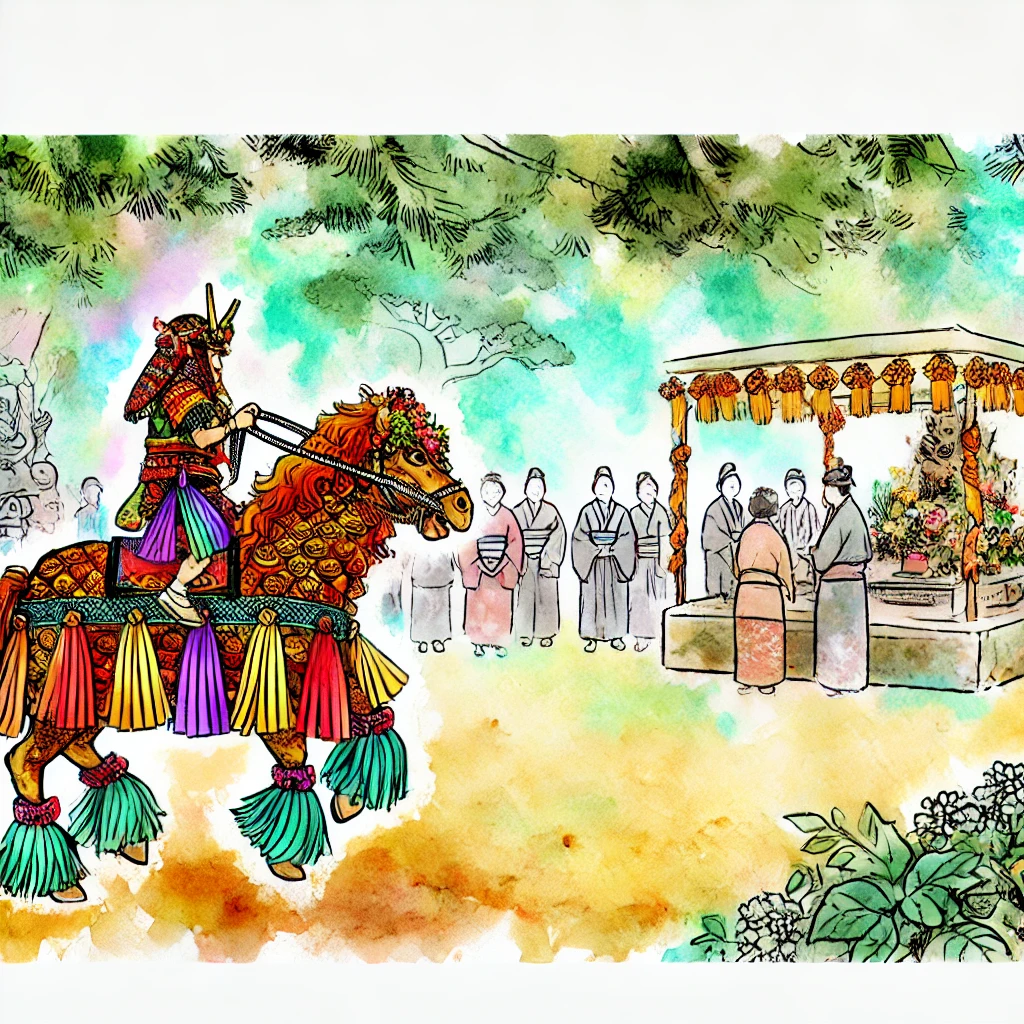
Okinawa’s nights resound with the valiant beats of drums echoing through the town. Adorned in vibrant costumes, horses dance gracefully under the night sky. These horses, known as “Hanya-uma,” are indispensable to Okinawa’s traditional festivals and are believed to be messengers of the gods, bringing blessings to the people.
The origins of Hanya-uma are ancient, influenced by China and mainland Japan, yet they have uniquely evolved in Okinawa. The elaborately decorated horses seem like divine creatures from another realm. The dance, which incorporates horse-like movements, captivates all who witness it.
However, Hanya-uma is more than just a performance. It embodies the spirituality of Okinawan people, rooted in ancestor worship and nature reverence. By dancing with the spirits of their ancestors, the performers express gratitude and prayers. The dance also symbolizes thanks for nature’s bounties and hopes for a prosperous harvest.
In contemporary society, Hanya-uma represents an important aspect of Okinawan identity. As globalization progresses, preserving regional culture and traditions and passing them on to future generations holds significant importance for humanity. Maintaining the tradition of Hanya-uma connects us to Okinawa’s history, culture, and spirituality, and it is our mission to hand this treasure down to the next generation.
Witnessing the dance of Hanya-uma allows you to feel the resilient spirit of the Okinawan people. Each vibrant costume piece reflects a deep love for Okinawa’s rich nature and culture. Through Hanya-uma, you can touch the profound heart of Okinawa and discover its hidden charm.
- What is Hanya-uma?
- Origin of Hanya-uma
- Characteristics of Hanya-uma
- Legends and Events Related to Hanya-uma
- Okinawan Culture and Hanya-uma
- Conclusion
- Q&A
- Summary
What is Hanya-uma?
Definition of Hanya-uma
Origin of the Term “Hanya-uma”
Hanya-uma, an essential part of Okinawa’s traditional festivals, has a name with several theories about its origin. The most popular theory combines “Haryu” (爬龍) meaning dragon and “Uma” (馬) meaning horse. Thus, Hanya-uma signifies a dragon-horse or divine horse, inspired by its unique decorations and dance that resemble a dragon’s splendor and a horse’s movements.
For centuries, the people of Okinawa have revered Hanya-uma as a sacred being, believing it to be a divine messenger bringing good fortune during festivals. Hanya-uma is also thought to ward off evil spirits and ensure bountiful harvests and successful fishing, reflecting the spiritual world of Okinawan people and making it an integral part of understanding Okinawan culture.
The Role of Hanya-uma
Hanya-uma plays a pivotal role in Okinawa’s traditional festivals, acting as a divine messenger to cleanse the festival grounds and bring blessings to the people. Its unique decorations and dances enhance the festival’s atmosphere, mesmerizing spectators.
The dance, dedicated to the gods, seeks blessings for bountiful harvests, fruitful fishing, and the health and happiness of the people. As Hanya-uma dances through the festival, it sometimes approaches the audience, sharing its divine power, believed to ward off evil and protect the people. Thus, Hanya-uma remains an indispensable part of Okinawan culture.
History of Hanya-uma
Origins of Hanya-uma
The origins of Hanya-uma are shrouded in mystery, with theories suggesting influences from China, mainland Japan, or independent development within Okinawa. The Chinese influence is inferred from the dragon motifs and dance styles resembling Chinese traditions. Japan’s theory stems from historical interactions and cultural exchanges between Okinawa and the mainland, with similar horse-related ceremonies and arts contributing to Hanya-uma’s development. However, the idea of Okinawan unique evolution holds significant weight, highlighting the island’s distinct cultural growth influenced by its natural beliefs and ancestor worship.
Evolution of Hanya-uma
Over the centuries, Hanya-uma has transformed. Initially more simplistic, its decorations and dances became more elaborate and sophisticated over time. During the Ryukyu Kingdom era, Hanya-uma was integral to royal ceremonies, flourishing under royal patronage. However, with the kingdom’s decline, Hanya-uma’s prominence waned. In the Meiji era, it faced suppression as superstition under Japan’s modernization efforts. Despite these challenges, Okinawans preserved Hanya-uma, which is now recognized as a crucial cultural heritage, cherished and protected by many.
Origin of Hanya-uma
Chinese Influence Theory
Impact of Chinese Culture
China’s influence on Hanya-uma cannot be overlooked, given the historical exchanges between Okinawa and China. Dragon motifs in Hanya-uma’s decorations signify its sacredness and reflect China’s profound cultural impact, where dragons are considered divine symbols. The dance movements also bear similarities to traditional Chinese dances, particularly those mimicking horses.
Similar Horses in China
In China, similar traditions include “Yue Ma” (躍馬), where performers dressed as horses mimic their movements, often featured in ceremonies and celebrations. This resemblance supports the theory of Hanya-uma’s Chinese origin, yet much about their connection remains unexplored, awaiting further research.
Mainland Japan Influence Theory
Impact of Mainland Japan
Mainland Japan’s influence is evident in the longstanding cultural exchanges with Okinawa. Ceremonies involving horse offerings in Japanese shrines and performing arts featuring horse motifs suggest a link to Hanya-uma’s development. The resemblance in dance movements further supports this theory.
Similar Horses in Mainland Japan
Similar traditions in Japan include “Batou Kannon” (馬頭観音), a guardian deity of horses, and “Ma-warashi” (馬童), performers dressed as horses in festivals, believed to bring fortune. These practices indicate potential influences on Hanya-uma, though detailed relationships remain unclear, warranting further study.
Okinawan Unique Development Theory
Okinawa’s Distinctiveness
Hanya-uma’s unique development is also attributed to Okinawa’s distinct culture, influenced by yet distinct from China and mainland Japan. Its geographic isolation fostered unique cultural growth, reflecting in Hanya-uma’s evolution. As a trading hub, Okinawa assimilated diverse cultural elements, enriching Hanya-uma’s development.
Cultural Background of Okinawa
Okinawa’s natural beliefs and ancestor worship deeply influenced Hanya-uma. Reverence for nature, seen as sacred, and the importance of coexisting with it are embedded in Hanya-uma’s rituals, symbolizing gratitude and prayers for bountifulness. Ancestor worship, believing in ancestral spirits’ protection, also shapes Hanya-uma, which carries ancestral spirits in its dance, symbolizing protection and gratitude.
Characteristics of Hanya-uma
Visual Features
Colors of Hanya-uma
One striking feature of Hanya-uma is its vibrant colors, adorned with red, blue, yellow, and green fabrics. Each color holds symbolic meanings: red for the sun and life, blue for the sky and peace, yellow for rice ears and abundance, and green for plants and nature’s blessings. These colors connect Hanya-uma to Okinawa’s natural and cultural richness, embodying its sacredness and imbuing vitality and hope.
Decorations of Hanya-uma
Hanya-uma’s intricate decorations include dragon-like headpieces, vivid fabrics, and bells around the neck, each element meticulously crafted. Dragon motifs signify sacredness, reflecting Chinese cultural influence. The flowing fabrics enhance the dance’s beauty, symbolizing natural elements like waves and flowers, while bells produce rhythmic sounds believed to ward off evil.
These decorations are not mere adornments but expressions of Hanya-uma’s sacredness and roles, created by skilled artisans preserving traditional techniques while incorporating contemporary aesthetics, making each Hanya-uma a work of art representing Okinawa’s heritage and prayers.
Role on Stage
Hanya-uma’s Dance
Hanya-uma’s dance is a highlight of Okinawan festivals, captivating audiences with horse-like movements: high-stepping, head shaking, and sometimes rearing up. These movements symbolize Hanya-uma’s divine nature, offering the dance as a tribute to the gods, expressing gratitude and prayers.
Relationship Between Hanya-uma and Performers
Performed by skilled dancers, Hanya-uma’s dance embodies the horse’s spirit. The performers, through rigorous training, become one with the Hanya-uma, channeling its divine power to bless and protect the people. This relationship, built on trust and respect, is vital for Hanya-uma’s dance, enabling a connection between humans and gods.
Significance in Festivals
Festivals Featuring Hanya-uma
Hanya-uma appears in various Okinawan festivals, like the “Haryu” on the 4th day of the 5th lunar month, praying for good harvests and fishing, and the “Eisa” during the Bon festival, honoring ancestral spirits. Each festival adapts Hanya-uma’s dance to its specific purpose, enriching the celebration.
Symbolic Meaning of Hanya-uma
Hanya-uma’s presence in festivals symbolizes its divine role, believed to bring blessings and ward off evil. As a symbol of abundance, its strength and vitality inspire thoughts of a rich harvest, while its sacred dance cleanses the festival grounds, ensuring a safe celebration. Hanya-uma’s symbolism reflects Okinawan faith
and aspirations, connecting people to their spiritual heritage and fostering communal well-being.
Legends and Events Related to Hanya-uma
Legends About the Origins of Hanya-uma
Mythical Legends
One popular legend is the “Niraikanai” tale, describing a paradise sending divine horses to the human world, bringing happiness and being revered in festivals. This legend ties Hanya-uma to divine origins, embodying godly power and benevolence.
Historical Legends
Another legend involves Shou Hashi, a 15th-century Ryukyu hero, who brought horses from China, leading to the creation of Hanya-uma. These horses, considered sacred, were integral to royal ceremonies. This legend highlights Hanya-uma’s historical significance, connecting it to Okinawa’s rich history and royal heritage.
Historical Events Surrounding Hanya-uma
Bans on Hanya-uma
Throughout history, Hanya-uma faced bans, especially during political turmoil. In the 18th century, King Shou Mou banned Hanya-uma dances due to political exploitation. In the Meiji era, Japan’s modernization policies labeled Hanya-uma as superstition, suppressing its practice. Despite these challenges, Okinawans preserved Hanya-uma, ensuring its survival.
Revival of Hanya-uma
Post-WWII, efforts to revive Hanya-uma surged, with preservation societies forming, learning dances from elders, and promoting its cultural significance. These efforts led to Hanya-uma’s recognition as a vital cultural heritage, registered as an Intangible Cultural Heritage by UNESCO in 2009, celebrating Okinawa’s resilience and cultural pride.
Modern Stories About Hanya-uma
Preservation Efforts
Today, Hanya-uma preservation societies actively teach dances and traditions to younger generations. For example, the Okinawa City Hanya-uma Preservation Society hosts workshops for children to experience wearing Hanya-uma costumes and learning dances, fostering cultural pride and understanding.
These efforts also involve restoring and creating costumes and tools, preserving traditional craftsmanship. Artisans, using inherited techniques and modern creativity, craft beautiful Hanya-uma decorations, reflecting Okinawa’s rich cultural heritage.
Contemporary Topics About Hanya-uma
Recently, Hanya-uma has ventured into contemporary art, collaborating with artists like Mr. in 2019, blending traditional motifs with modern aesthetics, thus reaching new audiences and ensuring cultural relevance. Hanya-uma also attracts tourists, boosting local economy and spreading awareness about Okinawan culture.
Such initiatives demonstrate Hanya-uma’s adaptability, balancing tradition and innovation, and its role in preserving and promoting Okinawan culture.
Okinawan Culture and Hanya-uma
Relationship Between Okinawa’s Spiritual World and Hanya-uma
Hanya-uma and Ancestor Worship
Ancestor worship is central to Okinawan spirituality, believing in ancestral protection. Hanya-uma embodies this belief, dancing with ancestral spirits to express gratitude and prayers, especially during the Bon festival’s Eisa, honoring and appeasing ancestral spirits.
Hanya-uma and Nature Reverence
Nature holds sacred significance in Okinawan spirituality, seen as divine. Hanya-uma’s dance reflects nature’s beauty and strength, expressing gratitude for nature’s blessings and praying for abundance. Thus, Hanya-uma serves as a bridge between people and nature, reinforcing the importance of living in harmony with the environment.
Reasons Hanya-uma Became an Integral Part of Okinawan Culture
Geographic Characteristics of Okinawa
Okinawa’s geographical isolation fostered unique cultural development, incorporating influences while maintaining distinct traditions. This distinctiveness allowed Hanya-uma to evolve independently, reflecting Okinawan spirituality and cultural identity.
Historical Background of Okinawa
Okinawa’s historical role as a trading hub introduced diverse cultural influences, enriching Hanya-uma’s development. During the Ryukyu Kingdom era, Hanya-uma played a political role, symbolizing royal authority. These historical dynamics helped embed Hanya-uma deeply in Okinawan culture.
Significance of Hanya-uma in Modern Society
Hanya-uma and Okinawan Identity
In modern society, Hanya-uma symbolizes Okinawan identity. Amid globalization, preserving regional traditions like Hanya-uma is crucial, fostering cultural pride and continuity. Hanya-uma’s survival through historical challenges showcases Okinawan resilience and cultural commitment.
Transmitting Traditions Through Hanya-uma
Hanya-uma plays a vital role in passing traditions to future generations, offering cultural education and fostering generational bonds. Preservation efforts by societies ensure that younger generations appreciate and uphold Okinawan heritage, strengthening community ties and cultural pride.
Conclusion
Summary of Hanya-uma’s Origins and Characteristics
Origins and Development of Hanya-uma
Hanya-uma’s origins remain mysterious, with theories suggesting influences from China, mainland Japan, and independent Okinawan evolution. Regardless of its precise origins, Hanya-uma uniquely developed within Okinawa’s historical and geographical context, becoming a symbol of cultural resilience and spiritual expression.
Distinctiveness of Hanya-uma
Hanya-uma’s uniqueness lies in its vibrant decorations, horse-like dance movements, and deep connection to Okinawan spirituality. It embodies gratitude and prayers to the gods, nature reverence, and ancestor worship, reflecting the rich cultural and spiritual tapestry of Okinawa.
Importance of Hanya-uma in Okinawan Culture
Hanya-uma and Okinawan Spirituality
Hanya-uma is integral to Okinawan spirituality, symbolizing ancestral and natural reverence, bringing blessings and protection. It serves as a spiritual anchor, connecting people to their heritage and cultural identity.
Hanya-uma and Okinawan Traditions
Hanya-uma represents Okinawan traditions, having survived historical suppression through the resilience and commitment of Okinawan people. Today, it is a recognized cultural heritage, with preservation efforts ensuring its continuity and significance in modern Okinawan society.
Importance of Preserving Hanya-uma Traditions
Significance of Cultural Continuity
In a globalized world, preserving regional traditions like Hanya-uma is crucial for maintaining cultural diversity and identity. Hanya-uma offers insights into Okinawan history and spirituality, fostering cultural understanding and pride among future generations.
Message to Future Generations
Preserving Hanya-uma is a responsibility and a source of joy, connecting past and future. It represents Okinawan resilience and cultural richness, offering future generations a link to their heritage and identity. Through Hanya-uma, we can ensure the continuity of Okinawan soul and spirit, celebrating its timeless beauty and strength.
Q&A
What are the theories about the origin of the term “Hanya-uma”?
The term “Hanya-uma” is believed to originate from a combination of “Haryu” (dragon) and “Uma” (horse), symbolizing a dragon-horse. Other theories suggest influences from China or mainland Japan.
What are the features of Hanya-uma’s dance?
Hanya-uma’s dance mimics horse movements, with high-stepping, head shaking, and rearing up. These movements express divine reverence, gratitude, and prayers to the gods.
What are some of the main festivals where Hanya-uma appears?
Hanya-uma features prominently in festivals like “Haryu” for harvest prayers and “Eisa” during the Bon festival, honoring ancestral spirits.
What is the significance of Hanya-uma in modern society?
Hanya-uma represents Okinawan identity and plays a crucial role in preserving and transmitting Okinawan cultural traditions to future generations.
Why is it important to preserve Hanya-uma traditions?
Preserving Hanya-uma traditions maintains Okinawa’s historical, cultural, and spiritual heritage, ensuring its transmission to future generations and highlighting the importance of regional cultural diversity in a globalized world.
Summary
Hanya-uma, indispensable to Okinawan festivals, has ancient origins influenced by China and mainland Japan, yet has evolved uniquely in Okinawa. It features vibrant decorations and horse-like dances deeply connected to Okinawan spirituality, ancestor worship, and nature reverence. In modern society, Hanya-uma symbolizes Okinawan identity and plays a crucial role in preserving and transmitting cultural traditions. Maintaining Hanya-uma traditions is vital for connecting Okinawa’s soul to the future, ensuring this precious cultural heritage endures for generations to come.


コメント