
- 【Story】The Ghosts of Shuri Castle – Sightings of Spirits in the Ancient Castle
- Okinawa’s Spiritual World
- The Impact of Shuri Castle’s Ghosts
- Real Incidents and Folklore
- Ghost Stories from Other Places in Okinawa
【Story】The Ghosts of Shuri Castle – Sightings of Spirits in the Ancient Castle
Shuri Castle, towering over Naha City in Okinawa Prefecture, served as the royal palace during the Ryukyu Kingdom era. Over its long history, countless people have passed through its halls, experiencing moments of joy and sorrow. Rumors persist that spirits still haunt this ancient castle.
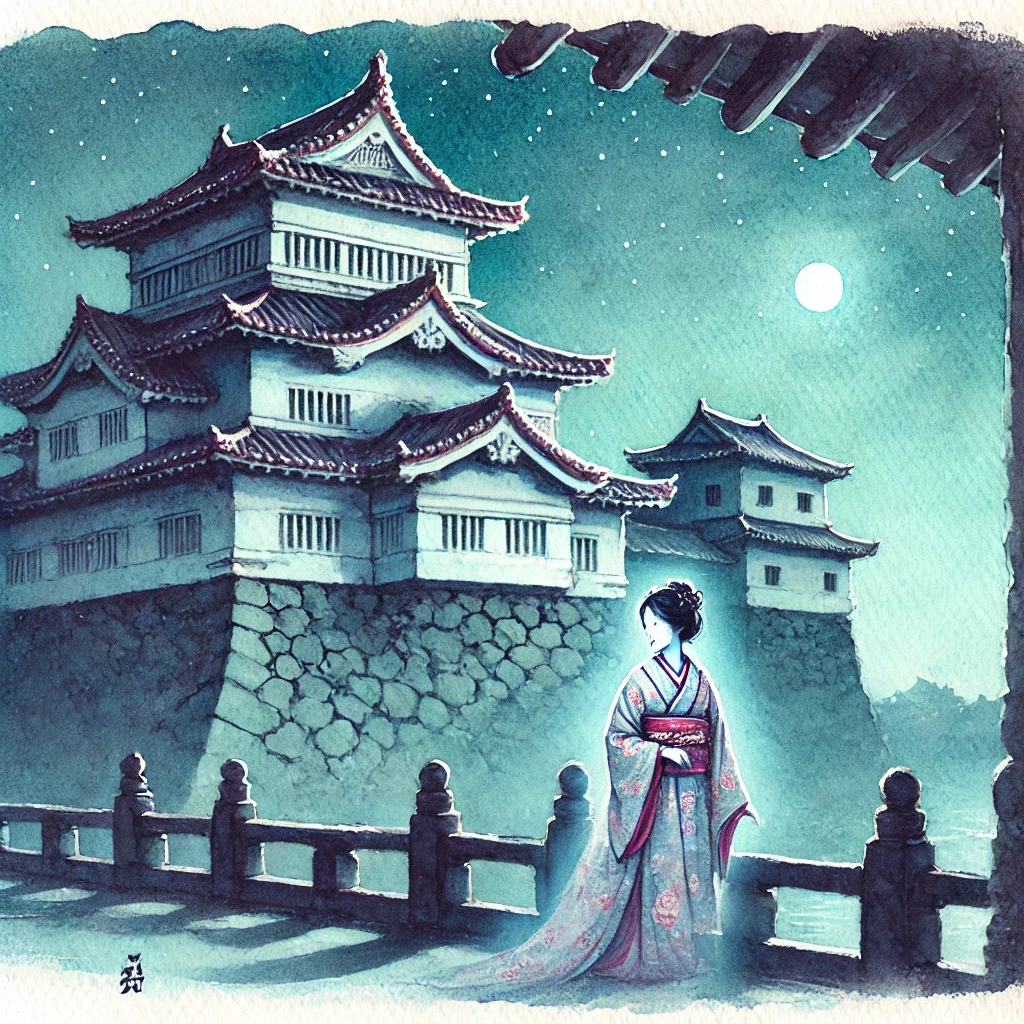
On a summer night, a security guard named Mr. Yamada was patrolling the quiet castle grounds as usual. Under the still night sky, he felt an inexplicable presence. Turning around, he saw a faint white shadow gradually approaching him. As it drew nearer, he could see it clearly—a woman dressed in traditional Ryukyu royal attire.
Mr. Yamada stood frozen in place, holding his breath as the ghostly woman gazed at him with a sorrowful expression before vanishing. When he reported the incident to his colleagues and superiors, they were skeptical. However, similar sightings continued to be reported, and whispers of the ghost’s existence grew louder.
One day, Mr. Yamada heard an intriguing story about the ghost’s identity from someone associated with Shuri Castle. The woman was believed to be a queen from the Ryukyu Kingdom era who met a tragic end due to political turmoil. Her restless spirit is said to haunt the castle, mourning her untimely death.
The ghost of Shuri Castle remains a mysterious phenomenon etched in people’s memories. The lingering sadness and resentment in the ancient castle may reflect the dark history of Okinawa. These ghostly sightings remind us of the importance of facing the past and finding ways to soothe troubled spirits.
Okinawa’s Spiritual World
History and Beliefs of Okinawa
Religious Practices and Customs of the Ryukyu Kingdom Era
Understanding the religious practices and customs of the Ryukyu Kingdom era is crucial to exploring Okinawa’s spiritual world. The Ryukyu Kingdom developed its own unique culture and beliefs, with people deeply valuing nature worship, ancestor worship, and the veneration of unique deities.
During the kingdom era, priestesses known as “Noro” played a vital role. Noro acted as intermediaries between the gods and the people, conducting rituals and conveying people’s prayers to the deities. There were also customs to honor “Onari Kami,” the guardian deities of villages.
These beliefs and customs have significantly influenced Okinawa’s current spiritual world. The faith that has continued since the Ryukyu Kingdom era still lives on in the hearts of Okinawan people today.
Influences of Shinto and Buddhism
Okinawan spirituality has been shaped not only by indigenous beliefs but also by influences from Shinto and Buddhism. Historically, Shinto and Buddhism were introduced to the Ryukyu Kingdom, blending with native beliefs over time.
The influence of Shinto can be seen in many shrines across Okinawa. A notable example is “Naminoue Shrine” in Naha City, a significant site dating back to the Ryukyu Kingdom era, which continues to attract many visitors today.
Buddhism’s influence is evident in various temples throughout Okinawa. “Enkakuji Temple” near Shuri Castle, established during the Ryukyu Kingdom, is closely linked with the royal family.
Thus, Shinto and Buddhism, intertwined with indigenous beliefs, have significantly shaped Okinawa’s unique spirituality.
Preservation of Indigenous Beliefs
The preservation of indigenous beliefs is a fundamental aspect of Okinawa’s spiritual world. These beliefs have been deeply ingrained in Okinawan life for generations and continue to be cherished today.
One notable aspect of these indigenous beliefs is the presence of “Yuta,” spiritual mediums believed to communicate with ancestral spirits and deities. People consult Yuta for guidance in solving problems.
Additionally, “Utaki,” sacred sites believed to be dwelling places of deities, play a crucial role in indigenous faith. Prayers and rituals are conducted at these sites, with “Sefa Utaki” being a prominent example.
These indigenous beliefs continue to be a vital part of modern Okinawan society. People uphold these traditions, practicing them in daily life, forming the core of Okinawa’s spiritual world.
Ancestor Worship and the Existence of Spirits
The Importance of Ancestor Worship
Ancestor worship holds a significant place in Okinawa’s spiritual world. Okinawans believe that the spirits of their ancestors continue to watch over them, and they cherish the respect and reverence for their forebears.
Ancestor worship is practiced at home altars called “Uchikabi,” where ancestral tablets and photos are displayed, and offerings are made regularly. Special offerings are made during traditional holidays like the lunar New Year and Obon to welcome ancestral spirits.
This practice strengthens family bonds, fostering a sense of unity and mutual support. For Okinawans, ancestor worship is an indispensable custom, providing spiritual sustenance by connecting them to their ancestors and the spiritual realm.
The Impact of Spirit Beliefs on Daily Life
In Okinawa’s spiritual world, the belief in spirits significantly impacts daily life. Okinawans believe not only in ancestral spirits but also in various spiritual entities in nature.
For example, “Kijimuna,” small fairy-like beings, are believed to reside in trees and grasslands, sometimes playing tricks or aiding humans. Another entity, “Yūrei,” wandering spirits unable to find peace after death, are also part of these beliefs.
These spiritual entities influence daily life, leading to practices like avoiding tree cutting to respect Kijimuna when building houses. Respecting and coexisting with these spirits is essential for maintaining harmony with nature and living a peaceful life.
The Significance of Rituals and Offerings
Rituals and offerings play crucial roles in Okinawa’s spiritual world. “Ugan” refers to prayers and rituals performed to wish for various blessings from gods and ancestral spirits, while “Kuyō” involves ceremonies to comfort and help the deceased spirits find peace.
Ugan is conducted in various circumstances, such as praying for health, safety, and prosperity. Through these prayers, people believe they can receive protection and blessings from the gods.
Kuyō, on the other hand, involves ceremonies like the “33rd Memorial Service,” which is highly regarded in Okinawa. This service, held 33 years after a person’s death, is believed to ensure the spirit’s peaceful journey to the afterlife.
These practices offer spiritual support to Okinawans, connecting them to the divine and ancestral realms, providing comfort and peace in their lives.
Yuta and Spiritual Abilities
The Role and Social Status of Yuta
In Okinawa’s spiritual world, Yuta, or spiritual mediums, play an essential role. Believed to communicate with ancestral spirits and deities, Yuta offer guidance for resolving people’s worries and problems.
Typically women, Yuta’s spiritual abilities are often inherited through family lines. They listen to people’s concerns and consult with spirits to find solutions.
Yuta are highly respected in Okinawan society, with their words and guidance trusted by many. They provide spiritual support, offering peace of mind to those who seek their help.
In addition to personal consultations, Yuta play vital roles in rituals and ceremonies, ensuring smooth communication with deities and ancestral spirits.
Yuta are indispensable in Okinawa, bridging the gap between people and the spiritual realm.
Yuta’s Spiritual Abilities and Rituals
Yuta’s spiritual abilities are believed to be mystical powers inherited through generations. They can communicate directly with ancestral spirits and deities, conveying messages and guidance to people.
These abilities are often manifested in a state called “Kami-Dari,” where Yuta enter a trance to relay messages from the spirits. Through Yuta, people receive spiritual guidance.
Yuta are also known for performing various rituals. For instance, “Misogi” is a purification ritual where Yuta cleanse individuals or homes of negative energy using prayers, paper, and salt.
Another ritual, “Ukui,” involves calling upon ancestral spirits and offering them food and prayers to soothe and honor them.
Yuta’s spiritual abilities and rituals are central to Okinawa’s spiritual world, providing solutions and peace through their unique connection with the spiritual realm.
The Presence of Yuta in Modern Society
Even in modern society, Yuta remain vital to Okinawans. Despite urbanization and modernization, belief in Yuta is still strong, with many seeking their guidance.
During significant life events such as marriage, childbirth, and career decisions, people consult Yuta for spiritual guidance. Many also turn to Yuta for help with illnesses or misfortune, relying on their spiritual insight.
In contemporary times, Yuta’s role has diversified, incorporating counseling and psychological approaches alongside traditional practices. They offer support for modern mental health issues, providing a crucial bridge between traditional beliefs and contemporary needs.
Yuta continue to be a cornerstone of Okinawa’s spiritual world, blending tradition with modernity to offer essential support to the people. Their presence is a testament to the enduring power of Okinawa’s spiritual heritage.
The Impact of Shuri Castle’s Ghosts
The Darkness and Resentment of History
Political Conflicts and Victims of the Ryukyu Kingdom Era
To understand the stories of Shuri Castle’s ghosts, we must first learn about the political conflicts and their victims during the Ryukyu Kingdom era. The Ryukyu Kingdom was established by Shō Hashi in 1429 and lasted until Okinawa became a prefecture in 1879.
Throughout this long history, various political conflicts unfolded within the kingdom. These included disputes over the throne and power struggles between influential clans, resulting in numerous victims.
For instance, in 1453, King Shō Toku was killed by his brother Shō Taikyu over a succession dispute. Another significant event was the 1609 invasion by the Shimazu clan, which led to many casualties.
These conflicts and their victims cast a deep shadow over Shuri Castle. The unfulfilled grievances of those who perished might have transformed into lingering spirits within the castle walls.
The Formation of Resentment and the Existence of Spirits
The unresolved grievances of those who died in these political conflicts are believed to remain as spiritual resentment within Shuri Castle. Resentment, in this context, refers to the strong feelings of bitterness or regret that persist as spiritual energy.
In addition to the victims of political conflicts, the spirits of those who perished in wars are also considered to inhabit Shuri Castle. Notably, many civilians died near Shuri Castle during the Battle of Okinawa in 1945, deepening the castle’s aura of resentment.
It is said that resentment can manifest as spirits influencing the present world. The ghosts of Shuri Castle might be such spiritual entities born from deep-seated resentment. Their sightings indicate the strength of these lingering emotions.
Okinawans, while fearing such resentment, also know how to appease it. Practices like ancestor worship and memorial services are crucial for soothing these spirits and helping them find peace.
Inheriting Historical Trauma
The impact of Shuri Castle’s ghosts is closely linked to the inheritance of historical trauma. Historical trauma refers to the severe experiences of war, discrimination, and persecution passed down through generations.
The people of Okinawa have endured various historical traumas, including the political conflicts of the Ryukyu Kingdom, wars, and post-war U.S. military rule. These traumas affect not only individual psychology but also the collective consciousness of society.
The ghosts of Shuri Castle symbolize this historical trauma. Their sightings serve to remind us of past tragedies and their ongoing significance in the present.
Overcoming historical trauma requires confronting the past and healing its wounds. The ghosts of Shuri Castle might be delivering a vital message about the importance of this process.
The Fear Induced by Ghost Sightings
Details and Commonalities of Sightings
Many detailed and specific ghost sightings have been reported at Shuri Castle. Most witnesses claim to have seen ghosts while walking through the castle grounds at night.
The ghosts often appear as women in white garments, sometimes with distorted faces or floating without touching the ground, adding to their eerie appearance.
There are common locations within the castle where these sightings occur, such as sacred groves (Utaki) and royal palaces, particularly areas associated with the royal family.
These sightings have been widely publicized through word of mouth and media, drawing significant attention and linking the ghosts’ presence to the castle’s historical context.
The Psychological Impact of Fear
The ghost sightings at Shuri Castle induce strong fear in people. Encountering an unknown entity like a ghost is a psychologically shocking experience.
Nighttime sightings amplify this fear. The sudden appearance of a ghost in the darkness triggers a primal fear response in humans.
Additionally, the connection between ghosts and historical trauma further intensifies the fear. Ghosts remind people of past tragedies, casting a profound shadow over their psyche.
Fear can influence behavior, leading some to avoid the area around Shuri Castle at night due to the ghostly rumors.
The fear induced by these ghost sightings is not merely an individual emotion; it is rooted in the collective history and culture of Okinawa.
Ghosts as Part of Collective Memory
The ghosts of Shuri Castle have become part of the collective memory of Okinawans. Collective memory refers to the shared past experiences of a group.
The stories of ghost sightings, spread through word of mouth and media, have been widely shared, becoming part of the community’s shared history. This connection with Okinawa’s history and culture has solidified the ghosts as collective memory.
As part of collective memory, the ghosts hold significance beyond mere ghost stories. They serve to pass on past tragedies and impart historical lessons to the present.
The existence of these ghosts also forms part of Okinawans’ identity, symbolizing the history and culture of Okinawa.
As collective memory, these ghosts are essential to understanding Okinawa’s spiritual world. They connect the past and present, representing a vital cultural heritage.
The Need to Confront the Past
The Importance of Facing Historical Truths
The ghosts of Shuri Castle teach us the importance of confronting the past. Their existence sheds light on historical darkness and provides clues to uncovering the truth.
Facing historical truths is not a pleasant task. It involves acknowledging tragic events and the existence of forgotten victims.
However, ignoring the truth would waste the lessons of history. To avoid repeating past mistakes, we must confront the truth and learn from it.
The ghosts of Shuri Castle convey this crucial message. Their presence urges us to reevaluate the past and learn from it.
Rituals and Prayers to Appease Spirits
Okinawans, while fearing ghosts, also know how to appease them through rituals like ancestor worship and memorial services.
These rituals involve prayers to comfort and help the spirits find peace. The prayers aim to soothe the resentment of ghosts and wish them eternal rest.
Spiritual mediums known as Yuta also play a role by directly communicating with ghosts, listening to their desires, and performing memorial services. Yuta connect the spiritual and physical worlds.
These rituals and prayers are not just driven by fear but also express respect and condolences for the deceased.
Shuri Castle’s ghosts might find solace through such rituals and prayers over time.
Utilizing Lessons from the Past for the Future
The most important lesson from Shuri Castle’s ghosts is to avoid repeating past mistakes. The tragedies of history provide valuable insights for modern society.
From the ghost sightings, we learn about the heavy toll of political conflicts and wars. The ghosts’ existence also highlights the horrors of discrimination and persecution.
To apply these lessons to the future, we must confront the past and learn from it. Forgetting history risks repeating its mistakes.
The ghosts of Shuri Castle sound a warning. Their presence prompts us to reflect on the past and consider the future.
Utilizing lessons from the past also helps to appease and save the spirits. Preventing historical tragedies from recurring is the best way to alleviate the resentment of ghosts.
Real Incidents and Folklore
The History of Shuri Castle and the Queen’s Tragedy
The Construction and Transformation of Shuri Castle
Shuri Castle symbolizes Okinawa’s history and culture. Its origins date back to the 14th century when it served as the residence of the ruling Shimazu clan.
In 1429, Shō Hashi established the Ryukyu Kingdom, making Shuri Castle the royal palace. The castle, known for its grandeur and Chinese architectural influences, was repeatedly destroyed and rebuilt due to various conflicts, especially during the Battle of Okinawa in 1945, when much of it was burned down.
After the war, Shuri Castle was temporarily used by the U.S. military until its restoration began in 1992. By 2000, it was reborn in its current form, preserving the majesty of the Ryukyu Kingdom era. However, behind its beautiful facade lies a history of sorrow.
The Life and Death of the Queen
Among the ghosts of Shuri Castle, the queen’s spirit is particularly famous. This queen, a real historical figure from the 18th century, met a tragic end.
She married into the royal family at a young age and bore children with the king. However, the king fell ill and died early.
The queen became entangled in succession disputes, facing severe harassment from political rivals. Exhausted both physically and mentally, she eventually took her own life.
Her death saddened many, and her funeral drew a large crowd. However, the harassment continued even after her death.
The queen’s spirit is said to still appear in Shuri Castle, lamenting her unfulfilled life.
The Influence of the Queen’s Spirit
The queen’s spirit has significantly impacted Shuri Castle’s history. Her tragic death remains deeply ingrained in people’s memories and has been passed down through generations.
Her spirit symbolizes the political struggles within Shuri Castle, representing the tragic fate of innocent victims caught in power struggles.
The queen’s ghost continues to influence people, with sightings conveying her unfulfilled wishes to the present.
She might be delivering a crucial message, urging us to reflect on past tragedies and learn from them.
The queen’s life and death are part of Shuri Castle’s history and a symbol of Okinawa’s spiritual world.
Modern Accounts of Ghost Sightings
Collection and Documentation of Sightings
Ghost sightings at Shuri Castle have been passed down orally for generations, but systematic collection and documentation began relatively recently.
Since the 1980s, folklorists and historians have actively gathered these stories by interviewing elders and examining ancient documents.
The media
‘s development also played a role, with television, radio, and magazines covering ghost stories, encouraging more people to share their experiences.
These collected accounts have been published in books and websites, making them widely accessible and recognized as important cultural records, not just ghost stories.
Characteristics and Patterns of Ghosts
From the collected accounts, common characteristics and patterns of Shuri Castle’s ghosts emerge.
Most frequently, the ghosts appear as women in white garments, reminiscent of the queen’s spirit. Some have distorted faces or float above the ground, adding to their eerie nature.
They are often seen wandering the castle grounds at night, especially around royal-related sites like sacred groves and palaces.
Some ghosts even speak to witnesses, expressing their unresolved grievances, often cursing their political enemies.
These characteristics and behaviors provide crucial insights into understanding the ghosts, highlighting their connection to historical tragedies.
Social Impact of Ghost Sightings
The ghost sightings at Shuri Castle have significantly impacted Okinawan society.
Firstly, these sightings instill fear among people, leading some to avoid the castle area at night. The stories have also been used to teach lessons to children.
However, the sightings are not just about spreading fear. They also prompt people to reflect on Okinawa’s history and culture.
The ghost stories convey the political struggles of the Ryukyu Kingdom and the horrors of war, providing important insights into contemporary issues.
They also speak to Okinawa’s spiritual world and views on life and death, illustrating the blurred boundaries between the physical and spiritual realms.
Thus, Shuri Castle’s ghost stories are more than mere ghost tales; they are essential to understanding Okinawa’s history, culture, and spirituality.
Ghost Stories from Other Places in Okinawa
Spiritual Traditions Across Regions
Ghost stories are not confined to Shuri Castle; many spiritual traditions are spread across Okinawa.
In the northern city of Nago, there is a giant banyan tree called “Hinpun Gajumaru,” believed to house numerous spirits, making people wary of approaching it.
In the southern city of Itoman, the “Tamashii Gome” ritual involves placing the spirits of the deceased in specific locations, believed to house these spirits.
The islands also have various spiritual traditions. For example, on Kudaka Island, the “Izaiho” festival honors the island’s gods and spirits.
These traditions reflect the deep-seated belief in spirits throughout Okinawa, similar to the ghost stories of Shuri Castle.
Commonalities and Differences in Traditions
There are several commonalities among Okinawa’s spiritual traditions.
Firstly, spirits are closely intertwined with daily life. Okinawans believe spirits are ever-present, fostering a sense of respect and fear.
Rituals and prayers to appease spirits are also a common theme, with various ceremonies aimed at comforting and memorializing spirits.
However, there are regional differences in these traditions. While Shuri Castle’s ghost stories highlight royal tragedies, other areas emphasize different aspects.
For instance, northern traditions are more nature-worship focused, southern ones emphasize ancestor worship, and island traditions reflect unique local histories and cultures.
Thus, Okinawa’s spiritual traditions, with their commonalities and differences, shape the spiritual world across regions.
Cultural Significance of Ghost Stories
Okinawa’s ghost stories are not mere tales of horror; they are crucial oral traditions reflecting the region’s culture and values.
These stories pass down Okinawa’s history, such as Shuri Castle’s ghosts recounting the Ryukyu Kingdom’s tragedies. Other regional traditions offer insights into various historical events.
Ghost stories also express Okinawa’s spiritual world and views on life and death, highlighting the blurred boundaries between the physical and spiritual realms, respect for ancestors and gods, and coexistence with nature.
Moreover, these stories strengthen community bonds, fostering shared values and understanding.
Thus, Okinawa’s ghost stories hold diverse cultural significance, being an integral part of the living culture, not just relics of the past.
Understanding and preserving these stories is crucial for protecting and developing Okinawa’s culture.
Okinawa’s Spiritual World and Modern Society
The Coexistence of Traditional Beliefs and Modern Life
The Role of Traditional Beliefs in Modern Society
Understanding the placement of traditional beliefs in modern society is crucial for comprehending Okinawa’s spiritual world.
In today’s globalized society, traditional values and beliefs are often seen as fading. However, in Okinawa, traditional beliefs remain deeply rooted in people’s lives.
For example, many households have altars or kamidana (household Shinto shrines) dedicated to ancestors. Traditional beliefs are also strongly reflected in various festivals and events across the region.
At the same time, there are conflicts between modern values and traditional beliefs. Especially among the younger generation, some people keep their distance from traditional beliefs.
However, traditional beliefs are central to Okinawa’s identity. Losing them might mean losing a vital part of what makes Okinawa unique.
The coexistence of modern society and traditional beliefs is not easy. Still, efforts to bridge the gap between the two are necessary.
The Fusion of Traditional Events and Modern Life
Okinawa’s traditional beliefs are expressed through various events and festivals, which continue to be passed down while merging with modern life.
For instance, during the lunar New Year, the Harii dragon boat races are held across the region. Originally a traditional event praying for bountiful catches and safe voyages, Harii has now become a popular event attracting many tourists.
Similarly, Eisa, a traditional Bon dance to console ancestral spirits, has evolved with modern elements and is now part of youth culture.
Thus, Okinawa’s traditional events are preserved in new forms, integrating with modern life. This fusion of tradition and modernity might be considered a strength of Okinawan culture.
The Inheritance and Evolution of Beliefs Across Generations
Okinawa’s traditional beliefs have been passed down through generations, but the way these beliefs are practiced has changed over time.
Traditionally, beliefs strengthened family and community bonds. However, with the rise of nuclear families and urbanization, these traditional communal ties are weakening.
Moreover, some younger people show little interest in traditional beliefs, influenced by exposure to diverse values through globalization.
Nevertheless, there is a renewed recognition of the importance of traditional beliefs. Their value as tourism resources and their significance as sources of identity are being re-emphasized.
The inheritance and evolution of beliefs across generations are inevitable trends. However, it is crucial not to lose sight of the essence of these traditions.
The coexistence of modern society and traditional beliefs is a critical issue for the future of Okinawan culture. Striving for harmony between the old and the new while preserving and developing Okinawa’s uniqueness is necessary.
The Lessons and Significance of Ghost Stories
Historical Lessons from Ghost Stories
The ghost stories of Shuri Castle are not just scary tales; they contain important lessons from Okinawa’s history.
These stories highlight the tragedies of political conflicts during the Ryukyu Kingdom era. The queen’s tragic fate caught in power struggles illustrates the heavy responsibilities of rulers.
The stories also reveal the horrors of war. The history of Okinawa, with its many victims in World War II, teaches the value of peace.
Ghost stories suggest the importance of reflecting on history and learning from past mistakes. Listening to these historical lessons is a responsibility for those living in modern society.
The Importance of Honoring the Dead and Consoling Spirits
Ghost stories emphasize the importance of honoring the dead and consoling spirits.
Okinawans hold their ancestors’ spirits in high regard. Practices such as ancestor worship and memorial services reflect this respect for the deceased.
The ghost stories of Shuri Castle also indicate the need to console the spirits. The queen’s spirit is said to wander because of her unfulfilled death, suggesting that our prayers are needed to soothe her soul.
Honoring the dead and consoling spirits is a duty for the living, reflecting gratitude and a view of life and death.
The Psychological and Social Significance of Ghost Stories
Ghost stories significantly impact people’s psychology and society.
Psychologically, ghost stories evoke fear. The fear of the unknown is a fundamental human emotion. However, fear can also unite people. Shared experiences of fear can foster a sense of camaraderie.
Socially, ghost stories can enhance moral awareness. Many ghost stories carry moral messages, such as the weight of responsibility for rulers, as illustrated by the queen’s spirit.
Moreover, ghost stories can strengthen community bonds. Sharing these stories and collective fear experiences foster a sense of solidarity.
Thus, ghost stories hold psychological and social significance, offering more than just spooky tales but also cultural value.
The Importance of Understanding Okinawa’s Spiritual World
Formation of Cultural Identity
Okinawa’s spiritual world forms the core of Okinawa’s identity. Beliefs in gods and spirits, ancestor worship, and harmony with nature shape Okinawa’s unique worldview.
In an increasingly globalized world, maintaining cultural identity is crucial. Recognizing the uniqueness of one’s culture helps establish a firm sense of identity amid universal values.
Understanding and preserving Okinawa’s spiritual world is essential for safeguarding Okinawa’s identity. It provides a source of pride and grounding for Okinawans.
Cultural Exchange and Mutual Understanding with Other Regions
Understanding Okinawa’s spiritual world also aids cultural exchange and mutual understanding with other regions.
Okinawa’s culture has historically been shaped by interactions with China and Southeast Asia. It has also formed unique relationships with other parts of Japan.
Knowing Okinawa’s spiritual world offers opportunities to reaffirm these cultural connections. Simultaneously, showcasing the uniqueness of Okinawan culture fosters deeper mutual understanding with other regions.
Cultural exchange is vital in a global society. Okinawa’s spiritual world has the potential to bridge cultural gaps.
Global Insights from Okinawa’s Spiritual World
Okinawa’s spiritual world offers essential insights into contemporary global issues.
For example, the theme of coexistence with nature is central to Okinawa’s spiritual world. This worldview, emphasizing harmony between humans and nature, provides guidance for addressing modern environmental issues.
Additionally, the practices of honoring ancestors and consoling spirits offer insights into modern human relationships. The emphasis on family and community bonds warns against the excesses of individualism in contemporary society.
Furthermore, the historical lessons conveyed by ghost stories offer opportunities to reflect on modern politics and society. Learning from past mistakes is a quality needed in a global society.
Thus, Okinawa’s spiritual world provides universal insights into global challenges. It offers wisdom valuable not only to Okinawa but also to people worldwide.
Okinawa’s spiritual world, shaped by its rich history and culture, is an invaluable heritage. Understanding and preserving it is a responsibility not only for Okinawans but for all of us in the global society.
The ghost stories of Shuri Castle remind us of this. Listening to the voices of the ghosts allows us to touch the essence of Okinawa’s spiritual world.
Now more than ever, we should learn from Okinawa’s spiritual world—facing the past, harmonizing with nature, and consoling souls. This might be Okinawa’s message to us in the global society.
Q&A
What historical events do the ghost sightings at Shuri Castle convey?
The ghost sightings at Shuri Castle mainly convey historical events such as political conflicts during the Ryukyu Kingdom era, the tragic death of the queen, and the Battle of Okinawa. These events symbolize the darker aspects of Okinawa’s history, with the ghosts serving as reminders of past tragedies.
What role do Yuta play in Okinawa’s spiritual world?
Yuta are spiritual mediums who play a crucial role in Okinawa’s spiritual world. They are believed to communicate with ancestral spirits and gods, providing guidance for resolving people’s concerns and problems. Yuta also play central roles in rituals and ceremonies, acting as intermediaries between the spiritual and physical worlds.
What other ghost traditions exist in Okinawa?
In addition to the ghosts of Shuri Castle, various ghost traditions are found throughout Okinawa. For example, in Nago City in the north, a giant banyan tree called “Hinpun Gajumaru” is believed to house many spirits, and in Itoman City in the south, a custom called “Tamashii Gome” involves placing the spirits of the deceased in specific locations. These traditions reflect the unique histories and cultures of different regions in Okinawa.
What is the place of traditional beliefs in modern Okinawan society?
In modern Okinawan society, traditional beliefs remain deeply rooted despite the influences of globalization. Many households have altars dedicated to ancestors, and traditional beliefs are prominently reflected in various festivals and events. However, there are challenges, particularly among younger generations who may distance themselves from traditional beliefs. Still, traditional beliefs are central to Okinawa’s identity, and their preservation and development are crucial.
What global insights do the ghost stories of Shuri Castle offer?
The ghost stories of Shuri Castle provide valuable insights not only into Okinawa’s history and culture but also into contemporary global issues. Themes such as coexistence with nature, respect for ancestors, and learning from historical lessons are relevant to addressing modern challenges like environmental issues, excessive individualism, and societal conduct. Okinawa’s spiritual world offers universal wisdom valuable to people worldwide.
Conclusion
The ghost stories of Shuri Castle are indispensable for understanding Okinawa’s history and spiritual world. These stories highlight the darker aspects of Okinawa’s history, such as political conflicts during the Ryukyu Kingdom era, the queen’s tragedy, and the unresolved grievances of those who perished in the Battle of Okinawa. Additionally, the presence of spiritual mediums like Yuta and the diverse ghost traditions across Okinawa showcase the richness and diversity of Okinawa’s spiritual world.
In modern society, traditional beliefs in
Okinawa remain deeply rooted despite the influences of globalization. These beliefs are central to Okinawa’s identity, and their preservation and development are essential.
The ghost stories of Shuri Castle also offer significant insights into contemporary global issues, emphasizing themes such as historical lessons, coexistence with nature, and respect for ancestors. Okinawa’s spiritual world provides universal insights into global challenges, making it an invaluable heritage.
Now is the time to learn from Okinawa’s spiritual world—facing the past, harmonizing with nature, and consoling souls. This might be Okinawa’s message to us in the global society.


コメント